[Most Recent Entries] [Calendar View]
Tuesday, November 13th, 2012
- Optimization for virtual network storage, with support for both iSCSI and NFS.
- VMWare Vsphere 5, Microsoft Windows Server 2012 with Hyper-V and Citrix XenServer certifications.
- VAAI integration, including Hardware Assisted Locking (ATS), Block Zero, Full Copying, and Thin Provisioning.
- Synology High Availability Manager for minimum downtime.
- SSD caching for improved speeds
| Time | Event | |||||||||||||||||||||||||||||||||||||||||||||||||||||||||||||||||||
| 1:10a | Aleutia Launches Ivy Bridge-based Relia Fanless Industrial Media PCs
Aleutia is one of the few companies focusing on fanless and rugged PCs suited for industrial purposes. They started off in 2007 with an intent to serve the social enterprise computing market. Their initial customers were government and non-profit organizations with requirements for low-cost, yet rugged and power-efficient computers. Since then, they have expanded their customer base to include organizations such as Al-Jazeera, Schlumburger etc. Aleutia PCs are guaranteed to operate reliably even in remote, hot, and dusty environments. All PCs are built to order in London, UK. Aleutia officially launched the Ivy Bridge-based Relia fanless industrial PCs late last week. Based on the Q77 Express chipset, members of the Relia lineup can be used as fanless Industrial PCs or dual LAN servers. They have no moving parts, and are ideal for HTPC, digital signage and other custom computing applications where low power and fanless operation are desired characteristics. Aleutia claims that the lineup consumes less than 17W when idle and around 55W under full load. As is the case with most fanless PCs, the chassis itself acts as a giant heat sink. The chassis is an exclusive design for Aleutia from Streacom (through Wesena), whose designs we had covered earlier.
The various configuration options for the different components are provided in the table below.
We have a review unit of the Relia in-hand. If there is a particular aspect that you want to see stressed upon in the final review, let us know in the comments. 
 | |||||||||||||||||||||||||||||||||||||||||||||||||||||||||||||||||||
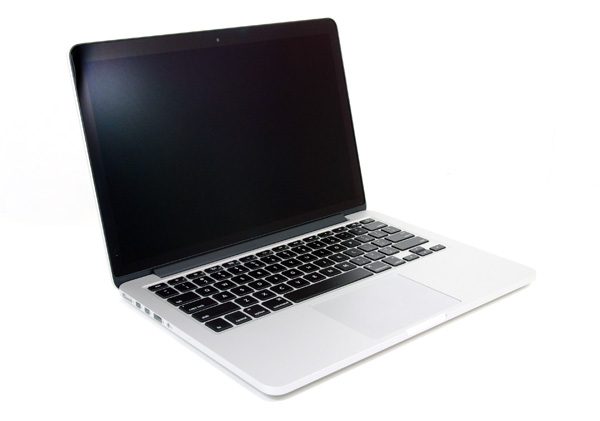
| 6:53a | 13-inch Retina MacBook Pro Review (Late 2012) Earlier this year Apple introduced its first Mac equipped with a Retina Display. The 15.4-inch MacBook Pro with Retina Display (henceforth rMBP) introduced a brand new, thinner and lighter chassis to the MacBook family while serving as the launch vehicle for the world's first 2880 x 1800 notebook display. Although the 15-inch rMBP was significantly more portable than its predecessor, the number one question asked after its release was when the MacBook Air would get similar Retina Display treatment. As the first Mac with an ultra high resolution IPS panel, the value of the 15-inch rMBP was obvious, but these days the market demands extreme portability. Over the past few years, the 13-inch notebook form factor emerged as a great balance between functional size and portability. Although many hoped for a MacBook Air equipped with a Retina Display, for the follow on to the 15-inch rMBP Apple made the logical progression and brought a Retina Display to its 13-inch MacBook Pro. Read on for our in-depth review of the new 13-inch MacBook Pro with Retina Display. 
| |||||||||||||||||||||||||||||||||||||||||||||||||||||||||||||||||||
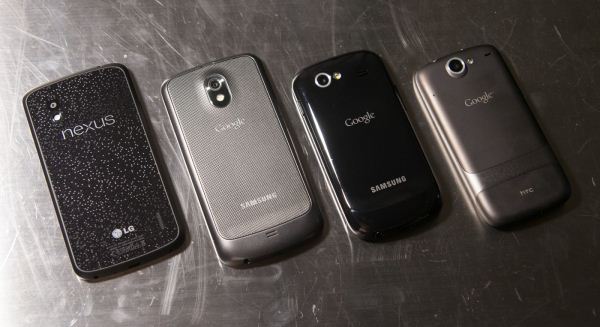
| 12:45p | Google Nexus 4 Review - Google's new Flagship The Nexus One was a groundbreaking device. It was the defining moment that Google got serious about making both a real consumer electronic, and pitting the Android platform against the incumbent iOS. While you could make the case that the original T-Mobile G1 was the original Google phone, it really was with Nexus One that Google set out on its path for defining a smartphone platform and distribution model of its own. While the success of that particular handset was limited and Google’s aspirations perhaps a bit unrealistic, the truth is that the Nexus platform itself has been a growing success. Each year we see essentially the same pattern — Google chooses one OEM, one SoC vendor, and sets the Android team free toward building a tailor-made version of the next major release of Android for that combination. We’ve now had three generations of Nexus smartphones, with the Nexus 4 deriving its name from the obvious forth incantation of the same goal — an unadulterated version of Android free from OEM skinning and carrier politicking. Read on for our review of the Nexus 4 and Android 4.2 platform revisions on that hardware. 
| |||||||||||||||||||||||||||||||||||||||||||||||||||||||||||||||||||
| 12:59p | Synology Launches SAS-Enabled Flagship 10-bay 2U RS10613xs+ NAS and RX1213sas Expander
Synology is a well respected brand in the low to mid-range NAS market. However, they missed a high-end flagship in their lineup to compete against products such as the ReadyDATA units from Netgear and the TS-EC1279U-RP from QNAP. These high-end flagship units support both SATA and SAS drives and serve as a solution for SMEs (Small & Medium Enterprises) who don't need all the bells and whistles of a SAN, but still require virtualization support and scalability. Today, Synology is launching their first product to target this market, the RS10613xs+. The unit has 10 bays in a 2U form factor. It can accept both SATA and SAS drives, an essential requirement in this market. (The Synology RS3413xs+ also targets large scale businesses, but doesn't support SAS drives).
Gallery: Synology RS10613xs+       The RS10613xs+ can be connected to up to 8 RX1213sas expansion modules, each of which has 12 bays. A system based on the RS10613xs+ can, thus, scale up to 106 SAS drives in total.
Gallery: Synology RX1213sas Expander Module       The highlights of the RS10613xs+ include: Unlike the ReadyDATA series (and similar to the QNAP SAS-enabled TS-EC1279U-RP), the RS10613xs+ doesn't offer ZFS. Instead, the unit offers RAID for data redundancy and runs Synology's own OS, the Disk Station Manager (DSM). The detailed hardware specifications are provided below: Though Synology doesn't explicity specify the CPU, we believe it is the Xeon E3-1240. By default, the unit comes with 4 GbE ports, but a PCIe 2.0 x8 slot is available to accommodate a dual 10GbE card. With link aggregation configured over these 6 links and SSDs in all the 10 bays in RAID5 configuration, Synology claims that the unit provides 2 TBps+ throughput and 200K+ IOPS. The RS10613+ is priced at $7000 and comes with a 3-year limited warranty, with an option to upgrade to a 5-year plan. Do readers feel that ZFS is essential in this market? Feel free to sound off in the comments. In other NAS news from Synology, the DS713+ was launched last week. Recently, we have seen a number of Atom-based 2-bay NAS units such as the Iomega StorCenter px2-300d (based on the Intel Atom D525). Synology's latest offering in this space is the DS713+. It has dual GbE links and can be expanded with the DX513 expansion module to become a 7-bay NAS.
Gallery: Synology DS713+       The DS713+ has the latest Intel Atom D2701 Cedarview CPU and can deliver up to 202.3 MBps read and 135.84 MBps write throughput as per Synology's claims. 
| |||||||||||||||||||||||||||||||||||||||||||||||||||||||||||||||||||
| 2:13p | AnandTech/Intel SSD Webcast Live Today at 9AM PST/12PM EST We are live at SC12 from Salt Lake City, Utah this morning and are preparing to answer your SSD, NAND and Intel SSD DC S3700 questions. In about two hours I'll be on a replica bridge set of the starship Enterprise from the original series, alongside Intel's Roger Peene, answering your questions live. Although its a replica of the original bridge, it is an officially sanctioned reproduction by Paramount. We'll be talking about the S3700, SSDs in general, NAND architecture and even the future of solid state storage. It should be an awesome discussion. If you didn't get to comment in the previous post prior to today you will be able to submit questions live during the webcast. Here's the link to the webcast which will begin at 9AM PST/12PM EST today. 
| |||||||||||||||||||||||||||||||||||||||||||||||||||||||||||||||||||
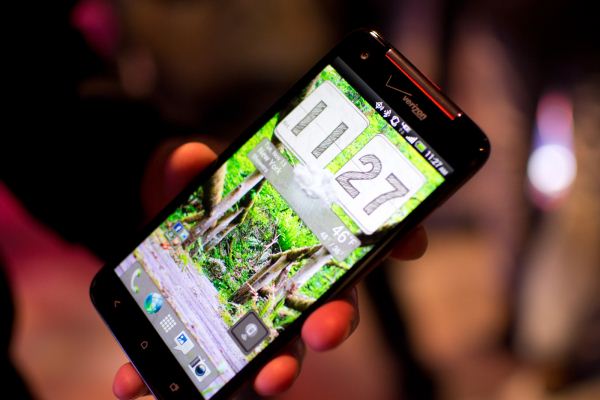
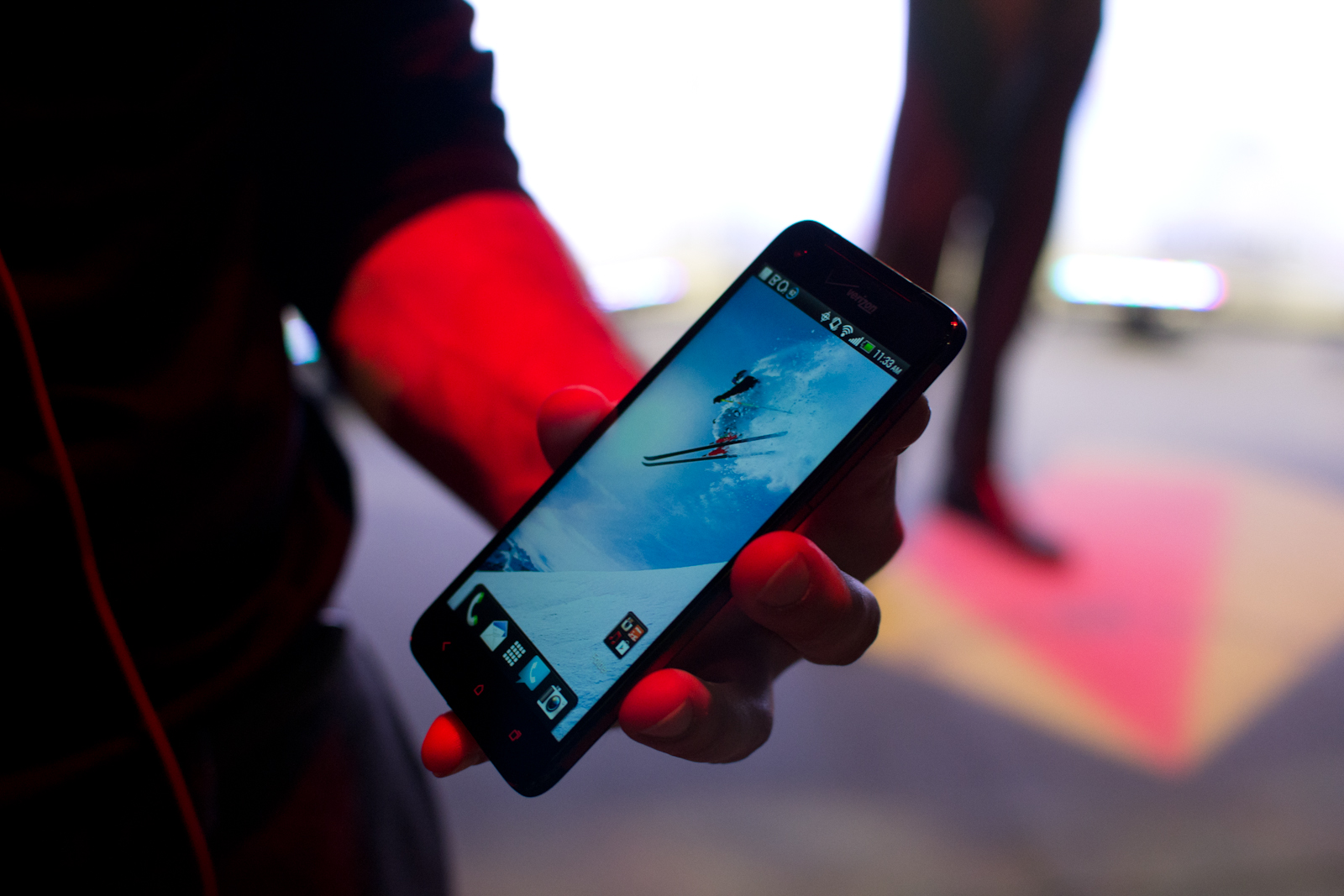
| 4:22p | HTC Droid DNA Hands-On
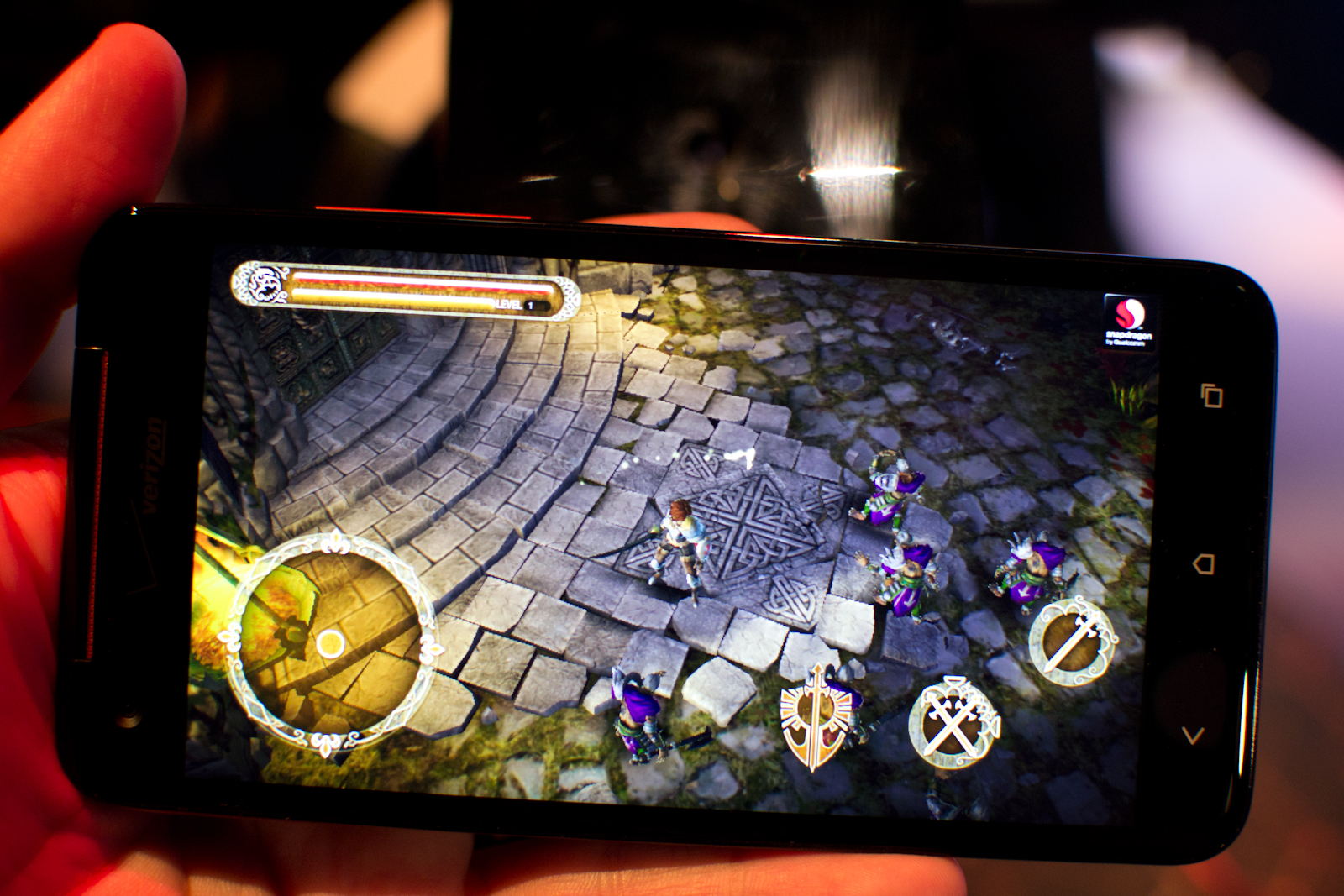
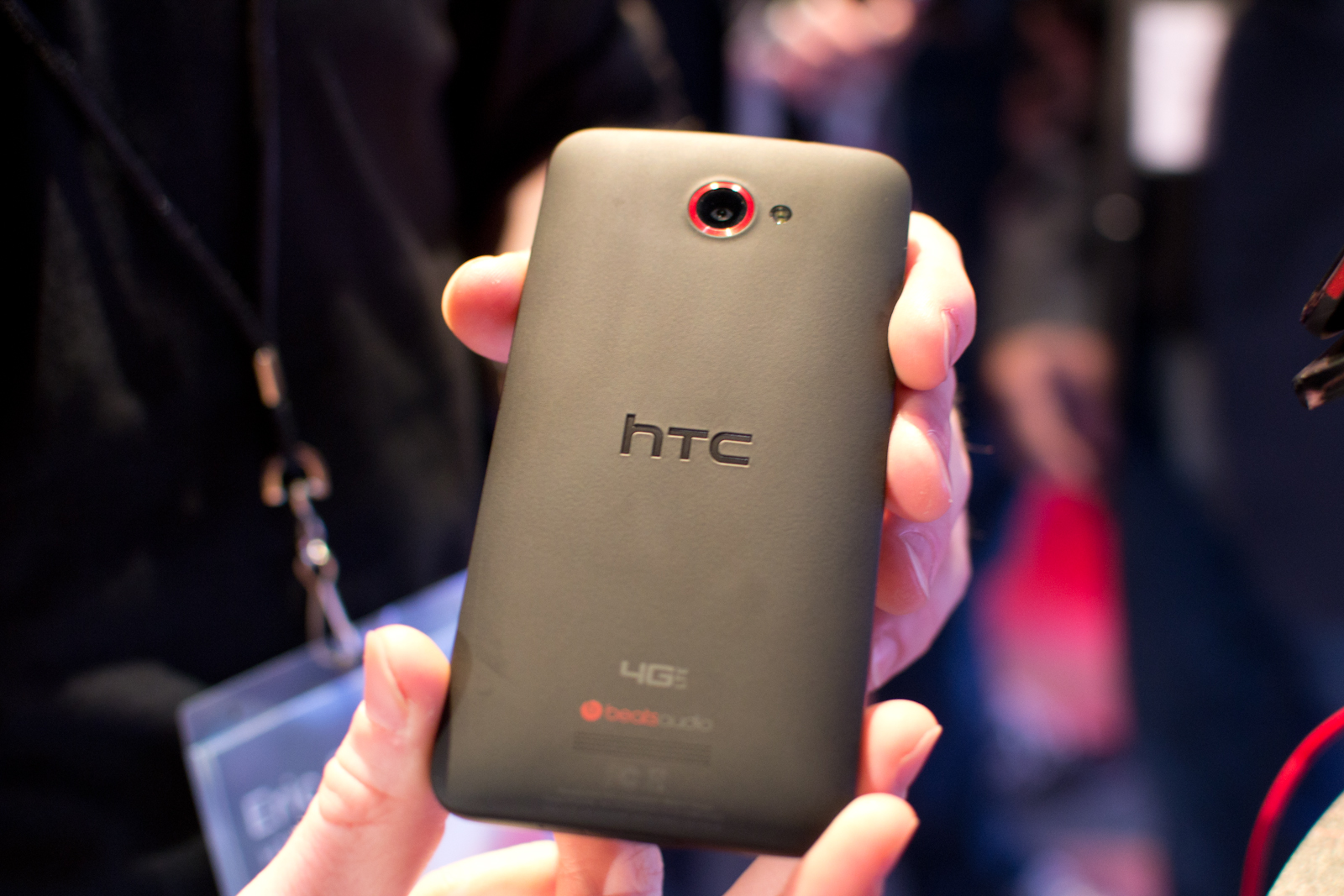
Today’s HTC Droid DNA announcement brings a few big advancements over the HTC One X that never made it to Verizon's line-up. We'll start our hands-on discussion with the most obvious change: the screen. The Display The rapid advance of screen technology means that we're just a year removed from the arrival of 720p displays, and just two years removed from WVGA being the defacto resolution. Today we see the efforts of Sharp’s display team come to fruition with a seemingly uncompromised 5" 1080p display. The pixel density is an unchallenged 440 ppi, and it seems to retain the brightness and fidelity of its predecessors, most recently seen in the HTC One X. Hands-on events aren’t the place for detailed analysis, the time is too short, and the venues to cramped to pull out a colorimeter. What I will say is that the display is easy on the eyes and offers such a glut of pixels that no amount of squinting allowed me to discern. Viewing angles seemed good, with no distortion noted, and colors were bright without being oversaturated. So, at first glance, a somewhat expected excellent for the display. Here’s the thing: do we want a 1080p 5” display? At this pixel density, we would be approaching an angular subtense of two thirds of a degree. That's well below the human ability to discern at twelve inches. So is the likely battery hit worth the improved pixel density? We'll have to wait and see. The Design The great display is surrounded by narrow bezels all around, and the result is a body that is just 6.2 mm longer than the One X, despite the larger screen, and less than a millimeter wider. Gorilla Glass 2 is used and actually extends across the entire face of the device and forms part of the edge of the handset, a surefire sign of confidence in the strength of the glass. The effect is to make the front glass and back seem fused into one solid piece. Accent grills adorn the sides of the device, in the bright red we’ve come to expect from HTC phones on VZW. The back is a softly curving single expanse of matte black, with the HTC logo etched and inlayed in silver. An LTE logo, Beats Audio logo and the single speaker grill grace the bottom of the back, and the 8MP rear-shooter sits at the top. One particularly unique feature on the back is a concealed status LED to the left of the camera lens. When the phone is face down and a notification is received, the LED will blink to alert the user. The LED is also used to alert self-shooters when the shutter will release. At nearly a centimeter at its thickest point, this is not the thinnest phone; but the way the back tapers down to the edge gives it an excellent in the hand feel, and makes it feel thinner than its specifications would indicate. Despite deviations from the One series design language, the solidity that defines that lineage can be seen here.
The Camera Cameras, like displays before them, were long ignored as just value adds, and not features that must be optimized and perfected. It’s really exciting to see manufacturer’s compete for the best phone camera and not just through software trickery. HTC’s approach is, perhaps, the most traditional, and that is to provide an optical package that mimics the higher-end discrete glass you’d find on a proper SLR. The same f/2.0 28mm optics package is used here, as in the One X, and most likely the same sensor is in play. The ImageChip ISP remains a feature, and the software (now called Sense 4+) has a few additions to improve usability. It’ll be interesting to see how Sense 4+ and Android 4.2’s new camera software will play together, but for now the camera seems intuitive and the results look to match that of the One X.  The front-camera from the HTC WIndows Phone 8X finds a home here, bringing its f/2.0 optics, ultra-wide angles and 2.1MP sensor, which shoots 1080p video. The SoC Obviously, we’ve spent a little time with this particular SoC, recently. UI performance was smooth, and hard to trip up, even with the graphical flourishes HTC favors. The home screen carousel is no more, but cycling through home screens remains a wrap around affair and a second tap on the home button still brings an overview of all your home screens. All those flourishes render fluidly, and hopping in an out of apps and the app drawer, I didn't notice any particular hiccups. Performance should be excellent in our typical tests, based on SoC alone, but software is always a key component to the experience, and it'll be interesting to see how this S4 Pro equipped handset differs from the Nexus 4 and LG Optimus G. The Audio HTC has been focusing on handset audio for sometime, including their investment in and use of Beats Audio's DSP algorithms. Beats Audio remains, and there’s even a VZW tie-in with the Beats Pill, a portable Bluetooth speaker. Added to the mix is a dedicated 2.55v headphone amp, which should be able to drive even the most high-end cans. Sound quality should be improved in all headphones, and they were certainly able to power my modest earbuds well. No specifics were provided, but a dedicated amp for the rear speaker should give audio a boost there, as well. This sort of focus on audio quality is always nice to see, and we’ll be excited to put the DNA through its paces to see how it stacks up.

| |||||||||||||||||||||||||||||||||||||||||||||||||||||||||||||||||||








| << Previous Day |
2012/11/13 [Calendar] |
Next Day >> |