[Most Recent Entries] [Calendar View]
Thursday, November 22nd, 2012
| Time | Event | ||
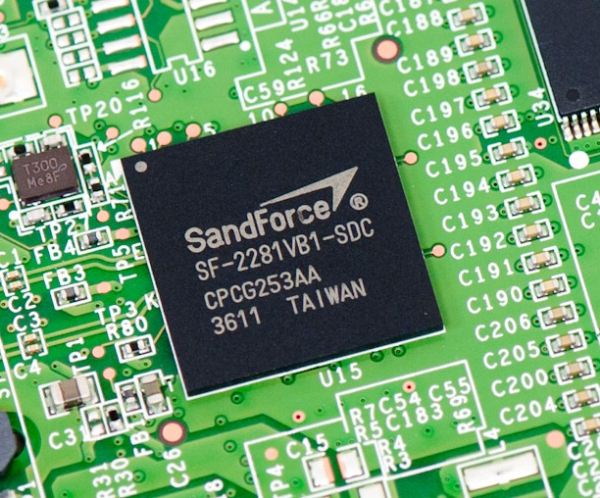
| 5:00p | SandForce TRIM Issue & Corsair Force Series GS (240GB) Review SandForce and TRIM—that has always been a tricky combination. SandForce SSDs have always behaved a bit differently when tortured and TRIM'ed due to their internal design. When a non-SandForce SSD is tortured, write speed degrades and sooner than later you will end up with a read-modify-write situation. SandForce, on the other hand, uses a real-time compression engine which minimizes NAND writes; thanks to that, write speed doesn't degrade when the drive is tortured with easily compressible data. However, in exchange, read speed is affected if the drive is tortured with compressible writes. Incompressible data will also push SandForce to a corner as it can't take advantage of compression, and that's a corner even TRIM can't pull the drive out of. Quite a few new SandForce SSDs are using a newer 5.0.x firmware, which does not have a fully working TRIM. Some are still using 3.x.x firmware without the TRIM issue but if you have a SandForce SSD that was recently released, there is a good chance its TRIM is broken. To test the TRIM issue, we used Corsair's new Force GS SSD with firmware 5.0.2, and Corsair was also kind enough to send us the 5.0.3 firmware that supposedly fixes TRIM. Read on to find more about the TRIM issue and how Corsair's Force GS performs. 
 | ||
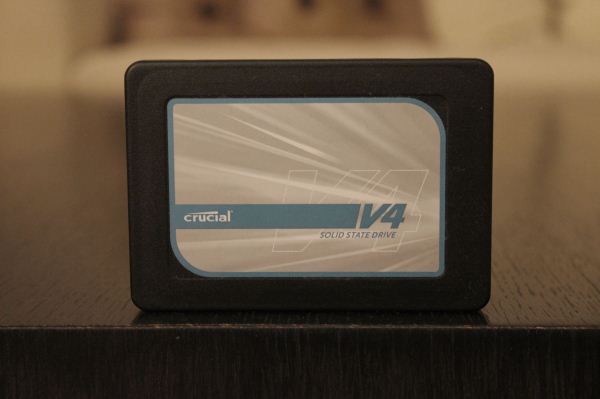
| 5:01p | Crucial v4 (256GB) Review As with virtually all consumer electronics devices, there is market for various types and levels of SSD. Not everyone is ready to pay the premium for the fastest possible SSD but on the other hand, there are users who aren't ready to settle for products meant for the mainstream. Value SSDs have existed for years and we have seen various outcomes, some good and others not so good. Today we're looking at Crucial's v4, the first value SSD from Crucial. Previously, Crucial's lineup has only consisted of one SSD at a time but that changed when Crucial launched the v4 but kept selling the faster m4 alongside. The v4 uses a somewhat unknown (at least for desktop SSDs) Phison PS3105 controller, which is in fact a SATA 3Gbps controller unlike most modern controllers. Read on to find out how the v4 performs and whether it's worth it to cheap out on an SSD. 
| ||
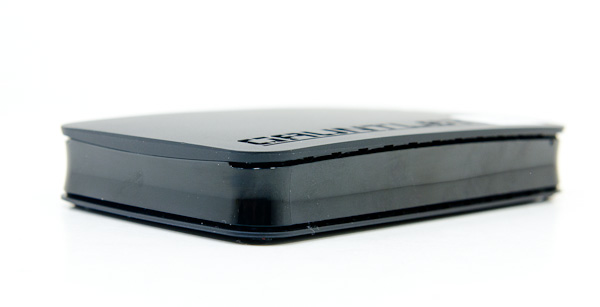
| 7:08p | Patriot Gauntlet Node 320 Review: Wireless Storage for Tablets One side effect of the current march towards ultramobility is the nearly complete abandonment of expandable/upgradeable local storage. No modern smartphone or tablet allows for upgradeable internal storage, and it's not exactly common to find microSD slots or USB ports on them either. This is particularly a problem if you're shopping with Apple, where expandable storage has never been a part of the iPhone or iPad. As a result, you're encouraged to buy enough storage to last you until the next upgrade - as well as rely heavily on cloud based storage and streaming services. Huge amounts of high performance NAND can be pricey. Modern SSDs are finally below the $1/GB price point, which when applied to a tablet should mean that the difference between 16GB and 32GB of storage is no more than $20. The reality however is far worse. NAND costs even less than the ~$1/GB that we pay when buying an SSD, and manufacturers tend to charge anywhere from $50 for 16GB to $100 in the case of Apple. For lower cost devices there may not even be higher capacity versions. All of the sudden that simple solution of just buying as much storage as you need up front becomes a lot more complicated. If you take into consideration the fact that smartphones and tablets are quickly replaced with much better versions, there's a good chance that you'll want a new device before you run out of storage if you buy the largest capacity offered. A number of players in the storage industry have recognized this problem and are attempting to find the perfect solution. Just like there's still movement in determining the best mobile form factor, there have been a lot of early attempts to get wireless external storage for mobile devices right. We covered some of these in the past (e.g. Kingston's WiDrive and Seagate's GoFlex Satellite) but more recently Patriot Memory threw its hat into the ring with the Gauntlet Node and the Gauntlet Node 320. 
|


| << Previous Day |
2012/11/22 [Calendar] |
Next Day >> |