[Most Recent Entries] [Calendar View]
Wednesday, December 5th, 2012
- Improves performance in Far Cry 3 (up to 25% with 8xMSAA, SSAO enabled @ 1600p, and up to 15% with 8xMSAA, HDAO enabled @1600p) (AMD Catalyst 12.11 CAP2 must also be installed)
- Resolves a sporadic system hang encountered with a single AMD Radeon HD 7000 Series GPU seen on X58 and X79 chipsets.
- Resolves an intermittent hang encountered with AMD Radeon HD 7000 Series GPUs in a CrossFire Eyefinity setup.
- Resolves image corruption found in certain DirectX 9.0c titles
- Resolve missing fonts issue in XBMC
- Resolves no video issue found in Media Player Classic Home Cinema when using full or half floating point processing
- Resolves stability issues found in the previous AMD Catalyst 12.11 Beta8 driver for Linux
- For users experiencing issues with HDMI Audio under Ubuntu 12.04, users should try installing the “dkms-hda - 0.201211291615~precise1” package from https://code.launchpad.net/~ubuntu-audio-d
ev/+archive/alsa-daily/+packages and reboot; this will resolve the HDMI Audio issue found in Ubuntu 12.04 - AMD Catalyst 12.11 CAP2 has just been released, and should be used in conjunction with AMD Catalyst 12.11 Beta11
- Improves Far Cry 3 performance for single GPU configurations with AA enabled
| Time | Event | ||
| 1:00a | NVIDIA GeForce 310.70 Beta Drivers Available Seeking a candidate for WHQL certification, NVIDIA has just released their 310.70 beta driver update for desktops and laptops. The driver continues to iterate on the 310.33 beta driver, which focused on improving performance for various games while updating SLI and Ambient Occlusion profiles. This driver update has come less than a week after NVIDIA’s 310.64 update, which focused on improvements for the newly released Far Cry 3. The driver notes specifically call out improved performance over the 310.64 beta driver for Far Cry 3, Call of Duty: Black Ops II, The Chronicles of Riddick: Assault on Dark Athena, Assassin’s Creed III, and Battlefield 3. The driver also adds TXAA support to Call of Duty: Black Ops II and Assassin's Creed III (while resolving a shadow flickering issue in the latter) and continues to add SLI profiles for several games. Additionally, there are various “Driver Not Responding” errors that should no longer occur. Here are the direct links to the various drivers: Desktop 32-bit Windows Vista/7/8 
 | ||
| 3:30a | AMD Catalyst 12.11 Beta 11 Drivers Available Continuing their work on the 12.11 drivers, AMD has recently released their 12.11 beta 11 driver update. This driver fixes several system hangs while including the previous improvements to performance found in Beta 8. In particular, the driver notes call out to a performance upgrade for Far Cry 3. Here are the direct links to the various drivers: AMD Catalyst 12.11 Beta11 Driver for Windows Vista/7/8 AMD Catalyst 12.11 Beta Release Notes 
| ||
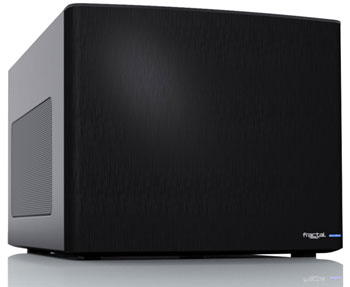
| 5:55a | Small Form Factor Buyer's Guide There have been many interesting developments in the small form factor market segment since our last SFF buyer's guide. Specifically, current-generation Intel Ivy Bridge CPUs and AMD Trinity APUs use less power than their respective predecessors, and GPUs from both AMD and NVIDIA are similarly less power hungry than last year's architectures. Using less electricity translates to emitting less heat, meaning small form factor systems are more viable than ever. Further, there are many new mini-ITX cases available to house the latest products from Intel, NVIDIA, and AMD. In this guide we outline budget-friendly general use tiny desktops, a small file server, and svelte gaming systems. 
| ||
| 11:27p | Qualcomm Announces S4 Play MSM8x26 and WTR2605 - Quad Core ARM Cortex A7 Yesterday, Qualcomm announced a new SoC for its Snapdragon S4 Play category, the MSM8x26, and alongside it a new transceiver, WTR2605. The announcement was a little light on detail and I waited until confirmation of a few details, but now know more about these two new parts geared at the growing entry-level Chinese handset market. First off, MSM8x26 is a 28nm SoC consisting of four ARM Cortex A7 CPUs running at (1.2 GHz) alongside an Adreno 305 GPU. This is to my knowledge the first Qualcomm SoC using a Cortex A7 for CPU, previously we've seen a lot of Cortex A5 use at Qualcomm in parts like MSM8x25 (dual A5s), MSM8x25Q (quad A5s), and also onboard baseband as an optional AP for managing things like a router. MSM8x26 is the spiritual successor to MSM8x25Q, which was again quad core ARM Cortex A5s at 45nm with Adreno 203 graphics. MSM8x26 should bring a nice jump in performance on both CPU and GPU over that part, in addition to supporting 1080p video encode and decode, and support for 13 MP cameras. MSM8x26 will come in two flavors, 8226 with UMTS and TD-SCDMA, and 8626 with UMTS, CDMA, and TD-SDCMA, consistent with Qualcomm's part numbering scheme. The other part of the story is the new transceiver, WTR2605, whose name suggests a wafer-level package (W for wafer) and includes necessary improvements to accommodate dual SIM active and standby modes (DS-DS operation) popular in the entry level Chinese market MSM8x26 is geared at. I don't know anything further about the WTR2605 or how it compares in terms of RF ports to WTR1605L, which is Qualcomm's current flagship transceiver, but suspect it's an evolution of that design with changes to accommodate the dual SIM modes. We'll have a piece ready later in the week about WTR1605 and the state of Qualcomm's modem portfolio. Source: Qualcomm 
|


| << Previous Day |
2012/12/05 [Calendar] |
Next Day >> |