[Most Recent Entries] [Calendar View]
Friday, January 18th, 2013
| Time | Event | ||
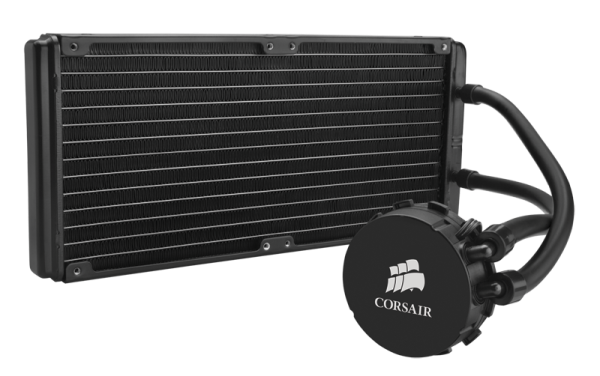
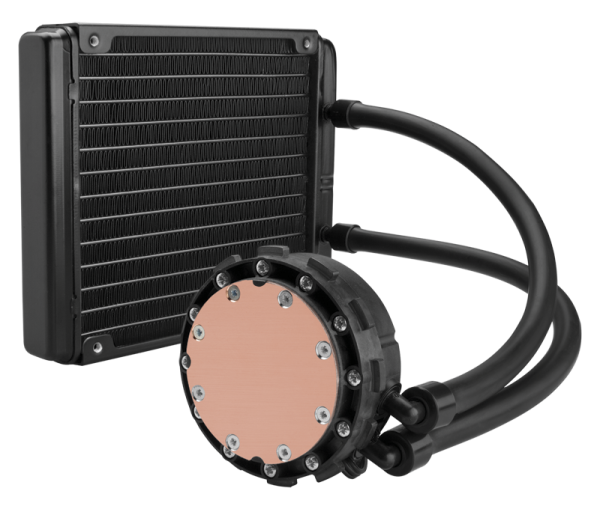
| 12:35a | Corsair Scales Up: H90 and H110 Released I’m a big fan of these closed loop all-in-one liquid coolers. For a little extra on the cost of an air cooler we can get a quieter cooling solution and something that can offer a great way to remove heat from the CPU without going for a full blown self-build water loop. AnandTech covered the first Corsair closed-loop liquid cooling range back in June 2011, and Dustin recently covered six of them including four from Corsair and two from NZXT in December 2012, with the larger 280mm model taking the top spot. With that in mind, Corsair has announced a pair of larger CLCs, in the form of the 140mm H90 and the 280mm H110. The Corsair H90 is a single width 140x140mm model that comes with a single 140mm fan, making it the bigger version of the H55. The H110 by contrast is a double length 140x280mm loop and a pair of fans, pushing the size of the H100 but using the Asetek based mounting system of the H55. The switch to 140mm should allow for quieter operation from the bigger fans, and Corsair states the bundled fans are designed for the high static pressure that these loops need. It is worth noting that both models use the Asetek mounting system used on the H80/H100 rather than the CoolIT mechanism of the H80i/H100i. Similarly, there is no mention of Corsair Link integration like the H80i/H100i, which may mean that the -i variants could be coming later this year if Corsair want to release them (and they can get the OEM of the H80i/H100i, CoolIT, to make them). We should be getting both in to review within due course, but eager buyers can find the H90 and H110 available at the Corsair Store online for $100 and $130 respectively. Both coolers will support all modern motherboard sockets - 2011/1366/1156/1155 for Intel and FM2/FM1/AM3+/AM3/AM2 for AMD. 
 | ||
| 2:00a | Antec GX700 Case Review: Just What You Can Get For $59.99 Most manufacturers are quicker and happier to show us their medium-to-high end cases, but for a lot of users the case is admittedly a steel box they put their computer into. While I personally advocate spending up a bit and getting a quality case, the enthusiast looking to maximize the distance their dollar can go may not be willing to shell out for something big and fancy. For those users, there are cases like the Antec GX700. When I saw it on display at CES, I was surprised at the incredibly low $59.99 price tag. Now that I've had it in house for testing and review, I see more of how they got there. This isn't necessarily a good or bad thing, but simply a fact of life when you're buying budget. Still, a case at this price point featuring a pair of 140mm fans, a single 120mm fan, a fan controller, and support for increasingly common 240mm radiators? There has to be a catch, right? As it turns out there are a couple of small ones, but not the ones you'd think. 
| ||
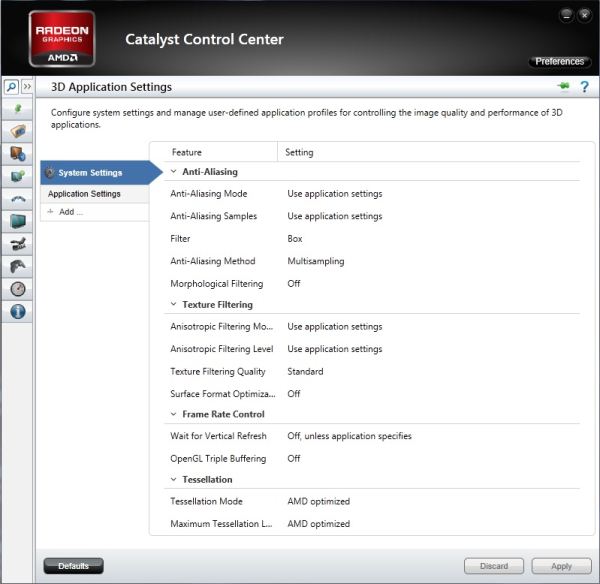
| 4:30a | AMD Catalyst 13.1 WHQL Drivers Available Having refined their 12.11 beta drivers, AMD has recently released their Catalyst Software Suite Version 13.1 update. This WHQL update includes all the performance improvements found in the previous AMD Catalyst 12.11 Beta 11 update while resolving a variety issues for Windows 8 and Windows 7 users. The Catalyst Control Center has also gained a new design for its 3D application settings page, which is designed to allow uses to adjust their 3D settings individually per application. Here are the direct links to the various drivers: AMD Catalyst Software Suite 13.1 for Windows Vista/7/8 32-bit 
| ||
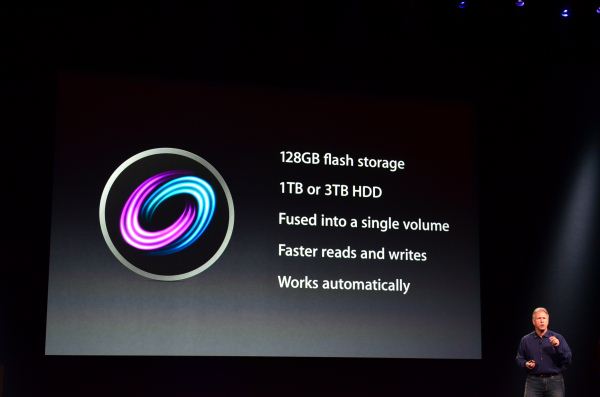
| 1:30p | A Month with Apple's Fusion Drive Apple has the luxury of not competing at lower price points for its Macs, which makes dropping hard drives an easier thing to accomplish. Even so, out of the 6 distinct Macs that Apple ships today (MBA, rMBP, MBP, Mac mini, iMac and Mac Pro), only two of them ship without any hard drive option by default. The rest come with good old fashioned mechanical storage. Given the extremely positive impact an SSD has to user experience, it seems inevitable that Apple would move all of its systems to SSDs. Moving something like the iMac to a solid state configuration is pretty tough to pull off however. While notebook users (especially anyone using an ultraportable) are already used to not having multiple terabytes of storage at their disposal, someone replacing a desktop isn’t necessarily well suited for the same. Apple’s solution to the problem is, at a high level, no different than all of the PC OEMs who have tried hybrid SSD/HDD solutions in the past. The difference is in the size of the SSD component of the solution, and the software layer. I spent a month with Apple's Fusion Drive in the new 27-inch iMac. Read on to find out how it compares to other SSD caching solutions and if it can truly approximate a standalone SSD setup. 
|


.jpg)
| << Previous Day |
2013/01/18 [Calendar] |
Next Day >> |