[Most Recent Entries] [Calendar View]
Monday, January 6th, 2014
| Time | Event | ||||||||||||||||||||||||||||||||||||||||||||||||||||||||||||||||||||||
| 2:52a | NVIDIA CES 2014 Press Conference Live Blog We are seated at NVIDIA's CES 2014 Press Conference. Our live blog begins at 8:00PM PT. 
 | ||||||||||||||||||||||||||||||||||||||||||||||||||||||||||||||||||||||
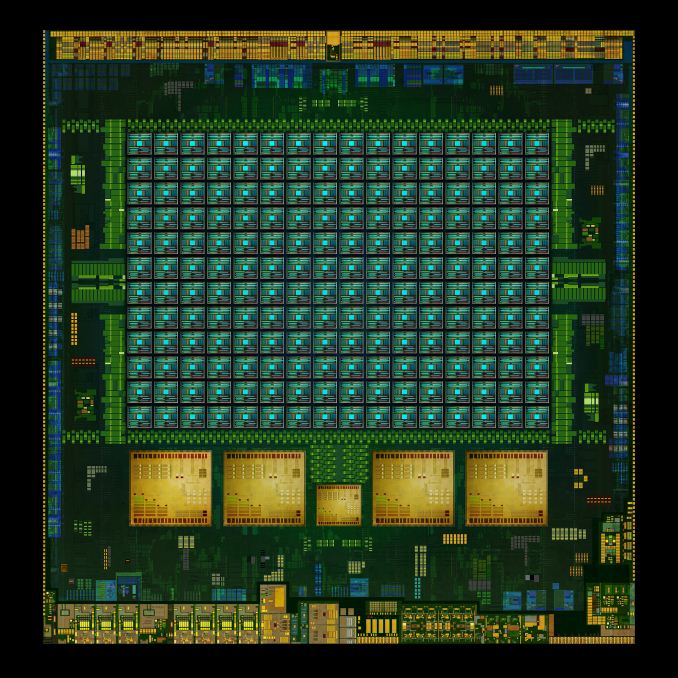
| 2:55a | NVIDIA Announces Tegra K1 SoC with Optional Denver CPU Cores
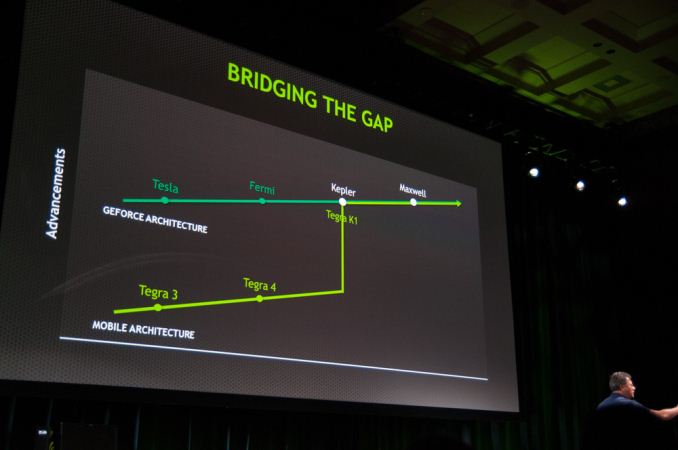
At its CES press conference, NVIDIA finally revealed the marketing name for Project Logan - NVIDIA's latest mobile SoC: Tegra K1. NVIDIA hasn't said much about the architectural details about its latest Tegra SoC, other than to confirm that it features 192 CUDA cores. Since we already know Tegra K1 is based on NVIDIA's Kepler GPU architecture, and a single Kepler SMX features 192 CUDA cores, we know that K1 uses a single Kepler SMX. With K1, NVIDIA ditches the GeForce ULP GPU core that was present in the previous four generations of Tegra and moves mobile onto the same roadmap as the desktop/notebook GeForce. NVIDIA used the slide below that seems to imply convergence between the Tegra and GeForce architectures going forward, even beyond Kepler. We'll be updating this post with more details as NVIDIA reveals them. Tegra K1 will be available in quad-core Cortex A15 (+1 shadow Cortex A15 core) and dual-core Denver (64-bit ARMv8) versions. The Cortex A15 version will be available in 1H 2014, the Denver version will show up in the second half of 2014. 
| ||||||||||||||||||||||||||||||||||||||||||||||||||||||||||||||||||||||
| 4:08a | NVIDIA Reveals First Details about Project Denver CPU Core
During its CES press conference, NVIDIA revealed its new Tegra K1 SoC will be available in two versions. One version will ship with four ARM Cortex A15s, while the other will ship with two NVIDIA designed Denver CPU cores. We don't know much about Denver other than it's a custom 7-wide superscalar 64-bit ARMv8 design. NVIDIA claims very high single and multithreaded CPU performance. It's important to note that the Denver version only comes with two cores, something we've argued is likely the more optimal use of die area in mobile. Max frequencies top out at 2.5GHz. Given that NVIDIA has silicon back already I suspect this is a 28nm design. The L1 cache is 128KB + 64KB (I$ and D$?). The Denver CPU cores will be paired with a 192 CUDA core Kepler implementation (1 SMX). No word on differences in power or performance. The Cortex A15 version of Tegra K1 will be available in 1H 2014, while the Denver version will be available in 2H. The two SoCs are pin-compatible, indicating that there won't be any difference in memory interface width. 
| ||||||||||||||||||||||||||||||||||||||||||||||||||||||||||||||||||||||
| 7:42a | MSI: Updated Notebooks at CES 2014
MSI had all of their latest notebooks on display, along with some upcoming models that feature new designs and hardware. Most of the hardware and design elements remain the same for now, but one area that is receiving an update is the keyboard. Specifically, the SteelSeries keyboards are receiving updated software to allow improved control over the colored backlighting, but more importantly is that the keyboards are fully programmable –each and every key can be set to a macro. That may not seem like a huge deal, but there are other benefits, for example being able to remap any of the keys to any of the other keys (which means people like me that like their Windows key on the left side can swap the Fn and Windows keys – or any other keys for that matter). The software also allows users to upload profiles for specific games, with individualized macros and mappings on each game. The software will detect which application/game is running and load the appropriate profile on the fly. This doesn’t address every concern with the keyboards – I still want four keys to the left of the keyboard (CTRL, Fn, Windows, Alt) and I want a number keypad with a full-size [0] key in the bottom-left – but considering the overall feel of the SteelSeries keyboards is better than most other laptop keyboards, it’s yet one more benefit of MSI’s notebooks. MSI has also worked to improve the feel and backlighting of the keyboards. Another item of note is that the existing branding for MSI’s notebooks is being phased out, to be replaced by more exciting names. Short-term, the GT, GS, GE, GP, and GX series will become the GT Devastator, GS Stealth, GE Apache, GP Leopard (they changed this, so the labels are wrong), and GX Destroyer. With the next update (Intel’s Broadwell CPUs and AMD Kaveri APUs), the G[x] prefixes will disappear and they will simply go with the main brand. While we haven’t necessarily been big fans of the industrial design of some of the MSI notebooks (specifically, the GT and GX lines are looking a little long in the tooth), MSI is working to improve in this area as well. Their GS line is a great example of this, with a thinner, lighter chassis that still packs a punch. The designs have been tweaked slightly on some of the other lines as well, like the “muscle lines” on the metal lids of the upcoming GE60 and GE70. MSI also had a prototype laptop on hand with a hand-built chassis that continues the trend towards thin computing with good performance, and we’re looking forward to seeing what happens with the final hardware. Finally, MSI will also be offering high-DPI 3K displays on several of the above laptops. The displays are still 16:9 aspect ratio (sadly, there doesn’t seem to be much hope at present for companies to buck the 16:9 trend in the Windows world, running at 2880x1620. High DPI display on Windows 8.1 are still a work in progress to be perfectly frank, and in many cases 1920x1080 at 100% scaling is more useful (in my experience) than 3200x1800 or 2880x1620 at 200% scaling. Most of this is just a software problem, however, and as more apps become high-DPI aware the situation should improve. We also noticed on at least one set of laptops that the 3K panel had much better color accuracy than the 1080p panel next to it. Let’s hope that’s not just a fluke and that all of the upcoming high-DPI displays will come with accurate color reproduction. Gallery: MSI: Updated Notebooks at CES 2014 _thumb.JPG) _thumb.JPG) _thumb.JPG) _thumb.JPG) _thumb.JPG) _thumb.JPG) 
| ||||||||||||||||||||||||||||||||||||||||||||||||||||||||||||||||||||||
| 7:58a | MSI All-In-Ones at CES 2014
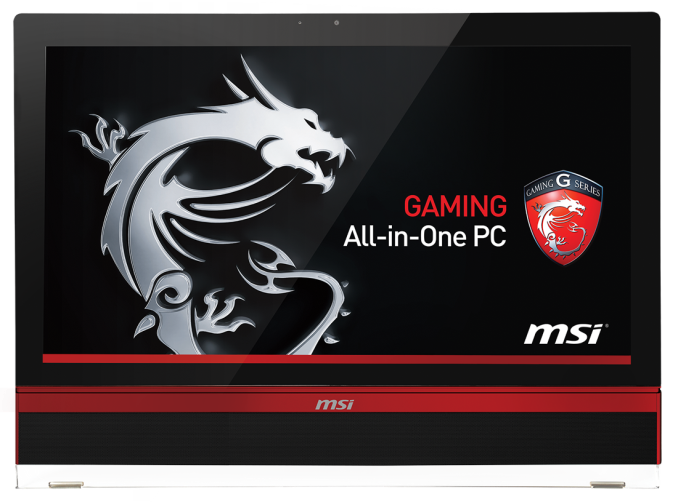
Notebooks weren’t the only thing on display – along with a couple desktops sporting MSI GPUs, MSI also had a couple of all-in-one touchscreen PCs on display. One is already shipping, with a previous generation Ivy Bridge CPU and a Radeon HD 8970M dGPU paired with a 27” anti-glare 1080p display. Upcoming models include a 24” 1080p panel as well as a new 27” 1080p panel, with the 24” shown above sporting flicker-free technology that boosts the backlight output at the end of each cycle in order to eliminate the flicker effect. MSI noted that the future models will also come with Haswell processors and mobile NVIDIA dGPUs, though they didn’t specify which particular GPUs will be used so they could be Kepler or potentially even Maxwell offerings. Gallery: MSI All-In-Ones at CES 2014  _thumb.JPG) _thumb.JPG) _thumb.JPG) 
| ||||||||||||||||||||||||||||||||||||||||||||||||||||||||||||||||||||||
| 8:02a | MSI GPUs at CES 2014: Massive R9 290X Lightning and More
Along with notebooks and all-in-ones, MSI had quite a few large GPUs on display. The past month saw a massive shortage of AMD GPUs, thanks in no small part to the surge in Bitcoin/Litecoin prices. Couple that with the holiday shopping season and the R9 290 and 290X have been selling for well over MSRP – R9 290 today continues to sell at $500 and more, while R9 290X has pushed into the $600+ range and even the rebadged R9 280X (7970 GHz Edition) has been selling at more than $100 over MSRP. Into that mix, MSI is releasing a gigantic R9 290X with their triple-fan and triple-slot GPU. The R9 290X Lightning should have the cooling capacity to keep the Hawaii cores running at maximum performance, but the drawback of course is that running more than two such cards in a single case will prove problematic at best. For those who are looking for the performance of the R9 290X without the noise, however, this may be the perfect solution. Several other GPUs were also being shown, most with large 80mm or larger fans. The GTX 760 ITX is interesting as well, in that it’s a potent GPU designed for use in smaller mini-ITX cases. (And like all things mini-ITX right now, don’t forget to mention the Steam Machines whenever you encounter a product for this market.) 
| ||||||||||||||||||||||||||||||||||||||||||||||||||||||||||||||||||||||
| 8:10a | MSI Motherboards at CES 2014: Kaveri and Socketed Kabini
Wrapping up our visit with MSI, we’ve already seen many of their already-launched motherboards (e.g. series 8 chipsets), but MSI did have some upcoming Kaveri motherboards on display with varying features and sizes. There’s not much to say about specs at present, but perhaps the more interesting boards (that we can actually discuss) are the two mini-ITX offerings. The first is a Kaveri platform, which is expected, but the second is the first instance of socketed Kabini motherboard that we’ve seen. The Kabini board recycles FS1, and it’s fun to see the difference in pin counts between the upcoming Kaveri socket and FS1b. It’s not entirely clear what the market is for the socketed Kabini chips, but presumably it’s an easier way for manufacturers to offer multiple performance options with mini-ITX Kabini systems. 
| ||||||||||||||||||||||||||||||||||||||||||||||||||||||||||||||||||||||
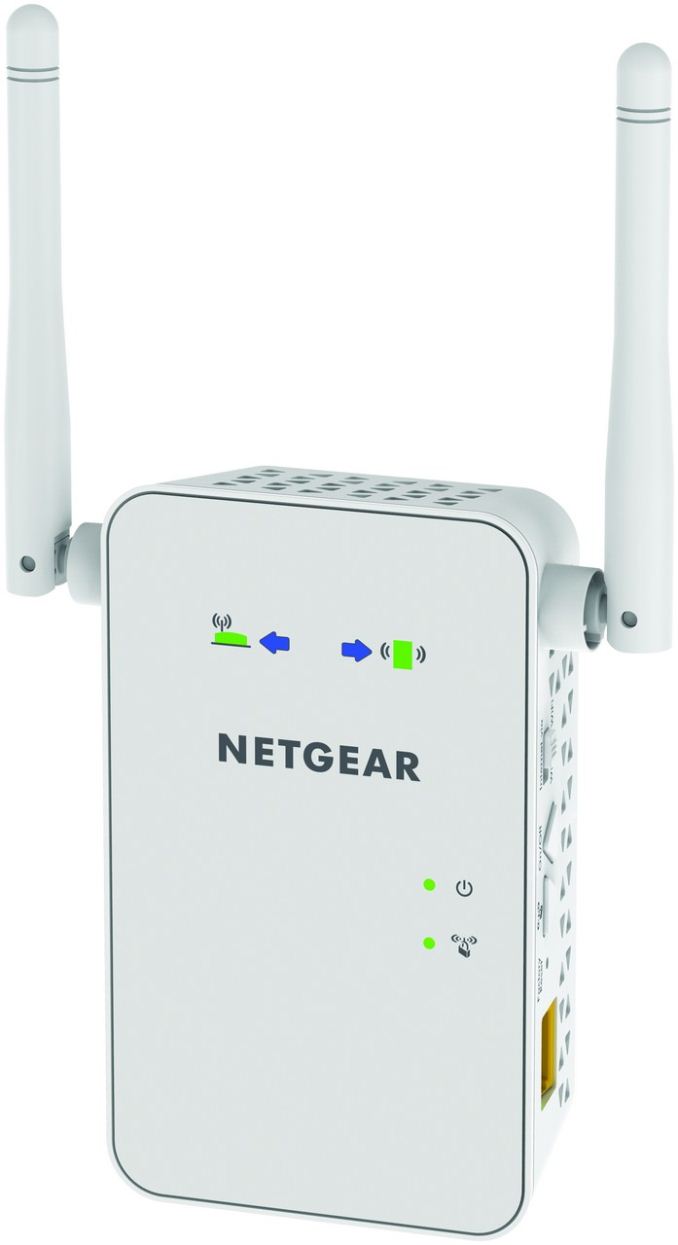
| 12:30p | NETGEAR at CES 2014: Network Range Extenders This year at the Consumer Electronics Show in Las Vegas, NETGEAR are showcasing their latest line of Travel Routers and Range Extenders, including 802.11ac WiFi Range Entenders and associated Android Apps to find the best location for these routers. We were sent the press releases ahead of time to show what NETGEAR are up to. At CES 2014: NETGEAR Trek N300 / PR2000 The N300 is a portable device designed to extend any WiFi or LAN for local or private use, for example in hotels when on the road to create a separate private and firewalled hotspot. It takes power either from the mains or USB, offers standard NETGEAR router firewall functions, and offers an extension antenna when required. As the name N300 suggests, it offers 802.11n with up to 300 Mbps (presumably 2.4 GHz 2T2R) output. The Trek N300 thus also acts as a small home WiFi range extender, or suitable for offices that need a private network while inside their main company network. NETGEAR also have the usage scenario of providing better WiFi connections to devices such as televisions that might rely on slower standards (connect to TV via Ethernet and to home network via WiFi – use USB Power from TV). The Trek N300 (SKU: PR2000) will be available in Q1 at an MSRP of $50. The listed dimensions and weight are 3.39 x 3.31 x 1.30 inches and 0.355 lb (161g). At CES 2014: NETGEAR AC750 WiFi Range Extender / EX6100 Billed as the first wall-plug 802.11AC WiFi Range Extender, the EX6100 uses dual band concurrency (2.4 GHz + 5 GHz) to supply b/g/n and AC devices with up to 300+433 Mbps WiFi capabilities. The device itself uses onboard LEDs to direct a user to best placement in the home for range extension, along with two external antenna to improve performance. In Access Point Mode, the EX6100 will create a new WiFi hotspot when connected to wired internet, and comes with a WiFi Analytics app in order to test which WiFi channels are best suited for the new hotspot or extension. The EX6100 should come on the market during January at an MSRP of $90. At CES 2014: NETGEAR A1200 WiFi Range Extender / EX6200 The EX6200 goes further than the E6100 by being a fully-fledged dual core range extender for the home and office. It combines both a 5-port gigabit router and a 300+900 Mbps 802.11ac extender in the same device, using 5 dBi external (removable) antennas and 10 power amplifiers for 700 mW total WiFi output power. Beamforming is coming into force with 802.11ac enabled devices, and the EX6200 uses this feature set to improve reliability, especially at long range. When in WiFi bridge mode, this keeps the singular connection to the main router b and consistent for gaming and streaming. The WiFi Analytics app is also available to help place the EX6200. The EX6200 is scheduled to arrive in Q1 at an MSRP of $130. 
| ||||||||||||||||||||||||||||||||||||||||||||||||||||||||||||||||||||||
| 2:00p | Imagination Technologies Announces Entry-Level PowerVR Series6XE GPU Family
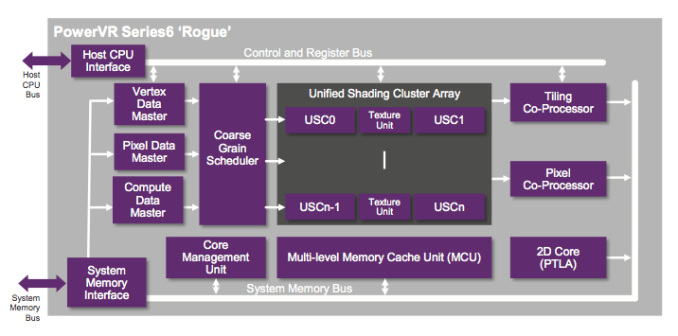
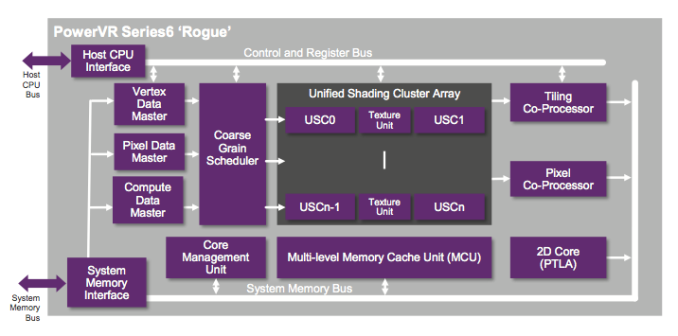
Going hand-in-hand with Imagination’s announcement of their new PowerVR Series6XT architecture and GPUs, Imagination is also announcing a new family of entry-level GPUs to further complement the Series6 family at the other end of the spectrum. These parts are designed for cost/area and power sensitive devices, and are the smallest GPUs offered within the Series6 family. Unlike Series6XT, these parts aren’t a new architecture, rather they’re new designs based around the Series6/6XT architecture. That said, it’s not clear at this time whether any given part is Series6 or Series6XT based (or maybe a bit of both?), as the features available differ with the model, even though all are in the Series6XE family. Though the inclusion of PVRIC2 in some of these parts, a Series6XT feature, implies that at least some of these parts are derived from the new Series6XT. Diving right into matters then, what’s more interesting is just what Imagination has done for the lower tier parts, G6050 and G6060. Whereas G1xxx parts have one compute cluster, these new low end parts half just half a compute cluster, which is smaller than what one would typically expect a GPU architecture to be capable of. Unfortunately as this information comes from a high level press release it’s not clear how Imagination has accomplished this. The likely scenario is that the company has taken their 16-wide scalar SIMD based Unified Shading Cluster (USC) and reduced it to an 8-wide design, possibly also reducing the width of other components in the process. Interestingly, Imagination notes that their new half-cluster designs are ISA compatible with the Series6 ISA, our best guess is that Imagination is executing half a wavefront over each clock, completing the whole wavefront in 2 clocks on the G60xx series versus 1 clock for everything else. Accompanying the G60xx parts are two new G61xx parts, the G6110 and the G6100 (which oddly is a new part with an old name). The G61xx parts implement a whole cluster and are designed to be follow-ups to the original G6100, Imagination’s low-end part for Series6. These parts are further updated and optimized versions of the original G6100, with Imagination noting that they now include a “high-performance texture mapping unit” in order to offer “the same raw [pixel] fillrates as multi-processor GPUs from the previous generation.” As noted earlier, each configuration includes two parts and are designed to chase slightly different markets. While the G6050 and G6100 are the “base” parts, the G6060 and G6110 include Imagination’s new PVRIC2 lossless image compression technology, which further reduces the amount of memory bandwidth needed by the GPU by compressing render targets and other images. Imagination is specifically pitching these parts at manufacturers that want to go with even cheaper/simpler designs, as the bandwidth savings from PVRIC2 would allow them to go with less expensive memory configurations, ideally more than offsetting the higher cost of the design.
Wrapping things up, like today’s Series6XT announcement, Series6XE is being announced with immediate availability for licensing. So similar to Series6XT, we’d expect products integrating Series6XE GPUs to start hitting the market sometime in 2015. 
| ||||||||||||||||||||||||||||||||||||||||||||||||||||||||||||||||||||||
| 2:01p | Imagination Technologies Announces PowerVR Series6XT Architecture & GPUs
With CES taking place this week a number of mobile announcements are in the pipeline. And in what has become something of a tradition for Imagination Technologies, they are using the backdrop of CES to make their annual PowerVR product announcements. The big news out of Imagination this year is that PowerVR Series6 will be getting a refresh, with the company announcing the existence of their new Series 6XT architecture and that it’s immediately available for licensing. Series6XT is designed to be a moderate feature upgrade and power/performance optimization pass for Series6, integrating various innovations over the past couple of years to keep Imagination’s designs performance and feature competitive. Series6XT comes 2 years after Series6 licensing was announced at CES 2012, and roughly half a year after the first SoCs implementing Series6 GPUs were released to consumers. So what’s new in Series6? Although Imagination does like to keep to high level details in their CES announcements, nothing out of the Series6XT announcement makes it sound like we’re looking at a significant overhaul of the Series6 architecture. Which means it’s safe to assume that we’re still looking at Imagination maintaining their Unified Shading Cluster (USC) design, a 16-wide scalar SIMD with each slot capable of up to 4 FP32 ops per clock. Other aspects of the design have been changed – various other functional blocks have been updated with new features to improve performance – but the fundamental architecture and execution model would appear to remain unchanged. Similarly, this means that API support also remains unchanged, with OpenGL ES 3.0 remaining as the baseline for all Series6XT parts. Though it’s not immediately clear whether any of these specific designs are available in a Direct3D 11_1 configuration too. Taking a look at what changes have been made, Series6XT will be gaining finer grained power gating through what Imagination is calling “PowerGearing G6XT” technology. Mobile class GPUs have featured power gating for some time – it being necessary in order to achieve the low power consumption today’s mobile devices shoot for at idle and in light workloads – with higher grained solutions offering even more efficiency gains by being able to shut off a larger percentage of the GPU when those resources aren’t required. For Series6XT, Imagination gains the ability to shut off individual USCs and other processing blocks within their GPUs, which should be especially beneficial in light workloads where the GPU can’t idle, but it doesn’t need to allocate all of its resources either. Meanwhile when it comes to performance Imagination has made several improvements and optimizations for Series6XT, with Imagination claiming performance gains of up to 50% versus Series6. Among other things, Imagination has specifically targeted front end and back end performance on Series6XT, nothing that they’ve made changes to improve sustained polygon and pixel fillrate performance. Though it’s not clear whether these are simply optimizations of their existing hardware or if those blocks have been outright widened for greater throughput. Elsewhere Series6XT also includes a new iteration of Imagination’s Hierarchical Scheduling Technology (HST) to further improve resource utilization, along with performance optimizations that draw from instruction set streamlining and some compute-specific data path optimizations. Of course none of this takes into account clockspeeds either; while Imagination’s designs are intended to cover a range of clockspeeds based on power/performance requirements, it’s a safe bet that Series6XT is designed to clock higher than Series6, as GPU and CPU clockspeeds have ratcheted up over the years. Series6XT’s final set of new features comes through what Imagination is calling “PVR3C”, which is a catch-all name for all of the various compression technologies that Series6XT supports. New to Series6XT is support for Adaptive Scalable Texture Compression (ASTC), a variable block size texture compression algorithm being blessed and promoted by Khronos as the next generation of texture compression for both mobile and desktop devices. ASTC is designed to improve texture compression efficiency both by improving the quality attainable at any compression ratio while allowing the use of larger blocks to further reduce the data size of textures, going up to a 36:1 ratio at a block size of 12x12. Series6XT is the first design we’ve seen with support for ASTC (ed: tied with NVIDIA), though it is worth noting that it’s still fairly early in the game as ASTC is not yet part of the core specifications for OpenGL or OpenGL ES, as it’s still in its experimental extension stage. ASTC joins the other texture compression formats that Series6 supports, including the PVRTC series and ETC. Texture compression aside, Series6XT also includes updates for lossless image compression and geometry compression. PVRIC, first introduced on the Series6 6x30 parts, is now up to PVRIC2, offering further improvements to compression throughput and performance. Meanwhile PVRGC is new to Series6XT, and is Imagination’s lossless geometry compression technology. Imagination’s press release doesn’t make it clear where PVRGC in particular is implemented, but from the description it sounds like this is an in-flight geometry compression technology, intended to reduce the amount of bandwidth needed to shuffle geometry within the GPU and between the GPU and its external RAM. Wrapping things up, as Imagination is announcing that Series6XT is available for immediate licensing, we already have some information on the GPU designs being released. Series6XT parts will be under the GX prefix, with the GX6240, GX6250, GX6450, and GX6650 designs being released today. As alluded to by the part numbers, GX6240 and GX6250 are two cluster parts, while GX6450 is a four cluster part and GX6650 is a six cluster part. Furthermore of those parts, GX6240 is an area optimized part, while the rest are performance optimized. With Series6XT focusing so much on performance and optimization improvements, although it’s not stated as such, for area efficiency in higher performance designs Imagination appears to be pushing customers towards smaller Series6XT designs, rather than having slower versions of larger designs.
It’s worth noting that Imagination’s earlier Series6 designs also topped out at six clusters with G6630, so while Imagination is scaling up performance internally, we’re not seeing them go with outright wider GPUs for the Series6XT family (at least not yet). So Series6XT’s performance improvements will come from these internal changes, including performance optimizations and any wider blocks within. Finally, while Imagination doesn’t provide a timeframe for consumer availability (since they only sell designs to chipmakers), based on the amount of time needed to integrate these designs into new products and then get those products in the hands of consumers, we should be looking at a timetable similar to the original Series6 designs. In which case Series6XT equipped SoCs would start appearing in 2015, likely in the latter half. 
| ||||||||||||||||||||||||||||||||||||||||||||||||||||||||||||||||||||||
| 3:48p | LG Announces G Flex Coming to AT&T, Sprint, T-Mobile in 2014
We've been using and working on our review of the SK Telecom version of the LG G Flex, and have heard rumors about the device coming stateside and to other markets, with LG themselves even alluding to it at the G Flex event last year in the US. Today, LG made that news official, announcing that the G Flex will be coming to the US on AT&T, T-Mobile, and Sprint sometime in Q1 2014 during its International CES 2014 press conference. There's not much more to the news, but the G Flex is one of the most intriguing devices to launch in recent history given its curved and flexible nature. It's great to see it come to the US for users who want to experience the flexible smartphone with the requisite LTE bands for the US. 
| ||||||||||||||||||||||||||||||||||||||||||||||||||||||||||||||||||||||
| 4:00p | Audience Announces its Fourth Generation Voice Processor – eS700 Series
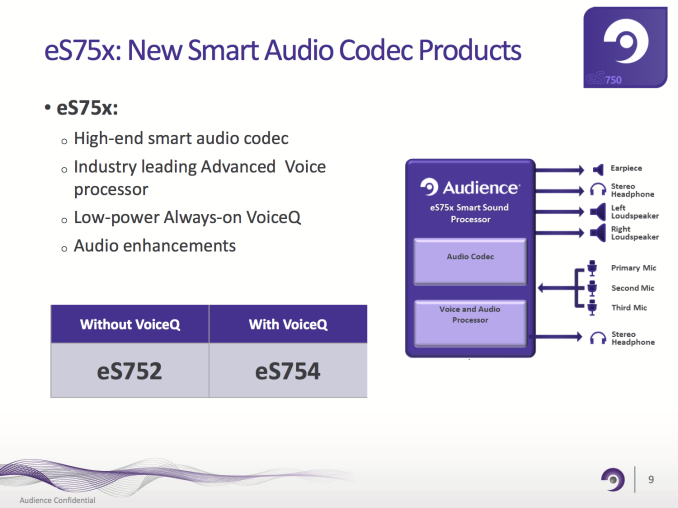
We've been covering and tracking ambient noise reduction technologies in smartphones for a while now, and one of the players in that space, Audience, is announcing its fourth generation of smartphone voice processor, the eS700 series. The fourth generation builds on the prior generation by including support for full band voice up to 48 kHz, improvements to the amount of noise rejected (SNRI), and the addition of an always-on voice activation feature similar to the always-on voice feature we saw first in the Moto X called VoiceQ. Keeping with the previous generation, Audience is still offering one version with a built in audio codec for OEMs who wish to go with something other than what the silicon vendor supplies, which now offers better quality sound as well. The eS75x series includes an audio codec that now supports up to 119 dB SNR and relatively low 3.2 mW MP3 playback power. OEMs that don't want a codec go with the eS70x series which includes the traditional noise reduction features, but no standalone codec. Audience believes its VoiceQ keyword voice activation feature is the lowest power in the industry as well, compared to the feature shipping in similar devices today. Audience's detection system uses a 3 step system beginning with a voice activity detector (not just a certain sound pressure level), then active keyword spotting before finally turning on the AP and waking up the phone. Expect to see Audience eS7xx inside devices being announced probably around MWC.

| ||||||||||||||||||||||||||||||||||||||||||||||||||||||||||||||||||||||
| 4:01p | Toshiba's 15.6 inch 4K Laptops
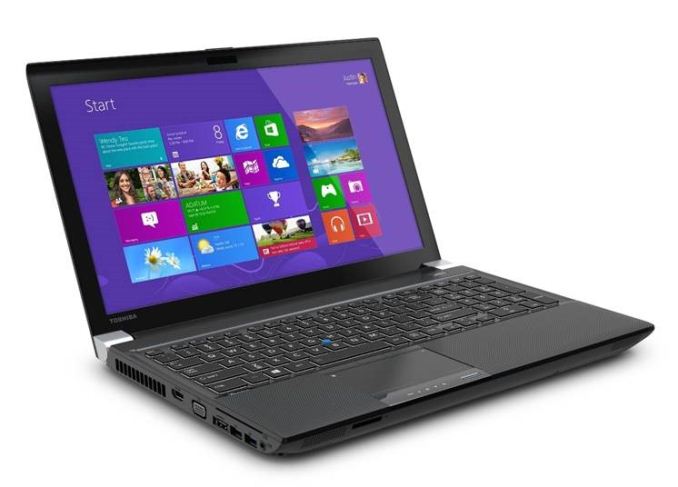
Another quick bit of news from CES: Toshiba is aiming to release two 4K (UHD, 3840x2160) 15.6" laptops in mid-2014. The first is a workstation design based on the Tecra W50 which sports a Haswell mobile GPU and a 2GB NVIDIA K2100M, and the second is the Satellite P50t, a touch-screen design thinner than the Tecra W50 using either integrated graphics or a mid range mobile graphics solution. The Tecra W50 edition (note Toshiba do a 1080p W50 as well) will be configurable up to the high end quad core models and support up to 32GB of memory. Being a workstation class product, Toshiba puts this model under their Highlt Accelerated Life Testing (HALT) in order to ensure longevity. The 'ultradurable' design incorporates a spill resistant, LED backlit keyboard with 10-key number bad, an integrated Trusted Platform Module (TPM), a fingerprint reader and optional SmartCard technology. The chassis will also provide dual USB 3.0 ports, one USB 2.0 port, a media card redia, eSATA/USB combo, HDMI and VGA ports. Gigabit LAN included as well. Until Toshiba put out a formal press release, pricing is speculative at best. Hopefully they will be on the Toshiba stand at CES for when we are able to have a look. The 1080p version of the W50 starts at $2000 MSRP for reference. Sources: Microsoft, Toshiba 1080p W50 PR 
| ||||||||||||||||||||||||||||||||||||||||||||||||||||||||||||||||||||||
| 4:26p | Lenovo at CES 2014: ThinkVision Pro2840m, 28 inch 4K Professional Display
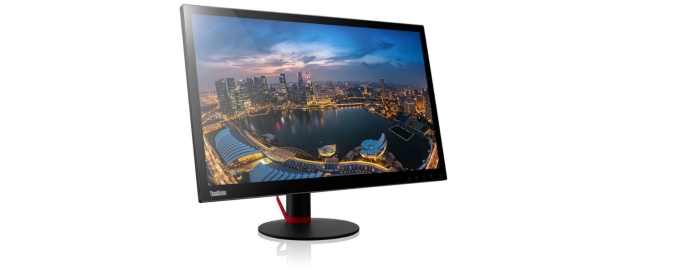
2014 looks like to be the year where 4K comes en mass to the market – or at least the high end and professional market to begin with. We might have to wait another year before the cheaper panels filter through the chain, but until that point, we can still all gaze in awe at what comes on the market. Lenovo is one of the manufacturers coming to the front with a 28” 4K (3840x2160) offering, although unlike the Dell version which is meant to be more mainstream than their higher end panels, Lenovo’s high end aims at the professional market with the 28 inch panel, the Pro2840m. Along with the resolution, we have a 5ms response time, 72% color gamut, DisplayPort, mDP, HDMI and MHL connectivity, three USB 3.0 ports and dual 3W speakers. Lenovo is promoting a true 10-bit color, and streaming capabilities via other digital devices. Backed by a three year warranty, the Pro2840m should be available in April for around $800. Source: Lenovo 
| ||||||||||||||||||||||||||||||||||||||||||||||||||||||||||||||||||||||
| 5:31p | D-Link at CES 2014: WiFi Router and Charger On-The-Go, WiFi Range Extenders too
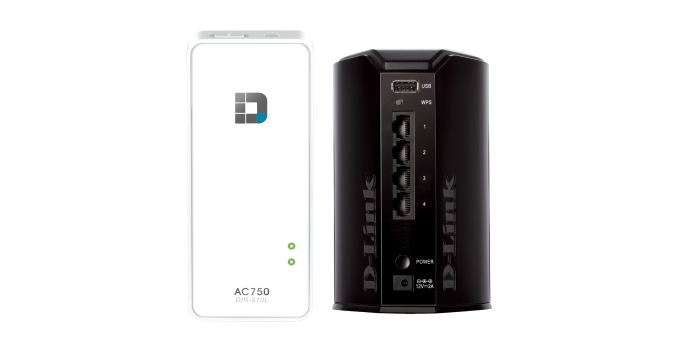
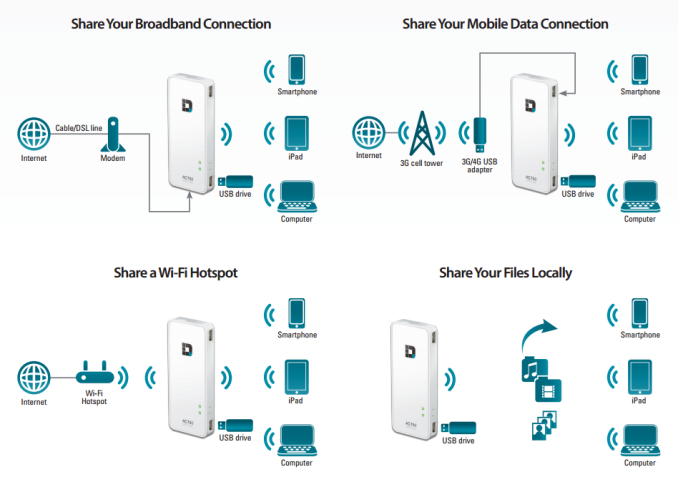
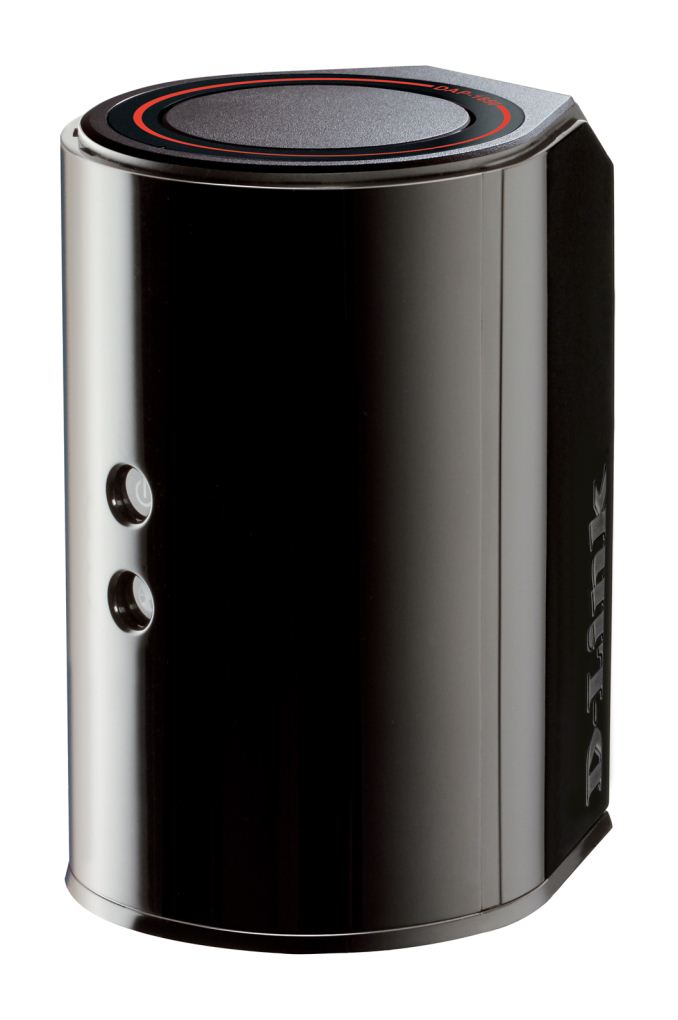
In the name of connectivity, local networks, data sharing and charging, D-Link are showcasing their DIR-510L WiFi AC750 Portable Router and Charger at CES this week. The principle behind the DIR-510L is simple: it looks like a normal 4000 mAh rechargeable battery pack with two USB ports, but it also has an Ethernet port to connect to a wired internet connection and share it with 802.11 b/g/n and 802.11ac devices up to 750 Mbps. The DIR-510L will also act like a WiFi Hotspot and connect to a WiFi router to extend the signal, or you can tether your 3G/4G device to the portable router and share that signal via 802.11ac. The device also accepts USB drives and the data on that drive can be shared with any connected technology. One of the USB ports is set to deliver up to 1A (rather than 0.5) to allow for quicker charging, and the DIR-510L will allow users to share files via USB while charging a device while acting like a WiFi Hotspot while connected to internet. It also offers firewall protection from public networks when connected through. With the UPnP nature of the device there is also a built-in DLNA server. If one of our on-foot D-Link are also promoting their stock of WiFi Range Extenders, which have all been updated to 802.11ac editions. The DAP-1650 and DAP-1520 deliver AC1200 (N300 + AC867) and AC750 (N300 + AC433) wireless speeds respectively while in dual band connectivity, and the DAP-1650 offers four Gigabit Ethernet ports as well. These fit into normal wall sockets and offer one-touch extender setup while the DAP-1520 weighs 104 grams (3.67 ounces). Both range extenders should be available in February, with the DAP-1650 at $90 and the DAP-1520 at $60. 
| ||||||||||||||||||||||||||||||||||||||||||||||||||||||||||||||||||||||
| 5:40p | Huawei Announces Ascend Mate 2 - 6.1 inch and 1.6 GHz Quad Core
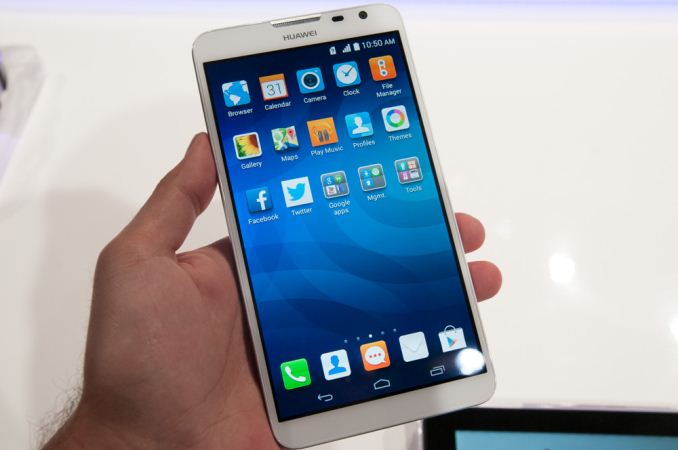
We’re here at Huawei’s 2014 CES press conference, where they’ve announced their newest smartphone, the Huawei Ascend Mate 2. The Ascend Mate 2 is the successor to the Ascend Mate launched at last year’s CES, and includes a 6.1-inch display with 1280x720p resolution. It’s Huawei’s refresh for its popular phablet form factor device, and although resolution doesn’t creep up at all, it's an LTPS based panel this time around. What the Ascend Mate 2 does include however is Category 4 LTE for downlink speeds of up to 150 Mbps versus the HSPA+ 21.1 that the previous gen Ascend Mate offered via an Intel XMM6260 modem. Huawei thankfully called out what SoCs are inside the Mate 2, and there's a split depending on what market. In the global market, Huawei is using MSM8928 from Qualcomm, inside China it's using Hisilicon's own SoC, the 1.6 GHz quad core ARM Cortex A9 based silicon, probably a rev of K3V2. MSM8928 is a Snapdragon 400 tiered SoC from Qualcomm with four Cortex A7s inside, clocked at up to 1.6 GHz, and Adreno 305 graphics at up to 450 MHz. I suspect the Chinese version of the Mate 2 is using Hisilicon's own modem (Balong) with Category 4 LTE onboard, and the global version is clearly using the Cat 4 LTE modem built into MSM8928 which supports all the usual air interfaces – CDMA/EVDO in addition to WCDMA, GSM, TD-SCDMA, FDD-LTE and TDD-LTE. The Mate 2 has a 4050 mAh battery (~15 watt hours assuming 3.8V nominal), and Huawei promises more than 2 days of uninterrupted use. The Mate 2 has a 5 megapixel front camera with 1.4 micron pixels and F/2.4 aperture, and the rear camera is an F/2.0 system with 13 MP Sony BSI sensor (second gen, so probably Exmor RS). Huawei also noted that the Mate 2 will launch in the US with banding for T-Mobile and AT&T in addition to the Chinese and other global markets.
Gallery: Ascend Mate 2 Hands On       Just got hands on with the Mate 2 as well, it's a very large phone to say the least, but still not entirely overbearing.

| ||||||||||||||||||||||||||||||||||||||||||||||||||||||||||||||||||||||
| 6:41p | Qualcomm CES 2014 Live Blog We're seated at Qualcomm's CES 2014 press conference, which is getting underway shortly at noon PT. Stay tuned for our live coverage. 
| ||||||||||||||||||||||||||||||||||||||||||||||||||||||||||||||||||||||
| 7:03p | ASUS CES 2014 Press Event Live Blog Stay tuned for live coverage from ASUS' famed CES press event! 
| ||||||||||||||||||||||||||||||||||||||||||||||||||||||||||||||||||||||
| 7:30p | ASUS at CES 2014: ROG 27” 1440p 120Hz G-Sync Monitor, Tablets, Smartphones, and a new Transformer Book This year at the Consumer Electronics Show, ASUS are attacking mobile in more ways than one. We have bodies/editors on the ground to get hands on with all the equipment on display, but ASUS provided a few apt press releases in advance for us. They include the PadFone Mini, the Transformer Book Duet TD300, the ZenFone 4, ZenFone 5, ZenFone 6, the VivoTab Note 8, the Padfone X and the ROG 27” Gaming Monitor, all with specifications, images, details and for a few, release date and pricing. 
| ||||||||||||||||||||||||||||||||||||||||||||||||||||||||||||||||||||||
| 7:47p | Intel CES 2014 Live Blog We just walked over from the Qualcomm press conference slash Q&A extravaganza to Intel's press conference, which should be getting underway at 1 PM PT. 
| ||||||||||||||||||||||||||||||||||||||||||||||||||||||||||||||||||||||
| 8:38p | AMD Demonstrates "FreeSync", Free G-Sync Alternative, at CES 2014
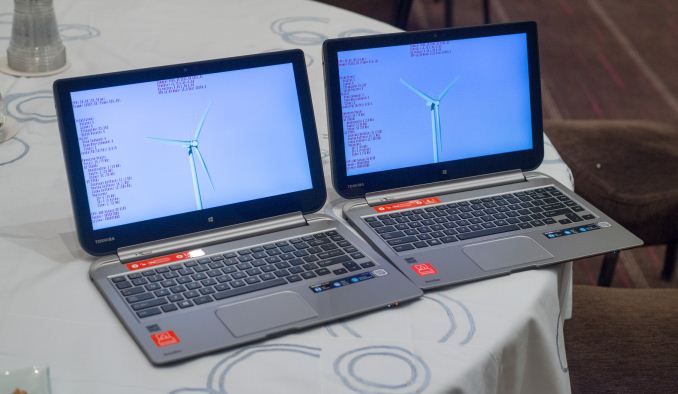
AMD has been relatively silent on the topic of NVIDIA’s variable refresh rate G-Sync technology since its announcement last year. At this year’s CES however, AMD gave me a short demo of its version of the technology. Using two Toshiba Satellite Click notebooks purchased at retail, without any hardware modifications, AMD demonstrated variable refresh rate technology. According to AMD, there’s been a push to bring variable refresh rate display panels to mobile for a while now in hopes of reducing power consumption (refreshing a display before new content is available wastes power, sort of the same reason we have panel self refresh displays). There’s apparently already a VESA standard for controlling VBLANK intervals. The GPU’s display engine needs to support it, as do the panel and display hardware itself. If all of the components support this spec however, then you can get what appears to be the equivalent of G-Sync without any extra hardware. In the case of the Toshiba Satellite Click, the panel already supports variable VBLANK. AMD’s display engines have supported variable VBLANK for a couple of generations, and that extends all the way down to APUs. The Satellite Click in question uses AMD’s low cost Kabini APU, which already has the requisite hardware to support variable VBLANK and thus variable display refresh rates (Kaveri as well as AMD's latest GPUs should support it as well). AMD simply needed driver support for controlling VBLANK timing, which is present in the latest Catalyst drivers. AMD hasn’t yet exposed any of the controls to end users, but all of the pieces in this demo are ready and already available. The next step was to write a little demo app that could show it working. In the video below both systems have V-Sync enabled, but the machine on the right is taking advantage of variable VBLANK intervals. Just like I did in our G-Sync review, I took a 720p60 video of both screens and slowed it down to make it easier to see the stuttering you get with V-Sync On when your content has a variable frame rate. AMD doesn’t want to charge for this technology since it’s already a part of a spec that it has implemented (and shouldn’t require a hardware change to those panels that support the spec), hence the current working name “FreeSync”.
AMD’s demo isn’t quite as nice as NVIDIA’s swinging pendulum, and we obviously weren’t able to test anywhere near as many scenarios, but this one is a good starting point. The system on the left is limited to 30 fps given the heavy workload and v-sync being on, while the system on the right is able to vary its frame rate and synchronize presenting each frame to the display's refresh rate. AMD isn’t ready to productize this nor does it have a public go to market strategy, but my guess is we’ll see more panel vendors encouraged to include support for variable VBLANK and perhaps an eventual AMD driver update that enables control over this function. In our review I was pretty pleased with G-Sync. I’d be even more pleased if all panels/systems supported it. AMD’s “FreeSync” seems like a step in that direction (and a sensible one too that doesn’t require any additional hardware). If variable VBLANK control is indeed integrated into all modern AMD GPUs, that means the Xbox One and PS4 should also have support for this. Given G-Sync’s sweet spot at between 40 - 60 fps, I feel like “FreeSync” would be a big win for AMD’s APUs. 
| ||||||||||||||||||||||||||||||||||||||||||||||||||||||||||||||||||||||
| 8:46p | Mushkin Launch ProSpec SSDs for Enterprise: SF-2582
All aboard the press release train and up next is Mushkin, launching their new range of ProSpec Enterprise SSDs based on the SandForce SF-2582 controller. Available in capacities from 100GB to 480GB, these drives are 128-bit AES hardware encrypted and implement Mushkin’s Power Safe Technology designed to provide enhanced power-loss data protection through hardware and firmware based features.
It seems a little odd for an Enterprise SSD to have only a three year warranty, and then decrease in IOPS as the size gets bigger. The sizes are most likely 128GB, 256GB, 384GB and 512GB each with 28% over provisioning, which is at least inline with standard enterprise products. Nevertheless, if we get one in to test, we will test it! Prices and release dates are as yet unannounced. 
| ||||||||||||||||||||||||||||||||||||||||||||||||||||||||||||||||||||||



_575px.JPG)
_575px.JPG)
_thumb.JPG)
_thumb.JPG)
_thumb.JPG)
_thumb.JPG)
_thumb.JPG)
_thumb.JPG)
_575px.JPG)
_thumb.JPG)
_thumb.JPG)
_thumb.JPG)
_thumb.JPG)















| << Previous Day |
2014/01/06 [Calendar] |
Next Day >> |