[Most Recent Entries] [Calendar View]
Wednesday, August 13th, 2014
| Time | Event | ||||||||||||||||||||||||||||||||||||||||||||||||||||||||||||||
| 4:51a | Samsung launches the Galaxy Alpha
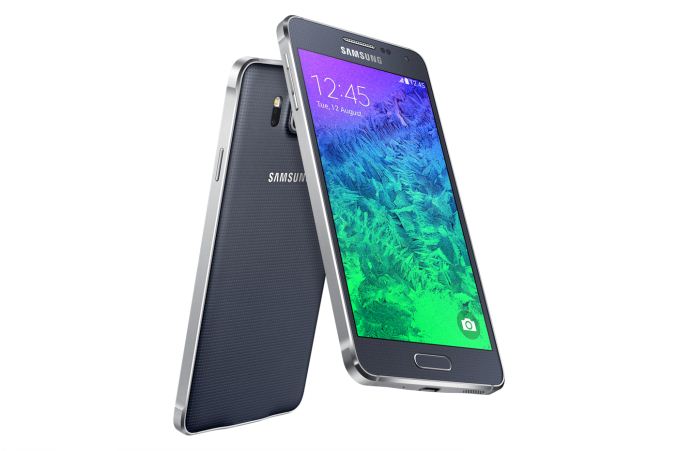
Samsung today announces the new Galaxy Alpha, a mid-range "premium" built device that creates a new range in Samsung's lineup. The Alpha totes a 4.7" 1280x720 AMOLED screen, coming with either a yet unnanounced Exynos 5430 SoC with 4 A15 cores running at 1.8GHz and 4 A7 cores running at 1.3GHz and a Mali T628MP6 GPU for the international market, or with a Snapdragon 801 SoC for select markets such as the US. Both versions come with 2GB of memory on board. A new 12MP rear sensor and a 2.1MP front camera can be found.
The device comes in a new aluminium frame, marking this as a change in build material from Samsung's usual plastic. The phone is extremely thin at only 6.7mm and weighing a lightweight 115g. The footprint of 132.4 x 65.5mm matches the 4.7" screen format of the phone. The back cover is removable and sports a 1860mAh replaceable battery. Strangely, Samsung omitted a microSD card slot in this device which comes at a standard 32GB of internal storage space. We find the same fingerprint and heatbeat sensor as on the S5, however it lacks the waterproofing of the former. It's shipping with Android 4.4.4 KitKat version with the same TouchWiz iteration as the S5. More interestingly the international version of the device should sport LTE-A category 6 with help of an Intel XMM7260 modem. This would be the first device announced with Intel's new LTE modem and mark a break from Qualcomm's dominance in the sector. The Alpha is an intriguing device that apparently to wants to fill in a gap in Samsung's lineup which has seen device size go up with each iteration of the S-series. The 720p screen, its slimness and design seems to target directly the iPhone instead of other high-end Android handsets, pricing should also end up in the higher end. Source: SamsungTomorrow | ||||||||||||||||||||||||||||||||||||||||||||||||||||||||||||||
| 7:30a | ioSafe 1513+ Review: A Disaster-Resistant Synology DS1513+ The 3-2-1 data backup strategy involves keeping three copies of all essential data, spread over at least two different devices with at least one of them being off-site or disaster-resistant in some way. It is almost impossible to keep copies of large frequently updated data sets current in an off-site data backup strategy. This is where ioSafe's disaster-resistant units come into the picture. Products such as the SoloPRO and the ioSafe N2 show how ioSafe has continued to innovate in this space. The ioSafe 1513+ is their most ambitious product to date, attempting to place Synology's most powerful 5-bay NAS unit inside a fire- and waterproof package. Read on for a closer look at the hardware and performance of the unit. | ||||||||||||||||||||||||||||||||||||||||||||||||||||||||||||||
| 3:05p | OCZ Launches ARC 100 Value SSD
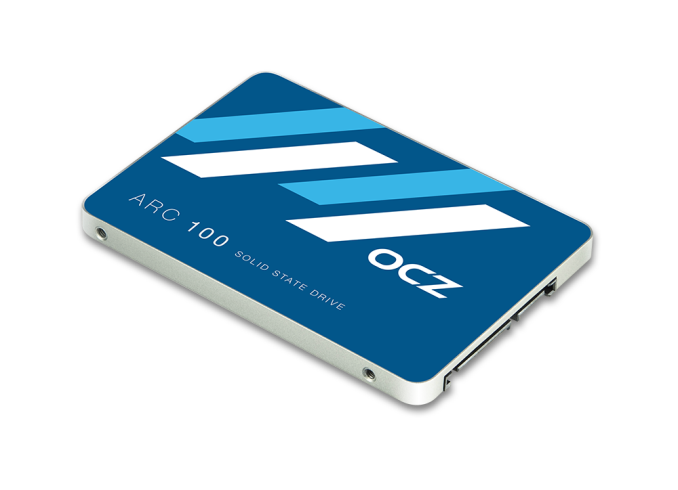
The release of the Vector marked as a change in OCZ's strategy. With a new CEO, OCZ's goal was to change the company's brand image from being a low-cost value brand to a higher-end, high performance and quality SSD manufacturer. For the first time, OCZ decided not to release a value version (Agility-level drive) of its Barefoot 3 platform and only focused on the higher-end market with the Vector and Vertex 4xx lineups. Almost two years later since the introduction of the Vector, OCZ is now finally comfortable with bringing the Barefoot 3 platform to the mainstream market and the ARC 100 acts as the comeback vehicle.
Similar to Vector 150 and Vertex 460, one of the main focuses in the ARC 100 is performance consistency and OCZ remains to be one of the only manufacturers that reports steady-state performance for client drives. The biggest difference to Vector 150 and Vertex 460 is in the NAND department as the ARC 100 utilizes Toshiba's second generation 19nm NAND, i.e. A19nm as Toshiba calls it. Despite the smaller process node NAND OCZ is rating the ARC 100 at the same 20GB of writes per day for three years as the Vertex 460, although the ARC 100 is slightly slower in performance and also drops bundled cloning software and 3.5" adapter. Given the smaller cell size of the A19nm NAND, OCZ is able to price the ARC 100 more aggressively. At higher capacities OCZ is able to hit the $0.50/GB mark and the ARC 100 is actually very price competitive with Crucial's MX100, which has been our favorite mainstream SSDs for the past couple of months. I am getting back from the US tomorrow and my review samples are already waiting for me at home, so you should expect to see the full review next week! | ||||||||||||||||||||||||||||||||||||||||||||||||||||||||||||||
| 3:46p | Razer Announces Chroma Keyboard, Mouse, and Headset
Today in Cologne, Germany at Gamescom 2014, Razer revealed their latest updates for their line of peripherals. Launching with a new feature dubbed Chroma, Razer announced three updated devices for the 2015/2016 timeframe: the BlackWidow Ultimate keyboard, DeathAdder gaming mouse, and Kraken 7.1 headset. Presumably these devices will be similar to the existing line of Razer peripherals, with the key difference being Chroma, which provides customizable multi-colored backlighting. The BlackWidow Ultimate keyboard is perhaps the most eye-catching of the three, and it appears similar to Corsair's RGB-backlit K70 and K95 keyboards with per-key lighting. The difference is in the details of course, and Razer uses their own custom Green/Orange switches, so the feel will be slightly different from the Corsair models. The DeathAdder and Kraken aren't quite as advanced, in that there are fewer backlights available – the scroll wheel and Razer logo on the DeathAdder are linked to the same color, while the ear cups on the Kraken are likewise linked. One interesting feature however is that all three devices can be synchronized via Razer's cloud-based Synapse software. Like other RGB backlit devices, Chroma in theory allows up to 16.8 million colors, though as we've noted before overlap among the colors means the "useful" palette is going to be more like 20-40 colors. Besides selecting individual colors, Razer offers several effects for colors as well. Spectrum cycling is for those that want to show the full rainbow of colors, while breathing causes the backlight to pulse one or two colors on and off every seven seconds. The BlackWidow keyboard offers several additional options, including the ability to customize each individual key and save/load templates optimized for various games. Reactive mode causes the individual keys to light up when pressed and then fade out with three time delays for fading to black (slow, medium, and fast), and finally there's a wave effect that cycles the colors on the keyboard in a wave. Razer has a web demonstration showing what the various effects look like, or you can watch the promo video on YouTube. Razer will also be providing an open Chroma SDK to allow game developers and users full access to the devices, providing the potential for an even deeper level of customization (e.g. reactive mode with multiple colors should be possible). Pricing for the devices has not been announced, but both the Chroma-enabled devices will be available starting in September 2014. The Chroma SDK meanwhile is slated for release in "late 2014".
| ||||||||||||||||||||||||||||||||||||||||||||||||||||||||||||||
| 8:44p | Samsung Announces Exynos 5430: First 20nm Samsung SoC
While we mentioned this in our Galaxy Alpha launch article, Samsung is finally announcing the launch of their new Exynos 5430 SoC. The main critical upgrade that the new chips revolve around is the manufacturing process, as such Samsung delivers its first 20nm SoC product and is also at the same time the first manufacturer to do so. On the CPU side for both the 5430, things don’t change much at all from the 5420 or 5422, with only a slight frequency change to 1.8GHz for the A15 cores and 1.3GHz for the A7 cores. We expect this frequency jump to actually be used in consumer devices, as the 5422’s announced frequencies were not reached in the end, being limited to 1.9GHz/1.3GHz in the G900H version of the Galaxy S5. Same as the 5422, both SoCs comes fully HMP enabled. A bigger change is that the CPU IP has been updated from the r2p4 found in previous 542X incarnations to a r3p3 core revision. This change, as previously in the year mentioned by Nvidia, should provide better clock gating and power characteristics for the CPU side of the SoC. On the GPU side, the 5430 offers little difference to the 5422 or 5420 beyond a little boost to 600MHz clock frequency for the Mali T628MP6. While this is still a planar transistor process, a few critical changes have been made that make 20nm HKMG a significant leap forward from 28nm HKMG. First, instead of a gate-first approach for the high-K metal gate formation, the gate is now the last part of the transistor to be formed. This improves performance because the characteristics of the gate are no longer affected by significant high/low temperatures during manufacturing. In addition, lower-k dielectric in the interconnect layers reduce capacitance between the metal and therefore increase maximum clock speed/performance and reduce power consumption. Finally, improved silicon straining techniques should also improve drive current in the transistors, which can drive higher performance and lower power consumption. The end-effect is that we should expect an average drop in voltage of about 125mV, and quoting Samsung, a 25% reduced power. In terms of auxiliary IP blocks and accelerators, the Exynos 5430 offer a new HEVC (H.265) hardware decoder block, bringing its decoding capabilities in par with Qualcomm’s Snapdragon 805. Also added is a new Cortex A5 co-processor dedicated to audio decoding called “Seiren”. Previously Samsung used a custom FPGA block called Samsung Reprogrammable Processor (SRP) for audio tasks, which seems to have been now retired. The new subsystem allows for processing of all audio-related tasks, which includes decoding of simple MP3 streams up to DTS or Dolby DS1 audio codecs, sample rate conversion and band equalization. It also provides the chip with voice capabilities such as voice recognition and voice triggered device wakeup without external DSPs. Samsung actually publicised a whitepaper on this feature back in January, but we didn’t yet know which SoC in question it was addressing until now. The ISP is similar to the one offered in the 5422, which included a clocking redesign and a new dedicated voltage plane. The memory subsystem remains the same, maintaining the 2x32-bit LPDDR3 interface, able to sustain frequencies up to 2133MHz or 17GB/s. We don’t expect any changes in the L2 cache sizes, and as such, they remain the same 2MB for the A15 cluster and 512KB for the A7 cluster. We'll be seeing the first devices shipping with this SoC in the form of the Galaxy Alpha beginning early September. | ||||||||||||||||||||||||||||||||||||||||||||||||||||||||||||||



| << Previous Day |
2014/08/13 [Calendar] |
Next Day >> |