[Most Recent Entries] [Calendar View]
Friday, August 29th, 2014
- Better quality 3D.
- Second analog stick.
- NFC built-in.
- Gyro sensor.
- Two new bumper buttons.
- 7 hour battery life.
- microSD support.
- Wireless PC backup support.
- HTML5 browser.
- CPU clock increase.
| Time | Event | ||||||||||||||||||||||||||||||||||||||||||||||||||||||||||||||||
| 8:00a | The State Of PC Graphics Sales Q2 2014
Every quarter, Jon Peddie Research analyzes the market for graphics and gives us a chance to see where the industry is at. The market for discrete graphics is seasonal, much like other segments of technology, so it is important to compare them not only to the most previous quarter, but more importantly to the same quarter from last year. Q2 is often a weak time in the discrete graphics industry, and 2014 was no exception. For the quarter, the market for graphics cards dropped 17.5% compared to Q1 even though the desktop PC market actually grew 1.3%. On a year-to-year comparison, the discrete graphics market dropped 17.6%, as compared to the desktop PC market as a while which fell only 1.7%. The seasonal drop was higher than the ten year average. The total number of Add-in boards (AIBs) shipped in Q2 was 11.5 million units, with AMD decreasing 10.7% from last quarter and NVIDIA decreasing 21%, however overall market share still shows NVIDIA holding strong at 62% compared to 37.9% for AMD. Remember this is for discrete graphics only with AIBs, so we will need to examine more data to get a feel for the entire market.
The attach rate of GPUs including integrated and AIBs was 139% which is up 3.2% from last quarter. 139% may seem too high, but practically all desktop, notebook, and x86 tablets ship with some form of integrated GPU, but many desktops and notebooks also have extra graphics, and some have more than one AIB attached as well, which is why the number is over 100%. 32% of PCs have discrete GPUs which means 68% of PCs sold are relying on integrated graphics. Looking at the total market for all PCs, the numbers shift quite a bit. Intel, which has all of zero discrete graphics cards for sale, commands an amazing 67.34% of the total GPU market. AMD, who trailed NVIDIA in the discrete GPU market owns 17.94% of the market once you combine in the integrated graphics. NVIDIA, being that they only sell discrete graphics, and based on only 32% of PCs even having discrete graphics, falls to third with 14.72%. Another data point we can use though would be the Steam Hardware and Software Survey. Steam, with over 75 million users, is far and away the largest gaming network on the planet. Every month, they collect opt-in anonymous data to get a feel for where the gaming industry is at. These kinds of data points would be very useful for developers to get a sense for where they can target the graphical fidelity of their upcoming games in order to hit their target market. On the Steam survey, the GPU manufacturer changes dramatically, with NVIDIA holding 50.93% of the market, Intel falling to 18.89%, and AMD holding the middle ground at 29.8%.
From the data, we can see some interesting trends. Integrated GPUs are unsurprisingly the bulk of the market. Intel is the volume king here, even though their integrated solutions are not as powerful as AMD APUs for graphics, but by the market share it appears that people are choosing CPU power and efficiency over GPU power for most devices. The majority of users who do not play any sort of graphical game can get by on just integrated graphics alone whether they are from AMD or Intel. Once you move to discrete cards, NVIDIA is a 2:1 seller of discrete graphics over the only other rival AMD. The greater than normal drop in AIBs when the PC market actually grew can most likely be attributed to an upswing in business PC sales which seems to be bringing the PC market back for the time being. Sources: Jon Peddie Research AIB Market | ||||||||||||||||||||||||||||||||||||||||||||||||||||||||||||||||
| 12:00p | The Intel Haswell-E CPU Review: Core i7-5960X, i7-5930K and i7-5820K Tested Today marks the release of Intel’s latest update to its Extreme processor line with a trio of Haswell-E models including Intel’s first consumer socketed 8-core product. This is the update from Ivy Bridge-E, which includes an IPC increase, a new X99 chipset, the first consumer platform with DDR4 memory, and a new CPU socket that is not backwards compatible. We managed to get all three CPUs ahead of launch to test. | ||||||||||||||||||||||||||||||||||||||||||||||||||||||||||||||||
| 12:01p | MSI X99 Motherboards Launched: XPower, MPower, Gaming and SLI PLUS
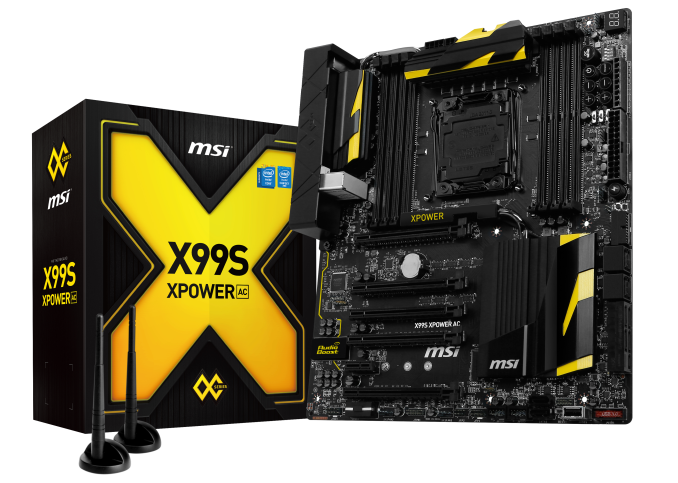
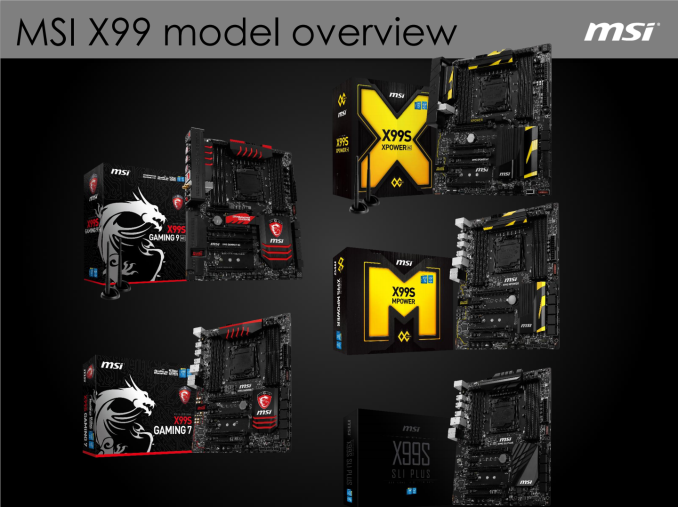
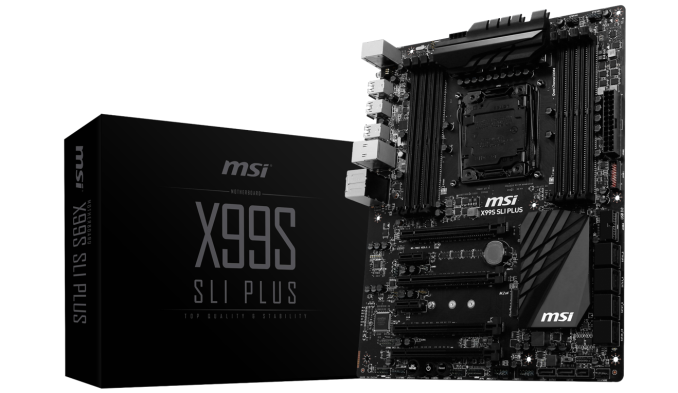
With the X99 and Haswell-E platforms being launched today, MSI is coming to market officially with four models on sale with another coming soon. We took a look at the MSI X99S SLI PLUS when it was leaked earlier this month, and I have since learned that the release price will be $230, making it a very attractive model at the lower end of the X99 pricing bracket.
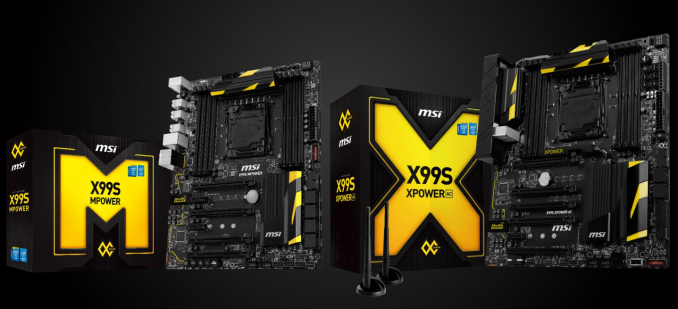
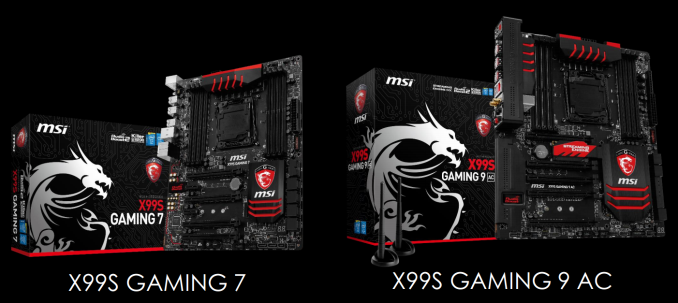
The other models from MSI are the X99S Gaming 9 AC, the X99S Gaming 7, the X99S XPower AC and the X99S MPower (the MPower being released later). You may notice that all these names start with ‘X99S’, which MSI says indicates the presence of SATA Express. It may be one of their defining naming characteristics going forward, but it seems that MSI is keen to support this storage technology in advance of retail drives coming to the market. MSI is also supporting ‘Turbo M.2’ on all its models, which means PCIe 3.0 x4 connectivity for future drives. Some motherboards will support up to 2280 sized drives, whereas others will go all the way to 22110. MSI is also keen to point out that all its motherboards will come with dual USB 3.0 headers.
The X99S MPower and X99S XPower AC are both members of the ‘overclocking certified’ motherboard segment that MSI has been developing over the past 12-18 months. Features for X99 XPower AC include a modified back plate for sub-zero copper-pot overclocking, a direct USB Type-A connector on the motherboard so users do not have to reach around to the rear, a set of easy buttons for fine tuning adjustments and PCIe disable switches to reduce unwanted electronic jitter. Interestingly MSI has included its Delid Guard should anyone want to de-lid their Haswell-E CPU, though this is short sighted as de-lidding Haswell-E will usually break the processor due to the bound epoxy being used.
The Gaming range will start with two models, both aiming at the high end. The gaming range for MSI has boosted its sales in more ways than one, particularly because as a company they adopted a styling that appealed to the gaming community. With aesthetics in mind, these motherboards will be using a cleaner PCB look with the Gaming 9 AC using protective covers to keep the feel of the board consistent. The Gaming 9 AC is the more interesting model of the two here, with its inclusion of an AVerMedia Streaming Engine in a mini-PCIe slot. The goal of this add-in card is to provide an FPGA like device that handles streaming data conversion rather than relying on the CPU which might take away the frame rate of the game being played.
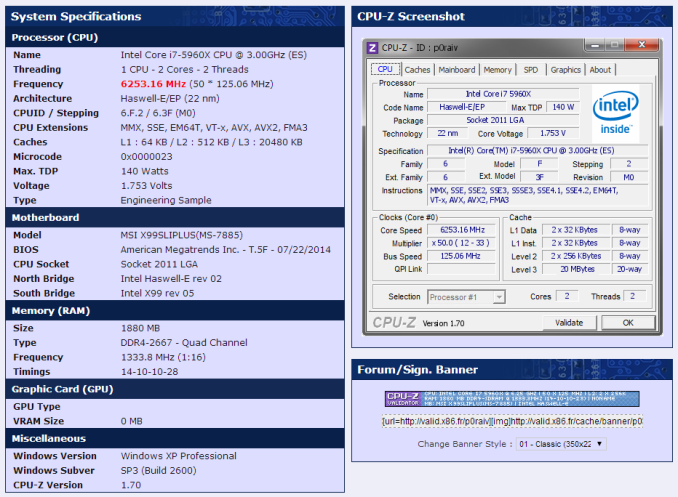
The sole member of the ‘classic’ range from MSI at launch will be the aforementioned X99S SLI PLUS, which will be one of the first X99 motherboards we review for the platform. MSI is keen to point out that the SLI PLUS, the MPower and XPower AC are all certified with a number of Xeon E5 v3 processors for prosumers. The SLI PLUS has also been put through its paces by extreme overclockers and hit 6253 MHz:
The final pricing list at launch is as follows: MSI X99S Gaming 9 AC: $430 / £300
Gallery: MSI X99S Gaming 9 AC
      MSI X99S XPower AC: $400 / £280
Gallery: MSI X99S XPower AC
      MSI X99S Gaming 7: $290 / £200
Gallery: MSI X99S Gaming 7
     
Gallery: MSI X99S MPower
      MSI X99S SLI PLUS: $230 / £160
Gallery: MSI X99S SLI PLUS
      I kind of want MSI to come to market with a micro-ATX motherboard as well, and I have no doubt that a Gaming 3 or Gaming 5 might be on the way. It would be interesting if we saw an ECO MSI X99 board, in white or green, although power efficiency is not one of Haswell-E’s strengths. We hope to review most of these motherboards during their life cycle, particularly that Gaming 9 AC. First up will be the SLI PLUS, so stay tuned for that review. | ||||||||||||||||||||||||||||||||||||||||||||||||||||||||||||||||
| 12:02p | Corsair Launches DDR4-3300, DDR4-3200 and DDR4-3000 Memory Kits
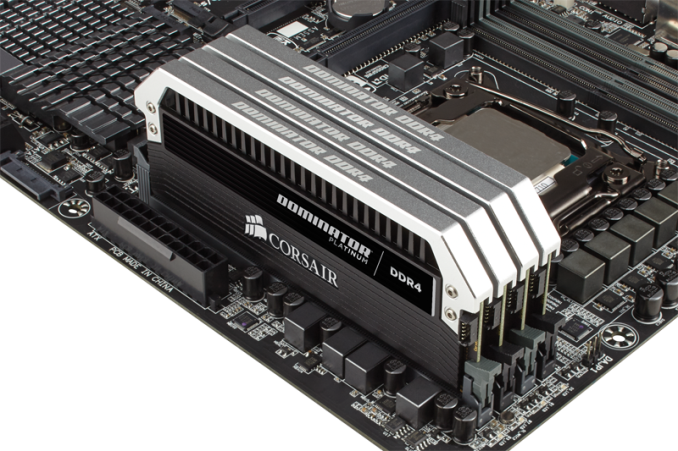
While the JEDEC standard for DDR3 slowly creeped up from 800 MHz to 1600-1866 MHz, the new DDR4 modules will come out of the gate at DDR4-2133 CAS 15. Similarly with DDR3, the JEDEC specifications seemed a little slow for the memory manufacturers who are all keen to get more market share than anyone else. To that extent, Corsair in conjunction with ASUS is launching today the highest specification DDR4 announced to date. The king on the plate is a DDR4-3300 Dominator Platinum kit, designed to work with all motherboards but especially with the ASUS X99 Deluxe and Rampage V Extreme motherboards. Corsair and ASUS have formed a partnership to expedite validation on ASUS’ high end motherboards along with fine tuning: I imagine we might see a specific memory profile or two on the Extreme for users wanting to overclock these particular modules.
One of the interesting things to note is that DRAM module manufacturers all bid on batches of JEDEC or near-JEDEC specification ICs. It is then up to them to bin the ICs (either automated or by hand) to place on the modules. The higher the specification of module, typically the more ICs (or the more batches) the system has to go through, which in turn puts more pricing pressure on the kits. Pricing for these modules will be higher than most, and due to their timings will initially only be available in 4x4 GB kits. We will find out the pricing and the sub-timing when Corsair puts the kits on its website.
The 3000 and 3200 MHz kits will play up against the modules from other DRAM manufacturers, but it would seem that Corsair is first to market with the 3300 MHz modules. We plan on testing a fair amount of DDR4 in the next month, especially as it forms a significant cost of a Haswell-E build.
Additional: Specifications for the 4x4GB kits have just come in, giving:
DDR4-3000 at 15-17-17-35, 1.35V (CMD16GX4M4B3000C15) | ||||||||||||||||||||||||||||||||||||||||||||||||||||||||||||||||
| 12:03p | ASRock on X99 Motherboards: WS, Extreme, Killer, OC Formula and mATX Inbound
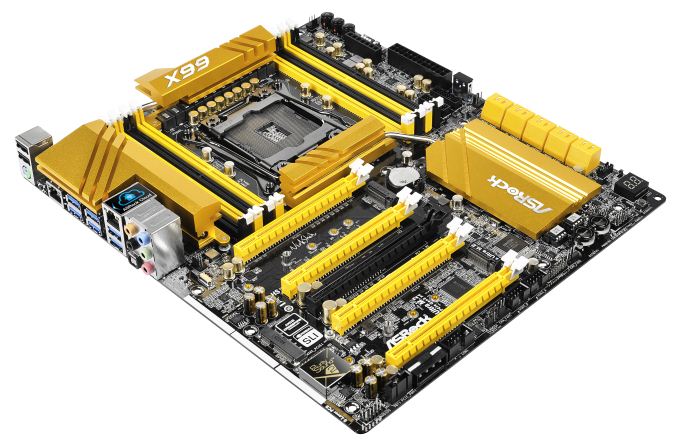
It is safe to say that all the motherboard manufacturers have been ambitious for the X99 launch. While I recently gave kudos to one of the others for supporting eight motherboards at launch, it would seem that ASRock is keen to top that with nine models, including two microATX sized motherboards. One of our most popular X79 reviews was the comparison between the X79 Extreme4 and the X79 Extreme4-M. ASRock has continued this duality trend by offering an X99 Extreme4 and an X99M Extreme4 (notice the small nomenclature change). This microATX part pairs off with the X99M Killer we wrote about in the last week.
The top of the mainstream range will be the X99 WS, a motherboard designed to support 160W Xeon E5 v3 CPUs as well as up to 128 GB of ECC/RDIMM memory. In light of other workstation boards from other manufacturers, the WS will be an E-ATX form factor with dual Intel network ports, extensive heatsink arrangement, eSATA, Ultra M.2, a twelve phase 60A power delivery and support for five-way PCIe 3.0 devices. The WS naming should be indicative of extensive testing with prosumer add-in cards, such as RAID, Thunderbolt and others. ASRock has also kept the z-height to a minimum to allow the motherboard to fit into a 1U chassis.
It would seem that ASRock is avoiding SATA Express for their X99 products, in contrast to MSI who is putting it on every model. Similarly to MSI though, the overclocking range also gets an update from ASRock, with the X99 OC Formula we reported on previously:
Aside from the superhydrophobic Conformal Coating that makes its way over from previous generations, ASRock’s in house overclocker Nick Shih has designed the motherboard to support up to 1300W of CPU power. In our overclock tests with the i7-5960X, we found the CPU can consume around 350-400W when approaching 4.7 GHz, so understandably for extreme overclockers moving above 5.5 or 5.7 GHz, the extra headroom will be needed. The OC Formula is also aimed at 24/7 overclocked builds, with support for ten SATA devices, two M.2 devices (one PCIe 3.0 x4, one PCIe 2.0 x4) and four-way GPU arrangements. ASRock’s Gaming range seems to have dropped the Fatal1ty part from the SKU name, but still adorns the motherboard with the logo:
The gaming range will have three models at the start – the X99 Professional, the X99X Killer and the X99M Killer. These are aimed at the gaming crowd for 4-way, 3-way and micro-ATX respectively, with the last one having one-DIMM per channel due to the reduced motherboard size. All these boards will support dual network ports, one Intel and one Killer, as well as the Fatal1ty mouse gaming port, 15 micron-gold connectors, 2oz copper PCB inner layers and extra-large aluminium heatsinks. Each Gaming motherboard will also come with a 3-month subscription to the XSplit broadcasting software. ASRock’s X99 microsite is currently live, and US pricing is as follows:
X99 WS: $324 The other motherboards are set to launched thought September. | ||||||||||||||||||||||||||||||||||||||||||||||||||||||||||||||||
| 12:04p | ASUS X99 Launch: Rampage V Extreme, X99-Deluxe, X99-A and X99-Pro
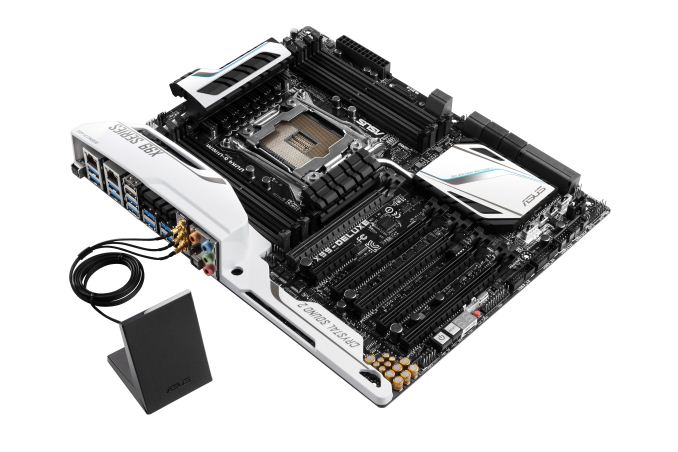
The launch today is one of the biggest in the last few years, with DRAM, CPU and Chipset all getting a refresh. Understandably ASUS is getting in on the action, and they sent over their PRs detailing what they have in store. The primary mainstream model is the X99-Deluxe, which we have in for our initial X99 coverage (stay tuned for that), but it takes a significant detour from previous ASUS color schemes. Rather than the gold or grey of recent times, here we go with a black and white livery.
Aside from dual SATA Express, dual Intel NICs, a vertical M.2 x4 arrangement and the Crystal Sound 2 shield around the audio and rear panel we also get a tri-stream 802.11ac setup included. This makes the X99-Deluxe the first consumer motherboard to come with a 3T3R shipped, and makes sense given that the Deluxe is to be the flagship ‘mainstream’ X99 model.
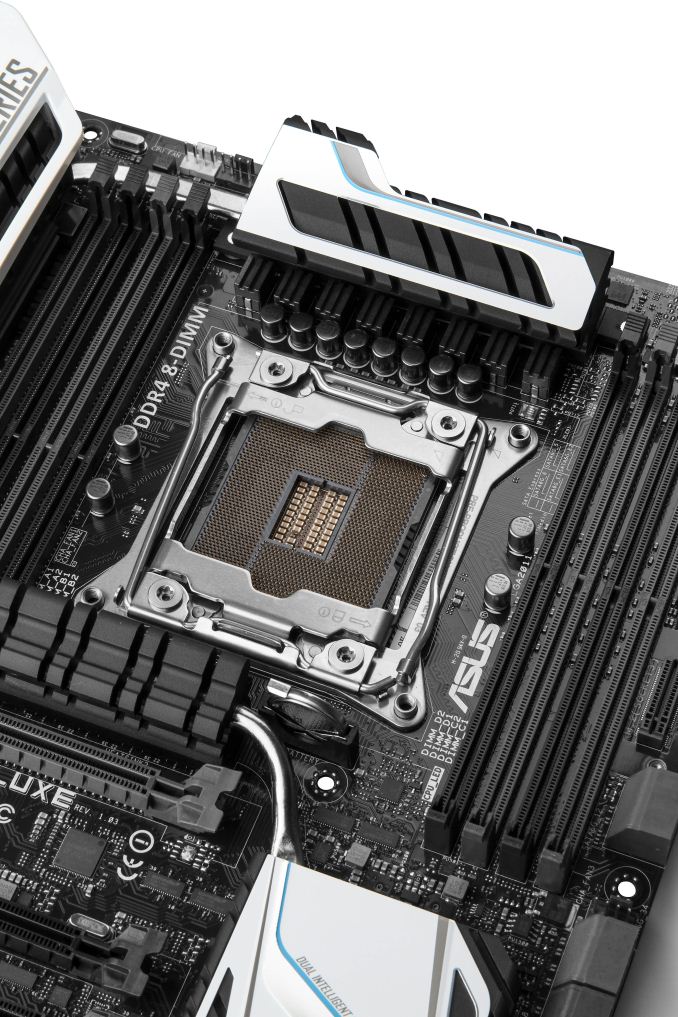
One of ASUS’ new features is a patent-pending OC socket that contains extra pins to connect to normally unused pads on the Haswell-E CPUs. Via propriatery circuitry, ASUS is expecting this innovation to lead to higher memory frequencies, lower latencies and stability while overclocking.
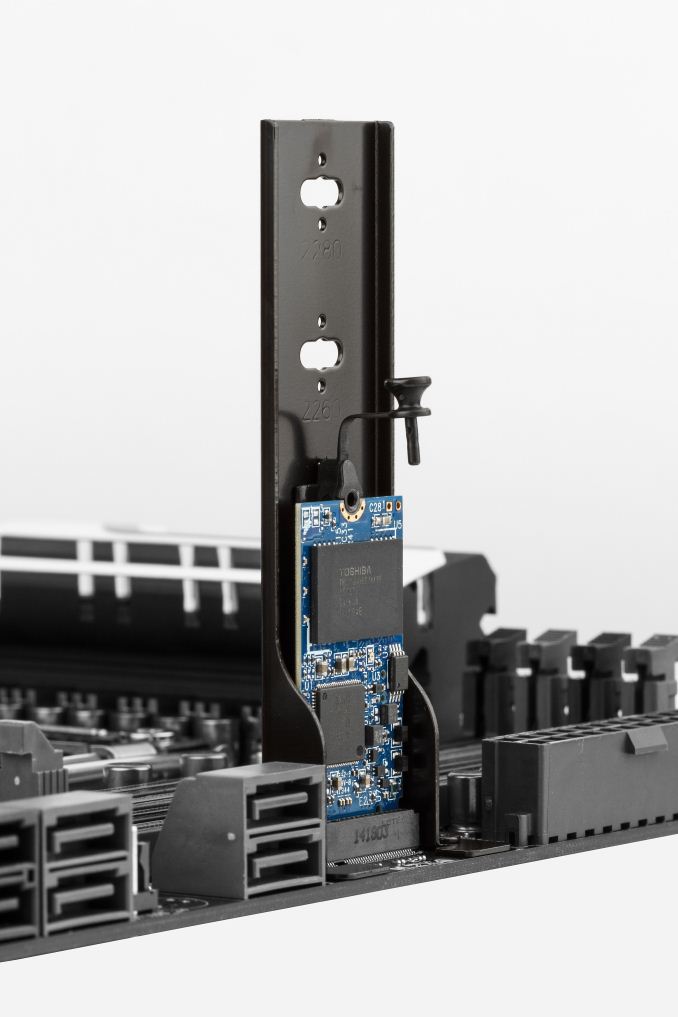
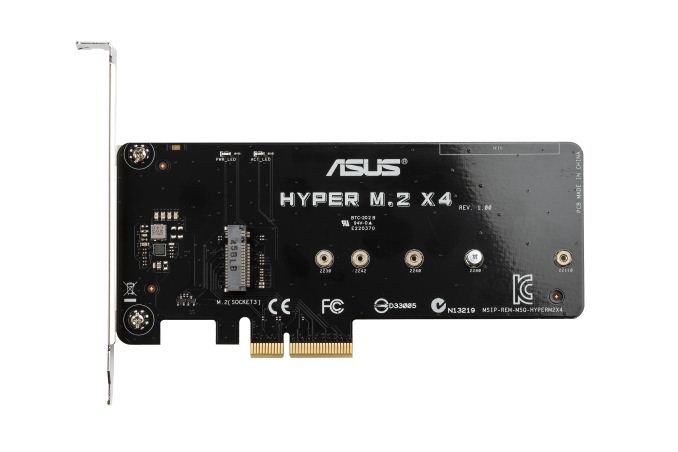
Due to the large space requirements of M.2, ASUS has decided to turn it vertical with an included bracket to support up to full length M.2 cards. For most users in a case this should not be an issue, but it is a good way to save precious PCB space for other features. The system also comes with an M.2 to PCIe converter card, allowing users to add a second M.2 card:
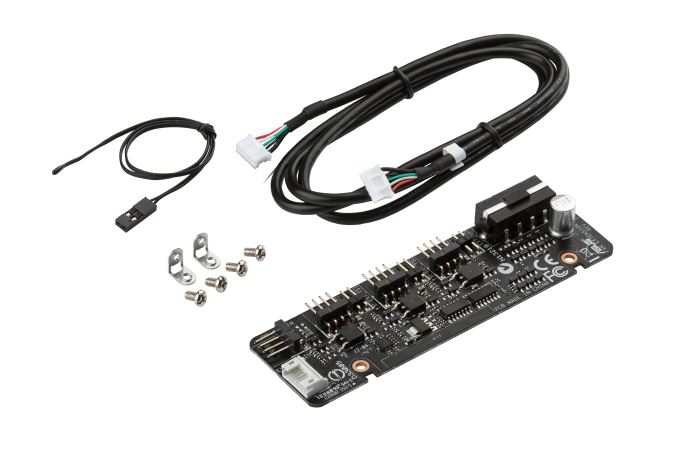
Also out on an extra daughter board are a series of fan headers on a controller card, useful for placing them where you need them in a case. These extra fan headers, like those on board, will be DC and PWM compatible.
Another new feature that ASUS likes to mention is the multi-GPU switch on board. For those users who have two or three GPUs, this switch will light up an LED next to the ports you need to use. It is a simple idea that negates having to look at the manual. We have the X99-Deluxe in for review, so check that out when it gets published. The ASUS X99-Deluxe will be available from launch at an MSRP of $400. ASUS is planning to launch their X99-A at $280 in early September, and the X99-Pro in October, price still to be determined. For both of these boards we are waiting on images to see what they will be like.
Gallery: ASUS X99-Deluxe
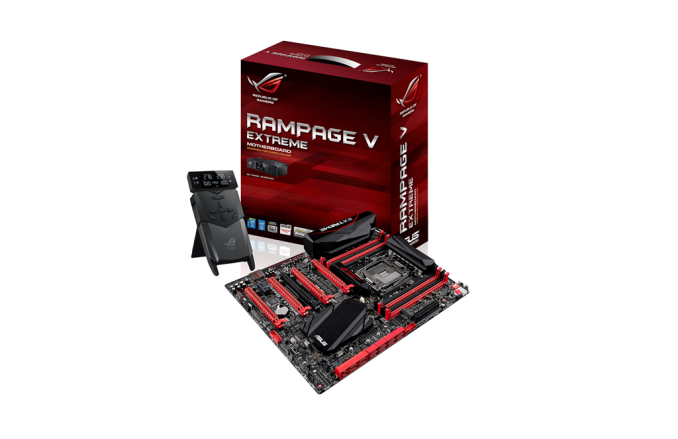
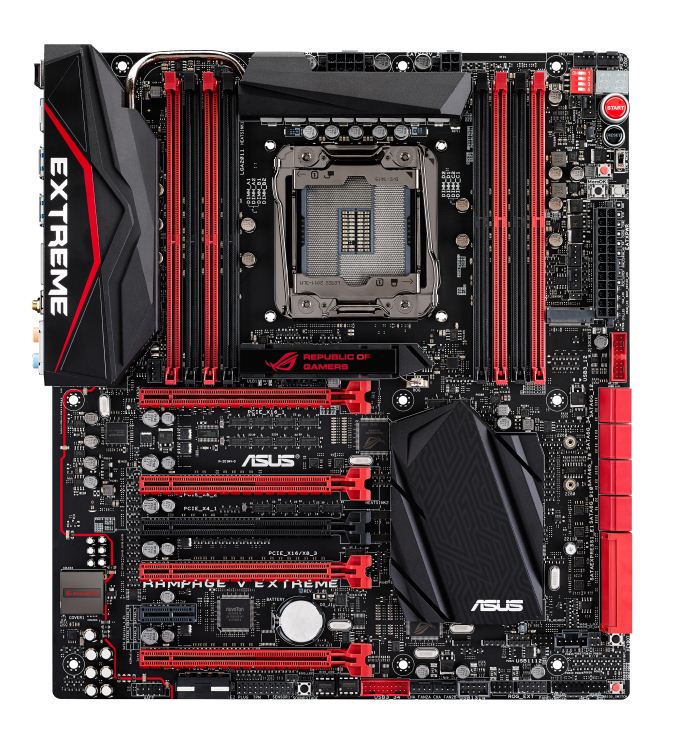
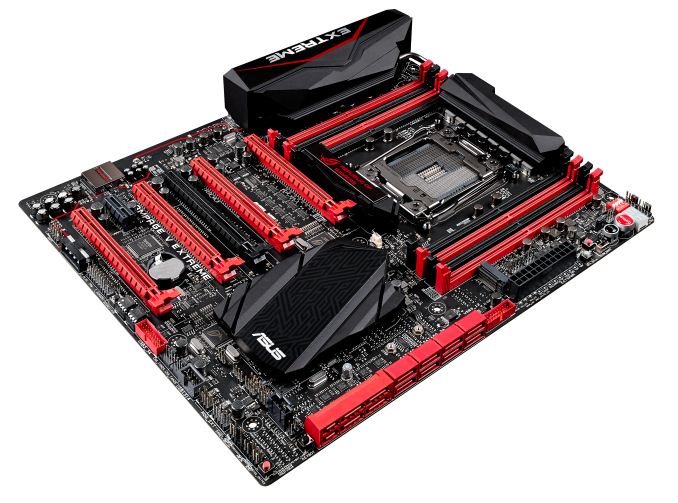
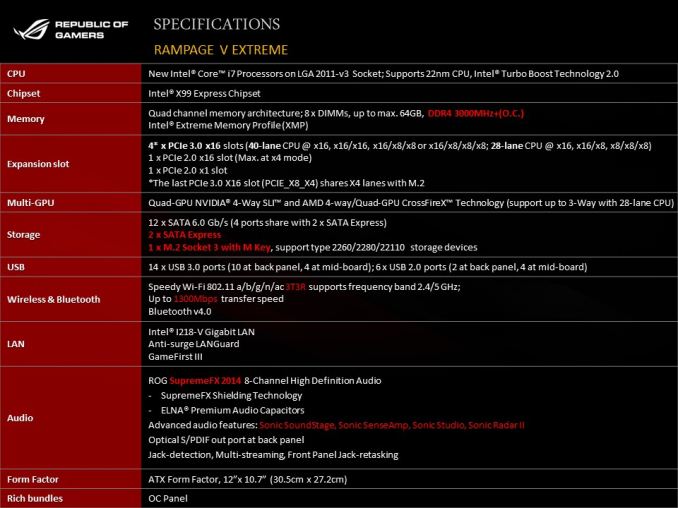
      Also on the cards for launch day is the highly anticipated ASUS ROG Rampage V Extreme motherboard. Users who follow the industry will know that Z97 never received a Maximus VII Extreme model, and the Rampage V Extreme is the reason why: because ASUS sees the Extreme line as the top of the top, when a major socket release comes around it requires extra time and effort to ensure day one satisfaction.
Aside from the big EXTREME on the rear panel, the red and black make the system look relatively normal. We see an eight-phase power delivery with a full assortment of DRAM slots. Next to these on the right is an M.2 slot, supporting full side 110mm drives. The SATA ports look extensive due to the dual SATA Express included.
There is the header for the included ROG OC Panel on the bottom of the motherboard, as well as the Thunderbolt header and a button for ASUS’ new Keybot system. At the top of the motherboard are the voltage check points, an LN2 mode header, a slow mode switch, the MemOK button, a Retry button and the usual array of power/reset buttons alongside a two-digit debug. ASUS is keen to point out that the power delivery has been upgraded to a PowIRstage IR3555 design with user-controllable VRM switching under Extreme Engine DIGI+ IV. ASUS has equipped the motherboard with SupremeFX audio and their SoundStage functionalisty. Additional PCIe power comes via a molex connector, and the system has two extra USB 3.0 headers for good measure. The TPU and EPU custom ICs from ASUS feature on the Extreme, making good use of the 5 Way Optimization software included.
The X79 based Rampage IV Extreme was a best seller for that platform, and ASUS is hoping that the Rampage V Extreme can do similarly well. ASUS is also reaching out to aid overclockers, especially with fine-tuning the recently announced Corsair DDR3-3300 Dominator Platinum modules specifically for motherboards like the Rampage V Extreme. The Extreme should be out today at an MSRP of $500.
Gallery: ASUS ROG Maximus V Extreme
      | ||||||||||||||||||||||||||||||||||||||||||||||||||||||||||||||||
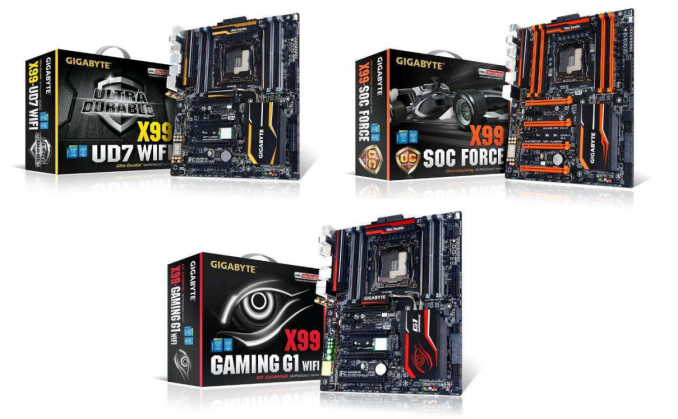
| 12:05p | GIGABYTE X99 Motherboard Launch: Eight Models from X99-UD3 to G1 WIFI and SOC Force
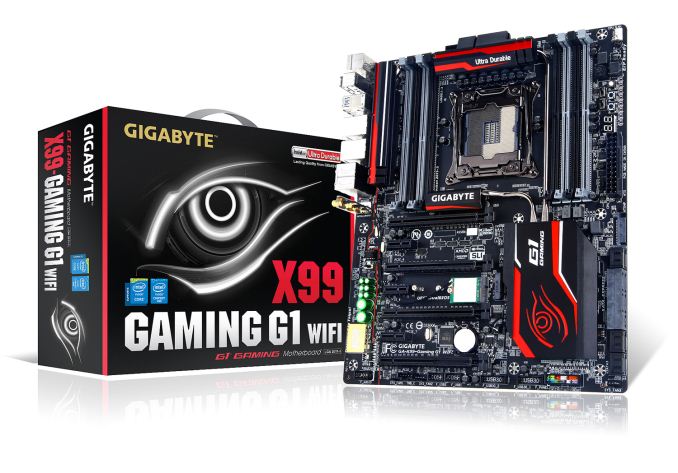
In previous generations, GIGABYTE has often been ambitious with the number of models it produces and supports. X99 is no different, so while the other manufacturers have four or five models coming through launch and September, GIGABYTE is starting with eight. These are split into three categories: Gaming, OC and Ultra Durable (aka ‘channel’). The gaming line will be headed by the X99-Gaming G1 WiFi, an E-ATX motherboard aimed at four-way GPUs and as much functionality as possible. This means dual network ports (Intel + Killer), 2T2R 802.11ac WiFi, the Creative Sound Core 3D audio codec, AMP-UP audio, ten SATA 6 Gbps ports, twelve USB 3.0 ports, two M.2 ports (One 2.0 x4, one 3.0 x4), dual DAC-UP for clean USB power and the styling to complement GIGABYTE’s brand of gaming graphics.
Interestingly enough GIGABYTE is going with sockets and slots with a higher gold content than standard. In previous generations we saw 15-micron gold pin connectors being advertised, however for X99 the advertising point has doubled to 30-micron. The aim of more gold in the socket and pins is to stave off corrosion in extreme environments as well as provide a path of lower resistance for signalling.
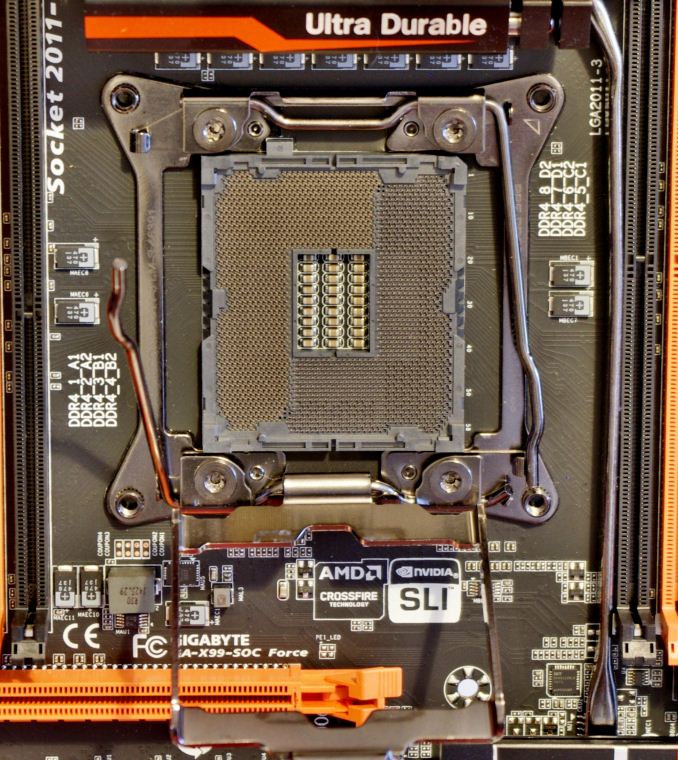
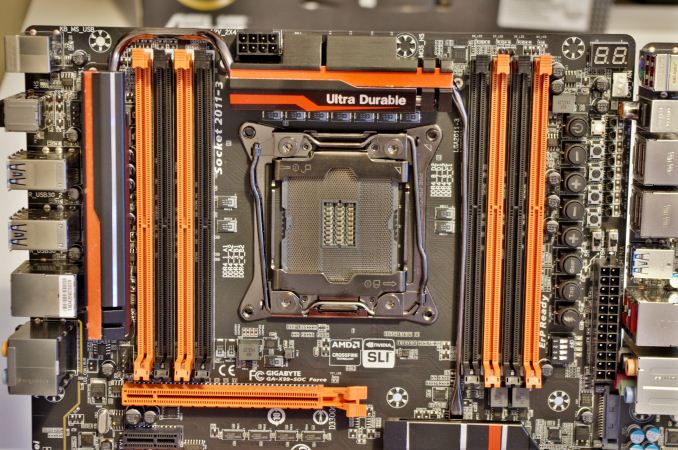
Also in the gaming line up are the Gaming 7 WiFi and the Gaming 5, which are both cut down versions of the Gaming G1. The Gaming 7 is still E-ATX but cheaper due to the lack of heatpipes connecting the heatsinks, and the Gaming 5 uses a single Killer network interface with fewer USB 3.0 ports and no WiFi connectivity. There is only one model in the for GIGABYTE’s X99 OC range so far, the X99-SOC Force. This is designed by GIGABYTE’s in-house overclocker HiCookie, with help from overclockers like Sofos and Dinos22 to add in more support for extreme system builds. The SOC Force keeps the orange and black color scheme, using an Intel NIC with Realtek ALC1150 audio with AMP-UP. The main functionality for the overclocking boards is with the add-in buttons on the side allowing for easy adjustment under extreme conditions:
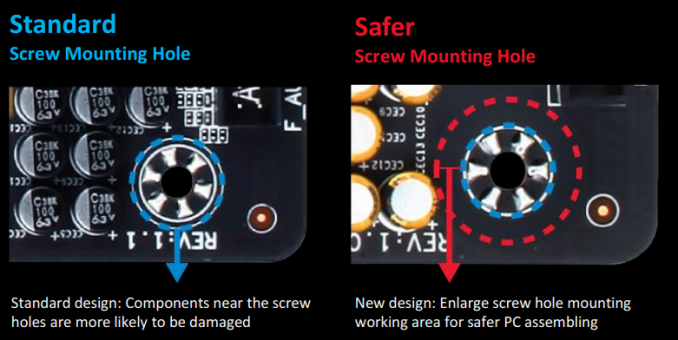
Going by HiCookie’s facebook page, it would also seem that an LN2 (liquid nitrogen) version is in the works for DDR4 memory overclocking. These OC versions also include features like the 30 micron gold connectors, M.2, SATA Express and USB 3.0 support. Previous OC boards have incorporated a USB connector on the board itself, however due to the chipset SATA ports this is not possible. GIGABYTE is experimenting with a new feature to help users attach the board to the case, by expanding the clean area around the screw holes:
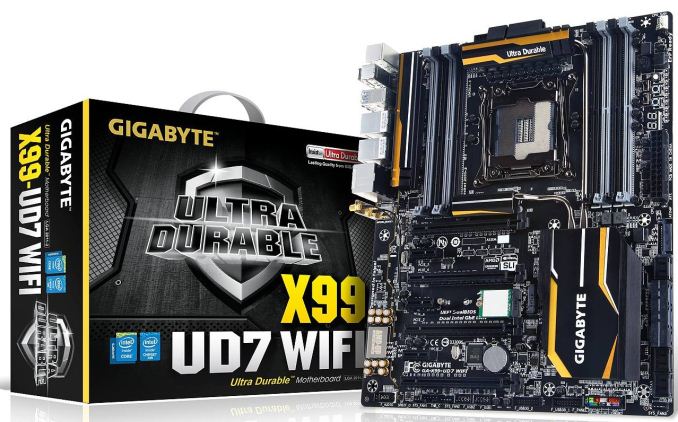
In the Ultra Durable line, GIGABYTE plan to release four models: the X99-UD7 WiFi, the UD5 WiFi, the UD4 and the UD3. As you can imagine this is a scaling from high end to low end, with the UD3 sporting single DIMM per channel but still focused on four-way gaming platforms. The WiFi models use dual Intel NICs along with 2T2R 802.11ac solutions, while the UD5/UD3 are single Intel network port enabled only. All four boards have dual M.2 and SATA Express as well as Realtek ALC1150 audio.
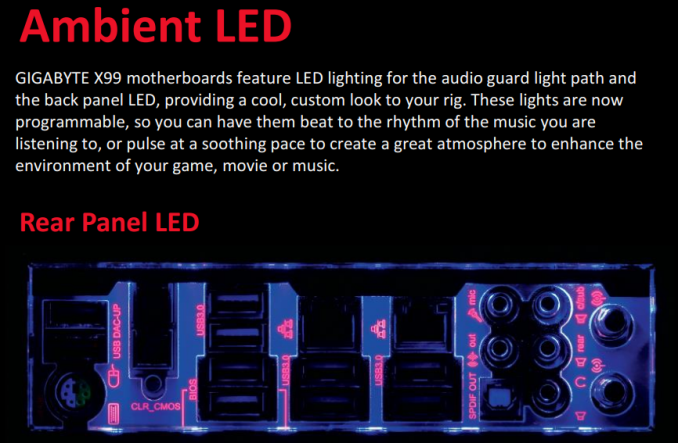
The main differences between the models will be in the WiFi/network connectivity, USB ports, heatpipe design and power delivery. All GIGABYTE models should be coming with an ‘ambient LED’ rear panel which causes the rear bracket to light up:
We are waiting on a full list of MSRPs for the North American market, and will update when we have the information. | ||||||||||||||||||||||||||||||||||||||||||||||||||||||||||||||||
| 4:47p | A Quick Look at the GS5 LTE-A Subpixel Layout
While it was easy to make an educated guess that the Galaxy S5 LTE-A Broadband had a PenTile subpixel layout to support the higher pixel density, I didn't get visual confirmation of this until now. While this picture is rather boring, it's much more interesting to see the display when turned off.
There are a few observations to be made from this photo. While it definitely looks disconcerting and creepy to some, it's possible to make out that there's something set in between the green subpixels when viewed diagonally. This appears to be where the transistors are placed to control a given subpixel. It also seems that the deposition process isn't perfect, as there's noticeable variance in shape and size among subpixels of a given color. This probably explains why the display isn't quite uniform when viewing it at near-black levels. It also appears that there may be an upper bound to how tightly Samsung can place two distinct emitter materials together, as this arrangement has noticeable levels of dead space in between subpixels. In order to better see the full picture, I've included a short gif of the display turning on and off.
| ||||||||||||||||||||||||||||||||||||||||||||||||||||||||||||||||
| 6:30p | Alienware Reveals New Area-51 Design
In what has to be one of the most unique designs ever, Alienware announced the revamped Area-51 model which features a triad-designed chassis. True to their name, Alienware has always had a desktop case that appeared to be from another world, but the new triad version is the most interesting yet in my opinion.
According to Alienware, the design of the case is for both thermal management, and ergonomics. Though we will need to wait for reviews to see how they accomplished both, looking at the angled front of the case does make it seem easier to use if the tower is on the floor like my own PC, but with a case so unique, you may want to keep it on your desk just to admire it. Another ergonomic improvement is the case is designed to be pivoted forward to allow easier access to the rear connections, which might work quite well. The case is also designed to be easy to get into for system upgrades in the future. The second goal, according to Alieware, is thermal management, and here we will just have to wait and see how it performs. The claim is that the larger area at the rear makes it easier for hot air to escape. Internal cable management is also claimed to not impede airflow any more than necessary, but any system with the cost of an Alienware should have good cable management anyway. The unique shape of the case also does not get in the way when it comes to graphics card installation, with the new Area-51 supporting up to three full-length double-wide GPUs, or up to quad-GPUs assuming smaller cards are obtained. According to the manufacturer, this new Area-51 can then support up to three Ultra HD (4K) monitors for a very immersive experience and an overall resolution of 11520x2160.
The announcement today of the Area-51 was no accident, with the new model featuring the Haswell-E processor with up to 8 cores, and the X99 chipset, both which were just revealed today. Other notable features is support for up to 32 GB of RAM, a 1500 watt power supply, both SSD and HDD, plus 802.11ac wireless. Finally, on the software end, the Area-51 comes with Command Center 4.0 which allows both overclocking and customization of the case lighting with up to twenty colors in nine zones to make the device your own. I used to own an Alienware M11x R2, and I have to admit one of the coolest things about it was being able to customize the color layout of the keyboard and other lights, and you can also have per-user customizations so that everyone has their own. Pricing and availability are not yet known, with the system only as “Coming Soon” so if you are in the market for an OEM gaming system, be sure to check this one out.
Source: | ||||||||||||||||||||||||||||||||||||||||||||||||||||||||||||||||
| 8:45p | Nintendo Announces the New Nintendo 3DS and 3DS LL
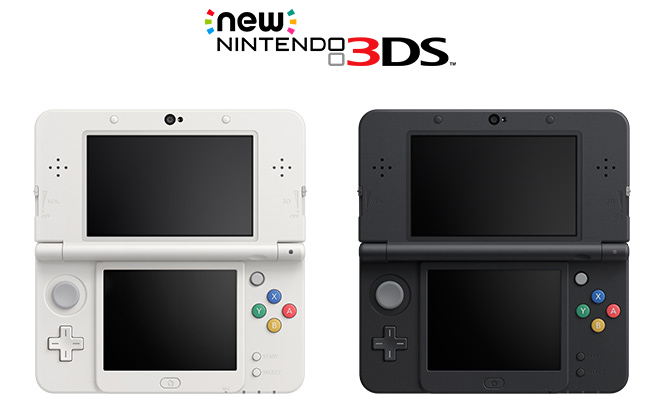
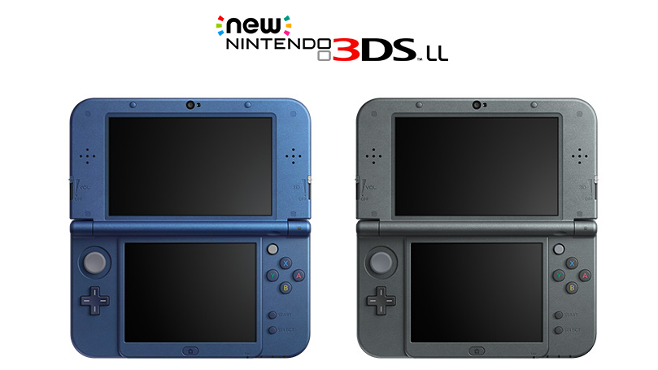
Earlier today Nintendo announced an updated version of its Nintendo 3DS handheld gaming console. It's been over 3 years since the launch of the original 3DS, and with Nintendo taking fire from gaming capable smartphones an update to the 3DS is definitely necessary. The new models sport updated form factors and improved specifications. The new Nintendo 3DS replaces what is now the old Nintendo 3DS, and it's slightly thicker, larger, and 18 grams heavier than its predecessor. The new Nintendo 3DS LL (XL internationally) replaces the old Nintendo 3DS LL and it's slightly thinner, larger, and 7 grams lighter than its predecessor. Both models have increased display sizes which explains the increase in dimensions for both of them. Both models feature secondary ZL and ZR triggers as well as a secondary analog control stick, which addresses control problems that Nintendo had to address with the Circle Pad Pro accessory offered for the original 3DS. Nintendo claims that the new models have faster processors and better camera tracking to improve 3D when looking at an angle. The new 3DS and 3DS LL also include support for NFC and shift from full sized SD support to MicroSD. Nintendo's entire list of improvements is laid out below.
According to some investigation done by 3dbrew, the internal amount of fast-cycle RAM (FCRAM) in both models has been doubled from 128MB to 256MB. An additional 4MB of VRAM was also discovered. Nintendo has also announced a line of faceplates that can be installed on the new 3DS and 3DS LL. These range from various patterns to pictures of iconic Nintendo characters, and cost between 1000 and 1500 yen each.. The new Nintendo 3DS and 3DS LL will be available on October 11th in Japan for 16000 and 18800 yen respectively. A launch in Europe and North America can be expected for 2015. Source: Nintendo via Crave Online | ||||||||||||||||||||||||||||||||||||||||||||||||||||||||||||||||
| 9:15p | PlayStation Plus September 2014 Games Preview
September is only a few days away, which means it is only a few days before the next round of games become available at no cost to PlayStation Plus members. Once again, two of the free games will be brand new to the PlayStation Store which is great perk for PlayStation owners. PlayStation 4Velocity 2X
The first game for PS4 owners is one of the games that is brand new to the store. Velocity 2X is a sequal to Velocity Ultra, and comes from the developer FuturLab. This space based game lets you pilot the Quarp Jet again in space combat. The original game received very favorable reviews, so let’s hope the sequel can live up to that name. Velocity 2X will also be available on the PS Vita. “Use the Quarp Drive teleport to outsmart the evil Vokh in race-tuned space combat, then dock your ship, jump out and continue the fight on foot! Velocity 2X is the visually dazzling action packed sequel to Velocity Ultra, featuring amazing puzzle-platforming action alongside award-winning shooter gameplay!” Sportsfriends
The next game comes from Danish indie developer Die Gute Fabrik. Sportsfriends was released in May 2014, and is a collection of mini-games which include BaraBaraBall, Hokra, Super Pole Riders, and Johann Sebastian Joust. This local multiplayer game received a 82 Metascore, and 7.3 User Score on Metacritic, and this game is also available on the PS3. “Sportsfriends is a compendium of award-winning local multiplayer games for living rooms, parties, and even backyards. Featuring: retro-styled fighting game BaraBariBall, QWOP-like pole vault dueling game Super Pole Riders, high-velocity sports game Hokra, and face-to-face physical party game Johann Sebastian Joust. All the games are playable with the DualShock®4 wireless controller, while Johann Sebastian Joust can be further enhanced by the PlayStation Move Motion Controller (sold separately).” PlayStation 3PlayStation All Stars Battle Royale
The first game from the PS3 owners is PlayStation All Stars Battle Royale from developers SuperBot Entertainment in conjunction with SCE Santa Monica Studio. This fighting game was first launched November 20th, 2012, and allows up to four players to battle using, as you guessed from the name, PlayStation All Star characters such as Kratos from God of War and Rachet and Clank. This game received a 74 Metascore and 7.5 User score on Metacritic. PlayStation All Stars Battle Royale is also available on the PS Vita. “From Kratos to Sly Cooper, Sweet Tooth to Parappa the Rapper, Sony characters from all over the gaming spectrum are brought together in a fighting adventure that’s both easy to play, and hard to master. Take the battle online for competitive multiplayer action, or go head to head with a group of friends on the couch and prove once and for all who’s really the best!” Hoard
Originally launched on the PS3 on November 2nd, 2010, Hoard was developed by Big Sandwich Games Inc. This action-strategy game combines a shooter with a real time strategy game. Hoard won the IGN award for “Best Quick Fix” in 2010, and scored a 75 Metascore and 6.1 User Score on Metacritic. “HOARD is an innovative fast-paced arcade action-strategy title from Big Sandwich Games that puts you in control of conquering a medieval kingdom. Your goal is to build a giant pile of gold to sleep on in your lair. YOU ARE THE DRAGON: Scare villages! Burn castles! Collect treasure! Roast pesky knights and thieves! Compete or co-operate with other dragons in epic multiplayer battles!” PlayStation VitaJoe Danger
The first game for the PS Vita is the second game on this list that will be new to the Vita store in September. Independent developer Hello Games first launched this game in 2010 for the PS3, and combines the racing and platform genres. The PS3 version scored an impressive 86 Metascore and 7.7 User Score on Metacritic, so hopefully the Vita port will live up to the original. “Take Joe on a ride from zero to hero in a game that lives up to its big brother with no compromises. Eye-popping super-smooth 60FPS graphics use only the very brightest colours on Vita’s lovely screen, and we’ve revamped the JD control scheme so it plays just as nicely, too, including touch controls for the editor modes!” TxK
The final game for the Vita comes from developer Llamasoft. Originaly released on the Vita on February 11th, 2014, TxK is a spiritual successor to the Atari game Tempest and features great visuals and sounds. TxK received an 84 Metascore, and 7.9 User Score on Metacritic. “Glowing vectors, explosive particle effects and a pulse-pounding soundtrack are core elements of many modern arcade shooters – a style that Llamasoft defined with its seminal 90s tube shooter. TxK is the spiritual successor to that genre-defining work and brings you 100 levels of engrossing score-chasing gameplay, married to an outstanding soundtrack that will have your head nodding as you blast your way onto the scoreboards.” PlayStation has done a good thing for its users to offer new to the store games alongside classics which PlayStation Plus members may already own, and it makes for a great value add. It is also great to see them offer the game on multiple platforms at the same time if it is available. This month may not be the strongest for AAA content, but as always there is a good mix of classic games with new. If you missed last month’s games, be sure to pick them up soon before they are gone.
Source: | ||||||||||||||||||||||||||||||||||||||||||||||||||||||||||||||||















| << Previous Day |
2014/08/29 [Calendar] |
Next Day >> |