[Most Recent Entries] [Calendar View]
Monday, June 1st, 2015
| Time | Event | ||||||||||||||||||||||||||||||||||||||||||
| 1:30a | SanDisk Announces 2TB USB 3.1 External SSD
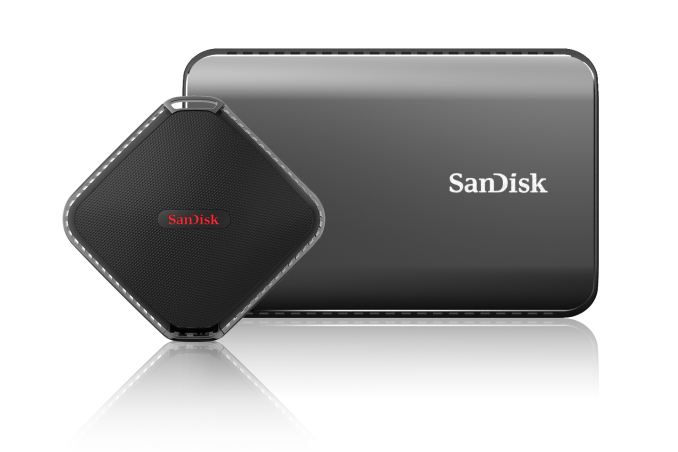
SanDisk is announcing the availability of a host of external flash drives at Computex 2015. Two of them are being marketed as external portable SSDs with a Type-C interface, while the other two are standard flash drives. The SanDisk Extreme 900 Portable SSD is the obvious star of the lineup. It comes in three capacities, 480 GB ($400), 960 GB ($600) and 1.92 TB ($1000). The SSD is housed inside a compact aluminum casing. All of them carry three year warranties. The family comes with a maximum performance rating of 850 MBps and carries a USB 3.1 interface. Both Type-A and Type-C cables are supplied with the unit. Aspects of interest include whether the internal flash is organized in a RAID-0 fashion with SATA interfaces, or whether it is a PCIe based unit behind a USB 3.1 controller. Kristian is at Computex and will likely be having some hands-on time with the device to gather the answers The SanDisk Extreme 500 Portable SSD is available in 120 GB ($100), 240 GB ($150) and 480 GB ($240) capacities and claims maximum performance of 415 MBps via a USB 3.0 interface. Both Portable SSDs are designed for rugged environments and feature SanDisk SecureAccess software with 128-bit AES encryption. The Ultra Fit 128 GB and Ultra 256 GB are standard USB 3.0 thumb drives. The Ultra Fit is more like the Mushkin Atom in size, but has double the capacity. The unit is priced at $120. The maximum performance is of the order of 130 MBps. The Ultra Fit 256 GB is rated for 100 MBps and is priced at $200.
Both the Ultra thumb drives carry a five year warranty and include encryption with the SecureAccess software. In addition, these drives come with a year's subscription to RescuePRO software for data recovery. | ||||||||||||||||||||||||||||||||||||||||||
| 1:41a | ASUS Zensation Press Conference Live Blog: Computex 2015 I'm sitting at ASUS' annual press conference here in Taipei. We're set to start at 2pm UTC +8, stay tuned for the latest. | ||||||||||||||||||||||||||||||||||||||||||
| 2:00a | ASUS Announces the ZenFone Selfie at Computex
ASUS has been making waves in the industry lately with their powerful but low priced ZenFone 2. ASUS's second generation of ZenFones is another chance for them to break into markets like North America and Western Europe. Part of their strategy appears to be a consolidation of the number of models they offer, and another aspect is rethinking the naming of their devices. The first generation of ZenFones were mostly named with a number on the end which signified how large the screen was. This type of naming doesn't scale very well when you update phones every year, and it isn't very good for naming models that target a specific niche. Today's announcement is one of those devices. The ZenFone Selfie is a device for users who like to take selfies, and as such it has a large degree of focus on the device's front camera and the software features that assist it. Of course, even when a device is focused on Selfies, making sure the other aspects hold up is still very important. To get an idea of how the ZenFone Selfie stacks up on paper I've listed its specifications below.
Unfortunately, ASUS's press release is somewhat light when it comes to specifications. In terms of its design, it looks almost exactly the same as the ZenFone 2. What we do know is that the ZenFone Selfie sports the same 13MP Toshiba camera sensors on the front and back, with the rear sensor having a wider aperture and a longer focal length than the front sensor. Both sensors are stated to be 1/3.2", although it's likely that they're advertised as 1/3.07" sensors with 1.12 micron pixels. The rear camera also sports laser autofocus like the ZenFone Zoom and the LG G3 / G4. Beyond the cameras we have Qualcomm's Snapdragon 615 CPU which has eight Cortex A53 cores split into two clusters. One cluster runs at 1.7GHz and is intended for more CPU intense workloads, while the 1.0GHz cluster is for lighter workloads. The display has the same specifications as the ZenFone 2, being a 5.5" 1920x1080 IPS panel. Currently the amount of RAM and NAND included is unknown, as is the capacity of the battery, and the specifications for WiFi, GNSS, and other connectivity features. The dimensions of the phone are also unknown, but one can get a decent idea of the specs from the display size, photos, and ASUS's advertisement that the bezels on the long edges of the display are 3.3mm wide. Once more information becomes available, I'll update this article to reflect it.
On the software side, the ZenFone Selfie supports a number of features to appeal to users. ASUS is advertising the front camera's 88 degree field of view, which can span up to 140 degrees when their selfie panorama mode is used in the camera. Features like "beautification" mode are also back, and that's all I have to say about that. At launch the ZenFone Selfie will be available with seven different color options for the back cover. The pastel-like finishes are available in white, pink, aqua blue. There will also be black, gold, grey, and red metallic back covers, much like those available now on the Zenfone 2. Like the two ZenPads that ASUS also launched today, the price and availability of the ZenFone Selfie are not yet known. Based on its SoC, I would imagine it has to undercut the ZenFone 2 on price, even with the higher resolution front camera. Once I get word on the price and what countries the ZenFone 2 will be available in I'll update that here as well. | ||||||||||||||||||||||||||||||||||||||||||
| 2:01a | ASUS Unveils The ProArt PA329Q UHD Monitor
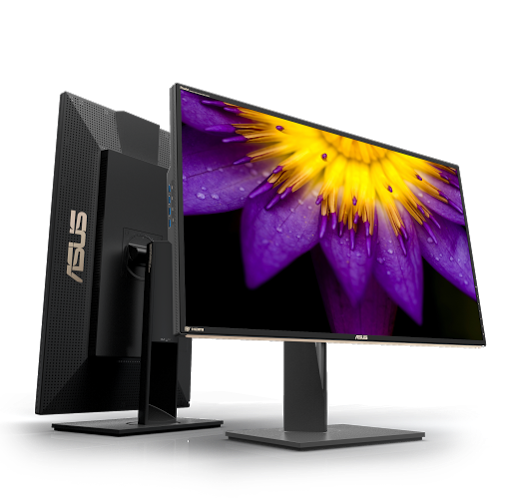
In addition to their smartphone and tablet announcements at Computex today, ASUS has also revealed a new monitor aimed at imaging professionals, photographers, and editors alike. It will be the flagship display in their line of ProArt monitors, and the most exciting monitor that I've seen come out of the ProArt line in a long time. It's a 32" UltraHD IPS panel with equally impressive specs in every other respect. You can check out its specifications below.
As you can see, ASUS has really gone all out in making this a display that is suitable for professional work. The panel is a true 10 bit IPS panel with full coverage of the Adobe RGB gamut, and color modes for working within sRGB, DCI-P3, and Rec. 2020, although the latter two won't be fully covered by this display. The high bit depth panel and 16 bit internal 3D LUT will also ensure smooth gradations even when working in a wide gamut like AdobeRGB. ASUS is also guaranteeing a DeltaE average of two or less. In addition to the high quality panel, ASUS has also made sure to cover their input ports from every angle. There's 60Hz UltraHD support via DisplayPort 1.2 and HDMI 2.0, with 30Hz UltraHD supported on both of the HDMI 1.4 ports. The inclusion of Mini DisplayPort is also great for anyone who works off of a Mac with Mini DisplayPort or Thunderbolt ports. There's also a four port USB 3.0 hub built in. ASUS is yet to announce pricing or availability for the ProArt PA329Q, but hopefully we'll know soon when it will be coming to market and how much it will cost.
| ||||||||||||||||||||||||||||||||||||||||||
| 2:02a | ASUS Announces Two New 8 Inch ZenPad Tablets
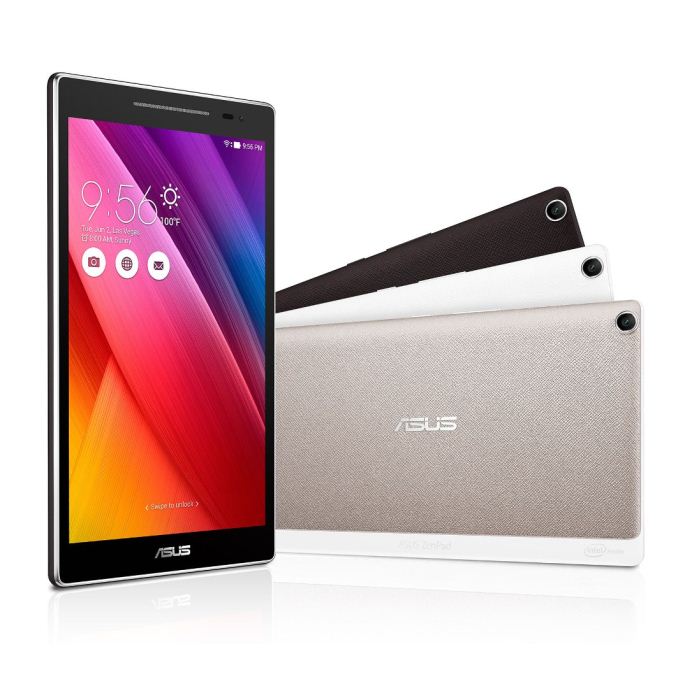
ASUS is no stranger to the Android tablet market. They've been around since the earliest days of Android tablets with their ASUS Transformer TF101 which launched with Android Honeycomb. Since that time they've released a number of iterations of the ASUS Transformer Android tablet, and have also expanded to other parts of the market with tablets like the ASUS MeMO Pad. In addition to their independent endeavors, they worked with Google to design and manufacture both generations of the Nexus 7, which was beloved by Android enthusiasts. While ASUS has been making Android tablets for a while, it has also been quite some time since we've seen a high end tablet come from the company. A focus on expansion into the world of Windows tablets has left the spot for a high end ASUS tablet unfilled. However, with a renewed focus on expanding their role as an Android manufacturer, and global ambitions with devices like the ZenFone 2, it was only a matter of time before ASUS brought new Android tablets to market. It also seemed inevitable that those devices would now fall under ASUS's Zen branding, and indeed, they do. ASUS's new Android tablets are the first in a line of tablets under the ZenPad brand. To put things in perspective and make it easier to compare these two new tablets, I've organized their general specifications in the chart below. There are a few things missing at the moment as they haven't yet been provided by ASUS, but I will update the chart and this article as soon as they are known.
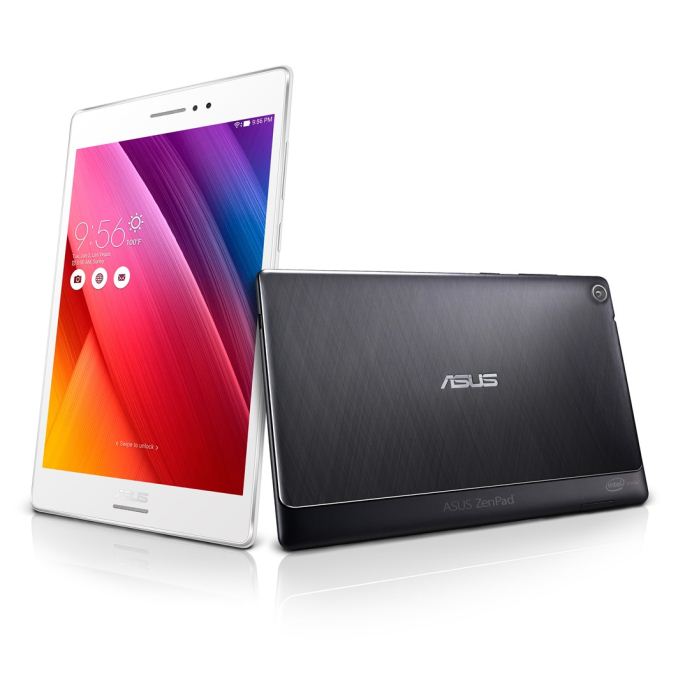
With this launch it appears that ASUS is putting devices into play at both the high end and the low end of the tablet market. The ZenPad Z380 is certainly the thicker of the two devices, and it's slightly shorter but with a much more narrow profile. You can see the ZenPad Z380 pictured in the cover image above, and the ZenPad S Z580CA is down below. While the Z380 opts for swappable leather textured backs, the Z580CA has a non-removable metallic back, although it's unknown if it's actually made of metal. I'll start by talking about the Z380 before moving onto the Z580CA. The first thing I noticed about the ZenPad Z380 was that it uses the Intel Atom x3-C3230RK SoC. This is a very interesting chip, because the RK on the end of the name signifies that it's a chip designed by Rockchip rather than Intel. Through their partnership, Intel licenses their architecture to Rockchip to use in the SoCs they design, and those SoCs are then fabricated on TSMC's 28nm process. It's a surprising collaboration of three companies. Atom x3-C3230RK has four of Intel's Silvermont cores and they have a peak frequency of 1.2GHz. This puts it pretty far behind Intel's higher clocked Moorefield parts that are built on their 22nm manufacturing process when it comes to bursty workloads. However, the size of the gap between it and Moorefield will be in a sustained load when both SoCs throttle down remains to be seen. It also sports ARM's Mali 450 GPU with four cores, although the clock speed on those GPU cores is unknown. Moving on from the SoC, we see that the ZenPad Z380 comes with either 8GB or 16GB of internal memory, and 1GB or 2GB of RAM. According to ASUS, these specs can vary based on region, so be sure to take a look at the spec sheet if you plan on buying the Z380. It also has an 8" 1280x800 IPS LCD which is fairly standard for a low end tablet, and a pair of 2MP and 5MP cameras on the front and back respectively.
After the ZenPad Z380 comes the high end ZenPad S Z580CA, which is also a tablet with an 8" display. However, the fact that both of these tablets have the same display size as measured from corner to corner does not mean they have the same form. This is because the ZenPad S uses an 8" 2048x1536 IPS panel which has a 4:3 aspect ratio. ASUS is following HTC and Samsung in moving to 4:3 after many years of 16:10 Android tablets. I'm surprised that it took this long for vendors to realize that 16:10 is ill suited to many of the tasks users perform on tablets and makes a device more difficult to manage in varying orientations. The rest of the internal specifications of the ZenPad S are very similar to those of ASUS's ZenFone 2. It uses Intel's Atom Z3580 SoC which is a 22nm part with four Silvermont cores that run at up to 2.33GHz, along with a PowerVR G6430 GPU at 533MHz. Other specs include up to 64GB of NAND, 4GB of LPDDR3 memory, a 5MP front camera, and an 8MP rear camera. Both of these new ZenPads share the same battery capacity, which is somewhat concerning when one considers that the display on the ZenPad S will most likely consume more power than the ZenPad Z380. They also share the same WiFi, and in both cases it's a very disappointing 2.4GHz 802.11n part. Although lackluster WiFi is not new to ASUS products on the laptop side with devices like the Zenbook UX305, the ZenFone 2's 802.11ac support had me hoping that this wouldn't extend to their mobile devices as well. While pricing for both these new tablets hasn't been revealed, the Z580CA is clearly aimed at the high end, and when your $199 ZenFone 2 has 802.11ac your high end tablet should too. There is one final thing that distinguishes the ZenPad S Z580CA from the Z380, as well as from almost any other tablet. It's the use of the new USB Type-C standard for charging and data connections, with no MicroUSB port available. This is probably going to be painful for some consumers as charging cables get lost or broken and can't be replaced with easily available MicroUSB cords, but it's a transition that needs to happen and I applaud ASUS for beginning it sooner rather than later. Using the Type-C port for connecting peripherals or doing display output will definitely be something to investigate if we do a review of the ZenPad Z580CA in the future. When Android M rolls around it will also be interesting to see if you can use the ZenPad Z580CA to charge another device. ASUS has also announced a range of accessories for these new tablets. The Z380 has protective cases available, and an audio cover that ASUS says enables 5.1 surround sound, powered by the ZenPad's build in DTS codec. There's also a power case to extend the tablet's battery capacity, and a 1024 pressure level stylus which works with both of the new ZenPad tablets. Overall I think ASUS has two very interesting devices on their hands. For me the ZenPad S is the most interesting of the two because of its hardware and USB Type-C connector, but the ZenPad Z380 could prove to be a formidable competitor to other inexpensive Android tablets depending on its price. Speaking of price, that's another aspect about these tablets that is currently unknown. Much of the success of these new tablets will be based on whether they provide a good value relative to their price. ASUS has a lot of competition, but if these tablets are priced right they could have a couple of winning tablets on their hands. | ||||||||||||||||||||||||||||||||||||||||||
| 2:06a | ASUS Shows Off The ZenWatch 2 At Computex
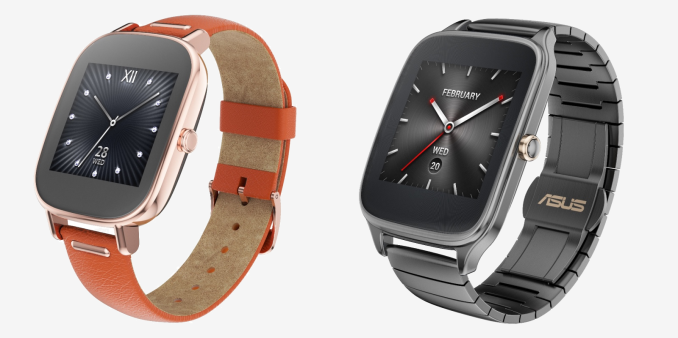
Today ASUS updated their Android Wear smartwatch offering. It wasn't long ago that we saw the original ASUS ZenWatch at IFA, but it's now being superseded by the ZenWatch 2. Unfortunately, details are fairly scarce about ASUS's new watch. It's powered by an unnamed SoC from Qualcomm, and sports a 2.5D AMOLED display of unknown size. More details about the ZenWatch 2 should come out over the course of Computex. One area where the ZenWatch 2 is clearly improved over its predecessor is the water and dust resistance. The original ZenWatch had an IP55 rating, and this has been improved to an IP67 rating for greater water submersion protection. The ZenWatch 2 comes in two sizes, and both models come in silver, gunmetal, and rose-gold finishes. Straps are available in rubber, leather, and metal. One interesting feature on the larger model is that it can be used as a tiny battery power pack to charge your phone, but with the limited battery capacity of smartwatches this seems like something to only be used as a last resort. | ||||||||||||||||||||||||||||||||||||||||||
| 4:00a | MediaTek announces Helio P10 Mainstream SoC
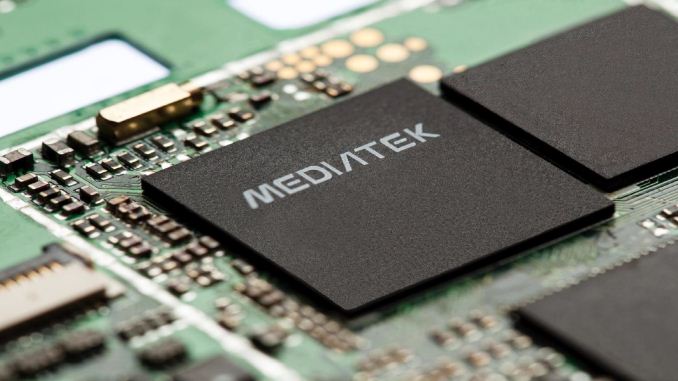
MediaTek started promoting its new Helio branding for SoCs back at MWC this year, and we had the please to cover the the new Helio X20 announcement just a few weeks ago. While the X-series is supposed to target the higher end (dubbed "eXtreme Performance"), the P-line is aimed at the budget mid-range ("Premium Performance" as MediaTek calls it). Today's announcement of the Helio P10 marks the first SoC in the P-series to adopt the new branding.
The P10 is the direct successor to last year's MT6752, which saw some quite widespread in adoption by Chinese vendors such as Meizu (M1 note), Gionee (Elife S7) or JiaYu (S3) and others. The P10 improves on its predecessor, the the MT6752, by taking a lot of improvements which were introduced with the X10 and X20. On the processor side, the CPU configuration remains a dual-cluster with four A53 cores per cluster. The MT6752 clocked both clusters at the same clock, running from 1.7 up to 2.0GHz as its maximum frequency depending on the chip bin. The P10 keeps this 2.0GHz maximum clock for its performance cluster, but has a slower cluster at lower speeds which we weren't yet able to confirm with MediaTek.
Memory bandwidth was supposedly also increased, and I suspect, but again in need of confirmation, that we're talking about finally switching over to a dual-channel memory controller, as the MT6752 was still sporting a single 32bit controller. The P10 is aimed at 1080p devices so it looks that MediaTek is keeping the graphics performances conservative and power efficient. MediaTek also upgrades the GPU from a Mali T760 to a T860, but keeps the shader core count steady at 2. We again see some interesting power claims concerning the T8XX series as MediaTek claims the new GPU uses only 70% of the power of the previous T760 iteration while improving performance by 20%, but we might be not talking solely architectural improvements as the P10 comes on a brand-new silicon manufacturing node.
The P10 is the first SoC to be announced on TSMC's 28HPC+ process. TSMC published the 28HPC process last autumn as a successor to 28HPM - with the advantages of a slight die shrink and improved power characteristics. 28HPC+ is yet another iteration that was publicly talked about last April, and promises a 15% gain in performance or a quite large 30 to 50% reduction in leakage at the same speed when compared to 28HPC. We'll continue to see the 28nm process continue to live on for a long time in the mid-range and cost-sensitive segments as it marks the sweet-spot in the transistors/$ scaling, and 28HPC(+) is one of the first enablers of this life-time extension.
The Helio P10 also takes over the modem sub-system that we've seen announced in the X20 - with LTE rel.11 Category 6 capability and 2x20MHz carrier aggregation on the download stream. This also includes crucial CDMA2000 support that MediaTek needs to be able to penetrate the North American and other limited markets. The mainstream lineup is the Taiwanese company's bread & butter and is the source of where MediaTek has seen most of its notorious successes. The P10, being part of this segment, will very likely see similar widespread adoption in low-cost devices as the Chinese smartphone boom continues to grow. The Helio P10 is supposed to be sampling in early Q3 2015 and with phone mass-production happening towards the end of the year in the fourth quarter. | ||||||||||||||||||||||||||||||||||||||||||
| 4:51a | Microsoft Announces That Windows 10 Will Launch On July 29
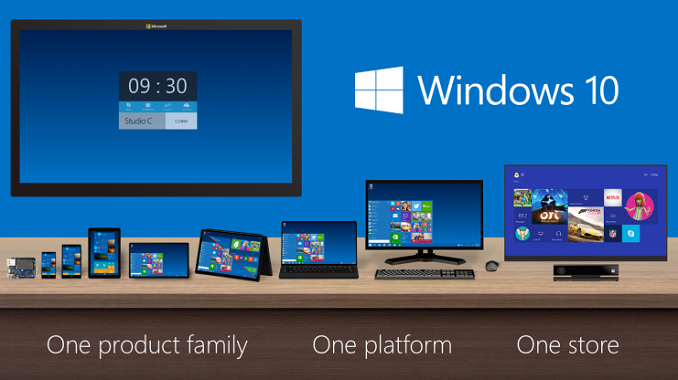
Today Microsoft formally announced the release date for Windows 10, the latest version of their Windows operating system. Up until this point, all Microsoft had said was that they were aiming for a summer release. Today's post on the official Windows blog states the release date for Windows 10 has now been set for July 29, less than two months from now. According to the blog post, Microsoft will be simultaniously launching Windows 10 around the globe to some 1.5 billion Windows users that currently reside in over 190 different countries, making it the widest Windows has ever been released at once. Windows 10 is Microsoft's chance to win back users who didn't embrace the changes made in Windows 8, and they have a lot riding on its success. Offering it as a free upgrade to existing Windows users will certainly help in gaining adoption. Even with the free nature of the upgrade, the promise of a July release date for such a monumental update is quite a bold move on Microsoft's part. The less than optimal state of the current Windows 10 testing builds means that Microsoft has a great deal of work ahead of them as they squash bugs and improve the stability of Windows 10 in the two months between now and release. As a user who is keen on upgrading from Windows 7 to Windows 10, I really hope they succeed.
Finally, Microsoft has revealed a few more details about how Windows 10 distribution will work. Starting today, users can "reserve" Windows 10 on Windows 7/8.1 machines. Reserving Windows will in turn flag a machine for pre-loading, with Microsoft distributing most of Windows 10 ahead of time as to get it in to customers' hands more quickly to better balance the expected load on their server backend. According to Microsoft's FAQ, reserving/pre-loading Windows 10 only downloads it, and users will still manually confirm the installation, or for that matter users can cancel the reservation entirely. Pre-loading has not started yet, and while Microsoft doesn't say when it will start, I expect it won't be until very near July 29th.
Along with detailing the reservation process, Microsoft has also confirmed the upgrade paths for various versions of Windows. As expected, all Pro/Ultimate versions of Windows 7 and 8.1 will get upgraded to Windows 10 Pro, while all other versions of desktop/tablet Windows will get upgraded to Windows 10 Home. And of course, Windows Phone 8.1 devices will upgrade to Windows 10 Mobile. | ||||||||||||||||||||||||||||||||||||||||||
| 10:50a | Corsair unleashes the Bulldog DIY 4K Gaming PC
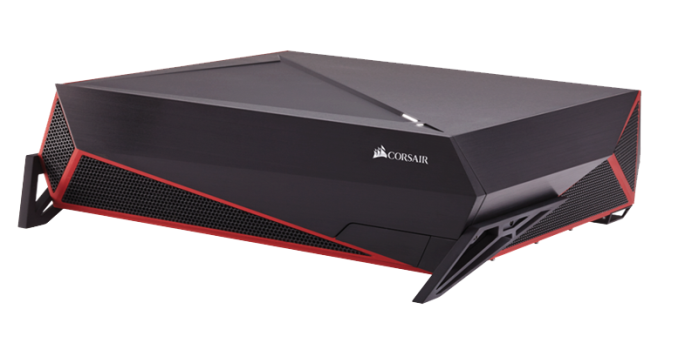
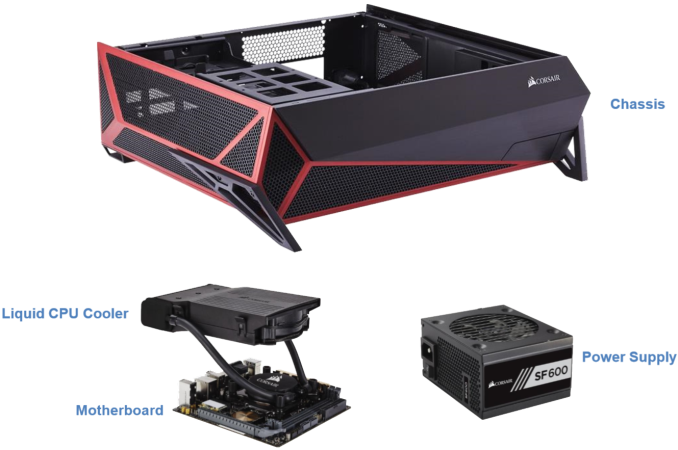
Corsair certainly is a company that is not afraid of diversification and has proved that multiple times in the past. They started as a memory products manufacturer, diversified into the power, case and cooling market segments and today they even have their own gaming division. With a company as active as Corsair is, their latest move was no surprise to us. Corsair combined their knowledge of chassis design and thermal performance, used their industry contacts and brought about the creation of the Bulldog, a DIY 4K Gaming PC designed to fit into living rooms. The Bulldog is the combination of a desktop PC case styled to appear as a gaming console with a 600W SFX power supply, a liquid cooler for the CPU and an ITX motherboard. Corsair's aim was to reduce a very high performance gaming PC to fit within the dimensions of a gaming console. In order to do that, they managed to fit dual liquid cooling systems (one for the CPU and, optionally, one for the GPU) and a high output SFX PSU into the desktop chassis. In terms of size, the Bulldog is relatively small but not too small, as it had to be tall enough for a high-end graphics card to fit. The base configuration of the Bulldog includes the case, the ITX motherboard, the H5SF CPU liquid cooler and the 600W SFX power supply. It starts with a MSRP of $399, which seems a little steep at first but it is not really overpriced considering the specs of the motherboard. We are not aware of very specific details regarding the motherboard that is installed in the Bulldog, but it will support DDR4 RAM, USB 3.1, 7.1 audio, Gigabit Ethernet and WiFi. (It's worth noting that at this point, the only mini-ITX motherboard that can support DDR4 is the ASRock X99E-ITX, but in the pictures provided by Corsair the board used seems to be a DDR3 based ASUS. It doesn't take much to pinpoint that the Bulldog is mostly likely aimed for a future DDR4 capable platform, or currently just for the ASRock motherboard if Corsair wishes to pursue the DDR4 route exclusively.) Corsair has also collaborated with NVIDIA and MSI to create drop-in ready liquid cooled variations of the Geforce GTX Titan X, GTX 980, GTX 980 Ti and GTX 970. Combinations of the Corsair H55 liquid AIO cooler and the HG10 graphics card cooling bracket may also be used.
Corsair's timing with that release seems perfect, as the first few graphics cards that can borderline handle 4K gaming are just hitting the market. A few months ago and 4K gaming without at least two high-end GPUs installed was impossible. However, you cannot install two graphic cards in a system with an ITX motherboard, which made the creation of very small 4K gaming PCs very difficult. Aesthetically, we feel that many will question the overly aggressive appearance of the Bulldog for a machine that is meant to be into living rooms. It definitely stands out a lot and that is not what people with modernized/minimalistic interior designs want. However, if Corsair's endeavor proves to be successful, it would be rather easy for them to base other designs on this, offering new products to cover a variety of tastes.
Alongside with the Bulldog, Corsair is also releasing the Lapdog, a gaming control center for use in the living room. Long story short, the Lapdog is a wired keyboard/mouse dock designed to sit on someone's lap. Aside from the presence of a USB hub and the memory foam cushion for user comfort, we do not have many details about the Lapdog at this point of time. Corsair will be offering it as a standalone station for $89 or with a keyboard for $199. The included keyboard obviously is the Corsair Gaming K65 RGB but we are unaware regarding the Lapdog's compatibility with other keyboards.
| ||||||||||||||||||||||||||||||||||||||||||
| 11:59a | The Kaveri Refresh 'Godavari' Review: Testing AMD's A10-7870K Astute readers will recognize that we recently posted two reviews covering more of the stack of AMD processors with the codename 'Kaveri' which covered the A6-7400K, A8-7650K and the A10-7700K in our recent coverage. Today we review the newest element that sits on top of all others, the A10-7870K Kaveri Refresh APU. | ||||||||||||||||||||||||||||||||||||||||||
| 6:05p | Intel to Acquire FPGA-Specialist Altera for $16.7 Billion
Today Intel has announced that they are buying Altera in an all-cash deal of $16.7 billion. The deal, having been rumored for a while now, will see Intel pick up Altera for their Field Programmable Grid Array (FPGA) experience, with Intel intending to both continue FPGA development integrating FPGAs into some of their future products. In the FPGA space Altera is one of the two major competitors, and alongside rival Xilinx compose the two companies comprise the bulk of the market. Prior to this sale Altera already had a close relationship with Intel, with Altera using Intel’s 14nm process for their latest generation of Stratix FPGAs.
As one of only a few external companies known to be using Intel’s 14nm process, Altera’s FPGA’s have been a natural complement to Intel’s ASIC business. On a business side there’s minimal overlap, but more importantly on the technical side FPGAs are good candidates for early production on a lower-yielding node. Since FPGAs are just large arrays of programmable logic and RAM, they can easily compensate for defects, allowing for a greater number of chips to be shipped for revenue early-on than a more complex ASIC. Given Intel and Altera’s already close working relationship, today’s deal was not unexpected. Purchasing Altera allows Intel to bring their FPGA production entirely in-house, not just producing FPGAs but better aligning them to Intel’s development plans as part of their integrated device manufacturing model. However more significantly, this gives Intel access to top-tier FPGA technology, which they can use to augment other products. Intel is already talking about the possibilities they see for Altera’s FPGA technology in the IoT and datacenter markets, but also the company has confirmed that they will be integrating FPGA technology into some of their future Xeon products, to allow customers to essentially build-out semi-custom processors via the FPGA component. Intel already does on-package FPGAs for certain customers, so this would represent the logical extension of that process by bringing the FPGA fully on-die.
For Intel this also represents a chance to further branch out in the markets they cover. The PC and server market has continued to treat the company well, even as PC sales have slowed, but having so far struggled to capture a major piece of the mobile space from ARM and its partners, Intel has been looking at other avenues of growth. In this case FPGAs represent a high-margin business on their own, one that’s increasing in revenue as ASIC development costs continue to rise, and a good match for Intel given their traditional manufacturing advantage. | ||||||||||||||||||||||||||||||||||||||||||
| 6:30p | AMD Picks Up Jim Anderson from Intel To Lead Computing and Graphics Business Group
Word comes from AMD this afternoon that they have finally found a new Senior VP and General Manager for the company’s Computing and Graphics business group. The group has been without a GM since early this year when previous GM John Byrne left the company, with CEO Dr. Lisa Su overseeing the group on an interim basis. After having conducted an external search, AMD has announced that they have tapped Jim Anderson to take over the group, bringing him over from Intel. Jim had in turn been with Intel for the last 7 months as the GM of the company’s Axxia communication processor business, after Intel acquired the business and Jim from LSI last year. Going farther back, before his tenure at LSI, Jim was employed at Intel as a microprocessor architect and later involved in Intel’s microprocessor strategic planning, giving him a bona fide background in the business he’s now being tapped to lead. In their press release of the hiring, along with lauding Jim’s technical credentials, AMD has also been making it clear that they are bringing Jim on-board in order to help turn around the state of AMD’s Computing and Graphics business and improve its profitability. As the GM is responsible not only for technical matters but business and sales matters as well, AMD has been in need of someone capable of expertly handling all three aspects of the business, to which AMD believes that Jim’s “proven ability to transform businesses to drive profitable growth” makes him a good fit for the job.
| ||||||||||||||||||||||||||||||||||||||||||
| 11:00p | Antec Reveals the Signature S10 Premium Tower Case
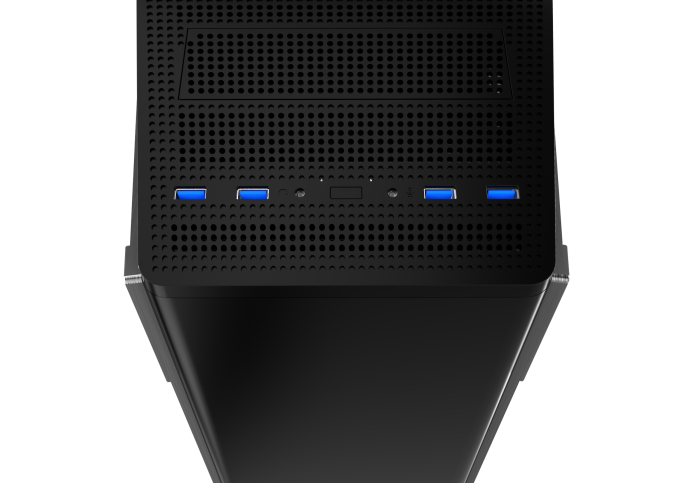
That Antec designed a new case may not really sound like news. After all, cases are the primary focus of the company, which offers dozens of models. However, this particular release is of special interest as the company has overhauled their lineup with a new flagship case, the Signature S10, a unique tower case of massive proportions. Meant to be Antec's engineering pinnacle, the Signature S10 is an aggressive combination of advanced thermal performance, versatility, and elegant aesthetics. Measuring 60 cm tall and 59 cm deep (23.7" × 23.2"), the Signature S10 is one of the largest tower cases in existence. It also weights about 18 kg, making it a very heavy case that is certainly not designed for frequent movement. Still, the proportions of a case alone are not stimulating and not what is unique about this particular release. What is perhaps the most important point of the Signature S10 is that it features Antec's patented three chamber design internal architecture.
Exactly as the name suggests, the three chamber design architecture splits the interior of the Signature S10 into three compartments. The entire front of the case is reserved for hard disk drives, the bottom compartment is shared between the PSU and five 2.5" device trays, and the primary compartment is reserved for the main system alone. Note that, despite its size, the Signature S10 does not have any 5.25" drive bays, so the idea of an optical drive is truly dead for this case. However, there is a slot for a short 5.25" device (fan controller, card reader, etc.). The chassis is most likely made out of SECC steel and the buyer is given the choice between aluminum and smoked tempered glass doors for the side panels. If Antec's press release is accurate and we are talking about real glass, not Plexiglass, that would be a sight to behold.
As the Signature S10 is intended to be Antec's engineering pinnacle, the stock cooling of the case is intense. The very architecture of the case is supposed to aid thermal performance, forcing top-down airflow. There are seven stock fans, one 120 mm and six 140 mm, preinstalled into the Signature S10, the models and specifications of which are unknown at this point of time. To limit the insertion of dust, Antec installed micromesh air filters to each individual chamber.
Obviously, Antec is trying to combine the very elegant appearance of the Signature series with outstanding thermal performance and expandability options, pitching the case as a good match for advanced gaming systems and workstations. Meanwhile it seems as Antec put every bit of their technology on the Signature S10, and the retail price reflects that, as the MSRP is just shy of $500. Consequently the potential market of the Signature S10 is going to be very small (if not very elite) limited to the most hardcore of enthusiasts who are willing to pay a very hefty price in order to combine elegant aesthetics and quality with thermal performance. | ||||||||||||||||||||||||||||||||||||||||||















| << Previous Day |
2015/06/01 [Calendar] |
Next Day >> |