[Most Recent Entries] [Calendar View]
Thursday, July 9th, 2015
| Time | Event |
| 12:48a | Microsoft Releases Office 2016 For Mac
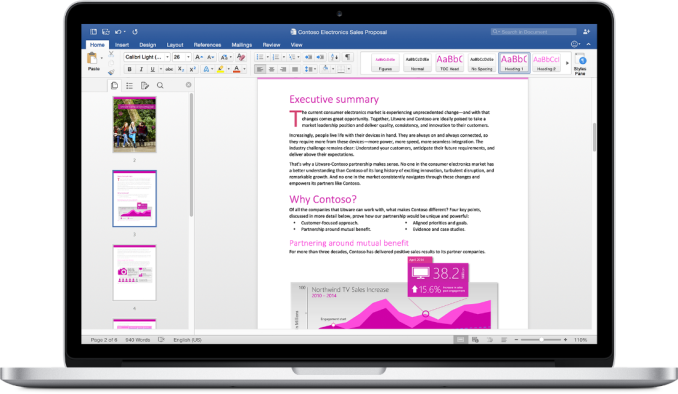
The last major release of Microsoft Office for Mac was the 2011 edition. Due to Microsoft's naming and release timing, the release of Office 2011 actually took place in late 2010. While Microsoft has made updates to Office 2011 over the years, such as the addition of Retina display support in 2012, the applications in the software suite still look quite dated due to their use of pre-Yosemite OS X interface elements. Today, Microsoft is bringing Office for Mac visually and functionally up to par with the versions on other platforms with the release of Office 2016 for Mac. Microsoft states that users who use Office on a Windows PC or an iPad will feel right at home with the new apps on OS X, and I'm inclined to agree. The interface doesn't try to fit in with other parts of OS X like the previous version does, but with Office being such a ubiquitous program I appreciate Microsoft keeping the interface mostly the same across all computers, tablets, and smartphones. In addition to the new interfaces for core Office apps like Word, Excel, Outlook, and PowerPoint, Microsoft is now including OneNote as part of the application suite. Since there was such a long gap between the original release of Office 2011 and the release of OneNote for Mac, OneNote has been offered as a separate application up until this point. Office 2016 for Mac is available now to Office 365 subscribers, and in September it will be available for purchase as a standalone product without the need for a subscription. |
| 12:01p | OCZ Trion 100 (240GB, 480GB & 960GB) SSD Review: Bringing Toshiba to the Retail It's been a year and a half since OCZ went bankrupt and Toshiba acquired its assets. In this time we have seen OCZ transition all of its products to Toshiba NAND and we have also discussed how Toshiba has helped OCZ with its quality/validation processes, but quite frankly we haven't seen anything truly concrete coming out of the partnership. The Trion 100 is here to change that as it's the first Toshiba built drive that will retail under OCZ's brand and it also the first TLC NAND based SSD from the Toshiba-OCZ organization. Can it match the competition? Read on and find out! |
| 2:36p | Apple Launches iOS 9 and OS X El Capitan Public Betas
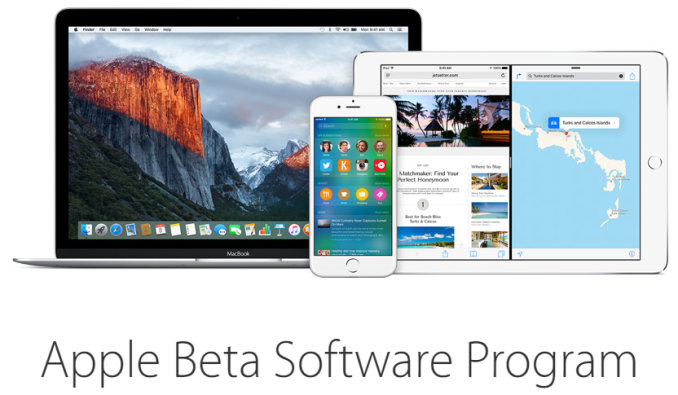
At this year's WWDC Apple announced that like OS X Yosemite, OS X El Capitan would go through a period where public betas were available to a certain group of consumers in order to receive feedback about stability and features. What was also announced is that iOS 9 would also have a public beta. Consumers have long installed developer betas of iOS to try out new features, but the public beta for iOS 9 marks the first time that consumers have been officially invited to test out Apple's mobile operating system. Before installing either of the betas, Apple recommends that users back up their iOS devices to iCloud or their PC, and their Mac to a Time Machine drive. Much like last year, installing the public beta for OS X El Capitan involves entering a redemption code in the Mac App Store in order to add the beta as an item to your list of purchased software. The installer for OS X El Capitan will then begin downloading automatically. Since it's a full OS upgrade, the installer weighs in at about 6GB. As for the brand new iOS betas, users will have to install a configuration profile which allows their device to receive the beta updates from Apple. Users will have to agree to an agreement which essentially states that iOS 9 is a beta and things may break or have problems. After accepting, the device must be rebooted. Once all that is done the updates will become available over the air just like any other iOS update. For reference, the first public beta OTA update for the iPhone 5s is 1.4GB in size. To enroll in the OS X El Capitan and iOS 9 betas users need to join the Apple Beta Software Program. The site is quite slow at the moment due to an influx of users, so it might be worth waiting a little bit if you haven't enrolled in the program already. |
| 9:20p | On Radeon R9 Fury X Pump Noise & Replacements
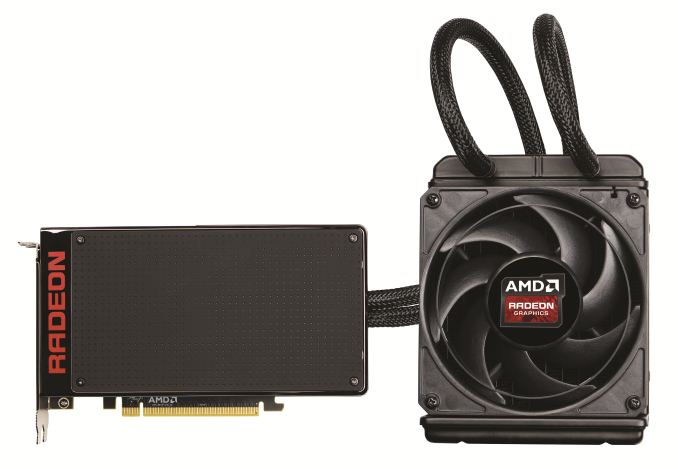
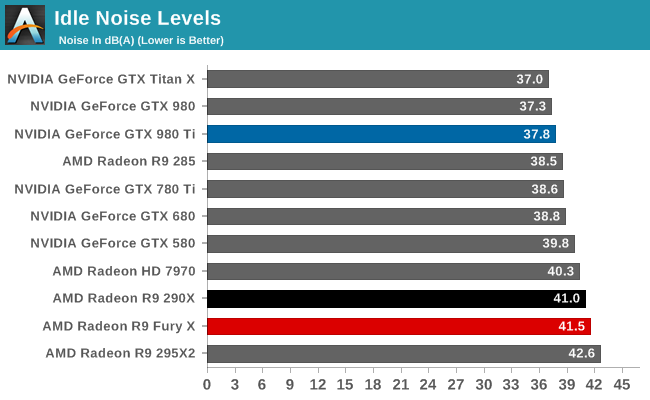
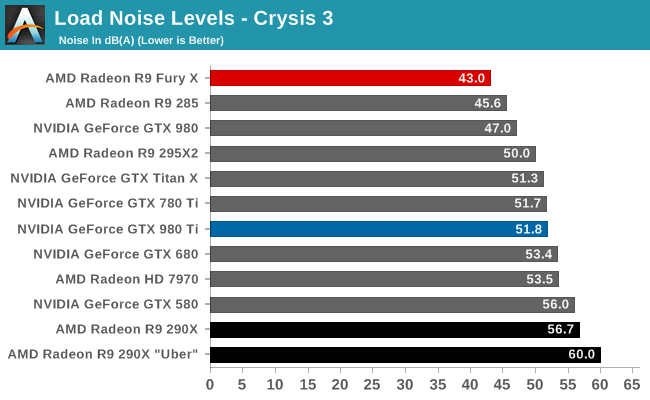
On a meta note this evening, over the last week I have received a number of questions about last week’s Radeon R9 Fury X review. Several of these questions were regarding the matter of pump noise, a matter which has been called into question for the original run of R9 Fury X cards. As a quick reminder, here’s what the noise situation looks like on the R9 Fury X.
In short, the R9 Fury X has great overall noise performance under load. However the pump doesn’t idle all that well, and as a result its idle noise performance is second only to the R9 295X2, a card with two pumps. Compared to contemporary competitors like the GTX 980 Ti, the R9 295X2 ends up being just under 4dB(A) louder than the competition, a not insignificant amount when we’re talking about idle noise levels, and is why we don’t believe the R9 Fury X to be a good fit for HTPCs or other environments where idle noise is of great concern. Meanwhile there is a secondary matter, which is the tone of that noise. Several of our colleagues, including Tom’s Hardware, PC Perspective, and The Tech Report, have reported that their samples are producing a whining noise. This was not an issue with our sample, and is the crux of the questions I have received on the matter. So to get right to the point and to answer those questions sent my way, does the R9 Fury X whine? The fact that as many other empirical-minded sites are reporting issues and that AMD has issued a statement on the matter (more on this later) certainly points to a whining issue that needed to be addressed. At the same time I’ve also had several people ask if our card is somehow different – why we aren’t experiencing whining – and the best answer there is due to variation in the production process leading to different amounts of noise from each card. Just like chip quality there will be minute variations in each card produced, and in this case our card would appear to have varied in such a way as to not suffer from vibrational issues to the same extent as some other cards, dampening enough to eliminate the whining (or at least make it unnoticeable). Which again, just like chip quality variations, doesn't mean our card is identical to all other cards, only that in our specific case we aren't experiencing whining, and is why we haven't had any whining to report on so far. Meanwhile I would also note that our testing is with a closed case, however the case is open for noise testing to more directly measure the video card.
In any case, for current Fury X owners and any prospective buyers, AMD has issued a statement earlier in the week, essentially addressing the issue and discussing how it is being resolved in latter batches.
AMD for their part believes that the issue has been resolved going forward, and that is something that will need to be tested as the newer batches become available. Finally, in the meantime there is the matter of the existing cards. AMD’s statement unfortunately doesn’t address the matter, though this is not unexpected since they aren’t directly selling the card to consumers. From what we’re hearing, the board partners are addressing this matter themselves, so any current Fury X owners experiencing pump whining would need to go to their board partner that sold their card for support. The catch at the moment is that after the initial launch, new R9 Fury X cards remain sparse. A quick check on stock history for the card shows that while new shipments come in almost daily, they also sell out in under an hour, which indicates that cards are hard to come by. So depending on how many support requests are filed and how board partners address the issue, it may not be possible to replace every problematic card at once. Though to be clear, this is speculation on our part. |

| << Previous Day |
2015/07/09 [Calendar] |
Next Day >> |