[Most Recent Entries] [Calendar View]
Tuesday, August 4th, 2015
| Time | Event | ||||||||||||||||||||||||||||||||||||||||||||||||||
| 5:00a | Acer Announces Ultra Low Cost Cloudbooks With Windows 10 Home
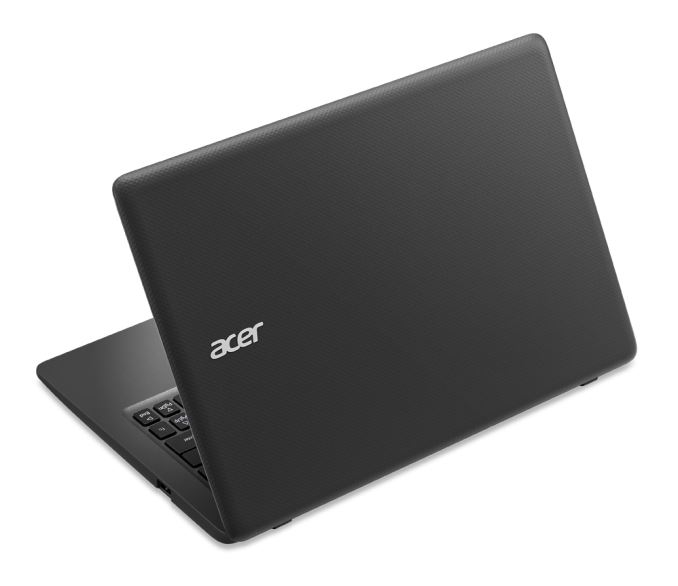
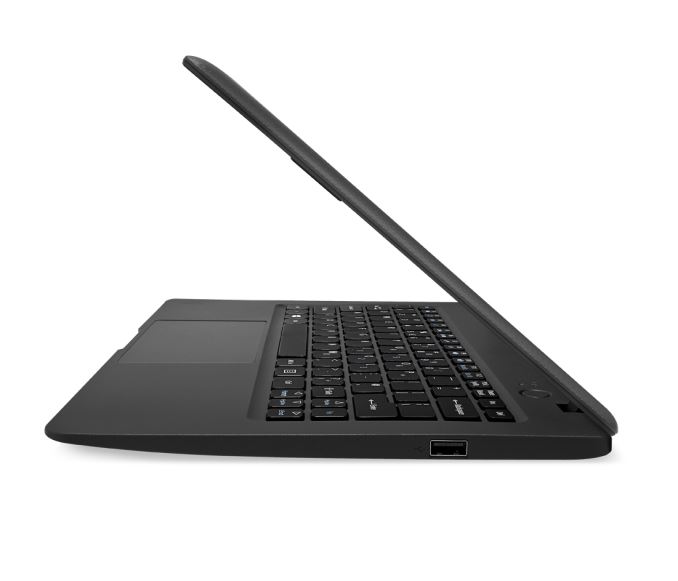
Today Acer is launching a new line of low cost notebooks, which are branded as Acer Aspire One Cloudbooks. There will be an 11.6-inch model, and a 14-inch model, and Acer manages to get both models under $200. We have seen some surprisingly decent notebooks around this price range, such as the HP Stream 11, but Acer has managed to move the barrier to entry even farther down. The 11.6-inch model starts at only $170, with a bump in storage boosting the price to $190, or for $199.99 you can step up to the 14-inch model. For this price you get a 1366x768 resolution display, which is likely going to be a TN panel. The fanless design is powered by the 14nm Intel Celeron N3050 processor, which is a dual-core model with a base frequency of 1.6 GHz and turbo frequency of 2.16 GHz. This is going to be Airmont cores, similar to the previous N series Celerons with Silvermont. Performance expectations should be in check, but with a 6 watt TDP it should be able to maintain its peak frequency fairly well. As a comparison, the Surface 3 has four Airmont cores at up to 2.4 GHz, but with just a 2 watt scenario design power. Graphics will also get a boost over the older Celerons, with the Airmont cores now paired with Gen 8 graphics and 12 execution units rather than just 4 Gen 7 units available on the older chips.
One of the ways Acer was able to hit these price points was due to the storage available. The 11.6-inch model starts with just 16 GB of storage, and even with the Windows 10 storage features which can save even more space than Windows 8.1’s WIMBoot, 16 GB is not a lot for a Windows install. For those interested in this device, the $20 boost to 32 GB would be a wise investment. The 14-inch model starts with 32 GB and will also offer a 64 GB model later on.
Both models will feature 802.11ac wireless, which is nice to see since that seems to be one of the first cuts on a budget notebook. Acer is positioning these devices as Cloudbooks, and they include one year of Office 365 Personal and the included 1 TB of OneDrive storage, and Acer is also promoting their cloud based abApps to help in keeping files in sync with smartphones and tablets.
While inexpensive, Acer has done well with the design. Both models are just 0.7-inches thick, and the smaller device comes in at just 2.54 lbs, and the larger 14-inch model tips the scales at 3.5 lbs. The textured pattern is finished in a mineral grey which looks quite sharp. The Acer Cloudbooks will be available starting this month for the 11.6-inch model, with the 14-inch version coming in September. Source: Acer
| ||||||||||||||||||||||||||||||||||||||||||||||||||
| 8:00a | Seagate Backup Plus Portable 4TB USB 3.0 Drive Review The rise in popularity of USB 3.0 has enabled a large number of high-speed bus-powered storage devices. While flash drives and external SSDs can take advantage of the high-speed nature of the interface, bus-powered external hard drives (2.5") still remain the only way for consumers to have an economical high capacity option. Seagate recently launched the Backup Plus Portable 4TB USB 3.0 drive based on one of the first 4TB 2.5" drives in the market. Read on for our review. | ||||||||||||||||||||||||||||||||||||||||||||||||||
| 8:30a | Seagate and Micron Announce 1200.2, S600DC SAS SSD Families for Enterprise
Today Seagate and Micron are jointly announcing their latest generation of Serial Attached SCSI (SAS) MLC SSDs for enterprise use. The new families of drives are designed to significantly broaden the Enterprise SSD lineup of both companies with a wider range of capacities, features, and performance options, for with up to 36 new drive models altogether. Making today's announcement particularly different (and wordy) is the fact that both companies are announcing the same drives under their own brands. Developed in a joint partnership between the two companies, Seagate and Micron have developed a single line of drives to be sold under different brands by each manufacturer for the purpose of making the drives available from multiple vendors for second-sourcing needs. For Seagate these drives will be known as the 1200.2 series, and will total 36 drives altogether. Meanwhile for Micron these drives will be known as the S600DC series. We'll start things off with Seagate, who has released the most information on these new drives. In Seagate's 1200.2 lineup the drives are available in four different tiers that trade cost against the higher endurance and performance, enabled through greater over-provisioning. The “High Endurance” line (rated for 25 drive writes per day) is tuned for write-intensive workloads and lots of random I/O. The “Mainstream Endurance” line (10 DWPD) is intended for a workload with a 70/30 mix of reads and writes, while the “Light Endurance” (3 DWPD) and “Scalable Endurance” (1 DWPD) are for very heavily read-intensive workloads with mostly sequential I/O. Capacity options vary between the different tiers: the HE drives are available in only two smaller sizes (200GB and 400GB), the SE drives in two large sizes (1920GB and 3840GB), and the middle two tiers offer more choices between those extremes. As is often the case, the smallest drives in each tier have somewhat lower performance ratings, which causes the 200GB HE drive to be rated a bit slower than the three largest ME drives. All models are using the same platform - that is the same controller and NAND - and Seagate isn't binning the Micron MLC flash chips between tiers, so all of the performance differences stem from the differences in firmware configuration and the amount of over-provisioning.
All drives use a dual-channel 12Gbps SAS connection, and these are the first 12Gbps drives that can use the two channels in tandem for higher performance rather than fault tolerance. This enables peak sequential read speeds of 1700 MB/s to 1800 MB/s, compared to the single-channel limit of 1200 MB/s. Peak 4kB random read speeds are also great looking, ranging from 140,000 IOPS to 210,000 IOPS. Advertised write speeds are nothing special, but the SAS interface does allow almost all of the drives to exceed the capabilities of 6Gbps SATA for sequential writes. Rounding out the enterprise feature set, every drive is available in a self-encrypting model, and the ME models are also offered in variants with FIPS 140-2 validated encryption. The drives have full power-loss protection and a 5 year warranty. All models use the 2.5” form factor. Drives under 1TB are 7mm thick while the larger models are 15mm thick. Meanwhile for the Micron S600DC branded release of these drives, we don't have quite as much information for today's announcement. We know that Micron will be releasing three different models of the drive as the S610DC, the S630DC, and the S650DC. However we don't know which models are the higher endurance models and which are the higher capacity models. Overall, the fact that Seagate and Micron are entering into a second-sourcing partnership on SSDs here is an interesting one, and one that makes a lot of sense given the desire for multiple sources from enterprise customers. And to be clear, this is true second-sourcing for as much as Seagate and Micron can achieve it, making it more than just both companies selling the drives under their own brands. In order to ensure a second-source supply, the two companies are using second-sourcing wherever practical in their supply chain and have geographically-diverse stockpiles for the important components that are only available from a single source, so they are confident they can offer a reliable ongoing supply. Finally, we're told that the drives will be on display this month, with Seagate planning on publicly demonstrating the 1200.2 SSD next week at Flash Memory Summit. As for availability, Seagate tells us that the 1200.2 series will be shipping to channel partners starting this month. | ||||||||||||||||||||||||||||||||||||||||||||||||||
| 11:00a | Toshiba and SanDisk Announce 48-layer 256Gbit TLC 3D NAND
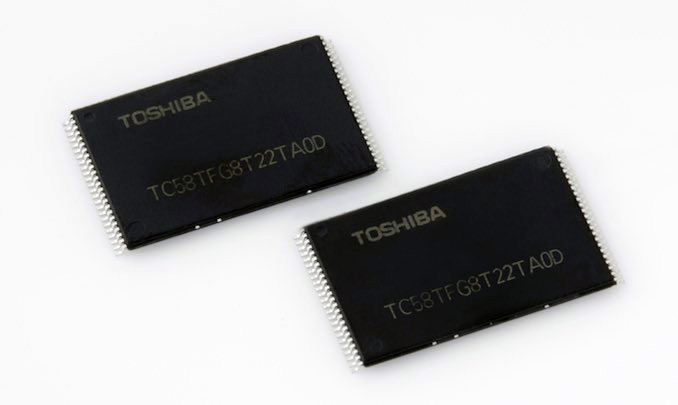
This week Toshiba and SanDisk are announcing a new milestone in their joint development of flash memory. Back in March Toshiba announced a 48-layer 3D NAND technology that they were sampling in the form of a 128Gb MLC die. Now Toshiba and partner SanDisk have built a 256Gb TLC die on their 48-layer process. Toshiba will be sampling that chip starting in September, and SanDisk has selected it as their first 3D NAND device for mass production. Central to this development is the outfitting of Fab 2 at their facility in Yokkaichi, Japan. The previous Fab 2 was demolished in 2014 and construction started on a replacement to be used as their first fab for 3D NAND. The new Fab 2 has now started pilot production of 3D NAND as it is being readied for mass production, scheduled to begin in 2016. Toshiba says the fab will be completed in the first half of the year and SanDisk plans to be shipping products using their 3D NAND by the end of the year. The new 3D NAND will face experienced competition from Samsung who are currently shipping 32-layer 3D NAND in capacities up to 128Gb for both MLC and TLC configurations. Samsung has also announced its third generation V-NAND which should be starting mass production in the latter half of this year. Meanwhile, Intel and Micron have stated that their 32-layer 3D NAND will be in mass production by the fourth quarter of this year in the form of a 256Gb MLC die and a 384Gb TLC die. SK Hynix is to begin mass production of a 36-layer 128Gb MLC die during the third quarter and is working toward a 48-layer TLC that will be available in 2016. All of the major flash manufacturers have now publicized their plans for introducing 3D NAND. Planar NAND won't be disappearing overnight or even in a year, as it takes a lot of time and money to convert a fab to a new process. But from here on out, we can expect all the most interesting news about NAND flash memory to be about 3D. | ||||||||||||||||||||||||||||||||||||||||||||||||||
| 11:50p | Xbox One To Get TV DVR Capabilities
Those that never got to experience Windows Media Center as the hub of a home entertainment system likely wonder why there is such a vocal group of people who cherish it and what it brought to the living room. The ease of use of the wonderful ten foot user interface was one of those times where software architects just got it right. I built my first Windows Media Center PC about ten years ago, and it had capabilities that some cable providers still can’t match, including the ability to stream recorded content from the PC to an Xbox 360 (or a couple of other less successful Media Center Extenders) where it could be played back in another room, and you could quickly resume where you left off somewhere else in the house.
So it is understandable that there was disappointment when Windows Media Center did not get an update for Windows 8’s launch, and perhaps even some anger when it was announced that Windows Media Center would not be coming to Windows 10 at all, and any installations of Windows 10 over computers with Windows Media Center would end up in a prompt to let you know it would be removed. I think WMC was one of Microsoft’s finest examples of good software bundled with hardware support, and though we lacked the CableCARD standard in Canada, I was still able to record multiple HD stations on my now defunct WMC PC and broadcast them around the house. I loved the software, and even the version that came with Windows 7 back in 2009 is to this day far superior to any cable box I have seen even six years later. But despite this, I eventually mothballed my WMC PC and went with the less robust Cable Co DVR setup just last year. The reason? Having a full PC running in my living room 24/7 was not without its challenges. I was of course the only support line to call if anything happened, and partially due to the lack of native HD support in Canada I decided to give it up. I don’t enjoy what I have now at all, but it works, and I, like many others, have found myself watching less cable TV anyway. With the rise in streaming services like Netflix, Hulu, and Amazon Video, cable TV certainly is under pressure it has likely never faced before. And so I think it makes a lot of sense that Microsoft has decided to shift its focus away from WMC, which was almost certainly an extremely expensive venture, to the Xbox One. Back in April, Microsoft announced that it was adding Over-The-Air TV tuner support to the Xbox One for North America, supplementing the existing tuner that was already available in Europe. At the time, I said that adding DVR support would put this over the top, and today we have an official announcement that this is happening. The Xbox One will offer OTA TV DVR capability next year. And the introduction certainly seems to move the Xbox One into a WMC replacement.
You will be able to stream recorded TV from the Xbox One to any Windows 10 PC, or even mobile devices running Android or iOS using the Smart Glass app. The new connected age also lets you schedule recordings through the Smart Glass app so you can set up recordings almost anywhere. In a way, it basically replicates what WMC could do by streaming to an Xbox 360, but reverses it.
Is it a true replacement for WMC? No, certainly not until it supports CableCARD, since it restricts you to just recording OTA broadcasts, but for a lot of people this is exactly what they want. The Xbox One can now be at the center for people who “cut the cord” and ditch cable, since it offers a pretty good assortment of streaming and local video playback.
Windows Media Center was great for its time, but I am glad to see that Microsoft is not abandoning it completely. Moving the capabilities to the Xbox One make a lot of sense, and should open the technology and experience up to a lot more people, since you don’t need an IT background to keep your DVR up and running any longer. They have not announced any plans for support for recording from either CableCARD yet, but still, this is a nice step for the Xbox One and should be a great solution for a lot of people. Source: Xbox Wire | ||||||||||||||||||||||||||||||||||||||||||||||||||




| << Previous Day |
2015/08/04 [Calendar] |
Next Day >> |