[Most Recent Entries] [Calendar View]
Thursday, August 27th, 2015
| Time | Event | ||||||||||||||||||||||||||||||||||||||||||||||||||||||||||||||||||||||||||||||||||||||||||||||||||||||||||||||||||||
| 1:54a | Obi Worldphone Launches The Worldphone SF1 and SJ1.5
Today Obi Worldphone, the smartphone company co-founded by former CEO of Apple and former president of Pepsi John Sculley, launched two new smartphones targeted at emerging markets. The first of the new phones has two SKUs, which allows the devices to target three different price points in the low-end and mid-range sections of the smartphone market. You can check out the specifications of both new smartphones in the chart below.
As you can see, the Worldphone SJ1.5 targets the low end of the smartphone market, while the SF1 is a mid-range device. I personally think the SJ1.5 might have trouble competing with Motorola's Moto E in regions where there is LTE coverage, but it does offer a larger, higher resolution display, as well as a very large battery and dual-SIM slot support which is very important for customers in emerging markets. Unsurprisingly, the SJ1.5 has a polycarbonate chassis, although the specifications for it indicate that it uses a magnesium-titanium alloy inside for support. In my opinion, the more interesting of these two devices is the Worldphone SF1. The SF1's chassis is made of reinforced fiberglass, and despite its 11.4Wh battery is only 8mm thick. In many ways, it reminds me of the OnePlus One in how it offers some high quality specifications at a low price. For $199 you get 2GB of RAM, 16GB of NAND, a 1080p display, Sony's IMX214 camera sensor, and Qualcomm's Snapdragon 615 SoC. Moving up to $249 gets you an additional gigabyte of RAM, and doubles your storage to 32GB. At least on paper, the Worldphone SF1 appears to give you more for your money than a phone like the Moto G, and it could have a significant impact when it launches in the EMIEA region in the near future.
The design of both the SF1 and the SJ1.5 reminds me a lot of the older Nokia Lumia smartphones like the Lumia 800, although there are a number of differences that give them a distinct appearance. I'm actually interested in trying one of these new devices to see how they feel in the hand and whether they live up to the expectations created by their specifications on paper. Obi Worldphone's listed specifications do have some oddities, such as the Worldphone SF1 launching with Android 5.0.2 while the SJ1.5 launches with Android 5.1. It's not clear if there are some errors or if the devices really will ship with two different versions of Android at launch. Both the Worldphone SF1 and Worldphone SJ1.5 will be launching in the near future at both online and physical retailers in countries including but not limited to Vietnam, India, Tukey, Pakistan, South Africa, Nigeria, Thailand, and the United Arab Emirates. The Worldphone SF1 is priced at $199 and $249 USD depending on the model you purchase, while the Worldphone SJ1.5 will be $129. | ||||||||||||||||||||||||||||||||||||||||||||||||||||||||||||||||||||||||||||||||||||||||||||||||||||||||||||||||||||
| 4:30a | Logitech Announces Artemis Spectrum G633 & G933 Audio Headsets
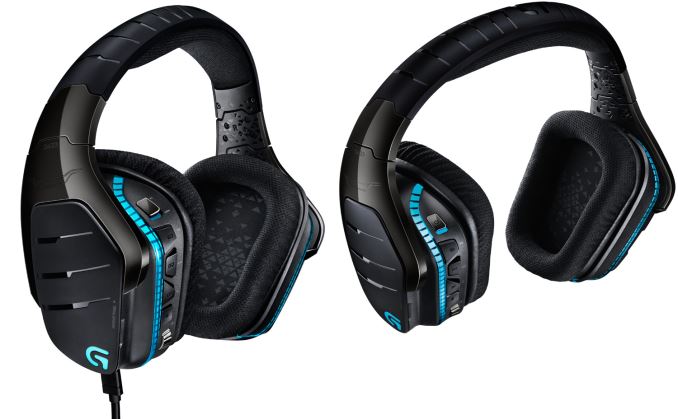
This morning Logitech is announcing an update to the company’s popular high-end gaming headsets, the G930 and G35. The new headsets are the Artemis Spectrum G633 and G933, and like their predecessors, share a common audio platform with wired and wireless connectivity respectively.
Logitech first introduced the G930 just over 5 years ago, and after many millions of units in sales they are finally updating these high-end headsets with the release of the Artemis Spectrum line. The Artemis headsets are a direct successor to the previous G series headsets, and while retaining the same high-end audio ambitions and 7.1 gaming features of their predecessors, they are also an almost entirely ground-up redesign of the headsets, both in physical form factor and underlying technology. Compared to the current G930/G35 headsets, the new Artemis platform retains the same 20Hz-20KHz frequency range, however Logitech has developed a new audio driver for Artemis which they are calling Pro-G. As a result of the new driver the impedance of the headsets have gone up slightly – from 32 Ohms to 39 Ohms – but so has the sensitivity, to 107dB SPL/mW. Logitech tells us that the new driver design is based on more thorough driver research over the past half-decade, and while headphone drivers are admittedly not a fast moving field, the Pro-G driver should deliver cleaner audio than the previous drivers.
Meanwhile Logitech has also been working on the boom microphone, shrinking it significantly from the G930. The microphone element in the Artemis platform is just 4mm in size, down from 6mm in the G930, allowing the overall boom mic size to be reduced.
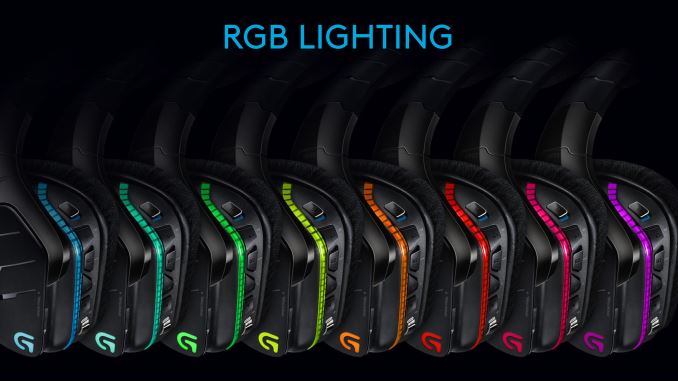
Much more significant however has been the design of the headset itself, which sees a number of changes relative to the G930. Along with a new headband, Logitech has relocated the G-keys that were previously on the side of the left cup to the back edge of the left cup. Doing so has allowed Logitech to free up the sides of the cups for removable/replaceable covers, and more importantly for the wireless G933 model, similar to some of their mice Logitech can now store the USB dongle within the headset. The redesigned body also facilities the introduction of one of the headsets’ new marquee features, RGB lighting. Both Artemis headsets feature RGB LEDs in each cup, which in turn allow the back edge of the headset and the cover plates to be lit up. This admittedly seems to be one of the more gimmicky features of the new headset, serving no real acoustic purpose, but from a design standpoint there’s little arguing that LED gear continues to sell well.
The electronics within the headsets have also been updated. Using a new audio codec from Avnera, the Artemis platform now features the ability to mux audio from multiple sources. For the wired headset this means muxing the USB and 3.5mm inputs, and for the wireless headset this means muxing the USB and a 3.5mm input on the USB dongle itself, along with the 3.5mm input on the headset as well. Logitech calls this feature sound mixing, with the idea being that users can listen to multiple sources at once, e.g. a computer and TV, computer and phone, etc.
Speaking of which, like its predecessor the Artemis headsets feature a range of input options to work with PCs, consoles, and other consumer electronics. Both headsets feature a standard 3.5mm input/output for connecting to computers and consoles, and meanwhile the USB input works with a number of devices. Talking to Logitech, we’re told that the USB input presents itself as a 2 channel + mic solution, allowing it to be used with almost any USB device that supports USB headsets (e.g. console) and even Linux or OS X for that matter. However to make use of the Logitech’s 7.1 surround sound spatialization features, Windows and the appropriate Logitech gaming software are required. For the Artemis platform Logitech is updating their gaming software as well to offer more 7.1 surround sound functionality, and this brings us to the Artemis headsets’ other marquee feature: DTS Headphone X. Along with their previous support for Dolby Headphone 7.1 surround sound spatialization, the Artemis headsets will also get DTS’s Headphone X technology as an alternative spatialization option. Similar to the Dolby option, DTS Headphone X is a 7.1 channel spatialization solution, but unlike Dolby Headphone DTS is said to be optimized for gaming as opposed to Dolby’s cinematic feel. Subjective improvements aside, DTS Headphone X does allow for some soundstage configuration, something Dolby lacks, which Logitech tells us should deliver more accurate (or at least desirable) spatialization performance for gaming. The one catch to DTS Headphone X is that it is not in the shipping version of the Logitech gaming software, and will not be available until October of this year.
Finally, for the G933 wireless version in particular, Logitech tells us that range and battery life are both improved over the G930. The headset now offers 15m range and battery life is up to 12 hours, versus 12m and 10 hours respectively. Furthermore thanks to the aforementioned use of the removable cup covers, it’s now possible to change the battery on the G933 without using any tools, simply by popping off the cover and swapping in the new battery. On a side note, after checking with Logitech we’re also told that the G933 still uses the 2.4GHz band for wireless connectivity, so despite the inherent interference in the 2.4GHz band, Logitech has been able to extend their range through a better wireless chipset and improved antenna characteristics. Wrapping things up, while the Artemis Spectrum headsets are being announced today in time for this weekend’s PAX Prime event, the headsets themselves will not go on sale quite yet. The G633 wired headset will be available in September, and meanwhile the G933 wireless headset will go up in October. They will retail for $149 and $199 respectively.
| ||||||||||||||||||||||||||||||||||||||||||||||||||||||||||||||||||||||||||||||||||||||||||||||||||||||||||||||||||||
| 8:00a | AMD Announces Radeon R9 Nano; mini-ITX Card Shipping September 10th
Back in June at AMD’s R9 Fury X/Fiji GPU launch event, the company unveiled that there would be four products based on Fiji. Fury X and Fury – which have since launched – and then two additional products, the R9 Nano and a yet-to-be-named dual-GPU card. Uncharacteristicly for AMD, the R9 Nano was unveiled some time before it would ship in order to demonstrate some of the size benefits of the Fiji GPU and its HBM, with the card initially receiving a tentative launch date of “summer”. Now with August coming to a close, AMD is formally announcing the R9 Nano ahead of its full launch next month. The card, which will be AMD’s take on a premium, specialty product for the mini-ITX market, will be hitting retailer shelves on September 10th for $649.
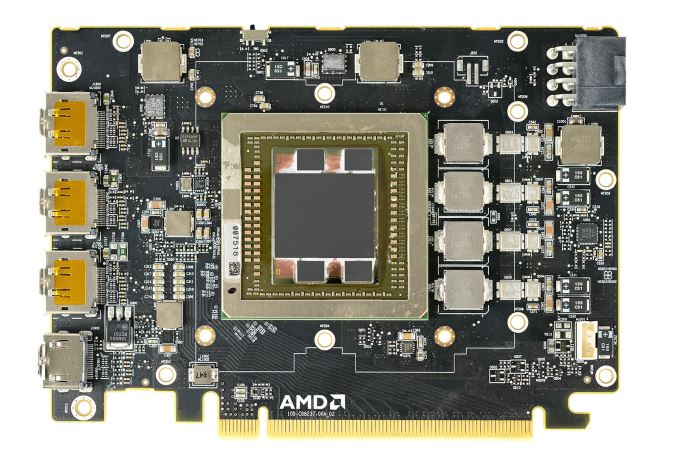
Diving right into the design and specs, the R9 Nano is designed to be a showcase piece for the space savings that HBM technology offers. With Fiji’s 4GB of VRAM confined to a quartet of small, stacked packages near the GPU die, the overall space occupied by the complete GPU package is quite small, just over 1000mm2. Similar to what we saw with the R9 Fury X, the lack of large GDDR5 memory chips allows AMD to build a smaller board overall, and R9 Nano is to be the logical extension of what R9 Fury X started, bringing Fiji down to a mini-ITX sized video card.
In order to achieve this AMD has turned to a combination of chip binning and power reductions to make a Fiji card viable as the desired size. The Fiji GPUs going into the R9 Nano will be AMD’s best Fiji chips (from a power standpoint), which are fully enabled Fiji chips that have been binned specifically for their low power usage. Going hand in hand with that, AMD has designed the supporting power delivery circuitry for the R9 Nano for just 175W, allowing the company to further cut down on the amount of space required for the card. The end result is that from a specification standpoint the R9 Nano should be an impressive, tiny terror. Since it’s a full Fiji GPU the R9 Nano doesn’t take an immediate hit to its performance relative to the R9 Fury X, featuring the same 4096 stream processors and 4096-bit ultra-wide HBM memory bus. The only real differences between R9 Fury X and R9 Nano are the clockspeed and the TDP/power targets. The R9 Nano will ship with a boost clock of 1000MHz versus R9 Fury X’s 1050MHz boost clock, and the TDP is 175W versus 275W. The resulting performance difference in turn will come down to power limits. While R9 Nano has a 1000MHz boost clock, even with AMD’s binning 175W is a relatively harsh power limit for such a powerful GPU, and consequently the R9 Fury X the R9 Nano is expected to power throttle under normal circumstances. AMD tells us that the typical gaming clock will be around the 900MHz range, with the precise value depending on the power requirements of the workload being run. As to why AMD is shipping the card at 1000MHz even when they don’t expect it to be able to sustain the clockspeed under most games, AMD tells us that the higher boost clock essentially ensures that the R9 Nano is only ever power limited, and isn’t unnecessarily held back in light workloads where it could support higher clockspeeds.
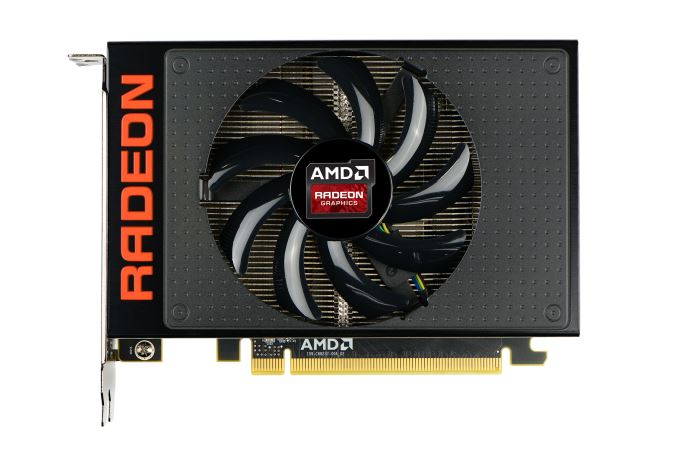
Moving on, the physical board itself measures just 6” long, allowing the complete card to fit within the full width of a mini-ITX motherboard. Power delivery is handled by a single 8-pin PCIe power socket, which is becoming increasingly common, replacing the 2x 6-pin setup for 150W-225W cards. In order to get the length of the board down AMD has moved some of the power delivery circuitry to the back of the card; the front of the card still contains the inductors and heat-sensitive MOSFETs, while a number of capacitors are on the rear of the card (and is why you won’t find a backplate). Responsibility for cooling the card falls to the R9 Nano’s new open air cooler, an aggressive design that has been specifically tailored to allow the card to effectively dissipate 175W of heat in such a small space. The overall design is best described as a combination open-air and half-blower hybrid; the design is technically open-air, however with only a single fan AMD has been able to align the heatsink fins horizontally and then place the fan in the center of the heatsink. The end result is that roughly half of the heat produced by the card is vented outside of the case, similar to a full blower, while the other half of the heat is vented back into the case. This reduces (though doesn’t eliminate) the amount of hot air being recycled by the card.
Drilling down, we find that the R9 Nano’s heatsink assembly is actually composed of two separate pieces. The primary heatsink is a combination vapor chamber and heatpipe design. A copper vapor chamber serves to draw heat away from the Fiji GPU and HBM stacks, and then heatpipes are used to better distribute heat to the rest of the heatsink. Meanwhile a small secondary heatsink with its own heatpipe is mounted towards the rear of the card and is solely responsible for cooling the MOSFETs. The use of a vapor chamber in the R9 Nano makes a lot of sense given the fact that vapor chambers are traditionally the most efficient heatsink base type, however the R9 Nano is also unique in that we typically don’t see vapor chambers and heatpipes used together. Other designs such as the high-end GeForce series use a single large vapor chamber across the entire heatsink base, so among reference cards at least the R9 Nano stands alone in this respect, and it will be interesting to see what cooling performance is like. That said, AMD is rather confident in their design and tells us that the R9 Nano should never thermally throttle; the card’s thermal throttle point is 85C, meanwhile the card is designed to operate at around 75C, 10C below the throttling point. Similarly, AMD is promising that R9 Nano will also be a quiet card, though as this is far more relative we’ll have to see how it does in testing.
From a marketing standpoint, AMD will be spending a fair bit of time comparing the R9 Nano to the reference R9 290X, AMD’s former flagship Hawaii card. The reference R9 290 cards were something of a low point for AMD in terms of cooling efficiency and noise, so they are eager to present the R9 Nano as an example of how they have learned from their earlier mistakes. Going up against what is admittedly a low bar, AMD is telling us that the R9 Nano is 30% faster than the R9 290X, draws 30% less power than the R9 290X, and is much, much quieter than their former flagship. Thanks in large part to the combination of Fiji’s architectural improvements and AMD’s aggressive binning, the R9 Nano should offer around 2x the energy efficiency of the R9 290X, and of course it will be a much smaller card as well. Otherwise against AMD’s Fury lineup, the performance of the R9 Nano will potentially be rather close. If AMD’s 900MHz average clockspeed figure proves to be correct, then the R9 Nano would deliver around 85% of the R9 Fury X’s performance, or around 92% of the R9 Fury’s. This would make it slower than either of the existing Fiji cards, but somewhere near (and likely ahead of) the R9 390X.
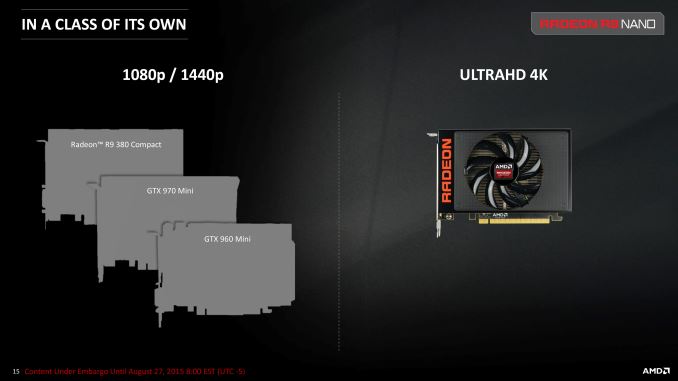
More importantly for AMD though, the R9 Nano should easily be the most powerful mini-ITX card on the market. The other major mini-ITX cards are based on smaller, less powerful video cards such as the Radeon R9 280 (Tonga) and GeForce GTX 970 (GM204), both of which a 900MHz Fiji will easily clear. By how much is going to depend on a few factors, including the actual average gaming clockspeeds and the games in question, but overall in the mini-ITX space there’s every reason to expect that R9 Nano will stand at the top.
Which brings us to the final aspect of the R9 Nano, which is pricing and positioning. For the R9 Nano AMD is going to positioning the card as a luxury product, similar to NVIDIA’s Titan series, which is to say that it will offer unparalleled performance for the segment of the market it’s designed for – in this case mini-ITX – but it will also fetch a higher price as a result. In the case of the R9 Nano, this means $650. From a silicon lottery standpoint R9 Nano will feature AMD’s best Fiji chips, and the vapor chamber cooler, though not quite as intricate as R9 Fury X’s CLLC, is still an advanced cooler with a higher cost to go with it. As a result it’s unsurprising that AMD is seeking to charge a premium for the product, both to cover the higher costs and to take advantage of their expected performance lead within the mini-ITX market. Practically speaking the mini-ITX market is a small one relative to the larger gaming PC market (pun intended), and while there is some overlap with the power efficient gaming PC market, it’s hard to say just how much overlap there is. Regardless, AMD’s pricing and messaging make it clear that the R9 Fury series is intended to be AMD’s top performance cards and price/performance kingpins, while R9 Nano is a specialty card for a smaller market that’s currently underserved.
Of course there’s also going to be the question of how many cards AMD can even supply. Binning means that only a fraction of Fiji chips will ever make the cut, so R9 Nano is never going to be a high volume part along the lines of the R9 Fury series. What remains to be seen then is how much of a market exists for $650 mini-ITX cards, and then if AMD can supply enough cards for that market. Though given AMD’s unique situation, I don’t doubt that they’ll be able to sell a number of these cards. On that note, we’re hearing that the overall Fiji supply situation is looking up. R9 Fury series cards have been in short supply in the US since the June/July launches, with card supplies improving just within the last couple of weeks. For the R9 Nano launch AMD has been stockpiling cards for the initial rush of sales, and beyond that we’ll have to see what becomes of the supply situation. Finally, once the supply situation does improve AMD tells us that we may see some custom R9 Nano cards come later in Q4 of this year. AMD has been very vague on this point, but from what they’re telling us they’re going to be letting partners take a shot at developing Nano designs of their own. So while the launch on September 10th and for the next couple of months after that will be pure reference, we may see some custom designs by the end of the year. And with that we end for now. Please be sure to check back in on September 10th for our full review of the smallest member of AMD's Fiji family.
Gallery: AMD Radeon R9 Nano
      | ||||||||||||||||||||||||||||||||||||||||||||||||||||||||||||||||||||||||||||||||||||||||||||||||||||||||||||||||||||
| 9:00a | The Cooler Master MasterCase 5 Review Modular computer cases are not a new concept but attempts to produce actual retail products are very rare. Cooler Master is making a very bold move towards that direction with the MasterCase 5, their first design featuring the "Freeform" modular system. The company goes as far as to claim that their new case gives "absolute control over how the case looks and functions". That is a very bold statement and we will see to what extend that is true in this review. | ||||||||||||||||||||||||||||||||||||||||||||||||||||||||||||||||||||||||||||||||||||||||||||||||||||||||||||||||||||










| << Previous Day |
2015/08/27 [Calendar] |
Next Day >> |