[Most Recent Entries] [Calendar View]
Sunday, January 3rd, 2016
| Time | Event |
| 10:30p | Lenovo Refreshes ThinkPad Lineup at CES
Lenovo is taking the opportunity to use CES as the launching point for its refreshed ThinkPad lineup, and pretty much the entire product portfolio is getting some sort of refresh at this time. The ThinkPad T series has some new models, as does the L series, but lets start with the ultra-mobile products first, the X1 Carbon and X260. The ThinkPad X1 Carbon is the ultra-portable ThinkPad from Lenovo. It’s been refreshed several times since it was first launched, and with the recent release of Intel’s Skylake processors I suppose it is not a big surprise that Lenovo has updated it again. The 14-inch notebook is the thinnest ThinkPad that Lenovo sells, and for 2016 they have made it even thinner and lighter, with it now weighing in at just 2.6 lbs and 0.65-inches thick. It can be had with up to Core i7 Skylake with vPro, as well as up to 16 GB of memory. Storage is now up to 1 TB of PCIe NVMe, which is a theme from Lenovo’s refresh. They have gone pretty much all-in on PCIe storage which is great to see.
The X1 Carbon can be had with either the 2560x1440 or 1920x1080 IPS 14-inch panel, and optionally you can get it with LTE-A connectivity. For docking, you can use the OneLink+ port, or utilize the optional WiGig docking which uses 60 GHz for a low range, high bandwidth link. There are 3 USB 3.0 ports, mDP, HDMI, microSD, and despite the thinner and lighter profile, the battery capacity has been bumped slightly to 52 Wh, up from 50 Wh in the outgoing model. The new X1 Carbon will be shipping in February for $1299. If you need an even smaller notebook, Lenovo is now offering the X260. This is the 12.5-inch model, and it is 2.9 lbs and 0.79-inches thick. The claim to fame of the X260 though is the extended battery life, and thanks to the PowerBridge battery options, the X260 is rated for up to 21 hours of battery life on MobileMark 2012.
The X260 can be had with up to Core i7 Skylake-U, 16 GB of DDR4, and 512 GB of SATA or PCIe storage. WiGIg is optional, as is cellular connectivity. There are 3 USB 3.0 ports, mDP, HDMI, SD card reader, and even a full sized RJ-45 port. This is a refresh of an already well established product, and there are no surprises here. The new X260 ships in February for $929. Moving on to the T series, the T460s is a refresh of the T450s that I reviewed in 2015. It of course moves to Skylake, with up to Core i7 with vPro, and you can now get it with 24 GB of DDR4 memory. Storage moves to PCIe based with up to 512 GB available, and you can outfit it with LTE-A. The 14-inch display is offered with 2560x1440 resolution, and driving that display is the Intel HD 520 standard, or you can get it with the NVIDIA GeForce GT 930M GPU.
The T460s offers plenty of connectivity, with 3 USB 3.0 ports, HDMI, mDP, and RJ-45. You can optionally outfit it with a Smart Card reader, touch fingerprint, and WiGig for docking. It also features a traditional docking connector on the bottom. The new model is also thinner and lighter than the outgoing T450s, with the T460s slimmed down to 0.74-inches and comes in at just 3 lbs. It will be available in February for $1059.
Moving up in size, the T460 and T560 occupy the next spot in the ThinkPad lineup. They are both offered with up to Core i7-U based processors, but you can also get them with NVIDIA GeForce GT 940MX graphics and 32 GB of memory. The T460 is a 14-inch model with a 1920x1080 panel, and the T560 is a 15.6-inch version with up to 2560x1440 IPS. The T460 is 0.83-inches thick and weighs 3.8 lbs, and the T560 is 0.88-inches and starts at 5 lbs. Both are shipping in February as well, with the T460 starting at $909 and the T560 starting at $969.
If you need more performance, the T460p is a 14-inch notebook which offers a step up in CPU power with the Intel Core H Series. This is the quad-core 45-Watt models, and with the extra cores and TDP they can offer up quite a bit more oomph compared to the 15-Watt U series. It can be purchased with up to 32 GB of DDR4 using 2 DIMMS, and the display is a 2560x1440 IPS model. Battery life is estimated at 12 hours with the 72 Wh battery. The T460p features Intel’s Snowfield Peak vPro with 8260NGW M as an option. The T460p ships in February for $1249 as the starting price.
Finally, The L series is getting a refresh with the L460 and L560. As you can likely guess, the L460 is a 14-inch model which offers up to 1920x1080 IPS, and the L560 is the 15.6-inch model which also offers up to 1920x1080 IPS. Both offer up to Core i7 processors, and the L460 can be had with up to 32 GB of memory, compared to the L560’s 16 GB maximum option. The L460 can also be had with the AMD Exo Pro Radeon R5 GPU with 2 GB of DDR3 VRAM. The L series is a more entry level ThinkPad, and both ship in February starting at $749 for the L460 and $779 for the L560.
Lenovo has pretty much covered their entire ThinkPad lineup here, with the exception of workstations, but the P series was already refreshed in August with optional Xeon CPUs. This moves the rest of the ThinkPad lineup to Skylake, and Lenovo has taken the opportunity to make many of the models thinner and lighter than the outgoing versions. We should get some hands-on time with the laptops this week at CES. Source: Lenovo
|
| 10:31p | Lenovo Launches The Modular ThinkPad X1 Tablet at CES
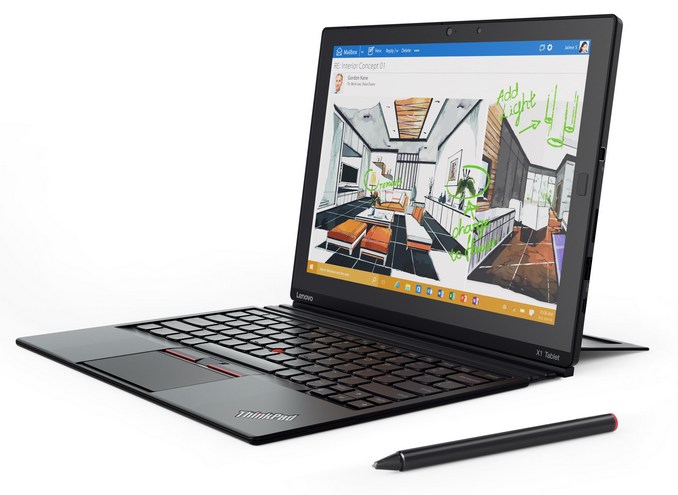
The convertible tablet segment has certainly gained a foothold over the last year or two, and now we are seeing a lot of great designs in this space. Lenovo already launched the MIIX 700 tablet which is a 12-inch 3:2 design. For business users that want the ThinkPad line, Lenovo is now offering the ThinkPad X1 tablet, which offers a lot of firsts for this segment. Let’s get the traditional information out of the way first. It is a Core m design, which means that it will be fanless, and Lenovo is offering up to the Core m7 with vPro. 16 GB of memory will be available, as will up to 1 TB of PCIe NVMe storage. You can also outfit the ThinkPad X1 tablet with LTE-A, and this is the first Windows tablet to offer LTE-A support. Since this is aimed at the enterprise, the back panel is removable for servicing, which should make a lot of IT departments happy. The display is the same resolution as the Surface Pro 3: 2160x1440, which means it is a 3:2 aspect ratio as well. I’ve found the 3:2 aspect ratio to be a great compromise between tablet and laptop. It also features an active digitizer and pen support. The X1 Tablet also offers a ThinkPad keyboard, including trackpoint, which can snap onto the tablet. It has three adjustable typing angles, and the tablet and keyboard together weigh in at just 2.4 lbs. The tablet alone is 1.75 lbs, similar to other laptop replacement tablets. The real innovation with the X1 Tablet though is the modular options which can transform the tablet into a couple of different solutions. The first is the Productivity Module, which adds up to 5 hours of battery life (for a total estimate of 15 hours), and adds a full size HDMI port, docking, and full size USB 3.0. It’s a smart way to increase the battery life and connectivity of the tablet, and the module just snaps onto the bottom of the tablet.
The second module is the Presenter module, which features a pico projector and HDMI port. When used with the included kickstand of the X1 Tablet, you can use the display for control and the projector for a presentation.
The final module is the 3D imaging module, which features an Intel RealSense 3D camera. You can use this to scan objects into software. Of the three, it’s likely going to be the smallest market, but it certainly is a smart use for the modular system.
Overall this looks to be a solid entry into this segment, and Lenovo is offering some truly unique and interesting ways to expand the capabilities of such a device. The X1 Tablet goes on sale in February, and starts at $899. The Productivity module which features additional battery, HDMI, and OneLink+ port, will retail for $149. The Presenter module which can project a 60-inch display from 2 meters, will retail for $279, and the 3D Imaging module will go on sale in May for $149. Source: Lenovo |
| 10:32p | Lenovo Launches ThinkVision Displays With USB-C Docking At CES
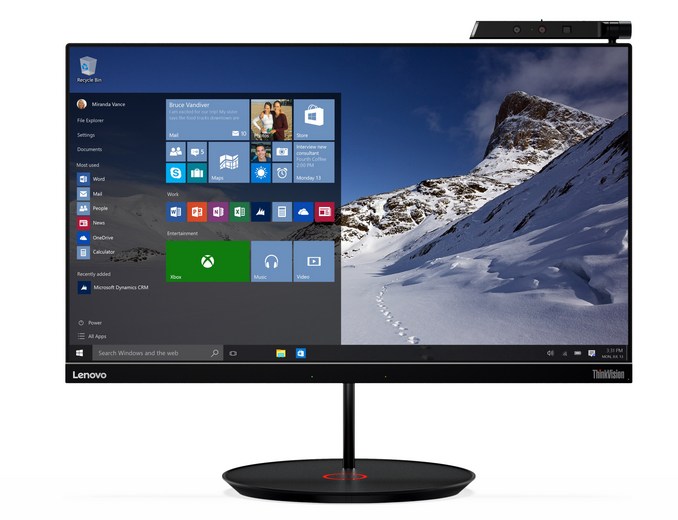
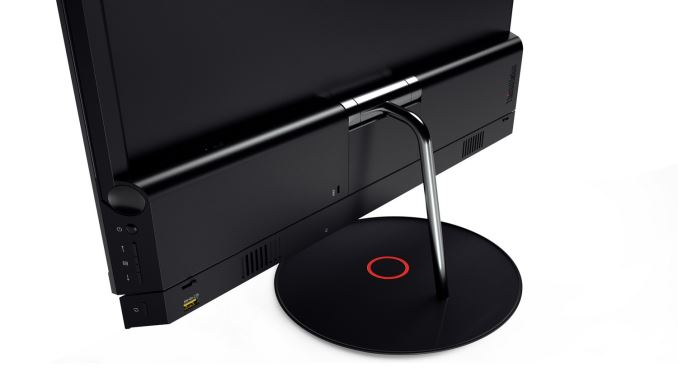
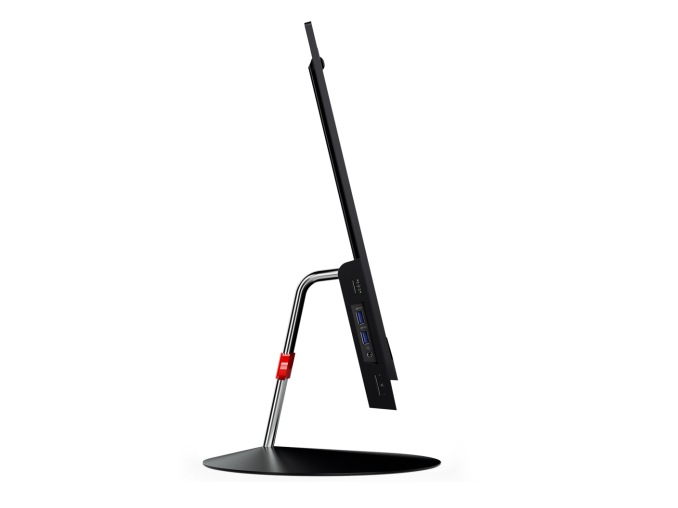
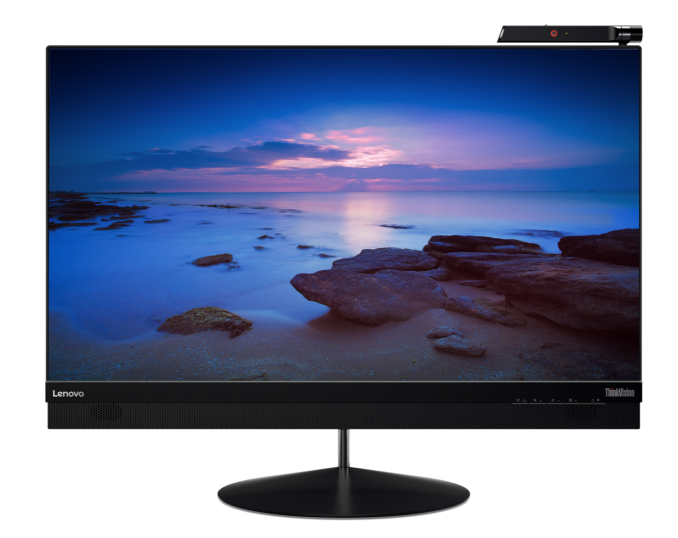
As soon as the USB-C connector and alternate modes were announced with DisplayPort adding support, I instantly envisioned a monitor with USB-C as the single cable to allow docking. With the added Power Delivery v2.0 available with USB-C, this single cable could offer video, peripherals, and laptop charging, since Power Delivery v2.0 can offer up to 100 Watts of power. Since most laptops come with somewhere around 30-65 Watts only, the new cable would have plenty of capability for a single cable docking solution. Today Lenovo is announcing two displays which offer this, meaning the wait is over. The first is the ThinkVision X24 Pro monitor. This is a 1920x1080 borderless (well, nearly) display with an IPS panel. If you don’t quite have USB-C yet, there are also mDP ports as well. The monitor also features an Intel RealSense 3D camera, so it should be ready to go for Windows Hello facial recognition login.
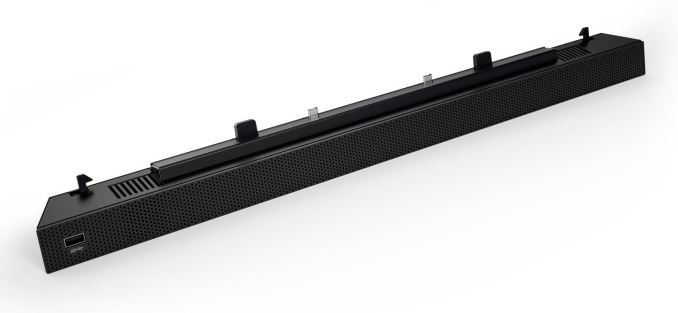
In addition, the X24 Pro offers a couple of well thought out accessories, including a Wireless Phone charging base, so you can just set your phone on the base of the monitor to have it charge – assuming you have a phone with support. Lenovo doesn’t specify but it’s likely Qi. We should be able to find out more with hands-on time this week at CES. The other optional accessory removes the need for the cable at all. You can outfit the X24 Pro with a WiGig bar which means that you can dock a support laptop with WiGig support (see pretty much all of the just refreshed ThinkPads) and have docking with no cables at all.
Also, the monitor features 2 x 3W speakers, and a dual-array mic which should help with noise cancelling. This can be all had for a starting price of $399 when it begins shipping in May. The WiGIg bar will be $250, and the wireless charging stand will add another $150. The second display is the 27-inch ThinkVision X1. If you’ve noticed, it shares the X1 branding with the ultra-thin laptops and tablet lineup from Lenovo, and for good reason. The ThinkVision X1 is just 7.5 mm thick. This display steps up the resolution to 3840x2160 (UHD) and it also offers the single USB-C docking ability. DisplayPort 1.2 supports UHD at 60 Hz, so this resolution will be no problem. It is also a borderless model (once again, nearly, with 2mm bezels on the top and sides), and the display is the first monitor to receive the TUV Eye-Comfort certification.
This is a 10-bit panel, with 99% sRGB coverage. It also offers HDMI 2.0 support in addition to USB-C and DisplayPort 1.2 ports. It is rated for 1300:1 contrast, and 300 nits brightness.
I’ll be looking forward to seeing these at the Lenovo booth, and If anyone has any additional questions please comment here and I’ll be sure to check in with Lenovo at CES. Source: Lenovo |
| 10:33p | Lenovo Launches ThinkPad X1 Yoga At CES With OLED Display
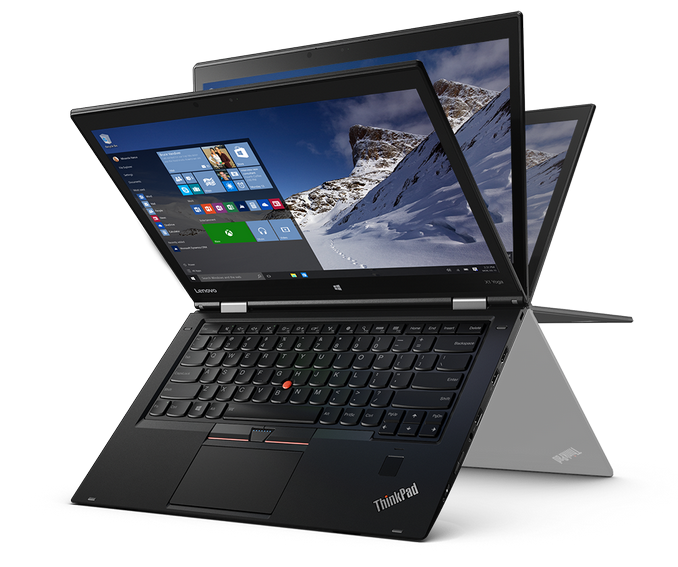
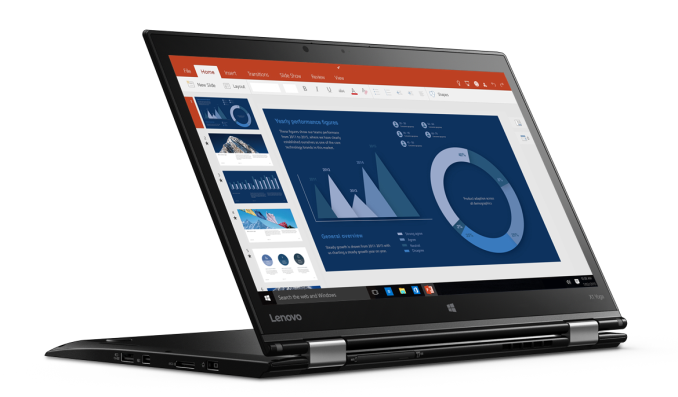
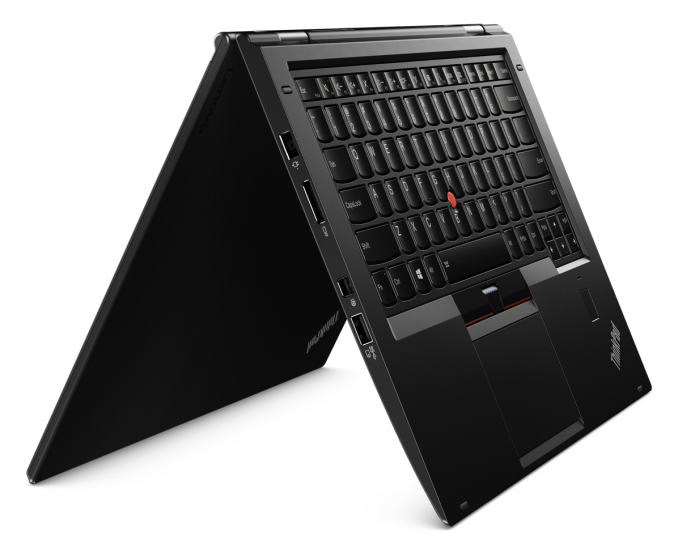
The ThinkPad Yoga has been around for some time, as a business focused version of the Yoga family, but Lenovo is launching the X1 Yoga today which takes the Yoga series to the next level. It is the first convertible device being launched with an OLED (Organic Light Emitting Diode) display. We’ve seen these displays predominately on smartphones, with the occasional tablet as well, but it’s now made its way to the laptop form factor. Lenovo is using a Samsung OLED as the optional panel, and it’s a 14-inch 2560x1440 version. Samsung is the market leader in OLED technology, so it makes a lot of sense that they would turn to them for this display. The base device comes with a 1920x1080 IPS LCD, and there is also an optional 2560x1440 IPS LCD too, but the OLED should give a large gamut and of course the deep blacks that OLED is known for, along with infinite contrast. It is exciting to see that this technology is now making its way here.
The X1 Yoga also features an active stylus, which docks into the keyboard base. When docked, the pen charges, so keeping the stylus charged and available should be a breeze. Keeping with the tradition of the ThinkPad Yoga, the X1 Yoga’s spill-resistant keys and trackpoint retract into the base when the display is rotated around, to improve the ergonomics when used in tablet mode. Having the keys on the backside is generally one of the big drawbacks of these types of convertibles, but the ThinkPad line solves that little issue.
The laptop is powered by Skylake-U series processors, up to a Core i7 with vPro. You can get up to 16 GB of memory, and a 1 TB PCIe NVMe SSD as well. There are plenty of connections available, with three USB 3.0 ports and OneLine+ for Ethernet, along with mDP, HDMI, microSD, and optional 4G LTE, with a Qualcomm Snapdragon X7 LTE modem. It also features WiGig wireless docking, as well as a Windows Hello compatible touch fingerprint reader. The convertible weighs in at 1.27 kg / 2.8 lbs and is 16.7 mm / 0.66-inches thick. The new X1 Yoga will be available starting in January, with the OLED model shipping around April. Prices start at $1449. Source: Lenovo |




| << Previous Day |
2016/01/03 [Calendar] |
Next Day >> |