[Most Recent Entries] [Calendar View]
Monday, January 4th, 2016
- Desktop GPU: GeForce GTX 970 or better
- Mobile GPU: GeForce GTX 980 or better
- CPU: Intel Core i5- 4590 equivalent or greater CPU
- A PC with USB 3.0 support,
- 8GB+ RAM of Memory/RAM
- 2x USB 3.0 ports and HDMI 1.3
- Windows 7 SP1 or newer
| Time | Event | |||||||||||||||||||||||||||
| 8:00a | Acer Announces Liquid Jade Primo, Flagship Windows 10 Mobile
Today, Acer is announcing the Liquid Jade Primo smartphone. This device is supposed to be their flagship smartphone running Windows 10 Mobile. This means the latest SoC, Snapdragon 808, a 5.5” FHD AMOLED display, a 21MP f/2.2 rear camera, 8MP front-facing camera, 3GB of RAM, 32GB of internal storage, and 802.11ac MIMO WiFi. In order to better support Continuum, the Liquid Jade Primo also supports USB-C and can connect an external monitor, keyboard, and mouse for enhanced productivity. Acer indicates that the antennas are integrated into the back cover with laser direct structuring, which is an industry standard method for placing antennas in a back cover. The display is also said to have on-cell touch, which is standard for all SAMOLED displays. The Liquid Jade Primo also has some cooling system without much detail in the press release, but it wouldn’t be a big surprise to discover either the use of heat pipes and/or thermal paste to help disperse heat. Pricing for the Liquid Jade Primo is currently unknown, but the specs are fairly high end so it'll be interesting to see if Acer will try to undercut the Lumia 950 and 950 XL on price. | |||||||||||||||||||||||||||
| 8:00a | Acer Announces the Iconia One 8
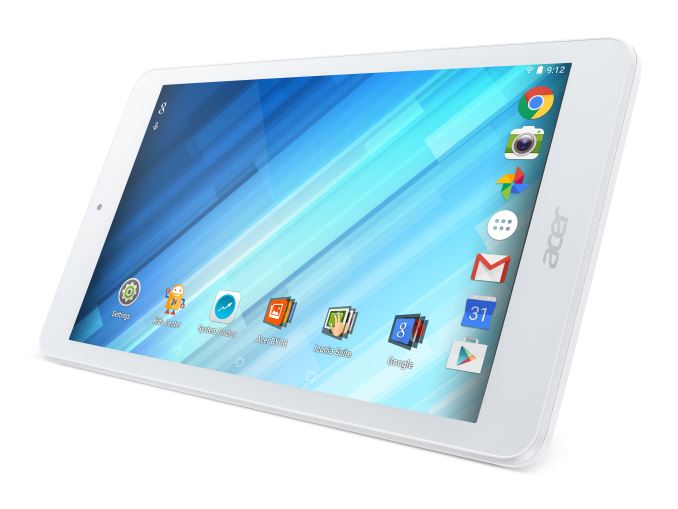
In addition to launching a brand new Windows Mobile 10 device, Acer has launched a new Android tablet in their Iconia line. The new tablet is called the Acer Iconia One 8, and with a price of $99 it's clearly targeting the budget segment of the tablet market. As of right now, the specifications for the Iconia One 8 are somewhat vague. According to Acer's press release, it features an 8" HD IPS display, which most likely refers to a 1280x800 panel. Powering the tablet is an unknown quad core MediaTek SoC paired with 1GB of DDR3L RAM, 16GB of NAND, and a MicroSD card slot. It also comes with a 5MP rear-facing camera and a 2MP front-facing camera. At launch, the Iconia One 8 will come in both blue and white finishes, and will ship with Android 5.1. At $99, it represents a very inexpensive way to pick up an Android tablet. It's probably best to wait until some of the specifications such as the SoC are specified in greater detail, but one can make a fairly good guess as to what will be available at this price point. | |||||||||||||||||||||||||||
| 9:00a | NVIDIA Announces the GeForce GTX VR Ready Program
With CES 2016 quickly ramping up ahead of Wednesday’s official opening, NVIDIA is hitting the ground running. While the company will be holding their traditional CES press conference this evening – with a focus this year on self-driving cars – the company’s consumer GeForce division is also at the show with their own products and technologies to show off. To that end, early this morning the company sent over a press release for a new branding program they’re launching, which they are calling the GeForce GTX VR Ready Program. The VR Ready Program will be a new branding/badging initiative from NVIDIA, that similar to past branding initiatives, is being created to label components and systems that the company considers to be VR ready. NVIDIA’s press release notes that they see a need to make it clearer to consumers which systems and components will be suitable for VR, which is why they are launching this program. Meanwhile more pragmatically speaking, this is also the latest effort by NVIDIDA to build up an ecosystem around VR and head mounted displays, as the company sees VR as a major market for high-end GPUs in 2016 and beyond. As for the actual system requirements for the GeForce GTX VR Ready program, these are are unsurprisingly almost identical to Oculus’s previously announced Oculus Rift recommended system specifications. Consequently, NVIDIA hardware vendors putting together cards and systems for the Rift can by and large join NVIDIA’s VR Ready program just by following Oculus’s existing recommendations. NVIDIA will be offering the badge for both complete systems and retail video cards. Complete systems will need to meet all of the above requirements, while video cards need to be a GTX 970 or better. The press release does not note a specific date this badging program will go live, but with the associated website going live today, it would appear that the badging program will be launching imminently, a couple of months ahead of the expected spring releases of the Oculus Rift and HTC Vive headsets. | |||||||||||||||||||||||||||
| 9:00a | AMD Reveals Polaris GPU Architecture: 4th Gen GCN to Arrive In Mid-2016 For much of the last month we have been discussing bits and pieces of AMD’s GPU plans for 2016. As part of the Radeon Technology Group’s formation last year, the leader and chief architect of the group, Raja Koduri, has set about to make his mark on AMD’s graphics technology. Along with consolidating all graphics matters under the RTG, Raja and the rest of the RTG have also set about to change how they interact with the public, with developers, and with their customers. Back in December we started things off talking about RTG’s plans for display technologies – DisplayPort, HDMI, Freesync, and HDR – and how the company would be laying the necessary groundwork in future architectures to support their goals for higher resolution displays, more ubiquitous Freesync-over-HDMI, and the wider color spaces and higher contrast of HDR. The second of RTG’s presentations we covered was focused on their software development plans, including Linux driver improvements and the consolidation of all of RTG’s various GPU libraries and SDKs under the GPUOpen banner, which will see these resources released on GitHub as open source projects. Last but not least among RTG’s presentations is without a doubt the most eagerly anticipated subject: the hardware. As RTG (and AMD before them) has commented on in the past couple of years, a new architecture is being developed for future RTG GPUs. Dubbed Polaris (the North Star), RTG’s new architecture will be at the heart of their 2016 GPUs, and is designed for what can now be called the current-generation FinFET processes. Polaris incorporates a number of new technologies, including a 4th generation Graphics Core Next design for the heart of the GPU, and of course the new display technologies that RTG revealed last month. Finally, the first Polaris GPUs should be available in mid-2016, or roughly 6 months from now. | |||||||||||||||||||||||||||
| 10:00a | Samsung Introduces Portable SSD T3
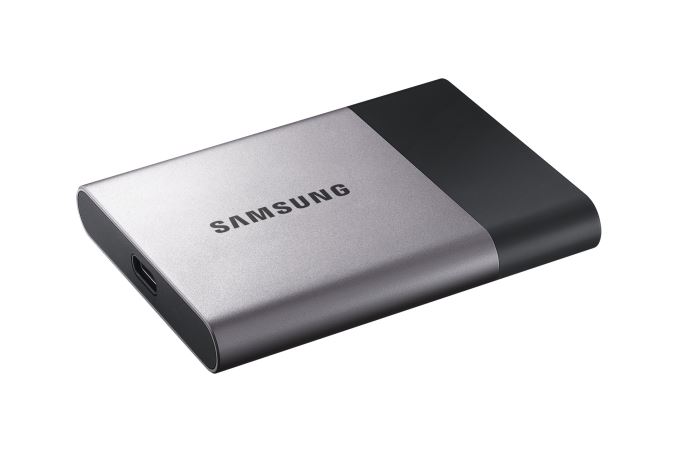
In recent years a new category of portable storage devices has emerged. Based on the same controllers and flash used in 2.5" SATA SSDs, portable SSDs offer much higher performance and capacities than typical of USB thumb drives. The use of SATA to USB3 bridge chips allows portable SSDs to be used with almost any devices, as opposed to relying on the rare eSATA standard. Most portable SSDs also support the USB Attached SCSI Protocol (UASP) to cut down on the overhead relative to a direct SATA connection. Portable SSDs usually can't match the performance of their SATA counterparts, but they are closer to the native performance than to normal thumb drive speeds. At last year's CES, Samsung introduced their Portable SSD T1, their first foray into this market. This year they've got a successor, the Portable SSD T3. Externally, the biggest difference is that the T3 switches to a metal case from the black plastic of the T1. This doubles the overall mass, bringing it up to 51 grams. The T3 also adopts the reversible Type C USB port, replacing the T1's micro USB 3 Type B port. The T3 includes a Type C to Type A cable. We don't have much information on what's changed internally. The T1 used the same controller and TLC 3D NAND as the 850 EVO. After the launch of the T1, the 850 EVO and Pro product lines gained 2TB models thanks to Samsung's newer MHX controller, which expanded the amount of RAM that could be accessed and allowed the drives to manage twice as much flash. The Portable SSD T3 introduces a 2TB option so we're pretty sure it is also adopting the MHX controller for at least that capacity. Like the 850 EVO and Pro, the smaller capacities may be using the earlier MEX and MGX controllers, but that shouldn't hinder their performance. The Portable SSD T3 will be available in early March. Pricing has not been announced. | |||||||||||||||||||||||||||
| 1:55p | ASUS Announces February Launch For The ZenFone Zoom
Today at CES ASUS showcased their upcoming ZenFone Zoom, and confirmed that it will be coming to the United States this February. ASUS has teased the ZenFone Zoom a couple of times, and most notably showed it at IFA last year. It was also mentioned during their CES keynote last year, and so it has taken quite some time for it to get to market. Just as a refresher, you can find the ZenFone Zoom's specs in the table below.
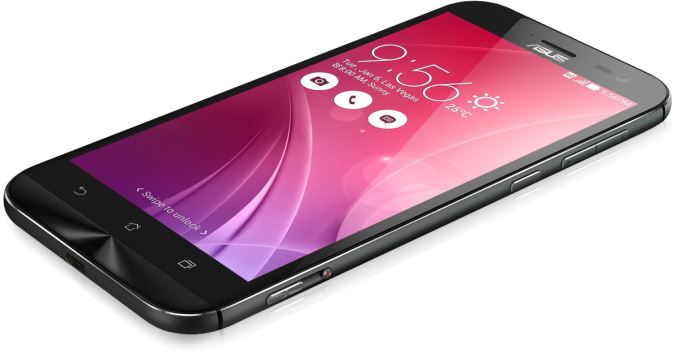
The ZenFone Zoom is very similar to the ZenFone 2 as far as the internal specs go. In the 128GB model there is a bump in clock speed, as the SoC moves from Atom Z3580 to Z3590, but the phone remains the same otherwise. Obviously the big attraction is the rear-facing camera with optical zoom. It's not clear exactly which camera sensor is used in the ZenFone Zoom, but I wouldn't be surprised to find that it's the same Toshiba sensor from the ZenFone 2. I hope that ASUS has put a lot of work into improving their camera processing from the state it was in on the ZenFone 2, as hardware has never really been the issue with photo quality on ASUS devices. The ZenFone Zoom will be launching in the United States this February, with a starting price of $399 for the 64GB model. Pricing for the 128GB model with the Z3590 SoC is currently unknown. | |||||||||||||||||||||||||||
| 10:30p | Lenovo Announces The VIBE S1 Lite
Today Lenovo introduced the VIBE S1 Lite at CES in Las Vegas. The VIBE S1 Lite is a mid range smartphone offered by Lenovo which offers some notable specs relative to its price. The known specifications for Lenovo's newest phone are in the chart below, with a few bits of information like the dimensions and WiFi/Bluetooth specifications being unknown at the moment.
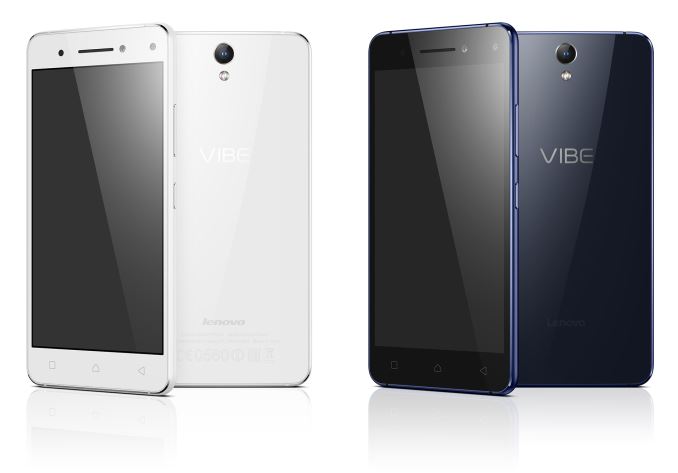
The Lenovo VIBE S1 Lite won't be coming to the US, which is actually a shame because it looks like an interesting phone for the price. For $199 you get a 5" 1920x1080 IPS display, support for LTE, and a 13MP rear-facing Sony camera with support for PDAF. Interestingly enough, Lenovo notes that it's an ISOCELL sensor, even though ISOCELL is really a Samsung specific term for deep trench isolation, which is the process of putting barriers between the pixels on the camera sensor to reduce crosstalk. All of this is run off of a 10.26Wh battery. If there's one thing that isn't too exciting about the VIBE S1 Lite it's probably the SoC. MTK 6753 is an octa core Cortex A53 part with a max frequency of 1.3GHz. Considering that you're put on the same playing field as Snapdragon 410 it's definitely not bad for the price, but some of the other specs are definitely a bit more exciting at this price point. The last notable thing about the VIBE S1 Lite is the design. Based on the press photos the phone actually looks quite nice for a phone at this price. The color choices are quite interesting, and when they're combined with the metal band around the phone the design reminds me a bit of the Nexus 6. That's somewhat intriguing when you consider that Lenovo now owns Motorola Mobility. The Lenovo VIBE S1 Lite will be available in white and blue in the first quarter of this year, for a price of $199 USD. Like I said earlier, it actually will not be sold in the US despite its introduction at CES, but it will be sold in all the markets that Lenovo phones are currently sold in. | |||||||||||||||||||||||||||
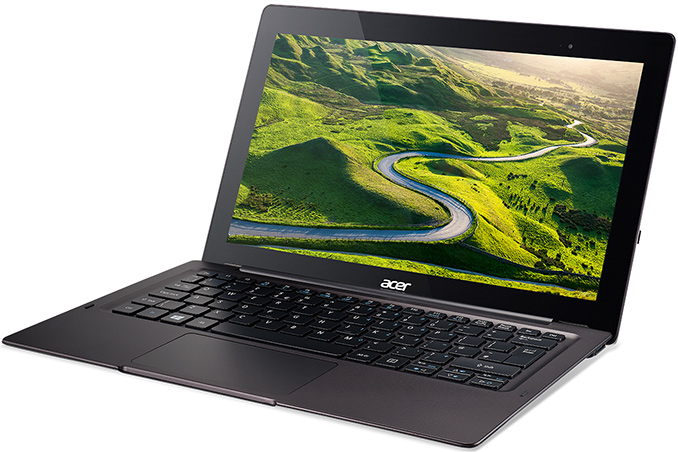
| 11:19p | Acer Aspire Unveils Switch 12 S 2-in-1 Notebook
Acer on Monday introduced its new 2-in-1 hybrid notebook at the Consumer Electronics Show. The Aspire Switch 12 S is designed for those, who need a decent level of performance and features along with a high-resolution display in a sleek form-factor. The new 2-in-1 system features Intel Thunderbolt 3 technology and will be compatible with Acer’s upcoming Graphics Dock, an external graphics solution for mobile PCs. The new hybrid personal computers will hit the market already next month. The Acer Aspire Switch 12 S hybrid PC is based on the Intel Core M central processing unit with 4.5W thermal design power and Skylake micro-architecture. The 2-in-1 comes equipped with 4GB or 8GB of dynamic random access memory (DRAM), a 128 GB or a 256 GB solid-state drive, a 802.11 b/g/n/ac Wi-Fi controller with 2x2 MU-MIMO technology, a 720p front-facing webcam, Intel RealSense R200 camera for 3D scanning, two USB 3.0 ports, one Thunderbolt 3/USB 3.1 type-C port as well as a micro-SD card reader. The system is completely fanless thanks to very low TDP of its CPU.
The 12.5-inch display panel of the Aspire Switch 12 S uses IPS technology along with Corning Gorilla 4 glass for protection, it can feature 1920 × 1080 or 3840 × 2160 resolution, depending on exact configuration. The multi-touch display supports the Acer Active Pen for note-taking and sketching, something, which may be useful for business users and creative professionals.
Those, who would like to use the Aspire Switch 12 S for gaming will eventually be able to connect an optional Acer Graphics Dock to the Thunderbolt 3 port. At present Acer does not reveal anything about the upcoming Graphics Dock. Considering the fact that Intel’s Core M processors can hardly provide enough horsepower for demanding games, even a mainstream discrete GPU inside the dock will significantly improve gaming capabilities of the laptop. Nonetheless, it is hard to expect the Graphics Dock to transform any low-power 2-in-1 machine into a gaming powerhouse. The Acer Aspire Switch 12 S is made of anodized aluminum. The tablet part of the device is about 7.85 mm (0.31 inches) thick and weighs around 800 grams (1.76 pounds). With keyboard dock connected, the 2-in-1 laptop is 17.3 mm thick (0.68 inches) and weighs around 1400 grams (3.09 pounds).
Acer officially positions its Aspire Switch 12 S for all types of users, including business road warriors, creative professionals as well as mainstream users. The 4K display, support for stylus, Intel Thunderbolt 3 technology, RealSense camera for 3D scanning make the new 2-in-1 PC from Acer considerably more advanced compared to previous-generation hybrids. In fact, 4K display and Thunderbolt 3 support make the Aspire 2-in-1 unique as such combination is rare in general. The Acer Graphics Dock will make the Aspire Switch 12 S somewhat more attractive for gamers. However, the lack of a 4G/LTE module, a fingerprint reader and high-capacity storage options will reduce popularity of the Aspire Switch 12 S among business and professional users. The Acer Aspire Switch 12 S will be available in North America in February starting at $999.99. The new 2-in-1 will also hit the markets of Europe, the Middle East and Africa in February with prices starting from €1,199. |




| << Previous Day |
2016/01/04 [Calendar] |
Next Day >> |