[Most Recent Entries] [Calendar View]
Sunday, January 10th, 2016
| Time | Event |
| 1:50a | QNAP at CES: A M.2 SSD NAS, Dual-Xeon ZFS NAS and More
At CES 2016, QNAP showed off what they had been introducing into the APAC market over the last three months. CES was used to make the North American market aware of the new models. While we have the usual 4-, 6- and 8-bay NAS units based on Braswell, three products stood out - a 4-'bay' NAS using M.2 SSDs, a 16-bay dual-CPU 40GbE-capable NAS with 12Gbps SAS support and QNAP's first foray into the high-end enterprise space with a ZFS NAS running a completely different operating system (QES based on FreeBSD). Before talking about the expected Braswell updates, we will take a look at the three unique products from the QNAP stable. TBS-453A 4-bay M.2 SSD NASbookThe TBS-453A looks more like a mini-PC, rather than a NAS.
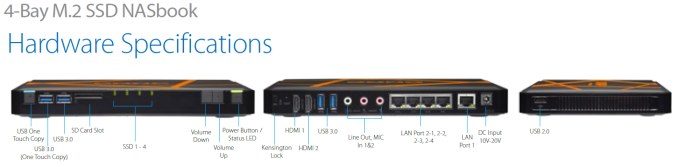
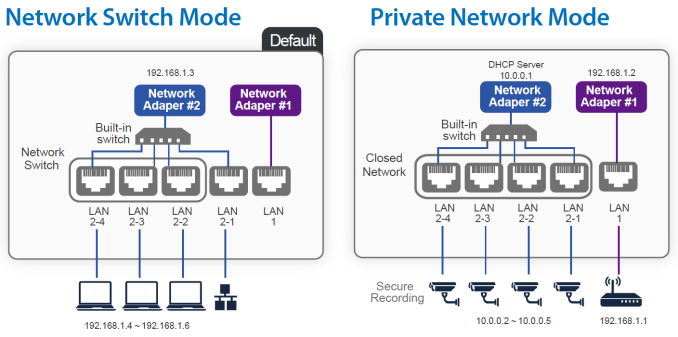
The most surprising aspect of the chassis is the presence of five RJ-45 ports. These appear as two physical LAN ports to the OS (since the second set of four is actually connected to the main SoC using a hardware switch chip). Gallery: QNAP M.2 SSD NASbook: TBS-453A
    Removing the bottom panel reveals four M.2 slots (capable of supporting M.2 2242, 2260 and 2280 SSDs) and two DDR3L SO-DIMM slots. The 2.08 GHz 4C/4T x86 SoC (Intel Celeron N3150 belonging to the Braswell family) is cooled by a notebook fan (SUNON MF60090V1-C482-S9A). The absence of any 2.5" or 3.5" drives make it quite compact. The combination of ports, speed and relative silence make it suitable for file sharing, presentations and multimedia applications (including karaoke singing concerts) in a portable form factor. The QTS Network Manager incorporates software-defined virtual switch technology providing configuration flexibility. The presence of five RJ-45 ports on the unit can lead to some interesting applications such as private networks for surveillance cameras.
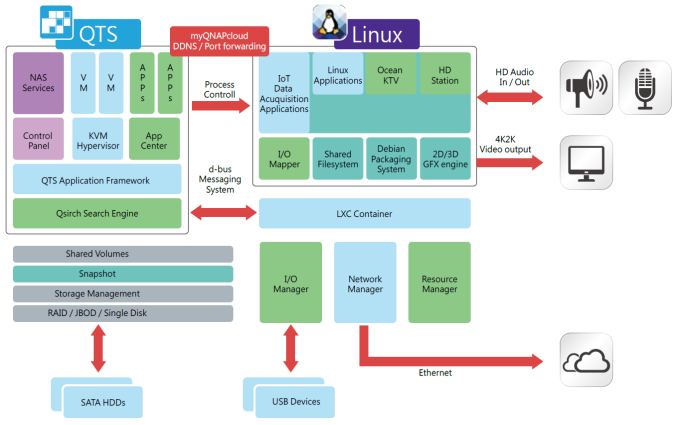
The TBS-453A also supports Linux using Docker functionality. QNAP has always had the Hybrid Desk (HD Station) app to enable video output over HDMI on selected QNAP NAS models. Linux Station builds upon Hybrid Desk and utilizes containers to provide users with a complete Linux desktop on the NAS. The NASbook along with Linux Station can act as a standard Linux desktop in this way.
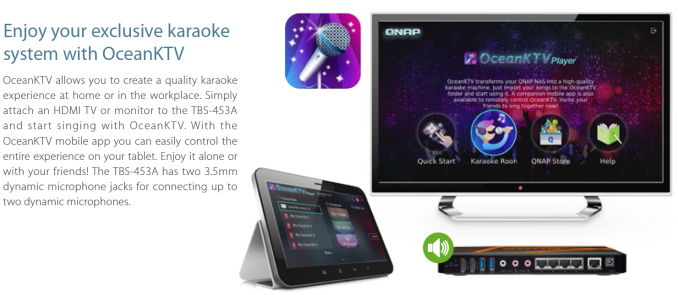
Other than these features, the usage of Braswell provides AES-NI capabilities for better performance with encrypted volumes and folders. The integrated Quick Sync engine can also transcode 4K material (both in real-time and offline) Container Station and Virtualization Station enable a number of different applications (including the running of different OSes on the machine as well as sandboxing certain processes for greater security). Dual HDMI ports allow for multimedia enjoyment using apps such as Kodi. The unit also comes with an IR receiver and remote. Apps such as OceanKTV allows for usage of the NASbook as a karaoke system.
Other than the above unique features, the standard QTS capabilities for data storage, backup and file sharing exist in the NASbook also. The storage capacity of the TBS-453A can be expanded via the UX-500P and UX-800P which provide five and eight 2.5" / 3.5" drive bays respectively. They can connect to the TBS-453A using one of the USB 3.0 ports.
We do not have concrete pricing information yet, but, with the launch towards the end of this quarter, that should soon be clarified. TDS-16489U Dual-CPU NAS
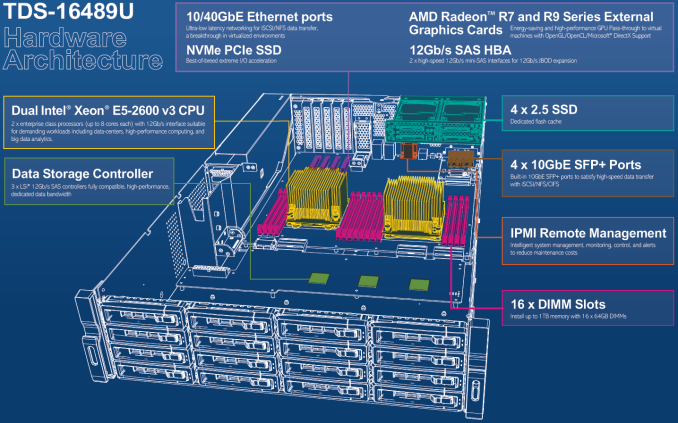
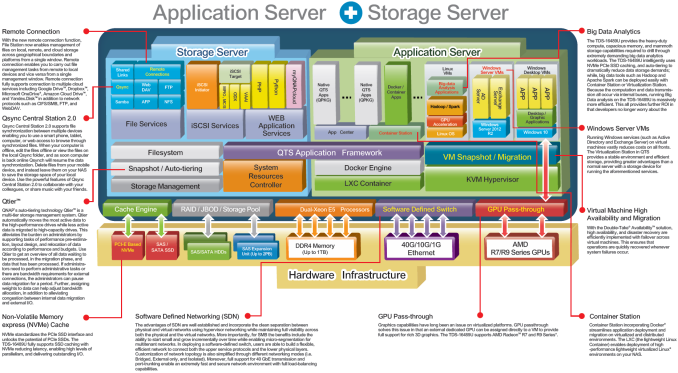
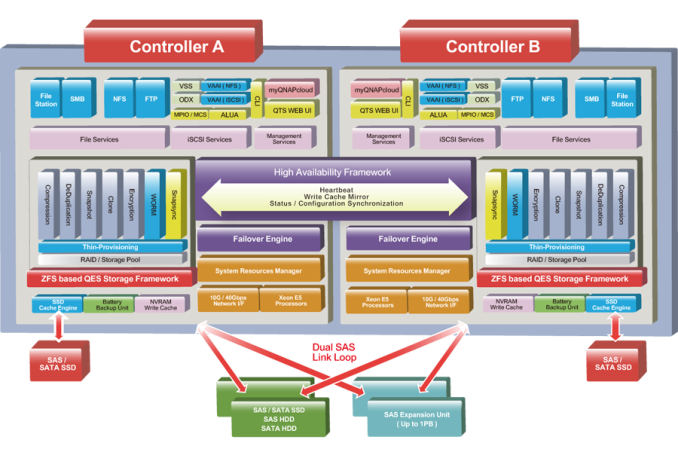
The TDS-16489U is, in QNAP's own words' a hyperconverged enterprise NAS. The capabilities of the unit are best brought out using the hardware architecture documentation.
The software capabilities enable the unit to act as both a storage server and an application server. QNAP's QTS provides all the storage server functionality. Linux and Windows VMs can enable all the compute heavy stuff. The usage of powerful Xeon CPUs give the unit bonafide data center server credentials.
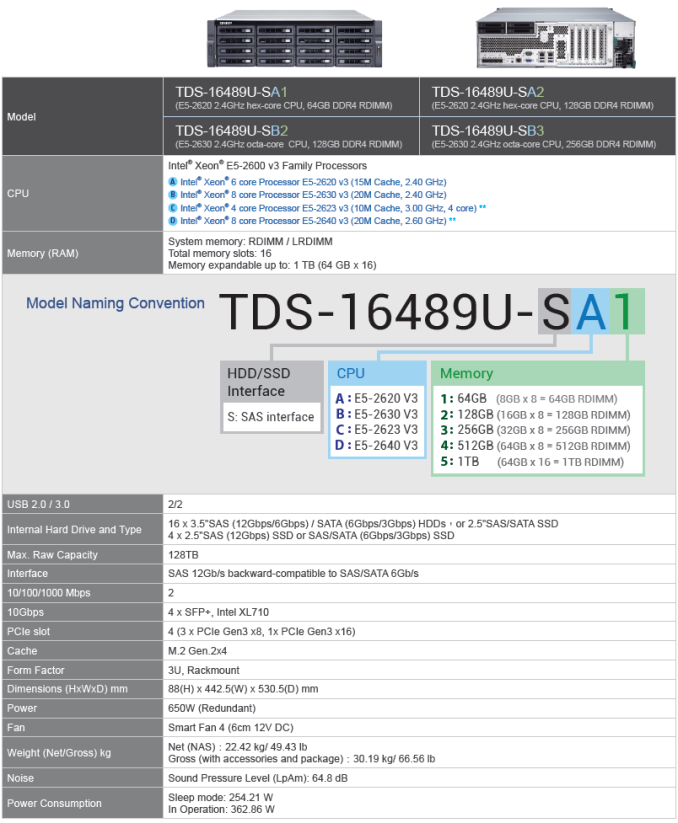
In a tradtional setup, boxes such as those from QNAP are used as a storage server, with another server running Hyper-V or some VMWare tools for virtualization. Even though QNAP's Virtualization Station can't hold a torch to those dedicated virtualization systems, it comes with no licensing costs and enables tighter integration of the guest OS and the storage server infrastructure in products such as the TDS-1648U. The hardware specifications of the NAS are reproduced below
Pricing information has not been made available yet. ES1640dc ZFS NAS and Miscellaneous Products
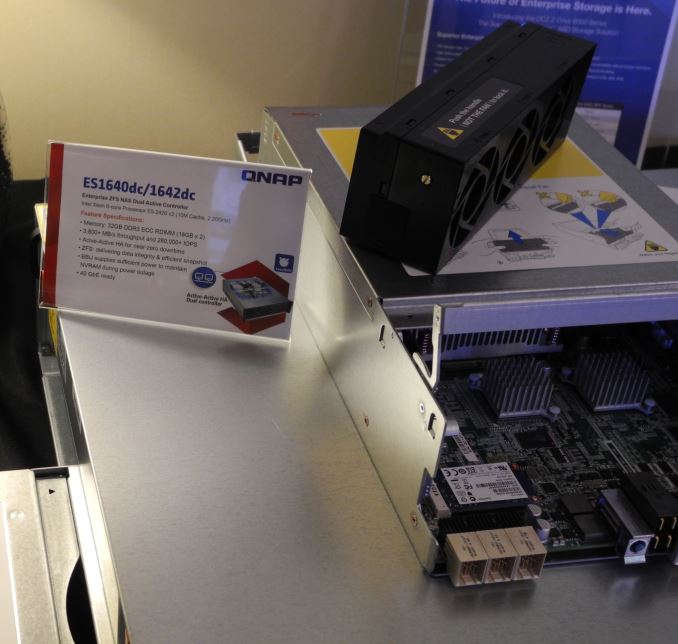
QNAP also talked about their upcoming ES1640dc, which is a significant departure from their usual products.
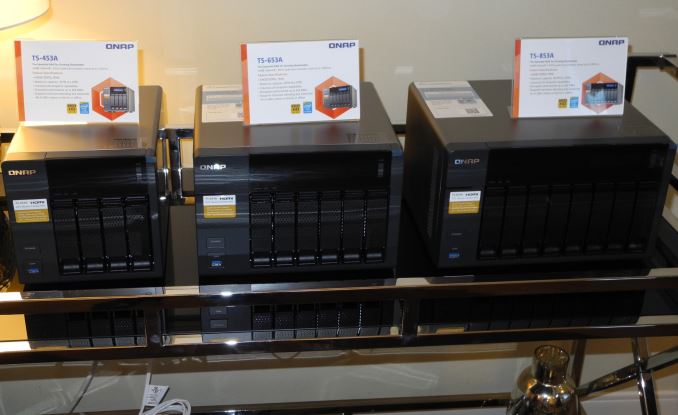
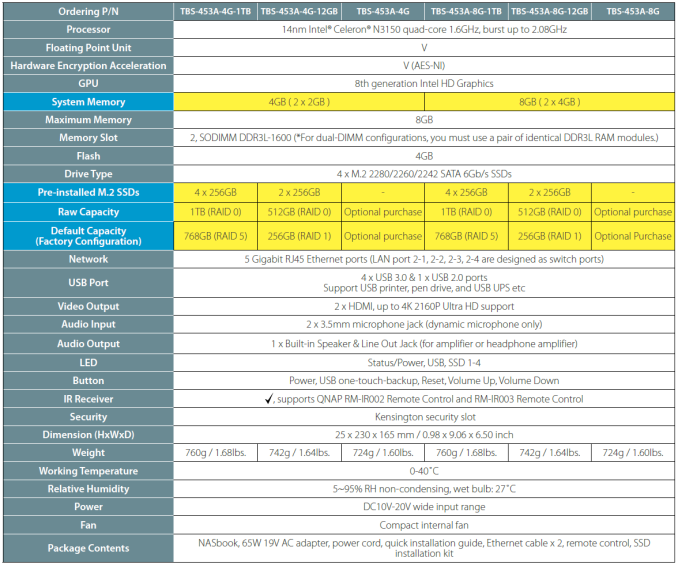
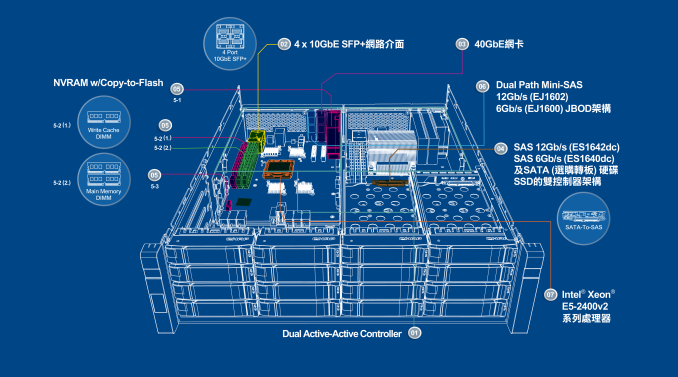
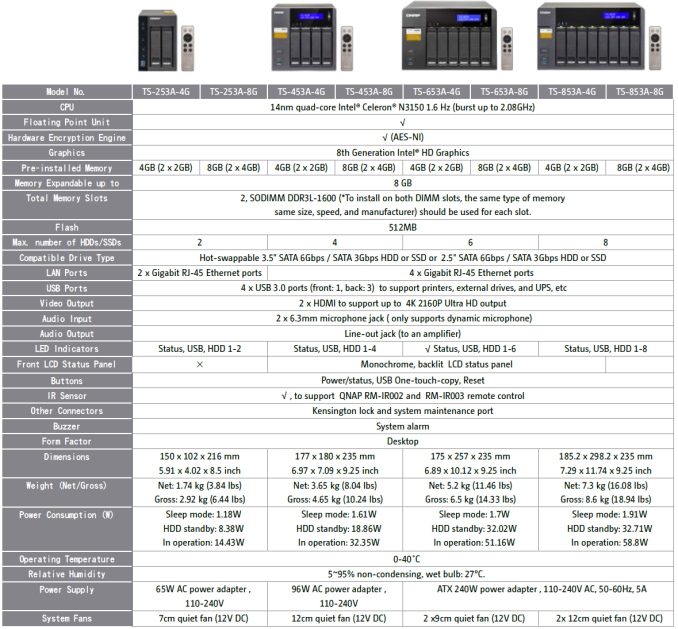
While the move to QES with ZFS brings features such as inline compression, data deduplication, checksumming / bitrot protection and increased shapshot capabilities, we lose support for powerful QNAP apps such as Virtualization Station and Container Station. On the hardware side, the ES1640dc and ES1642dc both come with dual active controllers in order to provide high availability if one of the controllers were to fail. The units also provide support for usage of a DRAM DIMM as a write cache as long as a dedicated battery backup unit is installed to copy contents to a mSATA SSD when power fails. Additionally, this scheme also reduces wear on the flash memory when the mSATA SSD is used as a write cache. The EJ1600 / EJ1602 expander modules (again, with dual controller support) can be used to increase the storage capacity of the ES1640dc. Moving on to other SMB-focused products, QNAP also had the TS-x53A on display in their suite. Based on the Intel Celeron N3150 platform, these products make up the Braswell update to the Bay Trail-based TS-x53 series. Like the TBS-453A NASbook, the TS-x53A series come with two HDMI outputs, two microphone inputs
The full specifications of the various models in the TS-x53A lineup are in the extract from the above spec sheet. On the whole, I would say that QNAP had a quiet CES. There was one major innovative product in the TBS-453A NASbook. The rest of the products show the direction in which QNAP has been heading, but they have all already been talked about in the APAC market. The only disappointing aspect, in my opinion, was that QNAP had no updates to share on the move from ext4 to btrfs for their home consumer and SMB lineup. Considering that Netgear has already been shipping an implementation for more than a year now, and Synology is shipping btrfs in beta form for a couple of months now, this was quite surprising. |
| 8:00a | Synology Demonstrates RT1900ac 802.11ac Router at CES
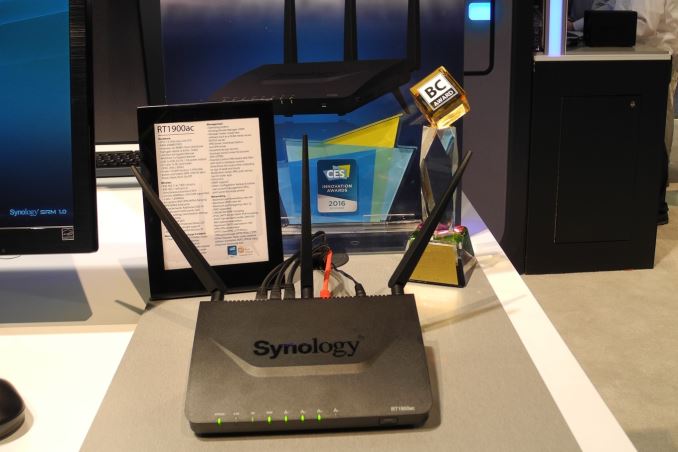
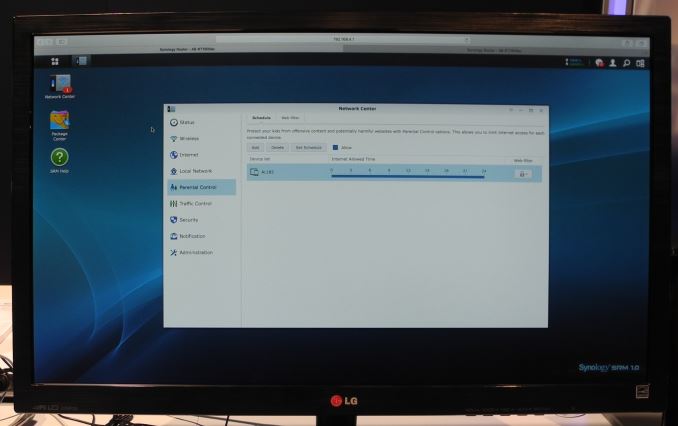
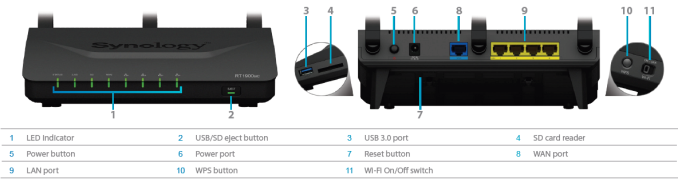
Synology had organized the Synology 2016 Conference back in September 2015 to talk about their plans for the next couple of quarters. We had covered it in great detail. In the conference, the beta version of DSM 6.0 was launched. Synology also talked about their 2-bay Braswell unit, the DS716+ and a 802.11ac router, the RT1900ac. Synology's booth at CES 2016 had a working demo of the RT1900ac. The 'DSM' experience delivered by the Synology Router Manager (SRM) OS on the router is quite impressive and will definitely make other router vendors rethink the interface for their offerings. As is common nowadays, management of the router can also be done via a mobile app. The router OS also has plenty of interesting features for power users. One of the unique features is the application layer QoS optimization that can bring down the bandwidth available for, say, YouTube or BitTorrent. Other routers have similar features, but Synology claims that their implementation provides the best granularity.
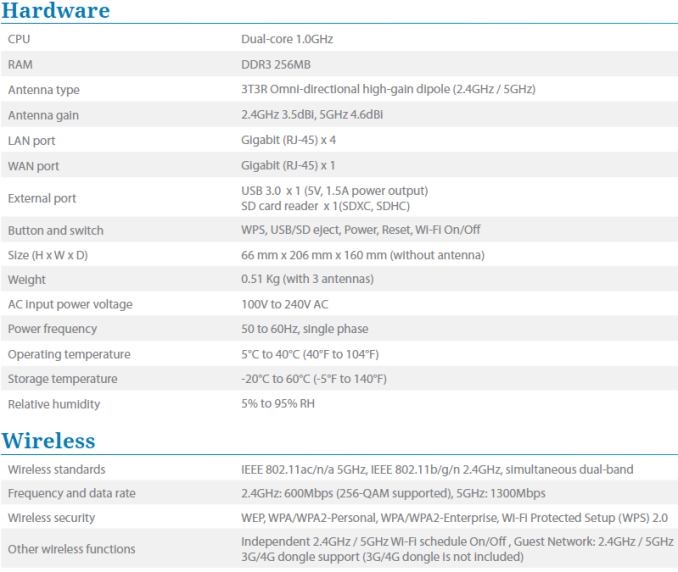
Hardware-wise, the unit is based on the legacy 2nd generation Broadcom 802.11ac platform (AC1900 - 3x3 in 5GHz band for 1300 Mbps and 3x3 in 2.4 GHz with 256-QAM for 600 Mbps). The rest of the specifications as well as the hardware aspects are reproduced below from the datasheet.
Going with an older platform has allowed Synology to price the unit at $150. This is quite cheap for the specifications and will definitely be a worthy competitor to the Netgear R7000 Nighthawk router which has similar specifications and is priced at $200. Synology DS716+Coming back to the NAS side, Synology was also demonstrating the DS716+, a 2-bay Braswell NAS which can be expanded up to seven bays with the DX513. The interesting aspect here is that the unit is capable of supporting btrfs volumes. Gallery: Synology DS716+
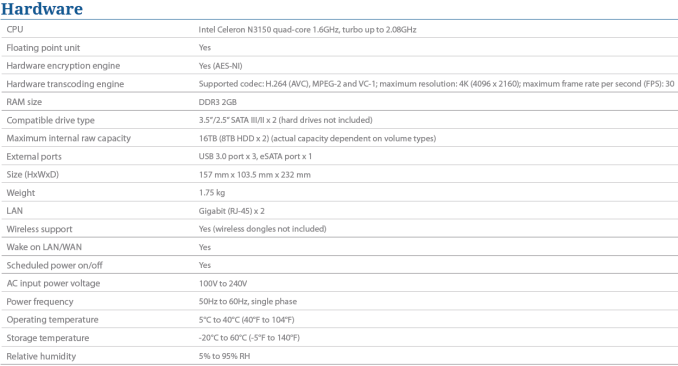
    The hardware specifications of the DS716+ are reproduced below.
Synology claims around 223 MBps for reads and 137 MBps for writes to a RAID-1 volume on the DS716+. Enabling encryption doesn't cause any noticeable drop in the claimed numbers. The Quick Sync engine is now taken advantage of in DSM to deliver real time 4K transcoding (no HEVC, though). The DS716+ is available for $450 on Amazon. Synology DS416jIn fresh NAS news (i.e, what we didn't hear about at the Synology 2016 conference), Synology also launched the DS416j in order to replace the DS414j in their budget-friendly 4-bay lineup. As is usual for budget NAS models, this unit comes with only one network port. However, RAID-5 performance is still very good, with reads coming in at 112 MBps and writes at 101 MBps according to Synology. Gallery: Synology DS416j
     
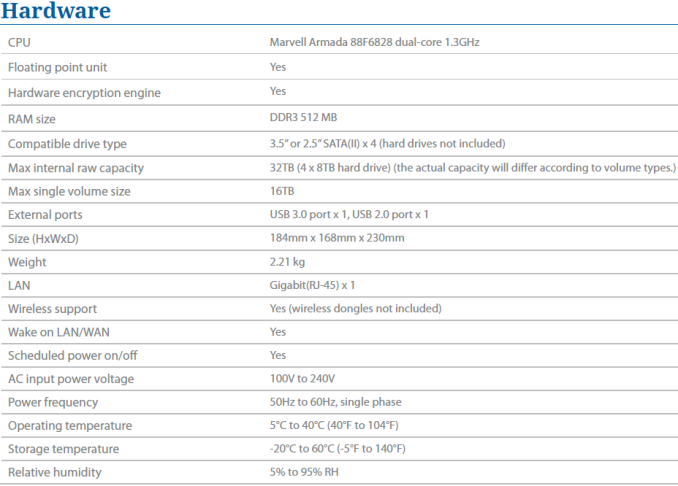
The interesting aspect here is that Synology has opted to go with the Marvell ARMADA 88F6828 with four native SATA ports. It is a high-end variant in the the ARMADA 38x family, and replaces the Mindspeed SoC used in the DS414j. The DS416j is available for $340 on Newegg. Synology has focused more on bringing attention to their RT1900ac router at CES 2016. Personally, I was hoping to hear about Braswell-based NAS units with 4+ bays. Consumers looking at commercial off-the-shelf NAS units with btrfs support will definitely be waiting for those. |
| 6:45p | Linksys Expands Max-Stream Networking Lineup at CES
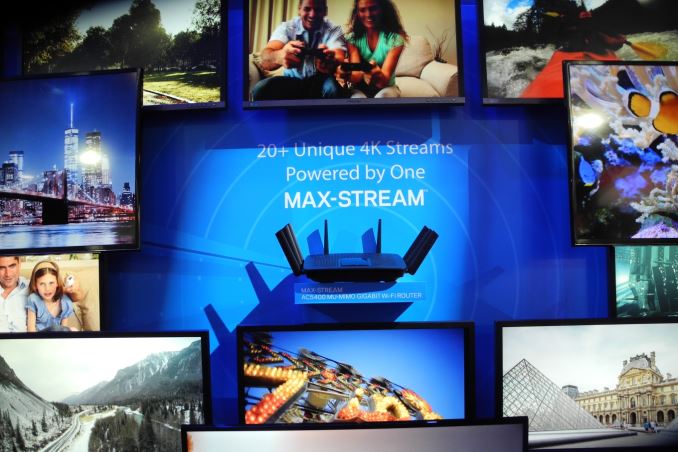
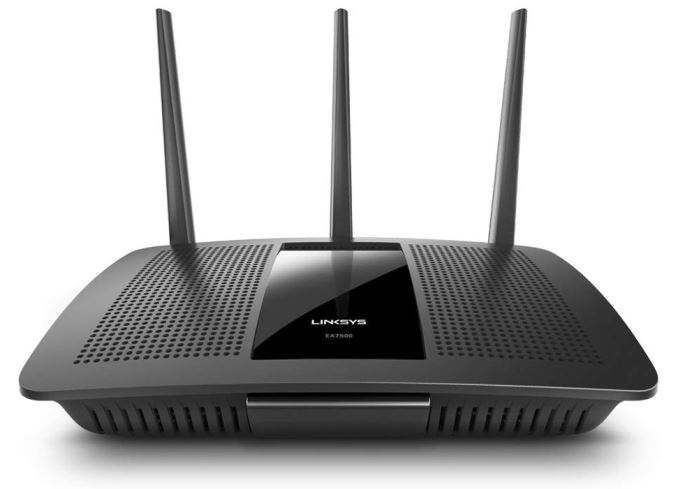
Linksys was one of the first vendors to jump on to the MU-MIMO bandwagon last year with the launch of the EA8500 AC2400-class 802.11ac router. The Max-Stream branding is used by Linksys to promote their routers. At CES, they introduced a host of new products to expand this lineup. EA7500 - AC1900-class with MU-MIMOThe EA7500 is a 3x3 dual-band router based on a Qualcomm Atheros platform (1.4GHz IPQ8064 SoC, QCA8337-AL3C switch, and QCA9982 and QCA9983 radios). This one enables 256-QAM to deliver 600 Mbps in the 2.4GHz band. The 5 GHz band still delivers 1300 Mbps theoretical throughput.
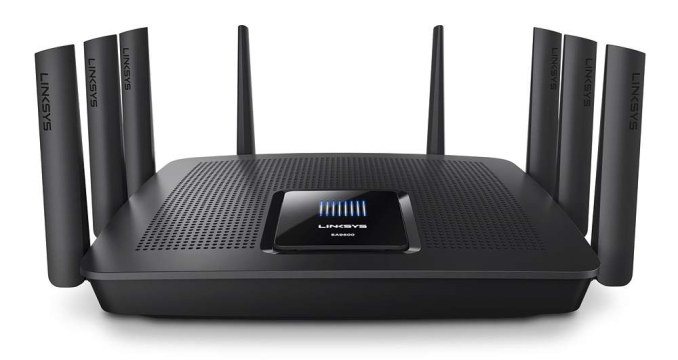
Priced at $200 and slated to come to the market next month, it will go against the Netgear Nighthawk R7000 with similar speeds, but come with MU-MIMO enabled. The latter is an important selling point as more and more MU-MIMO clients come to the market. More information can be found on the Linksys product page. EA9500 - AC5400-class with MU-MIMOThe EA9500 is based on the Broadcom Tri-Band Wi-Fi platform (two 4x4 5GHz SSIDs and one 4x4 2.4GHz SSID). This is the same platform as the AC5300 Nighthawk X8 router released by Netgear in October 2015. Compared to the Nighthawk X8, this one comes with 8 LAN and 1 WAN port and 8 external antennae. There doesn't seem to be any link aggregation capabilities out of the box, but that is just a firmware feature.
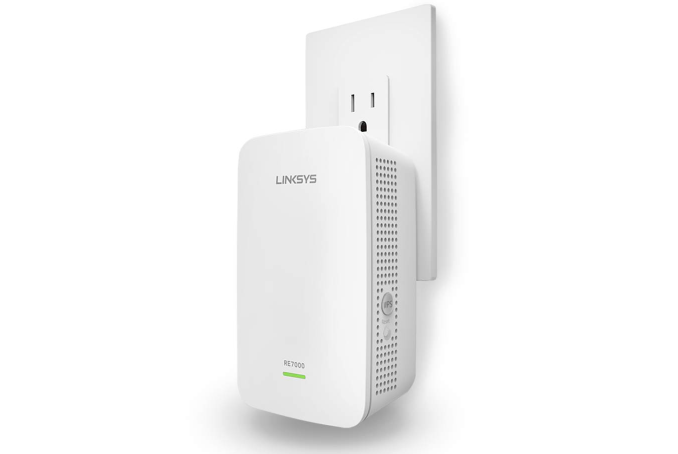
Priced at $400, availability is slated for April. The delay is due to the fact that Broadcom is yet to bring MU-MIMO capability to the platform in the firmware (the hardware is claimed to be MU-MIMO capable). Miscellaneous ProductsThe RE7000 is a MU-MIMO-capable Wi-Fi range extender in the plug-in form factor. It is AC1900 class, but, instead of having the same spatial stream configuration for both 2.4GHz and 5 GHz bands, the product does 4x4 in the 5GHz and 2x2 in the 2.4GHz channels. It comes with a single GbE port. Priced at $150, it will come to market in Spring 2016.
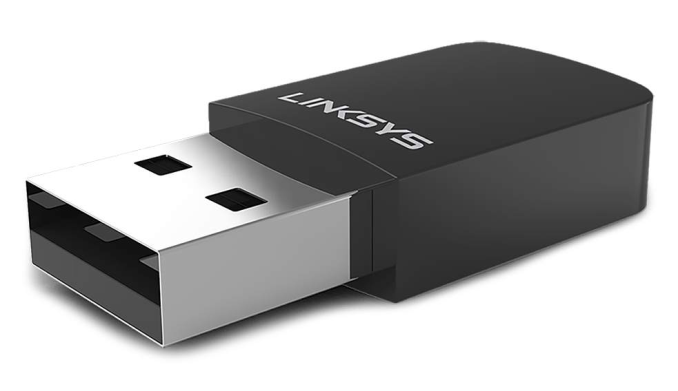
The AC600 USB MU-MIMO adapter (WUSB6100M) finally brings MU-MIMO to USB WLAN adapters. With a 1x1 configuration (433 Mbps in 5GHz and 150 Mbps in 2.4 GHz), it needs only a USB 2.0 interface to connect to the host PC. The big draw here is the MU-MIMO capability which helps improve overall system performance when used alongside other MU-MIMO clients and a MU-MIMO-capable router.
On the cable modem side, the CM3008 (DOCSIS 3.0, 8 downstream / 4 upstream channel bonding, 343 Mbps down / 120 Mbps up, $70, Spring 2016) and the CM3024 (DOCSIS 3.0, 24 downstream / 8 upstream channel bonding, 960 Mbps down / 240 Mbps up, $130, Spring 2016) were on display. There is also a growing trend to integrate the Wi-Fi router and cable modem in one (particularly from a service provider perspective). To address this market, Linksys is also introducing the CG7500 which combines the CM3024 24x8 DOCSIS 3.0 platform with a AC1900 (1300 Mbps + 600 Mbps) wireless router platform. The unit comes with four RJ-45 GbE ports and one USB 2.0 port. The antennae are all internal. It will be priced at $250 and be available in Spring 2016.
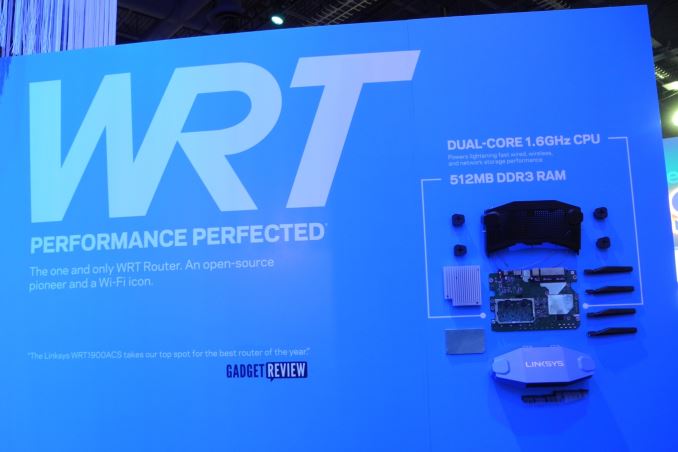
Linksys also took the opportunity at CES to announce DD-WRT support for the routers based on Marvell silicon (WRT1900AC, WRT1200AC and WRT1900ACS). |
| 10:15p | CES 2016: ASUS Product Tour
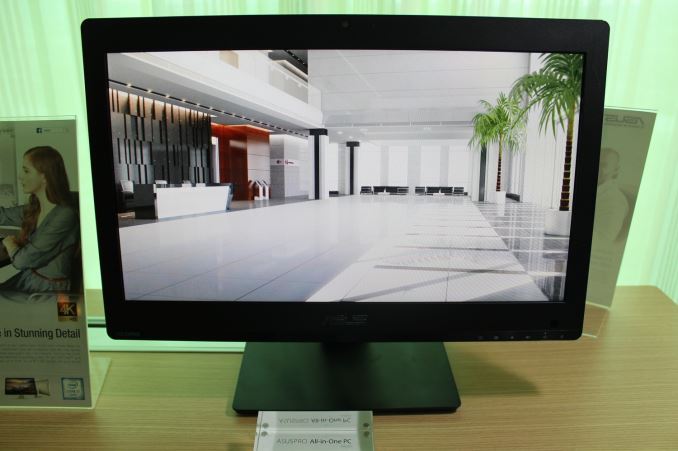
It’s almost hard to believe that ASUS started as primarily just a motherboard company. Their CES showcase for 2016 had a huge array of products, including of course motherboards, but also smart home, smartwatches, phones, laptops, all-in-one systems, monitors, and more. Let’s take a look at some of the new devices for 2016. ASUS had a couple of all-in-one PCs, including the ASUSPRO model. This is a 20” AIO designed for commercial applications, and it can include a smartcard reader, VGA port, COM port, HDMI, and a tool-less back cover to access the internal components. There was nothing flashy about this model, but it certainly should fit the bill for specific instances where things like a COM port are necessary.
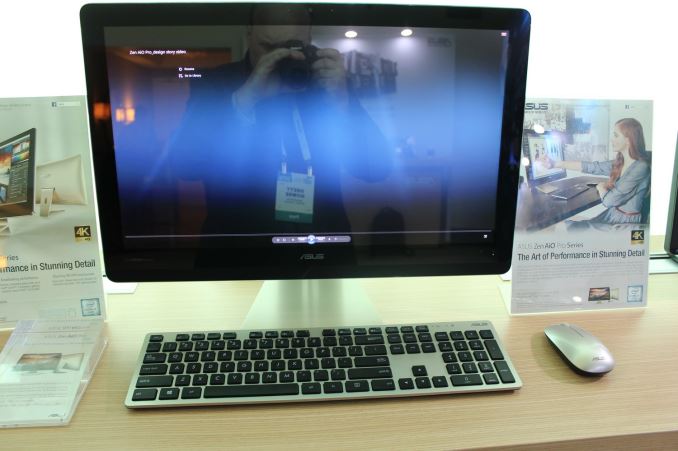
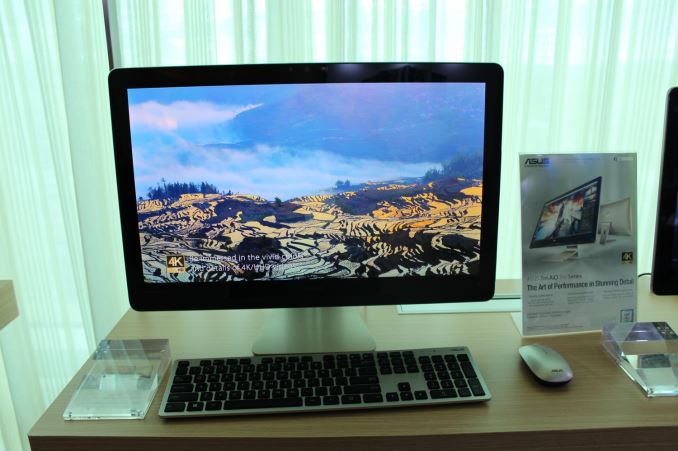
The Zen AiO Pro was a much more consumer oriented model, with the ASUS Zen spun circle finish on the back. It’s a Full HD (1920x1080) model which can be had with up to a GTX 960M graphics card, which should actually be pretty decent for gaming at that resolution. It also features a USB 3.1 Type-C port with 10 Gbps transfer. CPU is up to Core i7 Skylake (T Series 35 Watt Desktop chips) with 16 GB of DDR4, and 512 GB of PCIe storage. The speakers are 16 Watt models which should provide decent audio for a monitor mounted solution. The model on display was the Z220IC, which is a 22-inch version, but there is also a Z240IC which has an optional UHD display. Intel RealSense 3D camera is also available for Windows Hello facial login. ASUS has a very nicely designed AIO here with the beautiful aluminum stand.
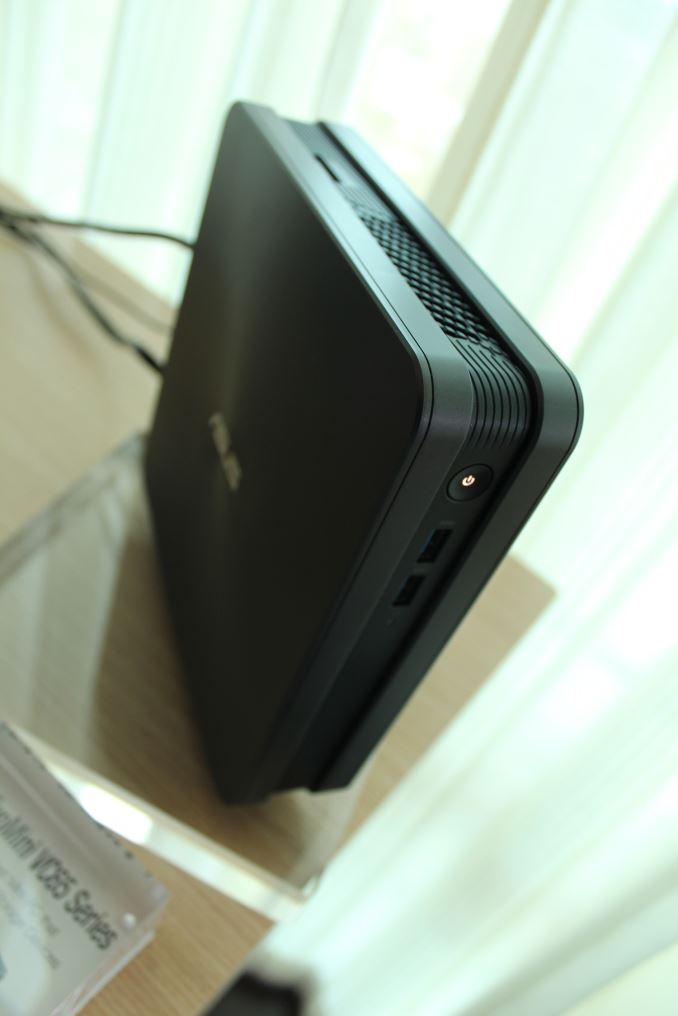
ASUS’s VivoMini VC65 Series of Mini-PC was pretty interesting. They feature desktop class processors and support for up to four storage devices, meaning you could turn one of these into a very compact NAS. The VC65R model supports RAID as well. These were announced quite a while ago, but it was good to see them in person. They really are very compact, and with room for up to four drives, there are a lot of applications for this.
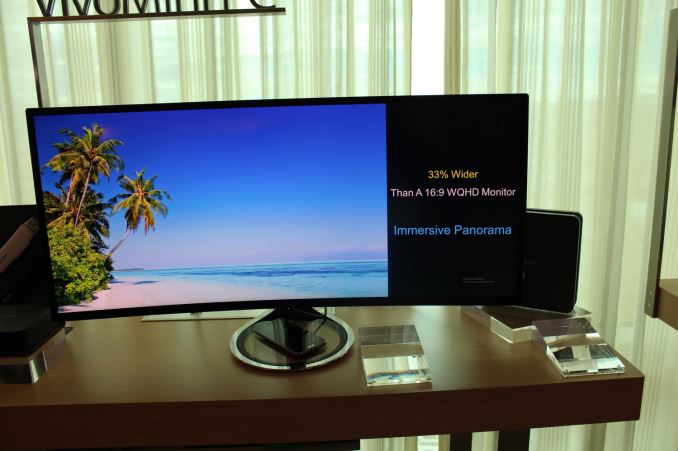
ASUS also had the MX34 Curved monitor, which is a 34-inch display with a 3440x1440 resolution. These 21:9 displays can be a nice way to eliminate the need for dual monitors. This model also features Qi wireless charging on the base, as well as HDMI 2.0 and DisplayPort 1.2 connections.
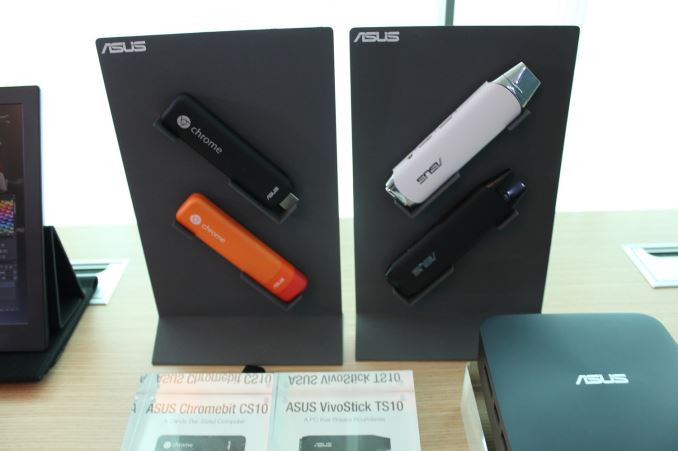
ASUS also had their mini PCs on display, with the Chromebit and VivoStick models shown in a couple of colors. The Chromebit is unsurprisingly Chrome OS, and the VivoStick is Windows 10. Neither is going to wow you with performance. The Chromebit is powered by a Rockchip quad-core RK3288C and has 16 GB of eMMC and 2 GB of memory. The Vivostick is based on Intel’s Cherry Trail Atom processor, and also has 2 GB of memory, but 32 GB of eMMC storage. There are 2 USB 2.0 ports available on the VivoStick.
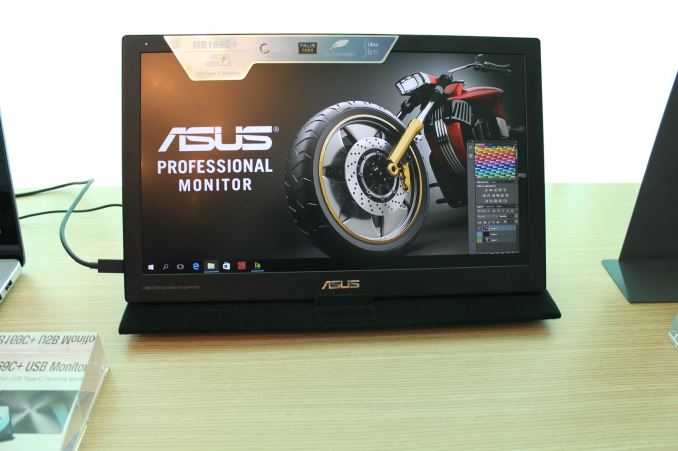
Next on display was the MB169C+ monitor, which has a terrible name, but a great set of features. It’s a 15.6-inch Full HD display, with the cool feature that it is completely driven off of a single USB-C cable. The USB-C can provide enough power for this display, so you can just plug it into your notebook and that’s all you need. It also comes with a sleeve case to protect the display when not in use.
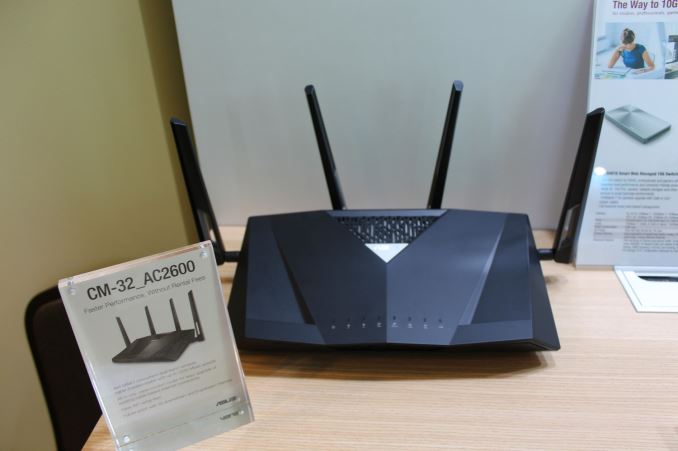
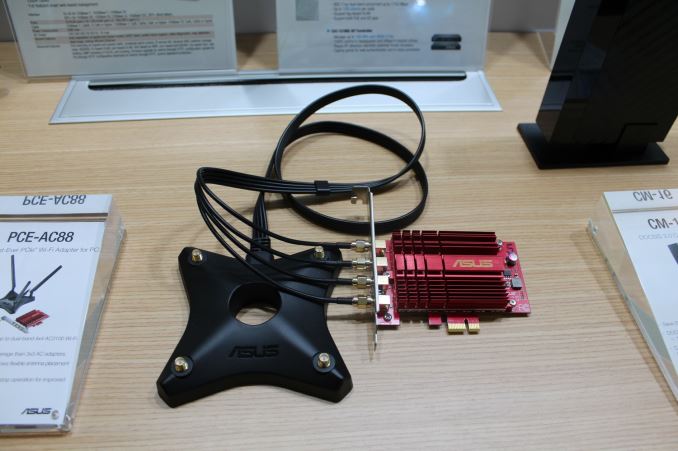
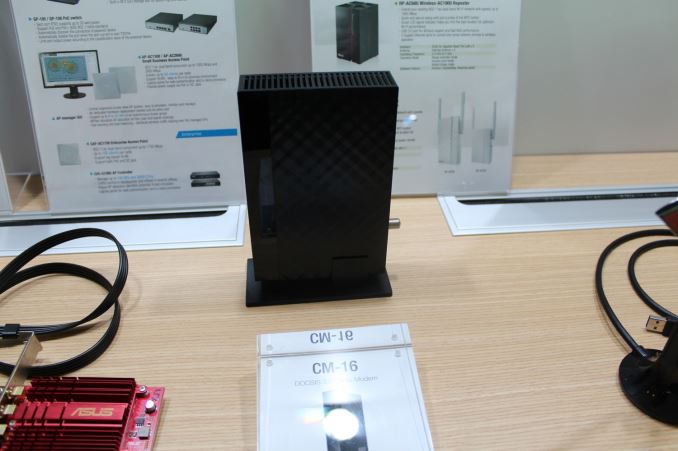
Before moving on to laptops, I’ll just mention a couple of networking items as well. ASUS had on display the AC2600 router, which offers 4x4 MIMO support, and to go with that, they also have a PCIe wireless networking card which supports 4x4 802.11ac for up to 3.1 Gbps theoretical speed. ASUS put a big heatsink on this card to help it keep cool under load, but the antennae required is, frankly, massive. If you can’t run Gigabit to your desktop, this should give you the best result. ASUS also had a DOCSIS 3.0 cable model on display, so it seems they are expanding their networking to that side as well.
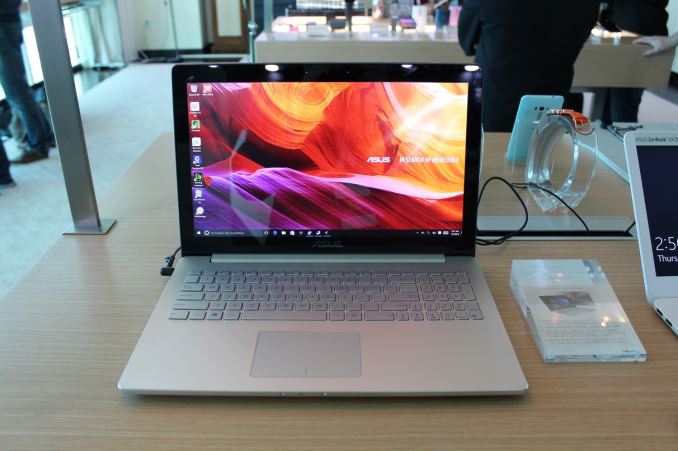
ASUS didn’t have any new laptops for CES, but I did get a chance to check out some that had been announced over the last couple of months with the launch of Skylake. The 15.6-inch ZenBook Pro is arguably ASUS’s flagship laptop, with a full aluminum chassis and 45-Watt Skylake CPUs. It also features an NVIDIA GTX 960M GPU, and PCIe storage. Optionally there is a UHD display with 100% Adobe RGB color space coverage. It’s a great looking laptop, and plenty powerful as well.
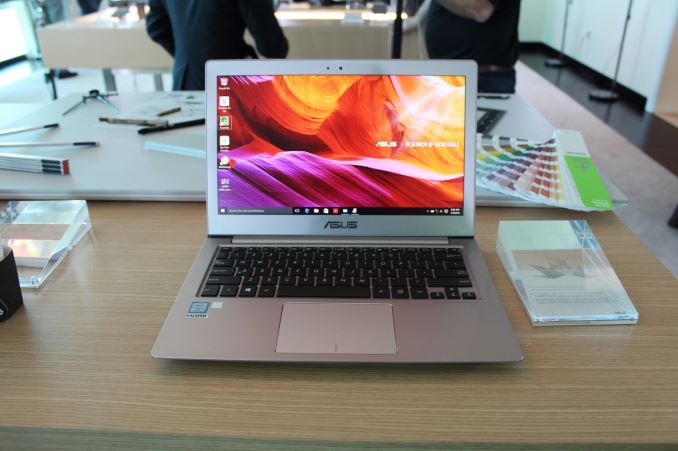
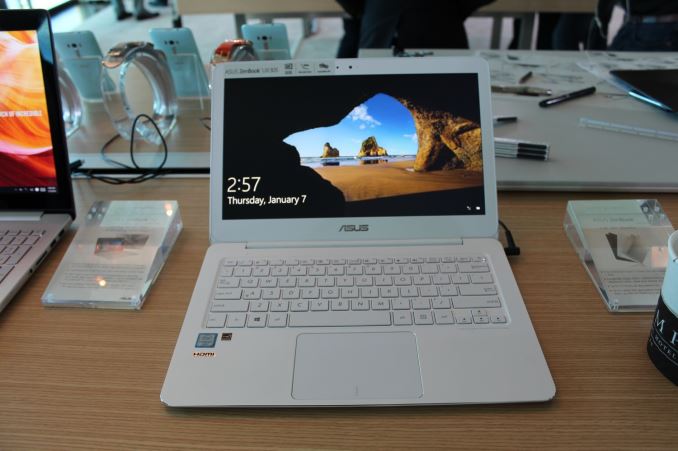
Moving down in price and performance is the UX303UA, which is a 13.3-inch Ultrabook with U series Skylake processors. It’s fairly light and thin, and is an incremental upgrade over the previous model. ASUS also had the UX305CA, which is the Skylake powered version of the UX305 that we reviewed in 2015, and ASUS sent us the new Skylake model to put through its paces so look for a review of this soon. The UX305 was one of my favorite Ultrabooks of 2015, and it offers some great value with 8 GB of memory and 256 GB of SSD storage for just $699.
As always, ASUS has a huge amount of product on display at CES. They have branched into almost every aspect of computing, including phones and smartwatches. They seem to aim for the value proposition, offering more product for the dollar than a lot of their competition.
|
| 11:05p | Netgear Updates Networking Lineup at CES
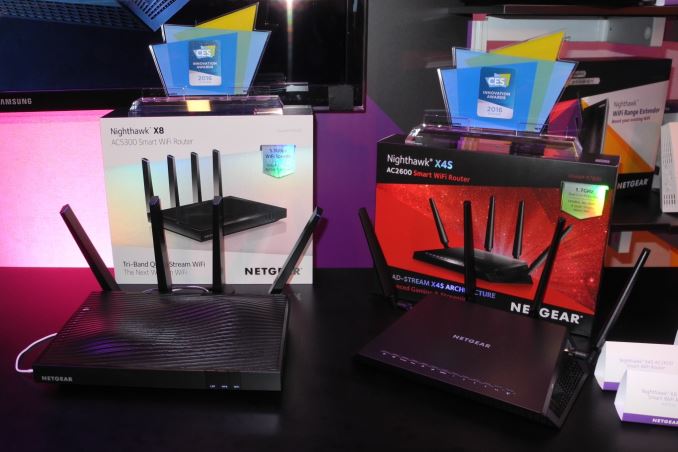
Netgear's flagship router - the Nighthawk X8 (R8500) - was launched in October. At CES, Netgear took the opportunity to upgrade the Nighthawk X4 line. Interestingly, the original X4 - the R7500 - was launched with Quantenna radios and a Qualcomm IPQ SoC, and promised MU-MIMO support in a future firmware update. However, Netgear decided to enable MU-MIMO only with a hardware upgrade - the R7500 v2 with full MU-MIMO support became an all-Qualcomm Atheros affair. The R7500 v2 is being replaced by the Nighthawk X4S at the same price point. The Nighthawk X4S (R7800) comes with an IPQ8065 dual-core SoC at 1.7GHz and the QCA9984 radio. Unlike the AC2400-class routers introduced towards the middle of last year, this 4x4 design supports 160 MHz (either contiguous or 80MHz + 80 MHz) and MU-MIMO out of the box. Client support is needed in order to take full advantage of both these features. The router has a MSRP of $270 and is available now.
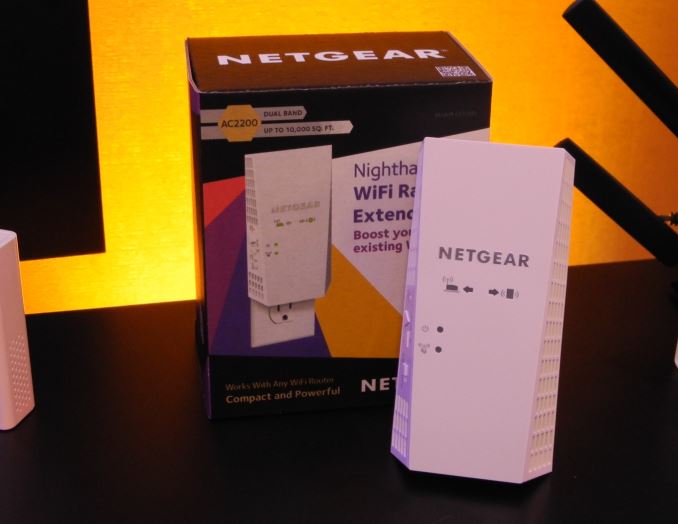
EX7300 AC2200 Nighthawk X4 WiFi Range Extender A wall-plug Wi-Fi extender with MU-MIMO capability (EX7300) was also launched at CES. It belongs to the AC2200 class - 4x4 1733Mbps in the 5 GHz band and 3x3 450 Mbps in the 2.4 GHz band. The antennae are internal and the unit also has a GbE RJ-45 port. The extender is available for purchase now and is priced at $170. At the $140 price point, Netgear is launching the EX6400, a AC1900-class extender with 3x3 spatial streams in both the 2.4 GHz and 5 GHz bands. 256-QAM support exists for the 2.4 GHz band. The EX6400 can also be used as a Wi-Fi access point.
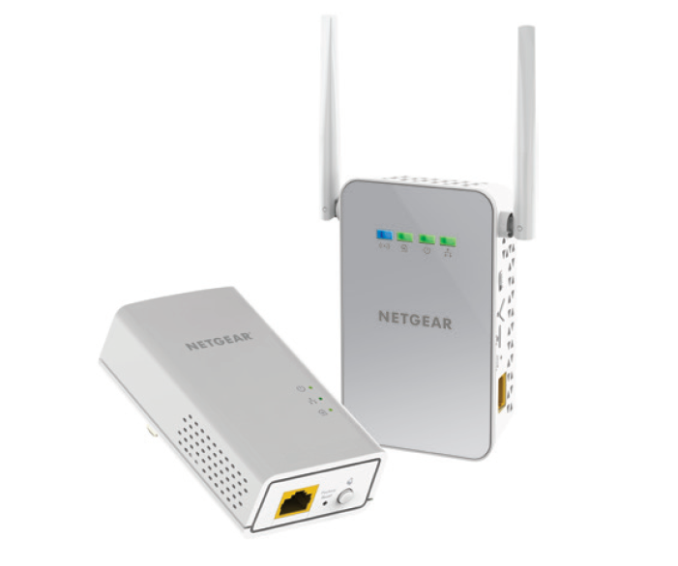
Powerline WiFi 1000 (PLW1000 Kit) On the PLC side, Netgear has introduced the PLW1000, which combines powerline technology with Wi-Fi. Based on the HomePlug AV2 standard, this adapter can support up to 1 Gbps of theoretical throughput. In addition, the PLW1000 also creates a Wi-Fi hotspot at the place of installation. While not explicitly specified, we believe this is a 1x1 configuration for both 2.4 GHz and 5 GHz bands. It is marketed as a 802.11ac access point. The PLW1000 is priced at $120 and is available now.
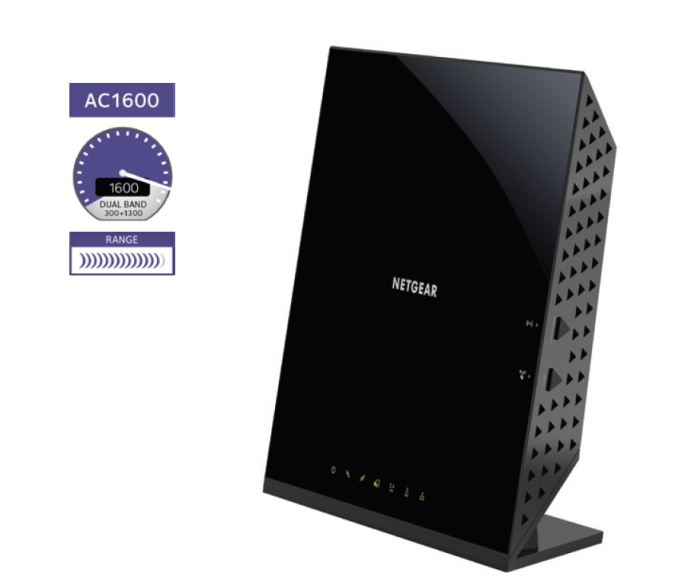
C6250 AC1600 WiFi Cable Modem Router Netgear also launched the C6250 Wi-Fi cable modem router. The DOCSIS 3.0 modem supports bonding of 16 downstream and 4 upstream channels. The Wi-Fi side is AC1600, i.e, 2x2 in the 2.4 GHz band (300 Mbps) and 3x3 in the 5 GHz band (1300 Mbps). The C6250 has a MSRP of $170 and will be available for purchase soon.
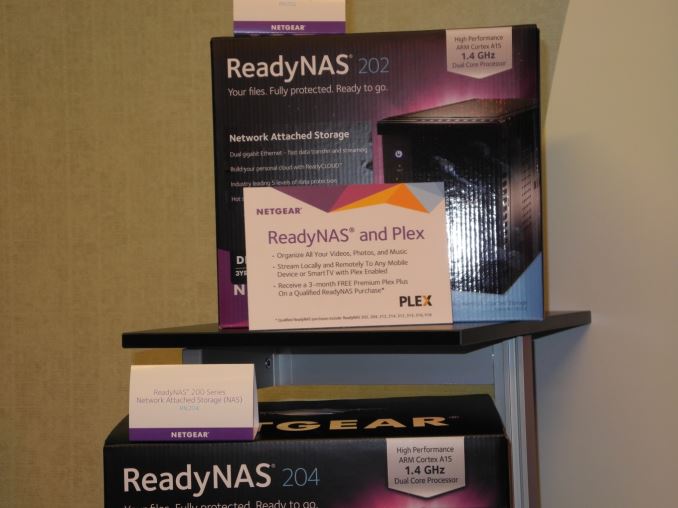
In ReadyNAS news, Netgear had the RN20x and 21x series on display. One of the interesting aspects was the tie-up with Plex. On purchase of models such as the RN202, RN204, RN212, RN214, RN312, RN314, RN316 and RN516, customers can obtain three free months of Premium PLEX Plus. |


| << Previous Day |
2016/01/10 [Calendar] |
Next Day >> |