[Most Recent Entries] [Calendar View]
Tuesday, January 26th, 2016
| Time | Event | ||||||||||||||||||||||||||||||||||||||||||||||||||||||||||||||||||||||||||||||||||||||||||||||||||||
| 11:00a | CES 2016 Roundup: Total Editor Recall Another year, another Consumer Electronics Show - actually, it seems that it's official name is now just CES. Nonetheless, it ends up being one of the biggest shows of the year for technology, if not the biggest. Covering PC to smartphone to TV to IoT to the home and the car, CES promises to have it all. It's just a shame that the week involves so many press events and 7am-midnight meeting schedules it can be difficult to take it all in, especially with 170,000 people attending. With the best of interests, we did take some information away and we asked each editor to describe the most memorable bits of their show. | ||||||||||||||||||||||||||||||||||||||||||||||||||||||||||||||||||||||||||||||||||||||||||||||||||||
| 12:17p | Skylake Iris Pro hits Intel’s Pricing Lists: Xeon E3-1575M v5 with GT4e
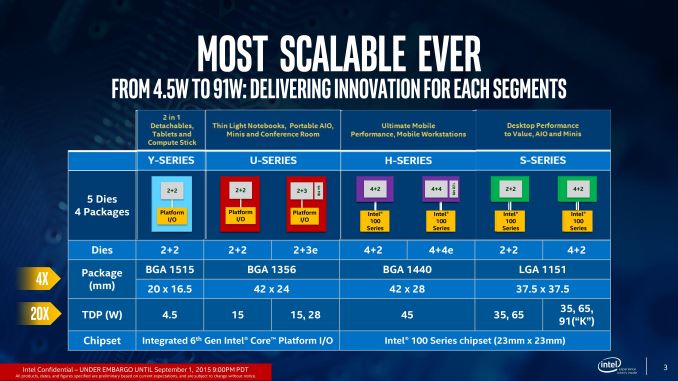
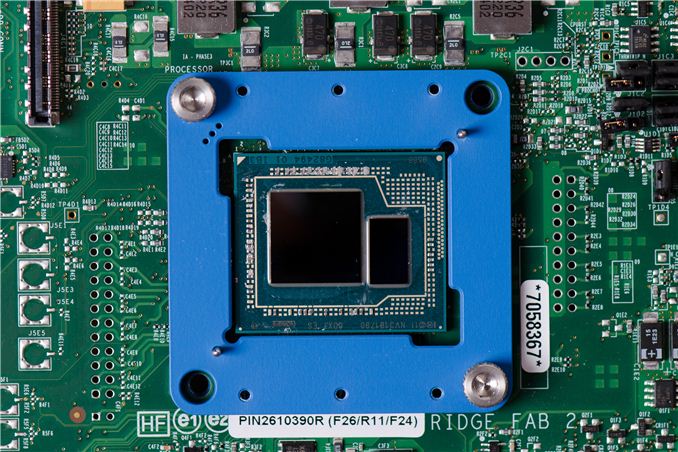
One of our forum members, Sweepr, posted Intel’s latest pricing list for OEMs dated the 24th of January and it contained a number of interesting parts worth documenting. The Braswell parts and Skylake Celerons were disclosed over the past few months are now available to OEMs, but it’s the parts with Iris Pro that have our attention. Iris Pro is Intel’s name for their high end graphics solution. Using their latest graphics microarchitecture, Gen9, Iris Pro packs in the most execution units (72) as well as a big scoop of eDRAM. At the minute we assume it’s the 128 MB edition as Intel’s roadmaps have stated a 4+4e part only on mobile, rather than a 4+3e part with 64 MB (only the 2+3e parts are listed as 64MB), although we are looking for confirmation.
The new parts are listed as: Xeon E3-1575M v5 (8M cache, 4 Cores, 8 Threads, 3.00 GHz, 14nm) - $1,207 These will compare to the non-Iris Pro counterparts, running P530 graphics (4+2, 24 EUs): Xeon E3-1535M v5 (8M cache, 4 Cores, 8 Threads, 2.90 GHz, 14nm) - $623 As Sweepr points out, the difference between the 2.8-2.9 GHz parts is only $55-56. That is for both the increase in graphics EUs (24 to 72) as well as that extra on-package eDRAM.
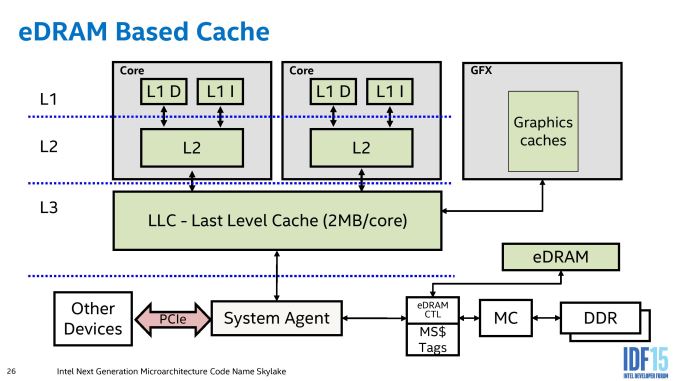
We have more reasons to be excited over the eDRAM in Skylake than what we saw before in Haswell with the i7-4950HQ on mobile and Broadwell on desktop with the i7-5775C, i5-5765C and the relevant Xeons. With the older platforms, the eDRAM was not a proper bidirectional cache per se. It was used as a victim cache, such that data that was spurned from the L3 cache on the CPU ended up in eDRAM, but the CPU could not place data from the DRAM into the eDRAM without using it first (prefetch prediction). This also meant that the eDRAM was invisible to any other devices on the system, and without specific hooks couldn’t be used by most software or peripherals.
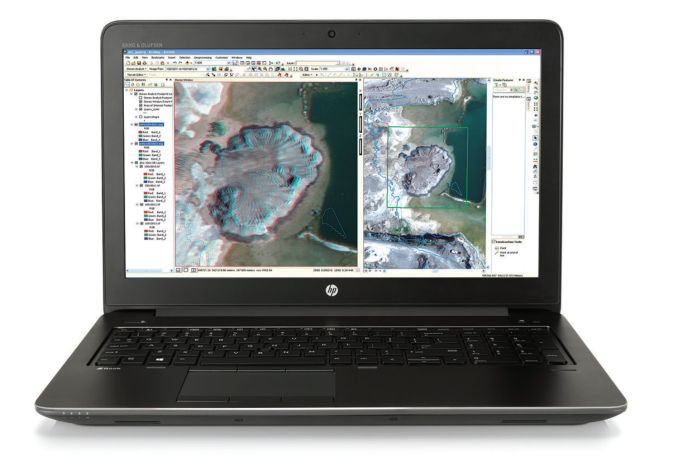
With Skylake, this changes, the eDRAM lies beyond the L3 and the System Agent as a pathway to DRAM, meaning that any data that wants DRAM space will go through the eDRAM in search for it. Rather than acting as a pseudo-L4 cache, the eDRAM becomes a DRAM buffer and automatically transparent to any software (CPU or IGP) that requires DRAM access. As a result, other hardware that communicates through the system agent (such as PCIe devices or data from the chipset) and requires information in DRAM does not need to navigate through the L3 cache on the processor. Technically graphics workloads still need to circle around the system agent, perhaps drawing a little more power, but GPU drivers need not worry about the size of the eDRAM when it becomes buffer-esque and is accessed before the memory controller is adjusted into a higher power read request. The underlying message is that the eDRAM is now observed by all DRAM accesses, allowing it to be fully coherent and no need for it to be flushed to maintain that coherence. Also, for display engine tasks, it can bypass the L3 when required in a standard DRAM access scenario. While the purpose of the eDRAM is to be as seamless as possible, Intel is allowing some level on control at the driver level allowing textures larger than the L3 to reside only in eDRAM in order to prevent overwriting the data contained in the L3 and having to recache it for other workloads. We go into more detail on the changes to Skylake’s eDRAM in our microarchitecture analysis piece, back from September. The fact that Intel is approaching the mobile Xeon market first, rather than the consumer market as in Haswell, should be noted. eDRAM has always been seen as a power play for heavy DRAM workloads, which arguably occur more in professional environments. That still doesn’t stop desktop users requesting it as well – the fact that the jump from 4+2 to a 4+4e package is only $55-$56 means that if we apply the same metrics to desktop processors, an i5-6600K with eDRAM would be $299 in retail (vs. $243 MSRP on the standard i5-6600K). One of the big tasks this year will be to see how the eDRAM, in the new guise as a DRAM buffer, makes a difference to consumer and enterprise workloads. Now that there are two pairs of CPUs on Intel’s pricing list that are identical aside from the eDRAM, we have to go searching for a source. It seems that HP has already released a datasheet showing the HP ZBook 17 G3 Mobile Workstation as being offered with the E3-1575 v5, which Intel lists as a whopping $1207. That's certainly not the extra $55. Source: AnandTech Forums, Intel | ||||||||||||||||||||||||||||||||||||||||||||||||||||||||||||||||||||||||||||||||||||||||||||||||||||
| 6:20p | Apple Reports Q1 FY 2016 Results: Record Revenue Despite Flat iPhone Sales
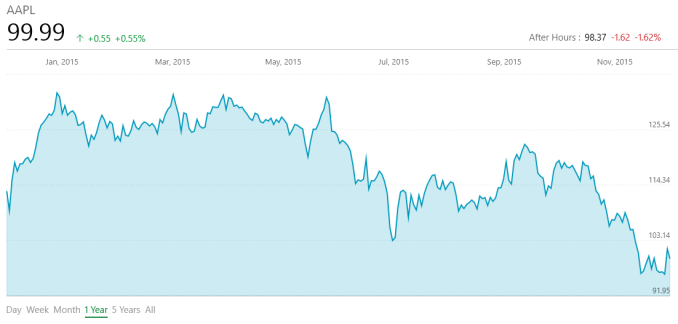
Today Apple announced their quarter 1 earnings, and once again Apple had record revenue of $75.9 billion, and a record quarterly profit of $18.4 billion. Revenue is up 2% compared to Q1 2015, and 66% of the quarter’s revenue came from International sales. Gross margin for the quarter was 40.1%, or $30.4 billion, up from 39.9% and $29.7 billion last year. Operating income was down slightly to $24.171 billion, but net income was $18.361 billion, which is up 1.8% year-over-year.
Although the company had record iPhone sales, it was only just a record. It is still a massive part of their business, and for the quarter Apple sold 74.779 million iPhones, with an average selling price of $691. Compared to the year ago quarter, this is a gain of 311,000 iPhones. That’s a pretty small gain, and percentage wise Apple calls it a year-over-year change of 0%. Although the growth is not there, that is still a huge amount of devices sold. iPhones accounted for $51.6 billion in Apple’s revenue this quarter. iPad has been a tricky market for Apple. After initial sales figures with huge growth, the platform stopped growing and started having a drop in sales quite a few quarters ago. The release of the iPad Pro was hoped to kick-start this, but, at least for the launch quarter, that has not been the case. iPad sales continued their fall, and in fact had an even larger drop of 25% year-over-year to 16.1 million devices. Revenue from iPads dropped 21% to $7.084 billion. Mac sales were also down, with a year-over-year drop of 4% to 5.3 million devices sold. Revenue went down slightly less than that, with just a 3% drop, to $6.7 billion. Considering the slowdown in the PC market, the drop is less than what we’ve seen from the PC market as a whole, but still a drop nonetheless. Regardless, Apple is likely pretty happy with Mac sales, which have weathered the storm better than many other brands. Dividing revenue by sales leads to an average of $1269.95 per Mac sale, which is territory most other OEMs would love to be in.
Services, which includes the App Store, AppleCare, Apple Pay, licensing, and other services, had a much better quarter. This segment had revenue of $6.056 billion for the quarter, which is a 26% increase year-over-year. Finally, Other Products, which includes Apple TV, Apple Watch, Beats, iPod, and accessories, had another great gain of 62% in revenue to $4.351 billion. Apple doesn’t break out individual numbers for this segment, but considering the Apple Watch did not exist in the 2015 numbers, you can be sure a lot of the gain is from this new product introduction.
Apple will pay a dividend of $0.52 per share, payable to shareholders of record as of February 8. The payment will be made on February 11. Apple paid back $9 billion to shareholders this quarter, through share buybacks and dividend payments. They have now paid out $153 billion of their $200 billion capital return program. Looking forward to next quarter, the forecast is decidedly down, with Apple expecting revenue of $50-53 billion, and margins of 39-39.5%. In Q2 2015, Apple had revenue of $58 billion, so this is a big drop. As always, forecasts are just that, and we’ll have to wait for their actual numbers to see how they do. Apple had a record quarter, but flat iPhone sales, and a drop in iPad and Mac sales are definite sour notes on this otherwise great quarter. Apple did say that currency rates have had a big impact this quarter, and “$100 of Apple’s non-U.S. dollar revenue in Q4’14 translates into only $85 U.S. dollars today”, which is going to be a big factor in earnings. Looking at a Constant Currency calculation, revenue would have been up 8% instead of 2%. Still, for a company with a net income higher than the revenue of many other players in the tech space, I think they will be OK. Source: Apple Investor Relations | ||||||||||||||||||||||||||||||||||||||||||||||||||||||||||||||||||||||||||||||||||||||||||||||||||||
| << Previous Day |
2016/01/26 [Calendar] |
Next Day >> |