[Most Recent Entries] [Calendar View]
Friday, February 5th, 2016
| Time | Event |
| 8:00a | Who Controls the User Experience? AMD’s Carrizo Thoroughly Tested In Q2 of 2015, AMD officially launched Carrizo, their new APU aimed at mobile devices such as laptops and portable all-in-ones that normally accommodate 15W-35W processors. Quoted in the media as 'the biggest change to Bulldozer since Bulldozer itself', the marketing arm of AMD released information regarding the architecture of the new processor which contained a long list of fluid and dynamic implementations on improving the Bulldozer based architecture over the previous iteration of Steamroller. Despite this, AMDs target market for the Carrizo platform has not been receptive to AMDs product stack in recent generations due to issues surrounding performance, battery life and designs. AMD believes to have solved the first two of those with Carrizo, whereas the third is put of their hands and up to the OEMs to embrace AMDs platform. We wondered if the OEM’s concerns were well placed, and organized some special testing to confirm AMD’s claims about Carrizo.
|
| 9:00a | VAIO to Start Selling Smartphones in Japan
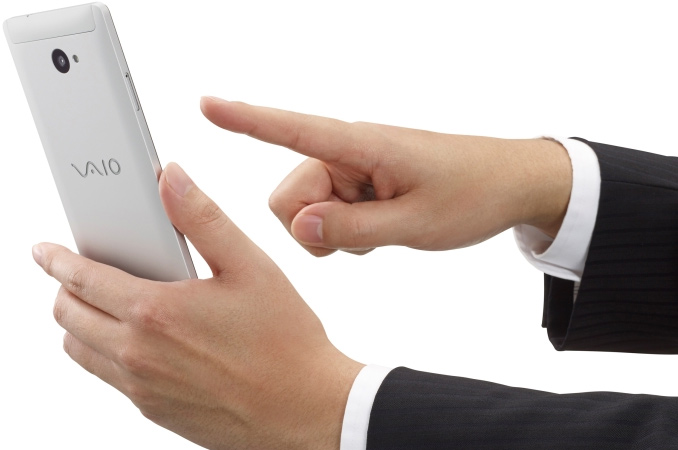
VAIO, the former PC division of Sony and now an independent supplier of PCs, this week announced plans to introduce its first smartphone in Japan this spring. The company will use Microsoft Windows 10 Mobile operating system and will target business users with its VAIO Phone Biz handsets. VAIO intends to capitalize on Microsoft’s eco-system in order to offer products that will not directly compete against smartphones running Apple iOS or Google Android. VAIO will promote its smartphones together with Microsoft and local operators in Japan. One of the selling points of the VAIO Phone Biz will be its support for the Continuum technology, which lets users to connect their smartphones to large displays or televisions using Miracast technology, HDMI/DisplayPort outputs, USB type-C ports or special accessories in order to use their phones like PCs (e.g., create/edit Office docs, send email, browse Internet, etc.). Since the VAIO Phone Biz smartphones will run Windows 10 Mobile, they will be fully compatible with Office 365, OneDrive, Azure Active Directory, Intune mobile app manager as well as Skype for business out-of-box. Microsoft will also help VAIO to promote its smartphones, just like it helps to sell notebooks and tablets designed by the company.
With its handsets, VAIO intends to address business users, the target audience of its PCs. Such positioning will, perhaps, help VAIO to avoid direct competition with Sony, Samsung and other companies selling Google Android-based handsets to the masses. However, since Microsoft considers itself a cloud company, it wants its apps and services to work on all mobile platforms, even a close collaboration between VAIO and Microsoft will hardly create a lot of unique advantages for the hardware company. The VAIO VPB 051 smartphone will feature a 5.5-inch display with 1920x1080 resolution. The handset will be based on the Qualcomm Snapdragon 617 system-on-chip (eight ARM Cortex-A53 cores clocked at 1.50 GHz, Adreno 405 graphics core) and will be equipped with 3 GB of LPDDR3 RAM, 16 GB of NAND flash storage as well as a microSD card slot. The handset from VAIO will also feature 13 MP rear and 5 MP front cameras, 802.11a/b/g/n/ac Wi-Fi, Bluetooth 4.0, a micro USB 2.0 connector, various sensors, a 2800 mAh battery and so on. The smartphone is compatible with 3G/LTE bands 1, 3, 6, 8, 11, 19 and 21 with carrier aggregation (so, this particular model is not suitable for the U.S.). The smartphone will be 8.3 mm thick and will weigh 167 grams.
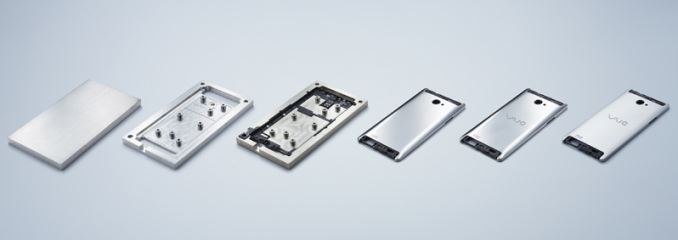
The VAIO Phone Biz model 051 will use a unibody carved out of solid aluminum (VAIO does not reveal exact type of alloy), which means that it should be rigid. Keeping in mind that many premium smartphones nowadays are made of polycarbonate, aluminum body could become a tangible advantage of the VAIO smartphone. The smartphone will be manufactured by a contract manufacturer, its quality will be checked and tested at the Nagano Technology Site (Azumino City, Nagano Prefecture), the former hub of Sony’s PC operations, where VAIO already performs final checks and assembly of its PCs. The VAIO VPB 051 will hit the Japanese market this April at the price of ¥50,000 ($428). The smartphone will not be sold with contracts, the owners will be able to choose their operator. For this reason, the handset’s bundle will include an adapter for nanoSIM cards.
The addition of a smartphone into the VAIO lineup is a clear sign that the company is planning to expand and address new markets. Moreover, with tablets, notebooks and smartphones in the family, the VAIO product line will be one of the most comprehensive Windows product lines in the world. The example of Apple shows that a vertically-integrated product stack helps to sell more products to loyal customers. What remains to be seen is when VAIO plans to bring its smartphones to the U.S. The first-gen model is not suitable for the U.S. because of LTE compatibility issues (in fact, a business phone that cannot really support LTE in the U.S. is a strange business phone), if VAIO wants to sell it in North America, it will have to redesign its LTE module. |
| 6:00p | Google Adds New Hands-Free Features to Android Wear
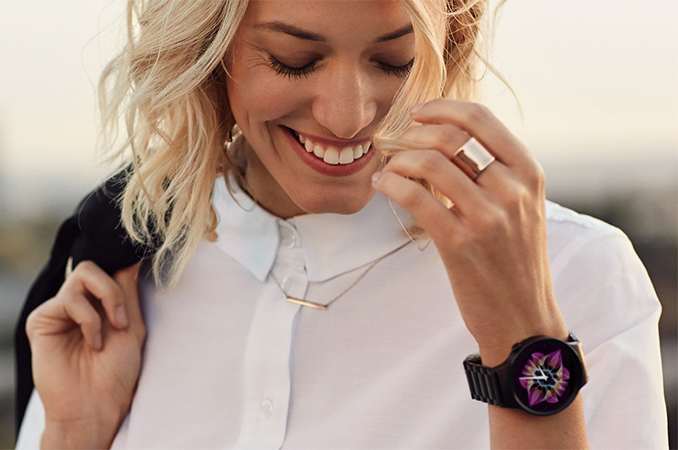
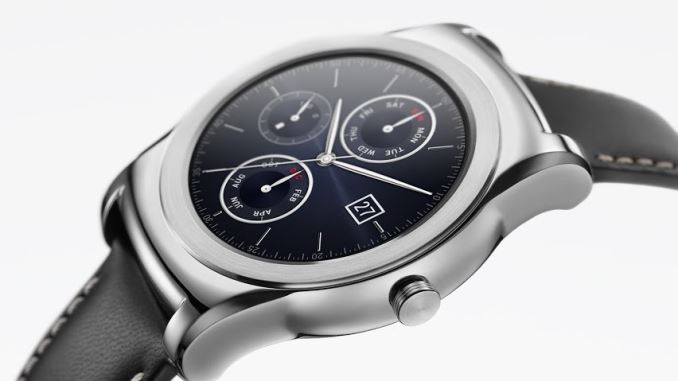
Google has announced this week that they have added several new functions to the Android Wear operating system in an update that is now being rolled out. The latest update takes an eye towards delivering some improvements to hands-free input options - and a bit more smartphone functionality to the wrist as a result - as Google looks to cut down on the number of finger gestures required to use reminders, messages, and handle calls. The new features will work on existing and upcoming mobile devices running the OS and will be compatible with first-party and select third-party apps. Starting things off is a set of new navigation options for wrist gestures. At present, Android Wear smartwatches can do simple navigation by flicking your wrist. With the new update, Google is adding the ability to expand a card, bring up apps, or return to watch face with a push, lift or shake of the wrist.
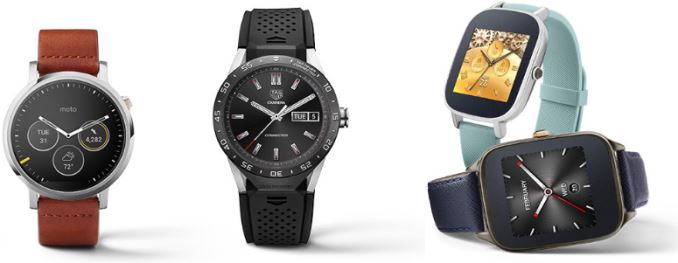
Also present in the latest update are improved voice control functions for third party apps. Smartwatches running Google Android Wear already support voice commands to control music playback, make notes/reminders, search the Internet, etc, while the latest update will all voice commands to send messages from applications like Google Hangouts, Nextplus, Telegram, Viber, WeChat, and WhatsApp. Finally, all Android Wear watches can monitor incoming calls. However, there is a new breed of Android Wear-based watches (the Huawei Watch and the ASUS ZenWatch 2), which feature built-in speakers and with this update will be able to make calls outright in this fashion when paired with a smartphone.
The new Google Android Wear update does not seem to be too significant or game changing. However, it shows certain trends. Smartwatches are gaining functionality and bring some of smartphone capabilities to the wrist, which increases importance of such devices in general. Added convenience is what made mechanical wristwatches popular a century ago. Perhaps, improved feature-set of smartwatches will make them more widespread in the coming years. The new update will be rolling out to all Android Wear watches over the next few weeks, but actual manufacturers will have to adopt them to their products and, perhaps, add their own features or even applications. Availability of the update depends on makers of actual devices. |




| << Previous Day |
2016/02/05 [Calendar] |
Next Day >> |