[Most Recent Entries] [Calendar View]
Tuesday, March 29th, 2016
| Time | Event | ||||||||||||||||||||||||||||||||||||||||||||||||||||||||||||||||||||||||||||||||||||||||||||
| 8:00a | The Razer Blade Stealth Review: Razer Takes On The Ultrabook Razer has traditionally been a company focused on gaming. In fact, their tagline is “For Gamers. By Gamers.” So when Razer announced at CES that they were building an Ultrabook – a product category whose size and power limitations are typically the antithesis of gaming – it was a bit surprising. Razer decided it was time to branch out into more of the mainstream of PC hardware, but of course with the Razer twists they are known for. The Razer Blade Stealth is not your typical Ultrabook, and one of the biggest twists of all is that it can be docked to a desktop GPU to actually enable gaming. | ||||||||||||||||||||||||||||||||||||||||||||||||||||||||||||||||||||||||||||||||||||||||||||
| 11:00a | Micron Begins to Sample GDDR5X Memory, Unveils Specs of Chips
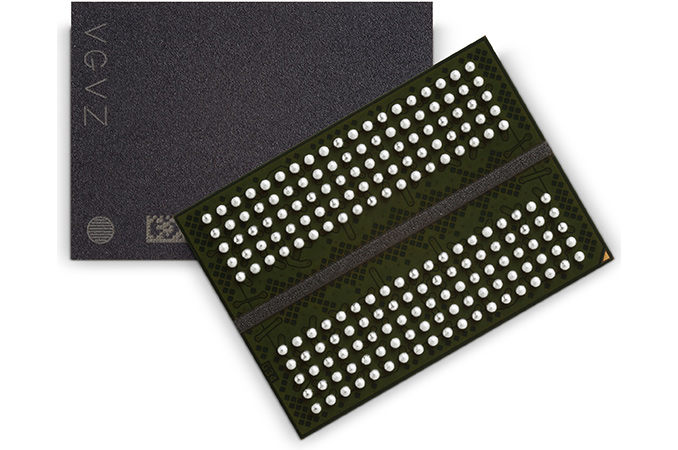
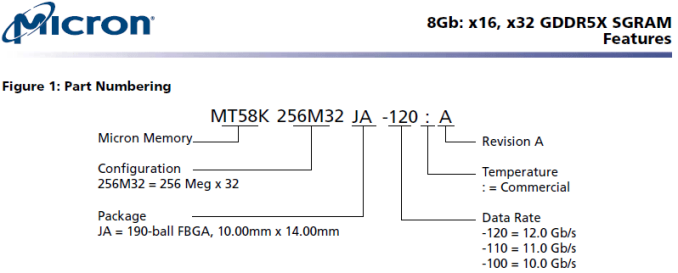
This past week Micron has quietly added its GDDR5X memory chips to its product catalogue and revealed that the DRAM devices are currently sampling to partners. The company also disclosed specifications of the chips they currently ship to allies and which potentially will be mass-produced later this summer. As it appears, the first samples, though running at much higher data rates than GDDR5, will not be reaching the maximum data rates initially laid out in the GDDR5X specification. The first GDDR5X memory chips from Micron are marked as MT58K256M32JA, feature 8 Gb (1GB) capacity, and are rated to run at 10 Gb/s, 11 Gb/s and 12 Gb/s in quad data rate (QDR) mode with 16n prefetch. The chips use 1.35 V supply and I/O voltage as well as 1.8 V pump voltage (Vpp). Micron’s GDDR5X memory devices sport 32-bit interfaces and come in 190-ball BGA packages with 14×10 mm dimensions. As reported, the GDDR5X DRAMs are manufactured using 20 nm process technology, which Micron has been using for over a year now.
The GDDR5X memory standard, as you might remember from our previous reports, is largely based on the GDDR5 specification, but has three crucial improvements: significantly higher data-rates (up to 14 Gb/s per pin with potential up to 16 Gb/s per pin), higher and more flexible chip capacities (4 Gb, 6 Gb, 8 Gb, 12 Gb and 16 Gb capacities are supported) and better energy efficiency thanks to lower supply and I/O voltage. The first samples of GDDR5X memory chips fully leverage key architectural enhancements of the specification, including quad data rate (QDR) data signaling technology that doubles the amount of data transferred per cycle over the memory bus (compared to GDDR5) and allows it to use a wider 16n prefetch architecture, which enables up to 512 bit (64 Bytes) per array read or write access. However, the maximum data rates of Micron's sample chips are below tose initially advertised, possibly because of a conservative approach taken by Micron and its partners. The addition of GDDR5X samples to Micron’s parts catalog has three important implications. First, the initial development of Micron’s GDDR5X memory chips is officially complete and the company has achieved its key goals (to increase performance of GDDR5X without increasing its power consumption). Second, one or more customers of Micron are already testing processors with GDDR5X memory controllers, which means that certain future GPUs from companies like AMD or NVIDIA do support GDDR5X and already exist in silicon. Third, the initial GDDR5X lineup from Micron will consist of moderately clocked ICs.
Thanks to GDDR5X memory chips with 10 Gb/s – 12 Gb/s data rates, developers of graphics cards will be able to increase peak bandwidth of 256-bit memory sub-systems to 320 GB/s – 384 GB/s. Which is an impressive achievement, because this amount of bandwidth is comparable to that of AMD’s Radeon R9 290/390 or NVIDIA’s GeForce GTX 980 Ti/Titan X graphics adapters. The latter use 512-bit and 384-bit memory interfaces, respectively, which are quite expensive and intricate to implement.
Micron originally promised to start sampling of its GDDR5X with customers in Q1 and the company has formally delivered on its promise. What now remains to be seen is when designers of GPUs plan to roll-out their GDDR5X supporting processors. Micron claims that it is set to start mass production of the new memory this summer, which hopefully means we're going to be seeing graphics cards featuring GDDR5X before the end of the year. More information about GDDR5X memory: | ||||||||||||||||||||||||||||||||||||||||||||||||||||||||||||||||||||||||||||||||||||||||||||
| 1:00p | Price Check: Prices of Unlocked Intel Core i7-6700K, i5-6600K Continue to Drop
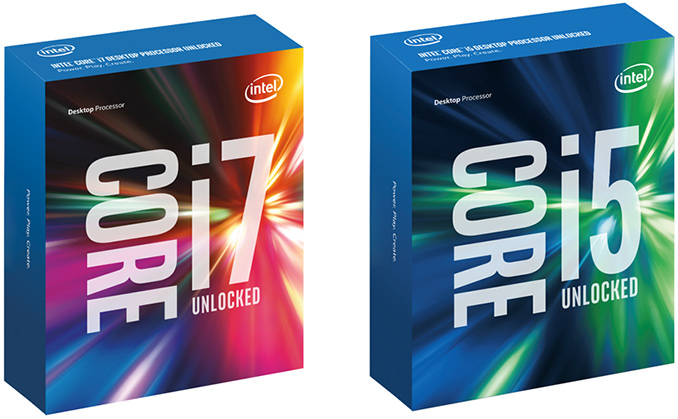
When Intel first introduced its high-end Skylake-S CPUs with unlocked multiplier about half a year ago, it was not easy to get them and for a long time the Core i7-6700K as well as the Core i5-6600K were overpriced and in tight supply. Their retail prices dropped and their availability generally improved earlier this year, but the Core i7-6700K was still rather expensive in some stores. Today, both unlocked Skylake-S chips are available and their prices no longer significantly exceed MSRPs. Nonetheless, despite the equal MSRP to the high-end desktop in the Core i7-5820K, the i7-6700K is still more expensive as the price continues to drop. Intel Core i7-6700K Getting Closer to Its MSRPIntel’s most powerful desktop quad-core processor for mainstream enthusiasts which is positioned below the HEDT platforms, the Core i7-6700K (four cores with Hyper-Threading, 4.0 GHz/4.20 GHz, 8 MB cache, Intel HD Graphics 530 core, unlocked multiplier), has an official MSRP of $350 according to Intel’s ARK. However, for a long time it was impossible to find at that price point: it used to cost $420 in December and up to $412 in February. Moreover, even overpriced, it was still hard to find at the biggest retailers. The availability of the Core i7-6700K (BX80662I76700K) improved this month. All major outlets monitored by NowInStock, including Amazon, B&H Photo, NCIXUS and Newegg had the chip in stock for $364 – $408. BestBuy lists the CPU for $409.99, can ship it in two days, but does not provide any store pickup options, which indicates that it does not have the product everywhere in its locations. Back in December, only Newegg had the Core i7-6700K in stock, so, it is evident that the U.S. retailers are getting more units through distribution.
Amazon lists the Intel Core i7-6700K for $373 and the chip is in stock. According to CamelCamelCamel, a price-tracker that monitors Amazon and its partners, the Core i7-6700K was available briefly for $349.99 (i.e., at its MSRP) earlier this month and for $363.95 earlier this week. Moreover, some of Amazon’s partners even sold the part for $340 on March 23. Last month Amazon listed the Core i7-6700K for $365, but it was not in stock. By contrast, it is possible to get it from Amazon now, albeit at a higher price-point Newegg offers the Core i7-6700K for $369.99 and the CPU was in stock at press time. The chip used to cost $412 last month at Newegg, so, it is evident that the retailer significantly decreased its price in the recent weeks. According to PriceZombie, which monitors Newegg, it slashed the price of the i7-6700K to around $380 early in March, reduced it to $365 earlier this week, but then hiked the price to $369.99.
It is evident that the Core i7-6700K is still sold at a premium, its prices at different locations are higher than Intel’s MSRP for the chip. Nonetheless, it is clear that a significant progress has been made and now the CPU is both widely available and no longer costs $50+ more than it should. Intel Core i5-6600K Drops Below MSRPThe Intel Core i5-6600K (four cores, 3.50 GHz/3.90 GHz, 6 MB cache, Intel HD Graphics 530, unlocked multiplier) is the other overclockable Skylake processor, and is popular among overclockers and enthusiasts due to its modern micro-architecture and performance in most consumer situations compared to the i7 variant. The processor is officially priced at $243, but it used to cost $290 in December. Moreover, only Newegg had the CPU in stock back then. By contrast, Intel Core i5-6600K (BX80662I56600K) is currently available from all major U.S. retailers for $239.99 - $254.99 right now, based on information from NowInStock web-site. Amazon has Intel Core i5-6600K processors in stock and offers them for $239.99, down from $249.99 several weeks ago. According to CamelCamelCamel, the retailer slashed the price of the product to a level below Intel’s MSRP only this week.
As for Newegg, it sells the Core i5-6600K for $254.99, which is higher than Intel’s official price and slightly up from February. However, if you enter the EMCEHGT62 promo code (expires on 3/30) and subscribe to Newegg’s newsletter, you can get a $15 discount and obtain the chip for $239.99. Based on data from PriceZombie, the price of the i5-6600K at Newegg has been fluctuating from $250 to $255 for several weeks now. The exact reason why the Core i5-6600K CPU dives below its MSRP is unknown, but the broad availability of the chip intensifies competition between various retailers and they are willing to offer lower pricing in a bid to sell. Intel Core i7-5820K Now Available for $349The Intel Core i7-6700K processor based on the Skylake micro-architecture has a number of advantages over previous-generation chips, but the entry-level high-end desktop processor, the Core i7-5820K CPU (six cores with Hyper-Threading, 3.30GHz/3.60 GHz, 15 MB cache, unlocked multiplier), still remains a very interesting product from many points of view. Moreover, it is still cheaper than the quad-core Core i7-6700K despite having more cores. The baby HEDT chip is now available for $349.99 from Amazon and Newegg, which is well below its official price of $396. The Core i7-5820K used to cost over $380 in February, so, it is evident that its price dropped substantially within several weeks. Keeping in mind that Intel is expected to update its high-end desktop family of processors with Broadwell-E offerings later this year, it is not really surprising that Haswell-E products are getting more affordable. Of course, to use the Core i7-5820K (BX80648I75820K) you will need an X99-based motherboard (on average, costs more than Skylake focused 100-series motherboards), an advanced cooler, and four DDR4 memory modules to maximize the available memory bandwidth. However, for $349 you get six Hyper-Threaded cores that can be easily overclocked and a capable motherboard (most new X99 have USB-C 3.1, but M.2 and Thunderbolt 3 options are varied). Moreover, the Intel X99 platforms will eventually support Broadwell-E processors later this year. Intel’s 14 nm Supply Finally Meets Demand?Intel has confirmed multiple times in the recent quarters that demand for its Core i7 high-end CPUs as well as K-series chips with unlocked multiplier were at a record high. The unprecedented demand, as well as initially slow ramp of Skylake-S processors, had created shortages of unlocked Core i5/Core i7 chips leading to the high prices of such CPUs in late 2015. Starting from late Q3 2015, Intel has been gradually increasing production of its CPUs using 14 nm process technology. The company began to produce 14 nm processors in its Fab 24 manufacturing facility in Leixlip, Ireland in Q3 FY2015, in addition to its D1D, D1C and D1X fabs in Hillsboro, Oregon. Yields of the CPUs most likely have improved since their introduction in August as well as turning more wafers into desktop parts, leading to larger shipments of higher-end Skylake-S products. As a result, prices of the Core i5-6600K and the Core i7-6700K are decreasing.
Nonetheless, there could be another reason why the prices of Intel’s CPUs are getting lower. Demand for PCs in the first quarter is traditionally below the demand in the fourth quarter. However, this year sales of PC components in Q1 have been slower than expected, according to market analysts. As a consequence, Intel (as well as Intel's distribution network) have more processors than they can sell, according to Stacy Rasgon, an analyst with Bernstein Research, citing Intel's reports. “First, inventories have ballooned over the last year. Internal inventories in Q4 were up >20% YoY on tepid revenue growth and have been outgrowing revenues for multiple quarters,” Mr. Rasgon wrote in a note for clients, reports Tech Trader Daily. “Second, receivables have once again spiked. Absolute receivable growth has far exceeded revenue growth over the last year, and days of receivables spiked in Q4, for only the second time in 10 years.”
Moreover, last week analysts John Donovan, Paul Peterson, and Steve Mullane with BlueFin Research Partners reported that based on their checks Intel had cut production of certain CPUs in February and March compared to January. Since no details are known, it is possible that Intel was ceasing production of older products because of demand. However, since Intel’s inventories and receivables are at high levels, the company may simply not need to produce a lot of processors because the market needs to consume already produced material. Given the fact that the Core i5-6600K and the Core i7-6700K are Intel’s high-end 'mainstream' desktop processors today and their relatively high prices, it is unlikely that their shipments substantially exceed demand. Relevant ReadingSkylake-K Review: Core i7-6700K and Core i5-6600K - CPU Review | ||||||||||||||||||||||||||||||||||||||||||||||||||||||||||||||||||||||||||||||||||||||||||||
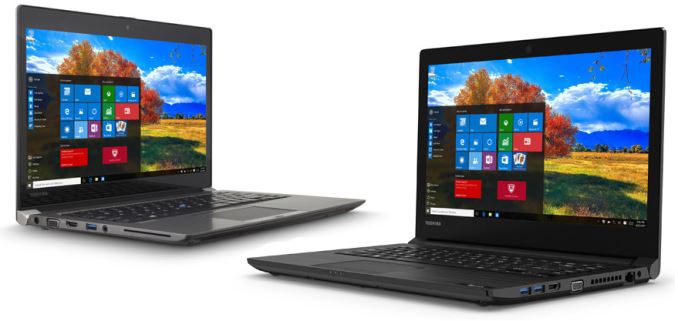
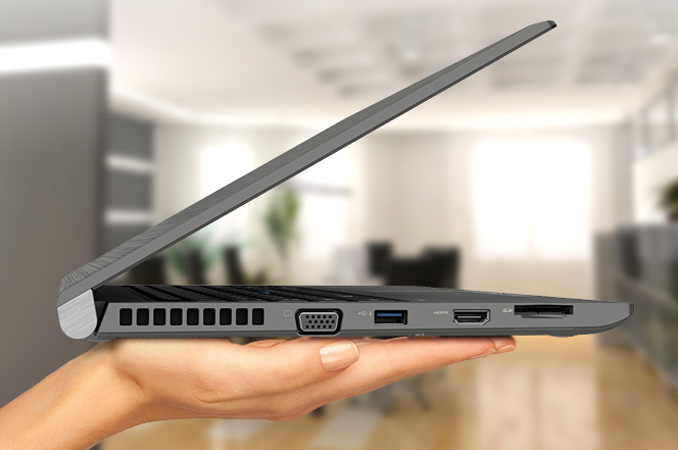
| 5:45p | Toshiba Details Its PC Business Reorg: Set to Concentrate on Tecra and Portégé Brands for Business Users
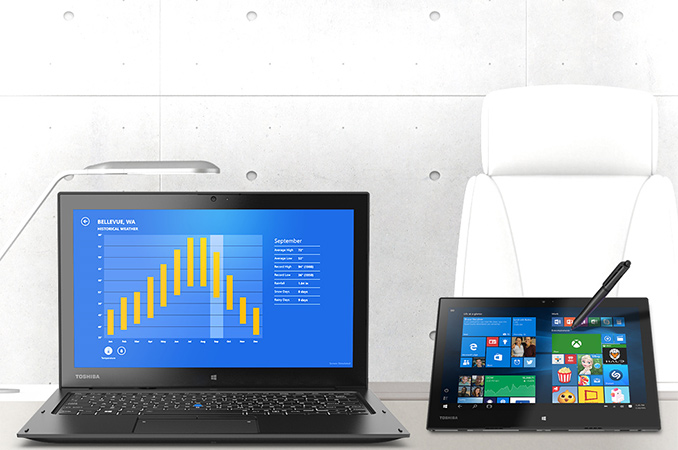
Toshiba this month revealed its finalized PC business strategy for the future. As expected, the company intends to cease selling consumer personal computers outside of Japan and plans to focus on corporate and business PCs going forward. Toshiba will sell existing consumer PCs in North America and Europe and will honor the warranties in the future. However, the company has no plans to introduce any new consumer models outside of its home market. Toshiba disclosed plans to reorganize its PC business in September, 2014. The company announced intentions to stop selling consumer computers completely and focus on business and corporate PCs instead. Toshiba said that the purpose of the reorganization was to ensure profitability of this business unit and improve competitive positions against companies like Dell, HP or Lenovo on the corporate PC market. Toshiba hopes that the new focus will help it to significantly increase its B2B (business to business) sales already in fiscal 2016 (which begins on April 1, 2016) and become profitable.
For a number of years Toshiba’s PC business was focused on increasing market share, which means that the company had to develop two separate product families: one for business users and another for consumers. Due to tough competition, it is not easy to sell consumer PCs nowadays. Products families have to be broad, profit margins are razor thin and suppliers have to focus primarily on sales scale and volume. While Toshiba is known for affordable systems in the U.S., that business was not profitable for the company. This was was one of the reasons why Toshiba decided to cease selling its consumer PCs outside of Japan. Because of the reorganization, the company has reduced headcount of its PC business by 1300 people as well as eliminated multiple operation sites. Toshiba plans to offer a full range of corporate personal computers, tablets and workstations. In particular, the company will offer higher-performance notebooks under its Tecra brand, ultra-thin laptops will be sold under the Portégé trademark, whereas tablets and 2-in-1s will carry dynaPad and Portégé names. “Toshiba will concentrate on the B2B PC market globally by developing, manufacturing, and selling its Tecra and Portégé brands to the corporate market,” the company said in its statement.
Right now Toshiba’s retail partners offer a variety of Satellite notebooks and other low-cost consumer PCs, including models based on Intel processors featuring the Broadwell micro-architecture. These systems will be available while the stock last and then customers interested in Toshiba PCs will have to buy Tecra, dynaPad and Portégé either directly from Toshiba or from various resellers. In short, Toshiba-branded PCs are not going away from the U.S., but they will not be available widely and will cost more than they do today. The company will honor all Satellite and other warranties. “Toshiba will continue selling its consumer notebooks through its retail partners as the company expands its corporate footprint,” the company said. “Customers can purchase Toshiba with confidence knowing their product warranties and service obligations will be honored.” To better address the PC market both in Japan and in other countries, Toshiba will establish Toshiba Client Solutions Co. later this week. Moreover, the company will continue to discuss further reforms of its PC business with third parties. There are rumors that Toshiba is negotiating strategic deals with other Japanese computer suppliers and investors, but so far nothing official has been revealed. | ||||||||||||||||||||||||||||||||||||||||||||||||||||||||||||||||||||||||||||||||||||||||||||



| << Previous Day |
2016/03/29 [Calendar] |
Next Day >> |