[Most Recent Entries] [Calendar View]
Wednesday, June 1st, 2016
| Time | Event | |||||||||||||||||||||||||||||||||||||||||||||||||||||||||||||||||||||||||||||||||||||||||||||||||||||||||||||||||||||||||||||||
| 8:00a | Qualcomm Announces Snapdragon Wear 1100 SoC For Wearables
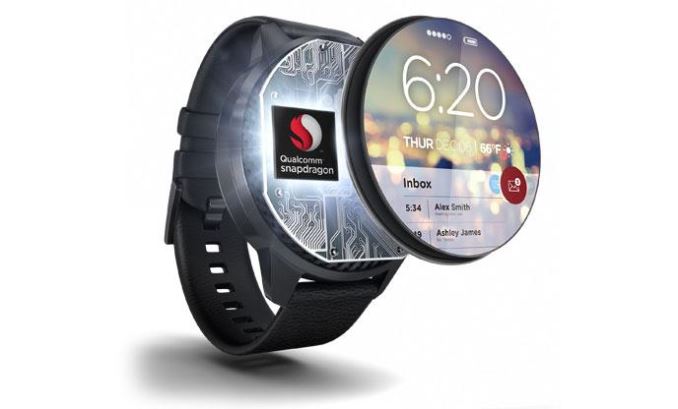
Qualcomm introduced the Snapdragon Wear 1100 SoC today at Computex 2016. Intended for wearable devices, such as fitness trackers, smart headsets, and connected watches for children, it features a single ARM Cortex-A7 CPU running at up to 1.2GHz and a fixed-function GPU for rendering simple 2D user interfaces. It's interesting that Qualcomm chose to stick with the A7 rather than use its replacement: the Cortex-A35. According to ARM, the A35 uses 10% less power while boosting performance between 6-40% at the same frequency and on the same process. This could simply be a matter of timing or just Qualcomm's familiarity with the A7. The Snapdragon Wear 1100 is a compliment to the Snapdragon Wear 2100 SoC that Qualcomm announced back in February 2016, and is meant to run lean, Linux-based operating systems instead of Android or Android Wear, which require the performance of the 2100 to deliver richer, more graphical experiences like those in typical smartwatches. The Snapdragon Wear 1100 integrates a Category 1 LTE modem that supports LTE FDD, LTE TDD, TD-SCDMA, and GSM networks with global frequency band support for keeping devices connected independent of a companion device such as a smartphone. Customers can also choose to incorporate Wi-Fi and Bluetooth connectivity options. Another feature crucial for safety monitoring applications that use geo-fencing is the inclusion of Qualcomm’s iZat Gen 8C location engine that supports the GPS, GLONASS, Galileo, and BeiDou positioning satellite networks. Location accuracy and speed are improved by augmenting GNSS with Wi-Fi and cellular networks.
The Snapdragon Wear 1100’s package size is 79mm², including the modem, RF transceiver, and PMIC, and is manufactured on a 28nm LP process. Also included in the package is a low-power sensor hub and a hardware cryptographic engine, features that further reduce power consumption. When paired with a 350mAh battery, Qualcomm claims the Snapdragon Wear 1100 allows for up to 7-days of LTE standby. Wearables featuring the higher-performing Snapdragon Wear 2100 SoC should be available in the second half of 2016, while the Snapdragon Wear 1100 is available to ODMs starting today. | |||||||||||||||||||||||||||||||||||||||||||||||||||||||||||||||||||||||||||||||||||||||||||||||||||||||||||||||||||||||||||||||
| 9:00a | The 9.7" iPad Pro Review In late 2015 Apple launched a tablet that they called the iPad Pro. It had been rumored for quite some time, and it had a number of features that differentiated it from other iPads. The most notable was its 12.9" display, which has a width equal to the height of Apple's 9.7" iPads, allowing it to use two essentially full sized iPad applications at the same time in a split screen view. In addition to its massive display, the iPad Pro came with two accessories that had not existed for any prior iPad. It seemed that in Apple's eyes the Apple Pencil and the Smart Keyboard really defined what made the iPad Pro worthy of the "Pro" name. Now Apple has launched a second iPad Pro to fill in the ten inch tablet market. Read on for the full review of the 9.7" iPad Pro. | |||||||||||||||||||||||||||||||||||||||||||||||||||||||||||||||||||||||||||||||||||||||||||||||||||||||||||||||||||||||||||||||
| 10:00a | Samsung Begins Mass Production of PM971: Tiny BGA SSDs with 1500 MB/s Read Speed
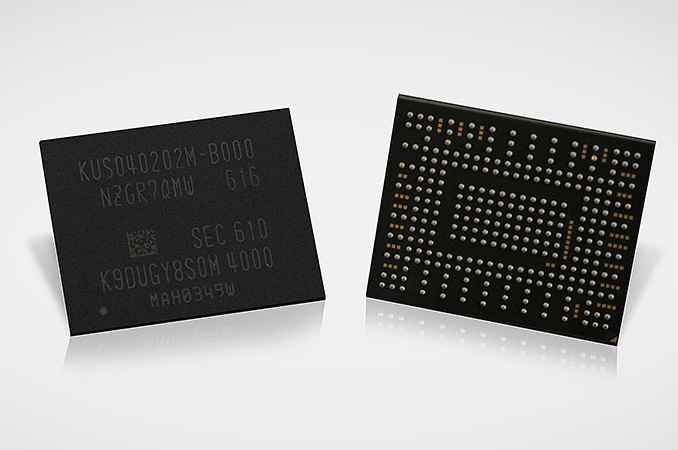
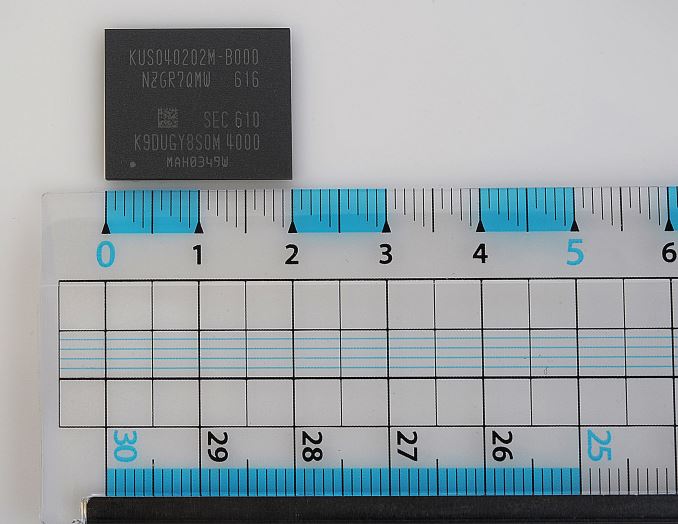
Samsung this week said that it had begun mass production of its first SSDs in BGA form-factor. The PM971-NVMe tiny drive weighs about one gram, can store up to 512 GB of data and offers up to 1500 MB/s read speed. The SSDs will be used inside 2-in-1 hybrid computers, high-end tablets as well as ultra-thin notebooks later this year. Samsung demonstrated its first BGA SSD earlier in 2016 and most of its specifications are generally known. The PM971 is based on up to 16 Samsung’s second-generation 48-layer MLC V-NAND. The SSD relies on Samsung's proprietary controller called Photon, which can extract high performance from a limited number of NAND channels and ICs thanks to architecture as well as the company’s proprietary TurboWrite technology. The PM971-NVMe SSD is equipped with a 512 MB LPDDR4 buffer, uses a PCIe 3.0 x2 interface and supports NVMe. Samsung will ship three versions of its PM971-NVMe BGA SSDs with 128 GB, 256 GB, and 512 GB capacities, which will be enough for modern convertibles, tablets and ultra-thin laptops. Dimensions of the PM971-NVMe are 20 mm × 16 mm × 1.5 mm and the weight is just about a gram. Judging by the physical sizes of the package, it seems that the new PM971-NVMe BGA SSDs from Samsung comply with mechanical specifications for BGA SSDs proposed by multiple companies to JEDEC last year. In any case, the key message here is that Samsung’s BGA SSDs are significantly smaller than the smallest M.2 modules and can thus save space inside SFF PCs to make them either thinner, or prolong their battery life.
The PM971-NVMe SSD supports sequential read speed of up to 1500 MB/s as well as sequential write speed of up to 900 MB/s when the TurboWrite technology is enabled (earlier this year the company mentioned 600 MB/s write speed, but did not mention the TurboWrite). Samsung’s TurboWrite technology uses a portion of SSD’s NAND memory in pseudo-SLC mode, which significantly improves writing performance of the drive. Typically, Samsung uses its TurboWrite for its TLC NAND-based drives, which makes the PM971-NVMe the company’s first MLC-based SSD with a pseudo-SLC buffer. At this point we are not sure how exactly Samsung’s TurboWrite works in the PM971-NVMe and whether it speeds up or optimizes anything else apart from writing performance (since it is actually easier to read from SLC cells, the pSLC buffer can also help to improve read performance and even reduce power consumption). As for random performance, the PM971-NVMe SSD can perform 190K random read IOPS as well as up to 150K random write IOPS, according to Samsung.
Since the PM971-NVMe BGA SSDs are not designed for end-users, but for large PC suppliers as well as their OEMs/ODMs, Samsung does not disclose their prices. Right now, the company says that the it would start providing the new SSDs to its customers “this month”, which is not really relevant because the announcement was made on May 31. However, keep in mind that memory companies usually do not announce mass production until they have quantities of finished products ready to deliver to customers. Therefore, the PM971-NVMe drives may show up in actual devices sooner than one might think. | |||||||||||||||||||||||||||||||||||||||||||||||||||||||||||||||||||||||||||||||||||||||||||||||||||||||||||||||||||||||||||||||
| 12:00p | Patriot Adds 2 TB SSD into Lineup of Mainstream Drives
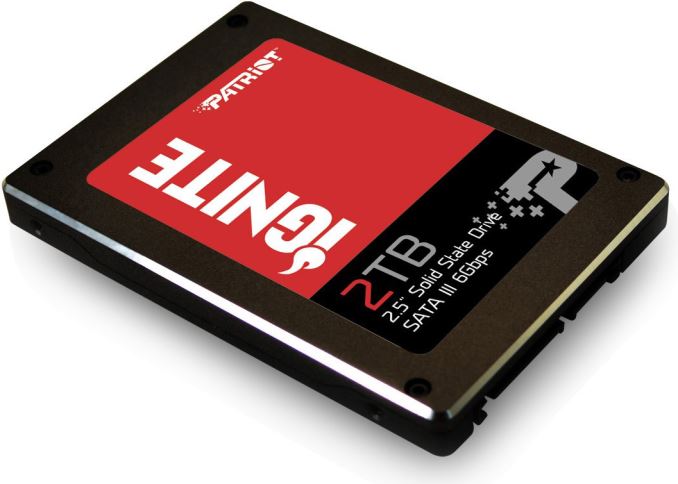
Patriot has introduced a new addition to the lineup of Ignite SSDs, this time with 2 TB capacity. The new drive will offer a lot of solid-state storage, but its performance will be constrained due to limitations of the SATA 6 Gb/s interface. Nonetheless, the price of the novelty promises to be relatively affordable. When Patriot introduced its Ignite family of SSDs based on the quad-core Phison PS3110-S10 early in 2015, it aimed it at performance-mainstream systems, which is why the lineup only included models with 480 GB and 960 GB capacities. Since then, M.2 SSDs with PCIe interfaces have gained traction and many SSD suppliers had to reconsider positioning of their SATA drives. As a result, Patriot added a more affordable model with 240 GB capacity to the Ignite family later in the life cycle to address price-conscious customers. Meanwhile, the recent declines of NAND flash pricing enabled the company to build another SSD based on the S10 controller to address a new segment of buyers who require a lot of solid-state storage in a 2.5” form-factor, but not necessarily extreme transfer speeds.
The Patriot Ignite 2 TB SSD is rated to reach sequential read speeds of up to 560 MB/s and write speeds of up to 500 MB/s, which is consistent with performance of advanced MLC-based 2.5”/SATA drives. As for random performance, the 2 TB drive delivers approximately 90K and 80K IOPS for aligned read and write operations, respectively, in-line with that of other high-capacity Patriot Ignite drives.
Phison demonstrated its reference design for 2 TB SSDs based on the S10 controller about a year ago, but its customers were unwilling to use it back then. In mid-2015 prices of NAND flash memory were considerably higher compared to today, which is why demand for high-capacity SSDs was not expected to be significant and hence it was not economically feasible to release high-capacity drives for many vendors, who do not own semiconductor fabs. Today, prices of NAND are considerably lower. For example, the average contract price of a 128 Gb MLC NAND chip was $3.51 (the lowest contract price started at $2.8 per chip) in the second half of April, down from $5.06 in the first half of May, 2015, according to DRAMeXchange. As a result, the cost of NAND needed for a 2 TB drive is between $360 and $500, depending on the amount of memory used for overprovisioning. Therefore, it is viable for numerous SSD suppliers to offer such SSDs to end-users. Moreover, since prices of NAND keep dropping, high-capacity SSDs naturally get cheaper to make over time. When considering costs of SSDs based on controllers from Phison, keep in mind that the company maintains strong relations with Toshiba and usually sells not just its controllers, but nearly finished SSDs with Toshiba’s NAND flash memory. Therefore, the actual cost of such package could be below the average cost of NAND flash memory obtained on the open market. On a side note, if 2 TB SSDs based on the S10 controller are now available from Phison, a number of other suppliers could also offer such drives eventually. Patriot does not reveal retail price of its Ignite 2 TB SSD today because it only plans to sell it sometimes in Q4. Nonetheless, it should not be too high and $700 - $900 price-range seems to be more or less viable. | |||||||||||||||||||||||||||||||||||||||||||||||||||||||||||||||||||||||||||||||||||||||||||||||||||||||||||||||||||||||||||||||
| 2:00p | SanDisk Unveils New Generation of USB Type-C Flash Drives
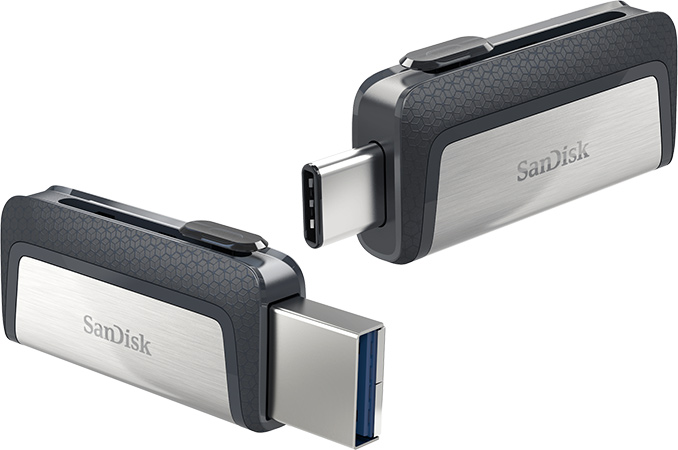
Last year SanDisk released its first-gen USB flash drives featuring two types of connectors: USB-A and USB-C in a bid to address the growing market of devices featuring USB Type-C, but retain compatibility with billions of legacy devices. This year, SanDisk introduced a new generation of such drives with adifferent design and higher-capacity options. The second-generation SanDisk Ultra Dual Drive USB Type-C family of USB flash drives includes models with 16 GB, 32 GB, 64 GB and 128 GB of NAND memory. The drives offer transfer speeds up to 150 MB/s and are compatible with all devices featuring USB-A and USB-C receptacles. Furthermore, they are also compatible with SanDisk’s Memory Zone app for Google Android to manage and backup content on devices running the OS.
Introduced commercially in 2015, the USB Type-C connector is rapidly gaining traction among suppliers of PCs, smartphones, tablets and other electronics. For manufacturers of peripherals adoption of new ports by devices is an important factor because they want to address broader audiences with their products. While USB Type-C is gaining popularity, there are still way too many systems featuring USB Type-A ports, which is why it makes a lot of sense to build peripherals compatible with both types of USB. Moreover, analysts from Strategy Analytics believe that even by 2020 only about 44% of mobile phones will use USB-C, which is a remarkable growth, but which still means that 56% of mobile phones will keep using other types of connectors. SanDisk and its partners are already selling the new drives with 16GB, 32GB, 64GB and 128GB capacities for U.S. MSRPs of $19.99, $29.99, $39.99 and $69.99, respectively. | |||||||||||||||||||||||||||||||||||||||||||||||||||||||||||||||||||||||||||||||||||||||||||||||||||||||||||||||||||||||||||||||
| 4:00p | Corsair Announces Dominator Platinum Special Edition and Vengeance LED Memory Modules
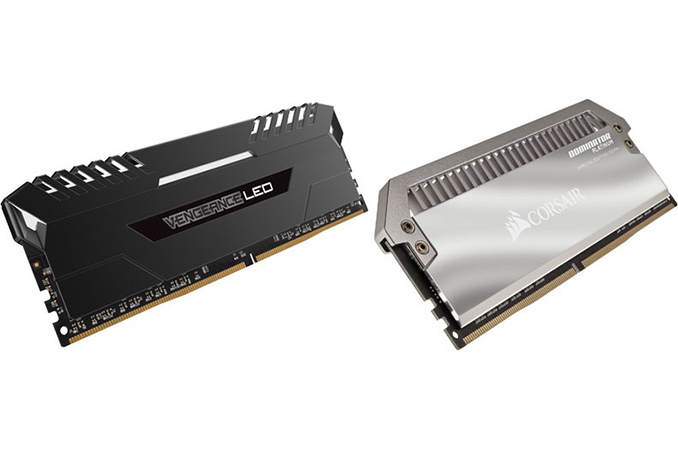
In the last 10 years, Corsair has greatly expanded its product lineup and nowadays it produces virtually the whole range of hardware and accessories for enthusiasts with the exception of motherboards, graphics cards, displays, and some exotics (like DIY liquid cooling kits). Nonetheless, memory modules reserve a special place in the company’s product family. At Computex, Corsair introduced two new lineups of DRAM modules: the Vengeance LED and the Dominator Platinum Special Edition. The Corsair Vengeance LED modules will bring new heatspreaders with red or white LEDs to the range of high-performance (yet, not top-of-the-range) memory solutions from the company. The modules will be based on Samsung’s DDR4 DRAM chips and will work at up to 4333 Mbps data-rates. For now, Corsair does not disclose which of Samsung’s DDR4 ICs it intends to use for the Vengeance LED modules, but in addition to the famous Samsung E 4 Gb chips (which are used for high-speed 4 GB DDR4-4000+ modules), it could use the company’s 8 Gb DRAMs made using 20 nm or even the latest 8 Gb chips produced using 18 nm fabrication processes to build some of the new modules. For those, who demand absolutely the fastest DIMMs, Corsair will offer the Dominator Platinum Special Edition modules with new aluminum heatspreaders featuring black brushed aluminum as well as chrome finishes. The Dominator Platinum SE will be aimed at various Intel processors as well as the X99 and 100-series platforms. The modules will be based on Samsung’s “top bin” DDR4 DRAM chips as well as custom PCBs, but right now Corsair does not reveal any details regarding clock-rates or capacities. Corsair intends to launch its Vengeance LED and Dominator Platinum Special Edition commercially in Q3. The company will disclose specs and prices of the new modules towards the launch. | |||||||||||||||||||||||||||||||||||||||||||||||||||||||||||||||||||||||||||||||||||||||||||||||||||||||||||||||||||||||||||||||



| << Previous Day |
2016/06/01 [Calendar] |
Next Day >> |