[Most Recent Entries] [Calendar View]
Thursday, June 16th, 2016
| Time | Event | ||||||||||||||||||||||||||||||||||||||||||||||||||||||||||||||||||
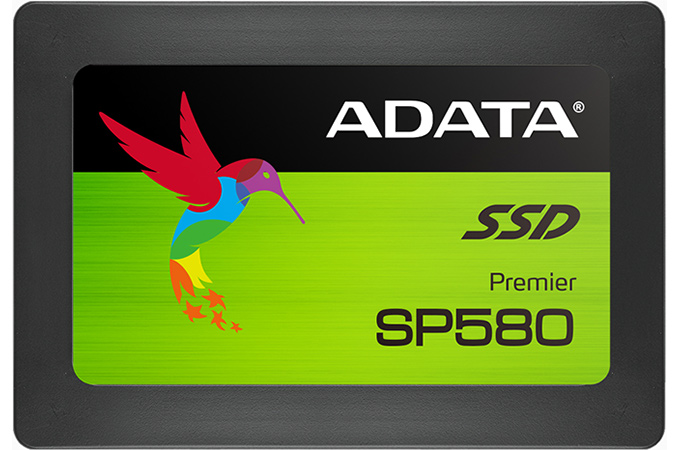
| 8:00a | ADATA Introduces Premier SP580 SSD: TLC NAND, LDPC and Marvell Controller
Last week, ADATA announced its new inexpensive lineup of SATA SSDs: the new Premier SP580 drives use Marvell’s 'Artemis' controller aimed at value storage, as well as TLC NAND flash from SanDisk. The new ADATA Premier SP580 family consists of two models, with 120 GB and 240 GB of TLC NAND produced using 15 nm process technology by SanDisk. The new drives are based on the Marvell 88NV1120 controller and do not use DRAM cache, which lowers their cost and puts them further into the cheap SSD category: DRAM-less controllers are expected to populate the low-cost segment over the next year. The manufacturer declares 560 MB/s / 410 MB/s maximum sequential speed for the 120 GB version of the SP580 SSD. ADATA notes that the 120 GB version is slower than the higher-capacity model, but does not elaborate as to the 240GB specification. Keeping in mind SATA performance limitations and how these drives work, read performance of both Premier SP580 SSDs should be similar, but expect the 240 GB model to offer slightly better write performance.
The Marvell 88NV1120 controller was specifically designed for entry-level SATA drives. It enables SSD makers to build DRAM-less solid-state storage devices and supports pseudo-SLC caching to speed up writing performance of TLC NAND-based drives, a near-must feature on low capacity hardware. One of the most important capabilities of the Artemis controllers is support for Marvell’s third-generation NANDEdge error correction control and management technology. This is based on low-density parity-check (LDPC) code and reduces data errors, improves data integrity and thus should increase the endurance of NAND from constant rewrites. Formally, the Adata Premier SP580 is positioned above the Adata Premier SP550, which was introduced in August 2015, and should be one of the most affordable SSDs available. The SP550 is based on the Silicon Motion SM2246EN controller as well as TLC NAND from SK Hynix. Performance specifications declared by the manufacturer are similar for both drives, hence, it is impossible to even make guesses regarding their real-world performance because of different controllers and different memory. What should be kept in mind is that the SP580 is DRAM-less and could be $1.5 – $2 cheaper (the average spot price of one 4Gb DDR3-1600 memory chip at press time was $1.454) to make than the SP550, assuming that other costs (NAND flash, controller, etc.) are the same. If ADATA managed to make a DRAM-less SSD faster than a drive with DRAM cache, this could be an important achievement. In particular, it could enable manufacturers to improve the performance of inexpensive SSDs while making them even more affordable. The manufacturer plans to release the 120 GB model first and then follow up with higher-performance 240 GB configuration. The more affordable model carries a $49.99 price tag, whereas the 240 GB version will have MSRP of around $79.99. | ||||||||||||||||||||||||||||||||||||||||||||||||||||||||||||||||||
| 8:45a | ARM Announces Mali Egil Video Processor: VP9 Encode & Decode For Mobile
Earlier this month we took a look at ARM’s new Mali-G71 GPU. Based on the company’s equally new Bifrost architecture, Mali-G71 marks a significant architectural change for the Mali family, incorporating a modern thread level parallelism (TLP) centric execution design. The Mali GPU is in turn the heart of ARM’s graphics product stack – what ARM calls their Mali Multimedia Suite – but in practice it is not a complete graphics and display solution on its own. As part of their IP development process and to allow SoC integrators to mix and match different blocks, the Mali GPU is only the compute/rendering portion of the graphics stack; the display controller and video encode/decode processor are separate. Splitting up these blocks in this fashion gives ARM’s customers some additional flexibility, allowing something like Mali-G71 to be mixed with other existing controllers (be it ARM or otherwise), but at the same time these parts aren’t wholly divorced within ARM. Even though they’re separate products, ARM likes to update all of the parts of their graphics stack in relative lockstep. To that end, with the Mali GPU core update behind them, this week ARM is announcing an updated video processor, codenamed Egil, to replace the current Mali-V550 processor. The Mali-V550 video processor was launched back in October 2014, and these days is typically paired with Mali-T8xx series GPUs. V550 introduced basic HEVC support, and the forthcoming Egil processor will in turn build off of that. From a codec standpoint, the two principle additions to Egil are further fleshed out encode support for HEVC, and full encode/decode support for VP9.
On the encode side, V550 implemented a form of HEVC that ARM politely calls HEVC Lite, which is not too far removed from doing limited HEVC encoding with an H.264 encoder. HEVC Lite lacked support for HEVC B-frames, and overall while it generated HEVC compliant streams, it couldn’t achieve the same quality/compression levels as a full HEVC encoder. To that end, Egil updates the Mali video processor to support full HEVC encoding, offering not just Main profile (8bpc) support, but Main10 profile (10bpc) support as well. This, interestingly enough, is something V550 could already decode, but now ARM finally has a video processor that can encode it as well. As for VP9, Egil adds both encode and decode support for the codec. VP9 has not seen quite the same level of usage as say H.264, but Google in particular favors it for their streaming services when it’s available, as it’s a royalty-free codec. This latter point is especially important as the patent holders behind HEVC have continued to struggle to develop a simple licensing scheme, which has further pushed ARM and other vendors towards VP9 and other royalty-free codecs. Egil in turn offers support for both Profile 0 (8bpc) and Profile 2 (10bpc) video, encoding and decoding. I suspect the decoding abilities will be the more useful feature there, but VP9 hardware encoding is still relatively new, so it’s hard to say how much we’re going to see it used. On a technical side note, after talking with ARM’s engineers, they seem especially proud of their encoding implementation for VP9’s reference frame scaling capability. Reference frame scaling allows the resolution of a stream to be altered on the fly – by scaling the resolution of the inter frames – with a goal of allowing for quick bitrate scaling of a stream. According to ARM’s engineers, doing reference frame scaling in real time in a low power hardware encoder was a Very Hard™ task that they’re quite proud they were able to get working.
Moving on, at an implementation level, Egil retains the same overall architecture as V550 and other ARM video processors. Which is to say that ARM uses a multi-core design from 1 to 8 cores, to allow SoC integrators to scale Egil’s size and performance to meet their needs. The individual cores are essentially small processors on their own, implementing a very rigid DSP to handle the necessary non-fixed functionality. ARM says that a single core built on TSMC’s 16nm FinFET process and clocked at 800MHz will be enough for 1080p80 encode/decode, with a 6 core design scaling up to 4Kp120. For that reason ARM likes to tout that Egil is capable of exceeding what any mobile device needs – and indeed, I expect any large configurations would be used in something more along the lines of a TV – but there is still a need to balance Egil’s size and power requirements with mobile SoC design needs. Though it’s also worth noting that since Egil supports simultaneous video encoding and decoding (something used in video conferencing, for example), the total video processing requirements for a device can be a bit higher than they would initially seem.
Wrapping things up, Egil is expected to be released later this year. And while it is not necessarily tied to the hip with Mali-G71 (especially since these designs aren’t being released simultaneously) I’d certainly expect Egil to eventually show up paired with a G71 in a future SoC. Gallery: ARM Egil Video Processor
      | ||||||||||||||||||||||||||||||||||||||||||||||||||||||||||||||||||
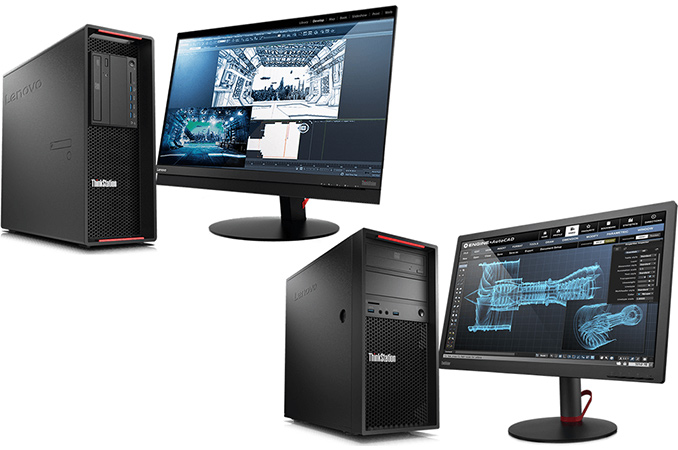
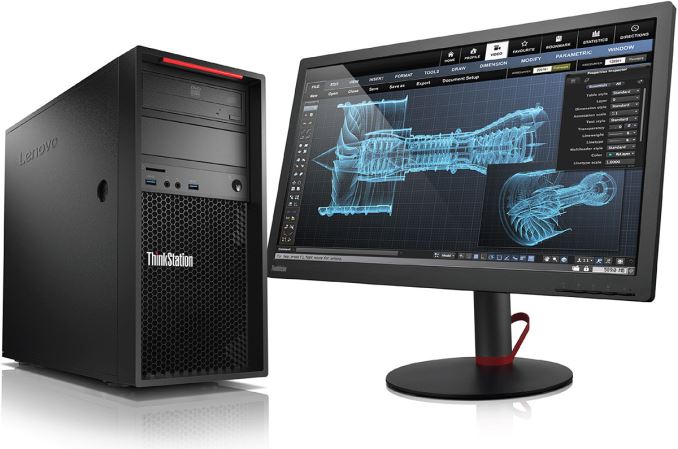
| 9:00a | Lenovo Unveils ThinkStation P410/P510: Intel Xeon E5 v4 with Up to 8 Cores, NVIDIA Quadro M6000
Lenovo has unveiled its new ThinkStation P410 and P510 workstations, which are based on the recently introduced multi-core Intel Xeon E5 v4 processors with up to eight cores as well as NVIDIA’s Quadro M5000 or M6000 graphics. The updated workstations fully support capabilities of Intel’s latest CPUs and come equipped with special programs to take advantage of their features. The new Lenovo ThinkStation P410 and 510 workstations are based on Intel’s C612 PCH as well as Intel’s Xeon E5-1600 v4 or E5-2600 v4 processors that belong to the Broadwell-EP family and feature up to eight cores as well as Intel Turbo Boost Max 3.0 technology, which identifies the core with the highest frequency potential and then directs important workloads to it in a bid to increase real-world performance. The machines support up to 128 GB (P410) or 256 GB (P510) of DDR4-2400 memory; multiple storage devices with M.2, PCIe, SATA and SAS interfaces; optional Thunderbolt 3; optional 802.11ac Wi-Fi + Bluetooth 4.0 module; a variety of PCIe add-on cards, an optional ODD (using the Flex module which can also add a 29-in-1 card reader, FireWire) and so on.
The Lenovo ThinkStation P410 is the smaller of the workstations. It supports up to NVIDIA Quadro M5000 graphics adapter (2048 CUDA Cores, 8 GB of GDDR5 ECC memory); up to two PCIe x16 cards, one PCIe x8 card and one PCIe x4 card; up to four 3.5” drives, up to four 2.5” SSDs/HDDs as well as up to one M.2 SSD. Meanwhile, the Lenovo ThinkStation P510 is the larger machine, it supports up to Quadro M6000 professional video card (3072 stream processors, 12 GB of GDDR5 memory), more storage devices and so on.
Both workstations support two important software features: the Lenovo Performance Tuner (LPT) as well as the Processor Affinity. The LPT offers BIOS management, graphics management, power management and resource monitoring. It also contains predefined application profiles that are optimized for particular professional programs (Adobe Illustrator CC, Autodesk AutoCAD 2017, ANSYS, etc.). Meanwhile, the PA allows to designate a program to run on a specific processor core(s), which is especially important because Intel’s Turbo Boost Max 3.0 technology determines the fastest cores and it is now possible to take advantage of them. Alternatively, the PA prevents apps optimized for multi-core CPUs from taking all of the available resources. As for operating systems, the new Lenovo ThinkStation P410/P510 workstations come with either Microsoft Windows 10 Pro or Ubuntu Linux. Lenovo is set to start selling the new ThinkStation P410/P510 workstations in the coming weeks or months in various regions. The company does not touch upon their pricing other than saying that the P410 will be “affordable”. However, exact prices will naturally depend on particular configurations. Gallery: Lenovo Unveils ThinkStation P410/P510: Intel Xeon E5 v4 with Up to 8 Cores, NVIDIA Quadro M6000
      Additional from Ian: When we reviewed the new Intel Broadwell-E processors a couple of weeks ago, Turbo Boost Max 3 (TBM3) was in a state of disarray: while Intel supported it, it relied on the operating system having the relevant driver but also the motherboard manufacturer supporting it by default. At the time of testing, none of our motherboards had TBM3 enabled by default, instead saying that if the user wants it, they should enable it in the BIOS. Normally this is a recipe for obscurity, given so few users actually enter the BIOS (even more so in the enterprise segment). The fact that Lenovo is enabling it by default for these systems is a green flag for performance for sure. It will be interesting to see how it is implemented: on our initial software testing, the minimum polling rate for TBM3 was one second, which means it has a distinct variable effect on shorter benchmarks. If this has been somehow reduced by Lenovo, it would be a significant plus point in the design. However, we're unsure if that one-second polling rate is an Intel or driver limitation at this point. It is certainly worth keeping an eye out for anyone that reviews Lenovo's implementation. | ||||||||||||||||||||||||||||||||||||||||||||||||||||||||||||||||||
| 9:00a | The NZXT Manta mITX Case Review Many companies have brought their prowess to design cases for Mini-ITX motherboards, with the usual approach being the minimization of their external dimensions as designers are striving to fit them into modern living rooms alongside gaming consoles and home cinema equipment. NZXT is a company that took an entirely different approach with their Mini-ITX design with the Manta, a tower case reduced to fit Mini-ITX motherboards while still providing enough space for sizable air coolers and liquid cooling radiators. | ||||||||||||||||||||||||||||||||||||||||||||||||||||||||||||||||||
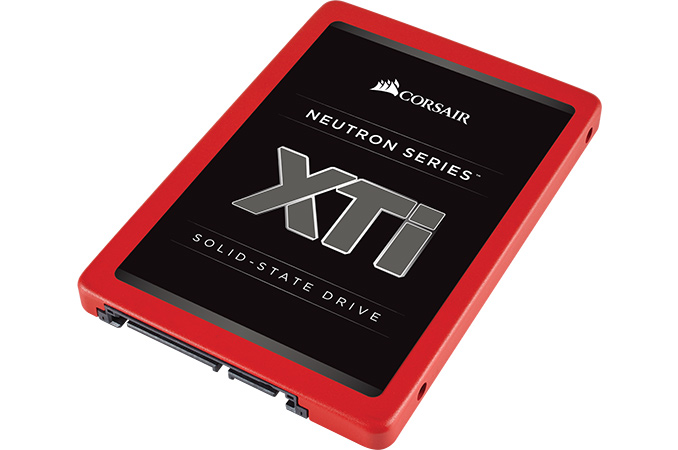
| 10:00a | Corsair Gives Phison PS3110 S10 Another Try: Neutron XTi SSDs Launched
A number of SSD suppliers have released drives based on the Phison PS3110 S10 controllers, with most of these coming in Q4 2014 or Q1 2015 and targeting performance mainstream customers. This year, some of the SSD vendors are not only reconsidering the positioning of such drives, but are actually introducing new models featuring a larger amount of NAND flash or even better performance but still using the same controller. Corsair last week introduced the Neutron XTi family of SSDs with the same Phison PS3110 S10 controller but with improved performance and capacities over the older XT SATA SSD line. The Corsair Neutron XTi series of SSDs includes models with 240 GB, 480 GB, 960 GB and 1920 GB of NAND flash memory. Just like many other drives featuring the Phison PS3110 S10 controller, the Neutron XTi utilizes MLC NAND made by Toshiba and given the timing, it is highly likely that the SSDs feature MLC produced using the company’s 15 nm fabrication process. Just like the original Neutron XT, the new series also supports end-to-end data protection, static and dynamic wear-leveling and so on. Performance-wise, the new Neutron XTi are as fast as the aging Neutron XT. The manufacturer declares transfer speeds of up to 560 MB/s for sequential read and up to 540 MB/s for sequential write. Random performance is up to 100K read IOPS and up to 90K write IOPS. When asked about differences between the Neutron XT and the Neutron XTI, Corsair revealed that the newer drives feature improved caches as well as different firmware, which should make them generally better than the predecessors. However, exact specifications for each capacity were unavailable at the time going to press. If we get new information, we'll update the table below.
Between the Neutron XT and the Neutron XTi lines are the newer NAND and the addition of a 1920 GB model to the lineup. Last week we already discussed the reason why SSD makers collaborating with Phison are adding 2 TB or sub-2 TB models to their families: as the price of NAND has declined significantly over the past few quarters it is now economically feasible to offer drives with such capacities to users who require a lot of solid-state storage but still use PCs that only support the SATA interface. The new Corsair XTi SSDs should be available shortly. The MSRPs for 240 GB, 480 GB and 960 GB models are $89.99, $159.99, $329.99, respectively. The price of the 1920 GB model is unknown. All Corsair Neutron XTi SSDs are backed by a five-year warranty. | ||||||||||||||||||||||||||||||||||||||||||||||||||||||||||||||||||
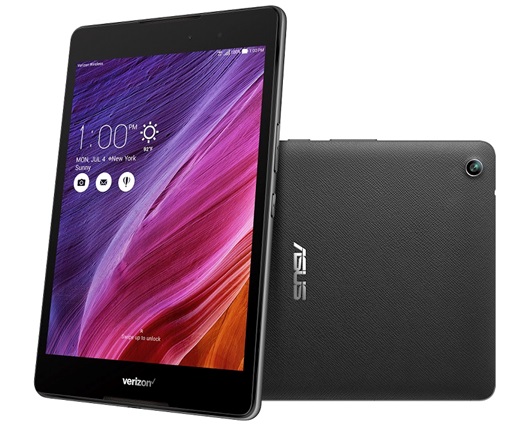
| 3:15p | Asus Announces ZenPad Z8 for Verizon
As a part of Asus’ continued commitment to the tablet market today Asus is launching a new tablet for Verizon, called the ZenPad Z8. There’s really not too much needed in the way of introduction here, so we’ll jump into the spec sheet first and see where we can go from there.
At a high level, right away the use of the Snapdragon 650 SoC is a fairly good sign given its 250 USD price point, as in general in devices we’ve seen that the Snapdragon 650 is a solid balance of performance and power for the mid-range, and in the case of this tablet means that Qualcomm’s modem expertise allows for good feature support, performance, and power on LTE.
Other than the basic specs, the ZenPad Z8 offers dual front-facing speakers which is great to see for media consumption, and VisualMaster display tweaks, which we investigated and found to be fairly disappointing in the ZenPad S, so hopefully there is some way to disable these display alterations. Overall, the ZenPad Z8 could be an interesting tablet at the 250 USD price point, but without further investigation it would be hard to say. Regardless, the ZenPad Z8 in black is available for preorder today and will go on sale June 23 through Verizon only for 249.99 up-front or divided across 24 months on a payment plan. | ||||||||||||||||||||||||||||||||||||||||||||||||||||||||||||||||||








| << Previous Day |
2016/06/16 [Calendar] |
Next Day >> |