[Most Recent Entries] [Calendar View]
Friday, July 15th, 2016
| Time | Event | |||||||||||||||||||||||||||||||||||||||||||||||||||||||||||||||||||||||||||||||||||||||||||||||||||||||||||||||||||||||||||||||||||||||||||||||||||||||||||||||||||||||||||
| 8:00a | Spot The Denverton: Atom C3000 Silicon On Display
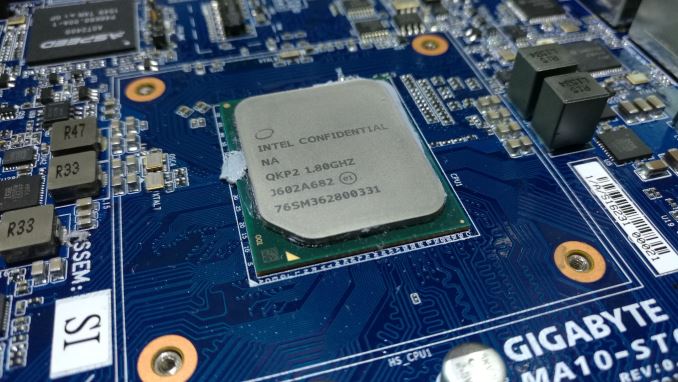
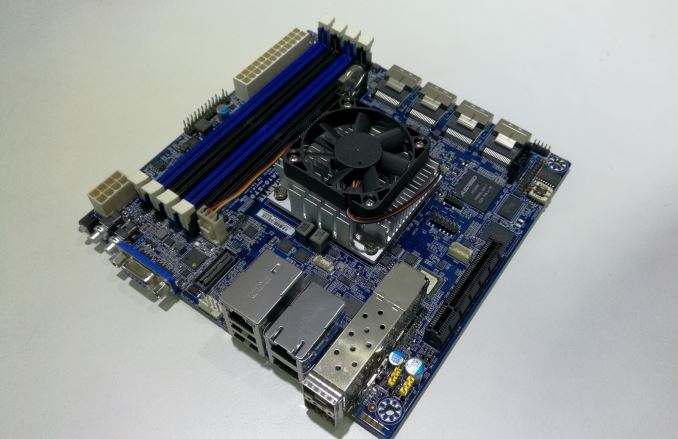
There are a few news items from Computex we didn’t cover at the time that I want to visit. The first is Denverton, and how one manufacturer had a relevant beta motherboard on display during the show. Denverton is the successor to Avoton, Intel’s 8-core Atom processor that we’ve seen in the ASRock C2750D4I and other and a variety of NAS and server based ‘card’ solutions (GIGABYTE showed a 46x C2750 server in 2U back at Computex in 2015). Avoton uses eight Bay Trail based cores, while Denverton will use the upgraded Cherry Trail microarchitecture design. The Denverton based motherboard on show was an ‘early’ sample, offering four DDR4 slots supporting RDIMMs, four SATA breakout ports (for 16 SATA drives, sharing some SoC PCIe lanes), dual 10G SFP+ ports, dual gigabit network ports (via Intel I210), 32GB of eMMC and an Aspeed AST2400 board management controller. A single PCIe 3.0 x8 slot is provided for additional functionality.
The chip at the center of this, after we asked nicely for the heatsink to be removed, is a 1.8 GHz Denverton part built on Intel’s 14nm process using the
IDF is currently set for mid-August, and we will have at least a trio of editors there for the ride. At this point in development, we are likely to see some announcements being made towards the Denverton platform. If there is a full release at that time, we should see full specification sheets and pricing. Failing IDF, Supercomputing16 is in November. Edit: Originally this piece claimed Denverton was Airmont, based on aged information. We have since concluded from multiple sources that it was perhaps originally going to be Airmont, but will now be Goldmont based. | |||||||||||||||||||||||||||||||||||||||||||||||||||||||||||||||||||||||||||||||||||||||||||||||||||||||||||||||||||||||||||||||||||||||||||||||||||||||||||||||||||||||||||
| 10:00a | More Atom: Apollo Lake On Display
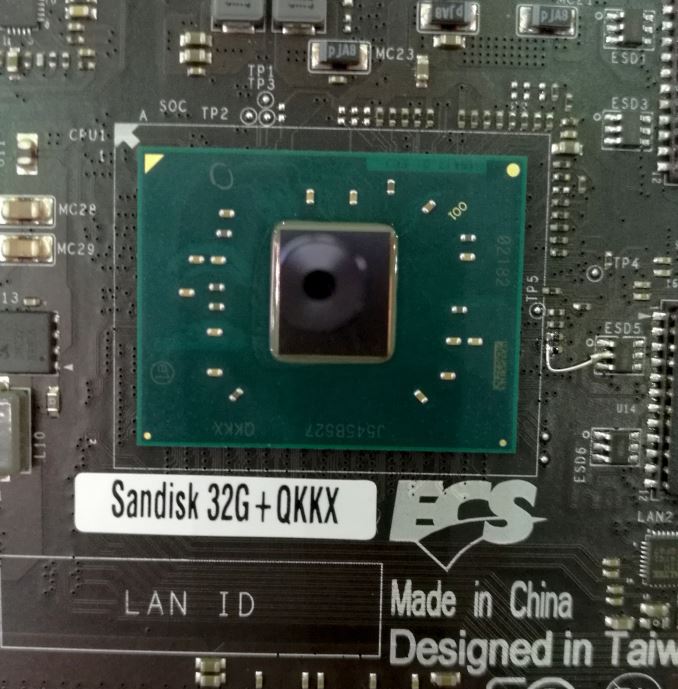
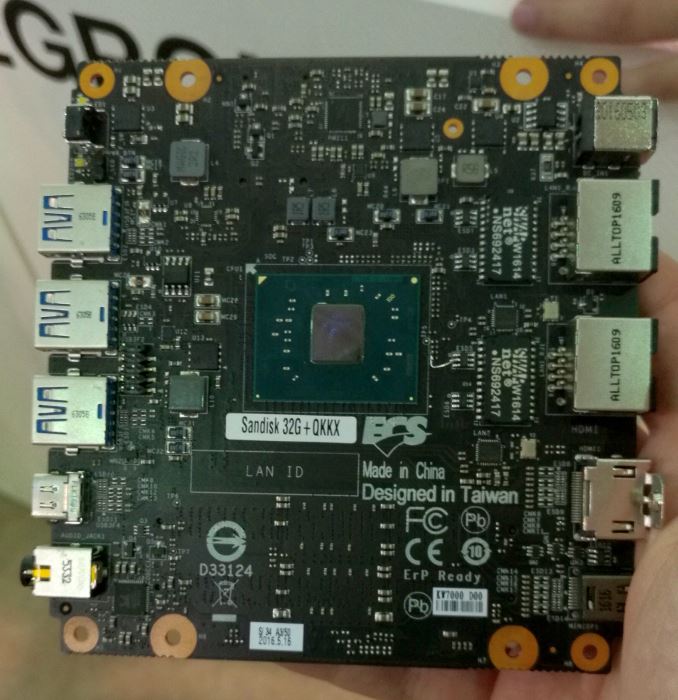
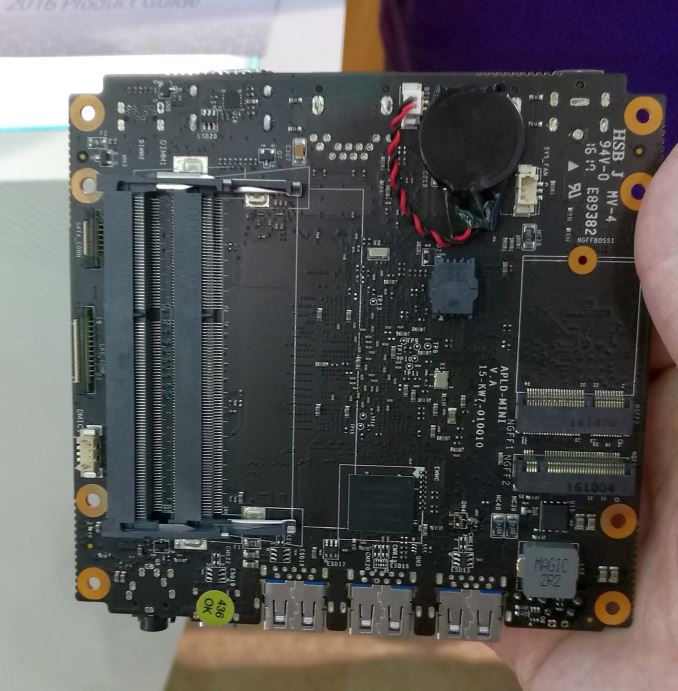
Further to our recent post about spotting Denverton silicon on display at Computex this year, we also caught an Apollo Lake mini-PC motherboard doing the rounds at the ECS booth. The mini-PC line from ECS incorporates many versions of the Liva, which run the gamut from dual core Atom all the way up to Core-M and Core i3, depending on how much power you need or how much you want to spend. Ganesh has in recent months reviewed the LIVA One with Skylake, the LIVA Core with Core-M, the LIVA x2 with Braswell and the LIVA X with Bay Trail-M. Based on that naming scheme, the motherboard we saw at Computex from ECS stands to be something like the LIVA x3.
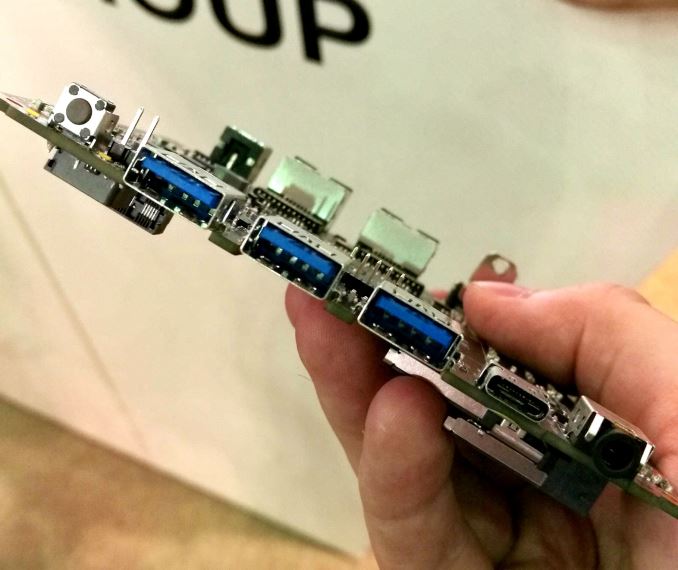
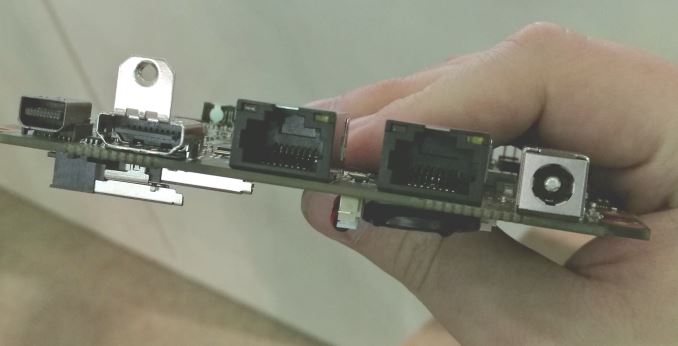
Apollo Lake uses Intel’s latest Atom cores, based on the Goldmont microarchitecture. We reported on Broxton for smartphones and tablets, also based on Goldmont, being canned earlier this year however the microarchitecture will live on in notebooks and mini-PCs for 2016 and 2017 (with servers/embedded even later). This motherboard shows an unknown Apollo Lake die, measuring in at 159.7 mm2 (11.24 x 9.98 mm), with DC-In power, dual network ports, three USB 3.0 Type-A ports, one USB 3.0 Type-C port, a HDMI output, a mini-DP output, two SO-DIMM slots and dual M.2: one for WiFi and one for storage.
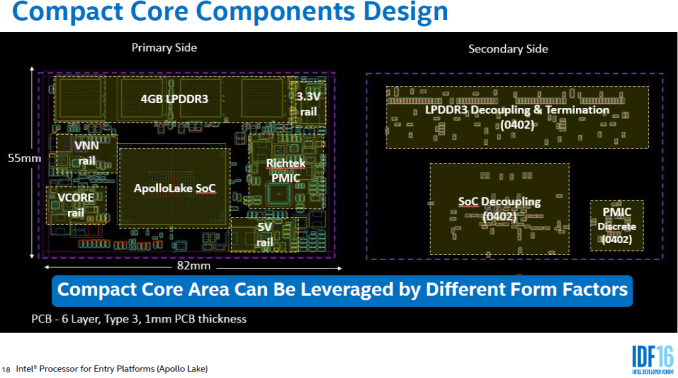
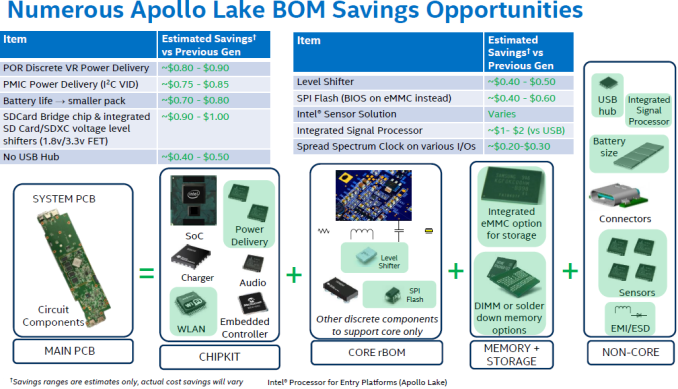
We reported on Apollo Lake being unveiled at IDF Shenzhen back in April, with up to four cores and Intel’s Gen9 graphics with an unknown amount of execution units. Apollo Lake supports DDR3L as well as LPDDR3/4, eMMC for storage, soldered down 802.11ac Intel WiFi and improved PMIC (power management) options. One of the headlines from the IDF Shenzhen presentation was the reduction in bill of materials cost (BOM) for the OEMs, up to $7, compared to the previous generation.
Along with a new ‘cloudbook’ category (i.e. Chromebook-style), Intel expects Apollo Lake to be in notebooks, all-in-ones and mini-PCs similar to ECS’ design. ECS also had a number of mini-STX designs on display, along with a couple of Intel engineers with some alternative combination mini-PC configurations. Gallery: More Atom: Apollo Lake On Display
      | |||||||||||||||||||||||||||||||||||||||||||||||||||||||||||||||||||||||||||||||||||||||||||||||||||||||||||||||||||||||||||||||||||||||||||||||||||||||||||||||||||||||||||
| 2:00p | Zalman ZM-K650WP: Because You Need a Soda-proof, Chip-proof $30 Membrane Keyboard
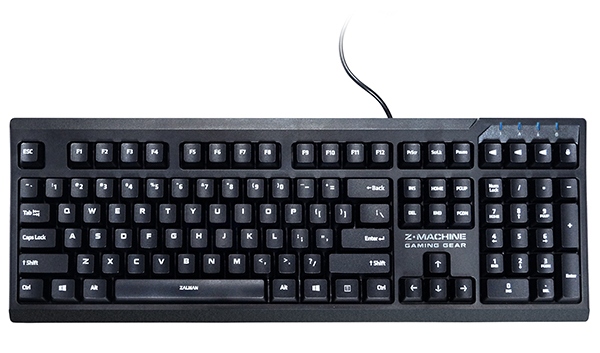
In the land of gaming keyboards and enthusiasts, mechanical keys are easily becoming the norm with every keyboard company coming out with a new feature, doodad, or eSports team sponsorship in a highly competitive market. Without the right guidance and knowledge, it can be difficult to separate the market, and users ultimately end up emotionally invested in their expensive products they use every day. But then you spill a soda on it, or in my case a cup of tea, because you weren’t looking. The keys are now sticky, and the mechanisms don’t feel the same, if you can bare to touch them at all. You look through online guides on how to clean the board, using an array of harsh solvents and cotton buds (or Q-tips) to bring it back to new. Zalman has an alternative up its sleeve.
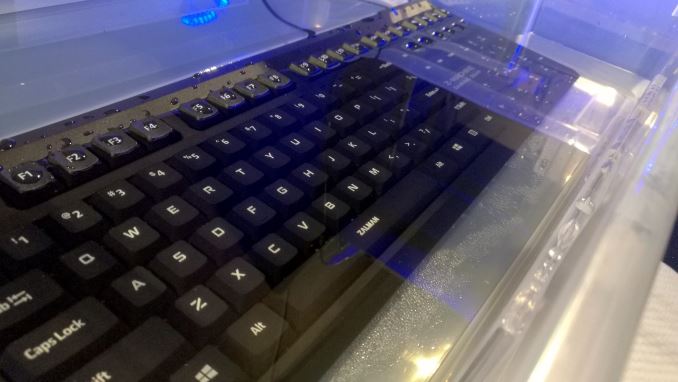
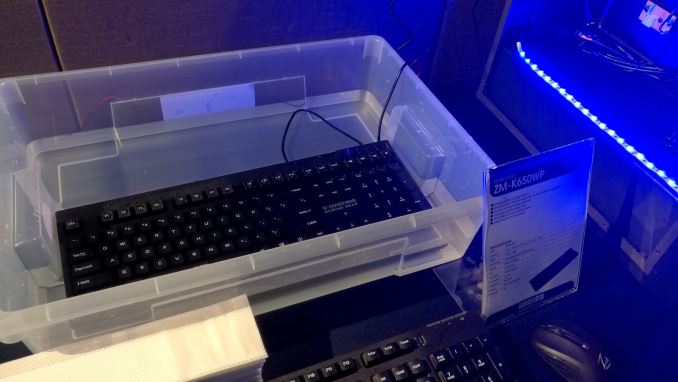
So it’s not a mechanical keyboard, and relies on standard membrane keys found in the $10 eBay models you can buy. But this keyboard is sealed and designed to be waterproof to the point that you could happily use it underwater. At Computex, Zalman had a hands-on display of the keyboard being used in a large tub of water, and subsequent videos have been posted online showing it in use with a running tap over the top. Add in some chip fragments from your favorite mix of Doritos and Mountain Dew, and when it gets to the point of un-usability (which, to be honest going by some office keyboards, involves fungus), grab some dish soap and a sponge. Five minutes later, it should, with some elbow grease, be back to normal. To be honest, an office environment might be a great place for a washable keyboard.
You can imagine the PC gaming market in several different segments, some of which overlap: those who just want to play, those who want the best equipment, those who attend LAN events, and those that drink at LAN events. Something like a soda-proof, chip-proof cheap keyboard makes sense, such that no-one else will want to steal it and it doesn’t matter what gets dropped on it if it can be easily cleaned. Sure, membrane keys aren’t gaming focused, but if the lack of mechanical keys is what is stopping the user from enjoying the game, then there’s not much else to say. The ZM-K650WP should be coming to the market sometime in August, with a $30 MSRP. After my meeting at Computex they’ve ended up sending both Tracy and I a couple of samples each, so we’ll get to a review (as much as is possible with a membrane keyboard, perhaps a couple of fun videos) in due course. | |||||||||||||||||||||||||||||||||||||||||||||||||||||||||||||||||||||||||||||||||||||||||||||||||||||||||||||||||||||||||||||||||||||||||||||||||||||||||||||||||||||||||||
| 3:15p | Intel Readies New NUCs Based on Kaby Lake and Apollo Lake SoCs
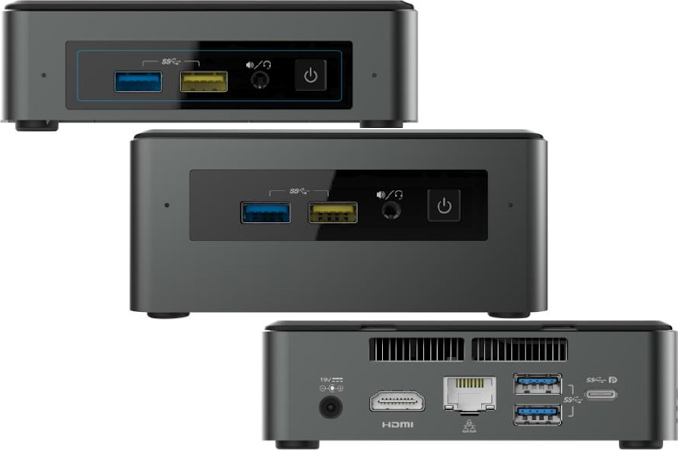
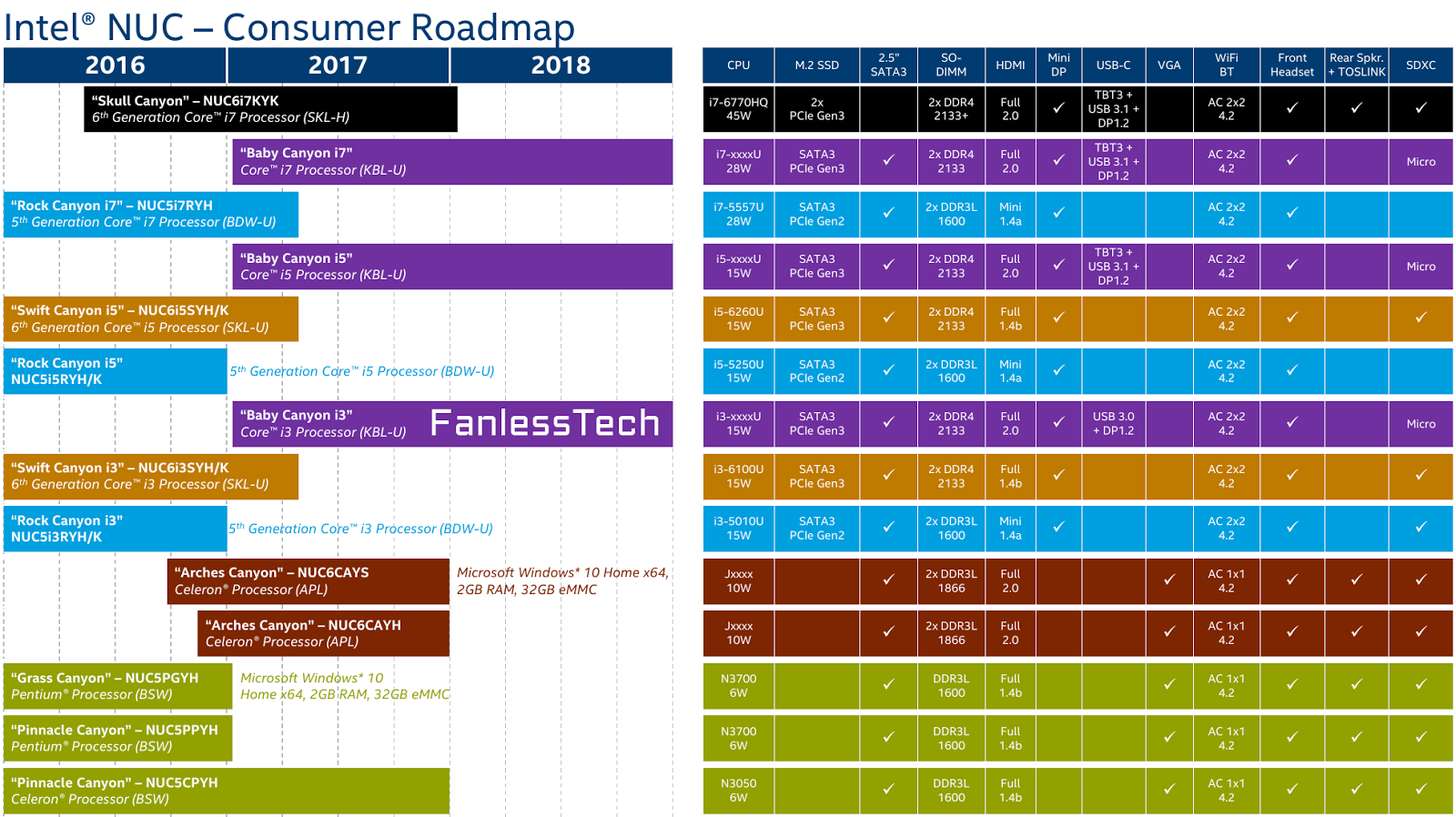
As one might expect, Intel is working on a new generation of its NUC small-form-factor systems based on the company’s upcoming Kaby Lake and Apollo Lake microprocessors. The writers over at FanlessTech have published what appears to be an exclusive of a set of Intel slides regarding the next generation of NUCs, and we are in the process of double verifying the details. Until then, here's our analysis of the news. The new systems are expected to hit the market in late 2016 and early 2017 and bring a number of new technologies, which are absent from today’s SFF PCs. In particular, the new systems will support Thunderbolt 3, USB 3.1 (10 Gbps), HDMI 2.0 and the new processors.
The upcoming Intel NUC systems are code-named Baby Canyon and Arches Canyon, according to the slides published by FanlessTech. The Baby Canyon PCs will be powered by Intel’s upcoming Kaby Lake-U SoCs, whereas the Arches Canyon will feature the company’s Apollo Lake chips. The new systems will complement and then eventually replace current-gen NUCs running Broadwell, Braswell and Skylake processors. Meanwhile, Intel’s top-of-the-range code-named Skull Canyon NUCfeaturing the high-end Core i7-6700HQ processor (quad-core with Hyper-Threading, 6 MB LLC, Intel Iris Pro Graphics 580 with 72 EUs and eDRAM, etc.) will not be replaced at least until late 2017. Baby Canyon with Kaby Lake-U SoCsIntel’s Baby Canyon NUCs will be the positioned as Intel’s mainstream SFF PCs for users, who would like to have Core-based CPUs powered by the company’s high-performance microarchitecture (Kaby Lake in this case). Thanks to microarchitectural enhancements, the new systems promise to be faster than existing mainstream NUCs, but at this point we have no idea what to expect from Kaby Lake in general, except natural enhancements of iGPU as well as improvements to media playback capabilities. All of the Baby Canyon PCs will support up to 32 GB of DDR4-2133 memory, HDMI 2.0, an M.2-2280 socket for PCIe 3.0 x4 SSDs, a MicroSDXC card-reader as well as a soldered-down Intel Wireless-AC 8265 controller. The Core i7 and i5 Baby Canyon systems will also come equipped with a Thunderbolt 3 controller, which will automatically bring support for USB 3.1 running at up to 10 Gbps, whereas NUCs featuring Core i3 CPUs will continue to rely on USB 3.1 Gen 1 implementation with 5 Gbps transfer-rate. Given all the hubbub surrounding Type-C audio, Intel decided to keep the good-old 3.5 mm audio jack but did not implement support for USB-C Audio into the Baby Canyon, at least, according to the published slides.
The Baby Canyon family of NUCs is projected to arrive in early 2017, around the same time we expect Intel to start discussing its Kaby Lake-U processors with HDMI 2.0 support. Keep in mind that Intel has not announced Kaby Lake chips officially, hence, all the plans are subject change. Arches Canyon NUCs with Apollo Lake SoCsThe Arches Canyon NUCs will be Intel’s new entry-level SFF systems running Apollo Lake SoCs branded as Celeron J-series processors. The chips will feature all new Goldmont x86 microarchitecture, Intel’s ninth-generation graphics architecture (Gen9) as well as improved media playback (due to hardware-accelerated playback of 4K video encoded using HEVC and VP9 codecs). Since the new SoCs are rated for 10 W TDP, it is logical to expect higher clock speeds than previous Atom-based NUCs, even though at this point this is a speculation. Intel reportedly plans to offer two versions of its Arches Canyon NUCs: the NUC6CAYS with 2 GB of DDR3L-1866 memory, 32 GB eMMC storage and pre-installed Windows 10 Home x64 OS; as well as the NUC6CAYH, which will come as a barebone PC. Both systems will still support up to 8 GB of DDR3L memory, one 2.5”/9.5 mm SSD/HDD, a 1x1 wireless module supporting IEEE 802.11ac Wi-Fi and Bluetooth 4.2, an HDMI 2.0 display output, USB Type-A ports, an SDXC card reader and so on. Intel decided to place a D-Sub connector on the back to enable connectivity with cheap displays.
Based on the documents published by FanlessTech, the fully-populated NUC6CAYS will hit the market ahead of the barebone NUC6CAYH sometimes in the fourth quarter of this year. Please keep in mind that all the information regarding Intel’s new generations of NUCs is completely unofficial and many details may change by the time the systems hit the market. Intel responded to requests for confirmation and responded with 'Intel does not comment on unreleased products', which is the expected response. As mentioned at the top of this news, we are in the process of double verifying the information in the slides, but for anyone who follows Intel's NUC lines, these hardware specifications are not far fetched at all and make sense for the markets they are entering. | |||||||||||||||||||||||||||||||||||||||||||||||||||||||||||||||||||||||||||||||||||||||||||||||||||||||||||||||||||||||||||||||||||||||||||||||||||||||||||||||||||||||||||






| << Previous Day |
2016/07/15 [Calendar] |
Next Day >> |