[Most Recent Entries] [Calendar View]
Wednesday, July 20th, 2016
| Time | Event | ||||||||||||||||||||||||||||||||||||||||||||||||||||||
| 7:00a | Consumer 10GBase-T Options: Motherboards with 10G Built-In
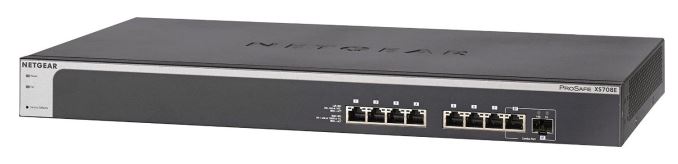
Any of our long time readers will know that I can have a soft spot for high-speed networking. Throughout the years I’ve been plagued with bad WiFi, irregular house shapes, routers that only come with a single 1G port, and the inability to set up a decent, cost effective high-speed home network. The movement to 10G has certainly been prevalent in the enterprise space, as shown by the growth of 10G panels at Supercomputing 2015 last year. However the movement to 10G for home use, which is still a niche category I admit, has been slow and still very expensive. Using 10GBase-T, over SFP or other connectivity, allows for backwards compatibility in the home which is still an important feature. There are two main ways to show 10G to your home network: either pick up a NAS with 10G and use a switch with one or two 10G ports (then 10+ ports with 1G connections), or use a full 10G switch and have 10G devices. The cheapest 10GBase-T switch available for end-users is still Netgear’s XS708E 8-port switch, retailing for $750 or sometimes on sale for $625-650.
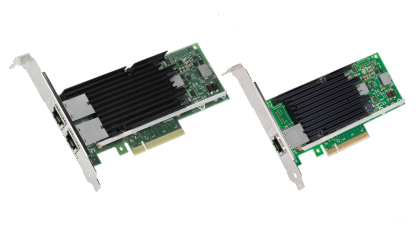
That’s around $80+ minimum per port for the switch, and then you need machines with 10G access. Depending on how the wind is blowing and what sales are on, single port PCIe cards with dual 10G ports can be had for $200-$220 on the gray market or up to $400 from source, with the main option of Intel controllers, however there are a few using an Aquantia/Tehuti networking solution. Or roughly translated, $100 per port, and it requires a system with a spare PCIe 2.0 x8 slot.
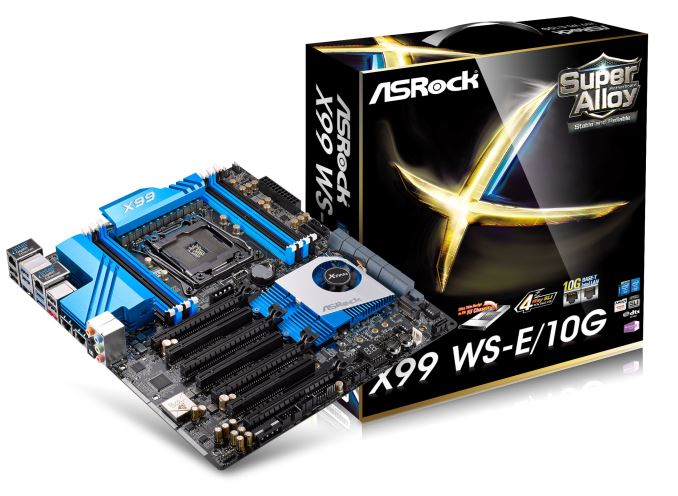
As we’ve previously reviewed at AnandTech, there are other options for having consumer-based 10G enabled systems. We reviewed the ASRock X99 WS-E/10G back in December 2014, which used a PLX PCIe switch to enable both the Intel X540T2 controller and four-way GPUs in a high-end motherboard. This motherboard currently retails for $770, and uses Haswell-E and Broadwell-E high-end desktop processors.
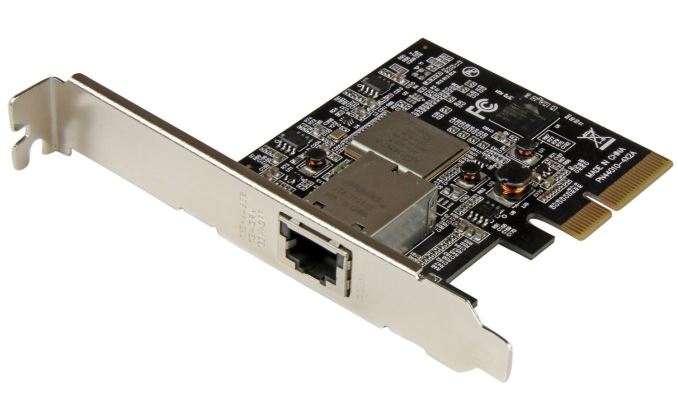
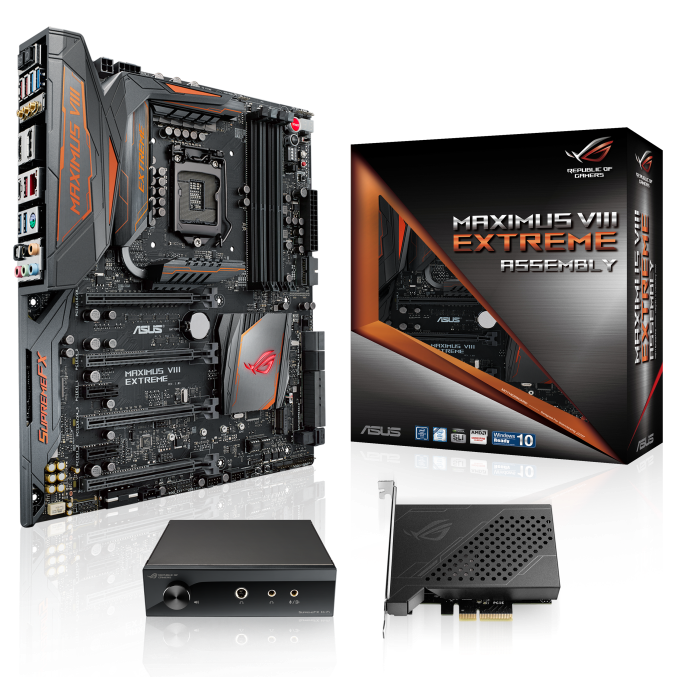
This motherboard held the title of the only consumer motherboard to come with a 10G chip for over a year. Late last year, in November 2015, ASUS met the feature half-way, offering their high-end Skylake-based Z170 Maximus VIII Extreme motherboard with a bundled single-port 10GBase-T card built on the Aquantia/Tehuti platform. The package carries the Extreme/Assembly branding, and also comes with a front panel DAC. We didn’t get time to review this bundle, and unfortunately the 10G card isn’t sold separately. The whole package is currently on sale for $570, however as it is Skylake based we are limited to a quad core i7-6700K system in this case.
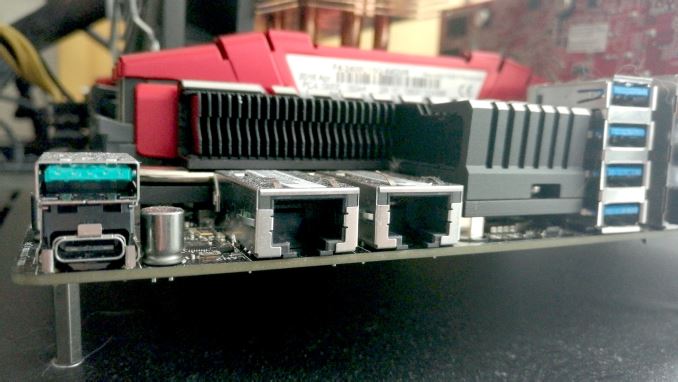
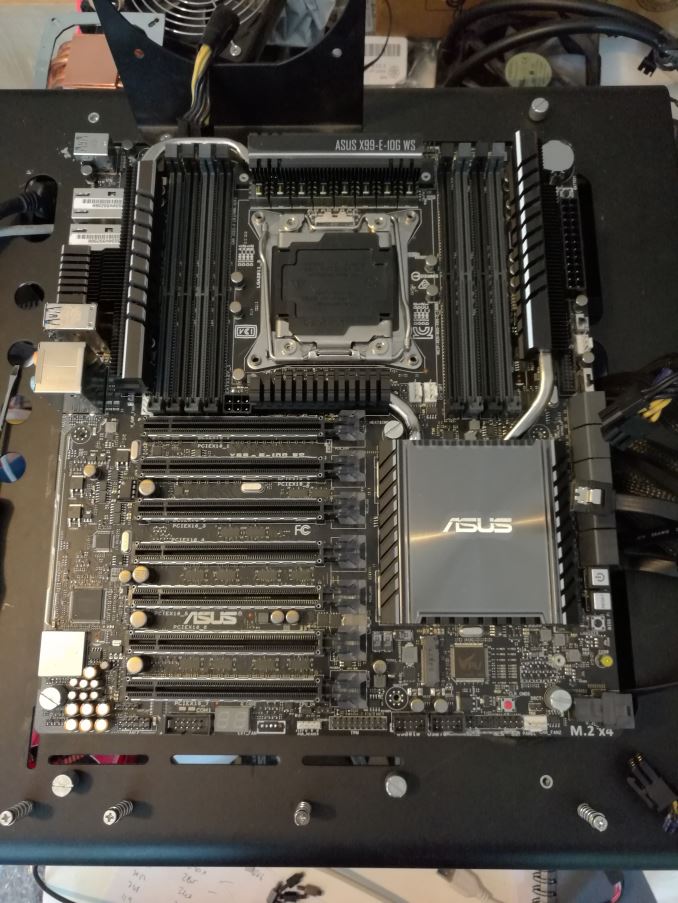
Move forward to Computex 2016, and ASUS dropped on my doorstep the day before I left their new 10G motherboard design for Broadwell-E processors – a near final version of the product. This is the ASUS X99 E-WS/10G, their high-end desktop workstation motherboard with a built in Intel X550T2 controller for dual 10G ports. The board also comes with reinforced PCIe slots, support for U.2 drives, USB 3.1 and most of the updated modern features for a high-end product. We’re still in the process of testing and reviewing this motherboard, which is set for release sometime soon. Price unknown at this point, but we expect it to be certainly near the ASRock 10G board.
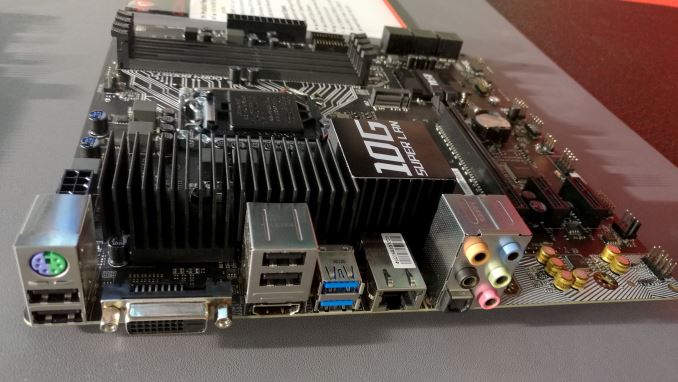
On the show floor at Computex, we saw another new entrant to the onboard 10G market on display. While all the other motherboards have been ATX (or E-ATX) so far, MSI is going to plug an Intel X550 controller on a Xeon grade Z170 micro-ATX motherboard to go after some smaller form factor designs. This design uses the C236 chipset, allowing users to equip either a Skylake Core CPU or a Xeon E3-1200 v5 processor, and siphons off four PCIe lanes from the CPU for the 10G controller. This gives 12 lanes from the CPU left, 8 of which go to the main PCIe slot, and another four to the M.2 slot as well. Being both Z170 based and micro-ATX should allow this product to be priced cheaper than the others, although unlike the others it only houses one 10GBase-T port rather than two. When MSI are near final with this motherboard, we’d love to get it in for testing.
There are also a variety of non-consumer focused motherboards with 10GBase-T ports, either with Xeon-D SoCs or dual socket motherboards, such as the MBD-X9DRE-TF+ from Supermicro (dual LGA2011) for $670 or the X10FRC-T4+-O (dual LGA2011-3) for $941. For consumers looking to move to 10G for home networking, we’re still waiting for the pricing of switches to come down, however it would seem that there are moves afoot to equip more motherboards with 10G by default. There’s still the added cost, and it means the PCIe lane layouts might be a bit different to normal, but it removes the need for an extra PCIe slot/card overall. It’s a slow march, and the price of both switches and 10G controllers needs to come down to make it a more viable option.
| ||||||||||||||||||||||||||||||||||||||||||||||||||||||
| 8:45a | The NVIDIA GeForce GTX 1080 & GTX 1070 Founders Editions Review: Kicking Off the FinFET Generation It has taken about 2 years longer than we’d normally see, but the next full generation of GPUs are finally upon us. Powered by FinFET based nodes at TSMC and GlobalFoundries, both NVIDIA and AMD have released new GPUs with new architectures built on new manufacturing nodes. AMD and NVIDIA did an amazing job making the best of 28nm over the 4 year stretch, but now at long last true renewal is at hand for the discrete GPU market. Back in May we took a first look at the first of these cards, NVIDIA’s GeForce GTX 1080 Founders Edition. Launched at $700, it was immediately the flagship for the FinFET generation. Now today, at long (long) last, we will be taking a complete, in-depth look at the GTX 1080 Founders Edition and its sibling the GTX 1070 Founders Edition. Architecture, overclocking, more architecture, new memory technologies, new features, and of course copious benchmarks. So let’s get started on this belated look at the latest generation of GPUs and video cards from NVIDIA. | ||||||||||||||||||||||||||||||||||||||||||||||||||||||
| 10:55p | Intel Begins Shipment Of Seventh Generation Core: Kaby Lake
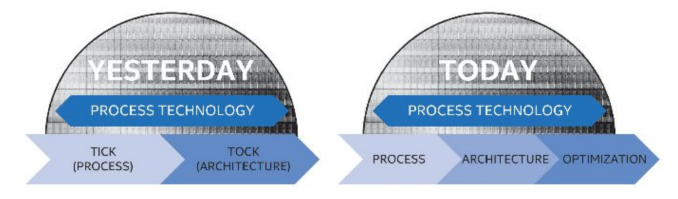
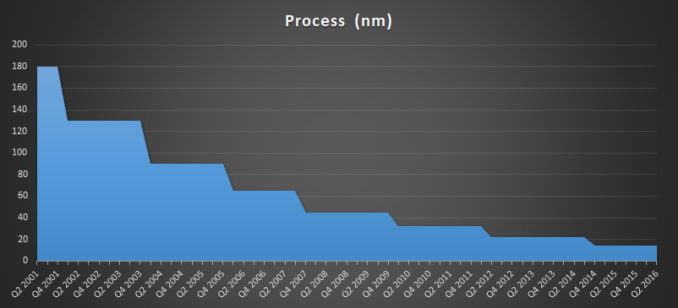
Intel had their Q2 earnings today, and while we’ll get to that shortly, some news came out of the earnings call that was interesting. Intel CEO Brian Krzanich stated on their earnings call that Intel is now shipping their 7th Generation Core processor, code named Kaby Lake. Kaby Lake was not even a product not that long ago, but with Intel coming up against the laws of physics with process shrinks, they made the announcement a year ago that they would be adding more architectures per process shrink. The delays in moving to 22 nm and then 14 nm meant that they were missing the anticipated product launches for their OEMs, which left the OEMs with quarters where they would have no new products to sell. In an attempt to smooth out the timelines to a more reasonable cadence, while at the same time coming to grips with the complexity of moving to smaller and smaller processes, Intel announced Kaby Lake as a successor to Skylake, which would build on Skylake and offer additional architectural improvements. This was big news at the time mostly because Intel’s previous Tick Tock strategy was so successful. To abandon it was certainly an important step for the company, but with Kaby Lake seemingly on-time for a fall launch this year, just a year after Skylake launched, points to the investment being the correct one.
When Intel says they are shipping, they of course mean they are shipping to their device manufacturer partners, so we should start seeing Kaby Lake based computers this fall. Another interesting point brought up during the call was on yields. Intel has found itself in a situation where it’s inventory levels are higher than they would like them to be, and the answer to this was yields. Intel’s yields improved in Q1, and to quote Stacy J. Smith, Intel’s CFO and EVP, “Frankly, they got a lot better in Q2 as well” which is likely another reason why Kaby Lake is being delivered on-time. We should learn more about Kaby Lake at Intel’s IDF which is coming up in mid-August. Source: Intel Investor Call | ||||||||||||||||||||||||||||||||||||||||||||||||||||||
| 11:55p | Intel Announces Q2 FY 2016 Earnings
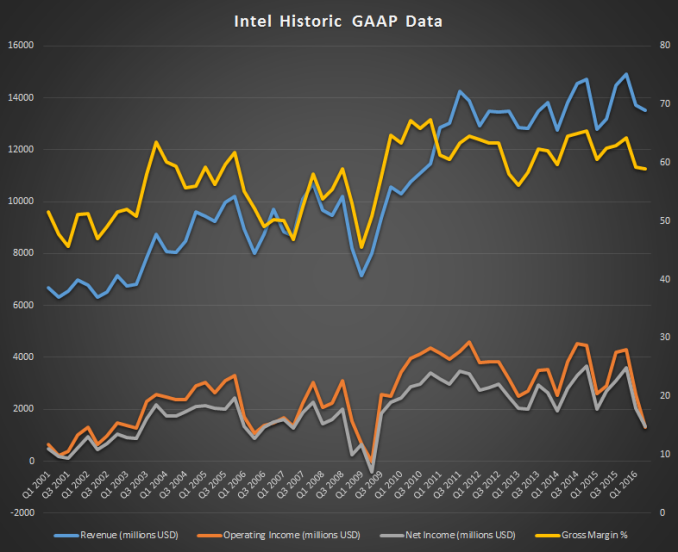
In addition to the interesting tidbit about Kaby Lake, Intel also found time today to announce their second quarter earnings for fiscal year 2016. Revenue was up 3% year-over-year, but net income and earnings per share took a big hit due to the restructuring announced in Q1. Revenue for the quarter was $13.5 billion, and while gross margin was down 3.6% to 58.9%, Intel did exceed their outlook on margins. Operating income for the quarter was $1.3 billion, compared to $2.9 billion a year ago, and net income was $1.3 billion as well, down from $2.7 billion last year. Earnings per share came in at $0.27 per share, down 51% from the $0.55 result a year ago. To account for the restructuring fees and other charges, Intel has also released Non-GAAP results. Revenue was the same at $13.5 billion, and gross margin was 61.8%, which was down 1.3% from a year ago. Operating income was $3.2 billion, down 2% from last year, and net income was down 6% to $2.9 billion. Non-GAAP earnings per share came in at $0.59 per share, down 5% from the $0.62 recording in Q2 2015.
Looking forward to next quarter, Intel sees revenues at $14.9 billion, plus or minus $500 million, with margins around 60%, plus or minus a couple of percent.
Looking at the individual business lines, Intel now has a couple of additional business groupings. After the acquisition of Altera, the formed the Programmable Solutions Group, and they also have the New Technology Group to manage the products designed for wearables, cameras, and other segments. The longer tenured groups are still the Client Computing Group, Data Center Group, Internet of Things Group, Non-Volatile Memory Solutions Group, and Intel Security Group, as well as “All Other”. The Client Computing Group is platforms for notebooks, desktops, tablets, phones, and wireless connectivity. This group had revenues of $7.3 billion for the quarter, down 3% year-over-year. Intel decreased sales of their notebook platforms by 5% compared to Q2 2015, but the average selling price increased 2%. Desktops decreased 7%, and average selling price increased 1%. Tablet platform volumes fell 49% to 5 million units. Overall, Client Computing Group unit volumes decreased 15% year-over-year, but average selling prices increased 13%. The Data Center Group had revenues of $4.027 billion, which is up 5% year-over-year. Unit volumes were up 5% year-over-year, but average selling prices of this line was down 1%. The Internet of Things group had revenues of $572 million, up 2% year-over-year, while the Non-Volatile Memory Solutions Group had revenues of $554 million, which is down 20% year-over-year. Intel Security Group revenue was up 10% year-over-year to $537 million, and the new Programmable Solutions Group had revenues of $465 million, up 30% from last quarter when they were acquired.
Intel’s quarter met their expectations, but the restructuring charges have taken a toll on their profitability. Perhaps the most exciting news from this announcement though is that Kaby Lake is now shipping, along side the latest 7360 LTE modem. Source: Intel Investor Relations | ||||||||||||||||||||||||||||||||||||||||||||||||||||||



| << Previous Day |
2016/07/20 [Calendar] |
Next Day >> |