[Most Recent Entries] [Calendar View]
Friday, July 22nd, 2016
| Time | Event | |||||||||||||||||||||||||||||||||||||||||||||||||||||||||||||||||||||||||||||||||||||||||||||||||||||||||||||||||||||||||||||||||||||||||||||||||||||||||||||||||||||||||||||||||||||||||||||||||||||||||||||||||||||||||||||||||||
| 9:00a | SAPPHIRE Announces NITRO+ Radeon RX 480
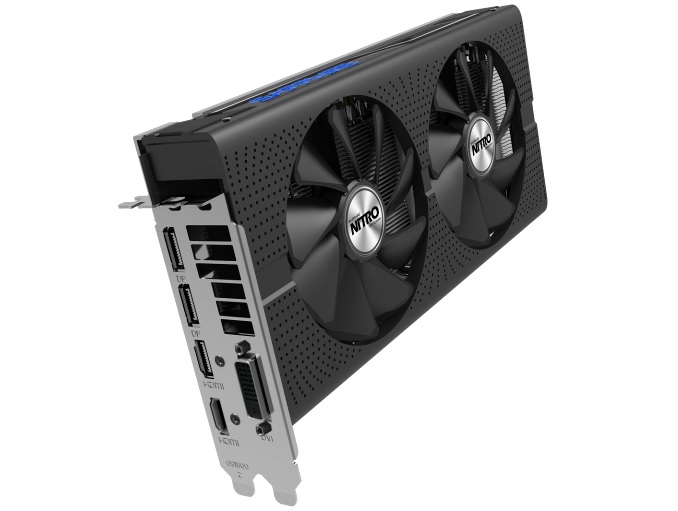
This morning SAPPHIRE is announcing their latest card in the NITRO+ family, the NITRO+ Radeon RX 480. Some key features of SAPPHIRE’s new NITRO+ RX 480 cards include higher clock speeds, an improved cooler with a back plate included, and software fan health monitoring. Along with this we’ll also get RGB lighting and power delivery that is improved over what we saw on the reference RX 480. The cooler is improved from SAPPHIREs last generation with two 95mm dual-ball bearing fans. Meaning longer fan life and potentially quieter operation. In fact, SAPPHIRE isn’t content simply improving the quality of their fans. They also are including a feature called “Fan Check” in their upcoming SAPPHIRE TriXX 3.0. Fan Check allows users to check the health of their fans and if an issue is detected they can contact customer support for a replacement fan. Thanks to quick swap fans the user can replace just the fan with a single screw, no more need to return a whole card for a dead fan, and no more need to disassemble a card to remove the fan. I think this sounds like a neat feature, but considering the use of dual ball bearing fans and that the fans shut off when temperatures are under 52 degrees Celsius, I won’t be surprised if the number of users needing replacements is rather low. It has occured to me that you can’t throw a dart without hitting an RGB LED card anymore. Regardless it does come in handy when color coordinating a build. Along with having the usual option to control the RGB lighting through SAPPHIRE’s utility, there is also a hardware controlled red button on the back of the card which will let one work through the various included modes such as fan speed or GPU temperature modes.
We will be seeing factory overclocks from both the 8GB and 4GB versions of this card. While base clocks are presumably higher they were not shared, though the boost clocks come out to 6% and about 3% over AMD's reference cards respectively. The memory clocks are right in line with the reference Radeon RX 480 8GB and 4GB cards. For those that enjoy running on overclocked hardware the NITRO+ Radeon RX 480 includes a NITRO Boost dual bios switch that further increases the boost clock and power limit for some extra performance. To help feed overclocking endeavors the card also comes with an 8-pin power connector and a new model of their own Black Diamond Chokes which they profess drop coil temperatures by another 15%. Amusingly, with the increasing growth in VR this generation having multiple HDMI outputs is becoming a highlighted feature all around. Following suit, we can find dual HDMI on the business end of the NITRO+ Radeon RX 480 sharing space with two DisplayPort connectors and a DVI-D port. Finally, for pricing the SAPPHIRE NITRO+ Radeon RX 480 will be listed at $269 for the 8GB card and $219 for the 4GB model, a $30 and $20 premium over the reference models, respectively. So far the NITRO+ RX 480 appears to be a robustly built card with all the bells and whistles we’re seeing this generation including RGB lighting, fan shutoff, and warranty fan replacement while they were at it. Exact release dates have not yet been revealed, but those interested in these cards will find them available from etailers next week. | |||||||||||||||||||||||||||||||||||||||||||||||||||||||||||||||||||||||||||||||||||||||||||||||||||||||||||||||||||||||||||||||||||||||||||||||||||||||||||||||||||||||||||||||||||||||||||||||||||||||||||||||||||||||||||||||||||
| 9:00a | Battle of The CPU Stock Coolers! 7x Intel vs 5x AMD, plus an EVO 212 End users need to be aware of the performance of their current cooling solutions in order to reasonably assess the upgrade that will fit their needs. In this review we will showcase the thermal performance of some popular stock CPU coolers, including the controversial aftermarket Intel BXTS15A and the highly touted AMD Wraith, marketed as offering 125W of near-silent cooling and the equivalent of a $30 freebie. We also included one of the most popular mainstream coolers available, the Cooler Master EVO 212, as a baseline comparison against aftermarket solutions. | |||||||||||||||||||||||||||||||||||||||||||||||||||||||||||||||||||||||||||||||||||||||||||||||||||||||||||||||||||||||||||||||||||||||||||||||||||||||||||||||||||||||||||||||||||||||||||||||||||||||||||||||||||||||||||||||||||
| 10:15a | Samsung’s SSD 850 EVO 4 TB Now Available from Major Retailers
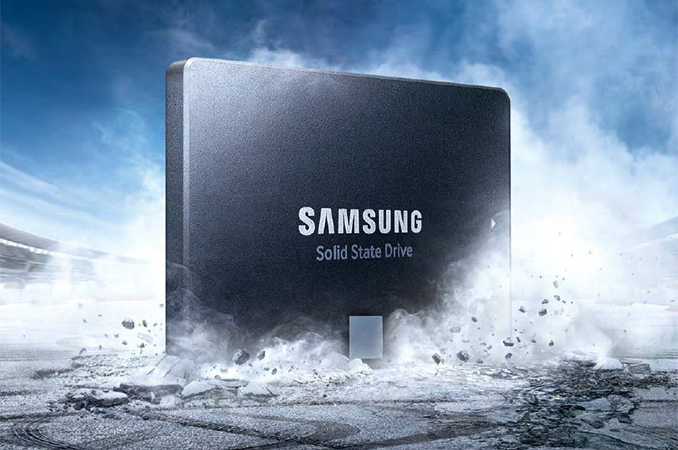
Samsung quietly added its 4 TB 850 EVO SSD model to the product to the lineup back in May (according to its own datasheet) without making any formal announcements. Earlier this month the company lifted the embargo on reviews of the product (you can read ours here) and began to ship the high-capacity SSD to its partners. By now, all the major retailers already either have the product in stock, or are taking pre-orders with ETA about a week from today, at a US MSRP of $1499.
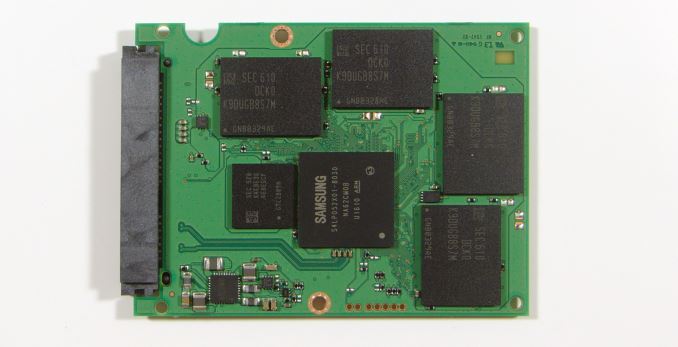
The Samsung SSD 850 EVO 4 TB (MZ-75E4T0) comes in a 2.5”/7 mm form-factor with SATA interface and is based on the company’s TLC V-NAND memory (3D, 32-layers). The 850 EVO 4 TB drive is based on the MHX controller and is equipped with 4 GB of LPDDR3 cache (previously we were told we knew about the MHX ASIC supported 2GB max, which is interesting). Like the rest members of the 850 EVO family, the 4 TB model fully supports 256-bit full disk encryption that is compatible with the TCG/Opal 2.0 and IEEE1667 specifications, which is important for workstation users.
As for performance, the Samsung 850 EVO 4 TB drive resembles other higher-end models in the 850 EVO family. The manufacturer declares maximum sequential read speed of 540 MB/s as well as maximum sequential write speed of 520 MB/s for the SSD. As for random performance, the drive delivers a top speed of 98,000/90,000 4K random read/write IOPS. Maximum power consumption of the drive is 3.1 W/3.6 W during active read/write operations, which is also in line with the rest of the high-end 850 EVO SSDs. Right now, virtually all the biggest retailers in the world already have the Samsung 850 EVO 4 TB in stock, or, at least, list the drive and take pre-orders. We could say that the highest-capacity consumer-class SSD is now widely available, however, we should note that in many stores the first batch was sold out immediately and some only have several units left.
The Samsung EVO SSD with 4 TB capacity has MSRP of $1,499 in the US, and the high price indicates that this remains a prosumer play at this point. At $1,499, the price is over two times higher than the 2 TB 850 EVO model ($675.76 at Newegg), indicating a higher cost per GB in exchange for density. Ultimately the product will likely find its buyer among those who need a large amount of solid-state storage (in 2.5"/7mm form-factor). Other Options, Mainly for EnterpriseTypically SSDs of such capacity are designed for servers and datacenters and come with professional grade features which makes them even more expensive. For example, the SanDisk Optimus Max 4 TB (SAS) is available for $2,685 at Amazon and for $2,718 at Ebay. Likewise, Samsung’s own enterprise-grade PM863 3.84 TB SSD (SATA) has suggested price of $2,200, whereas its faster PM1633 3.84 TB (SAS) brother is sold for $3,092. Moreover, if you go to companies like Fixstars or Foremay, they build special-purpose SSDs for various non-PC applications. These products typically aren't even quoted for pricing, because they can feature different configurations and the order quantity affects the pricing, along with any support deal. Nonetheless, when it comes to performance, capacity, endurance and price, the sky is the limit for solid-state storage. Multiple companies (including Samsung and Fixstars) now offer 2.5” SSDs with over 10 TB capacity and there are specialized solutions (such as those from HPE) that can easily cost $10,000 and north. In short, $1,499 may not be that expensive for a consumer drive. | |||||||||||||||||||||||||||||||||||||||||||||||||||||||||||||||||||||||||||||||||||||||||||||||||||||||||||||||||||||||||||||||||||||||||||||||||||||||||||||||||||||||||||||||||||||||||||||||||||||||||||||||||||||||||||||||||||
| 11:30a | G-Technology Introduces G-Drive and G-RAID External HDDs up to 20 TB
G-Technology this week introduced several new models of its G-Drive and G-RAID products with Thunderbolt 1, USB 3.0 or Thunderbolt 2 soltions. These are direct attached storage (DAS) devices, based on the latest hard drives featuring 10 TB capacity. The new DAS products aim to significantly increase performance and capacities of devices aimed at consumers and prosumers. The introduction of such storage solutions emphasizes that Western Digital (which owns the HGST and the G-Technology brands) is moving its helium-filled HDDs into the consumer space.
The first new G-Drive, with Thunderbolt 1 and USB 3.0, quotes a 10 TB capacity will give a maximum transfer rate of up to 245 MB/s, which is in line with the performance of the latest enterprise-class drives. In fact, the new product from G-Technology offers a combination of highest capacity and sustained transfer rate for a single-drive DAS in the industry. Officially, Western Digital only says that the new G-Drive is based on an enterprise-class HDD and does not confirm that the DAS utilizes the company’s flagship helium-filled HDD with 7200 RPM spindle speed (such as the HGST Ultrastar He10), but that is something logical to expect given the company’s portfolio of products. The 10 TB capacity point will add a new member to the stack, with a $699.95 price point for the TB1 flagship G-Drive (using TB3 and USB 3.0). A USB 3.0 only version of the G-Drive 10 TB external HDD will also available for $599.95. The new 10 TB drives complement other G-Drive models with 3, 4, 6 and 8 TB of space.
For those that need more storage and higher performance, Western Digital offers its G-RAID products with a combination TB2/USB 3.0 interface. These are powered by two HDDs in RAID 0 stripe mode, but also configurable as a RAID 1 mirror. The 20TB version of the G-RAID with Thunderbolt 2 uses a pair of 10 TB helium-filled drives in stripe mode, offers 480 MB/s throughput and costs $1499.95. In addition, the manufacturer offers G-RAID with Thunderbolt 2 DAS solutions with 8 TB, 12 TB and 16 TB of storage space. Western Digital positions its new G-Technology products with 10 TB and 20 TB capacities primarily for those consumers and prosumers that need to store 4K videos and other data which can use a lot of space but do not want an open NAS on the network (or for local storage). Considering the fact that many modern smartphones can shoot ultra-high-definition videos, those who actually film in such resolutions are going to need a lot of storage space eventually. As a result, companies like Western Digital and Seagate will offer them drives with capacities previously reserved for cloud data centers. Most users will be wondering why these are not Thunderbolt 3 enabled devices. Given the style, one might assume that G-Technology is primarily going for the Mac Pro/MacBook Pro and other Apple users right now, and those devices are currently based on the TB2 protocol. I imagine TB3 drives will be hot off the press when Apple integrates the next generation into their hardware. As we observed this week, the two leading makers of HDDs are starting to roll out helium-filled 10 TB drives for consumers in a bid to satisfy demands of those, who need to store a lot of various data. Seagate believes that there are users, who need internal 10 TB HDDs, whereas Western Digital assumes that using so big drives makes sense for external DAS. | |||||||||||||||||||||||||||||||||||||||||||||||||||||||||||||||||||||||||||||||||||||||||||||||||||||||||||||||||||||||||||||||||||||||||||||||||||||||||||||||||||||||||||||||||||||||||||||||||||||||||||||||||||||||||||||||||||


| << Previous Day |
2016/07/22 [Calendar] |
Next Day >> |