[Most Recent Entries] [Calendar View]
Friday, August 26th, 2016
| Time | Event |
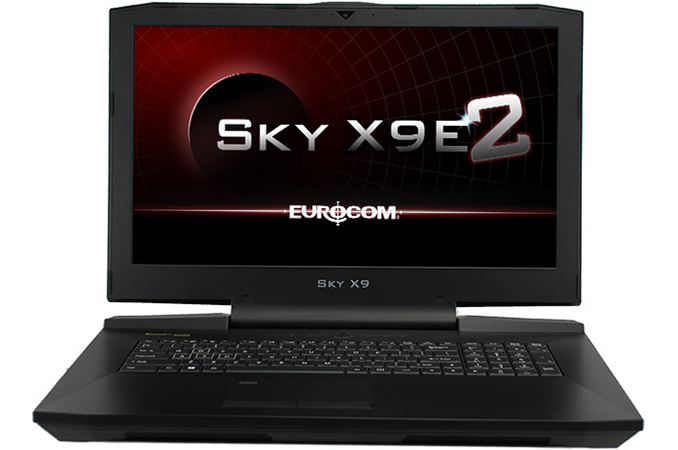
| 7:45a | Eurocom Sky E9E2 Laptop: Intel Core i7, Two NVIDIA GeForce GTX 1080/1070 GPUs in SLI, Optional 120 Hz Display Panel
Eurocom has released one of the world’s first laptops featuring two NVIDIA’s GeForce GTX 1080/1070 GPUs, along with one of Intel’s latest Core i7 CPUs for good measure. The Sky E9E2 machine is designed primarily for gamers, but it can also be equipped with up to 64 GB DRAM, up to 6 TB of storage and even optional 120 Hz display panels. Given the high-performance goals of the system, it not only costs a lot but also comes in a thick chassis designed to fit 17.3" screens as well. The Eurocom Sky X9E2 notebook is based on the Intel Z170 PCH and supports socketed Skylake-S processors (Intel Core i7-6700K, i5-6600K and i7-6700 options are available) that can be overclocked. The machine can fit up to four SO-DIMMs for a total of 64 GB of DDR4 memory, although maximum XMP support isn't directly listed. For graphics, the X9E2 uses one or two NVIDIA GeForce GTX 1070/1080 graphics processors in an MXM form-factor, which have 120-190 W TDP per card, but the system promises to deliver desktop-class performance in mobile form-factor. Installing a rather hot GPU into modern gaming laptop chassis should not be a problem in general, but Eurocom’s Sky X9E2 is among the first machines to integrate up to two Pascal graphics processors with a potential total TDP of <380 W. To cool the CPU as well as the GPU(s), the portable PC uses a sophisticated cooling system with multiple heat pipes as well as three huge blower fans.
For storage, the Eurocom Sky X9E2 can integrate up to two 2.5”/9.5mm SSDs or HDDs (in consumer land, that's 4 TB of storage) as well as up to two M.2-2280 NVMe SSDs (another two more terabytes). In addition, the laptop has 6-in-1 card reader as well as two Thunderbolt 3.0 ports (which automatically suggests support for two USB Type-C ports with 10 Gbps transfer rate) and five USB 3.0 connectors. For connectivity, the Sky X9E2 has two Killer Networking E2400 GbE controllers as well as one M.2-2230 Wi-Fi 802.11ac with Bluetooth controller.
When it comes to display options, end-users can choose between an IPS FHD panel, an AHVA FHD panel with 120 Hz refresh rate as well as an IPS UHD panel. Optionally, the machine also supports NVIDIA’s G-Sync technology. Moreover, the laptop has several display outputs (HDMI 2.0, DisplayPort 1.2 and Thunderbolt 3) in a bid to support NVIDIA’s SurroundView capability. For audio the PC has Sound Blaster X-Fi MB5 chip with 7.1-channel audio outputs as well as integrated 2 W speakers and a 2.5 W subwoofer.
The Sky X9E2 desktop replacement comes with either a 330 W or 660 W PSU (the latter is required when its spec is maxed out and the system is equipped with two GPUs), an 8 cell Li-Ion 89 Wh battery (battery life from zero to some depending on configuration), weighs 5.5 kilograms (12.1 lbs) and is 47.2 mm (1.88 inch) thick. The starting price of the DTR machine from Eurocom is $2499, and can push much nearer five digits when maxed out. |
| 8:00a | The Meizu PRO 6 Review The Meizu PRO 6 features an attractive design and excellent build quality, but is not a clear upgrade over the previous generation PRO 5. Lurking inside its all-aluminum chassis is a MediaTek Helio X25 SoC with a deca-core CPU and 4GB of RAM. Its defining feature, however, is a 5.2-inch 1080p SAMOLED display, which helps it stand out amidst a forest of phablets. |
| 10:30a | HP Announces EliteBook Laptops with On/Off Sure View Privacy Screens
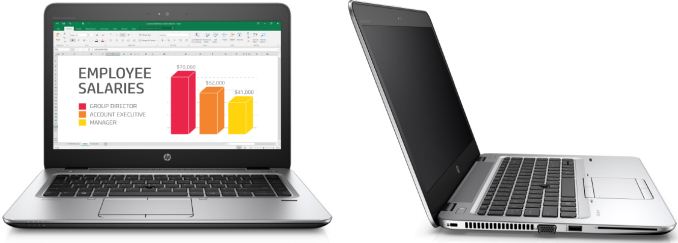
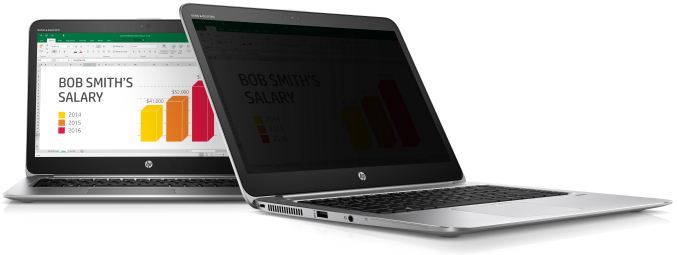
On Thursday, HP introduced adjustable privacy screens for the EliteBook 840 as well as the EliteBook 1040 notebooks. These are aimed at business users concerned about visual hacking and disclosing sensitive information to onlookers (something a number of journalists have to consider when working on NDA information when flying back from a press event). The protective measures for the screens are based on the Sure View technology jointly developed by HP and 3M, which relies on a number of HP’s proprietary technologies as well as 3M’s optical films. Ultimately, the user can control the privacy with an on/off switch as required, rather than equipping a perminant film that can reduce comfort. Right now, the Elitebook laptops are the first batch to get the technology, but eventually HP’s Sure View technology may appear on other PCs from the company depending on feedback.
In the conference call, HP was keen to point out that according to the Pew Research Center, around 60% of employees nowadays take their work outside of office walls and can potentially (without knowing) share confidential information with the wrong people. Most users that have to work while on the move might not be aware of who is staring at their displays from the back or from the side (which is incredibly annoying in general even if you are playing Tetris). Knowing that, HP explained that some employees tend not to work with sensitive data in public places, which can reduce their overall productivity. Meanwhile there is a market to ensure privacy in cafes, airports and other venues - other people install aftermarket privacy screens on their laptops. While that helps businesses to better comply with regulatory requirements in healthcare, finance and industries dealing with sensitive information, such screens reduce viewing angles of notebooks which affects overall user experience. By contrast, HP’s Sure View can be turned on and off, thus improving privacy without persistent reduction of viewing angles of laptop screens. HP’s Sure View technology uses a special film from 3M as well as HP’s own backlighting. When the setting of the backlighting is adjusted, the film decreases viewing angles of the display down to around 35 degrees. The tech can be activated by pressing Fn + F2 and actual viewing angles can be further adjusted by pressing other combinations of buttons. HP claims that the technology can be used with different display panels, but initially the company will use the technology on TN or SVA panels with FHD resolution. The Sure View does not consume extra power and since it relies on different setting of the backlighting, it might help to improve battery life a bit. HP does not reveal the price of its integrated privacy screen technology, but claims that with higher-end configs it will be virtually free. Moreover, the company mentioned that since it is not just a film on top of the display itself, it is going last throughout the lifetime of the laptop.
As for configurations, the HP EliteBook 840 G3 and the HP EliteBook 1040 G3 are 14” laptops based on Intel’s dual-core Core Skylake-U chips with integrated HD Graphics 520 and vPro (select models only). They come with up to 32 GB of DDR4-2133 memory and use 2.5” HDDs/SSDs (EliteBook 840) or M.2 SSDs (EliteBook 1040). The notebooks are equipped with 802.11ac WiFi + Bluetooth modules, Gigabit Ethernet (via dongle in case of the 1040) as well as an LTE or HSPA+ WWAN module. As with many business PCs, the systems are equipped with anti-spill keyboards, fingerprint readers (optional in case of the 840) and TPM 1.2/2.0 modules. Both laptops feature 14” display panels and are fairly light and thin for mainstream business models. The EliteBook 840 weighs 1.48-1.7kilograms and is 1.89-2.02cm thick (the peak values for touch-enabled models. Meanwhile, the EliteBook 1040 weighs starting at 1.43 and is 1.58-1.65cm thick. Depending on the exact configuration, the EliteBook 840 can work for up to 13.5 hours, whereas the EliteBook 1040 can boast with 10 to 11.5 hours of battery life. Since configurations of the notebooks can vary, HP does not mention recommended prices, but we are talking about machines that start at around $1200 and can end up at $2000 or higher. B2B sales will differ in price depending on volume and support packages. Users should see systems with Sure View privacy screens available in September. |
| 12:01p | Intel’s 140GB Optane 3D XPoint PCIe SSD Spotted at IDF
As part of this year’s Intel’s Developer Forum, we had half expected some more insights into the new series of 3D XPoint products that would be hitting the market, either in terms of narrower time frames or more insights into the technology. Last year was the outing of some information, including the ‘Optane’ brand name for the storage version. Unfortunately, new information was thin on the ground and Intel seemed reluctant to speak any further about the technology that what had already been said. What we do know is that 3D XPoint based products will come in storage flavors first, with DRAM extension parts to follow in the future. This ultimately comes from the fact that storage is easier to implement and enable than DRAM, and the characteristics for storage are not as tight as those for DRAM in terms of break-neck speed, latency or read/write cycles. For IDF, Optane was ultimately relegated to a side presentation at the same time as other important talks were going on, and we were treated to discussions about ‘software defined cache hierarchy’ whereby a system with an Optane drive can define the memory space as ‘DRAM + Optane’. This means a system with 256GB of DRAM and a 768GB Optane drive can essentially act like a system with ‘1TB’ of DRAM space to fill with a database. The abstraction layer in the software/hypervisor is aimed at brokering the actual interface between DRAM and Optane, but it should be transparent to software. This would enable some database applications to move from ‘partial DRAM and SSD scratch space’ into a full ‘DRAM’ environment, making it easier for programming. Of course, the performance compared to an all-DRAM database is lower, but the point of this is to move databases out of the SSD/HDD environment by making the DRAM space larger.
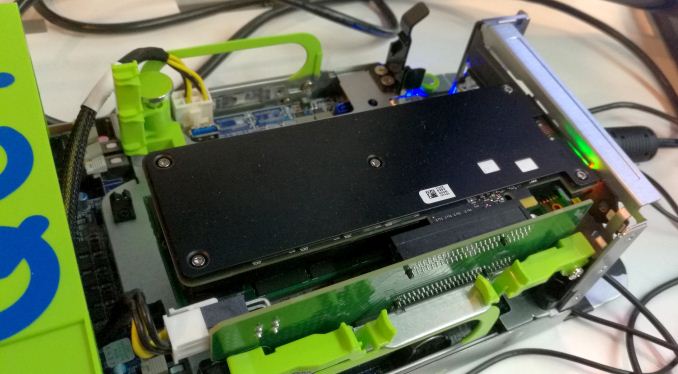
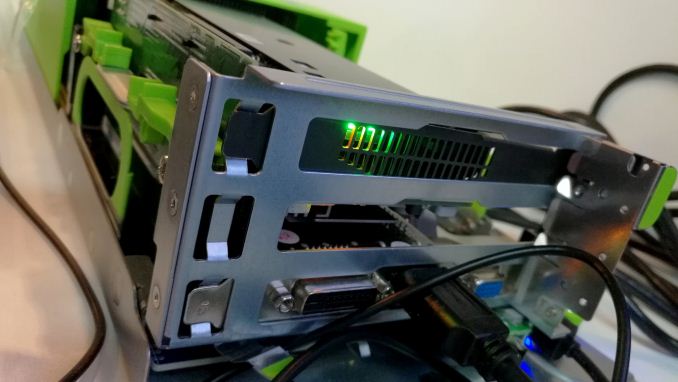
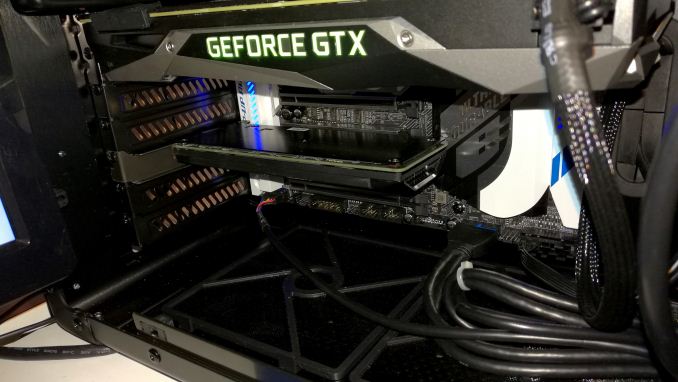
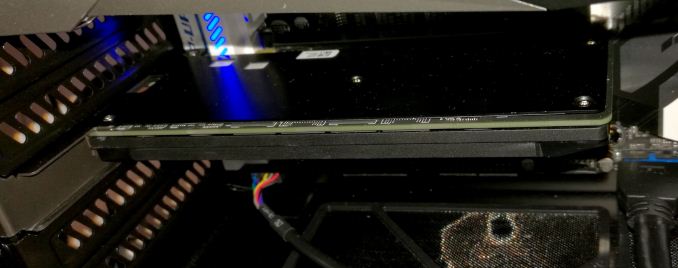
Aside from the talk, there were actually some Optane drives on the show floor, or at least what we were told were Optane. These were PCIe x4 cards with a backplate and a large heatsink, and despite my many requests neither demonstrator would actually take the card out to show what the heatsink looked like. Quite apart from which, neither drive was actually being used - one demonstration was showing a pre-recorded video of a rendering result using Optane, and the other was running a slideshow with results of Optane on RocksDB.
I was told in both cases that these were 140 GB drives, and even though nothing was running I was able to feel the heatsinks – they were fairly warm to the touch, at least 40C if I were to narrow down a number. One of the demonstrators was able to confirm that Intel has now moved from an FPGA-based controller down to their own ASIC, however it was still in the development phase.
One demo system was showing results from a previous presentation given earlier in the lifespan of Optane: rendering billions of water particles in a scene where most of the scene data was being shuffled from storage to memory and vice versa. In this case, compared to Intel’s enterprise PCIe SSDs, the rendering reduced down from 22hr to ~9hr. It's worth noting that we can see some BGA pads on the image above. The pads seem to be in an H shape, and there are several present, indicating that these should be the 3D XPoint ICs. Some of the pads are empty, suggesting that this prototype should be a model that offers a larger size. Given the fact that one of the benefits of 3D XPoint is density, we're hoping to see a multi-terabyte version at some point in the distant future.
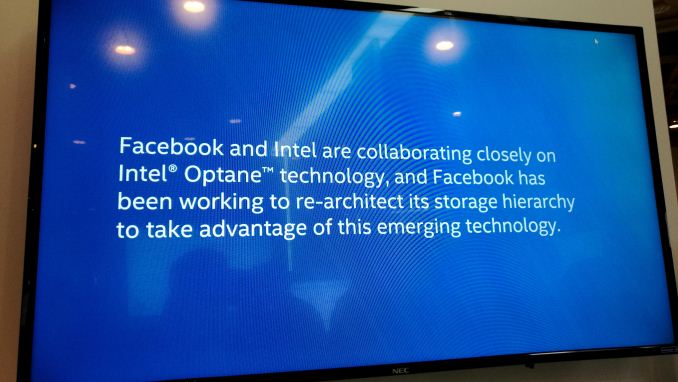
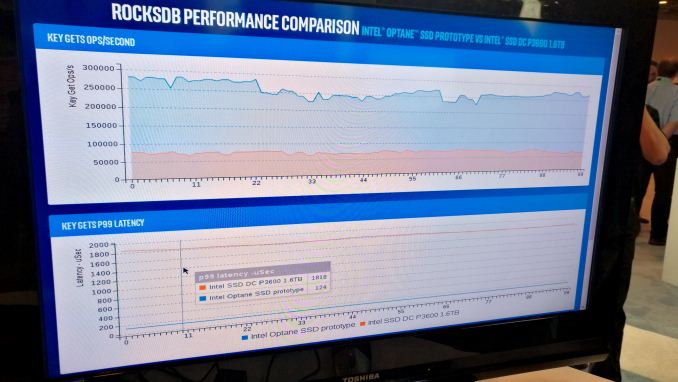
The other demo system was a Quanta / Quanta Cloud Technology system node, featuring two Xeon E5 v4 processors and a pair of PCIe slots on a riser card – the Optane drive was put into one of these slots. Again, it was pretty impossible to see more of the drive aside from its backplate, but the onscreen presentation of RocksDB was fairly interesting, especially as it mentioned optimizing the software for both the hardware and Facebook.
RocksDB is a high-performance key/store database designed for fast embedded storage, used by Facebook, LinkedIn and Yahoo, but the fact that Facebook was directly involved in some testing indicates that at some level the interest in 3D XPoint will brush the big seven cloud computing providers before it hits retail. In the slides on screen, the data showed a 10x reduction in latency as well as a 3x improvement in database GETs. There was a graph plotted showing results over time (not live data), with the latency metrics being pretty impressive. It’s worth noting that there were no results shown for storing key/value data pairs. Despite these demonstrations on the show floor, we’re still crying out for more information about 3D XPoint, how it exactly work (we have a good idea but would like confirmation), Optane (price, time to market) as well as the generation of DRAM products for enterprise that will follow. With Intel being comparatively low key about this during IDF is a little concerning, and I’m expecting to see/hear more about it during Supercomputing16 in mid-November. For anyone waiting on an Optane drive for consumer, it feels like it won’t be out as soon as you think, especially if the big seven cloud providers are wanting to buy every wafer from the production line for the first few quarters. More images in the gallery below.
|







| << Previous Day |
2016/08/26 [Calendar] |
Next Day >> |