[Most Recent Entries] [Calendar View]
Monday, August 29th, 2016
| Time | Event | |||||||||||||||||||||||||||||||
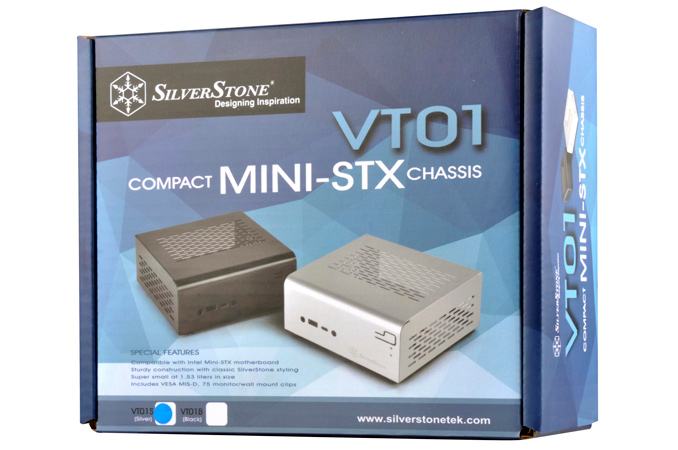
| 7:45a | SilverStone Introduces VT101 Mini-STX Chassis for $35
At Computex, SilverStone started to show off its early mini-STX prototype cases. This week it introduced its first commercial product, the VT101. The new PC case inherits classic design elements of SilverStone chassis and despite the fact that Mini-STX is mainly intended for system integrators, SilverStone plans to sell its VT101 in retail as well. Mini-STX is the latest iteration of form factor for motherboards, decreasing from the 17cm x 17cm of the mini-ITX into a 12.7cm square by ditching the full-length PCIe port as well as moving the power into an external brick for a DC-input. At Computex, especially at vendors such as Silverstone and ECS (who works closely with Intel for the NUC), Mini-STX was being pushed as the platform to have in certain commercial verticals, such as digital signage, where power and adjustability are important. It aims to fit above the Core-M mini-PCs in that regard. While the interest for small form-factor PCs is increasing mainly because such systems are small, energy-efficient, and provide good enough level of performance, there is another reason for their growing popularity. Highly-integrated systems are usually pretty inexpensive and have additional flexibility to adjust the socketable CPU in the Mini-STX form-factor. Style, affordability and a certain degree of flexibility is what SilverStone hopes the VT101 is all about.
SilverStone’s VT101 chassis is made of 0.8 mm stainless steel and a weight just 582 grams. The case can fit in one Mini-STX motherboard with a cooler that is no higher than 34 mm as well as one 2.5” SSD or HDD. Theoretically, high-performance 34-mm coolers (such as Scythe Kodati) can support CPUs with up to 65 W TDP, hence, VT101-based Mini-STX systems can be quite powerful when paired with the appropriate hardware. The VT101 has one USB Type-A as well as one USB Type-C ports in addition to an audio in and audio out. Besides, the case has VESA mount mechanism. Initially SilverStone plans to offer the silver version of the case, but shortly it also plans to debut the black one. We also saw a blue one at Computex, which may come later.
Since the case is very small, it naturally does not cost a lot: the manufacturer intends to charge $35 for it in the U.S., once it is available in approximately three weeks from now. In Europe, the case will be available late in September. | |||||||||||||||||||||||||||||||
| 8:00a | Memory Frequency Scaling on Intel's Skull Canyon NUC - An Investigation Overclocking has generally been the domain of enthusiasts with desktop rigs. However, increasing the CPU frequency beyond the official specification is not the only way to extract more performance from a computing system. Memory-bound workloads can benefit from memory hierarchies with increased bandwidth and/or lower latencies. Small form-factor (SFF) systems usually do not allow the DRAM to be operated beyond the standard JEDEC guidelines (up to 2133 MHz for DDR4). However, the Skull Canyon NUC (NUC6i7KYK) can support DDR4 SODIMMs operating at 2133 MHz+. Do increased memory frequencies deliver benefits in the Skull Canyon NUC? We benchmarked the system using five different SODIMM kits operating at various frequencies and latencies beyond the standard 2133 MHz. Read on for the results and analysis. | |||||||||||||||||||||||||||||||
| 5:20p | ASUS X99-E-10G WS Motherboard Launched: Dual 10GBase-T Ethernet via an Integrated X550-AT2
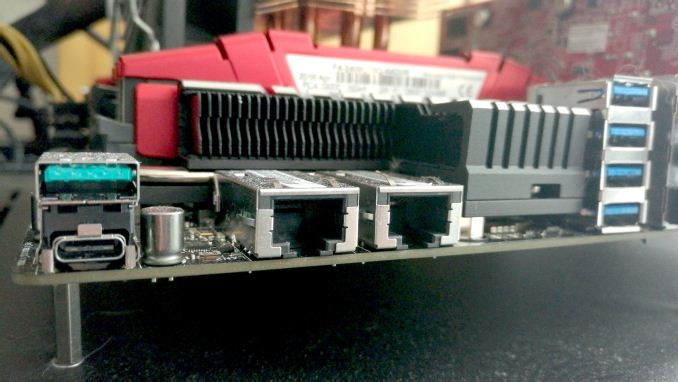
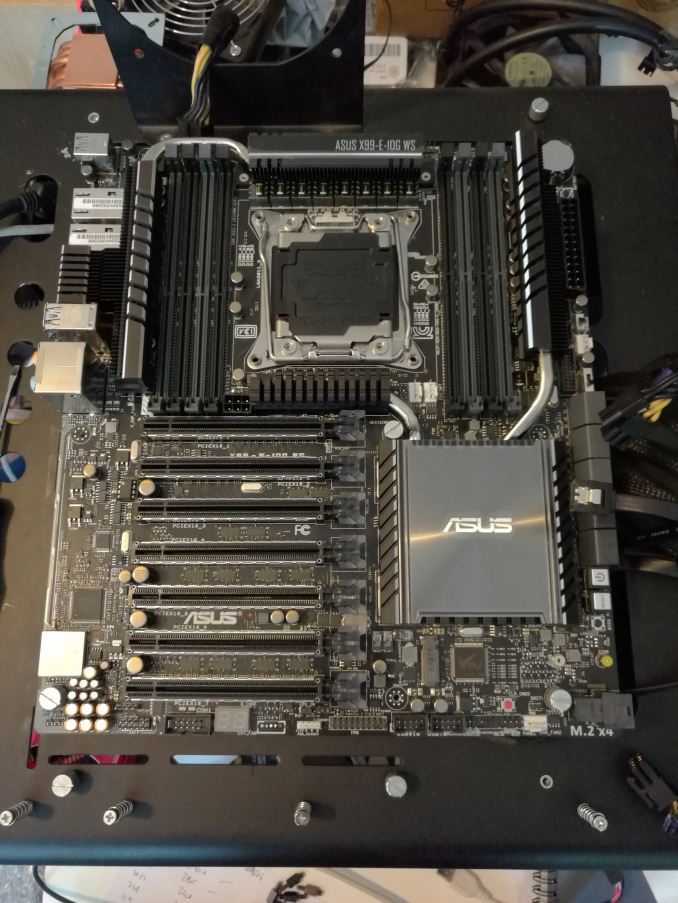
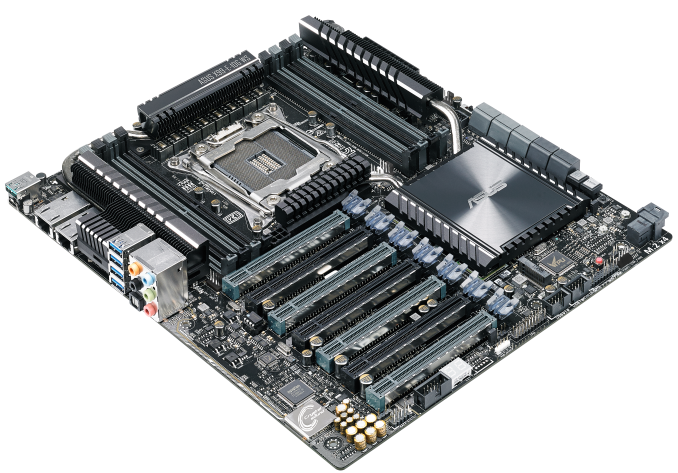
When we wrote up our list of 10GBase-T capable consumer motherboards back in July, we noted that out of the two main ways to get 10GBase-T on a motherboard, either by and add-in card or via an integrated controller, only one example of the latter existed on the market. For almost two years, that sole motherboard has been the only integrated solution – since then, ASUS launched the Maximus VIII Assembly which comes with a single port add-in card, and we saw a micro-ATX C236 model with a single port from MSI at Computex. We also listed the X99-E-10G WS from ASUS, a new board set to come to the market and we had an early sample. We’re still testing the board, but ASUS is officially announcing it today.
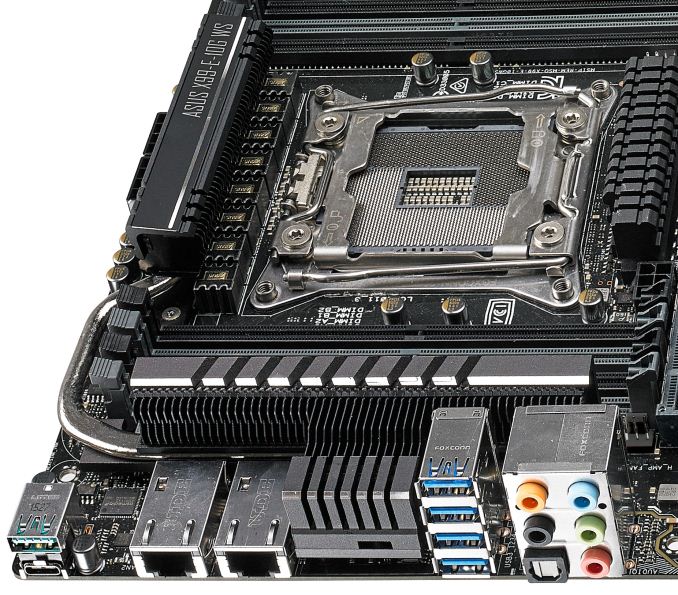
The X99-E-10G WS is built like a brick outhouse, with the focus on premium workstation parts and the latest set of features ASUS could put together while still under the X99 chipset banner, rather than a Xeon chipset. The board is designed for any Broadwell-E CPU, either consumer i7 or Xeon E5 v4, with extensive heatsink arrangements to carry both the Intel X550-AT2 controller (11W), the chipset, the upgraded power delivery and additional controllers.
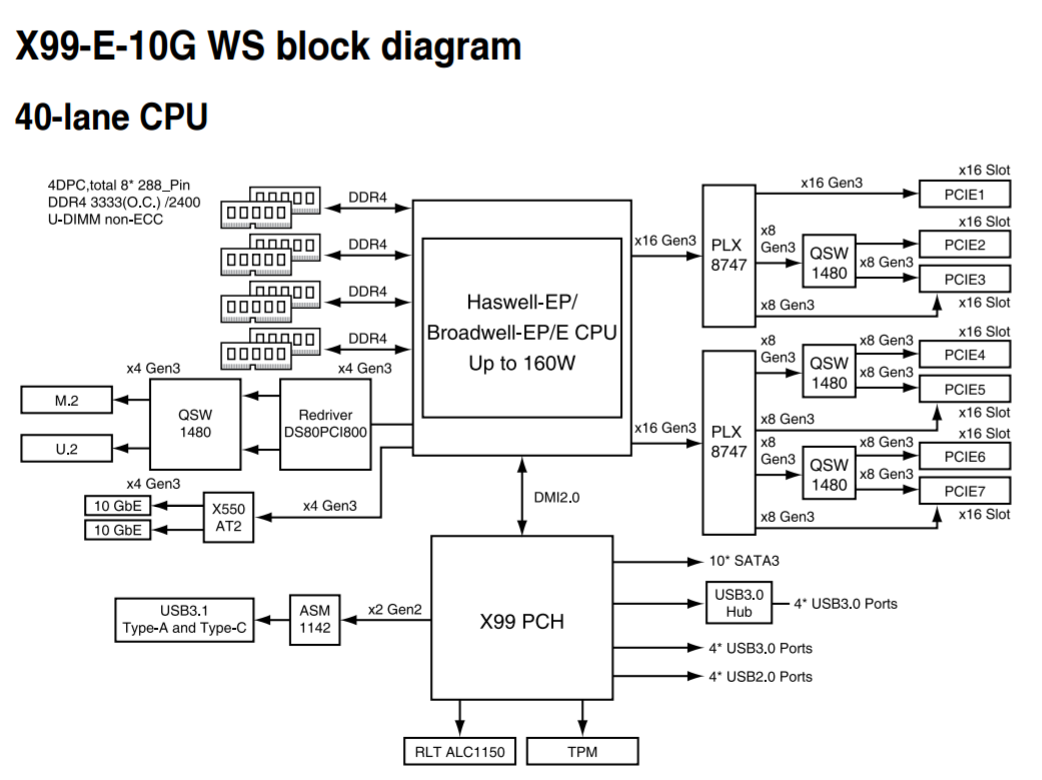
The main feature is obviously the 10GBase-T ports, which are RJ45 compatible with most home and SMB networks. The X550-T2 controller is a PCIe 3.0 x4 part, which is an upgrade over the older X540-T2 generation that needed PCIe 2.0 x8 (and even at PCIe 3.0, you still needed 8 lanes due to controller limitations). This controller has a list price on Intel’s ARK of $80 for batches of 1000, however it probably adds nearer $100-$150 to the motherboard cost paid for by the end user. Alongside the Ethernet ports are a pair of 10 Gbps USB 3.1 ports (one Type-C), four USB 3.0 ports and the audio.
The board has full support for PCIe graphics, using dual PLX8747s as high-end PCIe switches. This allows support of x16/x16/x16/x16 slots (or x16/x8/x8/x8/x8/x8/x8) while also having enough bandwidth for the X550-T2 controller, a U.2 connector running at PCIe 3.0 x4 as well as an M.2 slot also at PCIe 3.0 x4. The PCIe slots have two additional features, with integrated guard rails in each of the slots to increase rigidity and reduce RMAs, but also the PCIe latches are translucent. When the system is turned on, the main PCIe slot connectors have a LED light that implements a slow breathing effect. Speaking with the motherboard product managers, it turns out that users do not often know which PCIe slots are suitable for maximum bandwidth, and this is designed to help.
The ASUS X99-E-10G WS also comes with 10 SATA 6 Gbps ports, dual USB 3.0 onboard headers, Dr. Power, BIOS Flashback, EZ XMP and an upgraded audio solution. ASUS expects the board to land with an MSRP of $650 with select authorized resellers and distributors soon. | |||||||||||||||||||||||||||||||




| << Previous Day |
2016/08/29 [Calendar] |
Next Day >> |