[Most Recent Entries] [Calendar View]
Friday, September 2nd, 2016
- Exchange current Galaxy Note7 device with a new Galaxy Note7 (available next week)
- Exchange current Galaxy Note7 for a Galaxy S7 or Galaxy S7 edge and replacement of any Note7 specific accessories with a refund of the price difference between devices.
| Time | Event | ||||||||||||||||||||||||||||||||||||||||||||||||||||||||||||||||||||||||||||||||||||||
| 12:45a | Alienware Refreshes The Alienware 15 And 17 Gaming Notebooks At PAX
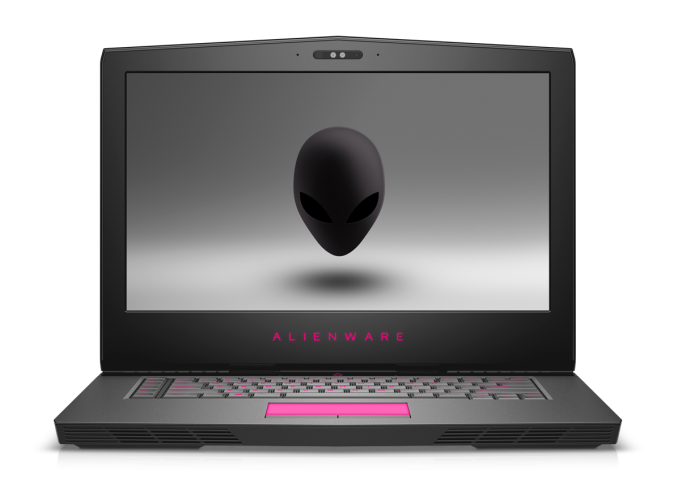
Today Dell’s gaming brand is announcing updates to their larger form factor gaming notebooks. The Alienware 15 and 17 are launching with a new design featuring a thinner chassis and updated internals, which will significantly improve performance. Alienware is calling the 15 and 17 VR-Ready, and to get there they’ve turned to NVIDIA’s Pascal lineup of mobile graphics cards with the GTX 1080 on the 17 and GTX 1070 on the 15. Since Kaby Lake has only just launched with the dual-core Y and U series, Alienware is still leveraging Intel’s 6th generation Core with quad-core i7 available.
Alienware 15 The design has changed as well. Alienware has moved to a new hinge-forward arrangement, which puts the display hinge closer to the user. This gives additional room at the rear of the laptop for components and cooling, allowing Alienware to shave 25% of the thickness off of the previous generation model. They aren’t the only manufacturer to do this, and it seems to work well on other gaming laptops. The chassis is designed with anodized aluminum, magnesium alloy, and steel reinforcements. Alienware even pointed out they put a steel plate behind the keyboard to protect the laptop if you have a bad game and end up smashing it, although I’d still not recommend testing this.
The keyboard has become a focal point with this generation, and Alienware has moved to newer switches which offer an impressive 2.2 mm of key travel. In addition, Alienware now joins the N-Key rollover club which means the keyboard can handle ten key presses simultaneously. For those that are into RGB lighting, Alienware does offer its lighting system, but it does not feature per-key RGB lighting.
Another new feature is Tobi eye tracking built-in to the laptop. This has been available on other gaming laptops already, but for those unfamiliar, Tobi technology uses cameras to track eye movement. This can then be leveraged to allow partial or full control of some functions with just your eyes, which sounds a bit crazy, but in titles that support it there could be some nice benefits such as the ability to auto-hide the HUD in a FPS unless you are looking at it, but the most interesting thing Alienware mentioned in the briefing is that they have software which will track your eye movement, and then when you are killed in a game, you can then replay the kill and find out where your eyes were at the time, and perhaps use this to improve your gaming performance over time. If it sounds silly, just remember that eSports are a big thing, with real money available, so players will likely be interested in this. Another excellent side benefit of the Tobi system is that it is Windows Hello capable, so you can log in with just the camera.
The displays are 1920x1080 IPS panels, and the 15-inch model will be available with a 120 Hz G-SYNC display as an option, as well as a UHD IGZO offering, which is likely similar to the one Dell implements on the XPS lineup. Battery options are a 68 Wh and optional 99 Wh battery, which is pretty much the maximum you can put in a laptop. I wouldn’t expect great battery life, but with the new Pascal chips we could be surprised. Both models will continue to work with the Alienware Graphics Amplifier as well. I asked them if they were going to move to Thunderbolt 3 for this, but they said they get more bandwidth out of the proprietary connector and are not looking to change at this time. Both models will be available this month at Dell.com. Prices have not been announced yet. Source: Alienware
| ||||||||||||||||||||||||||||||||||||||||||||||||||||||||||||||||||||||||||||||||||||||
| 4:00a | Razer Announces Availability Of The Stargazer Webcam And ManOWar 7.1 Headphones At IFA
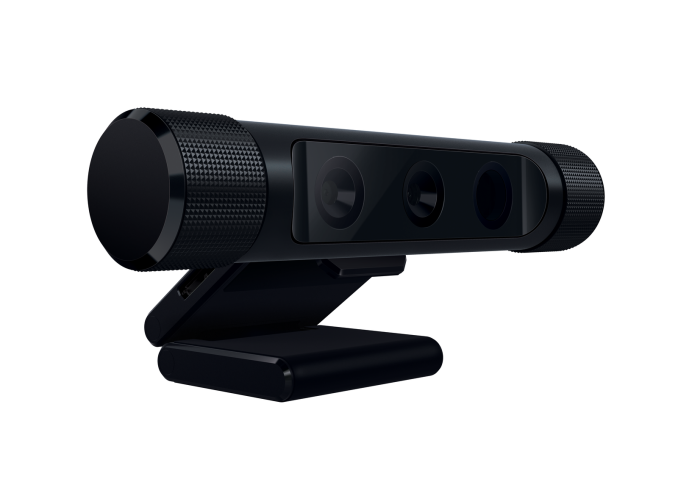
Just a couple of quick announcements from Razer at IFA. First off is the Razer Stargazer webcam finally has a launch date, after initially missing it’s Q2 2016 window. The Stargazer webcam was originally announced at CES and for a full breakdown on the camera, check out our initial post here. As a brief summary, it’s an Intel RealSense 3D webcam which offers Windows Hello support for facial recognition based login, and it targets game streamers with the ability to use the RealSense 3D to remove the background from an image and only overlay the person into the game stream. It also supports 1080p at 30fps as well as 720p at 60fps, which is higher than many webcams if you want to do a 60fps stream. Razer has also dropped the price from the original $199 MSRP to $149. Pre-orders are up now, and shipping will be October 2nd.
They’ve also updated their ManO’War headset with the latest ManO’War 7.1 model. It features 50 mm drivers for virtual 7.1 surround, and offers sound isolation and in-line volume controls. It has a retractable MEMS boom mic, and an included USB digital-to-analog converter for the PC and Mac, or a standard 3.5mm audio jack for compatibility with Xbox, PlayStation, or any other device. It will retail for $119.99 with pre-orders now, and shipping in October as well. | ||||||||||||||||||||||||||||||||||||||||||||||||||||||||||||||||||||||||||||||||||||||
| 7:00a | Hands On with ASUS ROG Avalon: A Teardown Video During Computex 2016, as part of their 10-Years of the Republic of Gamers’ celebrations and showcase, ASUS surprised me with a new take on the PC: the ROG Avalon. The Avalon is still a very extensive work in progress, however the fundamental concept is highly intriguing for anyone interested in PC design – using custom form factor parts and fitting them into a dedicated chassis but still opening up the options for users to customize their build. We were able to grab the hardware and Johnathan Chu, Product Manager for motherboards at ASUS, for a short time to record a video for a quick teardown and analysis. | ||||||||||||||||||||||||||||||||||||||||||||||||||||||||||||||||||||||||||||||||||||||
| 8:00a | ASUS ZenWatch 3 Announced: Round Display, Snapdragon Wear 2100, Long Battery Life
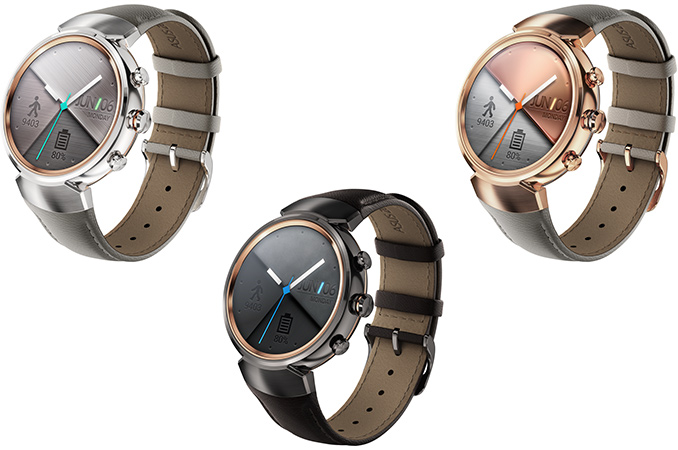
ASUS introduced its third generation ZenWatch at the IFA trade show on Wednesday. The ZenWatch 3 wearable features a new case design with round display and uses a more energy-efficient hardware platform when compared to its predecessors. The manufacturer claims that its new timepiece can work for two days on a single charge, which is longer than many contemporary Android Wear-based devices. Besides that, it can be charged quicker thanks to HyperCharge technology. The ASUS ZenWatch 3 (WI503Q) will be one of the industry’s first devices to use Qualcomm’s Snapdragon Wear 2100 SoC (APQ 8009w) with four ARM Cortex-A7 cores, an Adreno 304 GPU, integrated wireless connectivity (802.11n Wi-Fi, Bluetooth 4.0, NFC, GPS, etc.) and so on. ASUS says that the new SoC consumes 25% less energy when compared to the Snapdragon 400 (which was used for the previous two generations of ZenWatches) and therefore stretches out the battery life of the new device. The new processor is accompanied by 512 MB of LPDDR3 memory, 4 GB eMMC NAND flash storage, six-axis gyroscope and accelerometer as well as an antenna for Wi-Fi and Bluetooth. The new SoC is not the only improvement under the hood of the ZenWatch 3. The manufacturer claims that the new smartwatch has higher precision activity tracking than predecessors and competitors, which means that the novelty is equipped with improved sensors.
Besides changing the hardware platform, ASUS also changed the design of the ZenWatch 3. The new smartwatch comes in a classic round case made of 316L stainless steel that is 9.95 to 10.75 mm thick. Because of the new form-factor, ASUS also had to change the display of its ZenWatch 3 and equipped its device with a 1.39” AMOLED 2-point touchscreen with 400×400 resolution (287 PPI). The case is IP67 water resistant and the display is protected with curved Corning Gorilla Glass 3. ASUS plans to offer three color schemes for its ZenWatch 3 — silver, gunmetal and rose gold, as well as rubber and leather straps. All three versions of the ZenWatch 3 have a distinctive rose gold bezel around the screen to further emphasize the new classic look. Unlike its predecessors as well as other Android Wear-based smartwatches, the ASUS ZenWatch 3 comes with three buttons. Right now, we do not know what each button does, but the addition of extra two buttons may mean either certain new functions or just improved comfort when using existing ones. Since the ZenWatch 3 timepiece is Google Android Wear-based, it will be compatible with smartphones running modern versions of Apple iOS and Google Android OSes. ASUS plans to begin shipments of its ZenWatch 3 this fall. The price in Europe will start at €229 and the price in the U.S. should be similar in USD. | ||||||||||||||||||||||||||||||||||||||||||||||||||||||||||||||||||||||||||||||||||||||
| 9:00a | Razer Updates The Razer Blade And Razer Blade Stealth At PAX
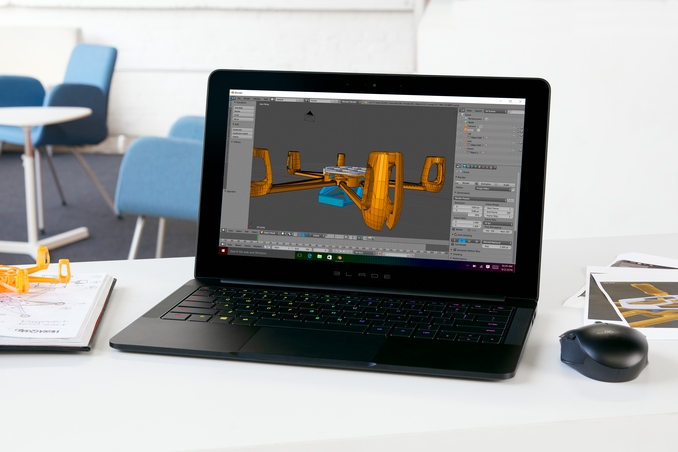
Today Razer is announcing some refreshes to it’s system lineup as well, with both the Razer Blade and Razer Blade Stealth getting significant updates. The Razer Blade makes the obvious jump to Pascal graphics, but let’s dig into the Stealth updates first. Earlier this year, Razer took their first jump into the Ultrabook ring with the Razer Blade Stealth. Announced at CES, this was an incredibly thin and light notebook which featured a Core i7 U series processor, an aluminum chassis, and optional UHD display. The really interesting part was that Razer priced it at just a $999 starting price, which isn’t inexpensive, but for a Core i7 Ultrabook, it was below similar models from other manufacturers.
The Razer Blade Stealth is a pretty good Ultrabook too. It can be docked with the Razer Core over USB Type-C, allowing a full desktop GPU as well as a docking station and power, all over a single cable. The one major disappointment on the Stealth was the battery life, which was well below other Ultrabooks. With just a 45 Wh battery, it was under capacity on battery, and not as well optimized as competitors, so it was a double blow against it. Razer has taken this to heart, and have tried to address both concerns. First, they’ve increased the battery capacity from 45 Wh to 53.6 Wh, which is about a 19% increase in battery capacity. This alone should help a great deal, but Razer has said that they’ve also optimized the power of the laptop to get better battery life as well. This one isn’t as easy to give a number for without actually testing the device, but any work here would be welcome, since it was one of the least optimized Ultrabooks we’ve tested in a while. In addition, Razer is updating to the latest Kaby Lake processors, with the Core i7-7500U being the only CPU option. The storage starts at 128 GB for the QHD version, and 512 GB for the UHD model, with the UHD offering a 1 TB PCIe SSD now as well. System memory is also doubled to 16 GB of LPDDR3-1866, which is excellent to see, especially since the price has not changed. The rest of the product hasn’t changed, with the same dimensions and weight, even with the higher capacity battery. Check out our review of the first gen here. It keeps the same starting price of $999 and is available to order now. Next up is the Razer Blade, Razer’s flagship gaming notebook. It got a nice upgrade last year, with the same per-key RGB keyboard as the Stealth, but it is now available with the NVIDIA GTX 1060 graphics, compared to the outgoing model’s GTX 970M. This is the same number of CUDA cores and same 192-bit memory bus as the outgoing GTX 970M, but it now offers 6 GB of RAM at 8 Gbps, and a much higher core and boost clock compared to the GTX 970M and should be a significant performance upgrade.
Razer is also bringing back the non-touch 1920x1080 model in addition to the 3200x1800 model, but this time with higher storage than the 128 GB it was originally stuck with. System memory is 16 GB for all models as well, with the Core i7-6700HQ as the only CPU. It is compatible with the Razer Core through USB Type-C. Razer has kept the same basic design for the Blade for several generations now, but it’s a solid design that suits them well, and it’s still one of the nicest laptops around with a CNC aluminium chassis and excellent display. The latest Razer Blade starts at $1799, available for order now and shipping in October. Source: Razer
| ||||||||||||||||||||||||||||||||||||||||||||||||||||||||||||||||||||||||||||||||||||||
| 9:30a | HDMI Alt Mode for USB Type-C Announced
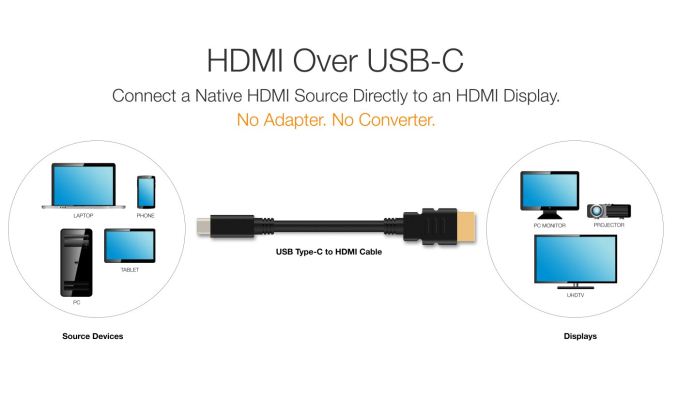
Over the past year we have seen an increasingly number of vendors, associations, and consortiums lay their support behind the USB Type-C port and take advantage of its alternate mode capabilities. Via alternate modes, a portion of the pins can be reallocated to carry signals other than USB SuperSpeed data, allowing a single port to be a USB port, data port, a display port, and more. This week the HDMI consortium has become the latest group to make use of the alt mode functionality, announcing the HDMI alt mode specification. Like the other specifications using the alt mode feature, the development of an HDMI alt mode is intended to give laptops and other devices the option of outputting HDMI video over a Type-C port, rather than requiring a separate HDMI port. This saves space and can simplify the process of hooking up an HDMI display, all the more important as devices continue to get thinner and USB-C ports become more common. The addition of an HDMI alt mode means that device manufacturers, when devices are suitably configured, can now offer a direct HDMI connection over USB-C from their devices using a simple cable. Previously the only way to offer HDMI via USB-C was to first pipe out DisplayPort, and then covert that to HDMI, which requires a more complex full protocol adapter. Digging into the announcement, it’s interesting to note that the alt mode specification is for HDMI 1.4b, and not HDMI 2.0, which means that the maximum resolution with full chroma subsampling is 4Kp30. The latter 2.0 specification uses the same pins, just at a higher data rate, so I’m not sure if there’s some kind of technical limitation in play here, or if the consortium had other reasons to favor 1.4b. Few mobile devices can output 4Kp60 video right now, however laptops with dGPUs are already there, and eventually iGPUs will get there as well. Otherwise the full HDMI feature set is supported, including the audio return channel, CEC, and the Ethernet channel.
Meanwhile the HDMI consortium hasn’t released too much in the way of technical details for how the pin configuration works, so there are a few holes here. As we’ve already seen with DisplayPort’s alt mode, you can typically use 11 pins for an alt mode – the 8 SuperSpeed pins, the 2 SBU pins, and one of the CC pins – and ignoring the 4 shield pins of the HDMI connector, I’m not sure how this maps to the remaining 15 pins of an HDMI connector. The consortium notes that this is meant to enable HDMI over a “simple cable,” so if a chip ends up being required, I’d expect it to be equally simple. One thing to note though that compared to the existing DisplayPort alt mode, HDMI requires all 4 of its high speed data/clock lanes to operate, so it doesn’t appear that there won’t be an option to have a cable carry a mix of HDMI video and USB SuperSpeed data. This means that manufacturers that make multi-port adapters with both USB 3.0 and HDMI – like Apple’s Digital AV Multiport Adapter – will still need to utilize DisplayPort-to-HDMI conversion to make the necessary lane allocations work. The HDMI alt mode, in this respect, seems far more focused on just directly connecting devices with HDMI displays, with maybe a USB-C pass-through for power. In any case, the HDMI consortium expects the first HDMI alt mode capable devices to be announced early next year, possibly in time for CES 2017. Like the other alt modes, manufacturers do need to build in support for the HDMI alt mode – typically using a simple mux – so whether a device supports this alt mode will vary on a case-by-case basis. But given how popular HDMI is, if it’s easy (and cheap) to implement I wouldn’t be surprised to see pretty wide adoption for this alt mode in laptops and other devices that already have HDMI capabilities. | ||||||||||||||||||||||||||||||||||||||||||||||||||||||||||||||||||||||||||||||||||||||
| 10:00a | Lenovo Reveals Yoga 910 Convertible: Intel’s Kaby Lake Meets 4K Display and Ultra-Thin Form-Factor
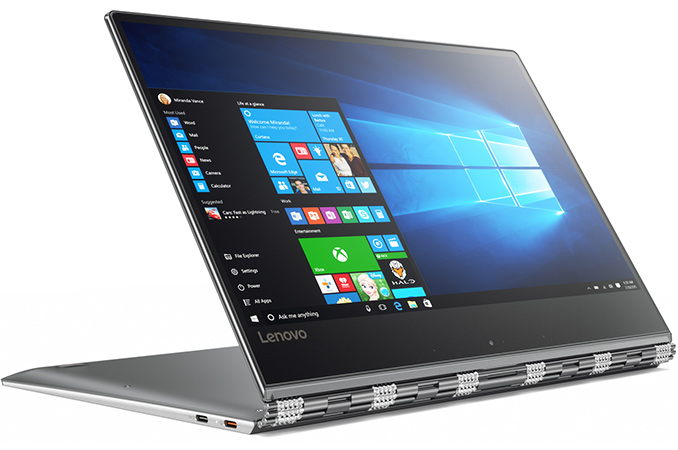
Lenovo this week took the wraps of its new Yoga 910 convertible, an aluminium 2-in-1 equipped with a 4K UHD display and is based on Intel’s upcoming 7th generation Core processors codenamed Kaby Lake. The Yoga 910 inherits distinctive form-factor from the previous-gen Yoga 900 laptops, makes it slightly thinner and adds a fingerprint reader to the familiar design. The Lenovo Yoga 910 is the direct successor of the Yoga 900 introduced last year, which at present is Lenovo’s top-of-the-range offering in the Yoga lineup. The new Yoga 910 will not only offer higher performance (something that is logical to expect from a PC based on a newer CPU), but also a slightly larger 13.9” IPS display panel with either 4K (3840×2160) or FHD (1920×1080) resolution. Thanks to thinner bezel, the larger screen does not affect dimensions of the convertible, and in fact the new model is even a little smaller and thinner (14.3 mm vs 14.9 mm) than its predecessor. Still, it is noteworthy that the Yoga 910 weighs 1.38 kg (3.04 lbs), which is around 80 grams more than the weight of the Yoga 900. When it comes to battery life the UHD model can offer 10.5 hours on one charge (in line with current models that have 3K displays), whereas the FHD promises to work for up to 15.5 hours (which is a massive improvement over current SKUs).
Lenovo has not revealed the complete specifications of the Yoga 910 just yet, but they note that it will use Intel’s Core i7 "Kaby Lake" 7000-series CPUs, up to 16 GB of RAM, a PCIe SSD (with up to 1 TB capacity) and will be equipped with a 802.11ac Wi-Fi + Bluetooth 4.1 module, a 4-in-1 card reader, 720p webcam, a dual-array microphone, two speakers made by JBL, as well as a fingerprint reader compatible with Windows Hello. For wired connectivity, the Yoga 910 has one USB 3.0 Type-C with video out functionality, one USB 2.0 Type-C for charging as well as one USB 3.0 Type-A port with always-on charging capability.
When Lenovo’s Yoga 910 laptops hit the market in October, they will be available in Champagne Gold, Platinum Silver and Gunmetal colors. Apparently, Lenovo is dropping its signature Clementine Orange color it uses for consumer notebooks in case of the Yoga 910. As for prices, the new convertibles will start at $1299, which is a $100 increase over current-gen models. | ||||||||||||||||||||||||||||||||||||||||||||||||||||||||||||||||||||||||||||||||||||||
| 3:20p | LG 38UC99 Announced: 37.5-Inch Curved 21:9 Display with 3840×1600 Resolution
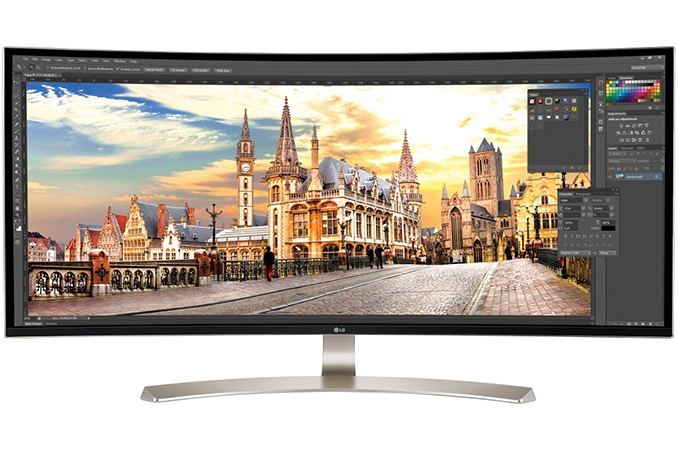
This week at IFA in Berlin LG introduced a new flagship UltraWide display. The new monitor is called the LG 38UC99 and it's LG's largest UltraWide display to date, with a diagonal size of 37.5 inches. With a horizontal resolution of 3840 pixels, and support for 99% of the sRGB color gamut, LG appears to be positioning the monitor as one well suited for displaying UltraHD content filmed in an aspect ratio of 2.35:1 or 2.40:1. Gamers aren't left out either, with support for AMD FreeSync being included as well. The basic specifications for the panel are listed below. There aren't any big surprises as far as the panel goes, with a resolution of 3840 x 1600, a 5ms GtG response time, a peak brightness of 300 nits, and a contrast ratio of 1000:1. When you look at the monitor as a whole there are a few interesting points. The monitor has a built in USB 3.0 hub, which is generally expected of high end monitors, but in this case there are two USB Type-A connectors as well as a USB Type-C connector. LG has noted that the Type-C port can charge mobile devices, but there's no word yet on whether they support high wattage charge modes as part of the USB Power Deliver spec. The monitor also has two 10W speakers, and it can be paired with smartphones or other devices via Bluetooth to play audio wirelessly. I would expect that most users interested in buying the LG 38UC99 for watching movies will also have a good set of speakers to go with it, but the feature is there for users who may not have enough desk space to fit such a large monitor and a sizeable pair of speakers.
LG can really be credited with bringing 21:9 displays to market in any significant capacity. A few years ago it was just a niche form factor, and prior to that it didn't really exist at all. Since then it has been adopted by many different users, including fans of movies, gamers, and users looking to improve on productivity without having to set up two separate displays. In the case of the 38UC99 the display is curved, which may limit its appeal among some groups, particularly those who need proper accuracy for geometry displayed on the monitor like users doing computer assisted design work. Right now the LG 38UC99 doesn't have an official price, but several reports have stated that it will cost $1499 at launch. That places it strictly in high-end territory, but that's not really a surprise for a monitor of this size with these specifications. Sources: LG, DisplaySpecifications, TechCrunch. | ||||||||||||||||||||||||||||||||||||||||||||||||||||||||||||||||||||||||||||||||||||||
| 6:00p | Google Cans Project Ara: No Modular Smartphones Incoming
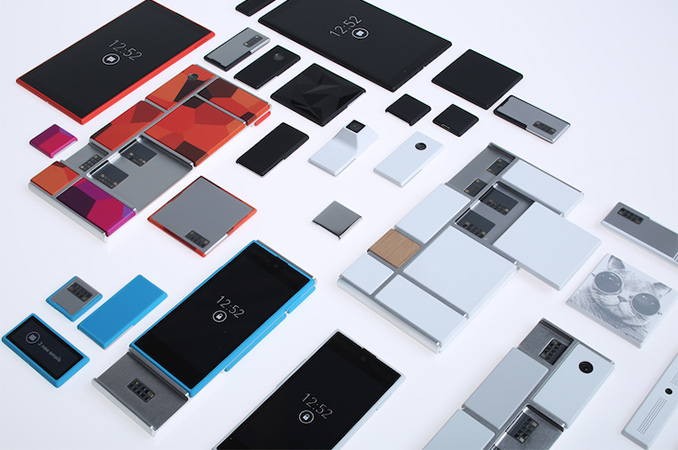
Word comes this week that Google has given up its plans to build modular smartphones with interchangeable parts, having cancelled all ongoing Project Ara efforts. According to reports by Reuters and Re/code.it appears that the price of the final handsets was going to be so high as to make viability questionable, as the modular phones lost some of the cost and performance advantages of hardware integration. The company reportedly plans to concentrate on other hardware projects, including its Chromebooks and various Android-based devices. Google began to explore the concept of modular smartphones in 2012, and publicly announced its Project Ara in late October, 2013. The company thought that for many people it would make sense to configure their smartphones themselves and then upgrade modules, as new ones come out, instead of getting entirely new handsets. Initially, Google considered building a fully modular smartphone with a PC-like architecture in a bid to enable upgrades of core components like SoC, antenna, sensors and so on. However, this required a lot of efforts in hardware standardization, interconnection, compatibility as well as software support. Back in May, the company announced changes of the Project Ara concept. Google said that core components of modular smartphones would not be upgradeable, but users would still be able to switch camera sensors, speakers and even add secondary displays. Google promised to introduce a working Project Ara model this fall and then release a commercial product for consumers in 2017.
Modern smartphones are self-contained, cannot be upgraded and their repair is often tricky at best. However, such integration allows manufacturers to make them sleeker and cheaper. By contrast, Google’s modular design appeared to be rather bulky. Moreover, Re/code reports that Google struggled to come out with a modular smartphone that could perform up to expectations and come in at a viable cost. The price of modules themselves was also a potential concern, as they'd need to be built to handle the modular system and wouldn't necessarily enjoy the high volume sales of a solitary phone design. As it turns out, Rick Osterloh, the new senior vice president of hardware at Google, decided to cancel Project Ara even in its “limited” form announced back in May. The company will no longer invest in the project, but may license technologies and patents it developed over the past several years to parties interested in building their upgradeable smartphones, according to reports. Keep in mind though that Google yet has to confirm its intentions regarding Project Ara. Recently Motorola came up with the Moto Mods idea to sell add-on accessories for its Moto Z smartphones. The add-ons can transform the handset into a camera with decent optics, a projector or a stereo system. Apparently, even though Project Ara is gone for good, the concept of add-ons for smartphones lives on. | ||||||||||||||||||||||||||||||||||||||||||||||||||||||||||||||||||||||||||||||||||||||
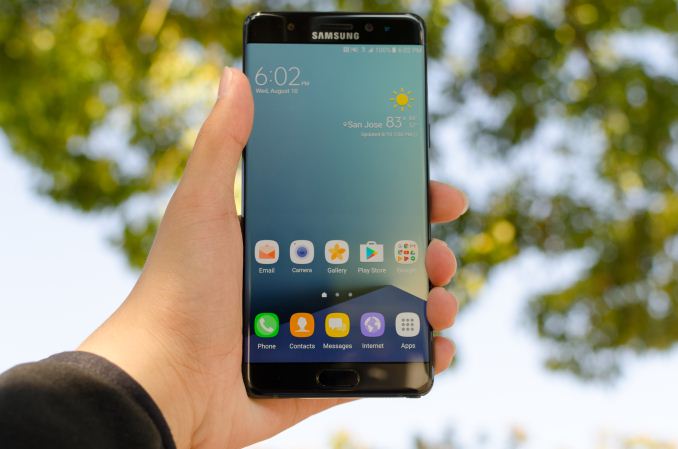
| 8:20p | Update: Samsung Recalls Galaxy Note7 Due to Battery Fires, Initiates Exchange Program
Update 09/02, 8:20pm ET: Moving quickly, Samsung has esbtablished a product exchange program for Note7 owners in the US. Samsung is giving owners the option of either replacing the Note7 with a fixed unit starting next week, replacing it with an S7 and refunding the difference. Under most circumstances, Samsung is also offering an additional $25 gift card or bill credit for the trouble. The carriers meanwhile have their own programs to augment this, including offering loaner phones until the fixed Note7s are ready, and of course handling full refunds. Update 09/02, 4:30am ET: According to Bloomberg, Samsung has initiated a global recall of the Galaxy Note7. All users who already have Galaxy Note7s will receive a replacement device. According to CNN Money, Samsung is aware of 35 cases thus far. Samsung has also released an official statement on their website.
Samsung has reportedly stopped shipments of the newly launched Galaxy Note7 amid reports that some units have caught fire after being received by users. The news was originally reported by Reuters after a number of users posted photos and videos of charred Galaxy Note7 phones online. According to the report, news sources in South Korea are also reporting that Samsung plans to launch a recall of the defective units so their batteries can be replaced, although this has not been confirmed by Samsung at this time. While Samsung declined to comment on the initial reports, they have since released the following statement:
It's not yet clear how extensive the issue is, but even a small percentage of the total units sold would represent a substantial recall. It was originally reported that shipments had stopped in South Korea, and later reports from news outlets and users have stated that the shipment delays are in effect in several markets worldwide. Some sources are reporting that there may be a complete recall of the phones to ensure that all potentially defective units are taken off the market. Such a recall would be unprecedented in the mobile space, and it would be a significant blow to Samsung after launching the Galaxy Note7 just last month to favorable reviews from tech publications and users alike. The news caused a decline in Samsung Electronics Co Ltd's stock value, with seven billion dollars being knocked off its market value as of last Thursday. Without knowing the extent of the problem, it's difficult to say where things will go from here for Samsung and the Galaxy Note7. With any luck there will be further communication in the coming days from Samsung about the issue and their plans to resolve it for affected users. | ||||||||||||||||||||||||||||||||||||||||||||||||||||||||||||||||||||||||||||||||||||||












| << Previous Day |
2016/09/02 [Calendar] |
Next Day >> |