[Most Recent Entries] [Calendar View]
Monday, September 12th, 2016
| Time | Event |
| 8:00a | Microsoft Releases The First Xbox Play Anywhere Title: Recore
At E3, Microsoft announced a new feature to bring together their Xbox ecosystem with the much larger, and more diverse, Windows 10 user base. The initiative was called Xbox Play Anywhere, and amazingly the name is quite appropriate. The idea is that you can purchase a supported game on either the Xbox One, or Windows 10 store, and you would get the version for the other platform at no cost. In addition, game saves would be synchronized between the two platforms, making for a seamless experience. The move makes a lot of sense for the company, especially with the Xbox One sales falling short of their chief rival, Sony’s PlayStation 4. This is a way to more closely tie the two previously separate platforms. It’s taken a lot of work on the platform side to enable this, because only a couple of years ago Microsoft would have had no way to even distribute the game on Windows. That has changed with Windows 10’s Universal Windows Platform, and the Windows Store, which has opened up this possibility. Changes brought in the Windows 10 Anniversary Update have enabled this game sharing, and tomorrow we will see the first Xbox Play Anywhere title launching with Recore, developed by Comcept and Armature Studio and published by Microsoft Studios. This is certainly not going to be the last title either, with all of the games Microsoft announced at E3 also supporting this.
For those interested in trying out Recore, it’s a third person action-adventure game, and I’ve had a chance to play it over the last couple of days on both the Xbox One and the PC. I’m not going to do any plot reviews or anything, but the core game mechanics are one of the few to pull me in this year, and the inclusion of many puzzles as well as combat make for a pretty fun game. Xbox Play Anywhere has worked as advertised, with game saves quickly syncing between the two platforms, and it truly is a seamless experience quitting the game on one platform and picking it up on the other. To get the best experience on the PC, a pretty beefy system is needed. The Recore team announced the specifications:
On my desktop system, with a Core i7-6700K and GTX 760, I was able to play with decent framerates on their medium setting, but for better graphics a bigger GPU would be recommended. On the Xbox One, my only issue was very long load times, but I did store the game on an external USB hard drive, which likely didn’t help. On my desktop, the same level load times went from minutes to seconds thanks to a Samsung 950 Pro. I think this is a smart move by Microsoft for a couple of reasons, and in hindsight it’s a feature that they likely should have added a long time ago, but they didn’t have any sort of distribution system that would have worked for something like a PC game before the Windows 10 Store came along. On the sales side, it not only competes with Sony, but also with Steam, especially since the Steam Machine has yet to make a big impact in the console market. Microsoft has done a nice job bringing the console together with Windows 10, with the Xbox app, game streaming, and now Xbox Play Anywhere. They have a lot of work on the hardware side to catch up to Sony, especially with the new PS4 Pro. On the software side, they have a stronger hand. |
| 8:30a | The Corsair Carbide 600Q Case Review: Upside Down But Right On The concept of reversed and rotated motherboard tray cases is not new. Such designs primarily received attention with the introduction of the BTX form factor, when manufacturers were trying to make their products both ATX and BTX compatible. The prime example is probably the first generation Cooler Master Stacker, both for its design and what followed. The Stacker was successful enough to spawn a whole family of cases, however none of them retained the original's reversable tray. And, as things turned out, that's an accurate reflection of the larger market: ever since the BTX form factor has been abandoned, there are very few cases with rotated and reversed motherboard trays. Those few cases that still offer alterable trays are considered unordinary, special designs. It is just such a special case that we are taking a look at in this review: the Corsair Carbide 600Q Inverse ATX case. Corsair introduced the Carbide 600Q as a high quality product that is focused on utility and low-noise operation. The primary attraction of this case however is its interior design. As the name suggests, the Carbide 600Q has an inversed motherboard tray that, according to the company, should enhance the thermal performance of the system. It goes without saying then that we'll be paying special attention to that claim for this review, and seeing how it compares against typical ATX designs. |
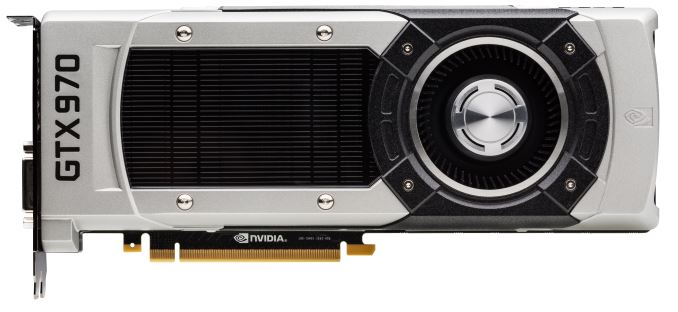
| 9:30a | Update: NVIDIA GeForce GTX 970 Settlement Claims Website Now Open
Update 09/12: Bringing this back up, over the weekend the website to submit settlement claims went up. Owners of GTX 970s who purchased the card between its launch and August 24th of this year can participate in the settlement in order to receive $30 per card. The settlement itself has not yet been approved by the courts, but is expected to be approved in December. Interestingly, there is no damage cap in the settlement, so all participants will receive a fixed $30 per card regardless of the price paid or the number of claimants. Meanwhile the proposed attorney fees total $1.3 million. Original: 07/29 Word comes from Top Class Actions (via The Tech Report) that NVIDIA will soon be settling a series of proposed class action lawsuits brought against the company regarding the GeForce GTX 970. Under the preliminary settlement, United States residents who purchased GeForce GTX 970 cards would be able to claim a $30 settlement in return for dropping further litigation against the company. With the GTX 970 having launched at $329, this amounts to a de facto 9% rebate on the card. The class action suits in question were brought against the company almost immediately after NVIDIA made the important (and more than a bit painful) disclosure that the initially published specifications for the GTX 970 were wrong. Specifically, that the card had an unusual memory crossbar organization where one ROP/L2 partition was disabled, giving the card only 56 ROPs instead of 64. Furthermore, this meant that the last 512MB of the standard 4GB of VRAM could not be accessed in a contiguous manner, impacting how it could be used. To that end, as the Top Class Actions article notes, the $30 settlement “was calculated to represent a portion of the cost of the storage and performance capabilities the consumers thought they were obtaining in the purchase of the product.”
With that said, at this point the settlement itself has yet to be approved by the court, and signups are not yet available. Assuming it is approved, I’d expect that signups will be made available shortly thereafter. |




| << Previous Day |
2016/09/12 [Calendar] |
Next Day >> |