[Most Recent Entries] [Calendar View]
Friday, September 16th, 2016
- Dr Ian Cutress, Host, Senior Editor (@IanCutress)
- Joshua Ho, Senior Editor (@JoshuaHo96)
- Matt Humrick, Smartphone Editor, (@MattHumrick)
| Time | Event |
| 9:15a | Logitech Acquires Saitek Brand and Product Lines, Expands Its Sim Controllers Biz
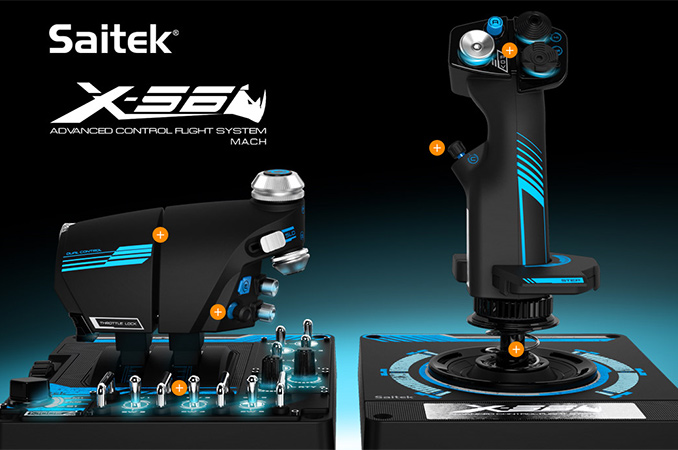
Logitech this week announced that it has taken over the Saitek brand as well as the family of flight and space simulation game controllers from Mad Catz for $13 million in cash. The acquisition expands Logitech’s portfolio of game-specific controllers and could eventually help the company to address the emerging VR gaming market with custom products. Saitek was founded in 1979 as a maker of electronic chess games, but diversified into PC peripherals in the 1990s, focusing on custom controllers for driving and flight simulation games. Over time, the company released its own keyboards, mice and even audio products for PCs, but kept its key specialization, which are game-specific controllers for various simulation titles. Mad Catz bought Saitek in 2007 for $30 million and greatly expanded Saitek’s families of R.A.T. mice and S.T.R.I.K.E. keyboards for gamers. Mad Catz continued to develop game-specific peripherals for flight simulators under Saitek brand. In the recent years, it added a special controller for Farm Simulator into its lineup and even inked an agreement with Cloud Imperium Games to build licensed controllers for Star Citizen. Fast forward to today, Logitech acquired only the Saitek brand as well as assets related to Saitek’s line of flight, farm and space simulation controllers, leaving mice and keyboard assets to Mad Catz. There is a great rationale behind Logitech’s decision to buy only a part of Saitek. Logitech already has gaming wheels products for driving simulation market in its Logitech G product lineup. The addition of Saitek’s Pro Flight controllers (joysticks, pedals, panels, etc.) opens up a new market for the company and does not create any internal competition (unlike mice and keyboards used to be sold under the Saitek brand). While this market is relatively small, customers here tend to be very loyal (partly because they do not seem to have a wide choice of peripherals) and loyal customers are not easy to find. Logitech says that it has a vision how to evolve Saitek’s product line and while it does not reveal any details, it hints that dedicated game controllers for VR could be a way to go. At present, we only have to wonder what we are going to see from Saitek and Logitech in future, but the transaction in general gives Logitech something to start with when it comes to VR peripherals. |
| 10:15a | Early iPhone 7 Teardowns: Intel & Qualcomm Modems, TSMC SoC, 2 to 3 GB of RAM
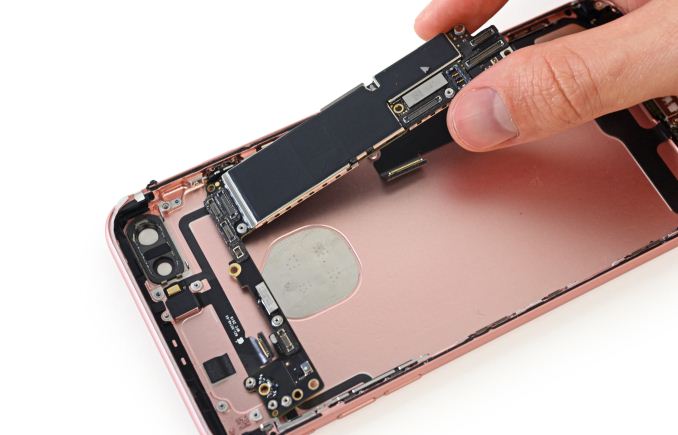
Today is launch date for Apple’s new iPhone 7 models, and as is tradition every year, the teardowns have already begun. Both the Chipworks/TechInsights team and iFixit have completed their respective initial teardowns of the iPhone 7 and 7 Plus, tearing part some of the first phones to go on sale. These teardowns are preliminary – there’s a lot of work left to do in deciphering the many cryptic identification numbers of the various components – but right off the bat it confirms a few things about each of the phones.
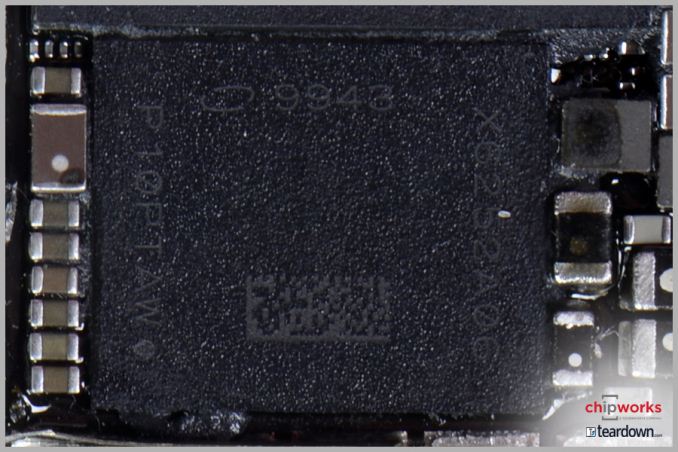
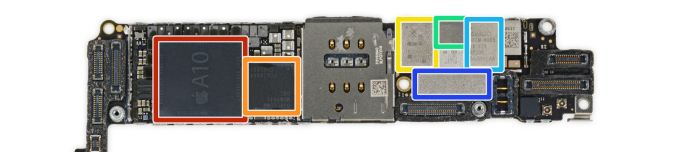
We’ll start off with the Chipworks teardown of an iPhone 7, which they have already earnestly begun identifying chips on. One of their immediate findings is that for the first time in a while, Apple is using a non-Qualcomm modem. On Chipworks’ GSM phone, they have found an Intel baseband processor with the model number PMB9943. They believe this to be part of Intel’s XMM 7360 modem, which was announced back in 2015.
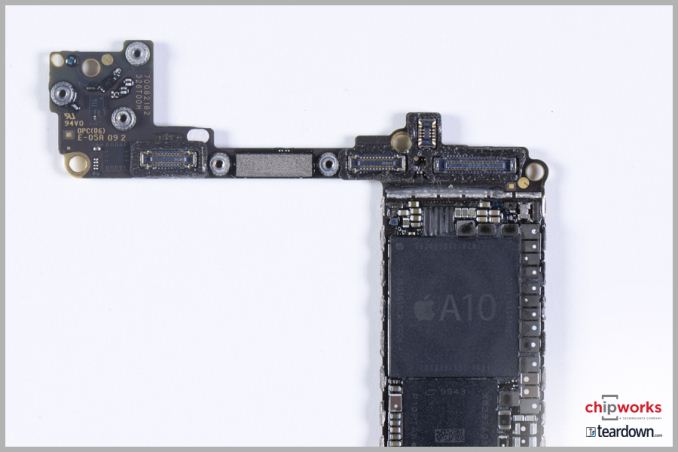
The XMM 7360 is a high-end LTE Advanced modem design that offers up to Category 10 performance (450 Mbps down). This is achieved in part through the use of 3x carrier aggregation, which allows the modem to use up to 60Mhz of wireless spectrum. The modem does not support CDMA, and as the iFixit team has turned up a Qualcomm Snapdragon X12 (Cat 12) modem in their unit, Apple is clearly using modems from multiple vendors. It’s not clear how this breakdown works – if Apple is using the Qualcomm modem in some GSM phones as well – but at a minimum the Qualcomm modem will have to be in all of the CDMA-capable models. Meanwhile for Intel’s modem group, this is a significant win, as the company has not seen too many high-profile device wins in recent years. Though historically speaking, this is actually something of a return to form. The original iPhone used a modem from the group’s predecessor, Infineon’s wireless unit, whom Intel purchased in 2010. Moving on, we have of course the A10 Fusion SoC. Chipworks has yet to get a die shot in, but they have already confirmed that the SoC is produced by TSMC. This is presumably another 16nm FinFET SoC, but the Chipworks team will be working to confirm that. So far there is no evidence to indicate that Apple is dual-sourcing SoCs on the iPhone 7 like they did the iPhone 6s, but this is again preliminary information.
Given that Apple doesn’t get a major new manufacturing process to use this generation, I had been wondering if and how Apple would instead compromise on die size, and we now have a rough answer. Chipworks estimates the A10 die to be roughly 125mm2 in size. This is 20.5mm2 (~20%) larger than the A9 TSMC die. The good news for Apple is that yields should be much better in 2016 than they were in 2015, so chip manufacturing costs should be down, helping to offset the higher costs of the larger chip. And while there are ways to improve performance without increasing the die size, any kind of significant improvement would have to entail a larger die, which is exactly what we’re seeing here. If nothing else, Apple would need more room for the new high-efficiency CPU cores the chip packs in. Speaking of packing, Chipworks’ teardown also hints that the A10 may have been packaged using TSMC’s new Integrated Fan Out (InFO) technique, which is meant to allow for thinner chip packages. InFO saves space, in part, by eliminating the organic substrate that logic dies have traditionally been mounted on.
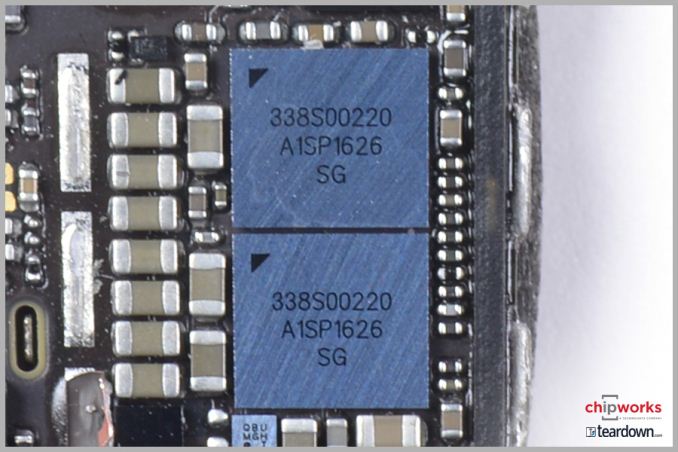
Lastly with the A10, Chipworks’ teardown of their iPhone 7 confirms that it has 2GB of RAM, specifically Samsung LPDDR4. Besides confirming that the memory capacity on the iPhone 7 hasn’t increased versus the iPhone 6s, this is notable because iFixit has found something different with their iPhone 7 Plus. In the case of the larger phone, there is 3GB of RAM. Apple has never before equipped the Plus with more memory than the base model, so this is a first. And while there has always been some performance stratification between the two phones due to the Plus model’s larger size – allowing better heat dissipation, and therefore slightly better performance – I wonder if this means we’re going to see an increase in the stratification between the two phone models. If nothing else, I suspect this comes as a consequence of the Plus’s higher resolution screen: all other factors being held equal, the Plus needs a bit more RAM for its larger GPU frame buffers. Finally, one interesting aspect of the Chipworks report is that they unexpectedly found a third audio amplifier. Chipworks was expecting to find two – one for each of the speakers – but came up with a third. The firm believes that the third amp may be for headphones, which in turn would mean that Apple has significantly revised the Lightning port specification for the iPhone 7. Previously Lightning has only carried digital audio, which doesn’t require an amp in the phone itself. In the initial iPhone 7 announcement I had speculated that Apple put the DAC (and amp) inside their 3.5mm adapter – which would be consistent with how Lightning has worked over the last 4 years – but this casts doubt on that idea. If Apple has revised the specification to allow analog audio over the port, then this greatly simplifies how headphones and adapters will work. But it also would raise a number of questions about peripheral compatibility, especially what happens if you plug something like the Lightning EarPods into an older device like the iPhone 5s.
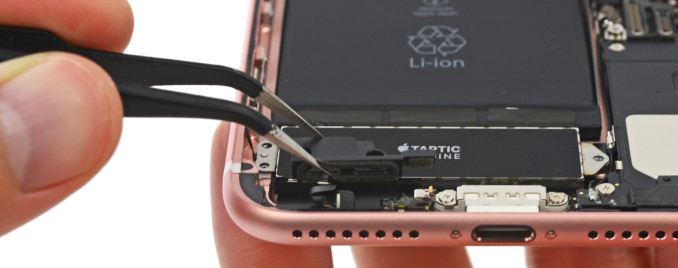
On that note, the Chipworks and iFixit teardowns also show us what’s gone in the place of the now-absent headphone jack: Apple has placed a taptic engine (linear actuator) for the solid state home button, and an unusual plastic bumper.
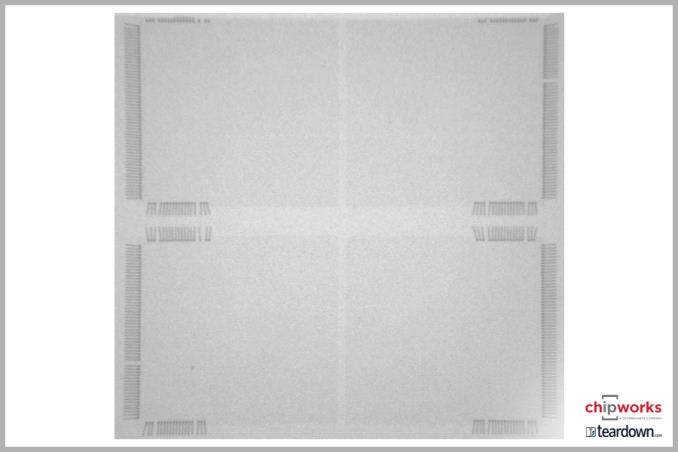
Wrapping things up, Chipworks’ reports that they already have the A10 SoC in their lab for further work, including confirming the manufacturing process and, of course, a die shot. The latter should prove to be very interesting, as it will be the first look we get at Apple’s new high-efficiency CPU cores. And in the meantime on our end we also have our iPhone samples in-house, so we’re diligently working on putting together a review for later this month. So be sure to stay tuned for that. |
| 1:00p | The AnandTech Podcast, Episode 38: Smartphones Anonymous (iPhone) With the launch of the iPhone today, Josh, Matt and I got together to record some of our thoughts on the launch of the latest Apple devices, as well as the new Apple Watch Series 2. There has been some discussion online regarding the new A10 Fusion SoC, and what exactly those smaller cores are (or how they are being used), as well as new modems and how the company has removed the 3.5mm audio jack. We found time to record a second podcast at the same time regarding a few other non-Apple devices, so stay tuned as we edit that and upload it soon!
The AnandTech Podcast #38: Smartphones Anonymous (iPhone)FeaturingiTunes Total Time: 54 minutes 49 seconds Outline mm:ss 00:00 - Start Related ReadingApple Announces iPhone 7 & iPhone 7 Plus: A10 Fusion SoC, New Camera, Wide Color Gamut
|


| << Previous Day |
2016/09/16 [Calendar] |
Next Day >> |