[Most Recent Entries] [Calendar View]
Wednesday, September 28th, 2016
| Time | Event | ||||||||||||||||||||||||||||||||
| 4:17a | GTC Europe 2016: NVIDIA Keynote Live Blog with CEO Jen-Hsun Huang I'm here at the first GTC Europe event, ready to go for the Keynote talk hosted by CEO Jen-Hsun Huang. | ||||||||||||||||||||||||||||||||
| 7:45a | NVIDIA Teases Xavier, a High-Performance ARM SoC for Drive PX & AI
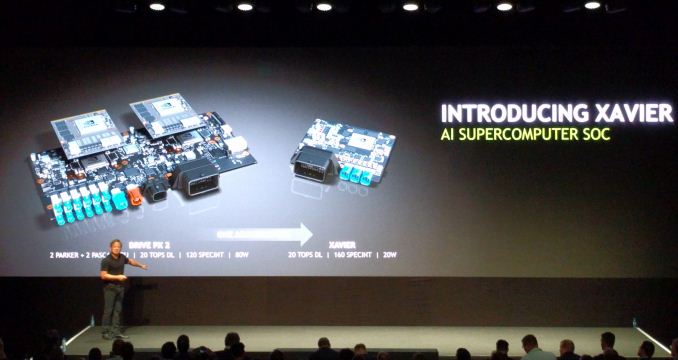
Ever since NVIDIA bowed out of the highly competitive (and high pressure) market for mobile ARM SoCs, there has been quite a bit of speculation over what would happen with NVIDIA’s SoC business. With the company enjoying a good degree of success with projects like the Drive system and Jetson, signs have pointed towards NVIDIA continuing their SoC efforts. But in what direction they would go remained a mystery, as the public roadmap ended with the current-generation Parker SoC. However we finally have an answer to that, and the answer is Xavier. At NVIDIA’s GTC Europe 2016 conference this morning, the company has teased just a bit of information on the next generation Tegra SoC, which the company is calling Xavier (ed: in keeping with comic book codenames, this is Professor Xavier of the X-Men). Details on the chip are light – the chip won’t even sample until over a year from now – but NVIDIA has laid out just enough information to make it clear that the Tegra group has left mobile behind for good, and now the company is focused on high performance SoCs for cars and other devices further up the power/performance spectrum.
So what’s Xavier? In a nutshell, it’s the next generation of Tegra, done bigger and badder. NVIDIA is essentially aiming to capture much of the complete Drive PX 2 system’s computational power (2x SoC + 2x dGPU) on a single SoC. This SoC will have 7 billion transistors – about as many as a GP104 GPU – and will be built on TSMC’s 16nm FinFET+ process. (To put this in perspective, at GP104-like transistor density, we'd be looking at an SoC nearly 300mm2 big) Under the hood NVIDIA has revealed just a bit of information of what to expect. The CPU will be composed of 8 custom ARM cores. The name “Denver” wasn’t used in this presentation, so at this point it’s anyone’s guess whether this is Denver 3 or another new design altogether. Meanwhile on the GPU side, we’ll be looking at a Volta-generation design with 512 CUDA Cores. Unfortunately we don’t know anything substantial about Volta at this time; the architecture was bumped further down NVIDIA’s previous roadmaps for Pascal, and as Pascal just launched in the last few months, NVIDIA hasn’t said anything further about it.
Meanwhile NVIDIA’s performance expectations for Xavier are significant. As mentioned before, the company wants to condense much of Drive PX 2 into a single chip. With Xavier, NVIDIA wants to get to 20 Deep Learning Tera-Ops (DL TOPS), which is a metric for measuring 8-bit Integer operations. 20 DL TOPS happens to be what Drive PX 2 can hit, and about 43% of what NVIDIA’s flagship Tesla P40 can offer in a 250W card. And perhaps more surprising still, NVIDIA wants to do this all at 20W, or 1 DL TOPS-per-watt, which is one-quarter of the power consumption of Drive PX 2, a lofty goal given that this is based on the same 16nm process as Pascal and all of the Drive PX 2’s various processors. NVIDIA’s envisioned application for Xavier, as you might expect, is focused on further ramping up their automotive business. They are pitching Xavier as an “AI Supercomputer” in relation to its planned high INT8 performance, which in turn is a key component of fast neural network inferencing. What NVIDIA is essentially proposing then is a beast of an inference processor, one that unlike their Tesla discrete GPUs can function on a stand-alone basis. Coupled with this will be some new computer vision hardware to feed Xavier, including a pair of 8K video processors and what NVIDIA is calling a “new computer vision accelerator.” Wrapping things up, as we mentioned before, Xavier is a far future product for NVIDIA. While the company is teasing it today, the SoC won’t begin sampling until Q4 of 2017, and that in turn implies that volume shipments won’t even be until 2018. But with that said, with their new focus on the automotive market, NVIDIA has shifted from an industry of agile competitors and cut-throat competition, to one where their customers would like as much of a heads up as possible. So these kinds of early announcements are likely going to become par for the course for NVIDIA. | ||||||||||||||||||||||||||||||||
| 2:00p | BlackBerry Stops Development of Smartphones, Set to Outsource Hardware Development
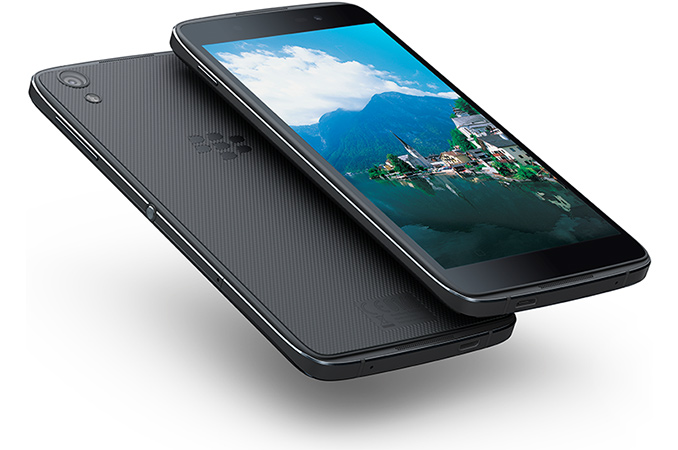
BlackBerry on Wednesday said it would cease internal development of its hardware and will transfer that function to its partners. While the BlackBerry-branded devices will remain on the market, BlackBerry itself will focus completely on software and will not invest in development of devices. The move edges the company closer to exiting the hardware business after years of considering such a move. “The company plans to end all internal hardware development and will outsource that function to partners,” said John Chen, CEO and chairman of BlackBerry. “This allows us to reduce capital requirements and enhance return on invested capital," continued Chen. Less than three years ago BlackBerry inked a strategic partnership with Foxconn, under which the two companies jointly developed certain BlackBerry-branded smartphones. Foxconn then built the hardware and managed the entire inventory associated with these devices. Now, the company intends to cease all of its hardware-related R&D activities and outsource this function to others.BlackBerry will now focus on development of extra-secured versions of Google’s Android operating system (recently the company introduced its own version of Android 6.0 that is used on the DTEK50 smartphone) as well as applications with enhanced security available through its BlackBerry Hub+ service. In addition to Foxconn, BlackBerry has worked with other hardware makers. BlackBerry’s DTEK50 smartphone released earlier this year resembles Alcatel’s Idol 4 handset developed by Chinese TCL. Therefore, right now BlackBerry has at least two partners, which can build smartphones carrying the well-known brand all by themselves. In fact, this deal with BlackBerry puts TCL into an interesting position because it now can make handsets both under BlackBerry and Palm brands (in addition to Alcatel trademark, which TCL uses for its smartphones). Today, BlackBerry also announced its first licensing agreement with joint venture PT Merah Putih, an Indonesia-based company. Under the terms of the agreement, the latter manages production and distribution of BlackBerry-branded devices running the BlackBerry’s Android software. While it is not completely clear to which degree PT Merah Putih develops its hardware in-house (typically, such companies outsource design of their products to others), it is more than likely that the actual devices are made by an ODM, such as Foxconn or TCL. BlackBerry has been considering an exit from the hardware business for several years now, ever since the company appointed John Chen as CEO. The head of the company has said on multiple occasions that software and security technologies are the main strength for BlackBerry and warned that the firm could drop hardware completely if this business is not profitable. As it appears, BlackBerry will cease development of its smartphones, but will allow others to do it. Therefore, BlackBerry-branded devices will remain on the market, but the company will not spend big money on their development. | ||||||||||||||||||||||||||||||||

| << Previous Day |
2016/09/28 [Calendar] |
Next Day >> |