[Most Recent Entries] [Calendar View]
Monday, October 10th, 2016
| Time | Event | |||||||||||||||||||||||||||||||||||||||||||||||||||||||||||||||||||||||||||||||||||||||||||||||||||||||||||||||||||||||||||||||||||||||||||||||||||||||||||||||||||||||||||||||||||||||||||||||||||||||||||||||||||||||||||||||||||||||||||||||||||||||||||||||||||||||||||||||||||||
| 7:30a | Launch Update: ASUS ZenFone 3, Zenbook 3, ZenWatch 3, ZenPad 3S 10
ASUS has introduced a number of new products this summer, but never released their official recommended prices and availability timeframes for the US market. In the recent weeks, the company quietly began to sell some of the new products and this week ASUS published actual configurations, MSRPs and ETAs for its Zenbook 3, ZenFone 3, ZenWatch 3 and ZenPad 3S 10 devices. ZenFone 3
ASUS formally introduced its ZenFone 3 family of smartphones at the company’s annual press conference ahead of Computex in late May. The new ZenFones are the first handsets from ASUS based on ARM processors and also the first phones from the company to use Super AMOLED display panels (high-end models only). The initial ZenFone 3 lineup included three models (Laser and Deluxe), but eventually ASUS expanded it with the Qualcomm Snapdragon 821-based ZenFone 3 Deluxe 5.7” Special Edition as well as the value ZenFone 3 Laser. Three ZenFone 3 models are already available in the U.S. for $199 (ZF3 Laser ZC551KL), $399 (ZF3 Deluxe 5.5” ZE552KL) and $499 (ZF Deluxe 5.7” ZA570KL), whereas the ZF3 Deluxe 5.7” Special Edition is set to be available in late October exclusively from the ASUS Store for $799. In the meantime, the destiny of the media-consumption focused ZenFone 3 Ultra (ZU680KL) in the U.S. is unknown. The device is available in some countries (e.g., the Philippines), but not in Europe or North America.
It is noteworthy that at present ASUS only offers silver versions of its ZenFone 3 smartphones. It looks like the rest colors will hit the market at a later date. Zenbook 3
The top-of-the-range model with 1 TB SSD and rose gold finish for $1999 is yet to come. We mentioned earlier this year that the price difference of $500 between the Core i7-based ZB3 models is a significant jump for 500 GB of additional PCIe SSD capacity. ZenPad 3S 10
It is rather hard to make a breakthrough affordable tablet these days, but the new ASUS ZenPad 3S 10 looks rather impressive. For $299, the slate offers a retina-class 9.7” display with 2048×1536 resolution, a six-core MediaTek MT8176 SoC (two Cortex A72, four Cortex-A53 cores, PowerVR GX6250 graphics, etc.), 4 GB of LPDDR3 RAM, up to 64 GB of storage, 802.11ac WiFi and a fingerprint reader.
The ASUS Z500M tablet looks like a rival for Apple’s iPad Air 2, which price starts at $399. The Wi-Fi-only ZenPad 3S 10 slate will be available in early November, but there has been no mention if ASUS intends to release a version with 4G/LTE. ZenWatch 3
The ASUS ZenWatch 3 (WI503Q) got a lot of attention earlier this year because this is the first smartwatch from the company featuring a round display and because it is one of the first devices to use Qualcomm’s Snapdragon Wear 2100 SoC (APQ8009w). Just like in other countries, the ZenWatch 3 will be available in the U.S. in November for $229.
What remains to be seen is whether the manufacturer plans to start selling all three versions of the device at the same time (in silver, gunmetal and rose gold finish), or intends to roll them out one after another like it does with the ZenFone 3. | |||||||||||||||||||||||||||||||||||||||||||||||||||||||||||||||||||||||||||||||||||||||||||||||||||||||||||||||||||||||||||||||||||||||||||||||||||||||||||||||||||||||||||||||||||||||||||||||||||||||||||||||||||||||||||||||||||||||||||||||||||||||||||||||||||||||||||||||||||||
| 8:00a | The iPhone 7 and iPhone 7 Plus Review: Iterating on a Flagship The iPhone 6 was a runaway success by any measure. The A8 SoC may have been built on a temperamental 20SoC process – something that dogged all other phone vendors – but for Apple it didn’t matter. The iPhone 6 was the first iPhone generation with a phablet variant. By all metrics it was a resounding success as it capitalized on this pent-up demand for larger iPhones. The iPhone 6s continued this success, and in a year of disappointing launches due to the weak showing of the widely used Snapdragon 808 and 810, the 6s and 6s Plus looked particularly good as the competition really couldn’t measure up. Now there were a lot of Android devices that performed better than the iPhone 6s/6s Plus in some particular area – a better camera or longer battery life, for example – but taken as a whole the iPhones 6s were just clearly superior devices. If nothing else, they hit that particular balance between features and performance that a lot of users were looking for. Meanwhile, the addition of 3D Touch was the sort of refinement to the user experience that still remains exclusive to the iPhone. Other OEMs have implemented some form of force sensing, but the implementation is not really executed in a way to improve user experience in a noticeable way. Adoption remained weak as well, with no real widespread support in the ecosystem for such features. That said, the iPhone doesn't exist in a vacuum on its own. Even in just the high-end market segment Apple limits themselves to, they have a loyal opposition, and that opposition is of course Samsung. Looking at the state of affairs there, relative to the iPhone 6s the Galaxy S6 had a better camera for still images, but it was obvious that it couldn’t freeze motion as well. The phone itself was fairly thick as well due to the need to accommodate a much larger battery. Despite the larger battery, battery life on LTE just wasn’t where it needed to be. The Galaxy Note5 was in many ways a similar story, which isn't too surprising as the Note has moved closer and closer to being a phablet-version of the Galaxy S. But, as the story goes, Apple's competition has improved and advanced. The Galaxy S6 gave way to the even better Galaxy S7, HTC finally found their groove with the HTC 10, and OnePlus's 3 is their best showing yet. The competition is getting better, and with the iPhone 7, Apple can no longer rely on weak competition or pent-up demand for some major feature. The iPhone 7 must stand by its merits against this increasingly stiff competition. To see how it manages, read on for the full review. | |||||||||||||||||||||||||||||||||||||||||||||||||||||||||||||||||||||||||||||||||||||||||||||||||||||||||||||||||||||||||||||||||||||||||||||||||||||||||||||||||||||||||||||||||||||||||||||||||||||||||||||||||||||||||||||||||||||||||||||||||||||||||||||||||||||||||||||||||||||
| 12:21p | ASUS XG-U2008 10GBase-T Network Switch Released: 2x10G + 8x1G for $249
Back at CES, we saw what looked like a first budget-style entry into the 10GBase-T networking arena for low-cost, high-speed RJ-45 networking that would be backwards compatible with most of an enthusiasts home network infrastructure. At the time I was told it would be $300, but I misread the brochure and thought it said ten 10G ports. When I realized it said two ports 10GBase-T with another 8x1G ports, it still looked pretty interesting to say the least. ASUS is now formally announcing the launch of the hardware, called the XG-U2008, for $250 available at Newegg today.
At CES we saw a brushed aluminium switch, with the aim focused more on the premium and prosumer market. The styling of the switch on release essentially matches the one we saw at the show. There isn’t much in the way to say about the switch – it is unmanaged, offers two 10GBase-T ports and eight 1G ports, with the latter also supporting 100 Mbps standards. The total switch fabric affords a rated 56 Gbps bandwidth as well as up to 16 KB jumbo frames and a 2Mb memory buffer. The external adapter is rated at 18W, and it measures 1.06-inch high.
Putting this into perspective, we recently did a quick news post rounding up all the motherboards with 10GBase-T preinstalled and noted that the additional cost of the switch and the motherboard puts the cost per port for 10GBase-T around $100-$150. Aside from the $200 extra per motherboard for one or two ports, an 8-port switch comes in at around $700 (or a 16-port for $1400). Compared to the larger and more expensive switches, this switch only has two 10G ports, meaning that the only options for connectivity will be between a 10G NAS and a bigger 10G switch, or a 10G PC and a 10G NAS - ASUS marks down that for a PC-based LAN, a couple of servers could be on the 10G ports instead.
Options for low-cost 10GBase-T switches mean that it’s a minimum $700 for a few ports, which for most users is not particularly low cost. Bringing at least two ports in a 10G switch for $250 brings the cost of ownership right down and more palatable, although only having two ports has some limitations. The fact that it's available straight away from Newegg for anyone (in the US) is a plus. Source: ASUS Edge Up, ASUS Product Page, Newegg | |||||||||||||||||||||||||||||||||||||||||||||||||||||||||||||||||||||||||||||||||||||||||||||||||||||||||||||||||||||||||||||||||||||||||||||||||||||||||||||||||||||||||||||||||||||||||||||||||||||||||||||||||||||||||||||||||||||||||||||||||||||||||||||||||||||||||||||||||||||
| 2:00p | Microsoft Adds HP Elite x3 Smartphone to Windows Store, $799
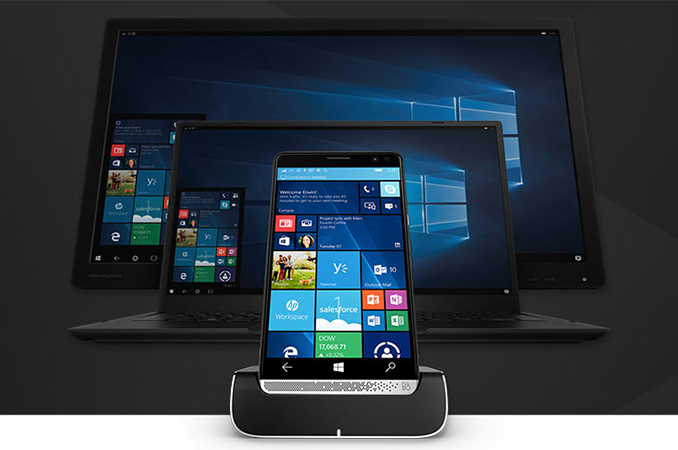
Microsoft has begun to sell HP’s Elite x3 smartphone at its Windows Store. The handset is one of the most powerful Windows 10 Mobile-based devices and the one of a few initially aimed at the business professionals on a company contract. The fact that Microsoft has started to sell the HP Elite x3 indicates that the smartphone is now available to general consumers as well. Microsoft sells unlocked HP’s Elite x3 at it MSRP of $799, which is much higher than the price of typical Windows smartphones. The handset comes with its Continuum desk dock that features an Ethernet adapter, as well as DisplayPort USB connectors, and can work with desktop displays as well as keyboards. Meanwhile, neither Microsoft nor HP currently offer the Elite x3 Lap Dock device, which can transform the Elite x3 smartphone into a laptop. The HP Elite x3 smartphone is powered by Qualcomm’s Snapdragon 820 SoC and is currently the only Microsoft’s Windows 10 Mobile-based smartphone to use the chip. The device is equipped a 5.96” AMOLED display and comes with 64 MB of eMMC 5.1 NAND flash storage, 4 GB of LPDDR4 RAM as well as all the necessary connectivity features, including 4G/LTE, 802.11ac Wi-Fi, Bluetooth 4.0 and a USB Type-C connector. Developed specifically for enterprise and business users, who value security, the HP Elite x3 is FIPS 140-2 certified and features Secure Boot (with iris and fingerprint scanners), full disk encryption with a 256-bit key, fTPM 2.0, and so on. The smartphone from HP also takes advantage of Microsoft’s Continuum technology, which allows you to run your phone as a desktop PC.
At present, the HP Elite x3 has no rivals in the price range because it is the only Windows 10 smartphone that sells for $799. In the Continuum space, the HP Elite x3 competes against Acer's Liquid Jade Primo as well as Microsoft’s own Lumia 950 and Lumia 950 XL, which are available for $449, $399 and $499 respectively. | |||||||||||||||||||||||||||||||||||||||||||||||||||||||||||||||||||||||||||||||||||||||||||||||||||||||||||||||||||||||||||||||||||||||||||||||||||||||||||||||||||||||||||||||||||||||||||||||||||||||||||||||||||||||||||||||||||||||||||||||||||||||||||||||||||||||||||||||||||||
| 2:15p | Samsung ArtPC: Cylindrical PC with 360º audio, i5/i7 plus NVMe, Preorders from $1200
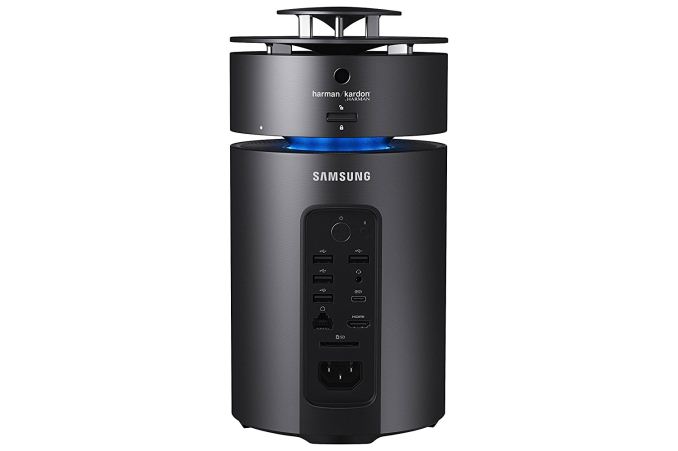
For most PC enthusiasts, if you ask them to name a cylindrical machine, the Mac Pro comes immediately to mind. Not to tread too heavily on Apple’s toes on what would now be a 2-3-year-old product, Samsung is entering the market with a more consumer focused ‘ArtPC Pulse Premium Desktop’ in a cylindrical aluminium chassis. The PC is self-contained with an Intel 6th generation Core i5 or Core i7, and an AMD Radeon RX based graphics card. On the top is a harmon/kardon 360-degree omni-directional audio speaker.
Preorders for both the Skylake-based Core i5 and Skylake-based Core i7 start from $1200 and $1600 from Amazon respectively. The exact CPU models have not been listed by either Samsung or Amazon as of yet, however it states the Core i5 is at 2.7 GHz, which is akin to the i5-6400 at 65W TDP or i5-6600T at 35W – the latter seeming more appropriate. For the Core i7, it is listed as 3.4 GHz, which would put it as the i7-6700, at 65W. Here’s the breakdown of the two systems, with the more expensive MSI Vortex G65 that has a full i7-6700K and dual GPUs:
We don’t have pictures of the internals, but one would assume that both systems would offer dual channel memory and Samsung NVMe drives, however it is unclear if these are user upgradable. The Core i5 is listed as having 8GB of DDR4 (probably DDR4-2133) and a 256GB NVMe SSD, whereas the Core i7 is listed as having 16GB of DDR4 and a 256GB NVMe SSD with another 1TB SATA HDD. It doesn’t state that the 1TB is mechanical, or a 2.5-inch drive, so until we can see the insides it is hard to tell. It is stated that the 1TB is a ‘module’ and users can add their own ‘modules’, but no further information is given. Both systems come with an AMD Radeon RX 460 graphics card, which we would assume would be the MXM version similarly used in notebooks, but in this case with 2GB of GPU memory.
Clearly visible are four USB 3.0 ports, a USB Type-C port (unsure on the speed), a HDMI output, an Ethernet port, an SD card reader and a single headphone jack. For this price it seems a little strange not to see any front facing Thunderbolt 3 ports here, and given that there are harmon/karmon speakers fitted, and something more in the audio ports might be worthwhile. It would be interesting to get a breakdown and see which audio codec they’ve fitted for the headphone audio port, as well as the Ethernet port controller. A note about the speakers - the Amazon listing for these machines indicates that 3xAA batteries are required, which might mean for the speaker itself as a separate entity, or these machines might come with a remote control.
The design is fairly minimal in design and measures 5.51 x 5.51 x 12.18 inches (13.9 x 13.9 x 30.9 cm) and uses the single central fan concept we’ve seen on a few other devices like the Mac Pro, the MSI Vortex and the GIGABYTE UHD Brix. The Samsung ArtPC is available for preorder today at $1200 and $1600 from Amazon, to be delivered on the 28th of October in the US. Source: Liliputing, MS Power User | |||||||||||||||||||||||||||||||||||||||||||||||||||||||||||||||||||||||||||||||||||||||||||||||||||||||||||||||||||||||||||||||||||||||||||||||||||||||||||||||||||||||||||||||||||||||||||||||||||||||||||||||||||||||||||||||||||||||||||||||||||||||||||||||||||||||||||||||||||||



_575px.jpg)




| << Previous Day |
2016/10/10 [Calendar] |
Next Day >> |