[Most Recent Entries] [Calendar View]
Friday, October 14th, 2016
| Time | Event | ||||||||||||||||||||||||||||||||||||||||||||||||
| 8:00a | OpenCAPI Unveiled: AMD, IBM, Google, Xilinx, Micron and Mellanox Join Forces in the Heterogenous Computing Era
Some of you may remember AMD announcing the "Torrenza" technology 10 years ago. The idea was to offer a fast and coherent interface between the CPU and various types of "accelerators" (via Hyper Transport). It was one of the first initiatives to enable "heterogeneous computing". We now have technology that could be labeled "heterogeneous computing", the most popular form being GPU computing. There have been also encryption, compression and network accelerators, but the advantages of those accelerators were never really clear, as shifting data back and forth to the CPU was in many cases less efficient than letting the CPU process it with optimized instructions. Heterogeneous computing was in the professional world mostly limited to HPC; in the consumer world a "nice to have". But times are changing. The sensors of the Internet of Things, the semantic web and the good old www are creating a massive and exponentially growing flood of data that can not be stored and analyzed by traditional means. Machine learning offers a way of classifying all that data and finding patterns "automatically". As a result, we witnessed a "machine learning renaissance", with quite a few breakthroughs. Google had to deal with this years ago before most other companies, and released some of those AI breakthroughs of the Google Brain Team in the Open Source world, one example being "TensorFlow". And when Google releases important technology into the Open Source world, we know we got to pay attention. When Google released the Google File System and Big Table back in 2004 for example, a little bit later the big data revolution with Hadoop, HDFS and NoSQL databases erupted.
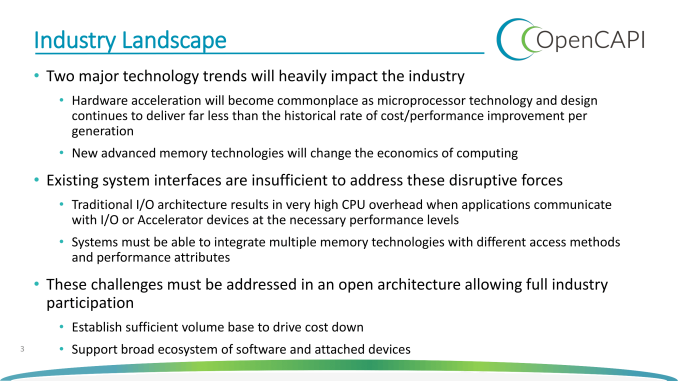
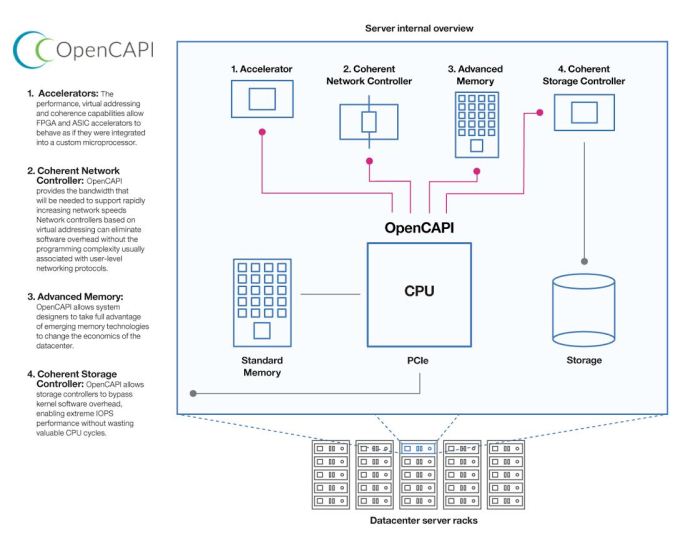
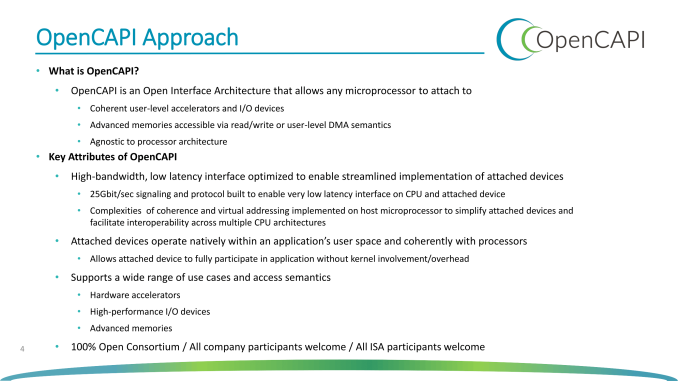
Big Data thus needs big brains: we need more processing power than ever. As Moore's law is dead (the end of CMOS scaling), we can not expect much from process technology advancements. The processing power has to come from ASICs (see Google's TPU), FPGAs (see Microsoft's project Catapult) and GPUs. Those accelerators need a new "Torrenza technology", a fast, coherent interconnect to the CPU. NVIDIA was first with NVLink, but an open standard would be even better. IBM on the other hand was willing to share the CAPI interface. To that end, Google, AMD, Xilinx, Micron and Mellanox have joined forces with IBM to create a "coherent high performance bus interface" based on a new bus standard called "Open Coherent Accelerator Processor Interface" (OpenCAPI). Capable of a 25Gbits per second per lane data rate, OpenCAPI outperforms the current PCIe specification, which offers a maximum data transfer rate of 16Gbits per second for a PCIe 3.0 lane. We assume that the total bandwidth will be a lot higher for quite a few OpenCAPI devices, as OpenCAPI lanes will be bundled together.
It is a win, win for everybody besides Intel. It is clear now that IBM's OpenPOWER initiative is gaining a lot of traction and that IBM is deadly serious about offering an alternative to the Intel dominated datacenter. IBM will implement the OpenCAPI interface in the POWER9 servers in 2017. Those POWER9s will not only have a very fast interface to NVIDIA GPUs (via NVLink), but also to Google's ASICs and Xilinx FPGAs accelerators.
Meanwhile this benefits AMD as they get access to an NVLink alternative to link up the Radeon GPU power to the upcoming Zen based server processors. Micron can link faster (and more profitable than DRAM) memory to the CPU. Mellanox can do the same for networking. OpenCAPI is even more important for the Xilinx FPGAs as a coherent interface can make FPGAs attractive for a much wider range of applications than today. And guess what, Dell/EMC has joined this new alliance just a few days ago. Intel has to come up with an answer... Update: courtesy of commenter Yojimbo: "NVIDIA is a member of the OpenCAPI consortium, at the "contributor level", which is the same level Xilinx has. The same is true for HPE (HP Enterprise)". This is even bigger than we thought. Probably the biggest announcement in the server market this year.
Gallery: OpenCAPI Announcement
      | ||||||||||||||||||||||||||||||||||||||||||||||||
| 11:00a | EIZO Launches ColorEdge CG2730 and CS2730 2560×1440 Displays for Professionals and Prosumers
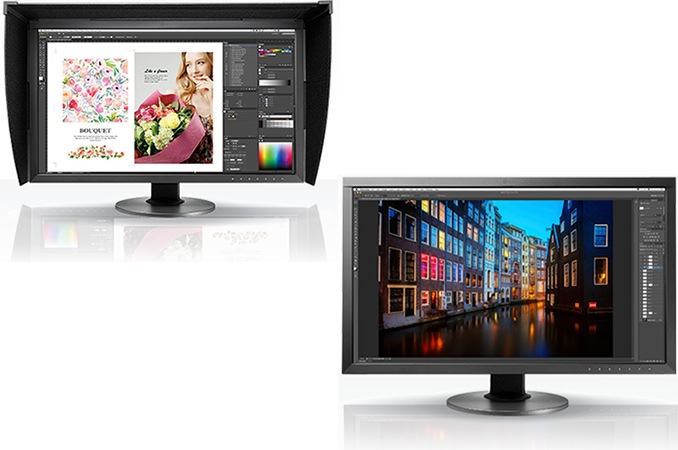
EIZO has introduced two new 27” displays designed for professionals and prosumers. The ColorEdge CG2730 and the ColorEdge CS2730 monitors share a lot of technologies and have a lot of similarities, but a number of distinctions allow EIZO to position and price them completely differently. The EIZO CG2730 and the EIZO CS2730 displays are based on 27” 10-bit 2560×1440 IPS panels with a 60 Hz refresh rate. Based on the specifications, the monitors sport a 350 nits typical brightness, 1500:1 or 1000:1 static contrast, 13 or 10 ms ms response time, and 178° viewing angles. As for I/O capabilities, both devices are equipped with a triple-port USB 3.0 hub as well as DVI-D, DisplayPort 1.2 and HDMI 1.4 inputs. In addition, both monitors come bundled with the company’s proprietary ColorNavigator 6 software, which can set the right brightness, gamma and other settings for photography, printing and web design with the help of calibration devices. Apart from differences in static contrast and response time, the new monitors from EIZO have a number of other important differences. In particular, the higher-end professional EIZO Color Edge CG2730 can cover 99% of the Adobe RGB and 98% of the DCI-P3 color spaces. DCI-P3 is generally important for video editors and animation designers, who do post-production work, because the standard is used for digital movie projection in the U.S. and is expected to be adopted by television and home cinema industries in the future. In addition, the CG2730 is covered with a special retardation film, which ensures depth of dark tones when viewed from an angle. Moreover, to simplify calibration without using any third-party calibration devices, the monitor features a special sensor. Finally, the professional-grade display comes bundled with a shading hood that prevents glare.
By contrast, the EIZO ColorEdge CS2730 is aimed at entertainment enthusiasts and prosumers. It only covers 99% of Adobe RGB color space and does not support the aforementioned pro-level features of the CG2730 (yet, it has better response time and that is important for gamers). Realistically speaking, the difference between two displays should not be too dramatic for a non-professional eye in typical applications because both are based on 10-bit IPS panels with 16-bit look-up-table and have similar brightness. Meanwhile, when it comes to contrast and the quality of dark colors, the CG2730 is expected to be significantly better than its consumer-oriented brother. EIZO did not announce MSRPs for its new displays, but said they would be available in November. Just like other ColorEdge monitors the new CG2730 and CS2730 come with a five-year warranty, which is longer than warranties offered by some other display manufacturers. | ||||||||||||||||||||||||||||||||||||||||||||||||
| 1:00p | Examining Windows 10 Anniversary Update's Driver Signing Enforcement Policy
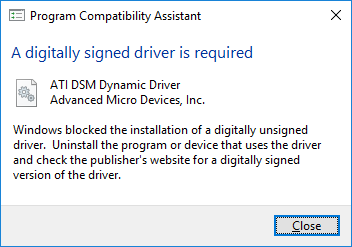
Windows 10 Anniversary Update came out at the beginning of August, with plenty of new user-facing features. There were also plenty of changes under the hood as well, including a change in policy regarding how Windows 10 handles device drivers. When the 64-bit versions of Windows launched over a decade ago, as a security measure Microsoft decided to require that all kernel mode drivers must be signed to be loaded. Under the aptly named cross-signing requirement, hardware vendors would need to get a certificate from one of the major certificate authorities, and use that to sign their drivers. The idea being that by enforcing signing restrictions, it would be much harder for malware to masquerade as legitimate drivers. This however didn't go quite as well as planned. In particular, malware authors begun stealing driver signing certificates from hardware vendors, allowing them to distribute malware that was for all practical purposes authentic as far as the operating system was concerned. As a result, when Windows 10 initially launched, Microsoft decided to take things one step further and require that not only would kernel mode drivers need to be signed, but that they would need to be WHQL signed by Microsoft. With that said however, Microsoft's plans hit a snag. There were technical complications to this decision, as well as a problem with the ecosystem being ready for this change. So for Windows 10, WHQL signing was a policy statement and not something that was enforced. Now with the rollout of the Windows 10 Anniversary Update (version 1607) this policy is no longer just policy, but an enforced requirement: in a fully secure x64 system, all kernel mode drivers must be signed by Microsoft. But, as with all rules, there are exceptions. The new requirement does not affect anyone who has upgraded from a previous build of Windows 10, and therefore it only affects new clean installs of Windows 10 1607. Furthermore the policy is only enforced if Secure Boot is enabled, so for those that require the ability to run traditionally (non-Microsoft) signed kernel mode drivers, one possible work around is to disable Secure Boot. As a backwards compatibility measure, Microsoft is also allowing the installation of drivers signed with end-entity certificates issued before July 29, 2015 which are signed by a supported CA. Finally, to prevent boot issues, boot drivers will not be blocked at this time, but the will be blocked in future versions of Windows.
Getting to heart of matters then, the additional signing requirements for Windows 10 piqued our curiosity on driver compatibility, and as a result we've gone and taken a quick look at how this change impacts the average user. In practice, it shouldn’t impact very many people at all, as many hardware vendors only ship WHQL (Microsoft signed) drivers to begin with. But there is one particular segment of hardware manufacturers that still semi-regularly release non-WHQL drivers, and that's the GPU vendors. Both AMD and to a lesser extent NVIDIA periodically release beta, hotfix, and other types of drivers that aren't WHQL signed. The obvious question then is raised: will users still be able to run these non-WHQL driver releases under Windows 10 Anniversary Update? To answer that question, we reached out to both companies for comment, and while only NVIDIA got back to us, they are not too concerned:
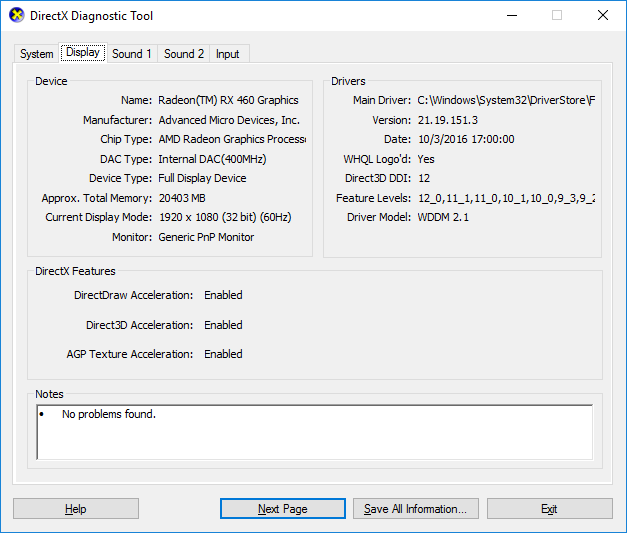
As NVIDIA only releases the occasional non-WHQL hotfix driver, they are less likely to be impacted to begin with. And indeed, they haven't had a hotfix release since before the release of Windows 10 Anniversary Update. AMD on the other hand has had a couple such releases, so we decided to simply see what would happen if you installed a non-WHQL driver release on a Secure Boot enabled system.
As it turns out, even AMD driver releases marked as non-WHQL are still sent to Microsoft for signing. And as a result they install on Windows 10 Anniversary Update just fine. Now to be technically accurate, AMD could always ship an unsigned driver if they deem it necessary. But as we can see, some thought has been put into this, and the company isn't releasing any drivers that won't install under Windows 10 Anniversary Update. Nor, do I expect that NVIDIA would ship unsigned hotfix drivers either. The net impact to the average user then is essentially zero. Having drivers that are signed by Microsoft but not fully WHQL does blur the line between what is and isn't really WHQL. But because all drivers are being signed regardless of WHQL status, it means that non-WHQL drivers are just as usable under Windows 10 Anniversary Update as they were before with the original release of Windows 10. This, ultimately, was the conclusion we expected to find. But it's nice to be able to confirm what we've already suspected. | ||||||||||||||||||||||||||||||||||||||||||||||||


| << Previous Day |
2016/10/14 [Calendar] |
Next Day >> |