[Most Recent Entries] [Calendar View]
Thursday, October 20th, 2016
| Time | Event | ||||||||||||||||||||||||||||||||||||||||||||||||||||||||||||||||||||||||||||||||||||||||||||
| 5:25a | Chinese Tech Giant LeEco Enters US Market with Le Pro3 and Le S3 Smartphones, Range of UHD TVs LeEco announced its official entry into the U.S. market at its “Ignite the Eco World” event in San Francisco, an important step in the company's globalization plan. Its initial products include two large-screen smartphones, a range of 4K TVs, and new content partnerships. LeEco may be the biggest tech company you’ve never heard of. The Chinese company began life as LeTV in 2004 as a streaming content provider and is often referred to as the “Netflix of China.” It then began creating its own movie and TV content with its Le Vision Pictures studio and then expanded into hardware, selling TVs that plugged into its streaming service. More recently, it has expanded its hardware lineup to include smartphones and even a connected bicycle and electric car. It even has its own Uber-like taxi service in China, Yidao. LeEco now looks to extend its reach further west. Earlier this year it purchased U.S.-based TV maker Vizio, the second largest brand in the U.S., for $2 billion, giving it a familiar name and a foothold in a market wary of Chinese brands. LeEco also purchased Dichotomy Creative Group in September, rebranding it Le Vision Entertainment. The new division is headquartered in Los Angeles and will be responsible for creating original English-language content spanning movies, TV, VR, and the Web. LeEco is even setting up its global headquarters in Silicon Valley (its campus in Beijing will remain its headquarters for China), having purchased a 48-acre plot of land in San Jose, California from Yahoo that will eventually employ some 12,000 people.
To kickstart its U.S. strategy, LeEco is offering two smartphones: the Le Pro3 and the Le S3. Both phones have 5.5-inch 1080p displays, but use different internal hardware. The Le Pro3 includes Qualcomm’s latest Snapdragon 821 SoC, 4GB of LPDDR4 RAM, and 64GB of internal storage. Given its emphasis on streaming content it’s probably not too surprising it does not offer additional storage tiers or microSD card support. Its most interesting feature is a large 4070mAh battery, which should help keep the screen lit for extended movie watching. The Le S3 comes with a Qualcomm Snapdragon 652 SoC, which combines four ARM Cortex-A72 CPU cores, four Cortex-A53 cores, and an Adreno 510 GPU that supports all of the latest 3D graphics APIs. We saw its smaller sibling, the Snapdragon 650 that comes with two fewer A72 cores, push the performance of Xiaomi’s Redmi Note 3 Pro to near flagship levels, so the Le S3 has good performance potential; however, in my brief time with the phone, I noticed some stuttering when navigating the UI and far too many instances where frame rate dropped below 60fps, more so than with the Redmi Note 3 Pro. The Le S3 also comes with 3GB of LPDDR3 RAM, which should be adequate, but only 32GB of internal storage. For a device that needs to cache lots of music and videos, and still have room for pictures and apps, we definitely would like to see more NAND, especially without microSD card support. The Le S3 also does not get a big battery like the Pro3; its 3000mAh cell is a typical size for 5.1- to 5.2-inch phones rather than a 5.5-inch phablet.
Both phones have a similar camera setup, with an 8MP front-facing camera and a 16MP primary camera that has an f/2.0 lens and PDAF for faster focusing but does not include optical image stabilization (OIS). Video recording options are pretty basic, supporting only 2160p30 (4K), 1080p30, and 720p30 modes, and with no electronic image stabilization (EIS) option, videos can look pretty shaky.
LeEco eliminated the 3.5mm headphone jack from its phones before Apple axed the analog port in its iPhone 7, opting to pass audio over the USB Type-C port instead. Both the Le Pro3 and Le S3 support LeEco’s Continual Digital Lossless Audio (CDLA) technology that passes digital audio over USB. CDLA compatible earphones, included with both phones, have their own DAC and audio processor that’s supposed to reduce noise and improve channel separation relative to traditional analog audio from a 3.5mm jack. A Type-C to 3.5mm adapter is also included so you can use traditional headphones too. Both phones also support Dolby Atmos surround-sound technology thanks to the Snapdragon SoCs, which produces more realistic positional audio and even accounts for an object’s vertical position in the soundfield as well.
The Le Pro3 and Le S3 both use aluminum unibody construction and share a similar design language. On the back of the phones we find horizontal plastic antenna lines at the top and bottom, with a large, not-quite-circular camera surround and fingerprint scanner. LeEco was the first company to use Qualcomm’s ultrasonic Sense ID fingerprint sensor, but these phones are using the more common capacitive variety. The most obvious visual difference between the phones is the finish applied to the aluminum: The Le Pro3 has a brushed finish while the Le S3 has a sandblasted finish.
The phones also look quite similar from the front, with relatively small upper and lower bezels and a symmetric layout. Hiding behind the lower bezel is a set of capacitive, backlit buttons. The LeEco logo replaces the standard home glyph on the Pro 3 and is flanked by the recents and back buttons of the left and right, respectively. The only other difference is that the Pro 3 uses 2.5D curved glass, while the S3’s edge-to-edge Corning Gorilla Glass 3 is flat all the way to the edge, giving it a sharper feeling in the hand. One thing that’s immediately obvious as soon as you turn on either phone is the ridiculously large black bezel on all sides of the screen. The black area is significantly larger in person than LeEco’s press renderings show. I have not seen a border this large on a phone in some time, at least not on a phone that costs more than $200. For me, it’s large enough to be distracting and, in my opinion, it gives the phones a low-cost look.
Both phones include an infrared LED on the top edge for remote control duties, which fits in with LeEco’s philosophy of enabling its hardware to work together. Centered on the bottom edge is a USB 2.0 Type-C port flanked by two perforated grilles. On the Pro 3 they’re covering a pair of speakers, although, having both so close together and firing downward will diminish the stereo effect. Switching our focus to software, we find that both phones are still running Android 6 Marshmallow with LeEco’s Ecosystem User Interface (EUI) 5.8 running on top. It’s disappointing that the phones will not ship with Android 7, but the demo models I handled were at least running recent security patches (either September or October). What’s unique about EUI are the included apps and built in support for accessing LeEco’s streaming content. Swiping to the left of the default home screen opens LeView, a list of suggestions for video content that learns from your viewing habits, somewhat analogous to HTC’s BlinkFeed or Flipboard for news. Tapping the Live icon opens a 3x3 grid of live video previews of content available for streaming. The Le app gives more comprehensive access to LeEco’s catalog of videos, TV episodes, and music.
It should be obvious by now that LeEco’s business strategy is more Amazon than Apple; it makes money from selling content and uses hardware as a delivery system. Because its revenue is not hardware-focused like with many of its competitors, it can sell its products at competitive prices, even at cost if necessary. LeEco’s ultimate goal is to create an internet-connected ecosystem encompassing hardware, software, and content that provides seamless access to all forms of digital entertainment. That’s no easy task, especially in the U.S. where many entrenched companies, including cable providers, movie studios, TV broadcasters, and internet companies provide similar services, albeit not always in a holistic way. LeEco thinks it has the answer to this problem with its EcoPlatform that’s open to third-party content providers and hardware partners, essentially giving them access to LeEco’s content delivery system with its apps and LeCloud network that encompasses more than 750 CDN nodes. LeEco announced a number of launch partners at its event, including Lionsgate, Showtime, Esquire, the History Channel, and Metro-Goldwyn-Mayer to name just a few, and it mentioned that another major content partner will be announced on November 2. To get the most from an ecosystem, whether it’s Apple’s or Google’s or Amazon’s, you need to fully buy in. This is especially true with LeEco, where signing up for Le EcoPass grants you access to 5TB of cloud storage, unlimited monthly movie viewing, extended warranties on LeEco hardware, and access to two EcoPass days (think Black Friday sales) at LeMall.com, its online storefront. It also offers the LeRewards program that grants further discounts on products.
Both the Le Pro3 and Le S3, along with LeEco’s other products, will be available for purchase on November 2 at LeMall.com. The Le Pro3 will cost $399 and the Le S3 will cost $249. There will be a $100 LeRewards discount available for both phones, which will drop the prices to $299 and $149, respectively. The Le Pro3 will be available in two colors—gray and gold—while the Le S3 will be available in three colors—gray, gold, and rose gold. Both phones will be unlocked and are compatible with GSM networks from AT&T, T-Mobile, MetroPCS, and Cricket Wireless. | ||||||||||||||||||||||||||||||||||||||||||||||||||||||||||||||||||||||||||||||||||||||||||||
| 1:00p | Razer Re-Launches The Razer Blade Pro: GTX 1080 And 4K G-SYNC
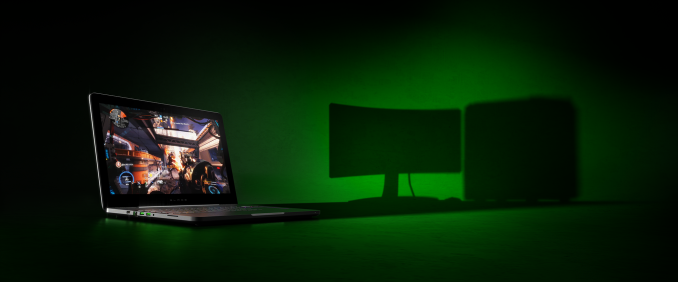
It’s been a while since Razer has refreshed the Razer Blade Pro, which is their 17.3-inch desktop replacement laptop. The outgoing model still has a Haswell processor with GTX 960M. It’s always been a bit strange that the 14-inch Razer Blade was equipped with a stronger GPU than the larger laptop, and when the Razer Blade Pro was last updated, the Razer Blade had a GTX 970M in a smaller form factor. This is no longer the case. The 14-inch Razer Blade was just updated with Skylake and GTX 1060 in September, which should significantly increase its performance, and today Razer is announcing the new Razer Blade Pro, which finally surpasses its smaller sibling in performance with a NVIDIA GeForce GTX 1080 squeezed into the same 0.88-inch thick CNC aluminum chassis. The Core i7-6700HQ 45-Watt CPU replaces the outgoing Haswell processor, and 32 GB of DDR4 RAM is now available. In order to keep the system cool, Razer has designed what they are calling the world's thinnest maufactured vapor chamber cooling solution in a laptop. Combined with a custom fan design and a dynamic heat exchanger, Razer is engineering as much cooling as they can into the thin notebook.
Razer has been a big proponent of IGZO displays, and they have outfitted the Blade Pro with a 17.3-inch 3840x2160 IGZO IPS display, and this high-resolution panel also supports NVIDIA’s G-SYNC technology, which should help quite a bit with gaming, even with the big GPU under the hood. This display covers 100% of the Adobe RGB color gamut as well, just like the Razer Blade Stealth UHD model. That has implications though due to the lack of proper color management in Windows, and if it is like the Stealth, it won’t have any included color management software. It’s not Razer’s fault, and hopefully more devices with wide color gamut support will force Microsoft’s hand here.
Razer has also outfitted the new Pro with their new ultra-low profile mechanical switches, which feature actuation points which register at 65 grams, as well as reset points. There have been other laptops with mechanical switches, but they are generally the full-size switches which require much more travel. On a 0.88-inch thick laptop, there would be no way for this to work. Razer has also added the same per-key RGB Chroma branded lighting they have already added to both the Stealth and Blade models. The TrackPad sits to the right of the keyboard, much like on the older model, but if you are gaming, a mouse is likely the best bet.
At under eight pounds, the new Blade Pro is actually pretty light for a system of this size and performance. The new Razer Blade Pro exceeds the requirements for any of the current VR headsets, so it should be able to run VR pretty well.
All of these features do add to the cost though. Where as the new 14-inch Razer Blade starts at $1800, the new Razer Blade Pro starts at over double that price: $3700. Shipments start in November. Gallery: Razer Blade Pro
      | ||||||||||||||||||||||||||||||||||||||||||||||||||||||||||||||||||||||||||||||||||||||||||||
| 4:25p | Nintendo Announces Switch Portable Gaming Console - Powered by NVIDIA Tegra
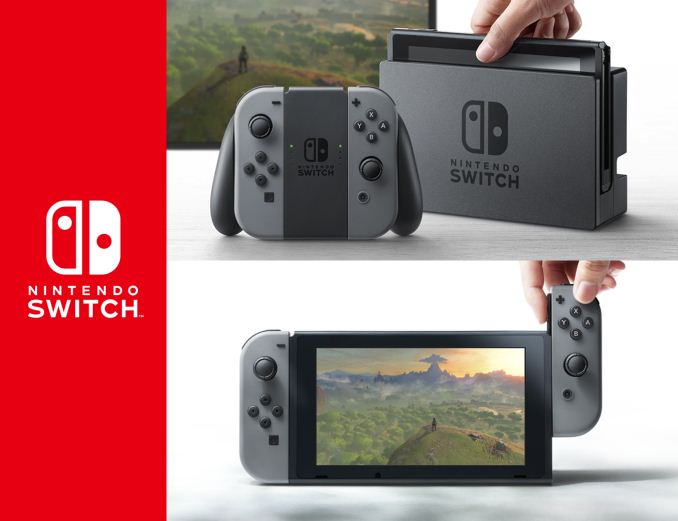
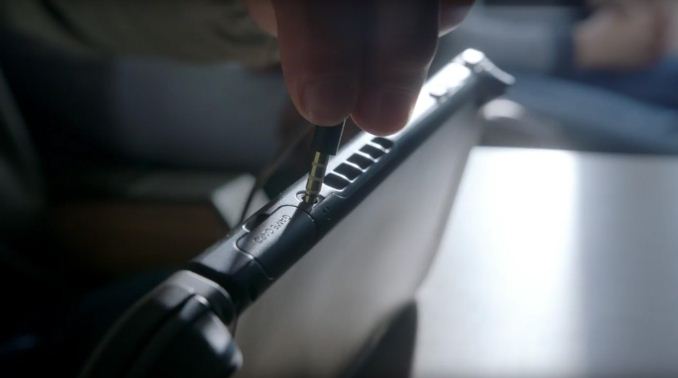
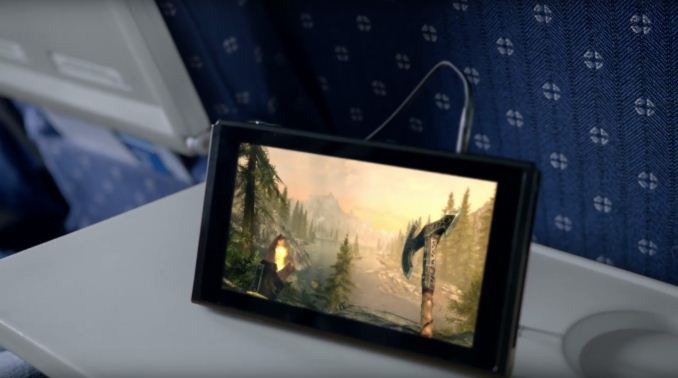
Earlier today Nintendo took the wraps off of their next generation console, Switch. Formerly known by the codename NX, the Switch is the successor to both Nintendo’s portable DS and set top Wii console lines, utilizing a portable, tablet-like unit that can be docked to behave like a set top console. Today’s announcement, in the form of a 3 minute trailer, is meant to tease the console ahead of its full launch in March of 2017. While I’ll skip the commentary on the console’s unusual design – dedicated gaming sites can offer better context – I wanted to dive into the hardware in the Switch. Given that this was a teaser, I was not expecting a reveal of any of the hardware specifications of the console, and indeed neither Nintendo’s teaser video nor their related press release made any mention of the underlying hardware. However shortly after the reveal went live, NVIDIA sent out an email to the press and posted a blog of their own. As it turns out, while today is still just a teaser, in some ways we’re already getting more information about the console than in any previous generation of Nintendo’s hardware. In their blog post, NVIDIA confirmed that they would be providing the underlying SoC for the console. As this is still ultimately a teaser, NVIDIA’s own details are light, but their announcement confirms that it’s a custom version of their Tegra SoC. Curiously, no mention of the CPU core in that SoC is mentioned. However as it’s a Tegra, something ARM-based is the logical (if not only) choice. And on the GPU side, as you’d expect, they’re using a GPU based on one of NVIDIA’s existing GPU architectures, though the company isn’t specifying if it’s Pascal or Maxwell (I’d assume Pascal, but consoles are known for their long development cycles).
Otherwise, as far as specifications go that’s all we get for now. Though as NVIDIA is supplying a whole SoC there are obviously many more parts to the package that we’ll hopefully learn about in the near future. More CPU and GPU details are obviously the most interesting aspect – does the Switch SoC use Denver CPU cores? – but there’s also the matter of memory bandwidth, WiFi support, and the many other functional blocks that make up an SoC. For NVIDIA, this is the first console hardware win for the company since the PlayStation 3, which launched in 2006. In the set top console market, AMD has since provided the GPU (and often, the CPU) for the most recent generation of consoles. Otherwise NVIDIA has never had a 3rd party portable console win, primarily because both Nintendo and Sony developed their respective SoCs internally for the 3DS and Vita. In fact, given that Nintendo previously did much of their portable console development work internally, this is a notable shift for how the company operates. The 3DS was essentially a custom SoC combining multiple ARM11 (ARMv6) CPU cores with an OpenGL ES 1.1 generation GPU from the little-known Digital Media Professionals (DMP). So this is the first time Nintendo has contracted out their SoC needs to a third party in such a visible fashion. I’m actually a bit surprised that NVIDIA is even allowed to talk about their involvement at this point in time, given Nintendo’s historical focus on secrecy. Though all of this also helps to underline just how big a jump in technology the Switch is from the 3DS. On the CPU side alone it’s reasonable to assume we’re looking at CPU design in the neighborhood of 4.x DMIPS/MHz, versus ARM11’s approximate 1.3 DIMPS/MHz rate, so IPC will have increased significantly, never mind an increase in frequency. Meanwhile on the GPU side, Nintendo is going from a GPU that didn’t even have a programmable GPU pipeline (i.e. shaders) to a fully modern GPU, essentially catching up on a decade of mobile GPU development in a single bound. Given that the console has to work as both the company’s portable and set top consoles, Nintendo has opted to use far more modern tech than their traditionally conservative designs.
Finally, without reading too much into a 5 paragraph announcement, there is one other interesting nugget of information in NVIDIA’s blog post that further shows just how deep the NVIDIA/Nintendo relationship is going here. Along with providing the SoC, NVIDIA also has a major stake in the development of the console’s API and middleware. While NVIDIA presumably isn’t developing the entire software stack, they make special note of the fact that they are providing a new “lightweight” API, NVN, for the console. NVIDIA is also providing middleware in the form of “a revamped physics engine, new libraries, advanced game tools and libraries” and “custom software for audio effects and rendering” which sounds a great deal like NVIDIA having brought over major parts of their GameWorks SDK, including the PhysX physics simulation libraries and VRWorks Audio library. In any case, it will be interesting to see how this plays out over the next few months. The mobile world has changed significantly since the 3DS was launched in 2011, something that the Switch’s design makes obvious. Nintendo has gone in a very different direction than either their console rivals or the smartphone market that is always threatening to encroach on mobile consoles, and that’s reflected in both the unusual dual-mode console and the hardware inside of it. | ||||||||||||||||||||||||||||||||||||||||||||||||||||||||||||||||||||||||||||||||||||||||||||
| 6:00p | Kodak Ektra Smartphone Announced: MediaTek Helio X20, 21 MP Camera, USB-C
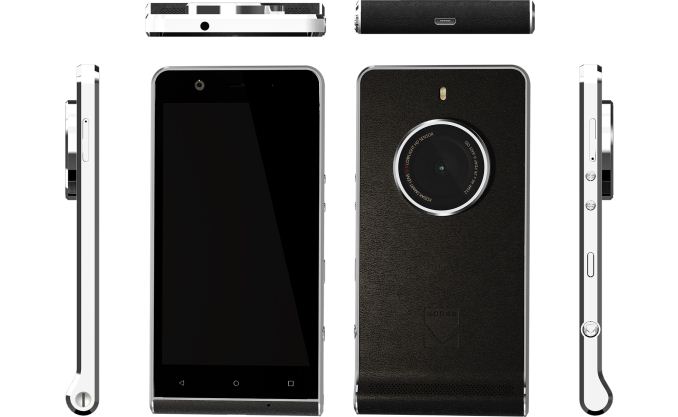
Eastman Kodak and the Bullitt Group on Thursday introduced the Ektra smartphone, which will be the first mainstream handset carrying the Kodak brand. The phone inherits its Ektra name from Kodak’s consumer cameras from the 1940s, and is designed to cater to digital photography enthusiasts, which is emphasized by overall design (which somewhat resembles the original), a large assembly of lenses as well as a dedicated shutter button. Initially, the Kodak Ektra device will be exclusively in Europe for €499. Kodak developed the world’s first digital camera in the mid-1970s and has patented a huge number of digital imaging-related technologies since then. Although the company was fairly successful with its digital cameras in the 1990s and early 2000s, it lost a significant chunk of its market share later on as new companies entered the scene. Consequently, Kodak filed for Chapter 11 bankruptcy protection in early 2012 and then had to exit the digital camera business, sell off its image sensor solution unit and some other businesses, and then sell many of its patents to a group of high-tech rivals in 2013. After re-emerging from bankruptcy, Kodak decided to focus on commercial products and services, but did not forget its heritage of serving consumers. In 2013, it demonstrated its first micro four thirds camera to be made by a third party and in late 2014 announced plans for smartphones.
Nowadays the market for standalone cameras is on the decline as many people use smartphones to make pictures, and this is when Kodak decided to team up with Bullitt (which also has rights to produce phones under CAT and Land Rover brands) to create a Kodak-branded handset. Under the terms of the agreement, Kodak licensed two of its trademarks to Bullitt and then developed the photography software as well as the optical lenses assembly. In the meantime, Bullitt designed the Kodak Ektra smartphone itself.
From hardware point of view, the Kodak Ektra is a typical mainstream smartphone, featuring a 5” FHD display and is based on MediaTek’s Helio X20 SoC. The handset comes equipped with 3 GB of LPDDR3 RAM, 32 GB of NAND flash storage, a 802.11ac Wi-Fi + BT 4.1 wireless module, a 4G/LTE Cat4 modem and a 3000 mAh battery. A good thing is that the phone sports a USB Type-C port used both for data and charging.
Gallery: Kodak Ektra Smartphone
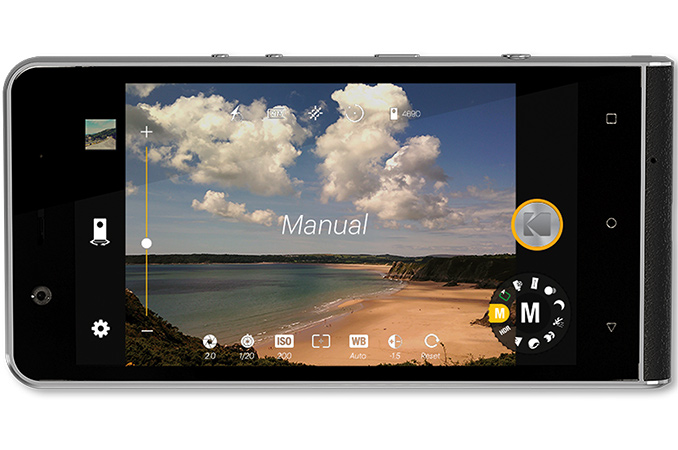
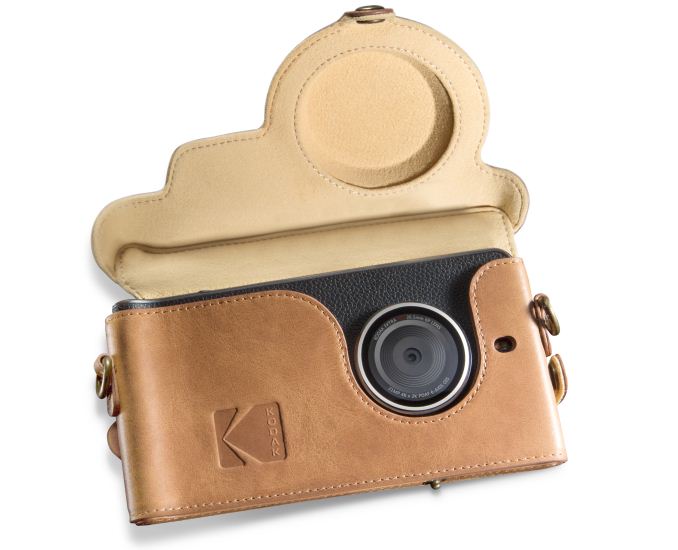
      Meanwhile, the imaging capabilities of the Kodak Ektra deserve a closer look: after all, the smartphone is all about photography. The main (rear) camera of the phone uses Sony’s 21 MP Exmor RS IMX230/IMX338 sensor (Kodak does not reveal the exact model), which is found on some other smartphones nowadays, as well as a dual-LED flash. As noted above, Kodak designed the imaging software with SLR-like UI to select the scene type (e.g., HDR, landscape, portrait, macro, sport, night-time, panorama, bokeh as well as a smart auto mode). In addition, the phone supports the manual mode that allows adjusting exposure, ISO, focus, white balance and shutter speed — just like on cameras. Finally, Kodak applied a special coating to the lenses to maximize their luminous transmission. While Sony’s 21 MP sensors are used relatively widely and behave predictably, Kodak’s lens assembly and custom software are supposed to be the main factors that will differentiate the Ektra from competing Android 6-based devices. Obviously, we will need to test the hardware and software before drawing any conclusions about imaging capabilities of the Kodak smartphone. As for the front-facing camera, Bullitt/Kodak installed a fairly good 13 MP sensor with an f/2.2 lens. Kodak and Bullitt intend to sell the Ektra in Europe later this year for €499 or £449, depending on the country, through Bullitt’s typical sales channels. The design as well as the price point clearly indicate that the Kodak Ektra is a niche phone that is positioned below flagship models from Apple and Samsung, but still relatively high in the market for what's largely mainstream hardware. That said, it looks like the Ektra is banking on people familiar with the Kodak brand, who value imaging capabilities, stylish design and original accessories (Kodak will offer a case and a pouch). However, it is unlikely that the smartphone will capture a significant chunk of the market. After all, many smartphone makers claim that their products have the industry’s best photography capabilities and Kodak/Bullitt are definitely not the first to advertise such features. | ||||||||||||||||||||||||||||||||||||||||||||||||||||||||||||||||||||||||||||||||||||||||||||
| 10:30p | Intel Announces Q3 FY 2016 Earnings: Record Quarterly Revenue
Earlier this week, Intel announced their earnings for the third quarter of their 2016 fiscal year, and the company achieved new records across their business lines, resulting in a record quarterly revenue of $15.8 billion USD, up 9% compared to Q3 2015. Intel achieved margins of 63.3%, up 0.3% year-over-year, and their operating income increased 6% to $4.5 billion. Net income for the quarter was $3.4 billion, up 9%, and earnings per share came in at $0.69.
Intel also announced Non-GAAP results, which exclude certain things like acquisition-related adjustments, deferred revenue write-down, restructuring, and more. For a full list, please check out their lengthy explanation on their earnings report. On a Non-GAAP basis, revenue was the same $15.8 billion, margins were up 1.3% to 64.8%, and operating income was up 18% to $5.1 billion. Net income was up 21% to $3.9 billion, and earnings per share were up 21% to $0.80. Intel’s internal divisions are broken down into six groups. The Client Computing Group, which is PCs, tablets, phones, and wired and wireless communication. The Data Center Group focuses on enterprise and the cloud. Internet of Things is retail, transportation, industrial, building, and home use electronics. Non-Volatile Memory Solutions is mostly Intel’s SSD efforts. Intel Security Group is security software (McAfee) and new for fiscal 2016 is the Programmable Solutions Group, formed after the acquisition of Altera, and features field-programmable gate arrays and related products.
For Q3, the Client Computing Group had revenues of $8.892 billion, which is up from $8.506 billion a year ago. Unit volumes were actually down 4% compared to the same point a year ago, and volumes are down 11% for the year compared to the first three quarters of 2015, but average selling prices (ASP) continue to increase. For this quarter ASP was up 6% compared to a year ago, and is up 12% for the year so far. Breaking it down a bit further, Intel has had 4% growth in notebook platform sales for this quarter (year-over-year) with ASP up 3% in the notebook segment. Desktops dropped 6% in volume, but have kept the same average selling price, and “tablet platform volumes decreased” which is a non-numerical way to say that Intel is getting out of the dedicated tablet market altogether. The Data Center Group had revenues of $4.542 billion this quarter, up from $4.140 billion a year ago. Unit volumes increased 12% this quarter compared to Q3 2015, and for the year unit volumes are up 9%. Average selling price has decreased though, down 3% this quarter, and down 2% for the year so far. Intel doesn’t break out the numbers as specifically for the remaining groups, but Non-Volatile Memory Solutions had revenue that was more or less flat at $649 million for the quarter, compared to $655 million a year ago. Internet of Things continues to grow, up to $689 million in revenue, compared to $581 million in Q3 2015. The Intel Security Group increased revenue from $506 million to $537 million, and the Programmable Solutions Group had revenue of $425 million, with no comparison to last year since it is a newly acquired product group, but up 6% compared to Altera’s numbers from last year. Intel has made some announcements in this quarter as well. Intel started sampling Stratix 10 in this quarter, which is the only 14 nm FPGA. They also announced they will sell 51% of the Intel Security Group, and establish an independent McAfee security company with the private equity firm TPG. Intel is also shipping “thousands of samples” of their new 3D XPoint to customers, and should have it qualified by the end of this quarter. Speaking of qualified, the Intel 7480 modem was qualified for AT&T this quarter, which is about a year after the 7360 modem got qualified.
Looking forward, Intel is forecasting revenues for Q4 at $15.7 billion, plus or minus $500 million, and margins of 61%. Intel has continued to diversify its portfolio, and has been building out other divisions to assist with growth while the PC market continues to decline, and while the Client Computing Group continues to be their largest division, they have had strong growth in other areas like the Data Center Group which had record revenue this quarter, and IoT which continues to grow quickly. Source: Intel Investor Relations
| ||||||||||||||||||||||||||||||||||||||||||||||||||||||||||||||||||||||||||||||||||||||||||||
| 11:35p | AMD Announces Q3 2016 Financial Results
Today AMD announced their third quarter earnings for the fiscal year 2016. Revenue was up to $1.307 billion, up 23% from a year ago. However their operating income and net income were not quite so lucky, with AMD showing an operating loss of $293 million for the quarter, compared to a $158 million operating loss a year ago, and net AMD showed a loss of $406 million, or $0.50 per share, compared to a net loss of $197 million, or $0.25 per share, a year ago.
AMD took a charge of $340 million this quarter for their sixth amendment to the wafer supply agreement with GlobalFoundries. This has been excluded in their Non-GAAP measures to show the core business, where they had the same $1.307 billion revenue, but showed an operating income of $70 million for the quarter, compared to an operating loss of $97 million a year ago. Non-GAAP net income for the quarter was $27 million, compared to a $136 million loss in Q3 2015.
Thanks to the charge, gross margin in GAAP terms was an abysmal 5% for the quarter, but Non-GAAP was 31%. AMD’s Computing and Graphics segment had revenue of $472 million this quarter, which is up 11% from Q3 2015. Increased sales of GPUs are attributed to the gain, but the gain was offset by a drop in desktop processor sales, though they have seen an increase in sales of notebook processors. This segment continues to be unprofitable, having an operating loss of $66 million this quarter, but that is much better than the $181 million operating loss a year ago. Once again, GPU revenue has helped here tremendously. GPU average selling price (ASP) increased with higher channel and professional graphics ASPs. CPU ASP was flat year-over-year.
Enterprise, Embedded, and Semi-Custom continues to grow, and has easily surpassed the Computing and Graphics division, with revenues of $835 million, which is up 31% year-over-year. Semi-custom SoC sales continue to be the bright spot for AMD, with AMD have locked up both current generation consoles in the Xbox One, and PlayStation 4, and their refreshes in the Xbox One S and PlayStation 4 Pro, as well as the upcoming Xbox Project Scorpio. Best of all for AMD, this segment continues to be profitable, with an operating income of $136 million this quarter, up from $84 million a year ago.
AMD plunked the wafer agreement charge right into their All Other category, which had an operating loss of $363 million this quarter, compared to an $11 million loss last quarter, and a $61 million loss in Q3 2015. AMD has seen success with its Polaris architecture in the GPU space, and they hope to see some success with their upcoming Zen CPU architecture, with their Summit Ridge desktop processor and a 32-core, 64-thread server product code named Naples. Looking forward to next quarter, AMD expects revenues to decrease 18%, plus or minus 3%. | ||||||||||||||||||||||||||||||||||||||||||||||||||||||||||||||||||||||||||||||||||||||||||||







| << Previous Day |
2016/10/20 [Calendar] |
Next Day >> |