[Most Recent Entries] [Calendar View]
Monday, November 28th, 2016
- Discrete Desktop GPU Market Trends Q3 2016
- Discrete Desktop GPU Market Trends Q2 2016
- AMD Announces Q3 2016 Financial Results
- NVIDIA Announces Record Q3 FY 2017 Results
| Time | Event | ||||||||||||||||||||||||||||||||||||||||||||||||||||
| 9:00a | Discrete Desktop GPU Market Trends Q3 2016: GPU Shipments Hit Two-Year High Shipments of discrete graphics processing units (GPUs) are traditionally high in the third quarter as PC makers and retailers gear up for the holiday season and build up stocks of components. Q3 2016 was particularly good for standalone GPUs because both AMD and NVIDIA introduced a number of new products for different market segments from May to August. Sales of discrete graphics cards for desktop PCs hit a two-year high in the third quarter, according to data released by Jon Peddie Research. What is important is that standalone GPUs performed very well despite a shrink of PC sales. | ||||||||||||||||||||||||||||||||||||||||||||||||||||
| 10:00a | Transcend Introduces Extreme Temperature DDR4 SO-DIMMs
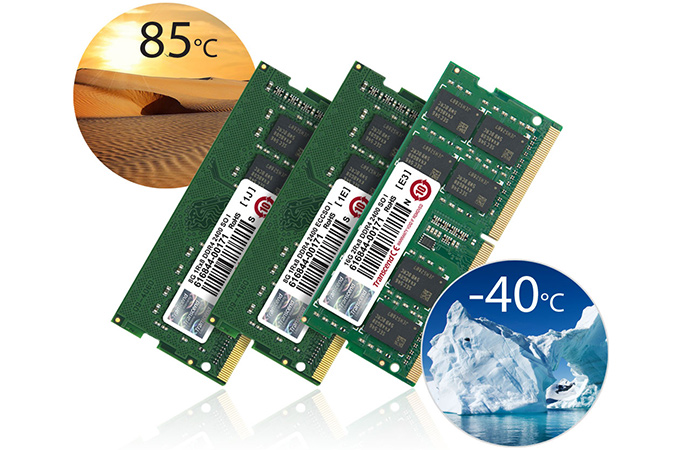
Transcend last week introduced a family of DDR4 SO-DIMMs that can operate in extreme temperature conditions. The modules are designed for industrial computers, special-purpose PCs, POS, ATM and other systems that work in rough environments for 24/7. Subsequently, the SO-DIMMs can be used safely in SFF PCs without decent cooling for prolonged amounts of time. Transcend’s new industrial grade memory modules use special PCBs that have industrial-grade capacitors, 30μm gold-plated contacts and are designed to withstand shock, electromagnetic disturbance and extreme temperatures from –40°C to +85°C. In theory, it means that the SO-DIMMs are rated to operate in Antarctica or in the Lut Desert in Iran. In the real world, Transcend’s new SO-DIMMs will be used inside space-constrained industrial PCs, military systems, embedded systems and others that work 24/7 in rough conditions and/or without decent cooling.
The new industrial-grade modules from Transcend are based on Samsung’s 8 Gb B-die DDR4 chips (marked as K4A8G08) that were hand-picked and tested to run in extreme conditions. The SO-DIMMs come in 8 GB and 16 GB configurations and are rated to operate at 2400 MT/s at 1.2V, which means that they are fully compatible with the industrial-grade, embedded and low-power CPUs that support DDR4 at JEDEC speeds. The new modules carry Transcend’s lifetime warranty. Pricing of Transcend’s new industrial-grade DDR4 modules is unknown as for industrial customers it typically depends on actual sales volumes. We would expect the modules will be more expensive than typical SO-DIMMs because they use special PCBs with 30μin gold plating, components with extended temperature ranges as well as cherry-picked memory ICs.
Related Reading: | ||||||||||||||||||||||||||||||||||||||||||||||||||||
| 10:30a | The OnePlus 3T Review Back in June, OnePlus launched their new flagship smartphone, the OnePlus 3. I've had an interesting relationship with the OnePlus 3 due to certain decisions that were made regarding its display and some parts of the operating system before the phone initially launched. Since that time, OnePlus has made significant improvements to both of these aspects, and in my follow-up piece I concluded that the OnePlus 3 should be considered by all smartphone buyers, even ones who were ready to pay $700 or $800 for a flagship phone from another company. Earlier this month OnePlus surprised a number of people in the Android community by launching a successor to the OnePlus 3. This move isn't in line with the yearly cadence that we've come to expect for their smartphones, which makes it all the more interesting. The name of this new phone is the OnePlus 3T, and based on that name one can already see that it represents an evolution of the OnePlus 3 rather than a revolutionary upgrade. As the OnePlus 3's successor, the OnePlus 3T simply serves to update certain aspects of the phone's hardware in order to take advantage of technology improvements that have been made available since the OnePlus 3 was originally developed and released. Read on for the full AnandTech review of the OnePlus 3T. | ||||||||||||||||||||||||||||||||||||||||||||||||||||
| 1:00p | The SD Card Association to Classify IOPS Performance of Memory Cards via Logo
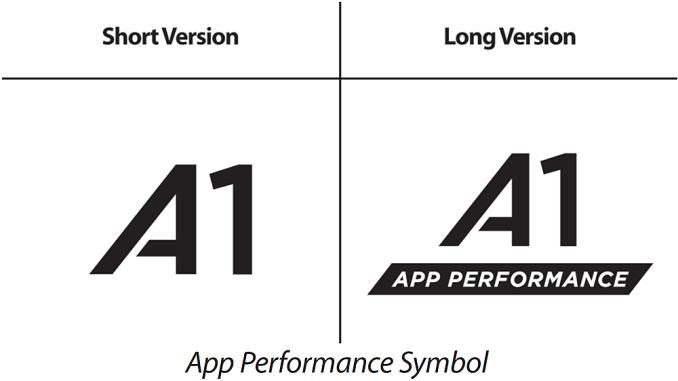
The SD Association this week announced the SD Specification 5.1, which will introduce the so-called Application Performance Classes that will specify minimum read and write IOPS performance supported by the upcoming SD cards. The App Performance Classes are designed to help end users to ensure that memory cards they get are capable of providing decent experience when running applications. When Panasonic, SanDisk and Toshiba developed the Secure Digital card standard in the late 1990s, their main goal was to create miniature removable devices to store multimedia files (music, images, short videos, etc.) and even operating systems that would be more versatile than MMC cards and would offer a path for future evolution. Over time, SD cards have increased capacity, improved sequential performance and even gained new interleaving modes to enable new usage models (such as recording of 360° videos or multiple video streams at once). In today's climate, usage patterns of SD cards by different people vary greatly. Some need to record and store UHD content, other need to run applications, which is why the former benefit from great sequential performance, whereas the latter need guaranteed sequential and random read/write performance.
Earlier this year the SD Association released the Secure Digital 5.0 specification that takes into account large block sizes of modern NAND flash chips and introduces the new Video Speed Class labels that define minimum write speeds supported by certain cards. Now the SD 5.1 spec introduces App Performance Classes that express minimum sustained sequential performance as well as random read and write IOPS performance. The first defined class is known as A1.
The SD 5.1 defines the App Performance Class 1 (described with one of the A1 symbols) to require SD cards to provide a sustained sequential performance of 10 MB/s, a performance of 1500 random read IOPS as well as 500 random write IOPS. Eventually, the SD Association plans to introduce higher App Performance levels when the market requires. It should be noted that levels of performance of the App Performance Classes are only guaranteed on devices that comply with the SD 5.1 specifications, and are not general catch-all performance certification. As a result, owners of contemporary devices can get new cards and then test them using Google’s benchmark for SD cards to ensure that their performance is sufficient for running apps (or just check out third-party tests of SD cards).
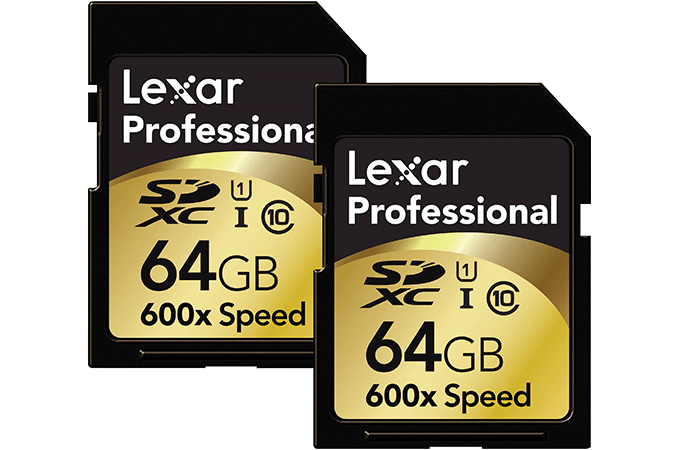
As it usually happens with SD cards, other SD-defined labels (e.g., UHS Speed Class, Video Speed Class, etc.) that determine other characteristics of devices will accompany the new A1 labels. In fact, 10 MB/s sequential performance mandated by the App Performance Class 1 is not too high and various SD cards carrying the UHS Speed Class 1 (as well as the VSC V10) labels offer this level of performance by specification anyway. Meanwhile, the A1 label is the first to ensure that random IOPS performance is sufficient for apps designed with this performance class in mind. Related Reading: | ||||||||||||||||||||||||||||||||||||||||||||||||||||
| 4:00p | Point of View BV Declares Bankruptcy, But Holding Company Vows to Come Back
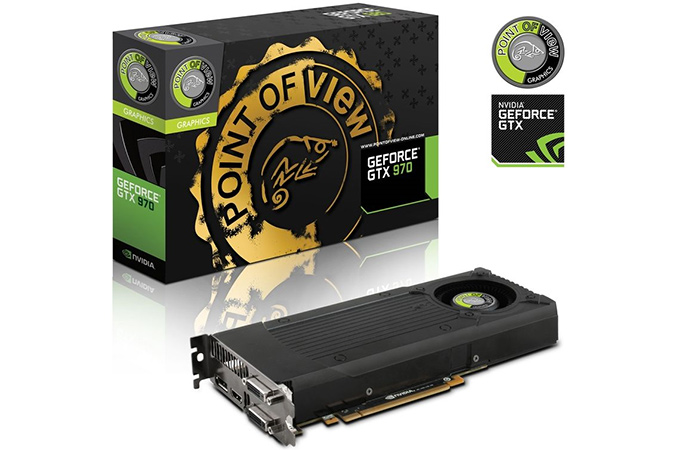
Shipments of discrete graphics cards for desktop PCs have shrunk by nearly two times since 2007 and competition between vendors intensified in the recent years. As a result, some companies have tried to diversify their business while others have had to leave. Last week Point of View BV, which was a known supplier of graphics adapters in Europe (particularly last decade), was declared bankrupt by the court in Oost-Brabant in the Netherlands. Meanwhile, the owner of the brand claims that the holding company Point of View Holding BV is still operational and plots its return. Point of View was established in 1994 with a purpose to sell various devices including graphics cards under a singular brand. The company got rather famous in 2000s, particularly for its inexpensive NVIDIA GeForce adapters available widely across Europe. As the market of graphics add-in-boards (AIBs) contracted and the competition intensified in 2010s, Point of View lost its market share and attempted to diversify its business by adding media tablets, mobile accessories and even drones to its product family. While the company kept selling video cards, its lineup of NVIDIA’s GeForce GTX 900-series adapters shrank to only five products (versus 19 members of the GeForce GTX 600-series family several years ago). Meanwhile, sales of tablets have been either declining or stagnating for years and despite low prices (enabled by Intel’s incentives and subsidies to China-based manufacturers) Point of View never got popular. After facing multiple problems, Point of View BV filed for bankruptcy earlier this year and this week the court in Oost-Brabandt declared it insolvent. On Friday, Bjørn Solli, CEO of Point of View, told us that the brand is not fading into oblivion. Point of View Holding BV, the parent company, owns multiple business entities, including Point of View BV, Point of View International BV, Point of View Asia Corp Ltd., Point of View US LLC and others. To date, only Point of View BV has been declared bankrupt, which is why it cannot continue operations and for now, we are not going to see any new graphics cards carrying the brand either in Europe or in the U.S. Right now, the company still sells add-in graphics boards in Latin America, whereas its Mobii Supply Partner BV division is focused on accessories for mobile devices. Nonetheless, the chief executive of Point of View hopes that eventually his company will return to the market of graphics cards “when the time is right.” “We will do what we can to be back to the European market,” said Bjørn Solli. “It will be with diversified products. We have many ideas! And it will not take long.” Unfortunately, to date the company has not come up with any RMA solutions for owners of its existing products, but the CEO promised to provide an update on the matter next week. Sources: FaillissementsDossier.nl, Point of View, TechPowerUp. Related Reading:
| ||||||||||||||||||||||||||||||||||||||||||||||||||||


| << Previous Day |
2016/11/28 [Calendar] |
Next Day >> |