[Most Recent Entries] [Calendar View]
Friday, December 23rd, 2016
- Best Gaming Laptops: Holiday 2016
- Alienware Refreshes The Alienware 15 And 17 Gaming Notebooks At PAX
- Razer Re-Launches The Razer Blade Pro: GTX 1080 And 4K G-SYNC
- The ASUS ROG Strix GL502VS Review: Mainstream GTX 1070 with G-SYNC
| Time | Event | |||||||||||||||||||||||||||||||||||||||||||||||||||||||||||||||||||||||||||||||||||||||||||||||||||||||||||||||||||||||||||||||||||||||||||||||||||||||||||||
| 8:00a | Samsung Updates Notebook 9: Kaby Lake, USB-C, Starts at 816 Grams
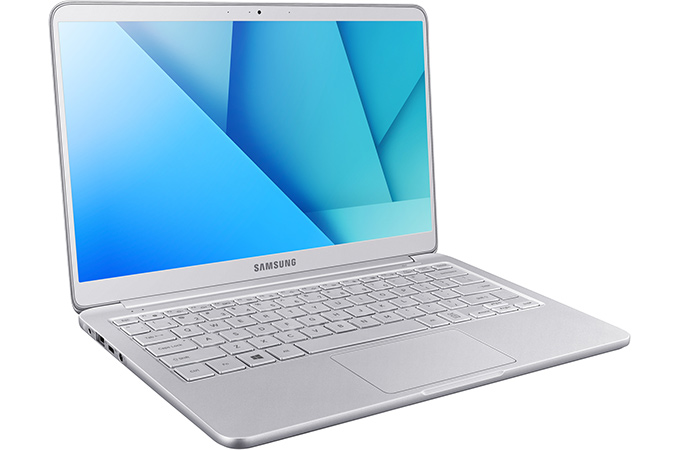
Samsung this week introduced new versions of its Notebook 9 ultra-thin and ultra-light laptops. The new mobile PCs are upgraded with Intel’s new Core i5/i7 Kaby Lake processors, new displays as well as a slightly different design that is slightly thicker, but is also slightly lighter. In fact, Samsung claims that its new Notebook 9 13” is the lightest laptop on the market at 816 grams (1.8 lbs), although some would claim that the 13.3-inch Lavie-Z holds that title starting at 720 grams (1.72 lbs). Samsung positions its Notebook 9 machines for business travelers who have rather special requirements and who are willing to make certain tradeoffs. Apart from the new Intel Core i5/i7 processors featuring the Kaby Lake microarchitecture, the key improvement of the Notebook 9 are their new display panels with FHD resolution and a maximum brightness of 500 nits (their typical brightness is 350 nits), which is especially useful for those working outdoors. Quite naturally, at 500 nits the screens consume a lot of power, but the Notebook 9 laptops come batteries that have 30 Wh capacity, which is lower when compared to thin and light systems from Apple (41.4 Wh), Dell (60 Wh) and HP (38.4 Wh), but which helps to reduce weight (at the end of the day, not a lot of people have to work under direct sunlight). Samsung claims that the Notebook 7 can last seven hours on one charge, enough for office workers and even long-haul flights. As an added bonus, the Notebook 9’s monitors can display videos with HDR enhancements (the manufacturer does not reveal whether we are dealing with HDR10, but that is a likely situation).
The Notebook 9 laptops from Samsung can be equipped with up to 16 GB of dual-channel DDR4 memory, which is a rare option for contemporary ultra-thin laptops, many of which come with 8 GB of DRAM (but this may change in 2017). Meanwhile, when it comes to storage, Notebook 9’s SSDs top at 256 GB, but Samsung integrated a MicroSD card reader and hence road warriors may easily add storage space if needed. Connectivity-wise, Samsung’s Notebook 9 machines offer two USB Type-A, one USB Type-C as well as an HDMI port. For connectivity, a 2×2 802.11ac Wi-Fi + BT 4.1 wireless module is present.
The key selling points of the Samsung Notebook 9 range are their weight and dimensions: the 13” model is 13.9 mm thick, weighs 816 grams, whereas the 15” model is 14.9 mm thick, and weighs 984 grams. The laptops are thicker when compared to HP’s Spectre and Apple’s MacBook, but they are still thinner than Dell’s XPS 13. Moreover, when it comes to weight, the Notebook 9 are considerably lighter than (almost all) laptops in their class.
Samsung did not announce MSRP or ETAs for its new Notebook 9 PCs, but it is logical to assume that the systems are set to arrive early in 2017. As for pricing, it is likely that the market segment that the manufacturer targets with the Notebook 9 family will not change with the arrival of new models, so we are looking at something like $1000+ for 13” models and something that starts at $1200 for 15” models. In the meantime, for a limited period Amazon in the U.S. is selling out the previous-gen Samsung Notebook 9 13” (NP900X3L-K06US) for $749.99 and the Samsung Notebook 9 15” (NP900X5L-K02US) for $849.99. Related Reading: | |||||||||||||||||||||||||||||||||||||||||||||||||||||||||||||||||||||||||||||||||||||||||||||||||||||||||||||||||||||||||||||||||||||||||||||||||||||||||||||
| 11:59a | SK Hynix to Build a New NAND Fab, Upgrade Existing DRAM Fab
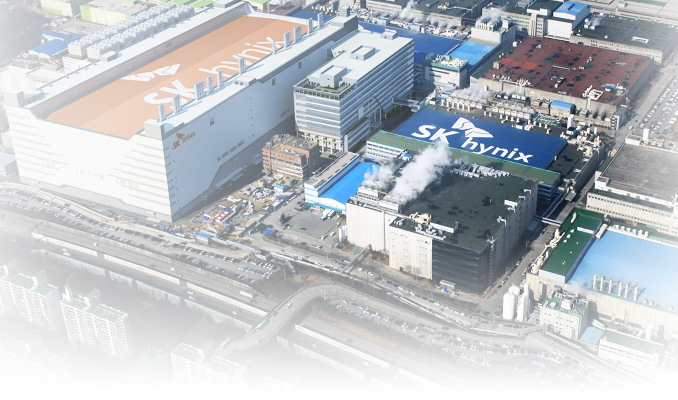
SK Hynix on Thursday announced plans to build a new manufacturing facility to produce NAND flash memory in South Korea, and also upgrade its DRAM production plant in China in a bid to sustain its production capacities. Both projects will initially cost SK Hynix about $2.6 billion (₩3.15 trillion) and are expected to be completed in 2019-2020. Over that time, the company will also invest additional money in the expansion of DRAM and NAND production in South Korea. The new fab will be located in Cheongju, South Korea, not far from the company’s existing M8, M11 and M12 manufacturing facilities. SK Hynix intends to start the design of the new fab in January and begin construction of the shell and the cleanroom space in August. The company hopes to complete the building in June 2019, and by then finalize decisions regarding equipment installation based on market conditions. If everything proceeds as planned, the new fab will process the first wafers already in late 2019 and will make a sizeable contribution to SK Hynix's revenue by late 2020. SK Hynix intends to spend $2.08 billion (₩2.2 trillion) on construction alone (a little lower than the manufacturer spent on the building for its massive flagship M14 plant) and then will have to invest in production tools. SK Hynix does not reveal details about production capacity of the upcoming fab and does not share the area of its cleanroom space. However, judging by the investment in the building itself, the memory producer is set to build another giant manufacturing facility. Today, SK Hynix processes around 300 thousand DRAM wafers (300mm) and 230 thousand NAND flash wafers (also 300mm) at its different fabs every month. A significant portion of SK Hynix's memory is made at its M14 fab, which monthly output (used to make both DRAM and NAND) is getting closer to a target of 200 thousand wafer starts per month, but is not there yet. The new fab will further increase 300-mm production capacities owned by SK Hynix.
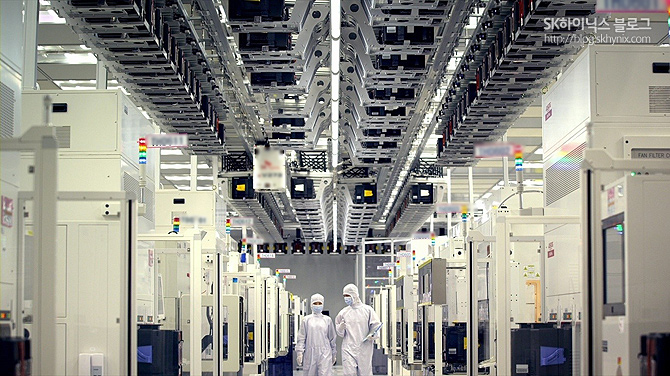
At present, SK Hynix plans to use the new fab to manufacture only 3D NAND flash memory, but once it is ready, the company will use it according to market demands and will be able to produce both NAND and DRAM at the same production facility. However, the flexibility of semiconductor fabs going forward will be more constrained. Traditionally manufacturers used similar step-and-scan lithography systems from companies like ASML or Nikon to produce both DRAM and 2D NAND. While production of the two types of memory has many differences, it was possible to balance a fab’s output depending on market conditions. Meanwhile, the industry (and SK Hynix) is transiting to 3D NAND and its production relies not only on lithography but also (mostly) on deposition and etching. 3D NAND manufacturing requires chemical vapor deposition (CVD) machines and high aspect ratio etch tools in addition to traditional step-and-scan systems. Once installed, CVD and etching equipment take precious cleanroom space and thus fewer scanners can be installed there. As a result, switching a production line from 3D NAND to DRAM and vice-versa gets more complicated since different equipment has to be installed. On the other hand, the upper floor of SK Hynix’s M14 fab is set to be used for 3D NAND production starting from 2017, which means that it is possible to make DRAM and 3D NAND in the same building.
As NAND flash is moving into three-dimensional space, planar DRAM will keep evolving for a long time (nonetheless, architectures like HBM and other types of 3D DRAM are developing as well) and will require new manufacturing technologies. As fabrication processes get thinner, DRAM makers have to increase the use of multi-patterning techniques, which makes production cycles longer and effectively lowers output of fabs. In a bid to maintain its DRAM production capacities (and ultimately preserve its market share), SK Hynix plans to expand cleanroom space of its C2 fab in Wuxi, China, to install additional step-and-scan systems. The upgrade of the plant will cost SK Hynix approximately $790.68 million (₩950 billion). The company will start the work in July next year and plans to complete them in April 2019. The manufacturer does not disclose output of the production facility officially, but analysts from TrendForce believe that it represents roughly half of SK Hynix’s DRAM output and can process up to 130 thousand wafers (300mm) per month. In the recent years, SK Hynix announced major plans to expand its existing semiconductor manufacturing capacities and build new ones. In total, the company intends to spend $38.28 billion (₩46 trillion) on fabs in the mid and long-term future, which is a serious commitment to the semiconductor industry in general. Related Reading: | |||||||||||||||||||||||||||||||||||||||||||||||||||||||||||||||||||||||||||||||||||||||||||||||||||||||||||||||||||||||||||||||||||||||||||||||||||||||||||||
| 2:00p | Plextor to Demo Mainstream M8Se NVMe and 3D NAND-Based SSDs at CES
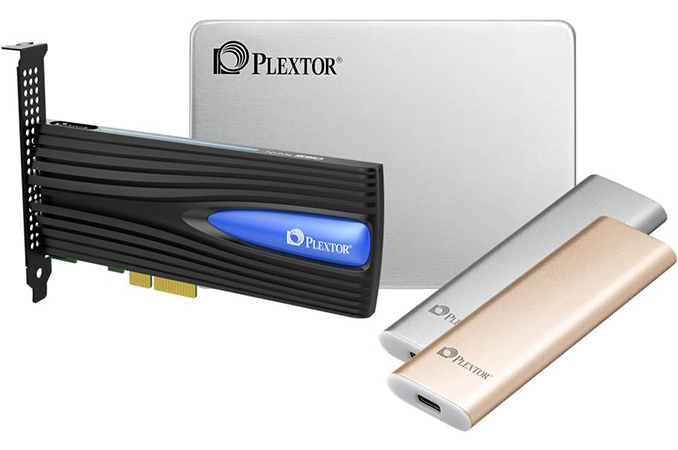
Plextor has announced plans to demonstrate some of its next year’s products at the upcoming CES early next month. In particular, the company will show off the final versions of its M8Se performance mainstream SSDs as well as upcoming drives featuring 3D NAND memory. The biggest intrigue about the new products will not be their specifications, but their availability timeframes. Up until 2014, Lite-On Technology, which produces SSDs under the Plextor brand, offered two lineups of SSDs within each generation - P (performance) and S (standard) - with different performance and positioning. The P-series were no-compromise SSDs featuring the best of what Plextor had to offer, whereas the S-series were aimed to be faster than the vast majority of drives on the market, but still a bit behind the P-series. Starting from the M6 family of drives in 2014/2015 timeframe, the company had to change the nomenclature and expand the number of lineups because it introduced multiple SSDs with various interfaces, memory types and form-factors. In 2016, Plextor released its M8Pe family of expensive SSDs targeting high-end desktops/workstations as well as four lineups of affordable drives targeting relatively inexpensive PCs. The company also demonstrated its M8Se series at Computex, but did not launch it. A good news is that the M8Se will resurface at CES and hopefully will make it to the market shortly afterwards. As Plextor revealed back at Computex, the M8Se SSDs will be based on the same Marvell 88SS1093 controller that powers the M8Pe, which supports NVMe, uses a PCIe 3.0 x4 interface as well as Marvell’s third-generation NANDEdge error correction control and management technology based on LDPC (low-density parity-check code) and other features available on the higher-end drives. The M8Se SSDs demonstrated at Computex used Toshiba’s 15 nm TLC NAND (the M8Pe drives use Toshiba’s MLC NAND) and their declared performance numbers were not significantly behind those of the M8Pe: up to 2.3 GB/s for sequential reads and up to 900 MB/s for sequential writes (we will still refrain from re-publishing specifications demonstrated at Computex simply because the final details may be different).
Plextor’s M8Se drives are going to have a lot in common with Lite-On’s CA1 NVMe SSDs, which are already listed on the company’s website. Plextor’s drives are going to have the brand’s firmware enhancements that aim to ensure long-term high performance, come with blue aluminum heat spreaders in M.2 and AIC form-factors and while they have some other differences with the CA1, their capacity configurations are likely going to be the same: 128 GB, 256 GB, 512 GB and 1 TB. Now, since the CA1 drives are announced and listed, their retail availability is a question of time. As for the ETA for the M8Se, we expect Plextor to announce that at CES. At the end of the day, Plextor needs those drives ASAP to compete against products like Samsung’s 960 EVO and offer something to gamers who cannot afford top-of-the-range models. Another interesting product lineup that Plextor is going to demonstrate at CES will be the company’s first 3D NAND-based SSDs. So far, Plextor has not announced any details about the upcoming products, but said that the drives would provide higher endurance and performance than predecessors, which is a typical way of describing such products. What remains to be seen is whether Plextor plans to use Silicon Motion’s 3D NAND-supporting the SM2258 controller for its first family of 3D NAND drives (the SM2258 is the first turnkey 3D NAND-supporting platform), or intends to pick up something else. Keeping in mind that in the recent years Plextor ceased to exclusively use Marvell’s controllers and Toshiba’s NAND chips as well as some other changes on the market, making predictions about upcoming drives from the company is not a very good business, especially a couple of weeks ahead of the show. Nonetheless, it is noteworthy that Plextor is prepping 3D NAND-based SSDs. Today, the only independent maker of drives shipping products featuring 3D NAND chips is ADATA, which has a tight relationship with Micron. While Plextor yet has to introduce its M8Se and 3D NAND-based drives next month, it still has a number of competitive SSDs in its lineup. We've been informed that users can get a 10% discount with PLEXTORMAS promo code at Newegg for a short while. Related Reading: | |||||||||||||||||||||||||||||||||||||||||||||||||||||||||||||||||||||||||||||||||||||||||||||||||||||||||||||||||||||||||||||||||||||||||||||||||||||||||||||
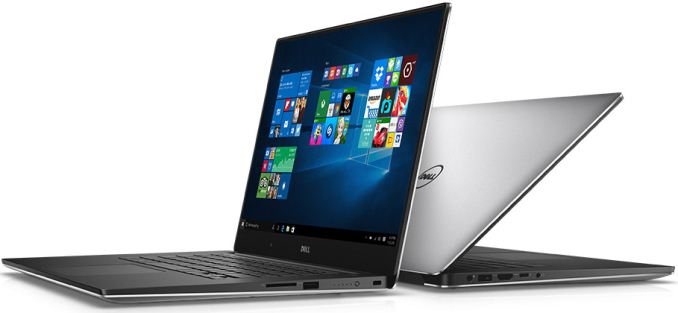
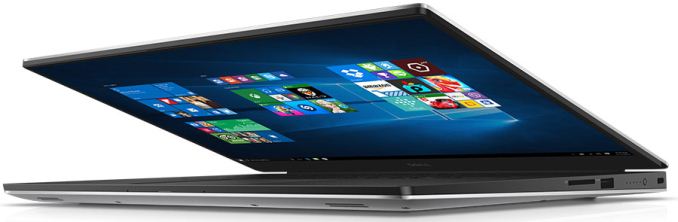
| 4:00p | Dell Readies New XPS 15: 4K, Quad-Core Kaby Lake, GeForce GTX 1050
Dell has accidentally published near-final specifications of its upcoming XPS 15 notebook due to be released early next year. The Dell XPS 15 computers are designed for performance-demanding users seeking near bezel-less laptops with above-average performance at a moderate price with a plenty of upgrade options. The new XPS 15 9560 will receive Intel’s Kaby Lake processor, NVIDIA’s GeForce GTX 1050-series graphics as well as some other optional upgrades not available on current-gen, but will retain the internal architecture and external design. According to the listing (now removed from the website) Dell’s upcoming XPS 15 9560 notebook will use either a dual-core Intel Core i3-7100HQ, a quad-core Core i5-7300HQ or a quad-core Core i7-7700HQ CPU. The aforementioned chips are not yet formally announced, but it is known that they are based on the Kaby Lake microarchitecture and will thus offer improved performance compared to predecessors due to higher frequencies, Speed Shift v2 technology and other refinements. For those who opt for iGPU rather than a discrete model it is important to note that the Kaby Lake CPUs also has an improved video encoding/decoding engine. The next key enhancement of the XPS 15 9560 over the current-generation XPS 9550 will be NVIDIA’s GeForce GTX 1050 GPU with up to 4 GB of GDDR5 memory. NVIDIA has yet has to announce a mobile version of the GeForce GTX 1050, but it is highly likely that the product is based on the GP107 GPU featuring the Pascal architecture and up to 768 stream processors, similar to the desktop version. The new graphics chip should offer a decent performance upgrade when compared to the GeForce GTX 960M used in the current-gen XPS 15. Meanwhile for those planning to play demanding games it makes sense to look at the GeForce GTX 1060 or 1070, which means the Alienware 15.
Since the new Dell XPS 15 9560 will retain the chassis of its predecessor, it will support similar InfinityEdge 15.6” display panels: an IPS FHD (1920×1080) or an IGZO UHD (3840×2160) with 100% AdobeRGB color gamut and touch support. Physical dimensions of the unit also remain intact with the predecessor: it weighs around 1.8 kilograms and is up to 17 mm thick. For storage, the new Dell XPS 15 will use either Seagate’s SSHDs or PCIe SSDs with up to 1 TB capacity. Meanwhile, due to improvements of Kaby Lake’s memory controller, the new laptops should be compatible with DDR4-2400 memory, offering an additional performance boost over DDR4-2133 used today. As for connectivity, the XPS 9550 uses Rivet Networks' Killer 1535 802.11 2×2 Wi-Fi + BT 4.1 controller, has one Thunderbolt 3/USB 3.1 Type-C port, two USB 2.0 headers, an HDMI output, a 720p webcam and an SD card reader, which essentially means that there is nothing for the XPS 9560 to upgrade here (at least, not without a major redesign of the whole PC). However, since the XPS machines are often used like workstations, Dell decided to add a fingerprint reader with Windows Hello support as an option.
Since Dell has already taken down the XPS 9560 product page (technically, it is there, but without any data), so prices and exact final configurations / availability dates remain under wraps. Still, being a close partner of Intel and NVIDIA, Dell is typically among one of the first to release PCs based on the new CPUs/GPUs. Therefore we expect the new systems to arrive shortly after CES in the usual XPS 15 price range that starts at $999 and ends at ~$2500 for high-end models. Related Reading: Sources: PCMag, WindowsCentral.
| |||||||||||||||||||||||||||||||||||||||||||||||||||||||||||||||||||||||||||||||||||||||||||||||||||||||||||||||||||||||||||||||||||||||||||||||||||||||||||||






| << Previous Day |
2016/12/23 [Calendar] |
Next Day >> |