[Most Recent Entries] [Calendar View]
Friday, December 30th, 2016
- The Khronos Group Announces New Standards Collaboration for VR Integration
- Oculus Touch Controllers Shipping In December for $199
- IFA 2016: Qualcomm Announces VR820 Reference Platform, QCA9379
- HTC Vive Launch Day News & First Impressions
- Oculus Rift Launch Day News: New AMD & NVIDIA Drivers; Async Timewarp & Platform Restrictions Added To SDK
- ZOTAC Launches GeForce GTX 1070 Mini for Mini-ITX PCs
- GIGABYTE Announces GeForce GTX 1070 Mini ITX OC
- Lian Li PC-Q37 Announced: Two-Stage Mini-ITX Chassis with Tempered Glass
- The NZXT Manta mITX Case Review
- The Fractal Design Node 202 Case Review: Mini-ITX Gaming For the Living Room
- Corsair's Bulldog PC Barebone for the Living Room is now Available: $299/$399
- The ASUS Maximus VIII Impact Z170 ROG Mini-ITX Motherboard Review
- Zotac ZBOX MAGNUS EN1080 SFF PC Review: A Premium Gaming Powerhouse
- GIGABYTE Updates The Aero 14 Thin Gaming Laptop: Now with a GeForce GTX 1060 GPU
- Calyos NSG Cube: Passively Cooled SFF PC with Intel Core and GeForce GTX 1060
- ZOTAC ZBOX MAGNUS ERX480: SFF PC with Intel Core i5, AMD Radeon RX480, USB-C
| Time | Event | ||||||||||||||||||||||||||||||||||||||||||||||||||||||||||||||||||||||||||||||||||||||||||||||||||||||||||||||||||||||
| 8:45a | Sharkoon Launches Rapid-Case USB 3.1 Type-C Storage Device DIY Kit
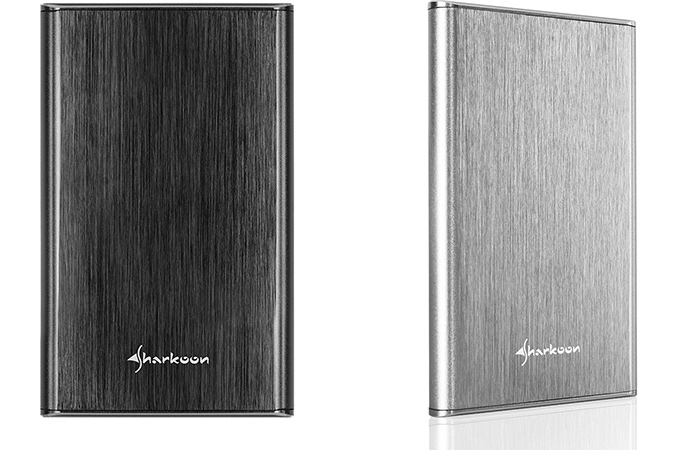
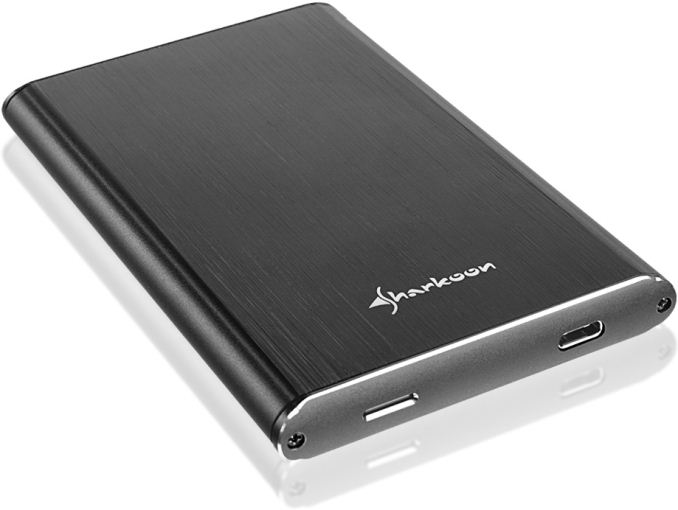
Sharkoon has introduced a DIY kit that lets users build their own external storage devices with the USB 3.1 Type-C interface. The kit is not expensive and resembles similar devices from other makers: it contains an enclosure for a drive as well as a USB 3.1 Type-C cable. The key element here is Type-C, although as with many devices of a similar nature, the 10 Gbps is limited by the chipset to 8 Gbps, and then further by the SATA protocol. The Sharkoon Rapid-Case 2.5” USB 3.1 Type-C is a sleek enclosure (132×80×14 mm) made of black or silver brushed aluminum that can house a 2.5”/9.5 mm storage device and has a USB 3.1 Type-C header. The chassis weighs 83 grams and when populated with an HDD, its weight will increase to something like 170 ~ 230 grams depending on the drive used. The only thing that owners need to do to use the device is to install an appropriate pre-formatted HDD or SSD inside. The chassis contains ASMedia’s ASM1142 PCIe-to-USB 3.1 Gen 2 bridge as well as ASMedia’s ASM1351 USB-to-SATA bridge. The ASM1142 is a PCIe 3.0 x1 chip supporting a maximum bandwidth of up to 8 Gbps, which is below 10 Gbps specified by the USB 3.1 Gen 2 standard, but since this chip is used on loads of USB 3.1 Gen 2-supporting motherboards, this is not really a limitation for the Sharkoon Rapid-Case. Meanwhile, the USB-to-SATA bridge not only downs physical bandwidth to 6 Gbps, but it further reduces it by the overhead introduced by SATAS’s 8b/10b encoding. In the end, even if the Sharkoon Rapid-Case is populated by a high-end SSD, performance of the latter will be limited by SATA, not USB 3.1 Gen 2. In fact, this is the case with a lot of USB 3.1 Type-C storage devices: while they formally support 10 Gbps data rate, they use SATA drives inside with a maximum throughput of 6 Gbps (which is still higher than what you get from USB 3.0-supporting devices at 5 Gbps).
Despite the fact that right now not a lot of external storage devices (factory-made or DIY) can take advantage of USB 3.1 Gen 2’s 10 Gbps data rate, it is important that such devices make it to the market in general. Nowadays many new PCs feature USB Type-C ports and it is important to build up an ecosystem of devices with this interface. Furthermore, if you need a lot of storage space, you are going to use a 2.5" HDD that has a maximum media to host transfer rate of less than ~200 MB/s and thus not requiring even 5 Gbps of USB 3.0. The Sharkoon Rapid-Case 2.5" USB 3.1 Type-C is available from select retailers in Europe for the suggested retail price of €24.99.
Related Reading: | ||||||||||||||||||||||||||||||||||||||||||||||||||||||||||||||||||||||||||||||||||||||||||||||||||||||||||||||||||||||
| 10:30a | PNY Launches CS2030 SSDs: Phison PS5007-E7, MLC NAND, 2.8 GB/s
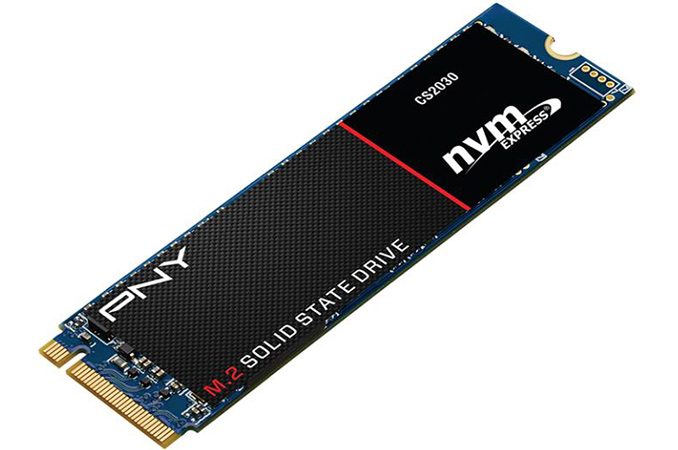
PNY has introduced its new CS2030 lineup of higher-end SSDs designed for desktops and laptops with M.2-2280 slots. The new drives are based on Phison’s PS5007-E7 controller for PCIe 3.0 x4 SSDs as well as Toshiba’s MLC NAND memory made using 15 nm process technology. The PNY CS2030 are already available in 240 GB and 480 GB configurations. Like many other companies, PNY does not develop SSDs from the ground up, but uses Phison’s turnkey platforms featuring Toshiba’s NAND flash memory to build its drives, which is why it is not surprising that the PNY CS2030 has a lot in common with other products powered by the PS5007-E7 controller in terms of capabilities (NVMe L1.2 power saving mode, 120-bit/2KB BCH code, end-to-end data path protection, advanced global wear-leveling, etc.). Meanwhile, this does not mean that PNY cannot differentiate from the others by tweaking firmware (or just buying an appropriate firmware from Phison). Apparently, the company opted to lower sequential reads and writes compared to some of the direct rivals (2800 MB/s vs 3000 MB/s, 1550 MB/s vs 2400 MB/s) in a bid to improve random write performance of the PNY CS2030 (up to a rated 300K IOPS).
PNY’s CS2030 family currently consists of 240 GB and 480 GB drives because such capacities are the most popular among customers today. Nonetheless, the company has demonstrated pictures of boxes for 120 GB versions of the CS2030 SSDs, which may indicate that the company is either finalizing the specs of the drives, or plans to sell them exclusively to OEM customers (and/or in certain regions only). As for performance, the PNY CS2030 480 GB has rated sequential read speed of up to 2800 MB/s and sequential write performance of up to 1500 MB/s. The same model of the drive can perform up to 300K random read IOPS (input/output operations per second) as well as 270K random write IOPS. Meanwhile the 240 GB version is rated slightly slower than the top-of-the-range model (see the table for details).
At present, PNY sells its CS2030 in 240 GB and 480 GB configurations for $179.99 and $329.99, respectively, which is in line with prices of some other Phison E7-based SSDs. All PNY’s SSDs come with a three-year warranty. Related Reading: | ||||||||||||||||||||||||||||||||||||||||||||||||||||||||||||||||||||||||||||||||||||||||||||||||||||||||||||||||||||||
| 11:45a | Thermaltake Adds RGB Lighting to Toughpower Grand Gold PSUs
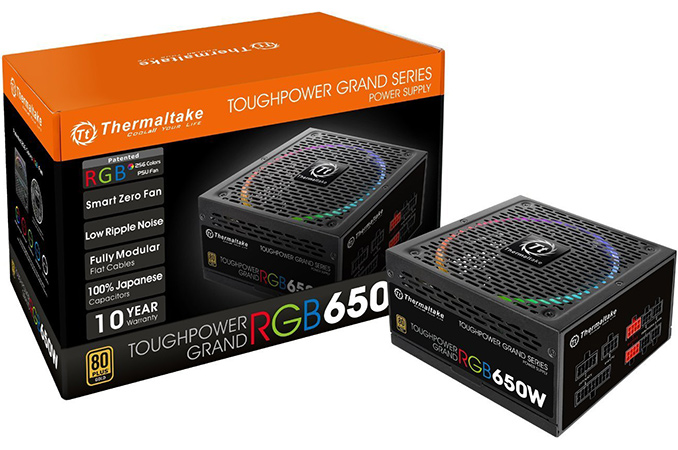
Thermaltake has introduced a new lineup of high-end PSUs featuring RGB lighting. The new Toughpower Grand RGB Gold power supplies are equipped with 256 colors 'Riing' RGB fan, featuring five lighting modes as well as all the regular attributes of advanced PSUs, including a modular design, flat black cables, a "smart" fan, as well as a 10-year warranty. The Thermaltake Toughpower Grand RGB Gold lineup of PSUs are compliant with the ATX 12V v2.4 and EPS v2.92 specifications, carry the 80 Plus Gold spec badge and are designed for full-size desktops/workstations (in fact, the 850 W model even has two 4+4 CPU power connectors and thus can handle dual-socket systems). Like other high-end PSUs, the Toughpower Grand RGB Gold power supplies feature a modular design, Rubycon capacitors (rated for 105°C/221°F), a high amperage single +12V rail design (see the table for details) as well as a 140 mm fan that can shut itself down completely when the load is below 20% (it is possible to keep the fan on at all other times). Thermaltake also indicated that the PSUs feature a very strict voltage regulation circuitry (set for no more than a ±2% variation) with a very low 30 mV ripple noise.
One of the key selling points of the Toughpower Grand RGB Gold is its Riing 14 RGB fan with a hydraulic bearing as well as multiple LEDs that can work in five modes: 256-color RGB cycle, solid red, solid green, solid blue or solid white. The modes can be set using a single button and then the PSU will remember them even after a shutdown.
As for connectivity, the Thermaltake Toughpower Grand RGB Gold PSUs come with four or six 6+2-pin PCIe power plugs for graphics cards (so, the 850 W model can handle three AMD Radeon R9 Fury graphics cards or two highly-custom EVGA Kingpin GPUs that need three power connectors), 9 or 12 SATA power connectors, Molex connectors and 4-pin plugs for floppy drives and other peripherals such as fan controllers. All cables are flat and black.
The Thermaltake Toughpower Grand RGB Gold series PSUs are already available from multiple retailers, including Amazon. The top-of-the-range model costs $119, whereas the 650 W and 750 W PSUs cost $89 and $99, respectively. Apart from the Toughpower Grand RGB Gold lineup, Thermaltake is also working on more affordable Smart Pro RGB Bronze PSUs, which are expected to hit the market in 2017. The Smart Pro RGB Bronze PSUs will feature the same RGB fan as the Toughpower Grand RGB, modular design and premium components, but the Bronze rating and a seven-year warranty. Related Reading: | ||||||||||||||||||||||||||||||||||||||||||||||||||||||||||||||||||||||||||||||||||||||||||||||||||||||||||||||||||||||
| 1:45p | Oculus VR Acquires The Eye Tribe, Developer of Eye Tracking Technologies
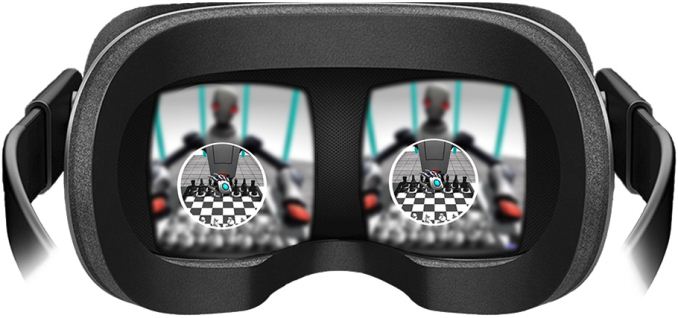
It has been announced that Oculus VR as bought The Eye Tribe, a company known for its eye tracking hardware and software technologies, earlier in December. Facebook’s VR division does not say how it plans to use the acquired company, but the two primary reasons for the takeover could be The Eye Tribe’s gaze tracking IP along with the company’s experience with foveated rendering. Theoretically, the buyout may indicate that foveated rendering could become an important feature of the upcoming VR platforms. The Eye Tribe was established in 2011 with the aim to develop software and hardware technologies for eye tracking. By 2013, the company introduced its eye-tracking device for PCs and tablets that cost only $99 along with an SDK to develop software for the product. The company actually started shipping the units to developers in 2014, but the devices have never been integrated into actual tablets or computers shipped to end-users. Eventually, the company designed eye tracking technologies for smartphones and earlier this year demonstrated an eye tracking tech for VR headsets. Eye tracking itself could enable a more intuitive control for virtual reality interactions when combined with gestures, voice and other methods. However, this might not be the only reason why Oculus VR was interested in The Eye Tribe. Usage of gaze tracking also enables developers to use foveated rendering, which allows optimizing the use of GPU horsepower. The method is relatively simple on paper: each scene is rendered first in low resolution and with the least amount of polygons and then the specific part of the screen where the user is currently looking at is rendered in high resolution. Developers may play with such effects like depth of field, blur and antialiasing to further optimize performance and/or improve quality, but all of those tricks require gaze tracking.
The foveated rendering technique is already supported in Unity3D engine and is enabled by the Tobii EyeX tracking device. According to the developers, usage of the tech helped to improve performance of a laptop from 11 FPS to 42 FPS. Microsoft and NVIDIA are also researching foveated rendering and the latter has even come up with new ideas on the matter. The company says that foveated rendering per se is not a panacea for VR (at the end of the day, you can improve performance of any platform by using foveated rendering with gaze tracking) because rendering in lower resolution for peripheral vision results in flickering if the foveation is too aggressive, meanwhile blur itself reduces contrast and introduces a sense of tunnel vision. NVIDIA has a number of suggestions how to minimize negative effects of foveated rendering (e.g., by introducing contrast preservation), but currently this is a research project. For VR applications, foveated rendering makes sense, especially if we are dealing with a headset based on a smartphone that has a limited amount of GPU horsepower. To enable it, Oculus VR needed gaze tracking IP and a team that understands how things work here. This does not mean that foveated rendering will be a part of Oculus VR’s next-gen VR headset because its current form requires some additional work. However, with eye tracking IP and appropriate team, Oculus VR could implement the technology in the future. Related Reading: | ||||||||||||||||||||||||||||||||||||||||||||||||||||||||||||||||||||||||||||||||||||||||||||||||||||||||||||||||||||||
| 3:00p | ZOTAC Announces GeForce GTX 1080 for Mini-ITX PCs
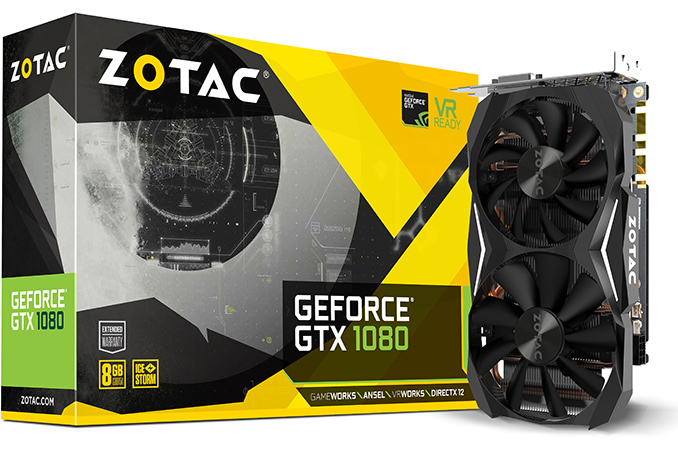
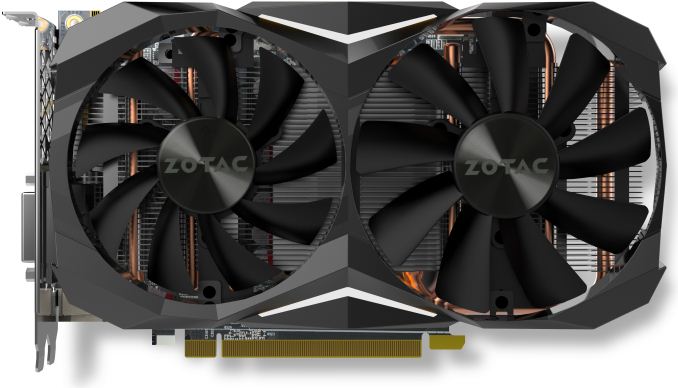
ZOTAC has introduced its GeForce GTX 1080 Mini, the industry’s first video card for Mini-ITX systems running the GP104 GPU in its full configuration. The new graphics adapter will be compatible with miniature computers with proper cooling and will be the most powerful card for SFF PCs until something better emerges. The ZOTAC GeForce GTX 1080 Mini (ZT-P10800H-10P) offers the same performance and connectivity as its larger brethren: it is based on the fully-fledged GP104 graphics processor (with 2560 stream processors, 160 texture units and 64 raster operations pipes) that works at 1620/1759 MHz (base/boost) frequencies and is equipped with 8 GB of GDDR5X memory featuring 10 Gbps and 320 GB/s of bandwidth. In fact, the GPU frequencies of ZOTAC’s GeForce GTX 1080 Mini are slightly higher when compared to those of NVIDIA’s reference cards which is worth mentioning. The board alo features three DisplayPort 1.4 connectors, an HDMI 2.0b port as well as one dual-link DVI header, which is exactly what NVIDIA’s reference cards carry.
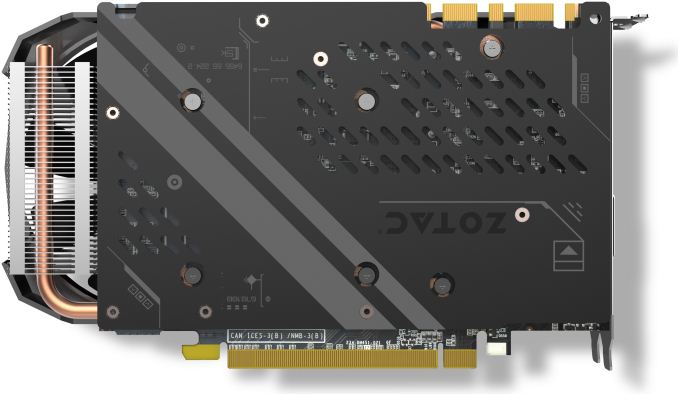
To squeeze a GeForce GTX 1080 GPU into Mini-ITX form-factor, ZOTAC had to develop a brand-new PCB with compatible with GDDR5X memory (so, the PCB is different from ZOTAC’s GeForce GTX 1070 Mini launched earlier this year). It is unknown whether the manufacturer decided to go with NVIDIA’s 5+1-phase VRM for the GTX 1080, or altered the VRM design somehow, but the card has one 8-pin PCIe power plug as well as two SLI-HB connectors, just like other boards in its class.
Since the GeForce GTX 1080 consumes up to 180 W of power, ZOTAC also had to design a relatively small cooling system for the ZT-P10800H-10P board. The company came up with a cooler that uses an aluminum radiator with at least three thick (and long) copper heatpipes as well as two fans. In addition, the GeForce GTX 1080 Mini card has a backplate, which has positive and sometimes negative effects. The cooling system seems to be a little longer than the one used on the ZOTAC GeForce GTX 1070 Mini, but the whole graphics adapter is barely longer than 17 cm (6.7”) specified by the Mini-ITX spec. In any case, the majority of builds designed for gamers have a few cm of extra space inside and the length is not going to become a problem.
ZOTAC plans to display its GeForce GTX 1080 Mini at CES and start its sales in 2017. The company did not announce exact pricing and ETA, but since this is a unique custom-designed product, it will likely be priced higher than NVIDIA’s reference designs. Related Reading: | ||||||||||||||||||||||||||||||||||||||||||||||||||||||||||||||||||||||||||||||||||||||||||||||||||||||||||||||||||||||
| 3:30p | MSI Cubi 2 Kaby Lake UCFF PC Review The Kaby Lake-U (KBL-U) series with 15W TDP CPUs was introduced along with the 4.5W Kaby Lake-Y ones in Q3 2016. The first set of products with Kaby Lake-U were ultrabooks. However, ultra-compact form-factor (UCFF) PCs were not long behind. There are already three vendors in the market with Kaby Lake UCFF PCs - ASRock (Beebox-S), GIGABYTE (BRIX), and MSI (Cubi 2). MSI was the first to launch KBL-U UCFF PCs in the North American market. Read on for our evaluation of the Cubi2-005B and how it compares against UCFF PCs from the last couple of generations. | ||||||||||||||||||||||||||||||||||||||||||||||||||||||||||||||||||||||||||||||||||||||||||||||||||||||||||||||||||||||
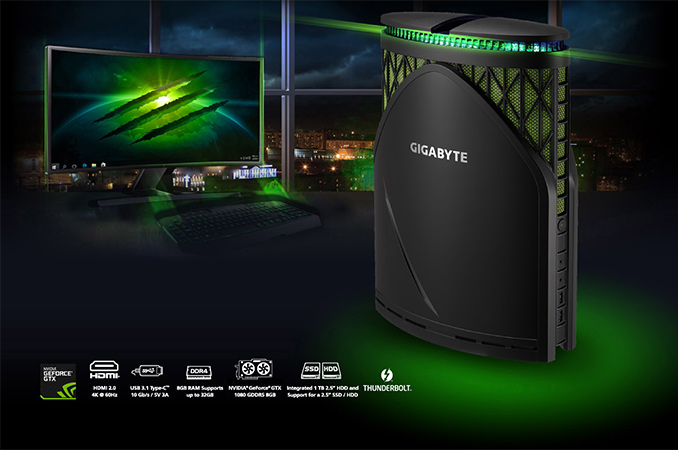
| 4:00p | GIGABYTE's New Console: The 'Gaming GT' PC Launched with Core i7-K, GTX1080, TB3
GIGABYTE has quietly announced its new small form-factor computer designed for performance-minded gamers. The new SFF PC not only packs high-performance components, such as the latest-generation CPU and GPU, but it uses desktop-class components and could be upgradeable. High-performance PCs in small form-factor are not rare nowadays: various PC makers use mobile CPUs and GPUs to build such systems. Such computers demonstrate high-performance out-of-the-box, but their upgrade strategy is tricky because it is not easy to get MXM GPUs or mobile CPUs in retail. When developing the GIGABYTE Gaming GT desktop (GB-GZ1DTi7-1080-OK-GW and technically this PC belongs to the Brix family), engineers from GIGABYTE wanted to create a product that could use widely available processors and graphics cards and thus potentially offer an upgrade path to the owners.
The GIGABYTE Gaming GT desktop is not really a miniature system: it measures 276×384×128 mm and is approximately 10 liters in volume, which makes it just larger than Sony’s first-generation PlayStation 3. The PC is based on a custom motherboard (210×205 mm) that is a bit larger than Mini-ITX, but is still smaller when compared to microATX or FlexATX. The system uses a dual-chamber design (CPU, DRAM, SSD are located on one side of the PC, graphics card and other 2.5” storage devices are on the other side), but the chambers are not isolated completely because they use the same airflows generated by two system fans (we do not know how large they are, but theoretically they may be of 90 mm in diameter). It is noteworthy that the PC has an automated exhaust system that opens up exhaust flippers at the top of the computer when it needs to cool down the components.
The chassis can accommodate any double wide graphics card with a maximum size of 280 mm in length and 41 mm in depth, but nothing too custom with regards heatpipes and backplates because the space is constrained. GIGABYTE will ship the Gaming GT desktop with its own GeForce GTX 1080 G1 Gaming 8 GB card, but they say the key thing is that it can be updated later. Since the card faces downwards, it has to use custom cables (bundled) to connect to displays. Audio and Ethernet cables also have to be angled, but at least it is not a big problem to find such cables in retail. On the bright side of things, the Gaming GT desktop uses a 400 W FlexATX PSU, which could be upgraded if needed.
The custom motherboard of the GIGABYTE Gaming GT PC is based on the Intel Z170 PCH and thus supports all LGA1151 processors, including the upcoming Kaby Lake chips. The manufacturer will ship the system with the Intel Core i7-6700K CPU (so, overlocking seems to be possible, but keep in mind temperatures and noise), but eventually the chip might be switched to something more powerful.
Finally, to give its Gaming GT system a distinctive look, GIGABYTE installed a series of RGB LEDs on top of it. The LEDs can work in different modes and can be controlled using the company’s Ambient LED application. Pricing and availability dates for the GIGABYTE Gaming GT SFF PCs were not available at press time. Keep in mind that actual configuration of the PC will differ based on the regions, which means that their prices will vary as well. Chances are we'll see it at CES next week. Related Reading:
| ||||||||||||||||||||||||||||||||||||||||||||||||||||||||||||||||||||||||||||||||||||||||||||||||||||||||||||||||||||||











| << Previous Day |
2016/12/30 [Calendar] |
Next Day >> |