[Most Recent Entries] [Calendar View]
Thursday, January 5th, 2017
| Time | Event | ||||||||||||||||||||||||||||||||||||||||||||||||||||||||||||||||||||||||||||||||
| 6:00a | Coolpad Announces Conjr: Affordable 5-inch Smartphone
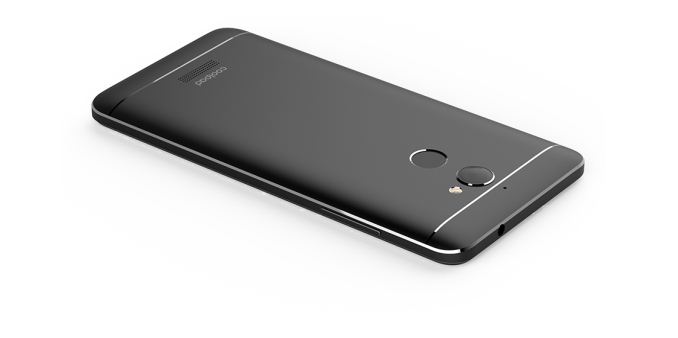
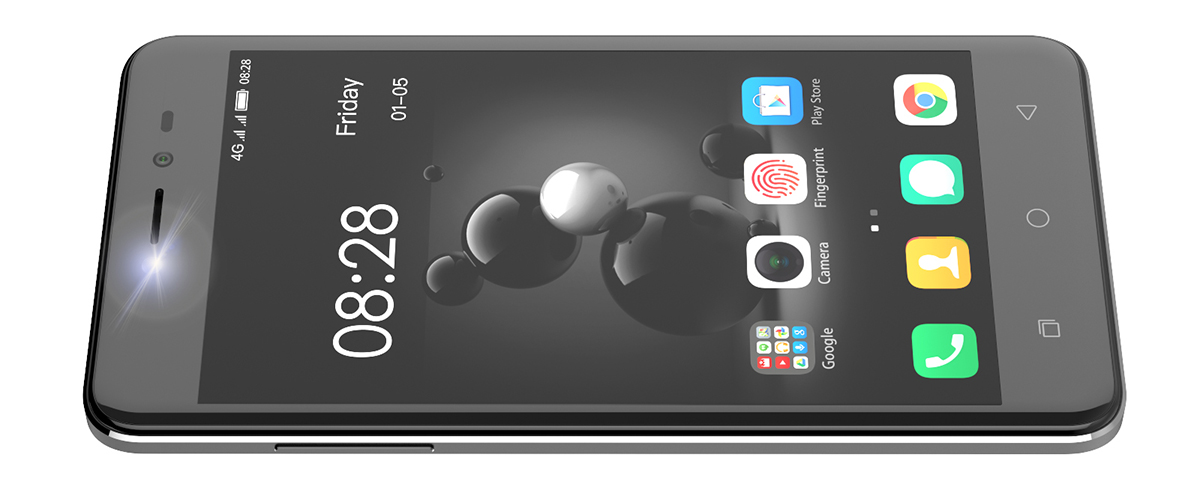
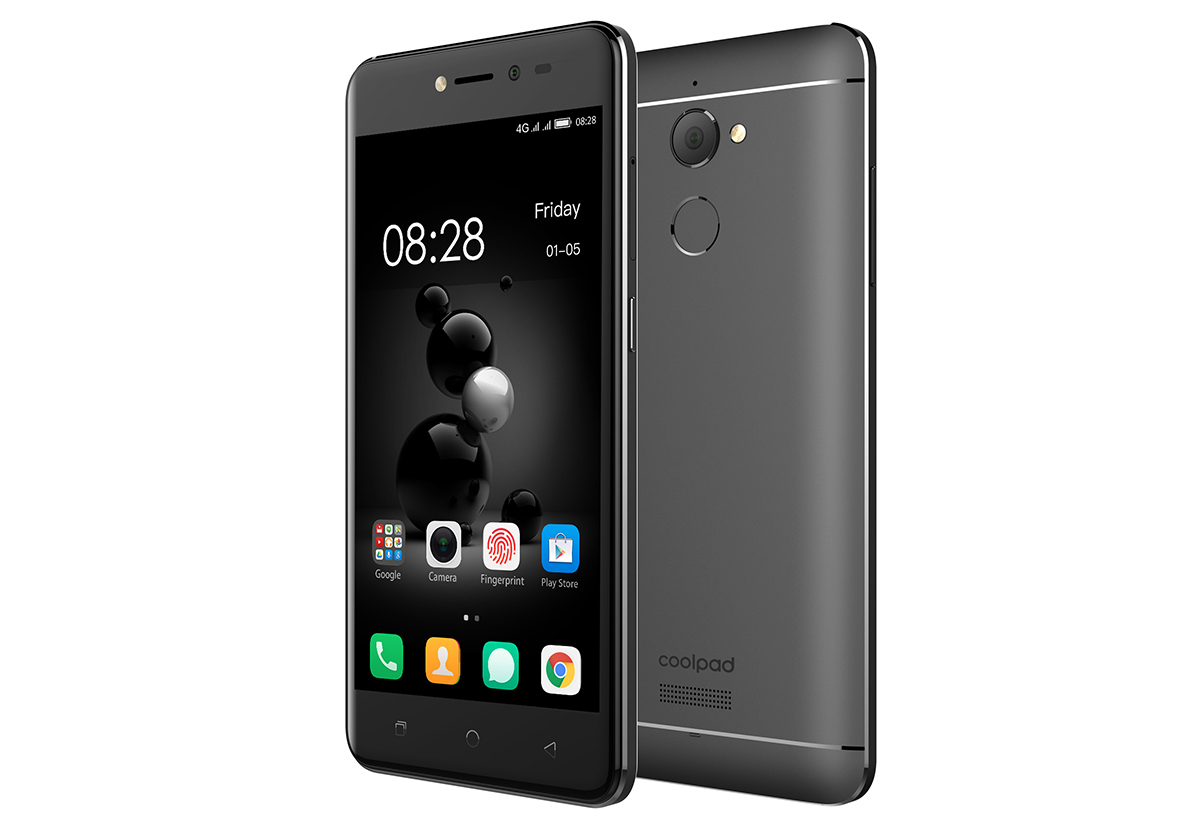
Today at CES 2017, Coolpad announced a new low-cost smartphone. The Conjr has a 5-inch 720p IPS LCD display and an aluminum unibody construction. A capacitive fingerprint scanner is located on the back along with a mono speaker that looks like it could be muffled when sitting on a table. The front is covered edge to edge with glass. It has capacitive navigation buttons below the 5-inch screen, which helps free up some screen space for content. There’s a notification light in the upper bezel, along with an 8MP selfie camera with a dedicated LED flash, an interesting feature at this price point.
A single-piece volume rocker is located near the top on the left edge, slightly offset from the power button that sits near the midpoint on the right edge. There’s a 3.5mm headphone jack on the top and a microUSB 2.0 port on the bottom.
Inside is a MediaTek MT6735CP SoC. With only four Cortex-A53 cores running at a lowly 1GHz, the Conjr will not be a top performer, even compared to other low-cost phones. The Mali-T720MP2 GPU is not well suited for 3D gaming either, but should be enough for simple 2D games. It does have 3GB of LPDDR3 memory, which should help with multitasking, but internal storage is only 16GB. Thankfully, the Conjr does have a microSD slot for storage expansion.
The integrated MediaTek Category 4 LTE modem will work on US GSM carriers, including AT&T and T-Mobile but not Sprint, Verizon, or US Cellular.. Coolpad did not announce exact pricing or availability, but did say the Conjr, which comes in either gold or gray colors, will cost less than $200 USD. | ||||||||||||||||||||||||||||||||||||||||||||||||||||||||||||||||||||||||||||||||
| 9:00a | Razer Reveals Their Triple Monitor Gaming Laptop Concept: Project Valerie
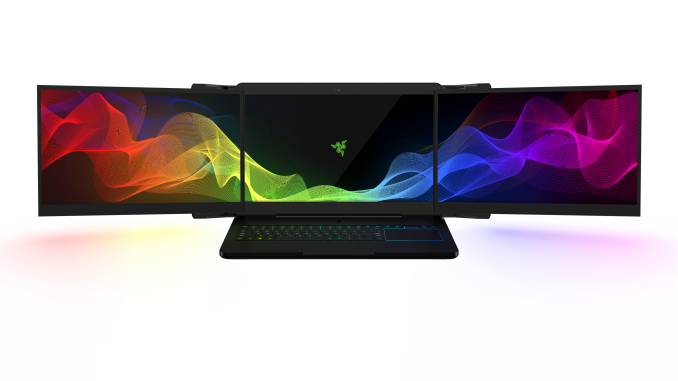
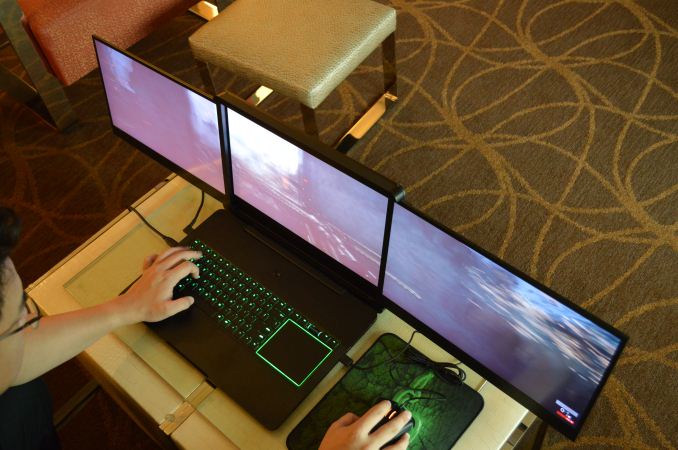
What do you do after you’ve launched one of the thinnest and lightest gaming laptops featuring the new NVIDIA GTX 1080 GPU? Razer found itself in this situation after announcing the long anticipated update to their large gaming laptop last year, with the launch of the Razer Blade Pro. At 7.8 lbs and 0.88 inches thick, it’s one of the most interesting gaming laptops announced last year, and our full review is coming soon. Meanwhile, Razer decided to take their Razer Blade Pro, and add two more displays to it. Today Razer is announcing Project Valerie, which is the world’s first portable laptop with three built-in displays. To do this, they didn’t make the main display smaller either. All three displays are 17.3-inch UHD (3840x2160) IGZO panels with 100% Adobe RGB coverage. I’ll leave the discussion on why 100% Adobe RGB isn’t a great experience for another day, but with the three displays, you get a 11,520 x 2160 resolution experience with Project Valerie. Since this is going to be a struggle to drive even with the best GPU, all three displays also support G-SYNC. The displays themselves have a motorized hinge to put them into position, and they slide back and slide under the main panel when stowed. It’s an interesting feat of engineering.
Just to be clear, this is currently just a prototype, but yesterday at CES Ryan Smith was able to visit Razer and check out this project. Razer has a couple of prototypes - ranging from proof-of-concept designs to the final industrial design - and not all of them have the movable displays, but they were functioning prototypes. One of the proof-of-concept prototypes was even playing Battlefield 1 in a full 180° NVIDIA Surround View gaming setup.
Razer is building this system as a mobile workhorse, and by starting with the Razer Blade Pro, they already have a thin and light system for the amount of compute available. Final specifications are not complete yet for the dimensions and weight, but Project Valerie with its triple monitors will be in the same aluminum CNC chassis format as the other Razer laptops, with a thickness of just 1.5-inches, and a final weight between 10 and 12 pounds, which is really not much different than many other 17.3-inch gaming notebooks. This would be excellent for an office user, where the extra display real estate would make multitasking much easier, and any of us who leverage multiple monitors regularly, like I do, can see this being an amazingly portable office machine too. One of the things I hate most about using a laptop on the road is that it only has a single display, making it difficult to get work done. Often I have to resort to crazy things like bringing multiple devices on a road trip for proper workflow, as seen below.
The basis of Project Valerie is the Razer Blade Pro, with a quad-core i7 mobile CPU, NVIDIA GTX 1080, and plenty of RAM, at least for the prototypes, and this may change later. For outright gaming, the single GTX 1080 is going to struggle with this kind of resolution of course, but if and when this comes to production we’ll see what Razer can do about that. It also features the ultra-low-profile mechanical keyboard from the Pro, with per-key RGB backlighting and Chroma support.
Although this is just a concept, it’s a very interesting concept, and if properly executed it could be a very exciting machine. For the time being, it is being shown at CES as a working prototype, which means it’s possible it may be put into production. Time will tell. Gallery: Razer Project Valerie
      Source: Razer | ||||||||||||||||||||||||||||||||||||||||||||||||||||||||||||||||||||||||||||||||
| 9:00a | Razer Announces Project Ariana: Chroma Lighting Comes To The Room, And To Third Parties
Razer’s Chroma branding has signified a rich, multi-colored lighting ability for many of Razer’s products, whether they be mice, headphones, laptops, keyboards, and more. Chroma offers the user to configure the color scheme with up to 16.8 million colors, in a variety of zones, or even per-key lighting schemes, all controlled through the Razer Synapse software. With the addition of Chroma supported apps and games, lighting can be controlled from within the program as well, so, for instance, if you are running low on ammo, your keyboard can flash to let you know.
Chroma has been one of Razer’s strongest assets in its accessory lineup, and last year they even brought their per-key RGB backlighting to the Razer Blade Stealth Ultrabook, then later to their Razer Blade, and now the Razer Blade Pro. At the time, the Stealth was the first notebook to offer per-key RGB backlighting, and in practice it’s much nicer to use than something with zoned lighting.
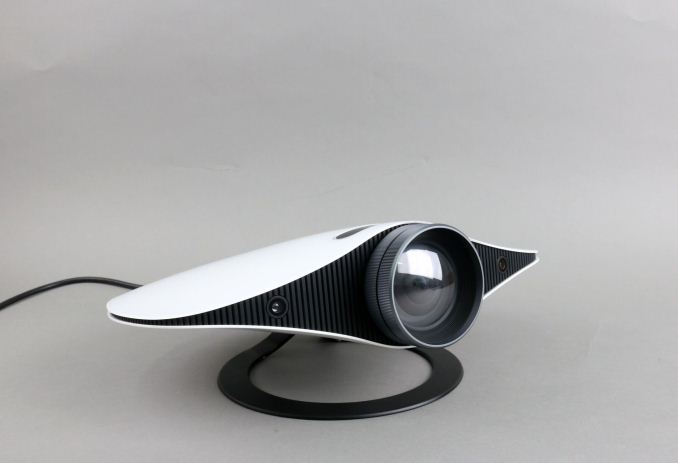
At CES 2017, Razer is announcing that they are now bringing Chroma lighting to the entire room, with Project Ariana. This is a concept project at the moment, but the idea is pretty interesting, and it can possibly bring even more immersion to the gamer. At the center of Project Ariana is a high-definition video projector, which features an ultra-wide fish eye lens for maximum room coverage. It features a pair of 3D depth sensing cameras in order to calibrate itself to the room it is in, to provide the best projection for any room.
When in the game, the projector can be used to augment the room lighting to bring a deeper experience, and you can imagine lightning or gunfire flashes around the room bringing a whole new complexity to the involvement of the gamer. As a video projector, it can also be used for exact that as well. It’s certainly an interesting concept, but likely needs to be seen to be experienced fully, and Razer will be demoing Project Ariana this week at CES, so we hope to get some hands-on time with it.
In addition to the expansion of Chroma to the room, Razer is also expanding Chroma support to third parties. Razer has sold over five million Chroma devices, and they have worked with developers to add Chroma app support to top games like Overwatch, and more, so it makes a lot of sense for them to bring other device manufacturers on-board. With one larger ecosystem, they would hope to get even more developer support, and from the third-party point of view, they will have a turn-key solution without having to develop an entirely new one – at a licensing cost of course. Razer has announced they have several hardware partners already lined up to support Chroma on their own products, including Lenovo, NZXT, Antec, Lian Li, Wicked Lasers, and Nanoleaf. Several of these companies have already worked with Razer in the past on devices, so this extension of cooperation isn’t too surprising. Project Ariana is currently in the prototype phase, so it will be a little while before Razer is ready for production, and therefore pricing is a long time away yet, but this seems like a natural extension to the Chroma ecosystem they’ve already created, and could bring a lot of “wow” factor to a gaming room. Source: Razer | ||||||||||||||||||||||||||||||||||||||||||||||||||||||||||||||||||||||||||||||||
| 10:00a | HDMI 2.1 Announced: Supports 8Kp60, Dynamic HDR, New Color Spaces, New 48G Cable
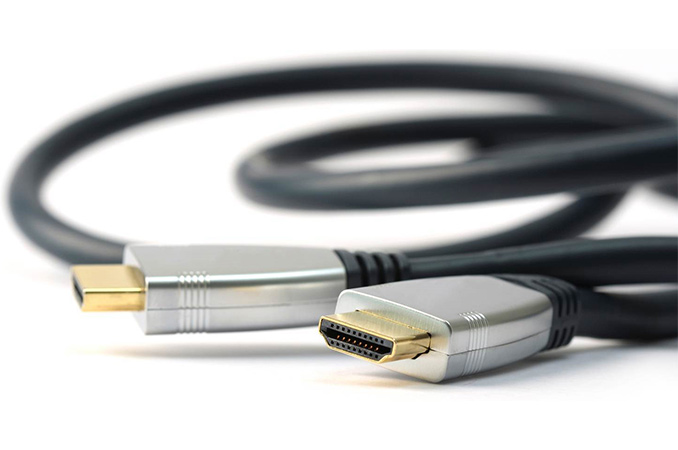
Update 1/6: HDMI Forum has notified us that the HDMI 2.1 uses DSC 1.2 compression for everything higher than 8K with 4:2:0 chroma sub sampling. The story was updated accordingly. The HDMI Forum on Wednesday announced key specifications of the HDMI 2.1 standard, which will be published in the second quarter. The new standard will increase link bandwidth to 48 Gbps and will enable support for up to 10K resolutions The most important feature that the HDMI 2.1 specification brings is massively increased bandwidth over predecessors. That additional bandwidth (48 Gbps over 18 Gbps, a bit more than what a USB-C cable is rated for) will enable longer-term evolution of displays and TVs, but will require the industry to adopt the new 48G cable, which will keep using the existing connectors (Type A, C and D) and will retain backwards compatibility with existing equipment. The standard-length 48G cables (up to two meters) will use copper wires, but it remains to be seen what happens to long cables. It is noteworthy that while some of the new features that the HDMI 2.1 spec brings to the table require the new cable, others do not. As a result, some of the new features might be supported on some devices, whereas others might be not. The increased bandwidth of HDMI 2.1’s 48G cables will enable support of new UHD resolutions, including 4Kp120, 8Kp100/120, 10Kp100/120, and increased refresh rates. It is no less important that increased bandwidth will enable support of the latest and upcoming color spaces, such as BT.2020 (Rec. 2020) with 10, 12, or even more advanced with 16 bits per color component and without compression. HDMI Forum does not say it explicitly, but the version 2.1 of their standard will also likely support the BT.2100 (Rec. 2100), which has a number of important enhancements to the BT.2020 when it comes to HDR. While HDMI 2.0 already supports BT.2020 and HDMI 2.0b adds support for HDR10 (through support for Hybrid Log-Gamma (HLG)), it only can transmit 10 and 12 bits per sample at 4Kp60 resolution. To support HDR at 8K, one will need HDMI 2.1.
Moreover, the new HDMI 2.1 standard brings support for dynamic HDR metadata, enabling content makers to control levels of color, contrast and brightness on a frame-by-frame basis. The important part here is that dynamic HDR will not require the new 48G cable to handle video in up to 4Kp60 resolution and thus manufacturers may add support for dynamic HDR even using a firmware update. That is not going to work for a lot of existing equipment because display pipelines work differently and many TVs are incapable of anything beyond HDR10. Moreover, recorded media (i.e., Ultra HD Blu-ray) does not currently support dynamic HDR (and when the next-gen standard emerges, it will bring a lot of other features, including a new content protection algorithm), which means that two primary sources for dynamic HDR content will be games and streaming media (which is an interesting thing, given the focus of AMD’s recently announced FreeSync 2 technology). It is also noteworthy that HDMI Forum does not currently mention particular HDR implementations, but only says that the HDMI 2.1 standard will support a variety of them. In fact, dynamic HDR will not be the only feature of the HDMI 2.1 specifications applicable to games. Among other things, the new standard will support the game mode variable refresh rate (GM VRR). Nowadays, AMD already supports FreeSync-over-HDMI using a custom mode and with the HDMI 2.1 everything gets a little easier. The HDMI 2.1 GM VRR will work for 4Kp120 and 8Kp60 resolutions with the new 48G cable, but for lower resolutions/refresh rates, the HDMI 1.4 cable will be enough. We do not known whether current-gen sources (i.e., GPUs and consoles) could be updated to support the HDMI 2.1 GM VRR, but the upcoming graphics processors are going to support the tech simply because they are going to support the HDMI 2.1 in general. When it comes to sinks (i.e., TVs, displays), it is unclear whether this is a full-on requirement - if all sinks will need to support VRR - but it is likely that they will support it in their next generations as well. Meanwhile, support of GM VRR by HDMI 2.1 also means that variable refresh rates may be coming to next-generation consoles (whenever they come out), finally making the feature a default one for gaming. The final capability of the HDMI 2.1 specification is the eARC — support for object-based many-channel audio formats. The HDMI Forum did not mention specific brands, but Dolby Atmos and DTS:X seem to be the most likely candidates to support. The HDMI 2.1 specification brings a number of long-awaited features to the table, some of which may show up in shipping products sooner, the other will become available years from now. HDMI Forum plans to publish the final standard in Q2 2017 and release the HDMI 2.1 compliance test specification in Q2 or even Q3 2017. That said, do not expect any features of the new spec to become available earlier than in the second half of this year (2018 seems more likely). Meanwhile, from licensing standpoint, any company with a license for the HDMI 2.0 spec can have access to the HDMI 2.1 blueprints. | ||||||||||||||||||||||||||||||||||||||||||||||||||||||||||||||||||||||||||||||||
| 3:05p | ECS Expands LIVA mini-PC Family with Z-Series at CES 2017
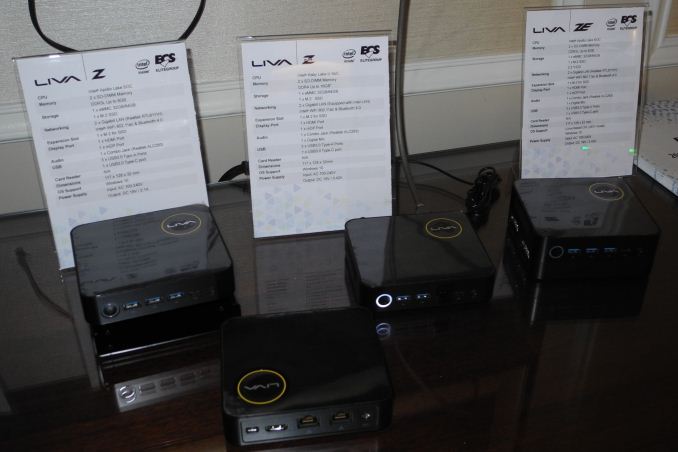
ECS has announced a number of ultra-compact form-factor (UCFF) PCs in the LIVA family at CES 2017. These build upon the success enjoyed by the LIVA brand over the last couple of years. The LIVA Z family being demonstrated at the show has three members - the Z and ZE are based on the Apollo Lake SoC platform, while the Z Plus is based on Kaby Lake-U. Details of the LIVA Z became public in November, and, today, we got the chance to see that, as well as the ZE and Z Plus in action. The specifications of the three PCs are summarized in the table below. The main differences to note between the Z and ZE models are the availability of four COM ports (RS232) and a 2.5" drive slot in the latter. The Z Plus is a completely different platform.
Traditionally, the LIVA series PCs have had one of the smallest footprints of all the mini-PCs belonging to the UCFF category. With the new Z-series LIVAs, ECS seems to have gone in for slightly larger PCBs (115 x 111mm, as compared to 101.6 x 101.6mm for the NUCs). Fortunately, the larger footprint has enabled ECS to put in dual LAN ports in all the models. The Z Plus needs a 65W adapter due to the 15W Kaby Lake-U processor. The ZE, despite sharing the same platform as the Z for the most part, needs more power for the 2.5" drive. ECS folks at the suite were not able to confirm whether the Z-Plus has a LSPCon for HDMI 2.0 / 4Kp60 output and HDCP 2.2 support. This is essential for using the Z Plus as a 4K OTT streaming box with 4K Netflix support. We should be getting confirmation sometime next week, and we eventually plan to post a hands-on review when the unit releases towards the end of this quarter. On the other hand, the four COM ports in the LIVA ZE as well as its fanless nature should lend itself to industrial use-cases. Gallery: ECS LIVA Z - Chassis Design & I/O
    Gallery: ECS LIVA Z Plus Chassis Design & I/O
    The industrial design and I/O organization for the LIVA Z and LIVA Z Plus are quite similar, as can be seen in the above galleries. The ZE model is thicker, as it has to accommodate four extra COM ports as well as a 2.5" drive slot inside the chassis. Gallery: ECS LIVA ZE - Chassis Design & I/O
     In addition, ECS also announced the LIVA XE, an upgrade over the existing LIVA x2 (which uses an Intel Celeron N3050 SoC). The LIVA XE uses a Celeron J3060, which has a higher burst clock. The form-factor and I/Os are similar, except that the XE dispenses with the digital microphone input. Gallery: ECS at CES 2017
     ECS also showed off some of their latest motherboards in the suite. These included the B350AM4-M uATX board with the AMD B350 chipset, and a couple of Z270 boards ith Intel Optane support. | ||||||||||||||||||||||||||||||||||||||||||||||||||||||||||||||||||||||||||||||||
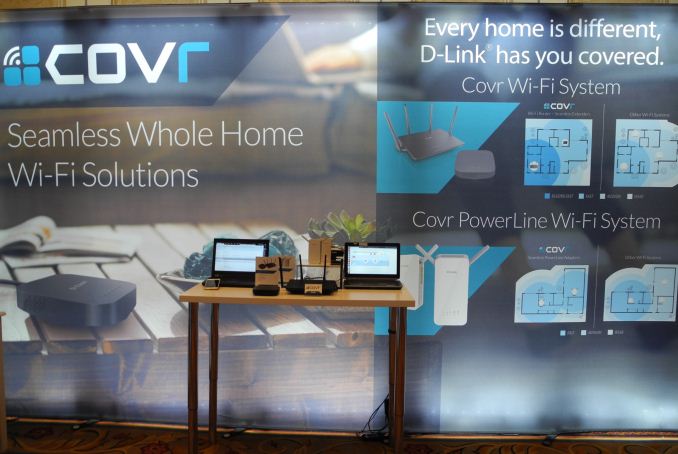
| 5:00p | D-Link's Covr Whole-Home Networking Solutions - Wi-Fi SON with Wi-Fi and HomePlug Backhauls
D-Link is launching a few IP cameras and a couple of Wi-Fi home networking solutions at CES 2017. D-Link's Covr systems come in two flavors - one with a pure Wi-Fi backhaul, and the other with a powerline backhaul using HomePlug AV2 technology. The firmware features for the whole-home Wi-Fi system are based upon Qualcomm's Wi-Fi SON in both versions. We have already evaluated different types of backhauls for extending Wi-Fi reach. In our testing, a dedicated 4x4 802.11ac Wi-Fi backhaul was able to perform better than both HomePlug AV2 (AV2 2000) and G.hn powerline systems. However, performance seen by end users may vary widely based on the type of construction of the home as well as the Wi-Fi backhaul characteristics and powerline chipsets used. The pure Wi-Fi backhaul version is the Covr Wi-Fi System (DKT-883), while the HomePlug backhaul version is the Covr Powerline Wi-Fi System (DHP-W732AV). Covr with Wi-Fi Backhaul: DKT-883Typical mesh Wi-Fi or whole-home Wi-Fi systems rely upon multiple units sharing very similar hardware. On the other hand, D-Link has adopted the more traditional approach with an AC2600 router (based on the Qualcomm Atheros 8065 SoC) - the DIR-883 Dual-Band MU-MIMO Wi-Fi Router with 4x4 802.11ac (1733 Mbps in the single 5 GHz band and 800 Mbps in the single 2.4 GHz band) - at the heart of the system. The DAP-1655 AC1300 Gigabit Wi-Fi Extender (2x2 802.11ac with 867 Mbps in the 5 GHz band and 400 Mbps in the 2.4 GHz band) is the other part of the system.
Note that there is no dedicated Wi-Fi backhaul channel - bandwidth is shared between client devices and the router-extender communication link. Users sensitive to performance need to keep this mind. The selling point, therefore, boils down to the Wi-Fi SON features of smart steering, load balancing across the 5 GHz and 2.4 GHz bands, and easy set up. Covr with Powerline Backhaul: DHP-W732AVThe DHP-W732AV solution is meant to extend Wi-Fi reach with an already existing router in the network. HomePlug AV2 1200 is used as the backhaul. The kit consists of two DHP-W730AV adapters. These adapters are 2x2 802.11ac solutions with Qualcomm Atheros chipsets for both Wi-Fi and powerline communication. While the PLC chipset it AV2 1200-class, the Wi-Fi is AC1300 (867 Mbps on 5 GHz + 400 Mbps in the 2.4 GHz band)
Each kit member also has three gigabit ports to service wired clients at their placement locations. Note that the kit doesn't need a wired connection to the main router (typical of many range extenders that use PLC backbone). Instead, since both members of the kit are Wi-Fi-enabled, one is used to connect to the Wi-Fi network of the main router, while the second one can be connected to any power outlet to extend the Wi-Fi reach. The key here is again the use of Wi-Fi SON to make the whole experience seamless when handing off clients between the Wi-Fi networks of the PLC kits and the main router's Wi-Fi network. The DKT-883 and DHP-W732AV will both become available in Q2 2017 for $300 and $199 respectively. In other CES news, D-Link also launched their first Apple HomeKit-certified IP camera, the Omna 1080 Cam HD (DSH-C310), and a host of other budget IP cameras. A welcome announcement was the integration of the functionalities present in multiple D-Link apps into one unified mydlink Home App for all of the company's IP cameras and smart home devices. Gallery: D-Link's Covr Whole-Home Networking Solutions - Wi-Fi SON with Wi-Fi and HomePlug Backhauls
  
| ||||||||||||||||||||||||||||||||||||||||||||||||||||||||||||||||||||||||||||||||







| << Previous Day |
2017/01/05 [Calendar] |
Next Day >> |