[Most Recent Entries] [Calendar View]
Tuesday, January 10th, 2017
- ASUS ProArt PA32U Display: 4K, 1000 Nits Brightness, 95% DCI-P3, 85% Rec. 2020
- LG Announces 32UD99: 4K IPS Display with 95% DCI-P3, HDR and USB-C
- BenQ Launches the SW320: a 4K Display with HDR for Professionals
- Panasonic Develops IPS Panel with 1,000,000:1 Contrast Ratio, 1000 Nits Brightness
- EIZO Launches ColorEdge CG2730 and CS2730 2560×1440 Displays for Professionals and Prosumers
- Dell Introduces UltraSharp UP3017 30-Inch Professional Display with 16:10 Aspect Ratio and DCI-P3 Color Space
- The NVIDIA SHIELD Android TV Review: A Premium 4K Set Top Box
- NVIDIA Announces SHIELD Console: Tegra X1 Android TV Box Shipping In May
- NVIDIA SHIELD Android TV Console Adds Support for Vudu, HDR and 4Kp60 Content
- NVIDIA's GeForce NOW - GRID Cloud Gaming Service Goes the Subscription Way
- NVIDIA SHIELD Android TV OTA Update Improves HTPC Credentials
- MSI Adds Low-Profile GeForce GTX 1050 Ti to Lineup
- NVIDIA Announces GeForce GTX 1050 Ti & GTX 1050: Entry-Level Cards Launching October 25th
- MSI Shows New Radeon RX 480 Gaming Cards, with an 8-pin
- NVIDIA Releases GeForce GTX 1060 3GB: GTX 1060, Yet Not
| Time | Event | ||||||||||||||||||||||||||||||||||||||||||||||||||||||||||||||||||||||||||||||||||||||||||||||||||||
| 7:00a | Keyssa at CES 2017: Design Wins, Prototypes, Refinement
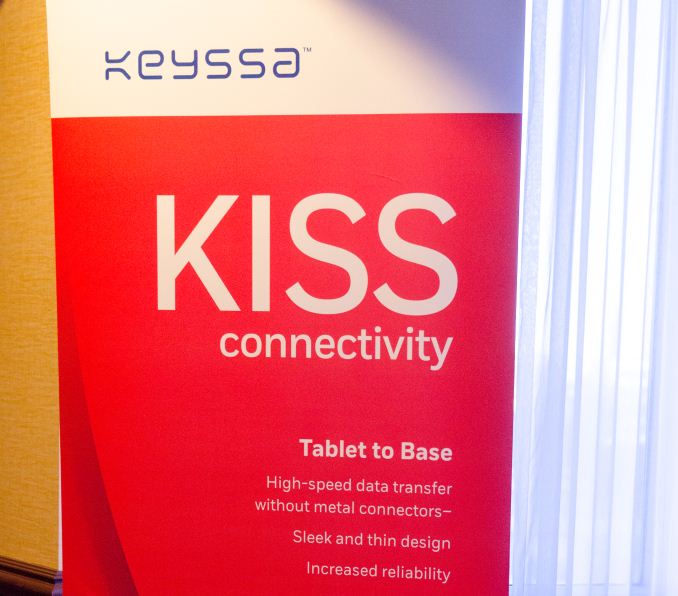
Keyssa is no longer a new name, but this year at CES 2017 they provided some interesting progress updates and also provided a sneak peek at some fairly interesting products. The first, and probably most telling sign of where our industry is headed, was a laptop designed by the ODM Quanta Computer.
Outside of the power port, the laptop itself completely lacks physical connectors. There is no USB port, nor USB-C, nor HDMI, or anything else that you might expect from a normal laptop. Instead, the system contains a breakout board that magnetically attaches itself to the power port and has a number of Keyssa connectors that provide all of these standard outputs including USB, HDMI, and microSD over a breakout board which enables a design that is comparable to the iPad Pro in size and formfactor.
The interesting idea here is that you would be able to use this expansion method to keep all of your usual peripherals plugged in at your desk and easily attached to your laptop when you need extra peripherals, but when mobility is everything and all you need is a more tablet-esque functionality you can have that formfactor as well without the compromises that come with ports that must be attached to the chassis all the time.
Outside of this design, Keyssa has also been working with a connector company to produce a turn-key module to enable this system. While this isn’t necessarily the most exciting of things, this is fairly important for pushing towards wider adoption as most OEMs don’t want to be bothered with doing their own layout on a PCB given a reference circuit. By providing a complete module with all circuit components ready to go for integration into a design, OEMs need to do less work in order to enable this kind of contactless functionality.
Another interesting demo that was shown was OneCompute for the Moto Z, which allows for the ability to use a smartphone as a sort of light desktop or thin client. Of course, Android isn’t really at the point where it’s going to be well-adapted to desktop use but perhaps with the use of something like ChromeOS on a tablet we’re going to see truly useful dual-mode applications. While we’ve known about the existence of this system for a while, it was interesting to see it in action even if the software isn’t really ready to take advantage of it yet. Of course, none of this technology really matters unless it can get into a shipping device, and it turns out that Keyssa has already integrated its technology into a device on the market today, namely the Acer Aspire Switch 12S, which uses this system to transmit data to and from the keyboard and USB ports on the keyboard dock without pogo pins or complicated moving parts like a muscle wire lock. It’s curious to see that the Surface Book continues to use such a complicated system compared to the solid state contactless technology that was enabled through UCLA research. Overall, it’ll be interesting to see how this technology is applied in more devices in the near future as I suspect we’ve only scratched the surface here. | ||||||||||||||||||||||||||||||||||||||||||||||||||||||||||||||||||||||||||||||||||||||||||||||||||||
| 8:00a | The Das Keyboard 'Prime 13' & '4 Professional' Mechanical Keyboard Review In this review we are taking a look at two mechanical keyboards from Das Keyboard, the 4 Professional and the Prime 13. The 4 Professional is a very popular keyboard that is being heavily marketed towards professionals, while with newly released Prime 13 the company is trying to expand their market base. | ||||||||||||||||||||||||||||||||||||||||||||||||||||||||||||||||||||||||||||||||||||||||||||||||||||
| 9:00a | Group Interview with George Zhao, President of Honor
Honor (styled honor) is a sub-brand of Huawei, defining itself for users that ‘feel young at heart’, or charactized in the media for focusing on lower cost devices with features that appeal to millennials. Last year honor introduced the honor 5X and the honor 8 in two big product launches, with the latter featuring HiSilicon’s Kirin 950 chipset and a striking blue color that was well received. At CES this year, honor launched the honor 6X, a $250 smartphone with a dual camera featuring Qualcomm’s Snapdragon 625. As part of the proceedings, we were invited to a group interview with the President of honor, George Zhao. Q: Can you explain the relationship between honor and the parent company, Huawei? Now that both brands have smartphones at similar prices, is there a danger of cannibalization? A: The Huawei group has a clear strategy for the smartphone market, and it relies on a dual brand strategy. The big company, Huawei, is based on the traditional retail model, with extensive effort to be sold in shops and with appropriate marketing with premium products. Honor is based on a new model – we are an ‘eBrand’, and rely on Internet-only sales as a change in the way people purchase products. Our different model is combined with our different customer target segments. We have a different product portfolio that defines the philosophy of that segment – more color, and more status as a product brand. We combine technology for young people, or to clarify, those that are ‘young at heart’, because this is more a state of mind. We want to consider how to meet the requirements of this market, and as a result our approach to product promotion is totally different. Honor communicates direct to young people through newer channels of communication, such as social networking. Also, just to be clear, honor is an independent organization. We have our own sales, our own marketing, and our own R&D. We do share some technical platforms with Huawei, such as the Kirin chipset and some manufacturing, but from our perspective the product portfolio is very different. Q: Can you comment on the marketing budget of honor compared to other companies? A: Not numbers directly, but because we do things different to other smartphone companies you may expect that we spend less – 1/5 to 1/10 of the budget of our competitors due to how we do things. Q: How important is wireless charging or eye recognition? A: In the honor Magic, we use the highest fast power charging, with 5V 8A. This means we can go from 0 to 90% in 30 minutes! But we have a lot of this technology to study, and for wireless charging, we care about efficiency. We look at what is available, and we have been waiting for a big breakthrough in wireless charging since 2012, but nothing makes us satisfied. Q: Does honor believe in a high-cost (e.g. $800) smartphone? A: Our strategy is to enable the best class of phone with a good price. The way we do things with our eBrand model helps us reduce costs, so our pricing strategy is low. We have launched an expensive phone, the honor Magic, which is about $550 in China, but we only produced a limited number – it doesn’t even cover the cost of our research and development! But for our mass market products, the price will not be so high. Q: Is the honor Magic going to be released outside China? A: With the AI (artificial intelligence) used by the Magic, we have found that AI needs to be based on local cultures and traditions in order to give people the responses they expect. Our R&D teams are in China, which is why we have only launched this product in China so far. If we think this technology is worth investing in, we might introduce a newer model into the international market. Q: What is your opinion on the headphone jack? A: When you make a change like this, you have to be careful. Bluetooth headphones are very popular with certain groups of people, and honor even has a pair of Bluetooth headphones for sale. But users are used to having a set of wired headphones still, so this consideration needs to be careful if it ever changes. Q: Speaking about the honor 6X, can you comment on the performance of the Kirin 655 compared to the 950/960? A: Huawei and honor have two lines of chips, the Kirin 9-series and the Kirin 6-series. Kirin 9 is for the flagship phones, such as the Mate 9 or P-series, or the honor 8/9 and honor Mi and honor Magic. Kirin 6 is for devices like the honor X-series. The main performance difference is chipset power, but the functions available are similar. Q: Does honor look at other OS platforms other than Google Android? A: As a corporation, we focus on Android. We want the best relationship in order to build the best Android products, and so when a device is used for 18 months it is still very fast. Q: Would using the phone as a PC be a good idea? A: For me, 95% of the time I use a phone is for business. So in the future we will have to move forward like this. We have a target for the honor 6X, to sell 20 million units over the life time. But the online platform needs to advance. Q: Will honor remain focusing on smartphones, or will it move into other products? A: Our business is mainly smartphones, but we are expanding into wearable technology and smart home products, such as WiFi router connection technology. Q: Does honor have a VR strategy? Will honor ever produce a Daydream VR capable smartphone? A: Last year we introduced the honor v8 which focuses on this performance. We will have a new V-series smartphone in 2017 which will offer a good VR experience.
| ||||||||||||||||||||||||||||||||||||||||||||||||||||||||||||||||||||||||||||||||||||||||||||||||||||
| 11:30a | ASUS PRO B9440: Durable Ultra-Thin Business Laptop with 10-Hour Battery for $999
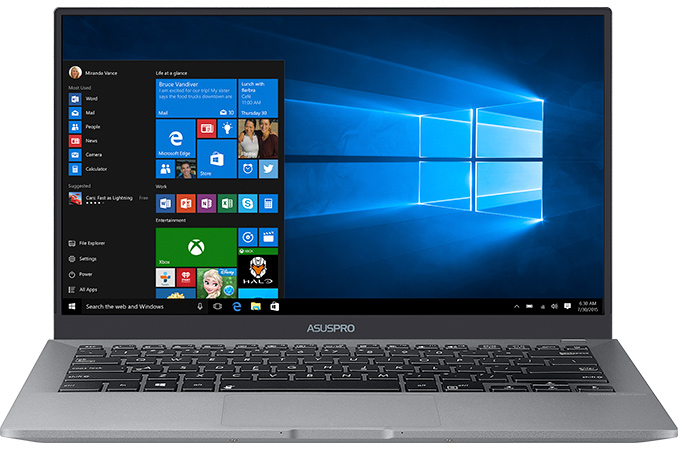
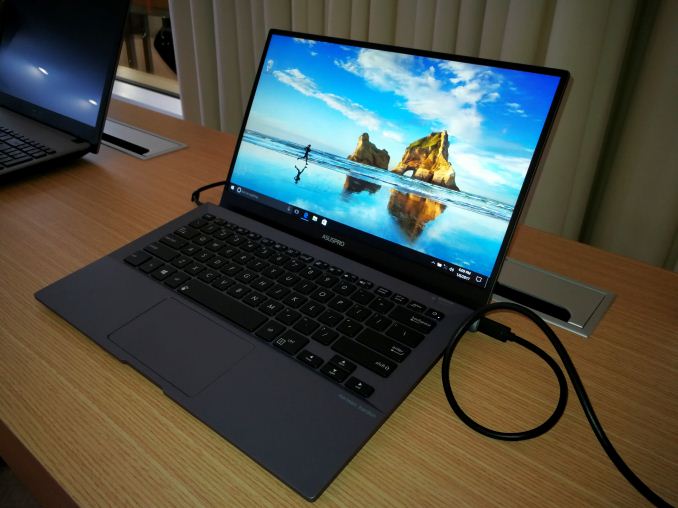
ASUS introduced its new ultra-thin business laptop that weds ultra-thin form-factor, long battery life, spill-resistant keyboard, good performance and a moderate price. The ASUS PRO B9440 is powered by Intel’s new Core i5/i7 Kaby Lake-U CPUs, weighs only around one kilogram and can work for 10 hours on one charge.
Since various people have different requirements and workloads, there are many types of business notebooks: from 12” ultra-thin and compact machines to 15” laptops with workstation-like performance and features. The ASUS PRO B9440 is located somewhere between in terms of design and performance: it comes in 13”-class chassis made of magnesium alloy and has so thin display bezels that it actually features a 14” display with FHD resolution and anti-glare coating. To make the PC more comfortable to use, ASUS installed a spill-resistant keyboard with large keycaps, backlighting, and 1.5 mm key travel. Meanwhile, the weight of the PC is around a kilogram (2.31 lbs), but it is MIL-STD 810G-rated for durability so it can survive shocks, vibration, exposure to low/high temperatures and so on.
From hardware standpoint, the ASUS PRO B9440 is a mainstream PC running Intel’s Core i5/i7 Kaby Lake-U processor, equipped with 8 or 16 GB of LPDDR3 memory, up to 512 GB SSD, a 2×2 802.11ac Wi-Fi with BT module, two USB 3.0 Type-C connectors, stereo speakers, a fingerprint reader, and a 48 Wh battery. ASUS customers can order PRO B9440 machines with enabled Intel’s vPro for remote management as well as Trusted Platform Module (TPM) for hardware-based data encryption.
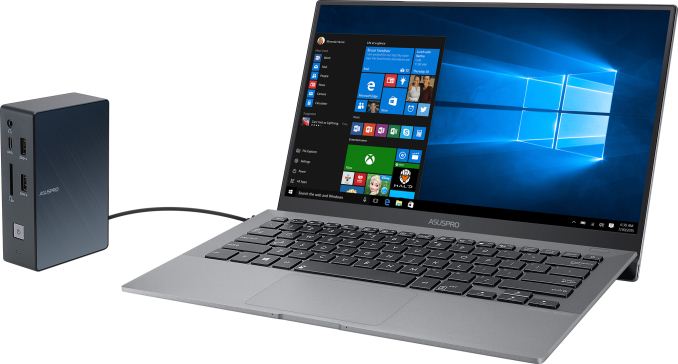
To make the PRO B9440 compact, thin and durable, ASUS had to make certain design decisions. First, the company eliminated the webcam, which helped to shrink the display bezel (and will also please corporate IT security personnel). Second, ASUS removed all I/O ports except two USB 3.0 Type-C and a TRRS audio jack from the PC, which helped to shrink the chassis. While an ultra-thin form-factor is generally an advantage, it also means that to connect an external display, mouse and a keyboard, the ASUS PRO B9440 will require the ASUS SimPro Dock USB-C docking station that is sold separately, which effectively makes the system more expensive. Engineers from ASUS are not the only to make the aforementioned design decisions, so it looks like for many laptops docking stations will be required in the future.
ASUS will ship the PRO B9440 notebook in May for the price that starts at $999. The cost of the ASUS SimPro Dock is unknown, yet its MSRP will be an important factor for those who plan to use the ASUS PRO B9440 in office environments. Ian says: Ultimately it's a clear shot across the bow of Dell's XPS 13, and seeing one at the show I was mightily impressed by form factor and weight. The trackpad had a good feel, and for writing it came across well. Other editors had reservations with the hinge mechanism, as it props up the keyboard and angles any hot air across the screen, but having used the Zenbook Infinity for 3 years, that doesn't bother me personally so much. Personally I guess I would have liked to see 32GB DDR4 and a touch screen model, and a key proponent here will be battery life. My current ZBI barely holds an hour of 'active' use (up to 5 hrs 'airplane word editing' use), and the B9440 looks pretty enticing right now if the battery life can hold up. Related Reading: | ||||||||||||||||||||||||||||||||||||||||||||||||||||||||||||||||||||||||||||||||||||||||||||||||||||
| 1:00p | Dell Announces UP3218K: Its First 8K Display, Due in March
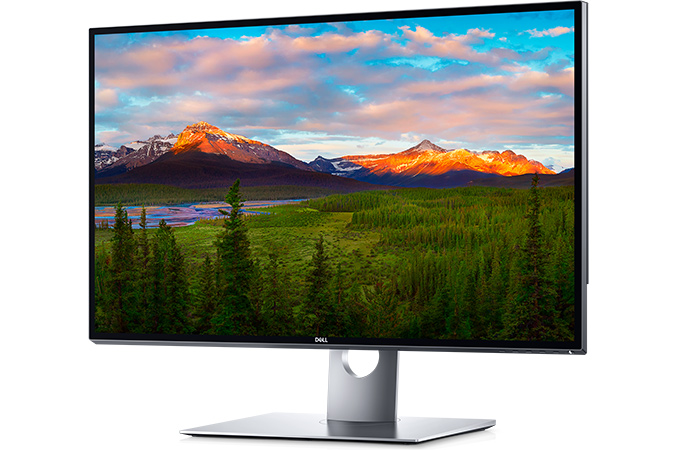
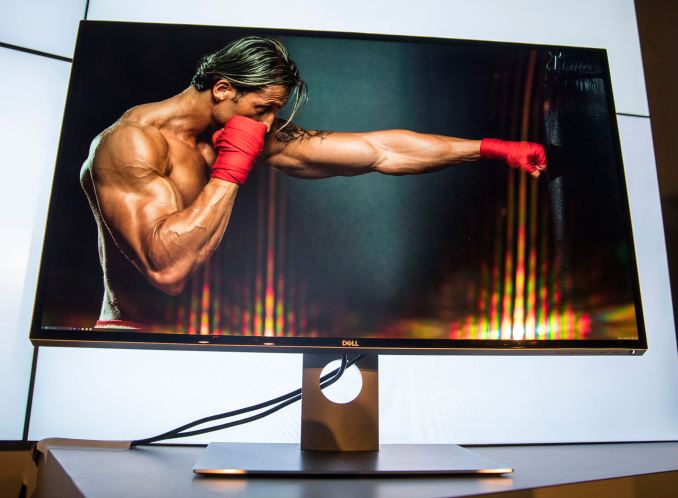
Dell introduced the industry’s first mass-market 8K display aimed at professional designers, engineers, photographers and software developers. The UP3218K will be available this March, but its rough $5,000 price tag will be rather high even for professionals dealing with content creation. That being said, $5K or so was the price that the original 4K MST monitors launched at in 2013, which perhaps makes this display price more palatable. On the other hand, right now an 8K professional display is such a niche product that the vast majority of users will have to wait a few years to see the price come down. Up to now, 8K reference displays were available only from Canon, in very low quantities and at very high prices. The displays were primarily aimed at video professionals from TV broadcasting companies like NHK, who are working on 8K (they call it Super Hi-Vision) content to be available over-the-air in select regions of Japan next year. A number of TV makers have also announced their ultra large 8K UHDTVs, but these are hardly found in retail. Overall, Dell is the first company to offer an 8K display that can be bought online by any individual with the money and be focused on the monitor market rather than TVs. At present, Dell is not publishing the full specifications of its UltraSharp 32 Ultra HD 8K monitor (UP3218K), but reveals key specs like resolution (7680×4320), contrast ratio (1300:1), brightness (400 nits), pixel density (280 ppi) as well as supported color spaces: 100% Adobe RGB and 100% sRGB.
For interconnection with host PCs, as a single DisplayPort 1.3/1.4 cable does not provide enough bandwidth for the 7680×4320@60 Hz configuration Dell is targeting, the UltraSharp UP3218K uses two DisplayPort 1.3 inputs to provide the necessary bandwidth, stitching the two display streams together internally using tiling. This is similar to early 5K displays, which used a pair of DisplayPort cables to get around the bandwidth limitations of DisplayPort 1.2. Using two cables not a big problem given the target market, but it's interesting to note that because 7680×4320@60Hz alone consumes all of the bandwidth supplied by the two cables, there isn't any leftover bandwidth to support HDR or the Rec. 2020 color space. On a side note, while the company could have used DisplayPort 1.4's Display Stream Compression 1.2 (DSC) feature to reduce the bandwidth requirements of the monitor, they opted not to. DSC is promoted as visually lossless, but given how demanding many professionals are and problems that potential artifacts introduced by DSC could bring, Dell decided to stick to two DisplayPort cables as a result.
While a high display resolution is good for photos and images, it also makes everything smaller; and while modern operating systems support scaling, it does not work perfectly for all programs. It's likely that professional applications like AutoCAD or Photoshop will support 8K the day the UltraSharp UP3218K hits the market, but general use applications, already struggling with 4K and HiDPI in general, will be another matter. Practically speaking, if the price tag alone isn't convincing enough that this is a monitor for specific editing tasks and not for general desktop usage, then the lack of good HiDPI support elsewhere will. And while I'm sure someone will try to use the UP3218K as a gaming display, at four times the resolution of a 4K monitor, we're at least a few years off from GPUs being able to render high-fidelity games at a 33Mpix resolution. Dell promised to start sales of the Dell UltraSharp 32 Ultra HD 8K monitor (UP3218K) on March 23 on its web-site. Initially, the monitor is stated to cost $4999. Time to put in some hardware requisition forms. Related Reading: | ||||||||||||||||||||||||||||||||||||||||||||||||||||||||||||||||||||||||||||||||||||||||||||||||||||
| 3:00p | NVIDIA Launches SHIELD TV: Smart Home Functionality, More 4K HDR Streaming Services
NVIDIA at CES launched its updated SHIELD set-top-box (STB), with an expanded feature-set as well as smaller and lighter form-factor. The upcoming NVIDIA SHIELD TV is based on the same Tegra X1 SoC as the previous-generation model launched in 2015, and like the mid-generation refreshes of gaming consoles that NVIDIA is clearly aiming to mimic, the launch of this slimmer console with updated software is meant to offer the hardware in a new form factor while calling attention to the major software updates being delivered to the platform this year. Among new features for the platform set to premiere in the near future is support for Google Assistant, compatibility with the SmartThings infrastructure and NVIDIA’s upcoming Spot wireless microphone. NVIDIA launched the SHIELD Android TV back in the spring of 2015 as a quirky combination of lightweight Android gaming console and Android TV set-top-box, and the device quickly earned recognition as the most powerful and capable Android TV device on the market. Thanks to the versatility of the Tegra X1 SoC in general and its Maxwell display controller in particular, NVIDIA launched with a box capable of displaying 4Kp60 content, and managed to further improve feature-set of its STB over the last two years. In particular, NVIDIA added HDR display and streaming support, and was among the first devices to be certified for 4Kp60 streaming from Netflix and other over-the-top streaming services. While the original SHIELD Android TV still has a lot of potential, some of the things are being introduced with a new model, which is what SHIELD TV is all about. From a hardware specifications point of view, the new SHIELD TV is essentially a cut-down version of the original 2015 model. The new device contains the same Tegra X1 SoC, similar RAM/storage configuration, and much the same I/O, etc. What NVIDIA has done away with is the 2.5" HDD bay (used in the Pro model), along with the microSD card slot, a micro-USB 2.0 port and an IR receiver. Instead the device's expandability and connectivity is delivered through the use of two USB 3.0 ports, along with Gigabit Ethernet and 2x2 802.11ac WiFi. As a result, the new SHIELD TV is considerably smaller and lighter than the original SHIELD Android TV thanks to the space savings (especially removing the HDD bay). Update 1/11: The new SHIELD TV does not have an IR receiver.
Another notable difference between the 2017 SHIELD TV and the 2015 SHIELD Android TV packages is the new gamepad controller, which loses some weight, ditches touchpad, but gains a microphone for the Google Assistant. The latter allows finding content, control playback and locating other information using voice commands. Technically, the original SHIELD Android TV also has a microphone on the remote, but it needs to manual activation, whereas the one on the new controller is “always on.” In fact, the new SHIELD controller can be bought separately to add hands-free commands to NVIDIA's SHIELD Android TV.
Up next is smart home functionality. Though this isn't making the initial Android 7.0 software release for the device, the SHIELD TV family will be receiving Google Assistant functionality later this year. This expands on the STB's original voice control functionality, particularly with always-on functionality. The old and new SHIELD TV STBs will also be able to act like the SmartThings Hub ($99 when sold separately), and when combined with an appropriate radio dongle, can communicate with compatible devices (such as Nest) using Zigbee and Z-Wave communication protocols. Meanwhile, later this year NVIDIA plans to release its Spot device. The $50 Spot is a wireless microphone and a speaker that can be plugged in any power outlet within a home, relaying voice commands to SHIELD TV. The Spot is meant to further improve the usefulness of the SHIELD TV as a smart home hub by expanding the range over which it can hear commands for Google Assistant and compatible SmartThings devices.
Finally, NVIDIA announced that the SHIELD TV software update launching alongside the new hardware will also add support for 4K HDR content from both Amazon Video and Google Play Movies (will be available in the next few months), further expanding the selection of 4Kp60 and 4K HDR content on the platform. Speaking of HDR, NVIDIA's GameStream HDR functionality, first introduced in beta form last May, will also finally be moved to release status in the software update. The new SHIELD TV STBs will come with NVIDIA's remote and the new gamepad by default. NVIDIA will ship the new SHIELD TV STB on January 16 and the systems are already available for pre-order at $199.99. The SHIELD TV Pro model with 500 GB HDD is priced at $299.99 and will ship on January 30. Related Reading: | ||||||||||||||||||||||||||||||||||||||||||||||||||||||||||||||||||||||||||||||||||||||||||||||||||||
| 5:00p | GIGABYTE Quietly Launches Low Profile GeForce GTX 1050, 1050 Ti Graphics Cards
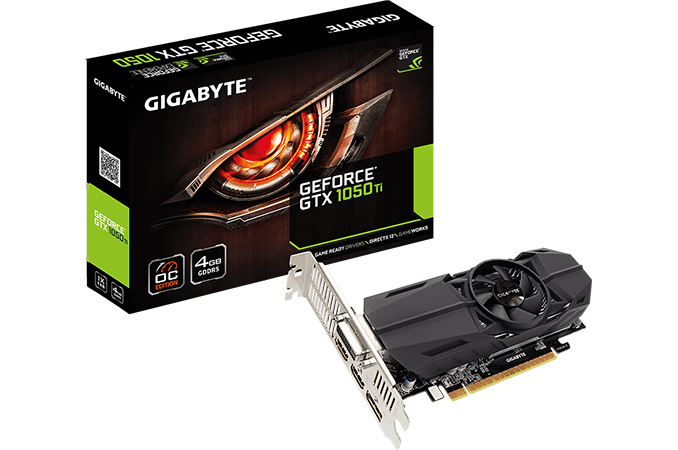
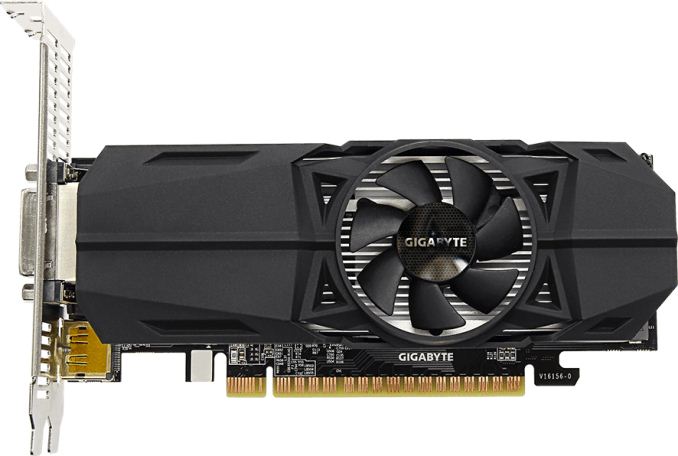
GIGABYTE has quietly added two low-profile video cards to its lineup of products during CES. The graphics adapters are based on NVIDIA’s GeForce GTX 1050-series GPUs and will be among the most affordable gaming-grade products in the company’s family. The new low-profile add-in-cards will be especially useful for those building mini PCs or HTPCs as well as for those upgrading inexpensive computers from OEMs. GIGABYTE’s GeForce GTX 1050 Ti OC Low Profile 4G and GeForce GTX 1050 OC Low Profile 2G graphics adapters are based on NVIDIA’s GP107 GPU (albeit, in different configurations) and carry 4 GB and 2 GB of GDDR5 memory running at 7 Gbps, respectively. Both cards use the same PCB (marked as V16156-0) as well as the dual-slot cooling system featuring an aluminum heatsink and a fan. As for connectivity, the boards also have a similar set of outputs: one DL-DVI-D, two HDMI 2.0b and one DisplayPort 1.4 with HDCP 2.2 support that is required for Ultra HD Blu-ray playback.
It is noteworthy that GIGABYTE decided to slightly increase GPU clock-rates of its low-profile GeForce GTX 1050-series graphics cards versus NVIDIA’s reference designs to give them some extra punch over rivals. Meanwhile, TDP and power requirements of its low profile GTX 1050-series graphics cards remained at approximately 75 W level, which means no additional power connectors are required and the cards can be installed into any contemporary computer with a PCIe x16 slot.
It seems like low profile graphics cards are back courtesy of NVIDIA’s GeForce GTX 1050-series as GIGABYTE is the second company to announce such parts after MSI, and it likely that these two companies will not be the only suppliers of such products. For those building low-power HTPCs or upgrading entry-level PCs, the GP107-based graphics adapters seem to be a good choice because the GPU supports DirectX 12 and Vulkan APIs as well as has an advanced media playback engine that features hardware-accelerated decoding and encoding of H.265 (HEVC) video. GIGABYTE does not specify MSRPs for its GeForce GTX 1050 Ti OC Low Profile 4G and GeForce GTX 1050 OC Low Profile 2G graphics adapters on its web-site, as these are typically determined at regional release. Given the positioning of these products, it unlikely that they will cost significantly more than NVIDIA’s MSRPs for similar video cards: $139 for the GTX 1050 Ti and $109 for the GTX 1050. Related Reading:
| ||||||||||||||||||||||||||||||||||||||||||||||||||||||||||||||||||||||||||||||||||||||||||||||||||||










| << Previous Day |
2017/01/10 [Calendar] |
Next Day >> |