[Most Recent Entries] [Calendar View]
Friday, January 13th, 2017
- Seagate to Lay Off Over 8,000 to Lower Costs
- Seagate Revives Maxtor Brand for External Storage
- The Evolution of HDDs in the Near Future: Speaking with Seagate CTO, Mark Re
- Corsair’s Bulldog 2.0 Gets Kaby Lake-Compatible Z270 Motherboard, New Cooler
- GIGABYTE's New Console: The 'Gaming GT' PC Launched with Core i7-K, GTX 1080, TB3
- Calyos NSG Cube: Passively Cooled SFF PC with Intel Core and GeForce GTX 1060
| Time | Event | ||||||||||||||||||||||||||||||||||||||||||||||||||||||||||||||||||||||||
| 3:10a | Nintendo Switch Hardware Launch Details - 32GB w/Expandable Storage, 6.2” 720p Screen, 2.5 to 6.5 Hour Battery Life
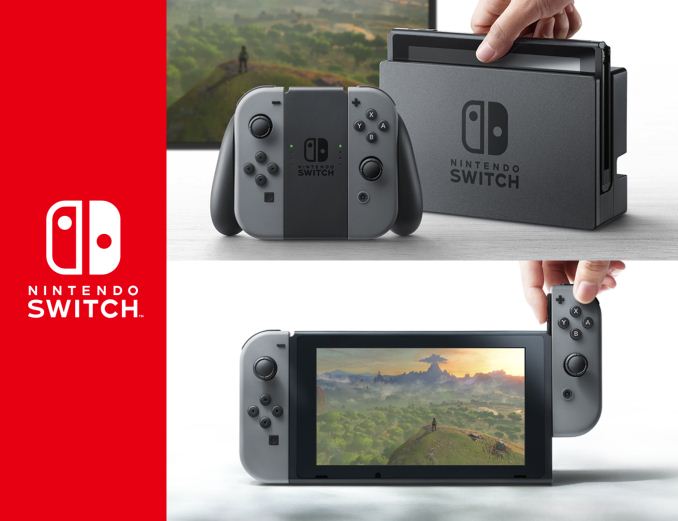
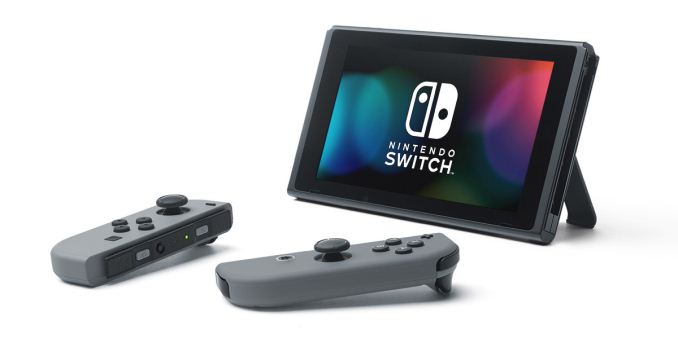
This morning in Tokyo, Nintendo held their long-awaited full product launch briefing for their upcoming console, the Nintendo Switch. Previously unveiled back in October of 2016, Nintendo has been keeping a fairly tight lid on specific details about the console, including its specifications, capabilities, and software lineup. Now with just less than 2 months to go until the console goes on sale, Nintendo is ramping up their promotional campaigns, releasing a good deal of new details on the console, though in a very Nintendo way. Back when the Switch was unveiled, we learned that the handheld console would be powered by an NVIDIA SoC, NVIDIA’s first console win since 2006. At the time Nintendo and NVIDIA had been very quiet on the specifications of the SoC, and while the full specifications were certain to be off the table, I had been hoping that Nintendo would open up at least a bit more on the SoC. Unfortunately, in admittedly traditional Nintendo fashion, the company has skipped right past anything involving the SoC, and I suspect we’re going to be waiting for the console launch and full teardown before we get any more hard facts here. For what it is worth, Eurogamer strongly believes that the underlying SoC is a Tegra X1 – NVIDIA’s 20nm Cortex-A57 CPU + Maxwell GPU SoC that’s also used in the NVIDIA SHIELD TV – and while I can’t confirm this at this time, for the moment I don’t have any reason to doubt their suspicions. Tegra X1 is ready and available in volume, and in this respect Nintendo has been conservative for quite some time. Still, it will be interesting to crack open the Switch in March to see if it’s actually Tegra X1 under the hood, or if it’s some sort of Nintendo-specific derivative.
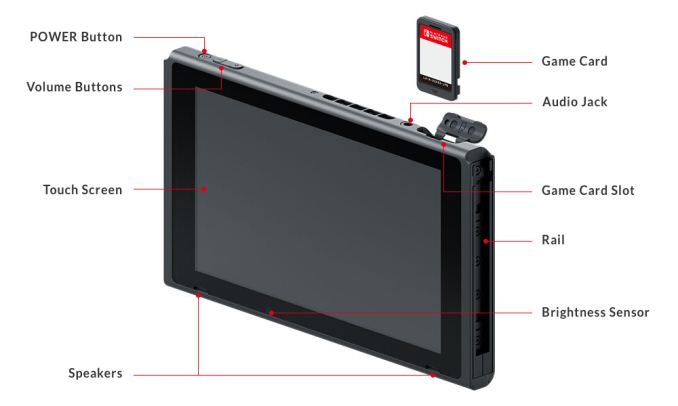
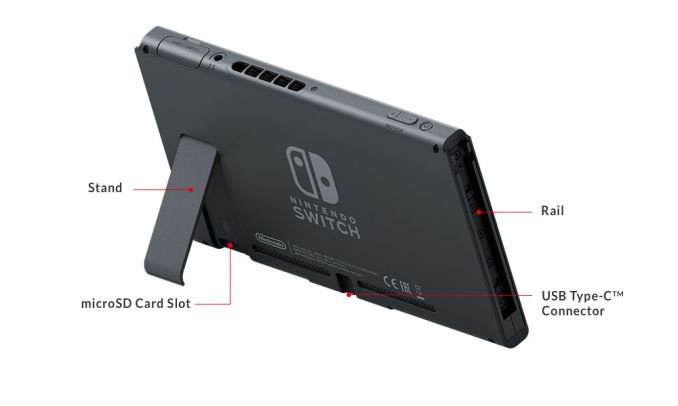
Moving on to new information, while Nintendo held off on SoC information, they have published some new information on the console as a whole. As long suspected, the Switch features a 1280x720p capacitive touch screen LCD. Though lower in resolution than comparable phones and tablets, this is a logical fit for the console giving its performance characteristics, battery life needs, and cost concerns. Nintendo’s website does not specify the type of the underlying panel, though I will be surprised if it’s not IPS or *VA. For storage, the console will feature expandable storage. 32GB (presumably eMMC) is built in to the console, while the console can be further expanded using microSDXC cards, similar to the current-generation 3DS consoles. And as revealed in Nintendo’s teaser video last year, there will also be a separate game card slot for games released on physical media.
Meanwhile Nintendo isn’t being quite as forthcoming on the underlying specifications of the console’s integrated battery, but they are providing some ballpark power figures. The Switch is rated to last between 2.5 and 6.5 hours on a single charge, depending on the game, with the forthcoming Zelda game said to run for 3 hours. This is roughly comparable to the New Nintendo 3DS XL, which is rated for 3.5 to 6 hours, with the Switch having a slightly wider range (ed: though well short of the DS Lite’s 8+ hours). Still, for a long trip it’s clear you’ll need to bring some extra power. The good news here is that for the Switch, Nintendo is giving up on proprietary chargers and power connectors. The Switch will charge via a standard USB Type-C connection, so it’s possible to use USB power banks with the console. Though without more details on the battery it’s hard to say just how large of a power bank will be required; given the higher power consumption of a gaming console, I expect the Switch will need a larger power bank than similarly sized tablets (perhaps something iPad Pro-sized). The Switch will also come with an AC adapter (curiously, with a hardwired cable), a welcome change after Nintendo didn’t include a power adapter with the New Nintendo 3DS.
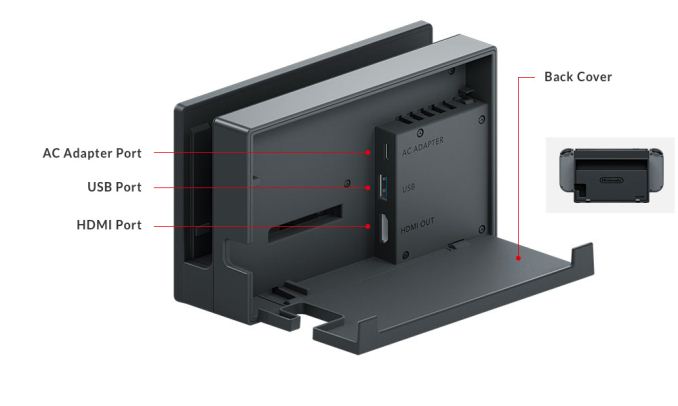
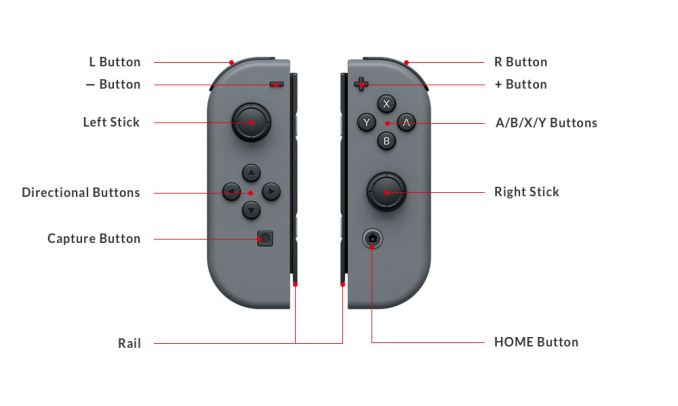
As for the Switch’s companion dock, Nintendo has previously confirmed that it would largely be a “dumb” device. That said, today’s unveiling does confirm that it includes a single USB 3.0 Type-A port and a pair of USB 2.0 ports, the former presumably using two SuperSpeed lanes off of the Type-C connector, and the latter using the two USB 2.0 channels built-in to USB Type-C. Nintendo hasn’t officially announced any USB peripherals at this time – and it will be interesting to see what does arise, since this is a portable console – though a quick straw poll around here is that we’ll be disappointed if Nintendo doesn’t support the GameCube adapter for the obligatory Super Smash Bros. game. As an aside, this hardware revelation also gives us just enough information to figure out how Nintendo is supplying HDMI out of the Dock. Since the Switch only offers USB Type-C connectivity, there isn’t a dedicated HDMI port/path coming out of the console. I had thought Nintendo might be using HDMI alt mode for USB-C, but the USB 3.0 port inside the dock rules that out since it consumes 2 of the 4 high speed lanes that HDMI alt mode needs. Instead Nintendo has to be using DisplayPort alt mode with 2 lanes, and then doing active conversion from that to HDMI. This handily explains why Eurogamer’s sources point to 1080p60/4Kp30 being the maximum output of the console – this being what 2 lanes of DisplayPort 1.2 can support – and it means that the Dock is not a dumb plastic shell, but rather has some basic, active electronics in it (it’s essentially Apple’s USB-C Digital AV dongle with some extra features). Though this does make me wonder whether the active conversion of video signals adds any appreciable input lag. Otherwise, as far as hardware goes the bulk of Nintendo’s focus with respect to hardware has been on the console’s two detachable controllers, the Joy-Cons. Besides being the console’s primary control mechanism (ed: a tablet with buttons, thank you!), the Joy-Cons are actually a lot more sophisticated than Nintendo originally let on last year. In terms of controls, each Joy-Con features the previously depicted 4 face buttons, a large shoulder button, an analog stick; also confirmed today is that on the inside, rail edge of the Joy-Cons are a pair of smaller shoulder buttons for when a single Joy-Con is used as a controller. So the Joy-Cons are essentially miniature versions of the SNES controller with an analog stick in place of the D-Pad. It’s what’s under the hood that’s particularly interesting though. As one might expect, Nintendo is sticking with motion controls. Each Joy-Con contains a gyroscope and set of accelerometers, making it roughly equivalent to the Wii remote with Motion Plus.
Beyond that, each Joy-Con features its own special set of features. The right Joy-Con contains an NFC reader/writer for use with Nintendo’s Amiibo figures, and what Nintendo is calling a "IR motion camera,” An IR camera would imply that it’s the same basic functionality as the Wii Remote, which used an IR camera to orient itself relative to the IR LEDs in the console’s sensor bar, however Nintendo also quickly demonstrated that the Joy-Con could measure distance and motion from a human hand facing the camera, something the Wii Remote could not do. Finally, the left Joy-Con contains what Nintendo is calling “HD rumble” functionality, their name for high fidelity rumbling. Given the diminutive size of the Joy-Con, coupled with Nintendo’s examples, I suspect that we’re looking at multiple linear actuators for vibration (similar to Apple’s Taptic Engine), as opposed to traditional motors. Not too surprisingly then, a second set of Joy-Cons won’t come cheap, with Nintendo listing the MSRP at $80. Finally, taking a brief look at the software side, retailer pre-release information has unveiled that Switch games will go for $60. This is the same price as Wii U games and $20 higher than most 3DS games. The one bit of good news here is that Nintendo has done away with region locking, so it’s possible to buy and play games from any region. Launch day games will include the previously announced Zelda game, and Nintendo’s new mini-game collection, 1-2-Switch.
Wrapping things up, the Switch will be receiving a world-wide release on March 3rd (coincidentally the final day of the 2017 Game Developers Conference). It will be priced at $299 in the United States, with similar regional prices elsewhere across the globe. Ahead of the launch retailers have already put up pre-order pages (and some have started taking pre-orders), including Amazon, Best Buy, and GameStop. | ||||||||||||||||||||||||||||||||||||||||||||||||||||||||||||||||||||||||
| 8:45a | Marvell Show the 88SS1079 Controller: An Updated 88SS1074
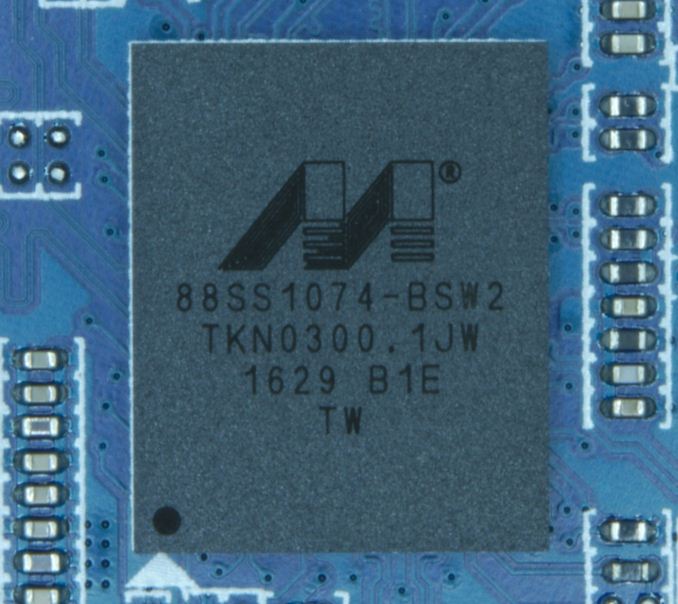
At CES, Marvell announced an updated version of its popular 88SS1074 SATA SSD controller in the 88SS1079. There's no significant change to performance or features as far as we are told, but it moves a few components that were required on the PCB side onto the controller die, saving cost and perhaps to a small extent, power. Fewer components on the PCB will also make layout a bit easier for an M.2 SSD, but the space saved is not so large as to allow for an extra NAND package, We've seen the 88SS1074 on popular SSDs such as the Crucial MX300, SanDisk X400 and WD Blue, and we expect the successors to these drives to adopt the 88SS1079. Some SSD vendors may update their products relatively soon to cut costs as soon as possible and to offset the price impact of the ongoing NAND shortage, but at the very least all current users of the '1074 controller can be expected to use the '1079 when moving to the next generation of 3D NAND that will be hitting the market later this year. This is still a play for cents per GB, so a few cents off the cost of the controller will be helpful, especially for the mid-range SATA SSDs that aim to offer a significant performance boost over DRAM-less designs for a small extra cost. While we saw a solution using the controller in our meeting with Marvell at CES, we were told to wait for partners to announce their solutions before taking pictures. When we get the 88SS1079 drives in to test, it will be interesting to see if any performance change has occurred (remember, Marvell stated that this should perform the same) or if any power difference to the 88SS1074 is observed due to moving components on die. While no retail SSDs with the new controller have been announced and Marvell cannot comment on their customers' roadmaps, it shouldn't take long for manufacturers to integrate the new controller into their designs given the slight hardware changes and the ability to use existing firmware as-is. We expect new products using the 88SS1079 controller to be announced by the middle of this year. | ||||||||||||||||||||||||||||||||||||||||||||||||||||||||||||||||||||||||
| 10:30a | OWC Previews DEC Add-On For MacBook Pro
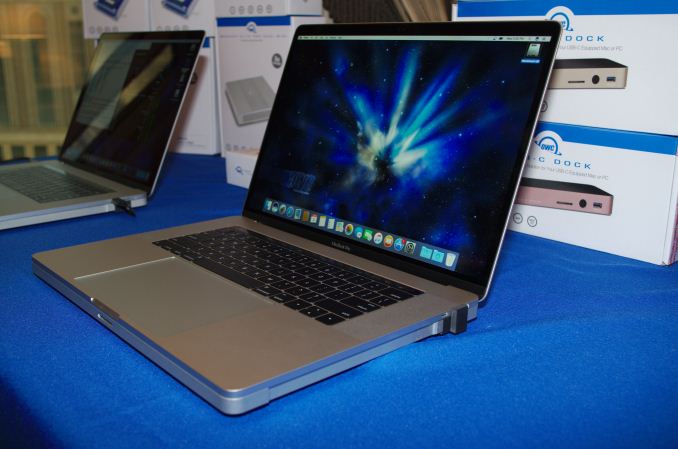
At CES, Mac accessory and upgrade supplier Other World Computing (OWC) showcased prototypes of an upcoming add-on for Apple's latest MacBook Pro models. The OWC DEC is in many ways similar to their existing line of USB and Thunderbolt docks, with one big difference: the DEC is intended to travel around with the computer instead of staying at the desk. The DEC is OWC's answer to the declining expandability, upgradability and connectivity of the MacBook Pro. The DEC occupies the same footprint as the MacBook Pro and attaches to the bottom by replacing the screws that hold the bottom cover of the MacBook Pro in place. To install the OWC DEC, users will not have to open up their MacBook Pro, only remove Apple's screws and screw the DEC on to the bottom of the machine. The DEC's data connection will be provided by a small bridge connector between one of the MacBook Pro's USB-C connectors and the DEC. OWC has been working on the idea of the DEC for several years, but the latest generation of the MacBook Pro has made the DEC a priority. The DEC will provide many expansion options that have been removed from the MacBook Pro line over the years, at the expense of making the machine heavier and thicker—but no worse than what the MacBook Pro itself was several years ago. The exact configuration of ports has not been finalized, but at a minimum the DEC will provide USB type A ports, gigabit Ethernet and a SD card reader. The DEC will also offer internal storage expandability by accommodating 2.5" drives and potentially M.2 SATA SSDs. OWC is also considering a version of the DEC that will use a Thunderbolt 3 connection to the host machine rather than USB, which would make M.2 PCIe storage possible but also make the DEC substantially more expensive.
Gallery: OWC DEC Prototypes
     The fit and finish of the prototypes OWC had at CES was poor, but only because the prototypes were very early mock-ups. Despite the obvious tool marks on the bare aluminum and the use of a black plastic covering for the bridge connector, the DEC felt solid and showed attention to detail with recessed sides that don't block the speakers or vents and an overall shape that matches Apple's industrial design. The first version of the DEC will be available this spring for the 2016 MacBook Pro with Touch Bar, bot 13" and 15" models. OWC is also working on a model that will include an extra battery and deliver power to the host system through the USB-C connection. This model is expected to be available later in the year. Pricing has not been announced, but the base model will almost certainly be more expensive than OWC's existing USB-C docks that retail for about $150. | ||||||||||||||||||||||||||||||||||||||||||||||||||||||||||||||||||||||||
| 1:00p | Seagate to Shut Down One of Its Largest HDD Assembly Plants
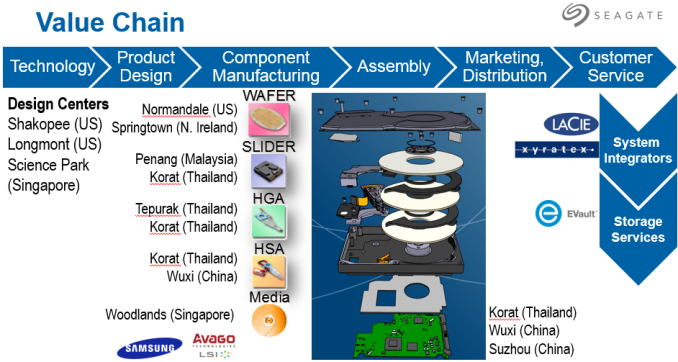
As a part of its cost-cutting efforts, Seagate has decided to shut down its HDD manufacturing plant in Suzhou, China. The factory is one of the company’s largest production assets and its closure will significantly reduce the company’s HDD output. Seagate intends to lay off ~2200 employees, but it is unclear what it intends to do with the facility, which it owns. The factory in Suzhou, China, assemblies hard drives and performs their final testing before shipping. The plant does not produce HDD subassemblies and thus is not vertically integrated, but at 1.1 million square feet (102 thousand square meters), this is one of Seagate’s largest manufacturing assets and the largest drive assembly facility. The company got the factory from Maxtor, when it acquired it in 2006. According to a media report, the plant no longer makes products and the last employees will be laid off on January 18, 2017. “As part of our continual optimization of operational efficiencies, Seagate has made the difficult decision to shut down its factory in Suzhou, China,” an alleged statement by Seagate reads. “We regret that our Suzhou employees will be affected by this action, which reflects our ongoing commitment to reduce Seagate’s global manufacturing footprint and better align the business with current and expected demand trends.” Last year Seagate announced intentions to optimize its manufacturing capacities from around 55-60 million drives per quarter to approximately 35-40 million drives per quarter. In 2016, the company already fired about 8,000 employees from different locations, but that was only a part of the strategy. With the plan to shut down the plant in Suzhou, the company actually reduces its ability to produce the drives.
After Seagate shuts down its plant in Suzhou, China, it will have two vertically integrated HDD production facilities in Wuxi, China, and Korat, Thailand. Both factories product drive subassemblies and actual HDDs, hence, by using only these two plants the company optimizes logistics (as it no longer has to transport drive subassemblies to Suzhou) and cuts its per drive manufacturing costs. Meanwhile, it remains to be seen what happens to Seagate’s factories that only produce drive subassemblies (sliders and HGAs).
It is important to note that while Seagate cuts down HDD assembly capacities, it does nothing to plants that produce heads, media and substrates. Over the past few years, unit shipments of HDDs have declined, but their average capacities increased (especially capacities of HDDs for datacenters) due to strong demand for high-capacity SKUs. Therefore Seagate may not need to produce a lot of drives, but it needs to pack about the same amount of heads and platters into fewer HDDs. Moreover, in the coming years, the company will need more heads because of new manufacturing technologies (TDMR, HAMR, etc.) and more media because it can now pack more platters into high-end helium-filled drives. What remains to be seen is what Seagate plans to do with its manufacturing assets from the Suzhou facility. The fab is so large that it does not seem that all of its equipment could be relocated to other facilities. Moreover, the building itself is huge and it is unclear what will happen to it. Related Reading: Sources: Seagate, BestChinaNews, Reuters, The Register. | ||||||||||||||||||||||||||||||||||||||||||||||||||||||||||||||||||||||||
| 5:00p | Digital Storm BOLT X: A Kaby Lake-Based SFF PC with Custom Liquid Cooling
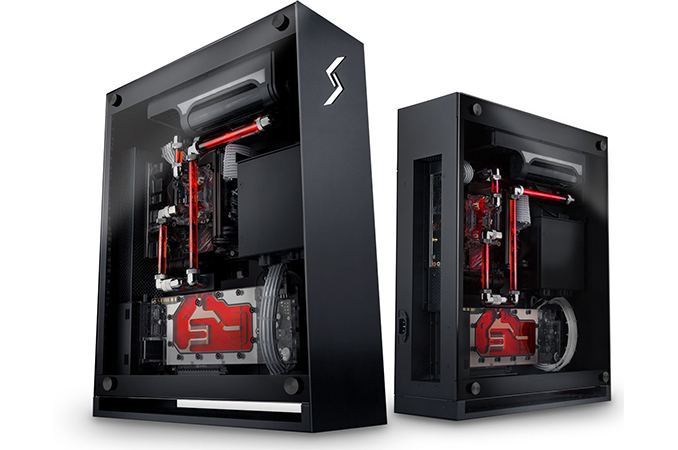
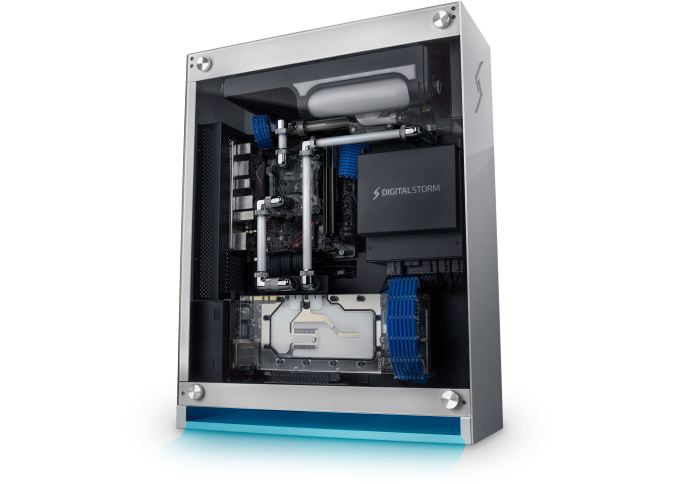
At CES this year, Digital Storm introduced its new compact PC design that weds a small form-factor with a specially-designed liquid cooling system. The BOLT X is designed to enable a significant overclocking potential of components even in a space-constrained form-factor, and it should benefit those who need to have maximum performance in a minimum footprint. Over the past few years we have observed the culmination of several separate trends: compact computers with liquid cooling, with style and with serious overclocking capabilities. The new BOLT X from Digital Storm is the company’s next-generation SFF PC with a HydroLux LCS that features a number of upgrades aimed to advance its cooling performance as well as improve the system in general. First off, the BOLT X has two 140-mm top mounted fans (up from two 120-mm fans in case of the BOLT 3, the predecessor). Second, it comes with an integrated stand that helps to minimize the amount of dust it sucks in through openings for cool air on the bottom. Third, it features a simplified open layout to make it easier to upgrade and service the PC.
Just like the predecessors, the Digital Storm BOLT X can accommodate a Mini-ITX motherboard and one graphics card located beneath the mainboard to ensure proper cooling and compatibility with custom cards that have tall PCBs. With the BOLT X, Digital Storm will offer the Intel Z270-based platforms (so, they will support technologies like NVMe, Thunderbolt 3, USB 3.1 Gen 2, 802.11 ac Wi-Fi, etc.) along with various Intel Core processors powered by the Kaby Lake microarchitecture. As for GPUs, expect the PC maker to offer the latest graphics cards that will be available with its BOLT X — NVIDIA’s GeForce GTX 10-series for now and whatever comes up next. At present, Digital Storm does not discuss the exact number of SSDs/HDDs that can be housed by the BOLT X chassis, but the PC will definitely support one high-performance M.2 SSD with a PCIe 3.0 x4 interface on the motherboard as well as a number of storage devices in a 2.5-inch form-factor. Following the latest trends, the boutique PC maker eliminated the ODD from the chassis completely, resulting in a perfectly flat front surface. One of the intrigues of the new BOLT X system is its PSU. In theory, Digital Storm can install almost any SFX power supply inside (except, perhaps, the SFX-L versions) to improve overclocking potential and/or support power hungry components. However, with the BOLT 3 the company only offers 400 W PSUs. Digital Storm will start selling BOLT X systems in the first quarter. Exact pricing will depend on actual configuration and will thus vary. At present, the company offers BOLT 3 systems starting at $1906, so the new versions are likely to start at approximately the same price-point. Related Reading:
| ||||||||||||||||||||||||||||||||||||||||||||||||||||||||||||||||||||||||




| << Previous Day |
2017/01/13 [Calendar] |
Next Day >> |