[Most Recent Entries] [Calendar View]
Monday, January 16th, 2017
- Micron 3D NAND Update: 2D and 3D NAND Bit Crossover, Gen 2 Hits Production
- ADATA Announces Ultimate SU900: 3D MLC NAND, SMI Controller, SATA
- ADATA Launches XPG SX8000: High-End M.2 NVMe SSD Featuring 3D MLC NAND
- ADATA Ultimate SU800 SSDs in M.2 Announced: Entry-Level 3D NAND SSDs for Laptops
| Time | Event | |||||||||||||||||||||||||||||||||||||||||||||||||||||||||||||||||||||||||||||||||||||||||||||||||||||||||||||||||||||||||||||||||||||||||||||||||||||||||||||||||||
| 8:00a | Zotac Updates ZBOX mini-PCs with Kaby Lake: vPro, Thunderbolt, and More
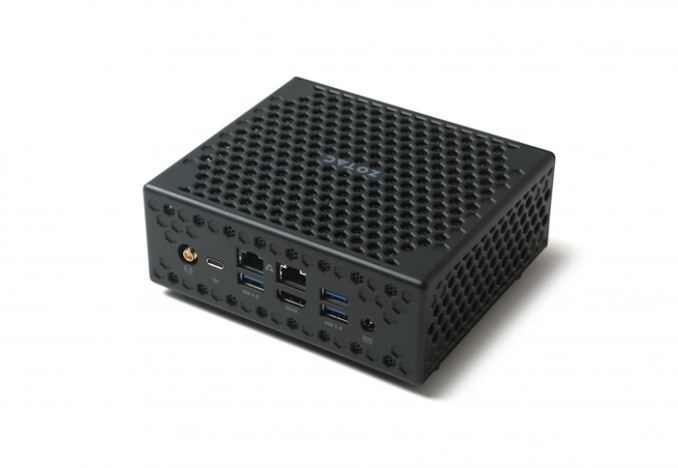
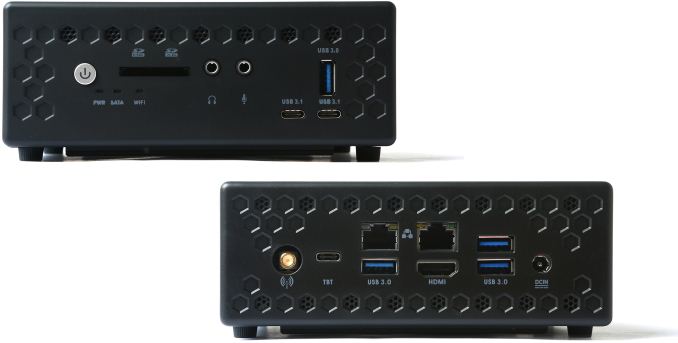
As part of their pre-CES teaser, Zotac had talked about their mini-ITX GTX 1080 and their external Thunderbolt 3 graphics dock. They had also hinted about some updates to the ZBOX lineup, with some details about the ZBOX CI549 nano, a vPro-enabled passively cooled UCFF (ultra-compact form factor) PC with Thunderbolt 3 support. However, at their suite, we found that many of their existing ZBOX models will be getting a Kaby Lake update. Since Kaby Lake is a minor update in terms of features to Skylake, the Zotac really doesn't have much to work with compared to the Skylake models. Despite that, Zotac has introduced some new features into the ZBOX series - including vPro and Thunderbolt 3 support - that are not present in the Skylake versions. Zotac markets their mini-PCs in multiple market segments - the E-series for gaming, the C-series for users interested in passively cooled systems, the M-series for certain PCs with active cooling in multiple form factors, the VR-series for virtual reality use-cases, the P-series for pocket-sized computers, and so on. The Kaby Lake updates are coming to the C-series, M-series, and E-series. While the C-series units come with the nano tag (with a 5in x 5in x 1.78in form-factor), the M-series come in either the regular ZBOX size (7.4in x 7.4in x 1.78in) or the nano size. The three tables below summarize the specifications of the Kaby Lake mini-PCs announced by Zotac at CES 2017.
The most interesting one in the above table is obviously the Zotac ZBOX CI549 nano / MI549 nano. From the perspective of a home consumer, the most important update when compared with the Skylake-U C Series models is the availability of a Thunderbolt 3 port. Thunderbolt 3 brings a host of exciting expansion possibilities. In addition, Zotac seems to have retained the two USB 3.1 Gen 2 Type-C from the ASMedia ASM1142 controller.
The other important aspect of the ZBOX CI549 nano and the MI549 nano is that the Core i5-7300U is a vPro SKU, making it more suitable for use in business environments. Intel's UNITE technology is also supported for secure workplace conferencing. AMT is also available for IT administrators to remotely repair and maintain the systems. The vPro designation makes it necessary for one of the two LAN ports to be an Intel-branded one. The other mini-PCs being updated with Kaby Lake in the above table all use two Realtek adapters. Gallery: Zotac ZBOX CI527 nano
      Gallery: Zotac ZBOX CI547 nano
      Gallery: Zotac ZBOX CI549 nano
      Gallery: Zotac ZBOX MI527 nano
      Gallery: Zotac ZBOX MI547 nano
      Gallery: Zotac ZBOX MI549 nano
     
The interesting ZBOX here is the MI572, with the 35W TDP LGA processor - the Core i7-7700T. Using a desktop PCH allows Zotac to include Thunderbolt 3 as well as a rich set of I/Os compared to the others launched at CES. Gallery: Zotac ZBOX MI526
      Gallery: Zotac ZBOX MI548
      Gallery: Zotac ZBOX MI572
      In the E-series, Zotac has only one updated SKU - the EN1070K, a Kaby Lake version of the EN1070. We would have liked them to move the MAGNUS EN1080 to Kaby Lake, given the pin compatibility between Skylake and Kaby Lake, and the fact that the PCH used for the Skylake board could work with Kaby Lake too.
Gallery: Zotac ZBOX MAGNUS EN1070K
      Given the nature of the mini-PC market, and the updates offered by Kaby Lake, we believe Zotac is doing the right thing by not going in for a complete overhaul of their Skylake-based offerings in this space. It is great to see dual LAN ports spread to more models, though we would prefer Intel adapters to the Realtek ones that are currently in the units. Zotac must also be appreciated for adding the LSPCon to the BOM to enable HDMI 2.0 and HDCP 2.2 capabilities. The Thunderbolt 3 feature, as well as the vPro capabilities, will definitely expand the target market for these systems. That said, some of the shortcomings such as the thermal design of the C-series (which is the same as that of the Skylake C-series) and the placement of the USB ports in the chassis (that we pointed out in our review of the Zotac ZBOX CI523 nano) don't seem to have been addressed. Hopefully, Zotac can tweak a few things before the final market release. Related Reading: | |||||||||||||||||||||||||||||||||||||||||||||||||||||||||||||||||||||||||||||||||||||||||||||||||||||||||||||||||||||||||||||||||||||||||||||||||||||||||||||||||||
| 11:00a | Mushkin Launches Reactor Armor 3D and Triactor 3D 2TB SATA SSDs: 3D NAND, SM2258
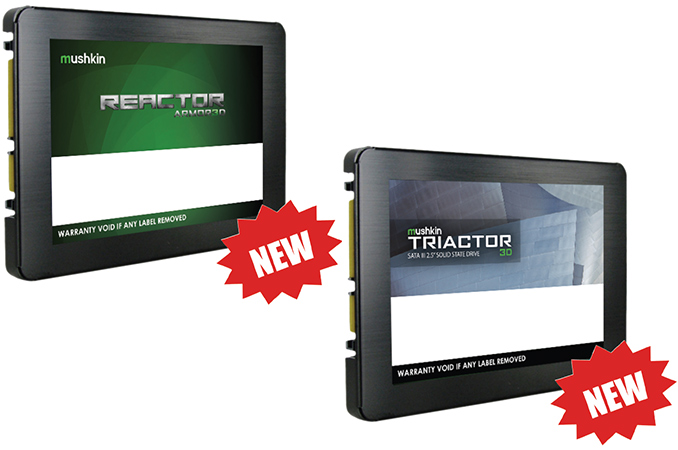
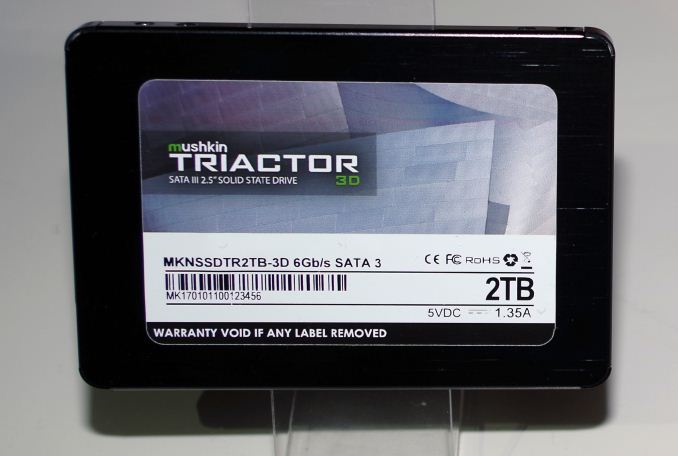
Mushkin at CES demonstrated its new SSDs in 2.5”/7 mm form-factor aimed at mainstream PCs with a SATA interface. The new Reactor Armor 3D and Triactor 3D use 3D NAND flash memory, the same controller from Silicon Motion and offer nearly similar performance. The main difference is that the former use 3D MLC, whereas the latter uses 3D TLC memory. The NAND flash industry is transitioning to various 3D NAND architectures that enable higher densities, lower per-bit costs and higher endurance compared to planar flash made using very thin process technologies. So far it has not been easy for independent makers of drives to secure a supply of 3D NAND memory because some manufacturers are cutting down the share of produced flash they sell on the open market, whereas 3D NAND from others does not suit SSDs well. In the recent months ADATA was the only independent supplier of drives to offer 3D NAND-based drives, but as we observed at CES, the situation is about to change. Mushkin is another company to announce a lineup of SSDs featuring 3D NAND and targeting different market segments, from entry-level to the high-end. Unlike ADATA, Mushkin is announcing all of its 3D NAND SSDs at once, which implies that the company can get enough chips for different kinds of drives. Mushkin’s Reactor Armor 3D and Triactor 3D SSDs are based on Silicon Motion’s SM2258 controller, but while the former uses 3D MLC NAND, the latter uses 3D TLC NAND from an undisclosed manufacturer. The SM2258 controller has four NAND flash channels, LDPC ECC technology, a SATA interface, a DRAM buffer support as well as pseudo-SLC (pSLC) caching in order to maximize SSD performance. At present, the SM2258 is virtually the only market-ready third-party SSD controller with that supports 3D NAND (technically speaking, the SM2256 also supports 3D NAND, but drive makers prefer the more advanced controller so to address the higher end of the SSD spectrum), so Mushkin’ s choice is not surprising if the company needs rapid time-to-market (which is also why it does not wait for Phison's PS5008-E8). What is even more interesting is that Mushkin is considering to add 3D NAND-based drives to the Reactor lineup that uses the SM2246EN controller (this one is qualified for 3D MLC as well). It does not look like the company has made any final decisions, but it is considering such possibility in a bid to continue addressing the entry-level segment with the Reactor lineup. Mushkin does not disclose the name of its 3D NAND flash supplier, but we have a reason to believe that this is Micron. SanDisk and Toshiba are shipping their 64-layer BiCS NAND inside their removable media products and promise to use this memory for their SSDs. But as of now, 64-layer BiCS chips have not been qualified for SSDs. 3D NAND from SK Hynix is also available for various products, but it has not been qualified for SSDs just yet.
The Reactor Armor 3D SSDs will be available in 240 GB to 1920 GB configurations, whereas the Triactor 3D drives will feature 256 GB to 2 TB capacities. The former family will take advantage of MLC and offer slightly better endurance albeit at a higher price, whereas the latter lineup will be more aggressively priced thanks to cheaper memory. At the same time, it is noteworthy that both product lines include high-capacity (~ 2 TB) drives, an indicator that they target customers who need a lot of non-volatile memory and can pay for that. As for performance, Mushkin rates sequential read speed of both Reactor Armor 3D and Triactor 3D drives at 565 MB/s, whereas sequential write speed is rated at up to 525 MB/s and 520 MB/s (when pseudo-SLC caching is used) respectively. Random performance of the drives is specified at up to 90,000 read IOPS and up to 85,000 write IOPS.
Mushkin did not announce MSRPs or ETAs for its new Reactor Armor 3D and Triactor 3D drives, but said that they will be covered by its three-year warranty. Related Reading:
| |||||||||||||||||||||||||||||||||||||||||||||||||||||||||||||||||||||||||||||||||||||||||||||||||||||||||||||||||||||||||||||||||||||||||||||||||||||||||||||||||||




| << Previous Day |
2017/01/16 [Calendar] |
Next Day >> |