[Most Recent Entries] [Calendar View]
Tuesday, January 24th, 2017
| Time | Event | |||||||||||||||||||||||||||||||||||||||||||||||||||||||||||||||||||||||||||||||||||||||||||||||||||||||||||||||||||||||||||||||||||||||
| 5:00a | Kaby Lake E3-1200 v6 Xeon Specifications Leaked
Some sleuthing by CPU-World has uncovered the list of to-be-released Kaby Lake single-socket quad-core Xeons. As it to be expected, these are incremental updates from Skylake-based Xeons using the newer 14nm Plus node from Intel. In our consumer Kaby Lake reviews, our results showed that the new design offers a better voltage/frequency profile than previous generations, affording more frequency at the same voltage. Another big change from the previous generation is the TDP: what used to be 80W is now listed as 73W if it has integrated graphics, or 72W if it does not. The list from CPU-World, who in turn discovered a QVL (qualified vendor list, or ‘CPUs which we confirm work in this board’) posting from a motherboard manufacturer whom accidentally included the new Xeons. The posted list features eight Xeon processors altogether. The two at the bottom of the stack are quad core parts without hyperthreading, and the others do have hyperthreading. The main differences between the processors will be frequencies and the presence of integrated graphics.
Most of these numbers come direct from the motherboard validation lists, with some such as core count being derived from L2 cache listings. All the parts listed have a full 8MB of L3 cache, indicating they run closer to the Core i7 design rather than a Core i5 (even those that have hyperthreading disabled). On the integrated graphics models, i.e. those ending in '5', are all running Intel HD P630 graphics and run up to 1150 MHz. This is the ‘professional’ version of the HD630 we see on the consumer parts, using Intel’s latest Gen9 graphics architecture and supporting H.265 encode/decode. Our Kaby Lake review piece goes into more detail. Not listed are the turbo frequencies of the CPUs, as these are currently unknown. Neither is the pricing, however given previous launches we would expect the tray price (OEM batches of a thousand CPUs) to have parity compared to previous generations.
For the most part, the new processors are ~200 MHz faster than the v5 parts while still being rated at the lower TDP. Memory support is expected to be the same as the consumer parts (DDR4-2400), and it is not yet confirmed if the v6 processors will support Transactional Synchronization Extensions (TSX) given issues in previous revisions, so we will wait on future Intel announcements on this front. It is still worth noting that for LGA1151 based Xeons, Intel adjusted the requirements such that Xeon processors require a server grade chipset on the motherboard. For Skylake E3 v5 parts, this was either a C232 or C236 chipset – we reviewed a few motherboards with these on (ASRock E3V5 Gaming, GIGABYTE Z170X-Extreme ECC). With a BIOS update, these C232/C236 motherboards should support the new v6 processors. However, we currently do not know if there will be a second generation of chipsets for these CPUs in line with the consumer updates. On the consumer side the new chipset has additional PCIe lanes and Optane Memory support, so we stand in wait for a new desktop chipset to support these. There is a new mobile chipset, CM238, for mobile E3 v6 Xeons, but no equivalent in the desktop space yet. We currently have all the Skylake E3 v5 Xeons in for testing on our new benchmark suite soon, and we’ll make similar moves to acquire the Kaby Lake E3 v6 models when they are released. Currently there is no word on release date or pricing, however we typically see the E3 Xeons release very shortly after the consumer processor release. Source: CPU-World | |||||||||||||||||||||||||||||||||||||||||||||||||||||||||||||||||||||||||||||||||||||||||||||||||||||||||||||||||||||||||||||||||||||||
| 10:00a | Xiaomi Announces the Redmi Note 4 in India
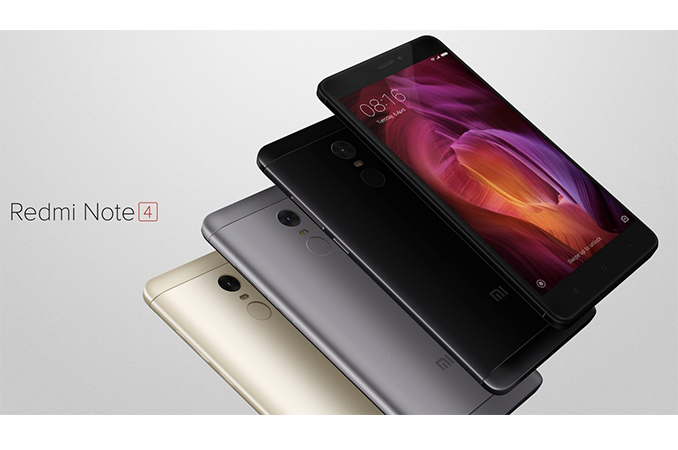
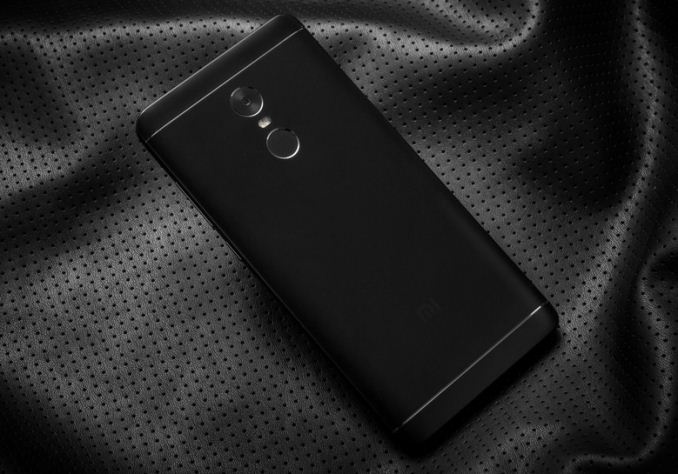
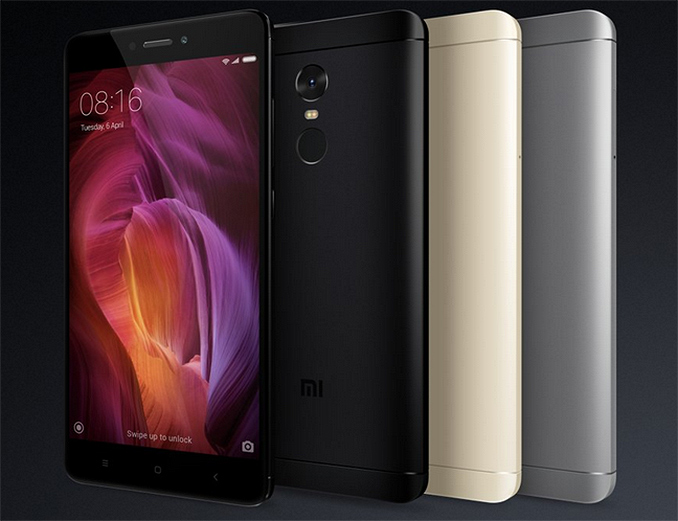
Just before Hugo Barra announced he was leaving the company, he and Xiaomi on Thursday introduced its latest phablet, the Redmi Note 4, in India. The design of the smartphone resembles that of the Chinese version, but the internal architecture has changed. Instead of the MediaTek Helio X20 SoC, the Indian version of the Redmi Note 4 uses Qualcomm’s Snapdragon 625, which is a shift from a tri-cluster 10-core A72/A53/A53 design to a full A53/A53 eight-core SoC. Meanwhile, despite the hardware switch, the concept of the device has not changed: the high-end flagship phone will retail at price-points below $200. Hugo Barra, former chief marketing officer of Xiaomi, published specs and prices of the Redmi Note 4 phablet that will be available in India. The company has changed a lot about the device both inside and outside, possibly because the newcomer will eventually be available globally and thus will have different competitors than it does in China. In general, the new Xiaomi Redmi Note 4 remained the same: it is a 5.5” smartphone that comes in a metallic unibody chassis with rounded edges and antenna separated from the rest of the back cover using polycarbonate strips. The new Redmi Note 4 lineup will include matte black, matte gold and matte gray smartphones.
When Xiaomi introduced the Redmi Note 4 in China several months ago, the company used Mediatek's deca-core Helio X20 in a market where core-count can matter at this price-point (as in, it affects buying decisions). For the new version, Xiaomi uses a Qualcomm Snapdragon 625 SoC that features fewer general-purpose cores, has a single-channel memory controller and a modem with more bands. More importantly, the chip is made using Samsung’s 14LPP (14 nm FinFET, low-power plus) manufacturing technology and presumably has generally lower power consumption when compared to the Helio X20 made using TSMC’s CLN20SOC (20nm planar) fabrication process. In any case, Xiaomi says that the Redmi Note 4 with its 4100 mAh battery lasts 25% longer when compared to its predecessor (the Redmi Note 3 with a 4050 mAh battery), an indicator that the new unit uses components with lower power consumption. On the other hand, the Xiaomi Redmi Note 3 Pro is powered by the Snapdragon 650 that features two high-performance ARM Cortex-A72 cores as well as four low-power ARM Cortex-A53 cores, compared to the quad A53+quad A53 of the Snapdragon 625 in the Redmi Note 4. The octa-core A53 configuration will result in lower performance for this version of the Redmi Note 4 compared to the Helio X20 version and the older Redmi Note 3 Pro, especially for bursty workloads like web browsing. In the last generation of mid-range smartphones, a number of companies were happy to take a 'hex' core design: big.Little using dual A72 and quad A53. This allowed the SoC to offer good peak performance, using some of the highest performing cores available at a high frequency, and move to the small cluster when in power saving mode. However, these designs were on 28nm - a popular but not leading edge process node. So far this year we've seen a number of devices announced that are ditching the pair of A72 cores for another set of quad A53 cores, on SoCs built on a 14nm node. The performance of the cores doesn't change with process node, but the power consumption does: using a 14nm S625 over a 28nm S650 means that battery life is up and up (on all else being comparable) however peak performance is generally down. The interesting intersection is if they compute the same amount of work and how much power is required: it is generally considered that a 14nm S625 still wins that one as well. This is despite the fact that the chip probably costs more, by virtue of the 14nm process. It would seem that vendors are willing to take the hit on price and performance in exchange for battery life (other devices announced include the honor 6X, Huawei Nova/Plus and the ASUS Zenfone 3 Zoom). Another downside of these S625 devices seems to be that some don't support 802.11ac.
The Redmi Note 4 phone has a 5.5-inch FHD IPS display covered with 2.5D Gorilla Glass for protection. The Chinese version of the Redmi Note 4 claimed to have a maximum brightness of 450 nits, a contrast ratio of 1000:1, 72% NTSC color gamut as well as a special technology that improves visibility of the display outdoors, but we do not know whether the Indian version has the very same display panel too. As for imaging capabilities, the Xiaomi Redmi Note 4 uses a 13 MP sensor with f/2.0 aperture, PDAF and a dual LED flash on the back as well as a 5 MP sensor with f/2.0 aperture on the front. Audio features of the Xiaomi RN4 include built-in speakers as well as 3.5-mm TRRS audio jack on top. Meanwhile, for local connectivity, the phone features 802.11n Wi-Fi, Bluetooth 4.1 and a microUSB port. Now, while we understand that the Snapdragon 625 supports LTE, WCDMA, CDMA and GSM, but so far, Xiaomi has not announced specific bands for the Redmi Note 4 smartphone. In the best-case scenario, the handset supports everything the SoC does, but the manufacturer has not confirmed that yet. The Xiaomi Redmi Note 4 uses Google’s Android 7 with various enhancements by Xiaomi, including new security features of the MIUI 8 designed to simplify usage of the fingerprint scanner.
The Xiaomi Redmi Note 4 was up for sale in India as of the 23rd January. For the prices, they will vary from Rs. 9,999 ($146) for the entry-level 2 GB/32 GB model to Rs. 12,999 ($190) for the high-end 4 GB/64 GB SKU. Related Reading: | |||||||||||||||||||||||||||||||||||||||||||||||||||||||||||||||||||||||||||||||||||||||||||||||||||||||||||||||||||||||||||||||||||||||
| 11:00a | Razer Updates The BlackWidow Chroma Keyboard: New Ergonomics And Switch Choices
The Razer BlackWidow keyboard has been around since 2010, and it is one of Razer’s most popular gaming keyboards. Today Razer is announcing an updated version of this keyboard, which adds more choices for their buyers.
The first may seem like a small thing, but they’ve added a magnetically attached wrist rest, similar to some of their other models like the Razer Ornata. Those who prefer a wrist rest can leave it attached, and those who prefer a smaller keyboard can take it off. I’ve not used this model, since it is just announced, but the magnetic attachment of the wrist rest on the Ornata seems to hold it securely. This is a nice value-add for Razer, and should please many buyers.
Their big news though is that the BlackWidow Chroma V2 now comes with a third keyboard switch option, in the new Razer Yellow switch. Razer started manufacturing their own keyboard switches in 2014, and they currently offer both a Green and Orange model, and both offer a tactile feedback. The new Razer Yellow switch is a linear, and silent design, and features a reduced travel distance. Razer says this shorter throw allows for faster key presses, and a quieter design should be welcome news to many people who want a mechanical keyboard with a bit less noise. The Green switches have a 50 gram actuation force, whereas the Orange and Yellow both have a lighter 45 gram actuation force, and all Razer mechanical switches are rated for an 80 million keystroke lifespan.
As with most Razer products, the BlackWidow V2 features Razer’s Chroma lighting, with individually backlit keys offering 16.8 million colors per key, as well as the Chroma effects powered by their Synapse software. It also features 10 key roll-over anti-ghosting, and offers fully programmable keys with on-the-fly macro recording options. The USB keyboard features 1000 Hz polling, a braided USB cable, and a USB pass-through and 3.5 mm 4-pole audio pass-through jack. Despite the included wrist rest, the new BlackWidow V2 Chroma keyboard has a price that is unchanged from the previous model, and select models are shipping now for U.S. $169.99 / EU €199.99. Source: Razer
| |||||||||||||||||||||||||||||||||||||||||||||||||||||||||||||||||||||||||||||||||||||||||||||||||||||||||||||||||||||||||||||||||||||||





| << Previous Day |
2017/01/24 [Calendar] |
Next Day >> |