[Most Recent Entries] [Calendar View]
Saturday, January 28th, 2017
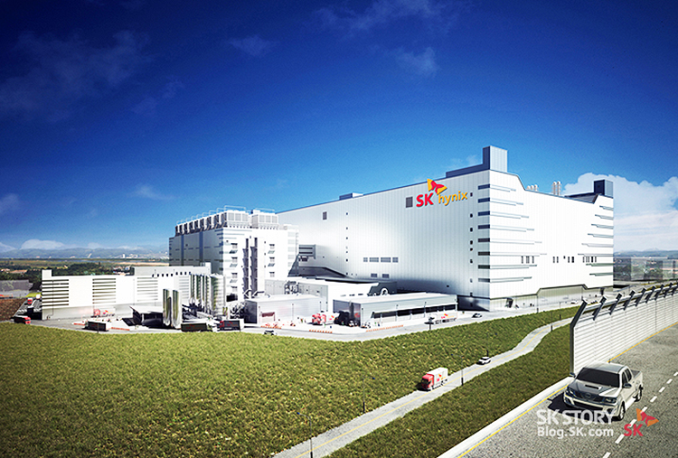
- SK Hynix to Build a New NAND Fab, Upgrade Existing DRAM Fab
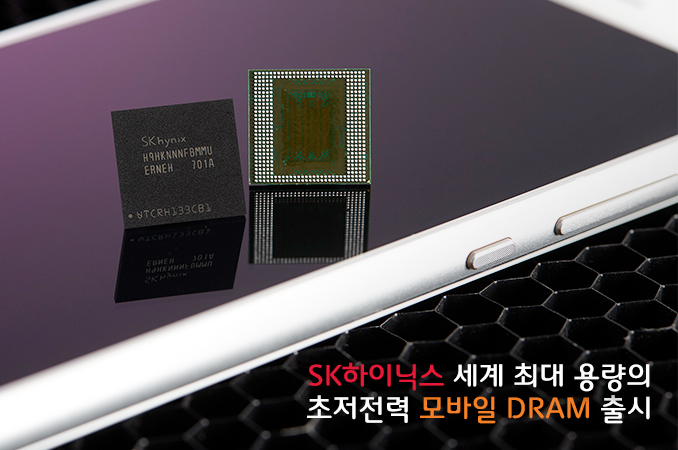
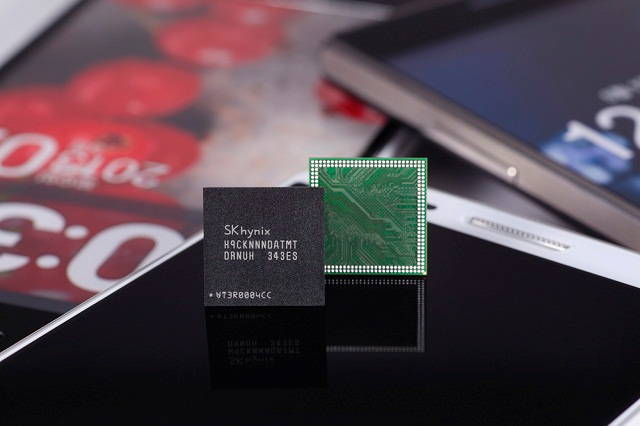
- SK Hynix Announces 8 GB LPDDR4X-4266 DRAM Packages
- SK Hynix Adds HBM2 to Catalog: 4 GB Stacks Set to Be Available in Q3
- Plextor Launches S2C SSDs: 16 nm SK Hynix TLC NAND and SMI SM2258
- Micron 3D NAND Update: 2D and 3D NAND Bit Crossover, Gen 2 Hits Production
| Time | Event | ||||||||||||||||||||||||||||||||||||||||||||||||||||||||||||||||||||||||||||||||||||||||||||||||||||||||||||||||||||||||||||||||||||||||||||||||||||||||||||||||||||||||||||||||||||||||||||||||||||||||||||
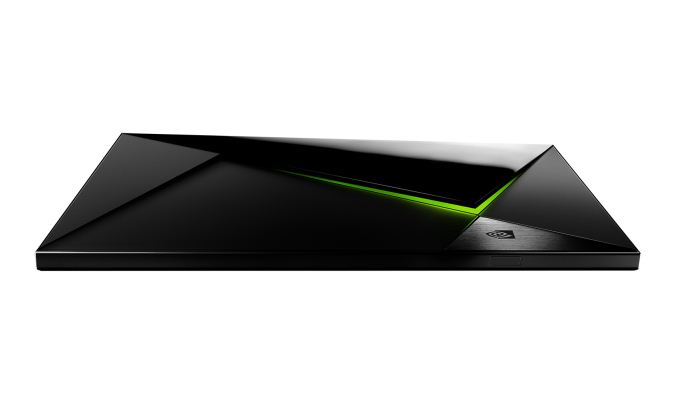
| 9:00a | NVIDIA Releases Android 7.0 Update for 2015 SHIELD TV, Adds Amazon Video App
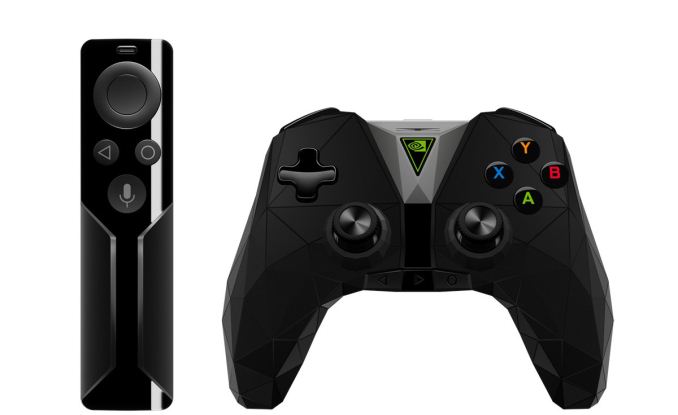
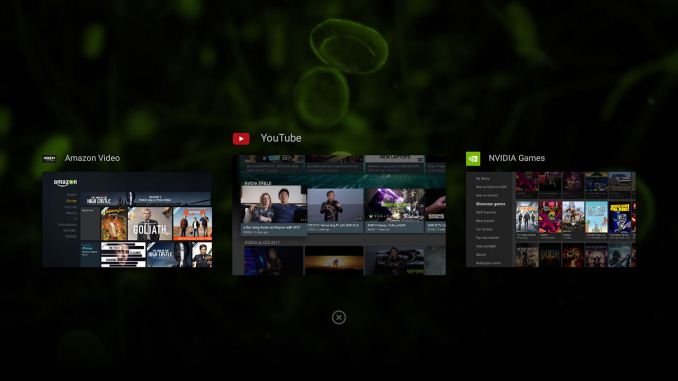
Earlier this month when NVIDIA announced the 2017 version of the SHIELD TV, the company also announced that the updated, Android 7.0-based OS that was at the heart of the miniaturized STB would also be coming to the existing 2015 models. Now, just a bit under 2 weeks after the retail launch of the new model, NVIDIA has released their promised update as Software Upgrade 5.0.2. Under the hood, the big change here of course is the upgrade to Android 7.0 “Nougat.” The latest version of Android doesn’t do quite as much for Android TV devices as we’ve seen on tablets and phones, but of note it adds support for a recent apps page, writing to USB/SD storage, and a new picture-in-picture mode. The latest update also adds support for NVIDIA’s 2017 hardware accessories: the revised SHIELD Remote (Pepper) and SHIELD Game Controller (Thunderstrike).
Meanwhile the biggest user-facing change is the addition of an Amazon Video app. While NVIDIA has been focused on growing out the video/app selection of their STB since it launched in 2015, Amazon has until now been a very notable absence. For NVIDIA this is particularly important since Amazon is one of a handful of streaming video services supporting 4K video and HDR, making it one of the few services that can fully show off what the hardware can do (ed: and just in time to catch the full first season of The Grand Tour).
And on the subject of 4K and HDR, the update also rolls out full support for 4K and HDR GameStream. This feature had been in limited testing up to this point. The update also brings in improved support for NVIDIA’s recently updated GeForce Now Internet game streaming service, allowing SHIELD TV to connect to the updated GTX 1060/1080 hardware (which, I suspect, is a precursor to streaming via HEVC). On that note, it should be pointed out that while the GeForce Now for PC/Mac program was announced to be a pay-by-the-hour service, NVIDIA is retaining their monthly $8 subscription service for GeForce Now for SHIELD devices. Going forward, the 2015 SHIELD TV will also eventually get support for Google Assistant and SmartThings Hub functionality. However like its 2017 counterpart, this feature is still under development and won’t be released until later this year.
| ||||||||||||||||||||||||||||||||||||||||||||||||||||||||||||||||||||||||||||||||||||||||||||||||||||||||||||||||||||||||||||||||||||||||||||||||||||||||||||||||||||||||||||||||||||||||||||||||||||||||||||
| 11:00a | SK Hynix Lays Out Plans for 2017: 10nm-Class DRAM, 72-Layer 3D NAND
SK Hynix this week announced financial results for its fiscal year 2016 and also revealed general plans for 2017. As expected, the company intends to start volume production of new types of memory and expand production capacities. What is noteworthy is that the company will primarily invest in the expansion of NAND flash manufacturing capacities, rather than the expansion of DRAM production, in the short-term future. DRAM: 21 nm Ramping, 18 nm(?) on Track for 2H 2017SK Hynix began to make DRAM using its 21 nm fabrication process in late 2015. The manufacturer has been gradually expanding usage of the technology as well as improving its yields since then. By now, SK Hynix makes a wide range of its products (including mainstream DRAM, mobile DRAM and specialized memory) using its 21 nm manufacturing process. This week the company confirmed that it intends to start volume production of DRAM using its 10 nm-class process technology (which industry experts believe is 18 nm) this year.
Just like other memory makers, SK Hynix plans to be conservative about its DRAM capital expenditures in 2017 and at present the company does not plan to undertake any significant capacity expansions. In the meantime, further increase of DRAM production using the 21 nm fabrication process and the start of 18 nm DRAM volume ramp in the second half of 2017 will automatically boost SK Hynix’s DRAM bit output — as memory cells get smaller, it is possible to produce more bits using one 300 mm wafer. Meanwhile, analysts from TrendForce believe that DRAM bit demand in 2017 will surpass 20% year-over-year, whereas DRAM bit supply by various makers will increase by around 19% YoY. The imbalance between demand and supply is projected to create shortages of DRAM as well as keep prices at high levels. Apart from PCs, there are two more factors that are going to raise demand for memory: first, Intel’s upcoming Xeon platform 'Purley' is expected to drive demand; and second, higher-end Google Android-based smartphones are expected to receive a memory upgrade with top-of-the-range models holding 8 GB of LPDDR4/LPDDR4X. NAND: 72-Layer 512 Gb Chips Due in Late 2017Demand for NAND flash has been steadily increasing in the recent years because the industry is increasing output of NAND-based devices (e.g., smartphones, SSDs, consumer electronics, etc.) as well as its content per box (e.g., the entry-level Apple iPhone 7 now contains 32 GB of storage, up from 16 GB). To meet the growing demand, manufacturers expand production capacities and introduce higher-capacity 3D NAND memory chips. Just like its competitors, SK Hynix plans to boost production of NAND in general and launch new ICs.
SK Hynix started to mass-produce its 36-layer 128 Gb 3D MLC NAND (which it calls 3D-V2) chips in 2015 and these ICs have been primarily used for various removable storage products. Last year, the company also started to make 48-layer 3D NAND (3D-V3) ICs that are to be used for various types of memory cards, flash drives, embedded storage and SSDs. With its third-gen 3D NAND, SK Hynix focuses on 256 Gb (32 GB) TLC ICs. The latter are used to build various NAND packages with 256 Gb, 512 Gb, 1024 Gb, 2048 Gb and even 4096 Gb capacities, which can be used for a variety of applications. Later this year SK Hynix intends to start volume production of 72-layer 3D TLC NAND (3D-V4) memory and this is where things start to get interesting. Initially, SK Hynix intends to produce 256 Gb 3D TLC ICs and these are going to be available already in Q2 2017, according to the company’s product catalog. Later on, sometimes in Q4, the company plans to introduce 512 Gb 3D TLC ICs (64 GB), which will help it to significantly increase capacities of SSDs and other devices featuring NAND flash. What is important about SK Hynix’s fourth-gen 3D NAND is that it will feature block size of 13.5 MB, which will increase the performance of such ICs compared to 3D-V3 and 3D-V2 that have a block size of 9 MB. At this point, we do not know whether SK Hynix intends to increase interface speed of its 512 Gb 3D-V4 ICs to compensate lower parallelism in lower-capacity SSDs, like Samsung did with its high-capacity 64-layer 3D V-NAND chips. What we do know is that SK Hynix’s catalog already includes NAND multi-chip packages of 8192 Gb capacity (1 TB) that will enable high-capacity SSDs in smaller form-factors (e.g., 2 GB single-sided M.2). Meanwhile, 64 GB NAND flash chips may force SK Hynix and its partners to abandon low-capacity SSDs (i.e., 120/128 GB) unless there is sufficient demand. M14 Fab Gets Second
| ||||||||||||||||||||||||||||||||||||||||||||||||||||||||||||||||||||||||||||||||||||||||||||||||||||||||||||||||||||||||||||||||||||||||||||||||||||||||||||||||||||||||||||||||||||||||||||||||||||||||||||
| 2:00p | MSI Upgrades Its Aegis and Nightblade PCs with Intel’s Kaby Lake CPUs
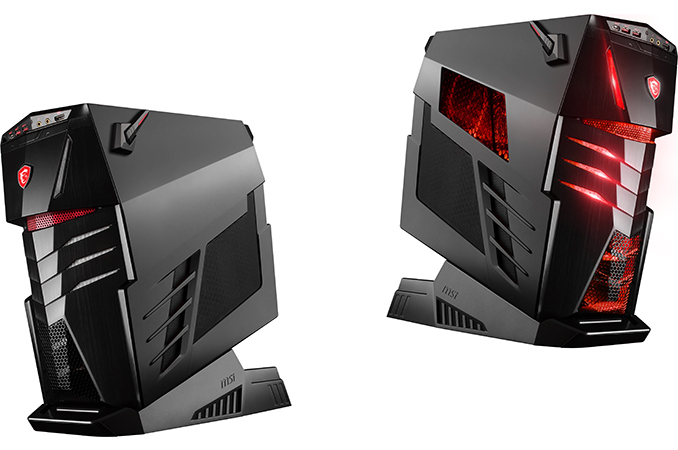
MSI this month upgraded its whole lineup of gaming desktops with 7th generation Intel Core Kaby Lake processors as well as newer motherboards featuring Intel’s 200-series chipsets. The new Aegis and Nightblade systems have the same design and capabilities as their predecessors, but they now offer higher performance because of the CPUs and a better feature set because of the new chipset (PCH). MSI’s Aegis and Nightblade computers are different in terms of positioning, but they have a lot of similarities when it comes to architecture. Firstly, the PCs use dual-chamber designs to ensure better cooling of their CPU and GPU, and they both simplify upgrades to a certain degree. Secondly, all the systems are based on Mini-ITX motherboards to minimize their footprint and make that dual-chamber design possible in case of miniature Nightblade PCs. Thirdly, gaming computers from MSI come with numerous configurable RGB LEDs to give their owners ability to customize their design according to their taste using MSI’s Mystic Light or Gaming Center software. Finally, all the latest MSI gaming PCs (except the Nightblade MIB) feature front HDMI ports to connect VR headsets.
MSI Nightblade MIB, MSI Nightblade MI3 and MSI Nightblade 3 The Nightblade series from MSI is designed to be as miniature as possible using off-the-shelf components: we are talking about 10-16 liter boxes here with up to 500 W PSUs. Given the relatively small sizes, the new Nightblade PCs use Intel B250-based motherboards, do not support CPU overclocking and can fit in up to three storage devices (in addition to one or two PCIe NVMe SSDs) - being a mix of 2.5-inch and 3.5-inch combinations. When it comes to graphics performance, we are still talking about very high-performance machines with either GeForce GTX 1060 or 1070 GPUs that can be overclocked if needed and there is enough cooling and power headroom.
Gallery: MSI Nightblade 3
      The Aegis family of desktops from MSI consists of the Aegis 3, X3 and Ti 3. These systems are aimed at gamers seeking for higher performance and expandability, which is why two out of three models (the Aegis Ti3 and the Aegis X3) are based on the Intel Z270 PCH, support manual and automatic CPU overclocking (they have a special MSI Game Boost button on their sides to activate the feature), come with 850 W or 600 W PSUs and the company’s Silent Storm cooling system. The Aegis PCs feature a triple-chamber design with the third chamber housing their PSUs.
Gallery: MSI Aegis Ti3
     
All three Aegis PCs can accommodate up to three SSDs/HDDs in combination, in addition to two or three M.2 SSDs (which can work in RAID) as well as feature Rivet Networks wired or wireless Killer network controllers that can prioritize gaming traffic over traffic generated by other apps. MSI’s Aegis computers use NVIDIA’s GeForce GTX 10 graphics cards, but the top-of-the-range Aegis Ti3 can actually accommodate up to two GeForce GTX 1070/1080 boards in SLI (making it the world’s only Mini-ITX PC with two GPUs) and up to 64 GB of DDR4-2400 memory.
It is interesting to note that instead of using a larger (say, microATX) motherboard with two PCIe 3.0 slots, in the case of the Aegis Ti3 MSI decided to use a Mini-ITX mainboard and then use a riser card with a PCIe switch to bifurcate the only PCIe 3.0 x16 slot between two cards. The Aegis Ti3 is a pretty large system that uses a 39-liter chassis. Given its configuration (two graphics cards, two SSDs with 1 TB capacity, 3 TB HDD, etc.), it can rival some of the systems made by boutique PC makers.
Gallery: MSI Aegis X3
      MSI’s Aegis and Nightblade PCs come with pre-installed microprocessors, video cards, storage and memory components, but actual configurations may vary in different regions. Therefore prices of the systems are going to vary greatly depending on the actual setup and components.
| ||||||||||||||||||||||||||||||||||||||||||||||||||||||||||||||||||||||||||||||||||||||||||||||||||||||||||||||||||||||||||||||||||||||||||||||||||||||||||||||||||||||||||||||||||||||||||||||||||||||||||||



| << Previous Day |
2017/01/28 [Calendar] |
Next Day >> |