[Most Recent Entries] [Calendar View]
Wednesday, February 1st, 2017
- AOC P2779VC: 27” PLS Display with Qi Wireless Charging Base for $199
- AOC Announces the AGON AG352UCG 21:9 Curved Display: 35", 3440×1440, 100Hz with G-Sync
- Nixeus NX-VUE27P Pro WQHD (2560x1440) Monitor Launched
- BenQ PD2710QC Announced: 27" 2560x1440 with Integrated USB Type-C Dock
| Time | Event | |||||||||||||||||||||||||||||||||||||||||||||||||||||||||||||||||||
| 11:00a | ASUS Launches 'Expedition' Line: GeForce GPUs and Motherboards 'Built for Non-Stop Gaming'
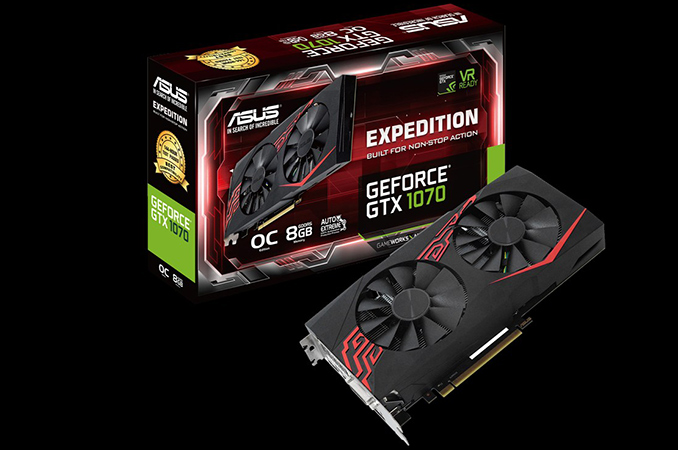
ASUS has launched five new GPUs and a B150 motherboard that belong to its Expedition family of products. The Expedition video cards promise to wed durability for sustained long-time use with reasonable prices: the boards are made using ASUS’ latest automated production process and feature components with enhanced lifetime ratings over the standard components (albeit with standard cooling and near-reference frequencies). The increased suitability for non-stop use claim comes through the components and additional testing for the range: a combined 144hr compatibility test and burn-in sequence. ASUS plans to market these parts to business such as gaming cafes which remain popular in Asia. Initially the ASUS Expedition lineup will consist of five graphics adapters based on NVIDIA’s GP104 and GP107 GPUs. The video cards are made using the ASUS Auto-Extreme automated production process that is also used to produce ASUS ROG Strix and some other high-end products. To build the boards, the manufacturer uses dual-ball bearing fans as well as 'higher-quality' chokes and other components that are said to be rated for extended durability. ASUS also states that the Expedition graphics cards are stress tested for 144 hours in various demanding environments to ensure their quality. The hardware maker does not elaborate whether all the cards are subject to rigorous testing, or just a number of cards per batch pass those tests, but it emphasizes that the adapters are ready for prolonged gaming sessions. Additionally, similar to its higher-end graphics boards, the Expedition video cards will feature ASUS’ zero-db fans that do not spin until the GPU reaches a certain temperature.
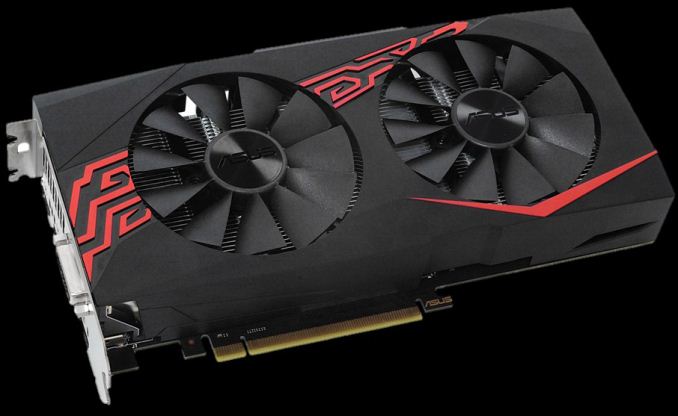
The higher performing card in the lineup is the ASUS Expedition GeForce GTX 1070 OC Edition 8 GB GDDR5 (EX-GTX1070-O8G) that uses the company’s own PCB design (24 cm/9.45” in length) and slightly taller cooling system (13.1 cm/5.16”) with two heat pipes and two fans. It is noteworthy that in default mode its GPU base frequency is 1582 MHz, lower than 1607 MHz recommended by NVIDIA, but the boost clock rate is 1771 MHz, which is higher compared to 1733 MHz on NVDIA’s reference designs. The card also has an OC mode with 1607/1797 MHz base/boost frequencies. As for display outputs, the card has one DVI, two HDMI ports, and two DisplayPort ports.
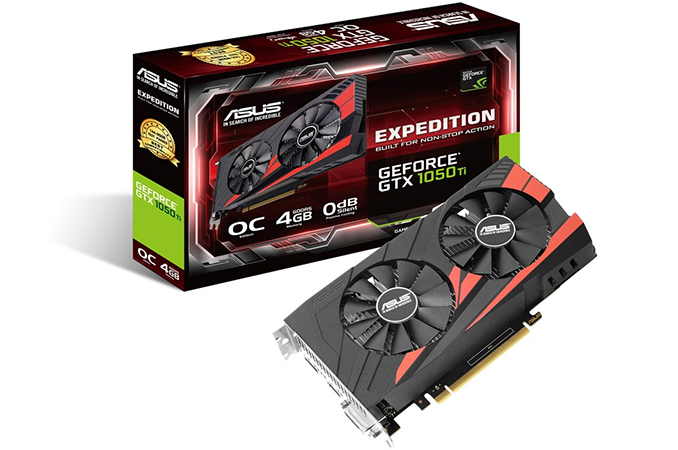
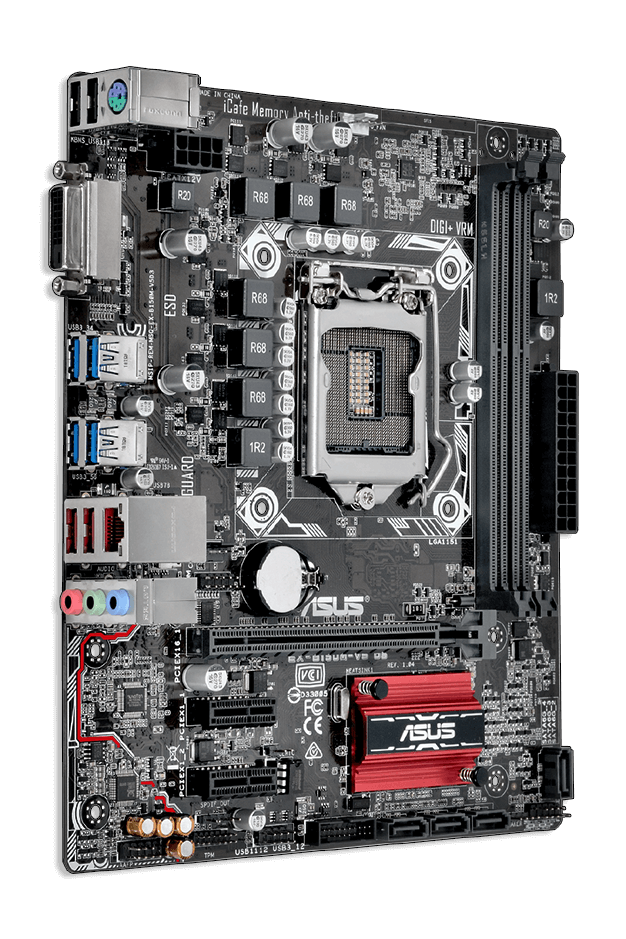
The other two video cards in the Expedition family are the ASUS Expedition GeForce GTX 1050 OC Edition 2 GB (EX-GTX1050-O2G) and the ASUS Expedition GeForce GTX 1050 Ti OC Edition 4 GB (EX-GTX1050TI-O4G), also featuring a custom PCB design and dual-fan cooling systems (in this case, without heat-pipes). Both cards have slightly (~ 50 MHz) higher GPU frequencies than recommended by NVIDIA and thus offer a little bit of improved performance over reference designs. When it comes to the display outputs, these two adapters feature one DVI, one DisplayPort and one HDMI connector. These two cards are paired with non-OC versions (EX-GTX1050-2G and EX-GTX1050TI-4G ) to bring the total up to five. On the motherboard side, ASUS has listed the EX-B150M-V5 D3 as an addition to the Expedition line. In a somewhat different take on the TUF line (which is aimed at high-end durability), this B150 board is along the similar lines of the GPUs: base hardware with a focus on durability when in a gaming cafe environment. This board caters for most gaming cafe needs: two memory slots, space for a stock cooler, a single GPU slot, 2.1 audio, SATA ports, USB 3.0 ports, and if needed, an integrated graphics based DVI-D port. The Realtek ALC887 (the top 2.1 codec) gets some Crystal Sound 2 treatment via PCB separation and filter caps, and ASUS states that the USB ports are individually surge protected (in case one fails, the others will keep working). As part of the focus on gaming cafes, ASUS states that this board goes through extensive testing to ensure base compatibility with games and 100+ peripherals. ASUS has not disclosed MSRPs of its Expedition graphics cards or their availability dates, but since the boards are already listed on the company’s website, we expect them to hit the market shortly. However, if they are truly focused on gaming cafes, they might only be launched in Asia. No word yet if these components come with increased warranties, either. Related Reading: | |||||||||||||||||||||||||||||||||||||||||||||||||||||||||||||||||||
| 12:01p | The ADATA Ultimate SU800 SSD Review (128GB, 256GB, 512GB) ADATA's Ultimate SU800 is their first SSD to use 3D NAND and the first 3D NAND SSD from a company that doesn't manufacture their own NAND flash memory. The SU800 pairs Micron's 3D TLC NAND with Silicon Motion's SM2258 controller to produce an entry-level consumer SATA SSD, available in both 2.5" and M.2 form factors. | |||||||||||||||||||||||||||||||||||||||||||||||||||||||||||||||||||
| 1:00p | GIGABYTE Extends Aorus to GPUs: A New GeForce GTX 1080
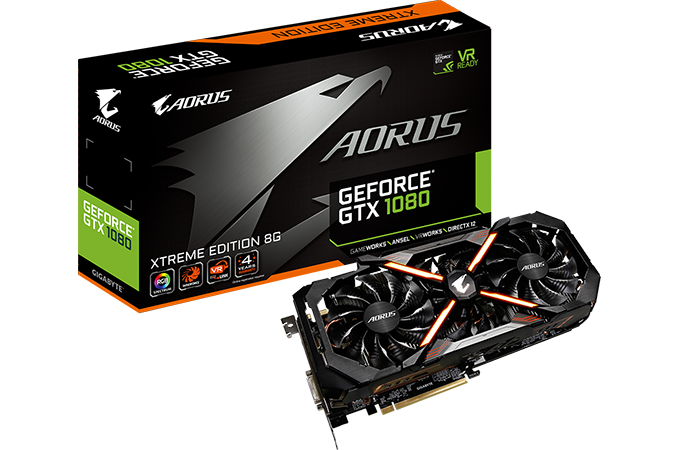
GIGABYTE this week announced its first graphics adapter that belongs to the Aorus line of products - the Aorus GeForce GTX 1080 xtreme edition 8G. The video card features a very high GPU frequency and will be among the fastest GeForce GTX 1080-based offerings from GIGABYTE and other hardware makers. The board will be the first graphics card to be sold under the Aorus brand, but soon other members of the same family will join it. Over the past several years, GIGABYTE has introduced multiple sub-brands to address the market, from gaming on a budget to the most demanding PC enthusiasts. For graphics cards, the company used the G1 Gaming and the Xtreme Gaming sub-brands for its highest-end products. In the meantime the motherboard arm of the company (which almost acts like a different company internally anyway) was using UltraDurable, SOC Force, G1 Gaming and some other names. The fact that there was a split suggested a lack of synergy, especially when GIGABYTE's main competitors were unifying their product lines under a single gaming brand. As a result, in order to make things simpler going forward, the company will consolidate its top-of-the-range offerings under just one brand, 'Aorus', which has been used for the company’s premiumhttp://forum.aorus.com/forum/main-forum/5 To clarify 'why' Aorus: taken from an Aorus marketing rep forum post on 11/6/2016,
The Aorus GeForce GTX 1080 xtreme edition 8G (GV-N1080AORUS X-8GD) in many resembles GIGABYTE’s previously announced GeForce GTX 1080 Xtreme Gaming 8G (GV-N1080XTREME-8GD). The new card has a nearly similar Windforce 3X cooling system with multiple heatpipes, two fans with special fins and RGB lighting, but a slightly altered backplate. This first Aorus video card also has exactly the same GPU frequencies as the previously announce card: 1784/1936 MHz base/boost in OC mode. The new GPU also has the same display output configuration (three DP, one HDMI, one DVI as well as one 'VR Link' - a HDMI on the back of the card). Based on the images, the PCBs of the cards are not exactly the same (at least based on the parts we can see on the images below the story), but they may be very similar. In any case, from an out-of-the-box performance point of view, the two cards would appear to perform almost exactly the same depending on firmware.
The fact that the Aorus card resembles the Xtreme Gaming board is not something completely unexpected: development of brand new products takes a long time and the company already has a flagship graphics product with an advanced cooling system and feature-set that satisfies the buyer. Going forward we would expect to see exclusive Aorus offerings, but for now the new cards will resemble existing products. Meanwhile, when it comes to motherboards, all advanced Intel 270 PCH-based offerings from GIGABYTE already carry the Aorus trademark. As soon as GPU companies come up with new processors, the Aorus family will get unique graphics cards as well.
GIGABYTE did not officially announce the recommended price of the Aorus GeForce GTX 1080 xtreme edition 8G, but since the card has similarities with other products we expect the new unit to cost about the same amount of money. Right now, Newegg offers GIGABYTE’s GeForce GTX 1080 Xtreme Gaming graphics cards for $680-$744. Both the Aorus and Xtreme Gaming graphics cards come with a four-year warranty in North America (with online registration required).
Related Reading: | |||||||||||||||||||||||||||||||||||||||||||||||||||||||||||||||||||
| 3:00p | The AOC Q2781PS Announced: 'Frameless' Rose Gold 27" QHD with Swarovski Crystals
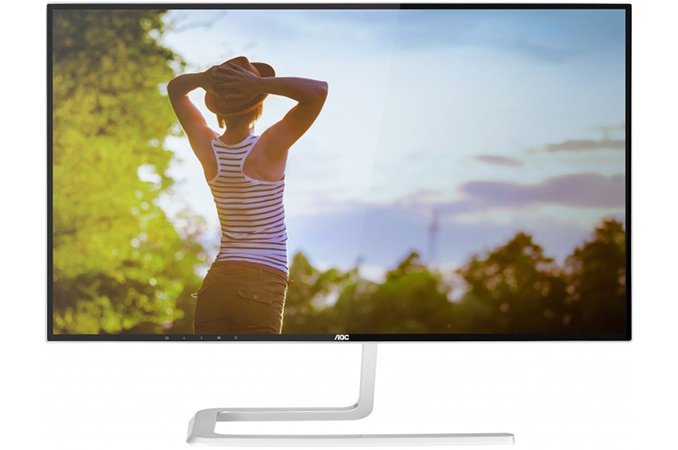
AOC this week introduced two new 27” displays with thin bezels, a fancy asymmetric stand, an IPS panel and QHD resolution (2560×1440). The more expensive of the two monitors comes with a rose gold base as well as a rear embedded with Swarovski crystals. When it comes to stylish computer hardware in general and displays in particular, it is not always easy to get something that is both aesthetically attractive and technologically advanced. High-quality backlighting requires space, and full-size connectors make devices thicker too, so sleek designs usually have certain compromises. AOC attempted to combine style and technology in its Q2781-series monitors, if having crystals on your monitor is your thing. The displays are based on AH-IPS panels featuring a 2560×1440 resolution suitable up to 350 nits brightness, a 1000:1 contrast ratio, 178°/178° viewing angles, a 5 ms response time and a 60 Hz refresh rate. The manufacturer claims that the Q2718PQ and the Q2718PS displays can reproduce 16.77 million colors, and also claims “full sRGB” (but we would cautiously call it 99%).
The monitors have very thin bezels on all four sides and have asymmetric L-shaped stands as shown in the picture above. The AOC Q2781PQ has a silver stand and a regular black back panel. The AOC Q2781PS comes with a rose gold base, whereas its back panel is decorated with Swarovski crystals. The tilt of both displays can be adjusted, but the height is fixed.
Gallery: AOC Q2718PQ Display
      As for connectivity, the AOC Q2781-series displays have a DisplayPort, an HDMI header, a D-Sub input as well as a 3.5-mm headphone output. Keep in mind that D-Sub does not support HDCP and certain content may not playback when using such connectors. AOC mentioned that the Q2781-series monitors also feature the company’s Clear Vision video engine to upscale SD content to HD quality. The AOC Q2781PQ is available now at Amazon.com for $349.99, which is below the MSRP of $499. The rose gold version with the Swarovski 'bling' (Ian's edit: each to their own) will be available in the coming months for $599. Related Reading:
| |||||||||||||||||||||||||||||||||||||||||||||||||||||||||||||||||||








| << Previous Day |
2017/02/01 [Calendar] |
Next Day >> |