[Most Recent Entries] [Calendar View]
Saturday, February 4th, 2017
- ASUS Announces Designo Curve MX38VQ: 37.5 Inch Curved Display with Qi Charging
- LG 38UC99 Announced: 37.5-Inch Curved 21:9 Display with 3840×1600 Resolution
- AOC Announces the AGON AG352UCG 21:9 Curved Display: 35", 3440×1440, 100Hz with G-Sync
- Acer Introduces A Pair Of Predator Gaming Displays
- Acer Announces The Acer Predator 21 X: 21-Inch Curved Screen Gaming Notebook
- China Calling: AMD Forms Joint Venture for x86 Server SoCs in China
- NVIDIA Files Patent Infringement Complaints Against Qualcomm & Samsung
- Samsung Files Counter-Suit & Patent Infringement Claims Against NVIDIA & Velocity Micro
- Samsung/NVIDIA Case Update: US ITC Finds Samsung GPUs Non-Infringing
- US ITC Finds NVIDIA Guilty of Infringing Three Samsung Patents
- NVIDIA & Samsung Settle All Patent Infringement Disputes
- ZOTAC Announces GeForce GTX 1080 for Mini-ITX PCs
- ZOTAC Launches GeForce GTX 1070 Mini for Mini-ITX PCs
- GIGABYTE Announces GeForce GTX 1070 Mini ITX OC
| Time | Event | |||||||||||||||||||||||||||||||||||||||||||||||||||||||||||||||||||||||||||||||||||||||||||||||||||
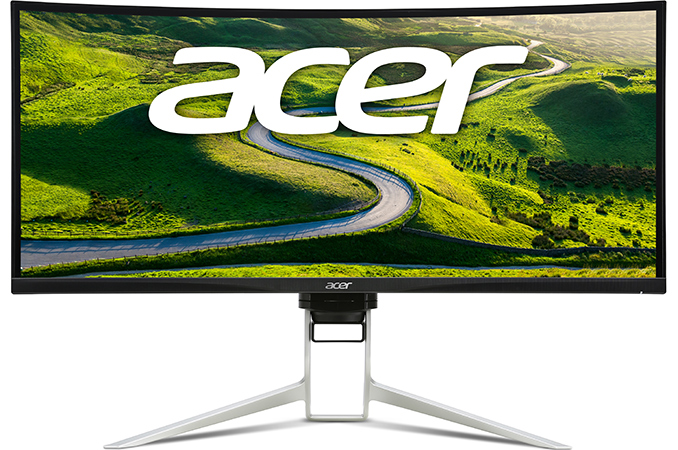
| 8:00a | Acer Launches Curved XR382CQK Display: 37.5-inch, 3840×1600, FreeSync, & USB-C
Acer has announced its new ultra-wide curved display for gaming and multimedia applications. The monitor boasts with a rare combination of features, such as a curved panel, 2.4:1 aspect ratio, a USB-C input, as well as multiple features for gamers, including a 75 Hz refresh rate, variable refresh via AMD’s FreeSync, and ambient lighting. The new display is about to hit the market, but with a rather high price tag due to its distinctive mixture of capabilities. The Acer XR382CQK is based on a 37.5” IPS panel with a 3840×1600 resolution, a 24:10 aspect ratio and 2300R curvature (see the table below for other specs). The distinctive specifications may indicate that the supplier of the panel is LG Display, and we already know two monitors which feature the same screen (1, 2). As reported, the resolution and the aspect ratio of the display are well suited for displaying HD and UHD content filmed in an aspect ratio of 2.35:1 or 2.40:1 (a lot of movies are shot in such aspect ratios) as well as for games. Meanwhile the 8-bit + FRC panel allows the reproduction of 1.07 billion colors, and covers 100% of the sRGB color space.
Given the positioning of the monitor, Acer added several features to its XR382CQK that are not available from competitors, including a 75 Hz refresh rate (I suspect the panel is probably overclocked, but not significantly and Acer guarantees that it is going to work fine) as well as RGB ambient lighting that can be adjusted from the OSD (lighting effects include pulse, flash and ripple). In addition, the monitor is equipped with two 7 W speakers with DTS Sound software enhancement.
As for connectivity, the Acer XR382CQK has HDMI, DP, mDP and MHL inputs, a rare combination not found on many other devices. Moreover, the new display is also the first gaming monitor that comes with a USB Type-C input and therefore is compatible with various notebooks that have this interface and can use it to connect to external screens. Technically, DisplayPort alt mode on USB-C supports Adaptive-Sync (and hence FreeSync) and therefore the XR382CQK is the industry’s first monitor that supports FreeSync over USB-C. However, we are not sure there are notebooks with AMD APUs or GPUs that have USB-C as their only display output. In any case, the USB-C input support is a nice feature for the future. In addition, the monitor has a headphone output, which is especially useful for gamers.
The Acer XR382CQK is about to hit the shelves of U.S. retailers with a price tag of $1,299.99. Amazon.com already lists the monitor and is even taking pre-orders, but the product is not in stock just yet. Related Reading: | |||||||||||||||||||||||||||||||||||||||||||||||||||||||||||||||||||||||||||||||||||||||||||||||||||
| 10:30a | AMD Files Patent Infringement Complaint Against LG, MediaTek, Sigma Designs, and Vizio
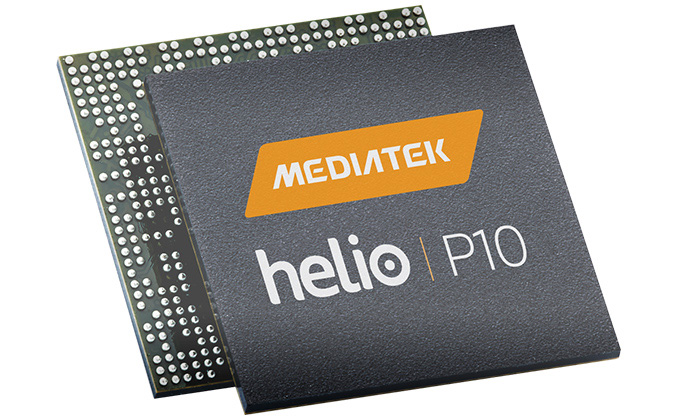
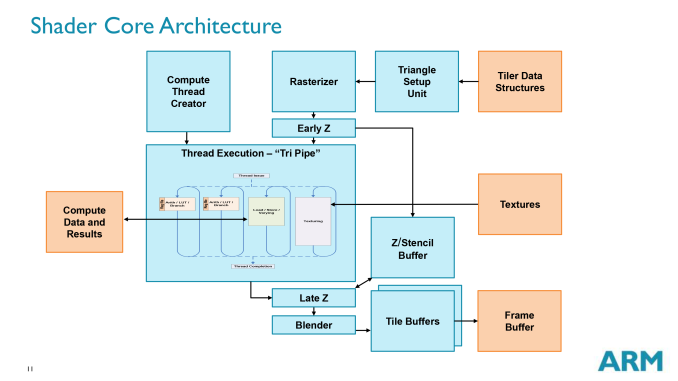
Late last month, AMD filed a legal complaint against a number of companies accusing them of infringing its patents covering graphics processing technologies. The company requested the United States International Trade Commission (US ITC) to investigate the matter and, if the ITC finds in their favor, ban products based on chips that infringe on AMD’s intellectual property rights. In its complaint, AMD asserts that products by LG, MediaTek, Sigma Designs and Vizio infringe three patents, two of which were originally filed by ATI Technologies (which AMD acquired in 2006) in early 2000s and one filed by AMD itself. The patents in question cover fundamental aspects of contemporary graphics processing, such unified shaders (‘133), parallel pipeline graphics system (‘506), as well as a graphics processing architecture employing unified shaders (‘454). In addition, the lawsuit mentions an in-progress patent application covering GPU architectures with unified shaders (‘967) that is also claimed to be infringed by two of the defendants. Notably, all the defendants license their GPU technologies from third party developers such as ARM and Imagination. As case law involving IP infringement is generally weak - it's more difficult to sue over ideas as opposed to physical products - AMD is going after product manufacturers instead. As a result, instead of accusing IP vendor ARM of using its intellectual property, AMD is taking a legal action against MediaTek, LG, Sigma and Vizio, all of whom either make chips that AMD believes use their IP, or use said chips as part of finished consumer goods. Overall the case draws some immediate parallels with a case filled by NVIDIA in the latter part of 2014, where the company filed complaints with the US ITC over accused patent infringement by Qualcomm and Samsung. Like AMD’s case, the core issue was over GPU patents that NVIDIA believed the companies’ products were violating. A side issue in the case that NVIDIA was also trying to get addressed was to figure out who is responsible for patent infringement in devices like smartphones: the handset manufacturer, or the SoC manufacturer. It was a case that NVIDIA essentially lost; the companies settled, but only after Samsung’s counter-suit was more successful in court than NVIDIA’s original suit. That the case was settled out of court also means that there is no significant legal precedent to come out of the case. As for the AMD case, diving deeper into matters, one of the allegedly infringing products is MediaTek’s Helio P10 SoC for smartphones, which is used by certain handsets from LG (e.g., LG X Power). The chip features the Mali T860MP2 GPU licensed from ARM and is not developed by MediaTek itself. Another SoC that allegedly infringes AMD’s patents is Sigma’s SX7 (STV7701) SoC for UHD TVs with HDR support. Details on this SoC are harder to come by, but at a high level this chip appears to use an ARM-developed quad-cluster GPU. Downstream, Vizio uses the SX7 SoC for its advanced televisions, which is why they are one of the defendants in the complaint.
Importantly, AMD's complaint also states that the infringement is not limited to the named products, but rather that AMD is naming them as examples of infringement. The case could ultimately go beyond the two SoCs, one smartphone, and several TVs (including LG’s 49UH6500 and Vizio's E43U-D2) named, depending on which side any rulings favor. AMD claims that the aforementioned SoCs and products not only infringe on its intellectual property, but that those products also damage legitimate licensees of AMD's IP. To support the claim, AMD made one interesting disclosure: Samsung and GlobalFoundries have licensed its intellectual property covered by the ‘506, ‘454 and ‘133 patents, as well as the ‘967 application. The former has rights to use the IP in its Exynos mobile SoCs (up to 10-nm Exynos 8 Octa 8895 that uses an ARM Mali GPU), whereas the latter has rights to manufacture the appropriate chips.
In fact, one big unknown right now is just which GPU architectures AMD believes to infringe on their IP. The two named SoCs are ARM Mali based, and given the patents involved (e.g. unified shaders) it looks like AMD takes issue with ARM’s Midgard architecture in particular. Midgard itself is a few years old now, and while it will be shipping in products for years to come, it’s interesting to note that ARM has already released designs based around their new Bifrost architecture, which is radically different from Midgard.
Meanwhile not named in any of the complaints are chips using any generation of Imagination’s PowerVR architectures. As MediaTek is known to use both ARM and Imagination GPU designs – and because AMD is only listing a couple of chips as examples – it’s not clear in AMD’s complaint whether they consider PowerVR to be infringing. However an important clue lies in the fact that in listing the SoCs Samsung is licensed to make, only SoCs using ARM GPUs are mentioned. As a result, our best guess is that this complaint is solely about ARM’s GPU IP. Looking at the broader picture and possible motivations for why AMD would bring this complaint up now, AMD announced plans to monetize its IP portfolio in late 2014 in a bid to secure new revenue streams and improve overall profitability. As part of the effort, the company inked a deal with Tianjin Haiguang Advanced Technology Investment Co., Ltd (THATIC), who is an investment arm of the Chinese Academy of Sciences, regarding the development of server SoCs last year. Apparently, in addition to finding partners like THATIC, AMD has approached certain technology companies that ship products based on technologies developed by third parties (e.g., ARM) in regards to patent licensing. AMD says that it has already “enforced” its “intellectual property rights” against Samsung and LG and the new family of lawsuits against the latter is a continuation of these efforts. The AMD complaint requests the US ITC to issue a limited exclusion order and a cease and desist order to stop the infringing products from being imported and sold in the U.S. If the commission finds that the defendants do infringe on AMD’s patents and decides to ban them from the U.S., multiple product lines of LG and Vizio would be affected. AMD is not a company that goes to court often and it is not a company that brings its litigations to the public attention, which is part of the reason this is only coming to light now. Back in 2005, the chip designer sued Intel alleging the latter of multiple wrongdoings that harmed AMD’s business in the 1990s and the early 2000s, but that was the only public legal process that AMD was involved into in the recent years. By contrast, the legal proceedings against Samsung and LG in the recent years went unnoticed. This also significantly contrasts with NVIDIA, which was quite vocal and public about their 2014 suit against Qualcomm and Samsung. The litigation against MediaTek, LG, Sigma Designs, and Vizio will not attract as much attention as the AMD vs. Intel fight, but it certainly marks a rare situation when AMD goes to court on the offensive. In the meantime this will be a case worth watching. As AMD already has a license agreement with a major SoC manufacturer (Samsung) in place, it means they aren't facing an entirely uphill battle. Still, barring an early out of court settlement, it may take years for this case to be fully resolved. Related Reading: Sources: ITC Law Blog, TechPowerUp. | |||||||||||||||||||||||||||||||||||||||||||||||||||||||||||||||||||||||||||||||||||||||||||||||||||
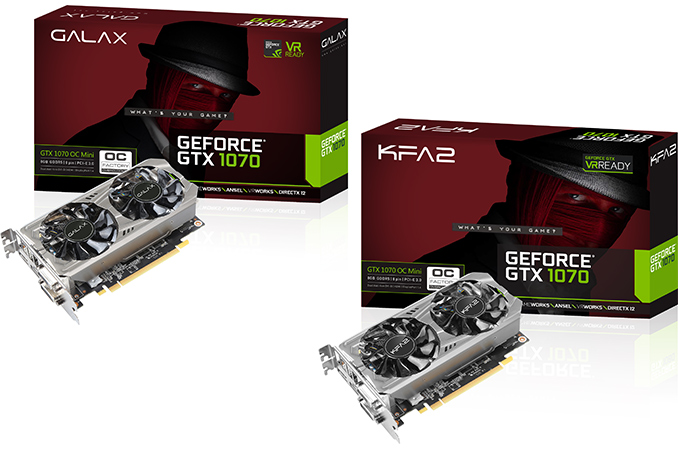
| 1:00p | Palit Launches GeForce GTX 1070 for Mini-ITX PCs with GALAX and KFA2 Brands
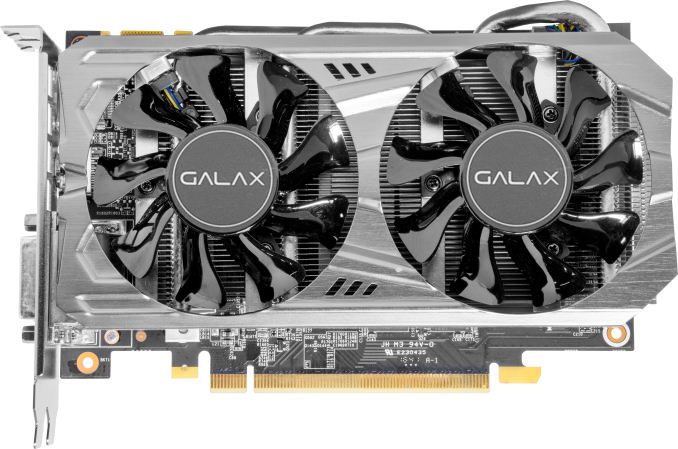
Palit has quietly released a GeForce GTX 1070-based video card for Mini-ITX systems under the GALAX and KFA2 brands. The product uses a unique PCB design and will be the third GeForce GTX 1070 graphics adapter for Mini-ITX PCs on the market. Just like competing GeForce GTX 1070s in an ITX form-factor, the GALAX GeForce GTX 1070 OC Mini and KFA2 GeForce GTX 1070 OC Mini graphics cards offer the same level of performance as a full-size GTX 1070. Both boards carry NVIDIA’s GP104 GPU (with 1920 stream processors, 120 texture units and 64 ROPs) that operates at 1518/1708 MHz (base/boost) as well as 8 GB of Micron’s GDDR5 memory running at 8 Gbps. While the card runs a bit faster than NVIDIA’s reference frequencies (+12/25 MHz for base/boost frequencies), its TDP remains the same at around 150W.
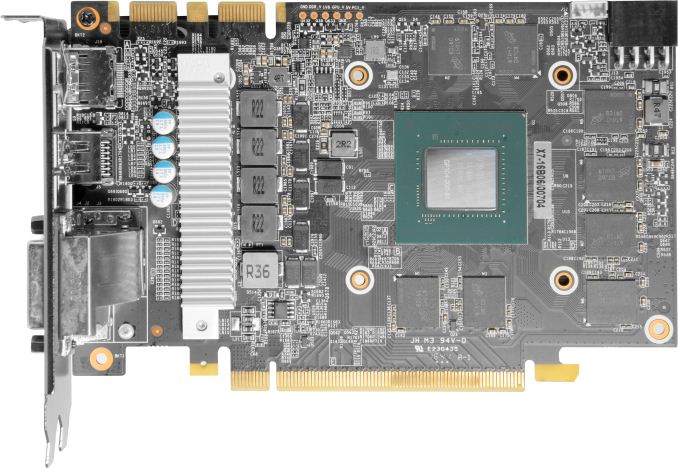
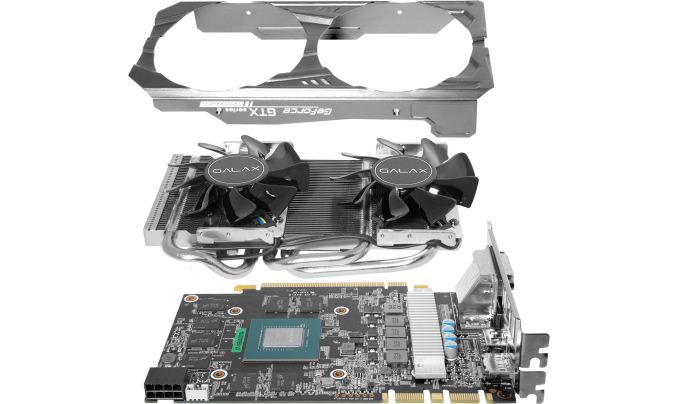
Both video cards use the same PCB design with a 4+1 VRM and one 8-pin PCIe power connector, which is inline what NVIDIA’s reference boards offer. The VRM uses solid-state chokes, whereas its MOSFETs are cooled down by a separate heatsink. The main cooling system features a copper base, three thick nickel-plated heat pipes, a relatively large aluminum radiator, two fans and a metal cover. In fact, the cooler is larger when compared to cooling systems of some other Mini-ITX graphics cards and the adapter itself is a bit longer when compared to direct rivals (195/181 mm with/without a bracket, whereas a mini-ITX motherboard is 170mm).
The dimensions of the GALAX/KFA2 GeForce GTX OC Mini cards are not going to become a problem in the vast majority of situations where a good performance mini-ITX gaming PC is concerned, however some users aiming at very small form-factor builds may end up finding it a tight squeeze.
As for connectivity, Palit decided to offer something different from NVIDIA’s reference designs and appeal to owners of older monitors (who use more than one of them) with DVI interface. Both cards are equipped with one DisplayPort 1.4 connector, an HDMI 2.0b port as well as two dual-link DVI-D ports. By contrast, NVIDIA-designed boards come with two DPs, an HDMI and only one DVI header.
Palit did not announce MSRP and ETA of its GALAX GeForce GTX 1070 OC Mini and KFA2 GeForce GTX 1070 OC Mini boards, but given that they are listed at respective web sites, expect them to show up on the shelves in the coming weeks. Meanwhile, as examples of other high-end Mini-ITX graphics cards show, the GPU manufacturers do not tend to charge a much more for an SFF card and prices of such adapters are very close to NVIDIA’s MSRPs (which for the GTX 1070 is $379). Gallery: GALAX GeForce GTX 1070 OC Mini
      Related Reading:
| |||||||||||||||||||||||||||||||||||||||||||||||||||||||||||||||||||||||||||||||||||||||||||||||||||




| << Previous Day |
2017/02/04 [Calendar] |
Next Day >> |