[Most Recent Entries] [Calendar View]
Thursday, February 16th, 2017
- Philips BDM4037UW Goes on Sale: 40 Inch 4K Curved Display for $800
- Philips Begins to Sell 43” 4K IPS BDM4350UC Display for $799
- Acer Launches Curved XR382CQK Display: 37.5-inch, 3840×1600, FreeSync, & USB-C
- ASUS Announces Designo Curve MX38VQ: 37.5 Inch Curved Display with Qi Charging
- LG 38UC99 Announced: 37.5-Inch Curved 21:9 Display with 3840×1600 Resolution
- ADATA Announces Ultimate SU900: 3D MLC NAND, SMI Controller, SATA
- ADATA Launches XPG SX8000: High-End M.2 NVMe SSD Featuring 3D MLC NAND
- ADATA Introduces Ultimate SU800 SSD: SMI Controller, 3D NAND, SATA Interface
- The ADATA Ultimate SU800 SSD Review (128GB, 256GB, 512GB)
| Time | Event | ||||||||||||||||||||||||||||||||||||||||||||||||||||||||||||||||||||||||||||||||||||||||||||||||||||||
| 8:00a | AMD & NVIDIA Post GDC 2017 Event Details, Both Holding Events February 28th
Though it feels like we’re barely past CES, things are already quickly ramping up in the PC hardware industry once again. Kicking off in a bit under two weeks is the 2017 Game Developers Conference, taking place as always in San Francisco. While it isn’t a tradeshow in the consumer sense, the conference traditionally draws out the major PC hardware vendors as part of the developer outreach efforts, and this year is no exception. GDC event details have been posted for both AMD and NVIDIA, whom it turns out are both holding events on February 28th (the day before the expo part of GDC opens). Neither of the vendors have announced their events through their gaming websites or press releases – bear in mind this is a developers’ conference – but both have sent out invites to developers and other GDC attendees. AMD: Capsaicin & CreamThe sequel to last year’s Capsaicin event, AMD is once again at GDC to talk to developers at their Capsaicin & Cream event. Last year’s event featured the announcement of the developer-focused Radeon Pro Duo, and a new AMD GPU roadmap. AMD’s event description (posted below) is light on details, but of note it appears that AMD will once again be livestreaming the event at 10:30am Pacific.
NVIDIA: GeForce GTX Gaming CelebrationNot to be outdone, NVIDIA is hosting an event at GDC as well, which they’re dubbing their GeForce GTX Gaming Celebration. NVIDIA did not have an event in 2016, while in 2015 the company used the event as the backdrop for the SHIELD TV unveiling (with a surprise GTX 980 Ti announcement the next morning). Like AMD, NVIDIA is being similarly mum about their event, but it’s safe to say it’ll involve GeForce…
| ||||||||||||||||||||||||||||||||||||||||||||||||||||||||||||||||||||||||||||||||||||||||||||||||||||||
| 10:45a | JapanNext JN-VC490UHD and JN-VC550UHD: 49-55 inch, Curved 4K, FreeSync, HDCP 2.2, Under $900
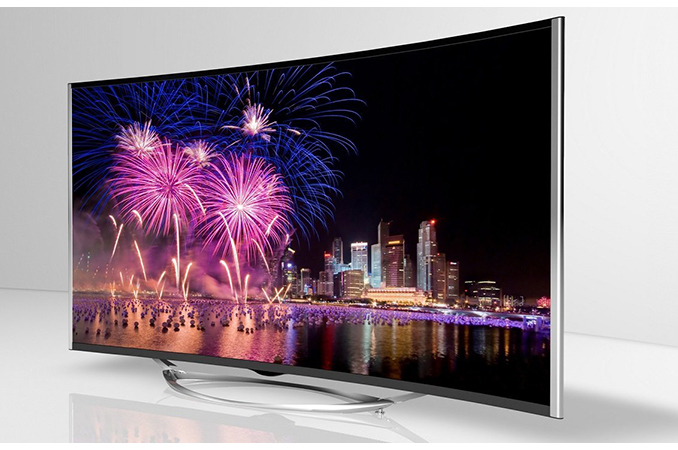
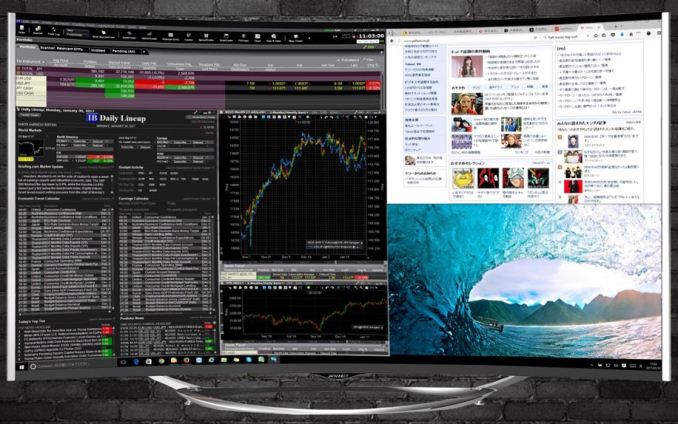
JapanNext has started to sell its new ultra-large 49” and 55” curved displays that feature an Ultra HD resolution, a low response time, AMD’s FreeSync dynamic refresh rate technology as well as HDCP 2.2 copyright protection. The monitors are not too expensive: they are currently available for less than $900. Ultra-large displays are not so common but are not something extremely rare too. For example, companies like NEC offer displays with 40”+ diagonals for professional and industrial applications. Such monitors tend to be too expensive for personal use because they are built according to different standards asking for 24/7 operation and rated for maximum endurance. For many people displays larger than 40” are simply too big, but there are gamers as well as those need to keep a lot of information on their screens, who may want to have a huge monitor. Last year TPV (Philips) introduced two 40” and 43” UHD 4K monitors for prosumers that retail for less than $1000. This month a Japanese company called JapanNext introduced its JN-VC490UHD and JN-VC550UHD monitors that are even larger and support a dynamic refresh rate technology.
The JapanNext JN-VC490UHD (49”) and JN-VC550UHD (55”) displays are based on SVA panels (which may indicate that the manufacturer sources it from Samsung Display) with a 3840×2160 resolution, 250 nits brightness, a 6000:1 contrast ratio, a 60 Hz refresh rate and a 3-4 ms response time. The producer states that the display panels can reproduce 1.07 billion colors (listed online as 10-bit) and are rated to support 99% of the sRGB color gamut. The displays use ELED backlighting to ensure “flicker free” operation and JapanNext promote the panels as being 16mm thick.
In a bid to make the JN-VC490UHD and JN-VC550UHD monitors more appealing to gamers, JapanNext equipped the display with AMD’s FreeSync dynamic refresh technology (and there is AMD’s official FreeSync badge on the manufacturer’s website). Unfortunately JapanNext does not declare what refresh range it supports for FreeSync, which may be limited (40/45Hz to 60Hz or similar). Moreover, the units both fully support HDCP 2.2 technology, which is not common for monitors, but which is more commonly found on UHDTVs (given the dimensions of the JN-VC490UHD and JN-VC550UHD, it makes sense to compare them to TVs). Therefore, the 49” and 55” curved UHD displays could be used for Ultra HD Blu-ray playback (but HDR support is not formally declared however).
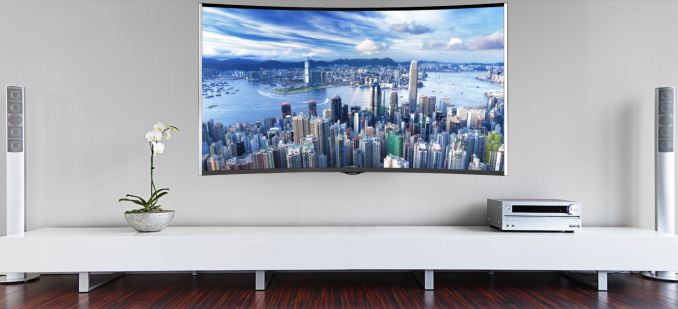
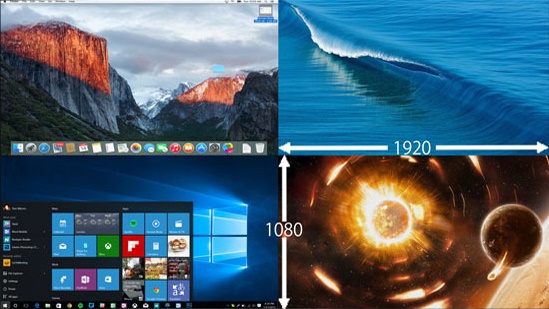
Connectivity is a yet another interesting peculiarity of the JapanNext displays. The monitors have two HDMI 1.4 inputs that support 3840×2160 resolution at 30 Hz, one DisplayPort 1.2 and one HDMI 2.0 that can both handle 4K at 60 Hz as well as one D-Sub connector (up to 2560×1440). The displays support PiP (picture-in-picture) and PBP (picture-by-picture) modes and some may use it to work with up to four different FHD PCs. As for audio, the displays are equipped with two 6 W stereo speakers, a 3.5-mm audio input, a headphone output and an SPDIF optical output for those who will use them with an audio decoder/receiver. The ultra-large curved UHD displays for prosumers and gamers from JapanNext will attract attention from many people who primarily need large dimensions. While the pixel density of the JN-VC490UHD and JN-VC550UHD monitors is comparable to that of 24” and 28” FHD screens, it does mean that applications that lack high-PPI settings may not be disadvantaged on the new displays (it depends how close you sit). JapanNext makes no secret that many people will use its new products primarily to enjoy media content in their living rooms: because the TVs have so many inputs, users can attach multiple STBs to them. A bad news is that the devices only have one HDMI 2.0 header, so owners will have to choose whether to plug in one high-end HDMI 2.0 device.
The official price of the JapanNext JN-VC490UHD is ¥99,970 ($873), but Amazon.co.jp offers it for ¥82,970 ($725). The MSRP of the JapanNext JN-VC550UHD is unknown, but it is available for ¥99,970 ($873). The manufacturer sells some of its displays in Europe via its own website, but the lineup there is not too wide. It is unknown whether JapanNext plans to make its JN-VC490UHD and JN-VC550UHD available outside of Japan. {gallery: 5479} Related Reading: | ||||||||||||||||||||||||||||||||||||||||||||||||||||||||||||||||||||||||||||||||||||||||||||||||||||||
| 1:00p | ADATA's XPG SX950 SATA SSDs: Up to 960GB, 3D MLC NAND, Six Year Warranty
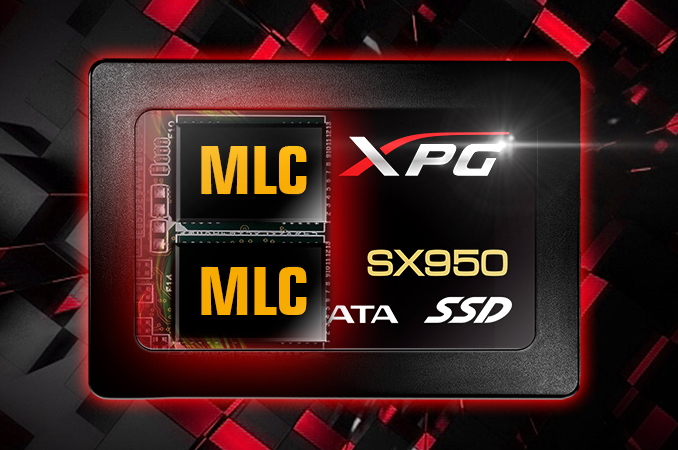
ADATA has launched a new lineup of its XPG-series SSDs, with the new models featuring 3D MLC NAND flash and targeted at gaming PCs. The new XPG SX950 family drives use a SATA interface and on paper deliver the performance expected mainstream SSDs. The key selling point of the new XPG SX950 products will be their six-year warranty and enhanced endurance ratings. The ADATA XPG SX950 resembles the company’s Ultimate SU900 drive announced late last year: both come in 2.5” form-factor, are based on the Silicon Motion SM2258 controller (four NAND flash channels, LDPC ECC technology, a DRAM buffer and pseudo-SLC caching support) as well as 3D MLC NAND - we presume from Micron. The XPG SX950 is a bit faster on paper as it supports sequential read speed of up to 560 MB/s as well as sequential write speed of up to 530 MB/s when pseudo-SLC caching is used. As for random performance, the XPG SX950 can perform up to 90K read IOPS and up to 90K write IOPS (see the table for details), which is a listed feature of the controller.
The key advantages of the ADATA XPG SX950 drives are their long warranty as well as endurance/reliability, which is why the manufacturer did not maximize capacities of the SSDs and left some extra memory for overprovisioning. The XPG SX950 family includes 240 GB, 480 GB, and 960 GB models.
The ADATA XPG SX950 SSDs are the fastest SATA drives from ADATA that are rated for 2 million hours MTBF and featuring the longest warranty (six years). ADATA would seem to have maximized the performance of the XPG SX950 vs. predecessors and improved endurance of the products at the same time, in exchange for a small amount of space for provisioning. The ADATA XPG SX950 SSDs are about to hit Amazon/Newegg soon and are expected to be available shortly. MSRPs for 240 GB, 480 GB and 960 GB drives will be $139.99, $249.99 and $449.99, respectively. The recommended prices of the XPG SX950 SSDs are slightly higher than the Ultimate SU900 series. Moreover, prices of the latter have dropped in retail since their announcement in 2016, so the actual difference will be even more significant initially. The slightly higher performance, improved endurance, and a six-year warranty will cost money, but it remains to be seen whether customers are willing to pay significant premiums for SATA drives today.
Gallery: ADATA XPG SX950
      Related Reading:
| ||||||||||||||||||||||||||||||||||||||||||||||||||||||||||||||||||||||||||||||||||||||||||||||||||||||



| << Previous Day |
2017/02/16 [Calendar] |
Next Day >> |