[Most Recent Entries] [Calendar View]
Friday, February 17th, 2017
| Time | Event |
| 9:00a | Previewing Silicon Motion SM2260 NVMe Controller With 3D MLC NAND (512GB) Silicon Motion's SM2260 is their first NVMe PCIe SSD controller. We've already reviewed the Intel SSD 600p using this controller and 3D TLC NAND. This review tests an engineering sample of Silicon Motion's reference design pairing SM2260 with Micron's 3D MLC NAND, a combination used in ADATA's XPG SX8000 and Mushkin's upcoming Helix SSD. |
| 11:00a | ELSA Launches a Single-Slot GeForce GTX 1050 Ti 4 GB SP
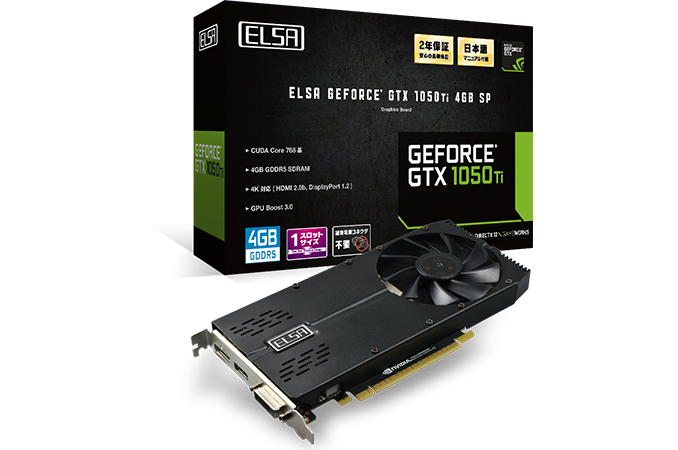
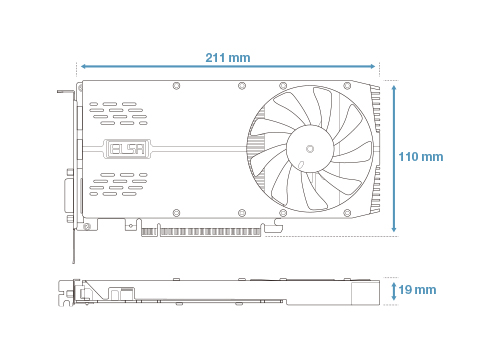
ELSA has announced a new graphics card with a single-slot cooling system. The GeForce GTX 1050 Ti 4 GB SP can fit into tightly packed PCs and does not require any auxiliary power connectors. The product will be available only in Japan so far and it is unknown whether it will ever make it to other markets. Over the past few months, we have seen multiple modern graphics cards designed for Mini-ITX and even low profile PCs. However, single-slot consumer add-in-boards (AIBs) these days tend to be rare, possibly because the vast majority of contemporary motherboards and chassis are designed to have enough space for installation of mainstream adapters that are two slots wide. Both AMD and NVIDIA offer professional graphics adapters (e.g., Quadro M4000, Radeon Pro WX7100 and so on) with single-slot coolers assuming that workstations could be packed very densely. Back in December, GALAX demonstrated a GeForce GTX 1070-based AIB with a single-slot cooling system, but that card was intended only for China. This week ELSA announced a slim GeForce GTX 1050 Ti-based product for Japan. The ELSA GeForce GTX 1050 Ti 4 GB SP graphics card is powered by NVIDIA’s fully-fledged GP107 GPU (768 stream processors, 48 texture units, 32 ROPs) and uses a PCB with the NVIDIA name on it. The latter may indicate that the AIB is based on a reference design of the GPU developer and ELSA sources the PCB from an NVIDIA-approved manufacturer (or buys both GPU and PCB from the Santa Clara-based company). The card runs at frequencies recommended by NVIDIA (1290/1392 MHz base/boost) and is equipped with 4 GB of GDDR5 memory operating at 7000 MT/s. Just like numerous other GeForce GTX 1050 Ti cards, the model from ELSA consumes no more than 75 W and does not need auxiliary PCIe power connector.
Apart from being thin, the cooling system of the device is nothing out of the ordinary. It uses an aluminum heatsink (possibly with a base made of copper), one large fan and is encased in a metallic enclosure. The rotating speed of the fan is unknown, so no word on loudness. As for connectivity, despite its single-slot form factor, the ELSA GeForce GTX 1050 Ti 4 GB SP offers all three essential outputs: an HDMI 2.0b, a DisplayPort 1.4 as well as a dual-link DVI-D. ELSA plans to start sales of the GeForce GTX 1050 Ti 4 GB SP graphics adapter on February 24, 2017. The company did not announce price, but it is likely that it will be close to NVIDIA’s recommendations for Japan. As for availability of the product in other countries, it might be possible that other manufacturers which use NVIDIA-designed PCBs for their GeForce GTX 1050 Ti products might adopt single-slot coolers as well. If not, Amazon.co.jp can ship the ELSA card worldwide (make note of import taxes).
Gallery: ELSA GeForce GTX 1050 Ti 4 GB SP
     Related Reading: |
| 5:30p | HTC to Exit Entry-Level Phone Market Later This Year
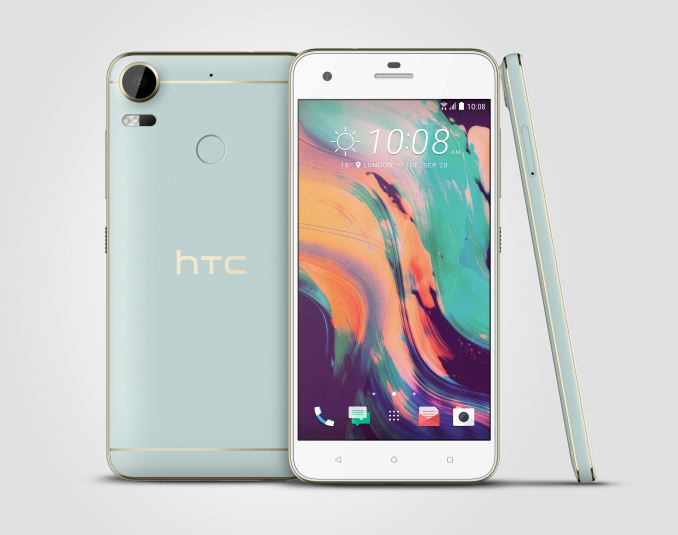
In the highly competitive smartphone industry it’s easy enough to make a name for yourself, but it’s a lot harder to make a profit while doing so. Apple and Samsung have long captured the lion’s share of the profits thanks to their flagship smartphones, which has forced the other handset vendors to fight for their own market share and profits. Due to the success of the duo, rival vendors have been focusing on an area where those companies are not as entrenched in (or not present at all in): the entry-level phone market. This is the traditional volume play, and while it can be profitable on the whole, the razor-thin margins and heavy competition from other vendors make it a similarly tough environment. And now it looks like there will be one less vendor competing in that market, as HTC has let it known that they will be exiting the market for entry-level phones. Earlier this week in the company’s quarterly earnings call, in a bit of a blink-and-you’ll-miss-it moment that the crew over at Phone Scoop picked up on, HTC announced that they would be leaving the entry-level phone market over the year in order to focus on more profitable segments of the smartphone market. Undertaking what amounts to a gradual draw-down, HTC is not discontinuing any phones or discontinuing support for those phones, but they will no longer be developing phones for the entry-level segment. Which means that when phones like the Desire 10 series reach the end of their natural retail lifetime, HTC will not be replacing them with newer models. HTC’s struggles with profitability over the years are well known. While the company is and continues to be a major player in the smartphone market, they have been squeezed on all fronts; Apple and Samsung split the bulk of the high-end market, and meanwhile the company faces extremely stiff competition at the entry-level from Chinese OEMs, whom are very difficult to compete with on price. As a result, rather than trying to make the volume play work with the entry-level market, HTC has decided to focus on the more profitable mid-range and high-end markets. The challenge now for HTC will be clawing market share from Samsung and other vendors in those more profitable spaces. While the mid-range and high-end markets are easier to make a profit in – consumers aren’t so price sensitive and there’s more to a phone’s price than just its bill of materials – it’s still a difficult task since vendors still need to move phones in some volume in order to cover the R&D costs of these better phones. The good news for HTC is that the company appears to be on the right path in terms of handset design after the HTC 10, but and the end of the day they still need to overcome consumer inertia and convince potential customers to leave Apple/Samsung. Finally, HTC’s exit of the entry-level market means that the company expects to introduce “six or seven” new phones for 2017. We’ve already seen their first two phones with the HTC U Play and HTC U Ultra, which were introduced at CES and will be aimed at the mid-range and high-end markets respectively, and these will be joined by other phones throughout the rest of the year.
|


| << Previous Day |
2017/02/17 [Calendar] |
Next Day >> |