[Most Recent Entries] [Calendar View]
Monday, February 27th, 2017
| Time | Event | ||||||||||||||||||||||||||||||||||||||||||||||||
| 2:45a | Sony Launches Xperia XZ Premium and Xperia XZs Phones For US Market
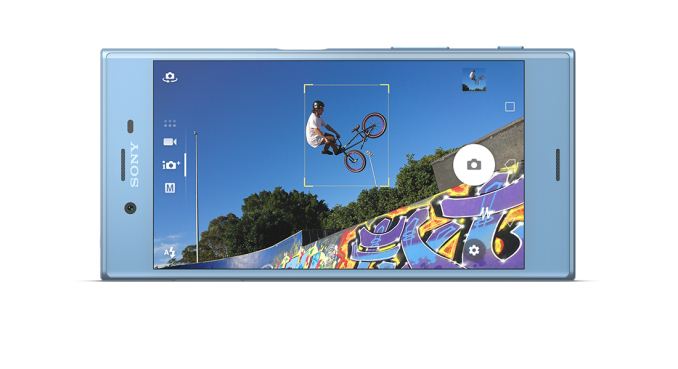
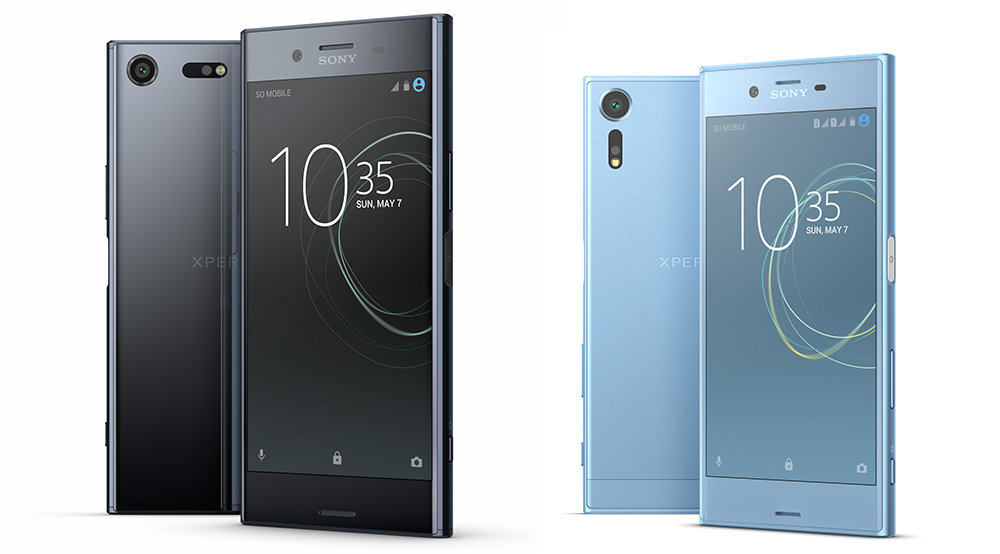
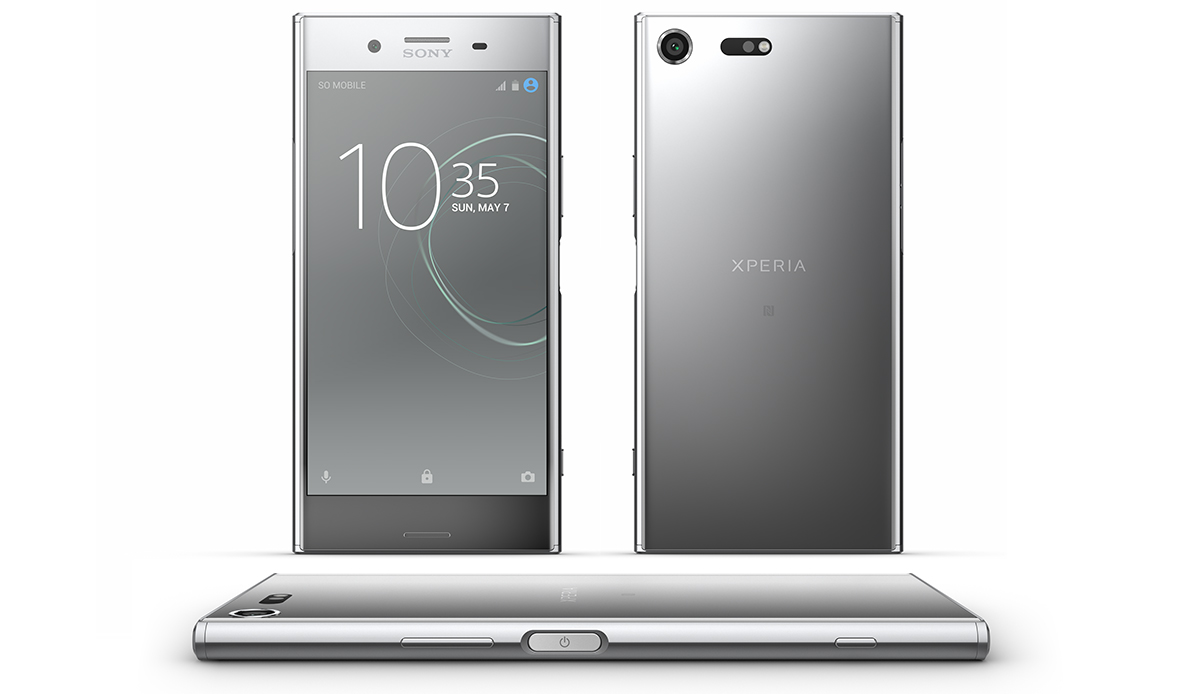
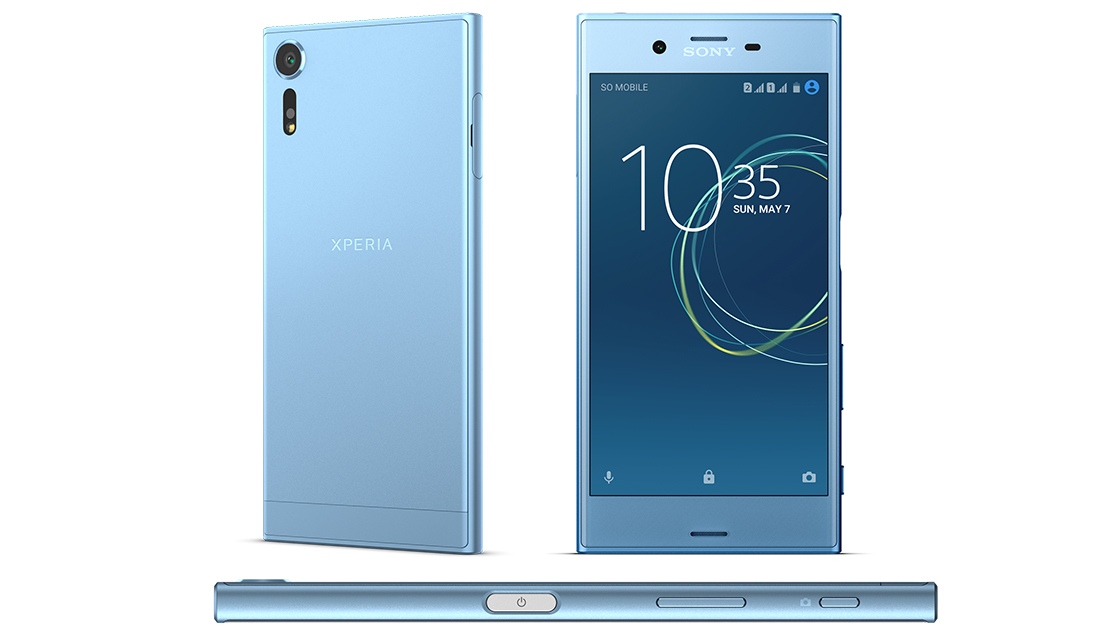
Sony announced today at MWC 2017 that it’s bringing two new premium phones to the US market: the Xperia XZ Premium and Xperia XZs. Both models employ classic Sony styling—a rectangular shape with rounded sides and a flat top and bottom. They also have an aluminum frame sandwiched between front and rear Gorilla glass panels. There are a few significant differences between the new Xperias. For starters, the XZ Premium will use Qualcomm’s latest Snapdragon 835 SoC, the first to use semi-custom ARM CPU cores and the first SoC available on Samsung’s new 10nm process. The XZs will use the previous generation Snapdragon 820, which uses four fully-custom Kryo CPU cores.
The XZ Premium is the larger of the two with a 5.5-inch TRILUMINOS display, which is notable for being the first panel to combine 4K resolution with HDR image support. It will be interesting to see if the display runs at 4K all the time or just when watching 4K content, scaling back to 1080p otherwise. The XZs puts a 5.2-inch 1080p TRILUMINOS display into a smaller chassis. Both displays support Sony’s X-Reality picture engine and Dynamic Contrast Enhancement technology. Sealed inside the XZ Premium is 3230 mAh battery, which is a little smaller than I would like to see for a 5.5-inch class phone with a high-resolution 4K display. A smaller chassis means an even smaller battery for the XZs at 2900 mAh. Based solely on this information, I’m a little concerned about battery life, but we’ll have to wait until devices start shipping to see how long they last. Both phones at least support Qualcomm Quick Charge 3.0 fast charging.
In addition to 4GB of RAM, both phones also share some nice audio features, including support for high-resolution audio and stereo front-facing speakers. They also have an IP68 dust and water resistance rating, a feature Sony fans have grown accustomed to. It looks like both will have single and dual SIM versions. The dual SIM XZs comes with 64GB of internal storage like the XZ Premium, but the single SIM version only comes with 32GB. Storage can be expanded on all models with a microSD card.
Both new XZ models use a similar camera configuration with a 13MP sensor behind an f/2.0 lens on the front and a 19MP sensor on the back. Both sensors are from Sony of course and are an integral part of the new Motion Eye camera system that incorporates technology from Sony’s a-series and Cyber-shot cameras, enabling 5x faster image scanning from the sensor. This means the Motion Eye cameras can capture super slow-motion video at an amazing 960fps (most phones are still stuck at 120fps or at most 240fps). The Predictive Capture feature starts buffering images when the camera detects motion, helping you capture fleeting moments you may have otherwise missed by allowing you to select from four photos taken up to 2 seconds before the shutter button was pressed. There’s also predictive hybrid autofocus that combines motion tracking and a motion prediction engine to lock onto an object and keep it in focus as it moves around.
The Xperia XZ Premium comes in two colors—Luminous Chrome and Deepsea Black—while the Xperia XZs offers three color options—Ice Blue, Warm Silver, and Black. The XZs will be available at select retailers, including Amazon and Best Buy, on April 5 for $699.99 (64GB). The XZ Premium will need to wait for the Snapdragon 835 SoC to become available, so it will not go on sale until later in the spring. Sony is not listing a price for it either, but it will most certainly cost more than the XZs. | ||||||||||||||||||||||||||||||||||||||||||||||||
| 8:00a | Logic Supply ML100G-50 Fanless Skylake vPro Industrial NUC Review Passively cooled computing systems carry many advantages. Most of these turn out to be very important for industrial and embedded applications. The low power nature of the NUCs make them the ideal candidate for passive industrial computing platforms. We have already reviewed a number of industrial PCs before. Today, we have an off-the-shelf passively cooled Skylake vPro PC in for review from Logic Supply. Read on for our thoughts on this unique industrial PC. | ||||||||||||||||||||||||||||||||||||||||||||||||
| 9:00a | BlackBerry KEYOne Announced: Snapdragon 625 with QWERTY, $549
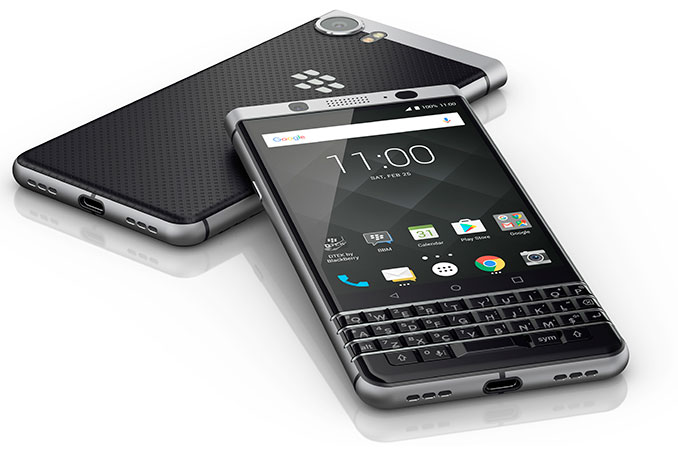
This week at MWC, TCL announced the BlackBerry KEYOne, which follows in BlackBerry's traditional style with a distinctive hardware QWERTY keyboard, but this time a more polished look at an Android implementation. The KEYOne implements a high-capacity battery, Qualcomm’s Snapdragon 625 SoC, Android 7.1, a 4.5” LCD display, and a USB-C connector for power and data. The KEYone will arrive in April at around $549. Last year BlackBerry Limited announced its intention to quit from the development and the manufacturing of smartphones, deciding to focus on creating and licensing its brand, other IP, and primarily its secure software suite for mobile devices. TCL became the primary licensee of BlackBerry and this is a company that will produce BlackBerry-branded devices going forward. TCL is currently the only global licensee of the trademark, so this KEYOne is the first BlackBerry-branded device, aiming at similar markets to BlackBerry's previous products. The KEYone is not the first BlackBerry-branded handset from TCL (the TCL-developed DTEK50 device released in 2016 essentially uses the same platform as the Alcatel Idol 4 handset), but this if the first one that was developed to be a BlackBerry from the ground up and used a close collaboration with BlackBerry Limited for the design. So, while the KEYone is produced by TCL, engineers from BBL have added their touch to the product. In addition, the phone comes with pre-loaded software from BlackBerry, including the BlackBerry DTEK application that monitor’s phones security. One of the product messages surrounding the launch was that when BBL and TCL started development of the KEYone, they set themselves a number of goals they wanted to achieve: keep the BlackBerry heritage, offer fast connectivity over today’s networks, ensure a long battery life, snappy multitasking performance, and make the device sturdy, yet stylish. We're sure that the sales numbers wil be the marker for how well they succeed.
First off, the quintessential value add for BlackBerry users has always been the physical keyboard, so this stays. TCL decided to add functionality to the keyboard beyond just typing, which is why the keyboard becomes an extension to the display as it supports swiping and programmable shortcuts. TCL lists that this functionality is useful for scrolling, photo editing, and opening apps (with various gestures). Battery life is a major concern of virtually all smartphone users. To make the KEYone last as long as possible, TCL did two things: it installed a ~3500 mAh battery into the handset and also picked up the Qualcomm Snapdragon 625 SoC. The S625 is an SoC we're going to see a lot of in 2017, as an alternative to S652 phones: rather than using 2xA72/4xA53 on 28nm, the S625 offers 8xA53 but on Samsung's 14nm LPP process, so while the latter might actually be lower in peak performance, the smaller node and lower power cores enable significant battery life improvements. On the connectivity side of things, the Snapdragon 625 supports 802.11ac, Bluetooth 4.2 and integrates Qualcomm’s X9 LTE modem (Cat 7 LTE, up to 300 Mbit/s downlink and up to 150 Mb/s uplink).
The BlackBerry look is distinctive. There are virtually no phones with a keyboard today, and given the more modern design (compared to say, the Passport), this handset should stand out for more positive reasons. The keyboard uses stainless-steel strips between the rows for touch-type assistance and to aid the look. Since part of KEYone’s front panel is occupied by its QWERTY keyboard, the IPS display of the smartphone has a 3:2 aspect ratio in its 1620x1080 resolution, which is unusual for a smartphone. The KEYOne has a rather unique texture to the back of the device (the material TCL uses for the back side is unknown), which looks like processed leather or carbon fiber, but which is designed to be both sturdy and oleophobic. Moreover, this coating is designed to prevent the phone from slipping from hand during usage. As for the overall feel, the KEYone feels very solid, but its thickness is 0.37”, which is considerably thicker than that of most modern smartphones of comparable dimensions (Apple’s iPhone 7 is 0.28”, the iPhone 7 Plus is 0.29”). Part of this is down to the battery.
When it comes to imaging, the BlackBerry KEYone uses Sony’s Exmor IMX378 and dual-tone flash as its primary camera as well as an 8 MP sensor (with selfie flash via LCD) on the front. Given the fact that the KEYOne is primarily targeting business users, nothing extra special was needed here.
As for pricing and availability, the BlackBerry KEYone will hit the market in April in multiple countries at $549/€599/£499 price points. It's going to be interesting to see how many octo-A53 devices ever reach that price point. | ||||||||||||||||||||||||||||||||||||||||||||||||
| 8:35p | MediaTek Announces Helio X30 Availability: 10 CPU Cores On 10nm
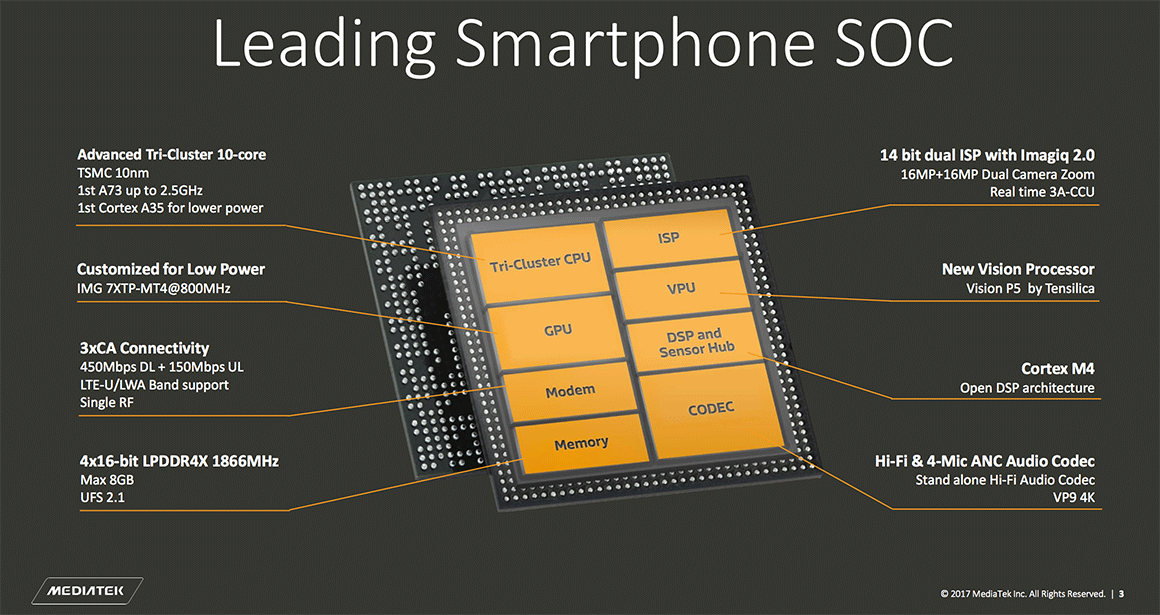
MediaTek first unveiled the Helio X30—its next-generation high-end SoC—last fall, but today at Mobile World Congress the Taiwanese company announced its commercial availability. The Helio X30 is entering mass production and should make its debut inside a mobile device sometime in Q2 2017. The Helio X30, like the Helio X20 family before it, incorporates 10 CPU cores arranged in a Max.Mid.Min tri-cluster configuration. Two of ARM’s latest A73 CPU cores replace the two A72s in the Max cluster, which should improve performance and reduce power consumption. The Mid cluster still uses 4 A53 cores, but they receive a 10% frequency boost relative to the top-of-the-line Helio X27. In the X30’s Min cluster we find the first implementation of ARM’s most-efficient A-series core. The A35 consumes 32% less power than the A53 it replaces (same process/frequency), while delivering 80%-100% of the performance, according to ARM. With a higher peak frequency of 1.9GHz, the X30’s A35 cores should deliver about the same or better performance than the X20’s A53 cores and still consume less power.
The Helio X30 will also be the first SoC to use TSMC’s 10nm process, which will offer significant power savings relative to TSMC’s 20nm planar process that the Helio X20 family uses. According to MediaTek, the X30 consumes 50% less power than the X20 when running an unspecified CPU workload and 60% less power when running GFXBench T-Rex. These power savings will increase battery life and improve sustained performance with less thermal throttling. Alongside the Helio X30, MediaTek is launching CorePilot 4.0, which manages CPU frequency and task scheduling. Optimized for its unique tri-cluster CPU configuration, CorePilot keeps track of the SoC’s power budget by monitoring temperature, and the global task scheduler component is responsible for migrating tasks between clusters based on workload and user experience parameters, such as frames per second. It also adjusts CPU frequency using Fast DVFS technology that increases sampling rate, allowing for faster voltage/frequency adjustments that better follow changes in workload. The overall goal of CorePilot 4.0 is to achieve the best possible performance at the lowest power levels.
In a short presentation at its MWC booth Monday, Executive Vice President & Co-COO Jeffrey Ju stated that MediaTek expects only a limited number of phones to use the Helio X30, perhaps less than ten. He also mentioned that a low yield rate for TSMC’s 10nm process has delayed the X30’s availability. The X30 sounds compelling on paper, so it will be interesting to see how many design wins it can actually achieve.
| ||||||||||||||||||||||||||||||||||||||||||||||||



| << Previous Day |
2017/02/27 [Calendar] |
Next Day >> |