[Most Recent Entries] [Calendar View]
Wednesday, April 5th, 2017
| Time | Event | |||||||||||||||||||||||||||||||||||||||||||||
| 6:30a | Honor Announces The Honor 8 Pro: Kirin 960, 5.7-inch QHD
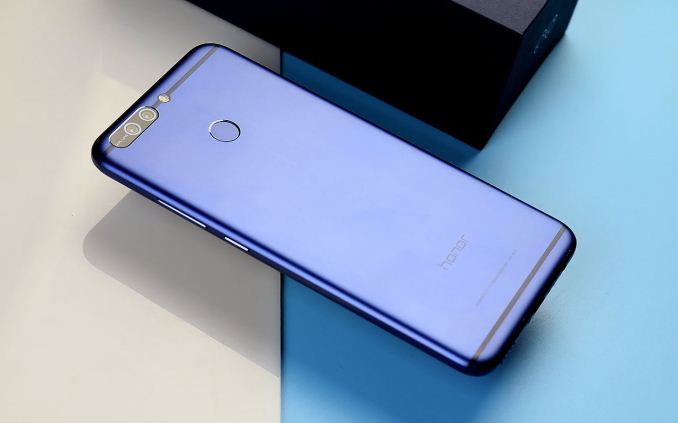
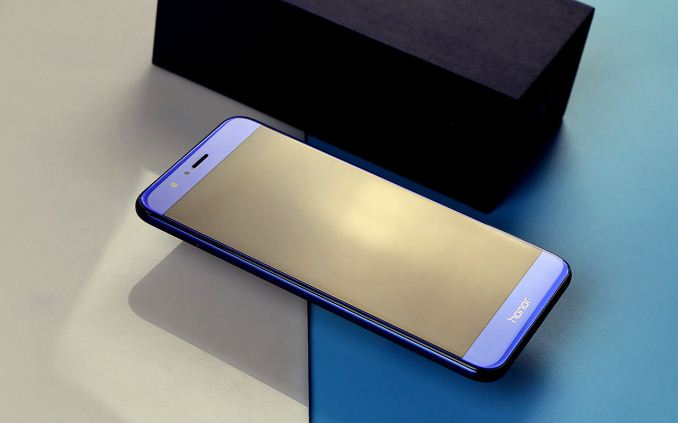
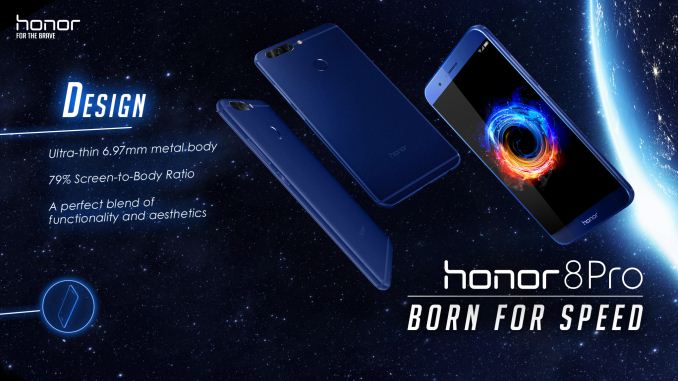
Today Honor is announcing the latest update to their product portfolio. After the successful launch of the Honor 8 last August as its flagship product, using the latest Kirin chipset back then, Honor is launching a higher-end model with a larger screen, more powerful SoC and an all-around upgrade.
The new device will have the newest Kirin 960 chipset, featuring 4x ARM Cortex-A73 and 4x ARM Cortex-A53 as well as the latest Mali-G71MP8 graphics, as we've seen on Huawei devices over the last six months. This will be paired with 6GB of LPDDR4 and 64GB of UFS 2.1 storage. The display moves up from the 5.2-inch Full-HD on the Honor 8 to a 5.7-inch QHD (2560x1440), and a combination of all these features means that Honor is promoting the Honor 8 Pro as a gaming and VR device, although there's no word on DayDream VR support, but the device will have some bundled VR software and support Google Cardboard. The display will target some form of DCI-P3, although the level of which has not been publicized as of yet.
On the battery side, the larger device allows for a 4000 mAh battery. Similar to the Mate 9, this will support Huawei Supercharge with appropriate power adapters for faster charging via the Type-C port on the bottom of the phone. This is still a USB 2.0 port, as per the regular Honor 8.
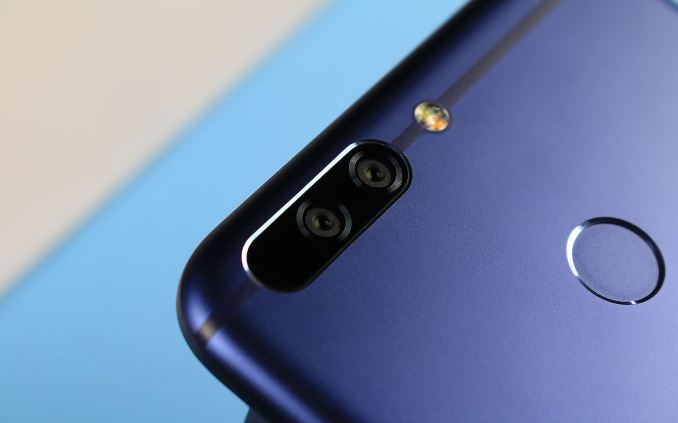
The Honor 8 Pro uses the same dual-camera setup seen in the Honor 8, using a 12MP RGB and a 12MP monochrome sensor for additional contrast focus capabilities, depth sensing, and bokeh. Given the relationship between Huawei and the Honor brand internally, it might not be a surprise that the Honor 8 Pro doesn't have the second generation of dual camera design as seen in the Huawei P10 that was launched back in February - it is likely that the Honor 9 will use that when released later in the year (as follows typical Honor cadence). The move to EMUI 5.1 will afford some additional software adjustments with the camera, and one of the features Honor was keen to promote is 4K recording in H.265, as well as an embedded feature called Highlights (co-created with GoPro) to help merge relevant photos and clips taken with the device when the user has a specific journey.
Current plans have the Honor 8 Pro launching in Western Europe (so we assume that means UK, France, Germany, Italy, Spain) to begin with, at a recommended price of 549 Euro or £475 (including tax). The navy blue color from the original Honor 8 will carry forward, along with two other designs in gold or black, although color availability may be region dependent. Pre-orders are currently available at vmall.eu (Honor's EU storefront), or a full Amazon launch will occur on April 20th. | |||||||||||||||||||||||||||||||||||||||||||||
| 10:00a | AMD Releases Radeon Software ReLive Crimson Edition 17.4.1
The game releases trickle this time of year, but the progression of technology marches on. More specifically VR is still a developing phenomenon, and 8K is just cresting the Horizon. Today’s AMD driver provides its fixes and steps us a little further along and prepares us for things to come. This week’s AMD Radeon Software Crimson 17.4.1 release brings us Display Driver version 17.10.1061 (Windows Driver Store Version 22.19.156.1) and comes with multiple bug fixes, including a fix for Radeon Settings becoming unresponsive during a driver upgrade, a fix for display flicker when running windowed borderless applications on an AMD FreeSync display, and some improvement of Multi GPU scaling while playing Tom Clancy’s Ghost Recon Wildlands. Additionally, a sudden unplugging of AMD XConnect after installation of Radeon Software will no longer cause a system hang. Meanwhile As the VR agenda continues to move forward, support for the ecosystem continues to improve. First on the list, this AMD driver release enables support for Oculus’ Asynchronous Spacewarp technology, the company's latest frame extrapolation feature, on more AMD cards. Async Spacewarp support launched on AMD's RX 400 series (Polaris) cards last year, and as of this driver update, the Radeon R9 Fury (Fiji), Radeon R9 390, and Radeon R9 290 series (Hawaii) cards have been added to the list. On a similar note, support for Valve's functionally similar SteamVR Asynchronous Reprojection technology has been added to AMD's drivers. However also like Spacewarp, AMD is starting slow in adding support for Reprojection; only the Radeon RX 480 and Radeon RX 470 cards on Windows 10 get support for Reprojection today. On the video interface front, AMD has finally formally enabled DisplayPort 1.4 HBR3 support. The Polaris hardware has been able to support this feature since the start, however as displays are still catching up, AMD is only now finally enabling it. This opens display possibilities requiring much more bandwidth, and listed on the release notes are 8K 30Hz on a single cable and 8K 60Hz on two cables. 8K monitors are slim pickings right now but it’s great for video card vendors to be prepared. As always, those interested in reading more or installing the updated hotfix drivers for AMD’s desktop, mobile, and integrated GPUs can find them either under the driver update section in Radeon Settings or on AMDs Radeon Software Crimson ReLive Edition download page.
| |||||||||||||||||||||||||||||||||||||||||||||

| << Previous Day |
2017/04/05 [Calendar] |
Next Day >> |