[Most Recent Entries] [Calendar View]
Thursday, May 4th, 2017
- Crucial Ballistix Sport LT Grey, DDR4-2400, 16GB (2x8GB)
- Crucial Ballistix Tactical, DDR4-2666, 16GB (2x8GB)
- Crucial Ballistix Elite, DDR4-3000, 16GB (2x8GB)
- Crucial MX300 525GB SSD
- ASUS ROG STRIX Radeon RX 580 Gaming OC Edition (RX-580-O8G)
- ASUS GeForce GTX 1060 OC Edition 6GB 9Gbps (1060-O6G-9)
- ASUS RT-AC1900P Dual-Band Wireless-AC1900 Gigabit Router
- ASUS PCE-AC88 4x4 802.11ac AC3100 PCIe WiFi Adapter
- ASUS Prime X370 motherboard
- ASUS Prime Z270-A motherboard
- DEEPCOOL Showcase the GamerStorm Quadstellar: One Big Metal Shuriken Chassis
- NZXT Unveils Fully Customizable Aer RGB LED Fans
- G.Skill Announces Trident Z RGB Illumination to DDR4
- Corsair Vengeance RGB DDR4 Memory Modules with LEDs Now on Sale
- The Corsair Gaming K95 RGB Platinum Mechanical Keyboard Review
| Time | Event | ||||||||||||||||||||||||||||||||||||||||||||||||||||||||||||||||||||||||||||||||||||||||||||||||||||||||||||||||||||||||||||||||||||||
| 8:00a | Intel Unveils the Xeon Scalable Processor Family: Skylake-SP in Bronze, Silver, Gold and Platinum
One of the more interesting elements of last week’s news was that some of the names of the future Intel Xeon processors, based on the Skylake microarchitecture, were accidentally ‘leaked’ via an official Intel Product Change Notification. In that list, we learned that the processors will have a new naming scheme, and we saw Gold and Platinum processors based on the LGA3647 socket having a wide range of numbers, but no core counts or clock speeds. Today’s unveiling is minor, but an official approach to the new platform. Due to the way that Intel is expanding its reach from processors to networking to FPGAs and byeond, it has been decided that a new naming scheme needs to be in place. Thus the Xeon E/EP/EX naming regime is being reintegrated into what is now called the ‘Xeon Scalable Processor Family’, of which the first set of products will be based on the Skylake microarchitecture. This is where the ‘SP’ in ‘Skylake-SP’ comes from, as the other abbreviations are now retired.
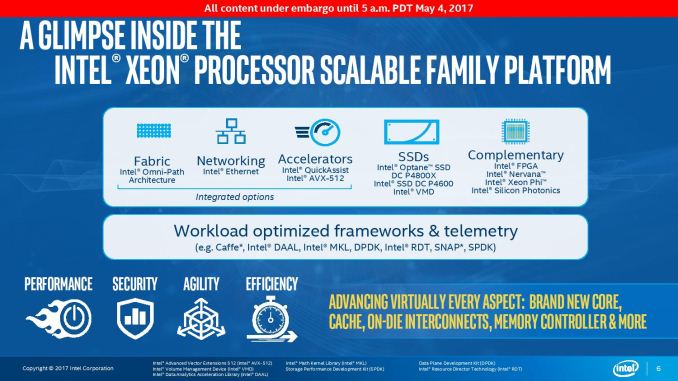
The core of Intel’s unveiling today revolves around the different processor levels they will be offering, and where the new integrated options will fit in the new stack. In the slide above, Intel lists three integrated options: Omni-Path, Networking, and Accelerators. Integrated Omni-Path options have already been seen in Xeon Phi based products from the Knights Landing family, which occupy the same LGA3647 socket, so it is perhaps not surprising that it looks like Intel will offer some Skylake-SP Xeons with Omni-Path also integrated. Integrated Networking (asides from OmniPath) would suggest that Intel is looking towards deeper 1GBase-T options and even perhaps a not to 10G, although this would most likely be provided by additional options on the chipset rather than on the processor (and stems from system integrator leaks we have already seen. As for integrated accelerators, here Intel mentions Intel QuickAssist (QAT) and AVX-512. AVX-512 is the next advancement in AVX instructions and we already see them in use with Xeon Phi, and we expect there to be the capabilities in silicon to run AVX-512 natively in Skylake-SP. Intel’s QAT is something we’ve seen in standalone PCIe cards before, so it would seem that Intel is also integrating this into the platform. After speaking with users familiar with QAT, due to what is needed to get QAT running at full speed, it would suggest that QAT will be chipset derived and platform dependent rather than purely on the processor. On the right hand of this slide, Intel mentions FPGA, Nervana, Xeon Phi and Silicon Photonics. The acquisition of Altera for $16.7 billion in 2015 put FPGA integration firmly on the roadmap for Intel’s Xeon product line, however Intel has not officially stated how these will be provided with the new Xeon-SP platforms. The fact that it isn’t listed under the integrated options suggests that Intel will only offer FPGAs as add-in cards (or add-in processors, like Xeon Phi, for dual socket systems) at this time. Intel is also working on new optimized frameworks for the hardware, particularly math and AI libraries.
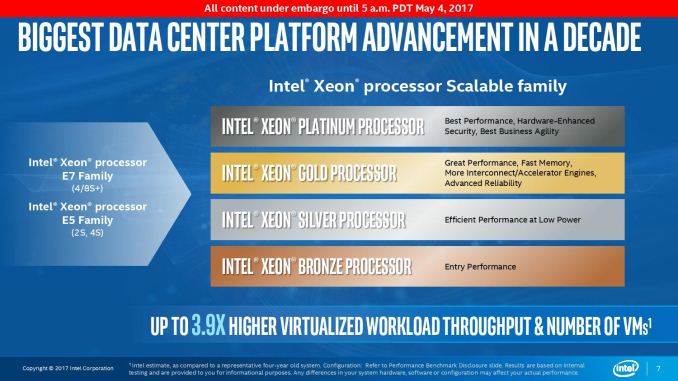
So along with the Gold and Platinum processors we saw last week, Intel will also be introducing Bronze and Silver grades as well. The Bronze group is aimed at entry performance, which sounds like the older low core count E5 parts, while the Silver parts seem aimed at lower power and will probably be low base frequency parts. The Xeon Gold family is aimed at accelerators and interconnects, which suggests they will be for multi-GPU or multi-socket platforms, while the Xeon Platinum will be the cream. Despite this potential correlation, we were told in our briefing, given by Lisa Spelman, VP and GM of the Data Center Group, that the previous E5/E7 naming split due to potential socket configurations goes away and now we should expect to see various CPUs in all segments correlating to a variety of socket configurations. One of the reasons for this is that sometimes a customer could take advantage of an 8-socket variant processor (due to high cache per core, for example), but would never consider it because the customer only needed a two-socket configuration. One of the reasons given for the naming is to alleviate this issue. It also means that we might see a lot more product SKUs coming to market, each with different configurations, naming, and capabilities depending on the accelerators. Typically Intel produces three dies for each Xeon generation – a low core count (LCC), a medium/high core count (MCC/HCC), and an extreme core count (XCC) version, and we see a variance up and down the stack depending on what dies fit in where: e.g. LCC were for single socket. With the new Scalable Processor Family naming scheme, we were told that Intel is trying to move away from this differentiation and just provide what the customer needs in the right segment. Not so much integration through obfuscation, but I kindly requested that when the official announcements are made, that the differentiations were made clear. Given the Gold/Platinum processor lists last week, it was unclear exactly what the numbering schemes represented, so in order to make the transition, it needs to be crystal clear. We were told that as this is the first generation of the Xeon-SP naming scheme, the generation is omitted from the name, but future product lines (Kaby Lake-SP) will have a generational marker to denote the difference. This may be in the form of v2/v3, but this isn't clarified at this time. Intel isn’t announcing any products today. This is more of an opportunity to take hold of the news that already exists, and perhaps get a step up ahead of the upcoming conference season. We were told to expect a launch in the middle of the year, and were told that Intel is still on track for that. | ||||||||||||||||||||||||||||||||||||||||||||||||||||||||||||||||||||||||||||||||||||||||||||||||||||||||||||||||||||||||||||||||||||||
| 8:15a | AT20 Giveaway Day 7: Crucial Helps You Remember DDR4 RAM & SSDs
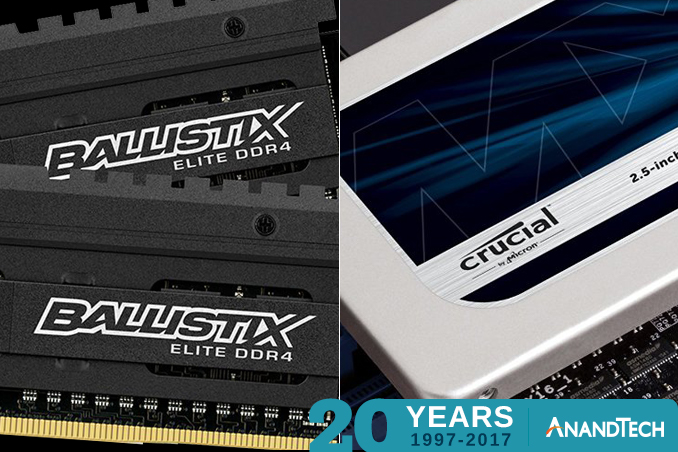
We’re back again for day 7 of our 20 day giveaway celebration of AnandTech’s 20th anniversary, so I hope everyone is ready to win some prizes. At this point we’re just about one-third of the way through the giveaway, so if you haven’t won yet, there’s still plenty of time. This morning we’re giving away our first memory kits, along with another SSD. The crew over at memory superstar Crucial has sent over a variety of 16GB (2x8GB) Ballistix memory kits for us to give away: the Sport LT DDR4-2400, the Tactical DDR4-2666, and the Elite DDR4-3000. And should you need something a little more permanent, we have a 525GB MX300 SSD as well. The AnandTech 20th Anniversary Celebration – Crucial Giveaway Crucial Ballistix Sport LT, DDR4-2400
Starting things off, we have a 16GB kit of Crucial’s Ballistix Sport LT memory. This kit runs at DDR4-2400 with 16-16-16 timings, and a voltage of 1.2v. The entry-level tier of Crucial’s Ballistix memory, these DIMMs feature a grey metal heatspreader and come loaded with an XMP 2.0 profile for use in systems that don’t recognize DDR4-2400 as a valid JEDEC-standard memory speed. Crucial Ballistix Tactical, DDR4-2666
Taking things up a step, we also have a 16GB kit of the company’s Ballistix Tactical memory. This is a DDR4-2666 kit with 16-17-17 timings, and still only 1.2v. The Tactical is Crucial’s mid-tier memory, and building on top of the Sport, features an all-black aesthetic with a gunmental grey heatspreader over a black PCB. Crucial Ballistics Elite, DDR4-3000
Third up is this 16GB kit of Crucial’s Ballistix Elite memory. The Elite kit runs at DDR4-3000 with 15-16-16 timings, making it one fast DDR4. Though it should be noted that it does take a bit of overvolting to get there, with a 1.35v DIMM voltage. The Elite builds off of the Tactical’s all-black look with a larger finned heatspeader, but also includes support for Crucial’s MOD utility, which allows for real-time memory temperature monitoring, making this the only kit with that feature. Crucial MX300 SSD, 525GB
Last but certainly not least, Crucial has also sent over one of their MX300 SSDs for those of you who need a bit more permanent storage. The MX300 is a TLC 32-lay 3D NAND based drive, using Micron’s own in-house memory along with a Marvell 88SS1074 controller. As a mid-range drive the MX300 should be a workhorse, and as Billy Tallis noted in our review of the 750GB MX300, anyone looking to install it in a laptop should be especially pleased with the low power consumption, which beats even a number of MLC-based drives.
Finally, as with our other giveaways, today’s giveaway is only open for 48 hours, so be sure to enter soon. However please note that for legal reasons, we’re only able to open these giveaways to residents of the United States. Good luck to everyone! And be sure to check in this afternoon for our next giveaway. | ||||||||||||||||||||||||||||||||||||||||||||||||||||||||||||||||||||||||||||||||||||||||||||||||||||||||||||||||||||||||||||||||||||||
| 8:53a | Imagination to Double-Down on GPU Business, MIPS and Ensigma to Be Sold Just over a month ago, Imagination Technologies dropped the bombshell announcement that their largest customer, Apple, would be phasing out their use of Imagination’s GPU IP in their SoC GPU designs. Specifically, Apple expects that they will no longer be using Imagination’s IP for new products in 15 to 24 months. This put Imagination in a significant pinch, as Apple is a full half of the company’s overall revenue and 69% of their GPU revenue. As a result, Imagination stands to lose the bulk of their GPU revenue starting two years down the line. At the time the company announced that they would be engaging with Apple to discuss “potential alternative commercial arrangements” to the companies’ current agreement, and now a month later, Imagination has published a further update on that. Discussions in the last month have not made what Imagination considers satisfactory progress, and as a result they are escalating the discussion to go through the dispute resolution clause of their current contract. Just what this will entail is unknown since the contract isn’t public, but as Imagination so delicately puts it, they’re seeking to reach an agreement with Apple “through a more structured process.” It’s unknown what will happen if this process fails, but for the moment it does not appear that a further escalation is off the table. If nothing else, Imagination will have the option of taking Apple to court for patent and IP violations once the current agreement expires. Though the company is also making it clear that they’d rather not go that far; it’s hard to imagine Imagination wants to go toe-to-toe with the richest company in the world, especially once their revenue takes a significant hit. Meanwhile in Imagination’s bombshell of the month, alongside today’s Apple update, the company is also announcing that they are going to be refocusing the company to focus entirely on the GPU business. To that end, the company is putting their remaining non-GPU businesses – the MIPS CPU business and the Ensigma communications business – on the market. Imagination is not listing an expected price for either business at this time – or if they have already lined up any suitors – but the company believes that given the improved fiscal performance of these two divisions, that they are in a good position to sell the two divisions.
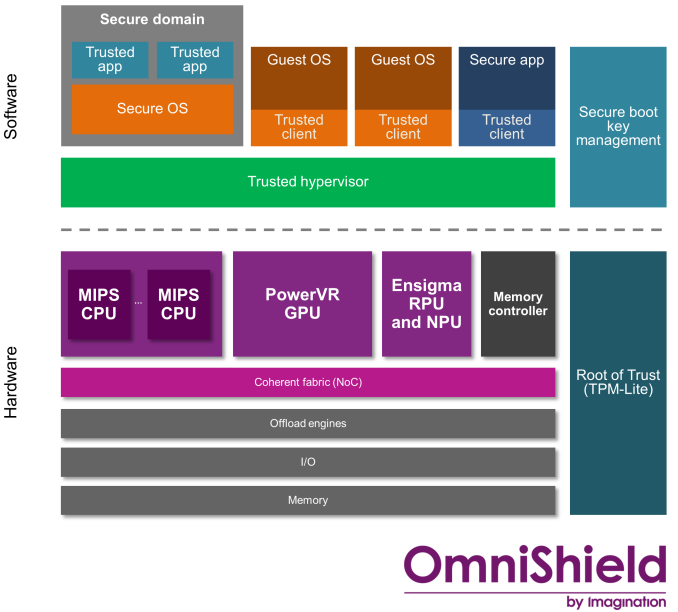
MIPS and Ensigma have been two of Imagination’s major efforts to diversify the company away from their original core business of GPU IP. MIPS was acquired by Imagination for In announcing this latest sale, Imagination noted that they are doing this to strengthen their balance sheet. At the risk of reading too much into a short fiscal statement, this doesn’t sound like a move that they are making with gusto, but rather something they have to do to save the company. Selling these divisions means that the company’s efforts to diversify have failed, but given their situation, it appears that focusing on their core competency is their best bet. Still, it does risk certain efforts in the long-term, such as Imagination’s OmniShield virtualization security technology, since that was a synergy play between owning both CPU and GPU IP. As for Imagination’s GPU business, the sale of MIPS and Ensigma means that Imagination will be transitioning to a pure-play GPU IP provider. The company continues to develop new IP here, including the recent Furian architecture, so they have products. The question that remains is how they will survive (and ideally thrive) a post-Apple world; even if the companies sign a new agreement, Imagination’s fate is going to be based on how well they can sell GPU IP to the remaining SoC vendors, particularly in the STB and Android mobile spaces. With all other businesses in the process of being sold, the fate of Imagination’s GPU business will determine the fate of Imagination itself. | ||||||||||||||||||||||||||||||||||||||||||||||||||||||||||||||||||||||||||||||||||||||||||||||||||||||||||||||||||||||||||||||||||||||
| 11:30a | Palit GeForce GTX 1080 Ti HOF Limited Edition Announced: 1.75 GHz and Onboard LCD
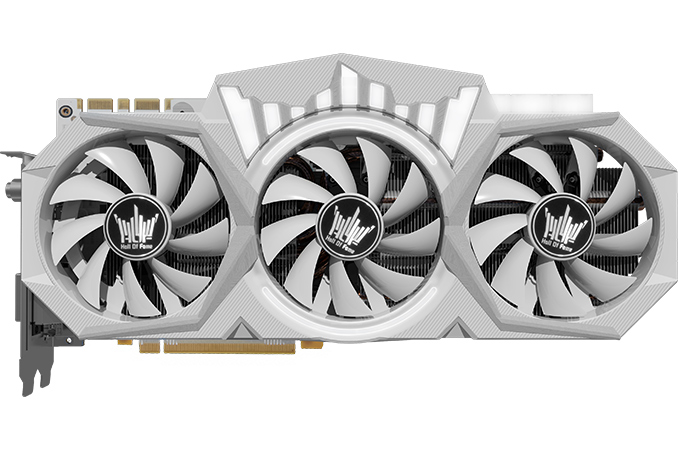
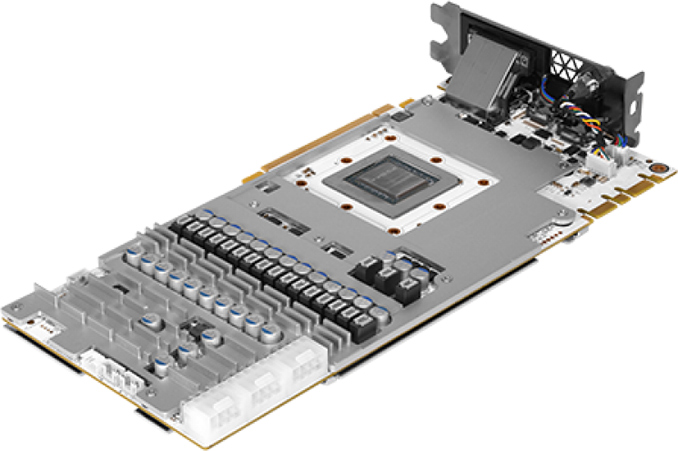
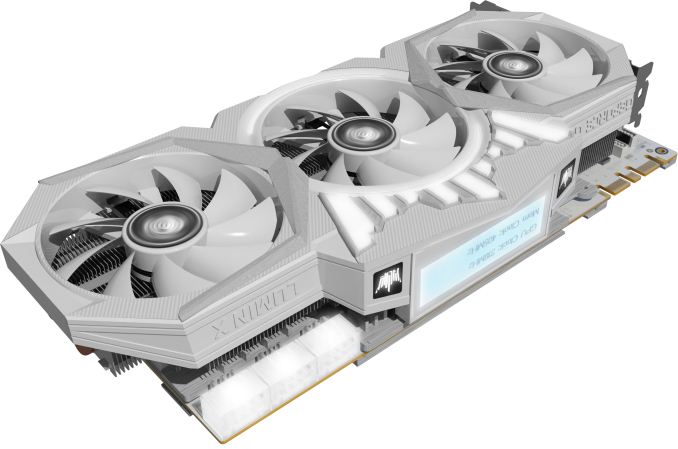
Palit Microsystems plans to release a new factory-overclocked limited edition graphics adapter based on NVIDIA’s GeForce GTX 1080 Ti GPU under its GALAX and KFA2 brands. The card was developed from scratch and will be among the highest-performing video cards in the industry due to a rather extreme GPU frequency. It also comes with exclusive features that will further push it up on price. The GeForce GTX 1080 Ti HOF Limited Edition graphics adapter from GALAX and KFA2 are based on NVIDIA’s GP102 GPU, clocked at 1645/1759 MHz (base/boost) and suses a custom 12-layer PCB developed by Palit. The add-in-board (AIB) features a 12+3-phase VRM and three 8-pin PCIe power connectors in a bid to guarantee stable operation of the GPU at significantly increased clock rates (165/177 MHz higher than NVIDIA’s recommendations) and enable further headroom for overclocking.
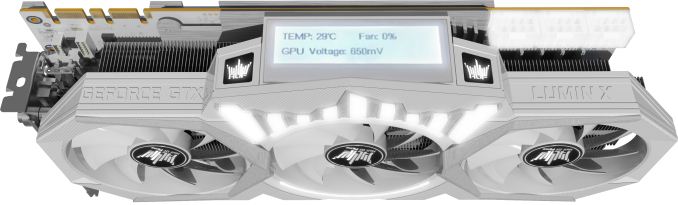
To cool down the GPU and memory, Palit uses a special cooling system that relies on a huge heatsink with five thick heatpipes as well as three fans. As an added bonus, the cooling system is equipped with an LCD screen that displays current GPU and memory frequencies, the GPU temperature, the GPU voltage and other important information. Since the cooler is very large, it takes three slots, meaning multi-GPU system builds with this card more complicated. Traditionally, large cooling solutions are equipped with a backplate and the cooler on the GeForce GTX 1080 Ti HOF Limited Edition is not an exception. As for outputs, the graphics adapter comes with three DisplayPort 1.4 headers, one HDMI 2.0b and one DVI-D.
With its factory overclocked GPU, the GeForce GTX 1080 Ti HOF Limited Edition from GALAX and KFA2 is going to be one of the highest-performing gaming graphics cards around. In fact, single precision compute performance of the AIB will be between 11.79 and 12.6 TFLOPS (depending on exact frequency), which is higher than that of NVIDIA’s Titan X and Titan Xp. The latter still have advantages when it comes to ROP count and memory bandwidth, but in at least certain cases the GTX 1080 Ti HOF Limited Edition is going to be faster.
Meanwhile, pricing of the GALAX/KFA2 GeForce GTX 1080 Ti HOF Limited Edition will match pricing of the two aforementioned cards that are sold exclusively by NVIDIA for $1200. Overclockers UK offers to pre-order the card from KFA2 for £949.99 (with ETA in late May), which equals to $1227. It is noteworthy that in the UK the card will be called the KFA2 GeForce GTX 1080 Ti HOF 8 Pack Edition, after professional overclocker 8 Pack who works for Overclockers.
Related Reading: | ||||||||||||||||||||||||||||||||||||||||||||||||||||||||||||||||||||||||||||||||||||||||||||||||||||||||||||||||||||||||||||||||||||||
| 1:00p | ASUS Maximus IX Extreme Z270 Motherboard Now Available: $629 with Water Block
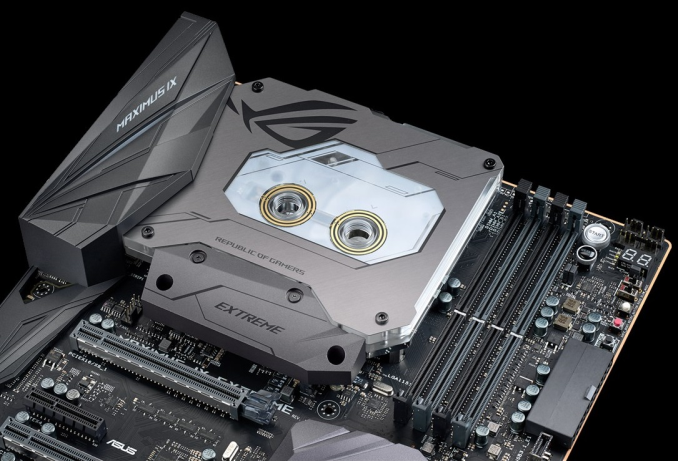
First unveiled at CES 2017, and launched by ASUS back in early March, the availability of the flagship Republic of Gamers (ROG) Z270 motherboard has thus far been limited to Newegg in North America. That changes today with the announcement that the Maximus IX Extreme is now widely available at leading resellers in both Canada and the United States.
Built for gaming and liquid cooling enthusiasts, the Maximus IX Extreme represents the pinnacle of ASUS' engineering expertise. ASUS has also collaborated with Bitspower in order to develop the factory-installed monoblock water cooling solution that is clearly the model's most distinguishing feature over other motherboards. The monoblock is so large that it is likely the main factor behind this model's price.
Designed to cool the CPU and the associated power delivery components, this monoblock incorporates flow rate, water leak, and inlet/outlet temperature sensors, all of which can be monitored and controlled from within the UEFI or the Fan Xpert IV utility. There is also ubiquitous RGB LED lighting built-in, which can be controlled by the AURA utility along with the LEDs integrated into the I/O cover, PCH heatsink, and any light strip attached to the 5050 RGB header. Speaking of headers, this motherboard has a lot of them. There are 12 fan headers, which includes 8 radiator fan headers and 2 water pump headers, and a number of additional flow rate and temperature sensor headers. Overall, this should not only negate the need for any additional fan controllers, but also reduce wiring complexity. All of these headers can be fully configured from within the UEFI or Fan Xpert IV utility. There is also a separate heatsink included to cool the topmost M.2 drive. While it is not part of the monoblock, it does make contact with it and thus should receive some level of passive cooling. Not to be ignored, the secondary M.2 drive can be cooled with the M.2 cover that is integrated into the PCH heatsink. Both of these M.2 connectors support SATA and PCI-E 3.0 x4 NVMe SSDs, as well as Intel Optane Memory, but only the secondary connector supports longer 22110-type drives. The remaining drive storage needs are handled by eight SATA 6Gb/s ports.
In addition, the mainboard supports eight USB 3.0 ports (six rear, one header), four USB 2.0 ports (via two headers), one USB 3.1 type-A port, one USB 3.1 type-C port that supports Thunderbolt 3, and a rare USB 3.1 front-panel connector. Rounding out the connectivity is one gigabit LAN port powered by an Intel I219-V controller, onboard 2x2 802.11ac Wi-Fi with MU-MIMO that is based on Qualcomm Atheros QCA6174A chip, as well as HDMI 1.4 and DisplayPort 1.2 video outputs. Since this is a high-end gamer-oriented motherboard, it is no surprise to see ROG SupremeFX onboard audio. This 8-channel audio solution is designed around the Realtek ALC1220A codec, but also features a Texas Instruments RC4580 op-amp, ESS ES9023P digital-to-analog converter (DAC) for the front-panel output, shielded audio circuits, impedance sensing for the front and rear headphone outputs, and color-coded and LED-illuminated 3.5mm audio connectors.
Given the pedigree of the Extreme model name, overclockers have not been overlooked either. There is a plethora of ASUS-specific features that are designed with overclocking in mind, such as the ProbeIT voltage read points, Q_Code LED, an LN2 Mode jumper, a Slow Mode Switch, an RSVD switch, a ReTry button, a Safe Boot button, a MemOK! button, a DRAM channel jumper, and the ROG Extension connector. There are also diagnostic LEDs throughout the motherboard. Last but not least, the board features a standard complement of four DDR4 slots (which support overclocked memory speeds up to DDR4-4133), two strengthened PCIe x16 slots for graphics purposes (PCIe 3.0 x16 or x8/x8), one PCIe 3.0 x4 slot from the chipset, and one full length PCIe slot that operates at PCIe 3.0 x4. These last two slots get their bandwidth from the PCH, and there are SATA limitations that you need to research if you plan to use the mechanical PCIe x4 slot. As mentioned in the introduction, the ASUS Maximus IX Extreme is now widely available in North America and carries a suggested MSRP of $629 USD. As a result of that price point, it supplants its predecessor, the Maximus VIII Extreme, as the most expensive LGA1151 motherboard on the market. Related Reading | ||||||||||||||||||||||||||||||||||||||||||||||||||||||||||||||||||||||||||||||||||||||||||||||||||||||||||||||||||||||||||||||||||||||
| 2:00p | AT20 Giveaway Day 7.5: ASUS Motherboards, Video Cards, & Networking Gear
Taking the wheel for our afternoon giveaway in our 20 day giveaway celebration of AnandTech’s 20th anniversary is ASUS. The Taiwanese technology titan has their fingers in a number of different product categories, so it’s only appropriate that they’ve sent us a technology sampler of sorts with products from three of their major categories: video cards, networking gear, and of course, motherboards. All told we have AMD and NVIDIA video cards, AMD and Intel motherboards, a router, and a WiFi adapter to give away this afternoon. So we have a number of prizes to give away to our lucky winners. The AnandTech 20th Anniversary Celebration – Asus Giveaway ASUS ROG STRIX Radeon RX 580 Gaming OC Edition
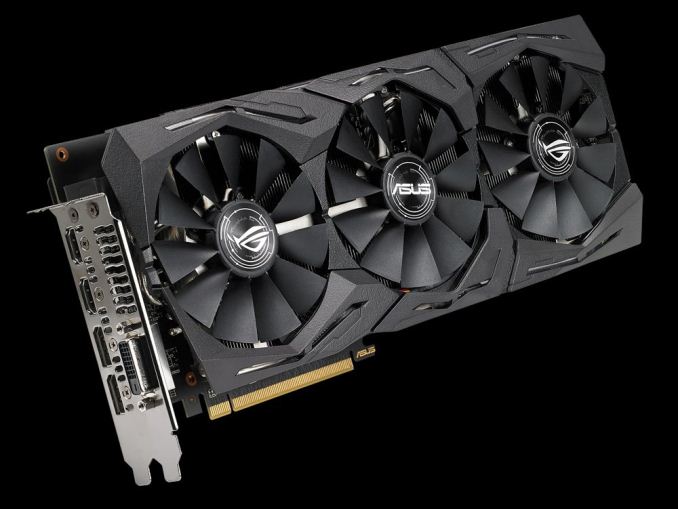
Starting things off is ASUS’s ROG STRIX Radeon RX 580 Gaming OC Edition video card. Part of the company’s high-end ROG imprint, the Strix RX 580 is their factory overclocked Radeon RX 580 card, featuring a default 1360MHz clockspeed.
ASUS classifies this as a 2.5 slot card, and between that and the 11.73” length, this is a sizable beast of a card. Putting that space to good use, the card is equipped with a trio of the company’s “wing-blade” fans, which also support zero fan speed idling. Meanwhile as you’d expect for a high-end video card, this is built on a custom ASUS PCB, equipped with a 7+1 phase power delivery system built from ASUS’s Super Alloy Power II components. Rounding out the package is a full RGB lighting system built into the shroud, courtesy of ASUS’s Aura Sync lighting technology. ASUS GeForce GTX 1060 OC Edition
Our second video card from ASUS’s collection is their GeForce GTX 1060 OC Edition. While not a high-end card like the ROG Strix, the GeForce card features its own set of tricks. In particular, this factory overclocked card is one of the first GTX 1060 cards on the market to feature 9Gbps GDDR5 memory, which NVIDIA only recently started offering on factory OC cards. Coupled with that is 100MHz GPU frequency bump, making for a sizable boost over the reference GTX 1060.
ASUS’s GTX 1060 is equipped with their DirectCU II cooler – a dual fan open air cooler – which like its ROG counterpart, also implements their “wing-blade” fans and zero fan speed idling. The card’s PCB is also equipped with ASUS’s Super Alloy Power II components to further set it apart from other cards. ASUS RT-AC1900P Dual-Band Wireless-AC1900 Gigabit Router
Third up is one of ASUS’s routers, the RT-AC1900P. This is a dual-band, 3 antenna router supporting 3x3 MIMO on both the 2.4GHz and 5GHz bands. With the addition of support for Broadcom’s proprietary TurboQAM feature, this means the router can hit 600Mbps on 2.4GHz and 1300Mbps on 5GHz. In terms of wired connectivity, the RT-1900 features a quarter of GigE ports, along with another GigE uplink port. A USB 3.0 port and a USB 2.0 port are provided to take advantage of the router’s significant OS capabilities, including network share hosting, cellular modem connectivity, and network printer hosting. Internally, the router is powered by a dual-core 1.4GHz processor, though ASUS doesn’t specify the exact make. ASUS PCE-AC88 4x4 802.11ac AC3100 PCIe WiFi Adapter
Meanwhile if you need wireless connectivity on the client side of matters, ASUS has also sent over one of their PCE-AC88 WiFi adapters. This PCIe card based adapter offers 4x4 MIMO streams and the latest-generation MCS-11 (1024-QAM) modulation modes, allowing it to transfer up to 2167Mbps on the 5GHz band. The adapter also uses an external antenna pod with adjustable antennas, to allow for the best antenna positioning. ASUS Prime X370 Motherboard
Getting to our motherboards, we also have ASUS’s Prime X370 motherboard. The AM4 motherboard sports 3 PCIe x16 slots (2x 3.0, and 1x 2.0), 3 PCIe x1 slots, and a single full-feature M.2 slot. In terms of third party controllers, we’re looking at an ASMedia controller for USB 3.1 (Gen 2) support, a Realtek ALC S1220A for audio, and an Intel I211-AT GigE LAN controller. And as this is a Prime board, ASUS hasn’t skimped on the features either. The board features ASUS’s “5X” hardware protection, including their reinforced “SafeSlot” PCIe slots. And on the BIOS side the board features their usual high-end BIOS features – including one-click overclocking and CrashFree BIOS 3. ASUS Prime Z270-A Motherboard
Last but certainly not least, we have ASUS’s Intel motherboard, the Prime Z270-A. This full ATX LGA 1151 board offers 3 PCIe x16 slots and another 4 PCIe x1 slots. The board also features a pair of M.2 slots – one pure PCIe and the other offering both SATA and PCIe. ASUS has also added several third-party controllers to the board, including an ASMedia USB 3.1 (Gen 2) controller, an Intel I219V controller for GigE networking, and a Realtek ALC S1220A for audio. Otherwise like its AMD counterpart, ASUS has similarly equipped it in terms of features, including the 5X hardware protection and high-end BIOS features. The board also features a dedicated clock generator (which ASUS dubs Pro Clock) for improved overclocking, and the company is even embracing customization via 3D Printing, publishing the blueprints for a few accessories that can be printed for the board. Finally, as with our other giveaways, this afternoon’s giveaway is only open for 48 hours, so be sure to enter soon. However please note that for legal reasons, we’re only able to open these giveaways to residents of the United States. Good luck to everyone! And be sure to check in tomorrow for our next giveaway. | ||||||||||||||||||||||||||||||||||||||||||||||||||||||||||||||||||||||||||||||||||||||||||||||||||||||||||||||||||||||||||||||||||||||
| 4:00p | Deepcool Launches Captain EX RGB CPU Coolers with LED Lighting
Deepcool has announced its new lineup of CPU coolers featuring customizable RGB LED lighting. The new Captain EX RGB cooling systems offer the same cooling performance as the already available Captain EX products, but offer a new look that can be controlled by appropriate software shipped with motherboards from different manufacturers.
The Deepcool Captain 120EX RGB and the Deepcool Captain 240EX RGB devices resemble the company’s Captain 120EX/240EX cooling systems with 120- and 240-mm radiators (respectively) as well as one or two 120 mm fans. The products are compatible with all modern processors from AMD (including AM4) and Intel (including LGA2011-v3 and LGA1151). As for performance, both parts are rated for CPUs with TDP of up to 150 W.
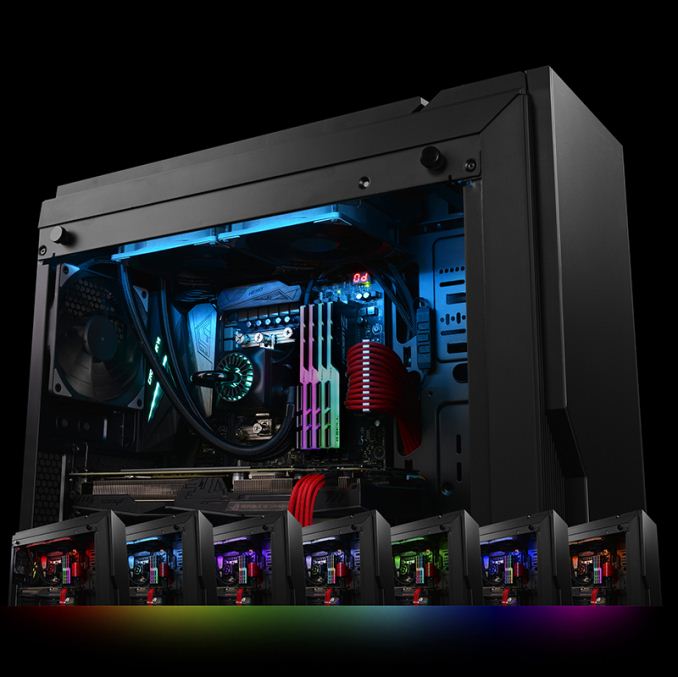
The main differences between the Captain EX and the Captain EX RGB coolers are RGB LEDs integrated into waterblocks of the latter as well as a bundled LED strip for the case. The lighting of the Deepcool Captain EX RGB coolers can be controlled using the included wired controller, or the RGB LED-controlling software (such as the ASUS Aura) supplied with appropriate motherboards.
The addition of the Captain EX RGB coolers into the Deepcool lineup emphasizes the importance of customizable LED lighting for high-end PC hardware for enthusiasts. Nowadays a lot of people demand to have an option to build a computer that looks exactly how they want and customizable RGB lighting is an easy and relatively inexpensive way to do it. In speaking to companies like Corsair, despite the negativity surrounding RGB lighting, it tends to make up a significant portion of sales, especially on high-end products, when both plain versions and RGB versions is available.
The Captain 120EX RGB and the Captain 240EX RGB from Deepcool will be available starting next month for $99.99 and $129.99, respectively. Related Reading: | ||||||||||||||||||||||||||||||||||||||||||||||||||||||||||||||||||||||||||||||||||||||||||||||||||||||||||||||||||||||||||||||||||||||














| << Previous Day |
2017/05/04 [Calendar] |
Next Day >> |