[Most Recent Entries] [Calendar View]
Monday, May 8th, 2017
- MasterKeys Lite L Keyboard & Mouse Combo Pack (#1)
- MasterKeys Lite L Keyboard & Mouse Combo Pack (#2)
- MasterKeys Pro L Mechanical Keyboard White
- MasterBox Lite 3 Micro-ATX Case
- MasterLiquid Lite 120mm CLLC
| Time | Event | |||||||||||||||||||||||||||||||||||||||||||||||||||||||||||||||||||||||||||||||||||||||||||||||||||||||||
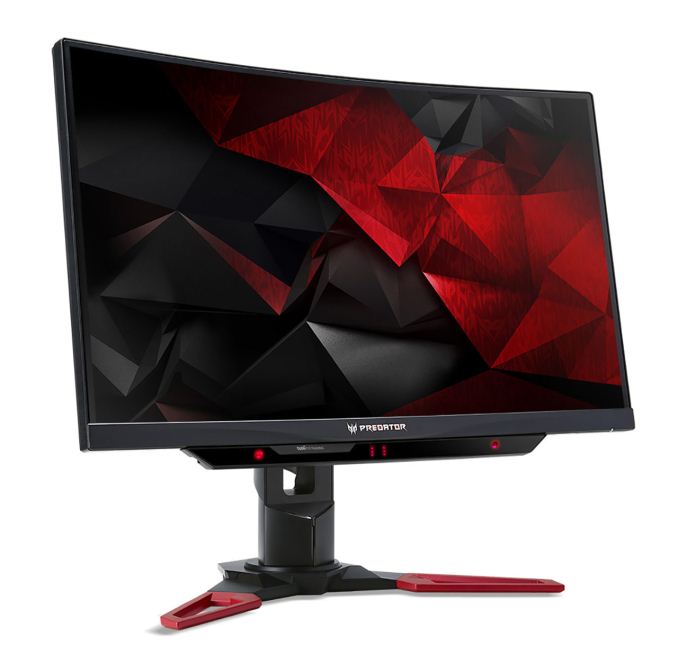
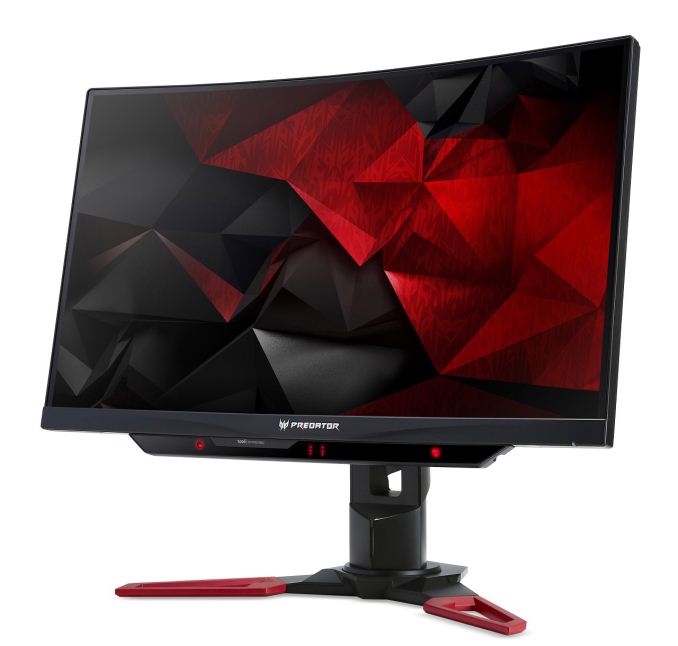
| 7:00a | Acer Predator Z271UV Gaming Monitor: 1440p, 144-165Hz, G-Sync, Eye Tracking
Although we have already reported on the flagship Acer Predator X27 gaming monitor, an interesting model that isn't getting quite as much attention is the Predator Z271UV. By foregoing the X27's more premium features like 4K resolution and HDR, this new model is being positioned as a more wallet-friendly option for the serious gaming crowd. The Predator Z271UV is a 27-inch model with a WQHD resolution of 2560 × 1440 and an 1800R curve that should help provide a wider field of view. It features a TN panel with 400 nits brightness, 1000:1 contrast ratio, and viewing angles of 170°/170°. The 8-bit panel can display 16.7 million colors, and uses a quantum dot film in order to support 130% of the sRGB and 95% of the DCI-P3 color gamuts. The TN panel on this model is rated to a response time as low as 1ms (3ms native), while the refresh rate can be overclocked from the default 144 Hz all the way up to 165 Hz (the fact that the monitor isn't sold as 165 Hz suggests that your mileage may vary). When you combine those figures with the built-in NVIDIA G-Sync or ULMB (Ultra-Low Motion Blur) technologies, this is a gaming monitor that is being promoted as having no problems with motion blur, stuttering or tearing.
This Predator Z271UV also includes Tobii eye-tracking hardware, which uses infrared light to track your head movements and where your eyes are looking on the screen. Designed to complement a keyboard and mouse, one of the uses is that you can pan around a digital world without having to use the mouse, kind of like with a virtual reality headset. There are apparently 100 game titles that support eye tracking technology. Further catering to gamers are additions like Predator GameView, which allows users to make precise color and dark level adjustments that can be saved to three different profiles, and which can be easily switched between at any time during gameplay. There are also vendor features like Acer VisionCare with Flickerless, BluelightShield, ComfyView and low dimming technologies that are intended to reduce eye fatigue during extended gaming sessions.
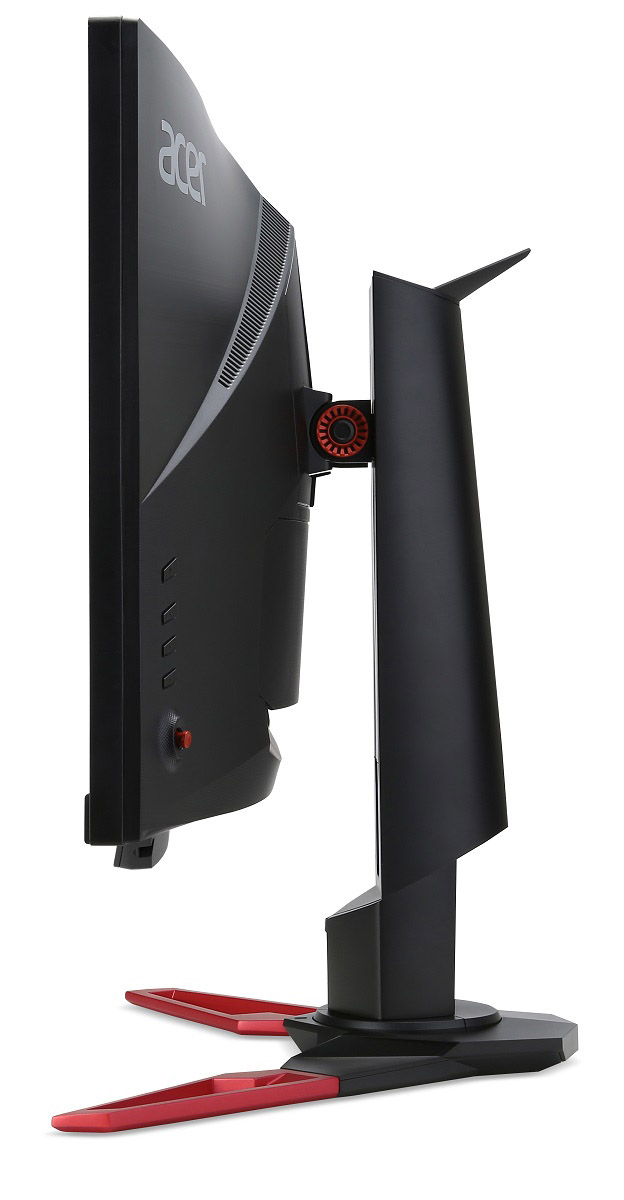
This model also has what Acer describes as a ZeroFrame design, which is a thin bezel that should improve the viewing experience for those planning a multi-monitor setup. The stand was designed with ergonomics in mind, and it can tilt the display between -5 to 25 degrees, swivel +/- 30 degrees, and provide height adjustments of up to 4.7 inches (120mm). There are also two 7-watt speakers with Acer TrueHarmony technology built into the monitor.
When it comes to connectivity, the specs are little less clear. There is no indication as to the version of the HDMI input - which would likely indicate HDMI 1.4 - while the only other video connector is a DisplayPort 1.2 input. If this is accurate, only the DisplayPort would support the 165Hz refresh rate at the native resolution. The HDMI port would be limited to 60Hz. There is also a five port USB 3.0 hub (1 up, 4 down) and one audio out jack. The press release did not have any details regarding pricing, availability, or warranty.
Related Reading | |||||||||||||||||||||||||||||||||||||||||||||||||||||||||||||||||||||||||||||||||||||||||||||||||||||||||
| 8:00a | AT20 Giveaway Day 9: ASRock Gives Your Ryzen an X370 Taichi Motherboard
Welcome everyone to the start of the third week of our 20 day giveaway celebration of AnandTech’s 20th anniversary. We have a full schedule this week, so that means 9 more giveaways between now and Friday. Kicking things off for the week is one of our long-time motherboard partners, ASRock. With AMD’s Ryzen CPUs selling so well – a welcome change for the battered AMD – Ryzen-compatible Socket AM4 motherboards are now in demand. So ASRock has sent over one of their X370 Taichi motherboards for us to give away to someone looking to complete their Ryzen system. The AnandTech 20th Anniversary Celebration – ASRock Giveaway ASRock X370 Taichi MotherboardASRock’s X370 Taichi is a full ATX board, giving it room for 3 PCIe x16 slots, and another 2 PCIe x1 slots. Along with the traditional form factor, the board also sports a duo of M.2 slots – one sporting SATA and PCIe 3, the other sporting purely PCIe 2. ASRock has also added several third-party controllers to the board, including an unnamed (but likely ASMedia) controller for USB 3.1 (Gen 2) support, an Intel I211AT controller for GigE networking, an Intel 802.11ac dual-band WiFi controller (on an includes M.2 stick), and a Realtek ALC 1220 for audio.
Rounding out the package, ASRock has equipped their board with their “steel slots” PCIe braces for two of the PCIe x16 slots to better support heavy video cards, along with a 16-phase power delivery system for the CPU. And while the board itself doesn’t sport RGB LEDs, it does include a pair of controlled headers for adding RGB lighting strips. Meanwhile on the software side of matters, the board uses ASRock’s latest-generation UEFI firmware, supporting features such as Instant Flash and Crashless BIOS. Finally, as with our other giveaways, today’s giveaway is only open for 48 hours, so be sure to enter soon. However please note that for legal reasons, we’re only able to open these giveaways to residents of the United States. Good luck to everyone! And be sure to check in this afternoon for our next giveaway. | |||||||||||||||||||||||||||||||||||||||||||||||||||||||||||||||||||||||||||||||||||||||||||||||||||||||||
| 9:00a | Toshiba Demonstrates NVMe SSD With 64-Layer BiCS3 3D NAND
Toshiba's transition from planar NAND flash to 3D NAND flash memory has been a long, drawn-out process. Their BiCS 3D NAND architecture is on its third generation but has yet to have any significant impact on the SSD market. The first generation of BiCS 3D NAND was never mass produced. The second generation 256Gb 48-layer BiCS2 3D NAND has seen some use in memory cards and smartphones, but its only presence in the SSD market has been the BG series—a relatively low-volume OEM-only line of BGA SSDs. It's enough to prove that their 3D NAND isn't vaporware, but hasn't done anything to alleviate the ongoing global NAND shortage or push prices down. Toshiba's third generation 3D NAND is planned to be the one that finally displaces planar NAND, with a 512Gb 64-layer TLC part that should be able to beat the price/GB of Toshiba's 15nm planar TLC, and a smaller 256Gb part for lower-capacity applications like memory cards. This week Toshiba is publicly demonstrating for the first time a SSD using their 64-layer BiCS3 3D NAND. At the Dell EMC World conference, Toshiba has a live demo of a laptop containing a prototype XG-series NVMe PCIe SSD with a total of 1TB of BiCS3 3D TLC NAND. Toshiba's XG3 series is the OEM counterpart to the OCZ RD400 consumer NVMe drives. Toshiba won't comment on how the XG prototype differs from the RD400 or XG3 aside from using 3D NAND, but the prototype probably offers an early look at what the next XG will feature when it is ready to be officially announced. The prototype is a model that is currently sampling to large OEMs and could be formally announced and in just a few months. Toshiba has announced that they intend to migrate all of their SSD product lines to their 3D TLC NAND, starting with OEM and enterprise products before rolling out to the retail market. They are not willing to commit to a particular timeline for completing the transition, but we should see multiple models announced and shipping by the end of 2017. Supply will continue to be a concern as new 3D NAND fab capacity comes online in 2018, and that's when we might see the current flash memory shortage wrap up and SSD prices resume a healthy decline. | |||||||||||||||||||||||||||||||||||||||||||||||||||||||||||||||||||||||||||||||||||||||||||||||||||||||||
| 2:00p | AT20 Giveaway Day 9.5: Cooler Master Keyboards, Case, & a Liquid Cooler Too
As Monday rolls along, taking us to our second giveaway of the day is Cooler Master. The case & cooling & peripherals firm has sent along a selection of prizes, including multiple keyboard sets, a 120mm closed loop liquid cooler, and a micro-ATX case. So there’s plenty of chances to win this afternoon. The AnandTech 20th Anniversary Celebration – Cooler Master Giveaway MasterKeys Lite L Keyboard & Mouse Combo Pack
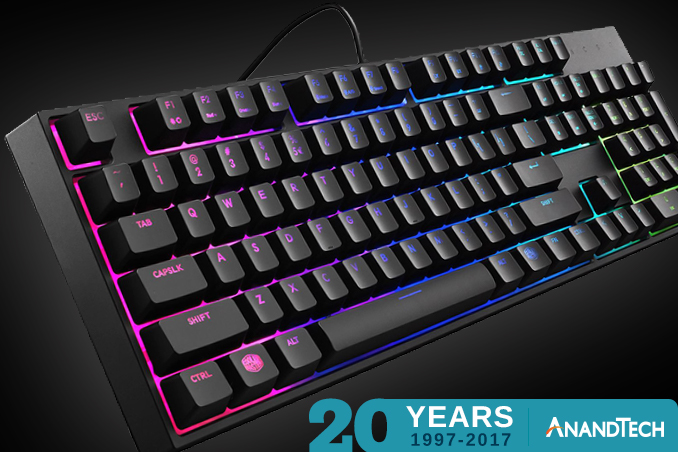
First off, we have a pair of Cooler Master’s MasterKeys Lite L Combo mouse & keyboard packs. The keyboard features a membrane switch variant that Cooler Master calls the “mem-chanical” switch, which is touted to offer more mechanical-like resistance, and which work with standard Cherry MX keycaps. Meanwhile the right-handed optical mouse is based around an AVAGO 3050 sensor and can switch between DPI settings on the fly. Finally, both peripherals feature RGB lighting, with both the keyboard and the mouse offering multiple zones. MasterKeys Pro L Mechanical Keyboard
Along with the aforementioned combo packs, Cooler Master has also included a stand-alone mechanical keyboard, the MasterKeys Pro L. Based around Cherry’s MX switches, this keyboard augments its normal hardware with an additional 4 keys dedicated to profile loading. These profiles are in turn part of the keyboard’s programmable macro system, allowing for the quick programming and playback of keyboard macros. And of course, full RGB lighting is built-in, which in turn can be controlled by the aforementioned gaming profiles. MasterBox Lite 3 Micro-ATX Case
Third up is our first micro-ATX case of the AT20 giveaway, Cooler Master’s MasterBox Lite 3. Just recently launched, the MasterBox 3 Lite can accept micro-ATX or mini-ITX boards, and is just under 15 inches tall. Cooler Master advertises the case as a spacious mATX case, as it’s capable of holding video cards up to 13.5 inches long.
The MasterBox Lite 3 comes with one 120mm rear fan pre-installed, and space for up to 2 more front intake fans. Meanwhile the case offers one 5.25 inch bay, a 3.5 inch bay, and a 2.5 inch bay for SSDs. MasterLiquid Lite 120mm Closed Loop Liquid Cooler
Our final prize of the afternoon is a MasterLiquid Lite 120mm CLLC. The liquid cooler uses a dual-chamber design, dissipating heat via a standard thickness radiator, which is driven by a 120mm 66.7 CFM fan. The radiator itself does look a bit long, so be sure to check your measurements before installing, while the pump unit itself comes with adapters to work with all of the major sockets. Finally, as with our other giveaways, today’s giveaway is only open for 48 hours, so be sure to enter soon. However please note that for legal reasons, we’re only able to open these giveaways to residents of the United States. Good luck to everyone! And be sure to check in tomorrow for our next giveaway. | |||||||||||||||||||||||||||||||||||||||||||||||||||||||||||||||||||||||||||||||||||||||||||||||||||||||||
| 2:30p | Acer ProDesigner BM320 32-inch 4K Monitor Launched: dE < 1 Guaranteed
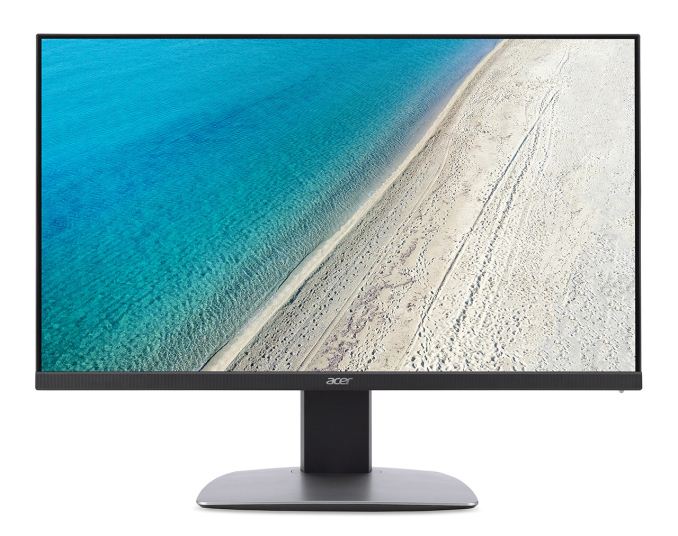
While gaming monitors like the Predator X27 and Z271UV tend to get the most attention, there is still a significant market for work-oriented monitors that boast accurate color reproduction and a large work area. Those are two criteria that the new Acer ProDesigner BM320 has been designed to meet. This 32-inch display has a native UHD resolution of 3840 x 2160 with a standard refresh rate of 60 Hz. It features an IPS panel with anti-glare coating, a peak brightness of 350 nits, wide viewing angles of 178°/178, and a 5ms response time. Contrast is listed as a comical marketing speak 100,000,000:1, which is the Acer Adaptive Contrast Management (ACM) figure.
Color reproduction and wide color gamut support is a key feature of this model, and it expands its range to include 100% of Adobe RGB, 100% of sRGB (plus 100% of Rec. 709), and 90% of DCI-P3 coverage. There is no explicit mention of a 10-bit panel, but support for 10-bit color is touted as a feature. The ProDesigner BM320 also comes factory calibrated and tested to ensure a DeltaE of 1.0 or less, which is near perfect color accuracy and better than almost all other claims of per-unit factory calibration, which typically gives dE < 3. Professionals will also have access to 6-axis color adjustment settings to create custom color profiles or simply to update the calibration as the monitor ages.
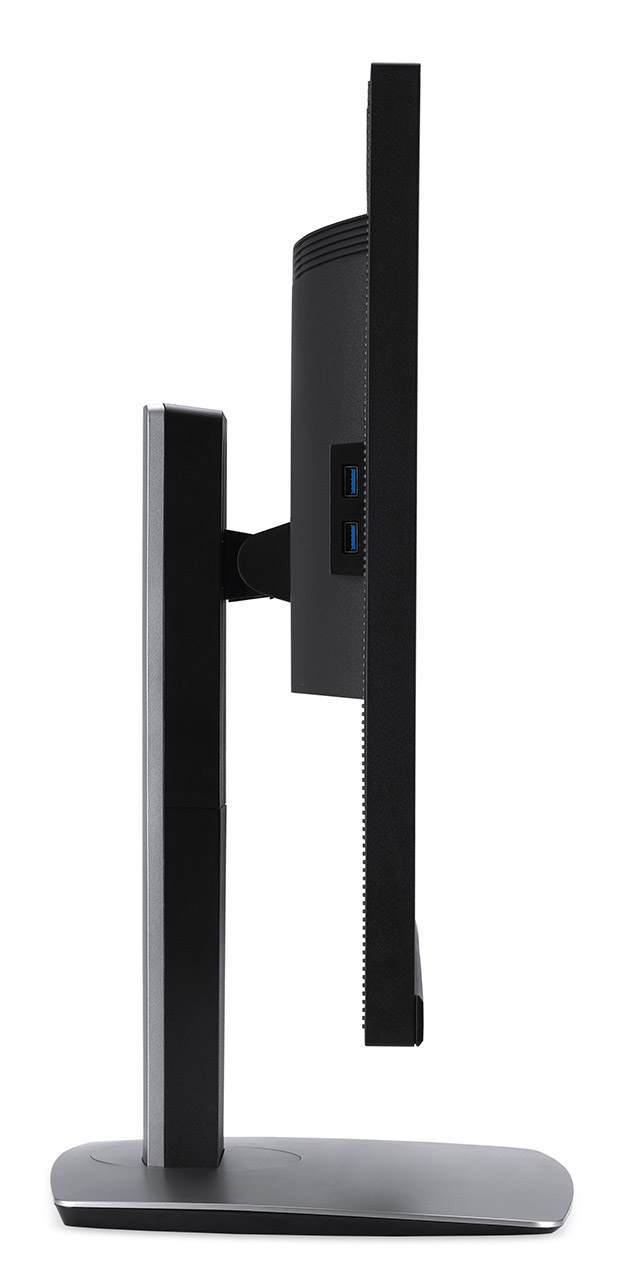
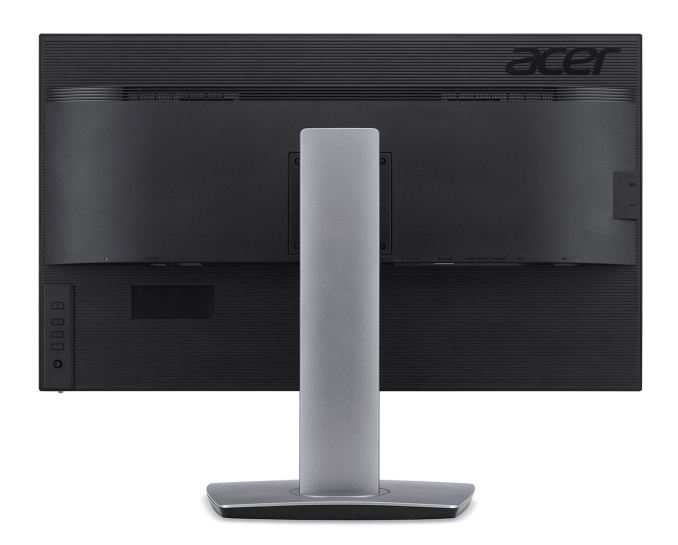
Given its professional positioning, the BM320 ships with Acer’s highly adjustable ErgoStand. The stand can tilt the display between -5 to 25 degrees, swivel +/- 45 degrees, pivot +/- 90 degrees, and provide height adjustments of up to 5.9 inches (150mm). The 90° of swivel rotation should not be overlooked since that means the display can be rotated into a vertical orientation. The ZeroFrame design results in this model having very thin screen bezels on three sides, which should help create near seamless multiple monitor setups.
Connectivity is listed as DVI, DisplayPort 1.2, Mini DisplayPort, and HDMI 2.0 video outputs. There is also a five port USB 3.0 hub (1 up, 4 down) and two integrated 2W stereo speakers. The Acer ProDesigner BM320 is available now in the United States with an MSRP of $1299 and a three-year warranty. That is a high price tag for gaming enthusiasts, but not outside of the norm for a display aimed at creative professionals. Related Reading | |||||||||||||||||||||||||||||||||||||||||||||||||||||||||||||||||||||||||||||||||||||||||||||||||||||||||
| 10:00p | Qualcomm Announces Snapdragon 660 & 630 Mobile Platforms: Better Connectivity, Camera, & Compute at 14nm
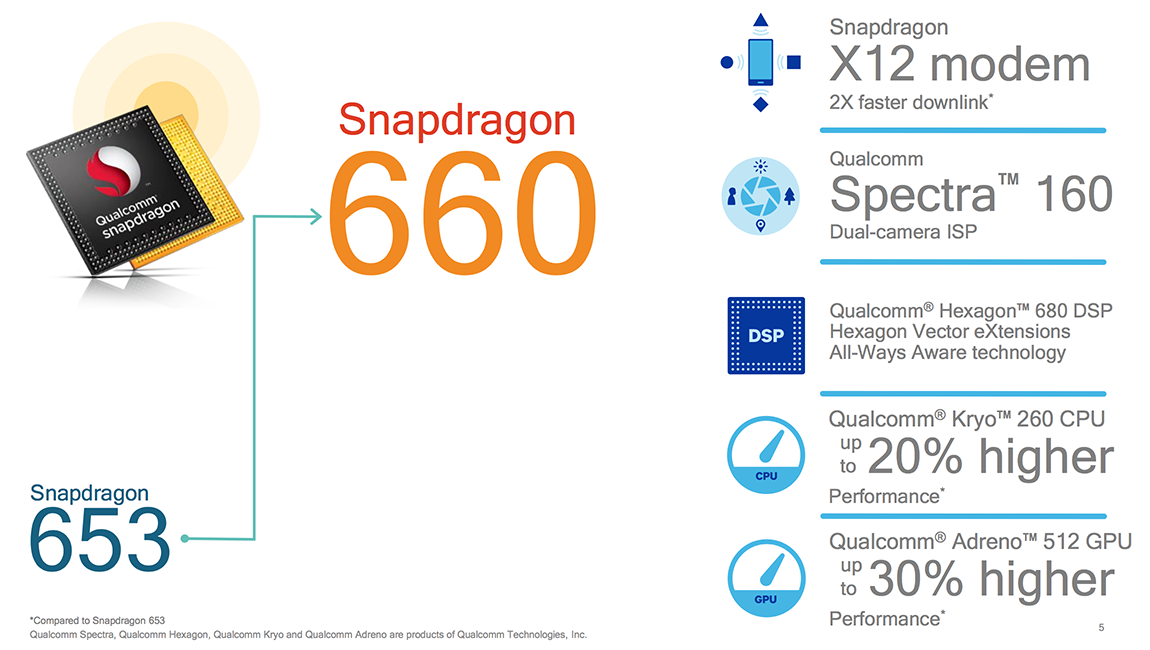
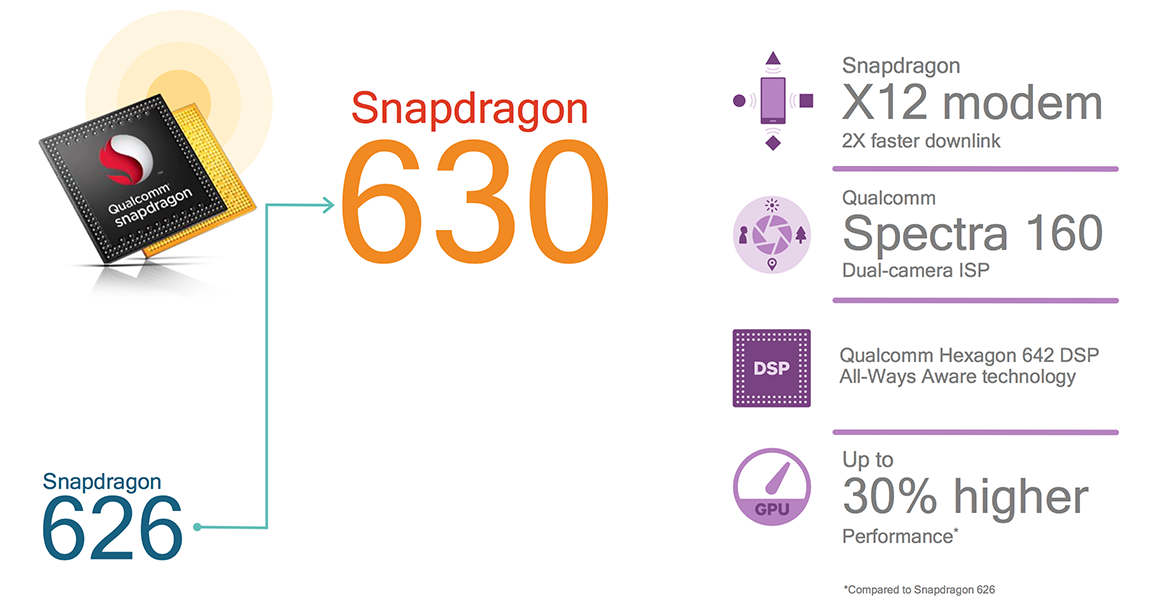
Qualcomm is bringing some premium experiences to its mid-tier lineup with the addition of the Snapdragon 660 and Snapdragon 630 Mobile Platforms. Improved connectivity, enhanced imaging, faster charging, and even machine learning features, in addition to the usual CPU and GPU improvements, help make these 600-series parts particularly interesting. Qualcomm has been aggressively pushing more advanced LTE modems throughout its product portfolio recently, giving at least some of the SoCs in the 600 and even 400 tiers a minimum of Category 7 LTE performance (300Mbps DL / 100Mbps UL) with a Snapdragon X8 LTE modem. But after the debut of Qualcomm’s first gigabit LTE modem—the Snapdragon X16 (1.0Gbps DL / 150Mbps UL)—in the Snapdragon 835 SoC this year, along with its successor the Snapdragon X20 (1.2Gbps DL / 150Mbps UL), Qualcomm is ready to bring even higher performance to its new 600-series platforms. Both the Snapdragon 660 and Snapdragon 630 get the same Snapdragon X12 LTE modem that appeared in last year’s flagship Snapdragon 820/821 SoCs. This is a Category 12/13 modem capable of up to 600Mbps throughput on the downlink (3x20MHz CA, 256-QAM) and 150Mbps on the uplink (2x20MHz CA, 64-QAM). Both the Snapdragon 660 and 630 platforms also support Qualcomm’s suite of RF front-end components too, including TruSignal adaptive antenna tuning with carrier aggregation, which dynamically optimizes signal quality to deliver better voice and data, and envelope tracking technology, which improves battery life and lowers skin temperature by improving power amplifier efficiency. There’s also support for high-power user equipment (HPUE) that helps extend network coverage, and is currently being used by Sprint.
Another shared component between the Snapdragon 660 and 630 is the Spectra 160 ISP. While a step down in processing performance from the Spectra 180 ISP in Snapdragon 835, it still supports many of the same features, including hybrid autofocus systems, dual photodiode phase-detect autofocus (2PDAF), better electronic image stabilization for video, and enhanced low-light processing for still images. It can also handle dual-camera setups with Qualcomm’s smooth “optical zoom” feature when using two cameras with different focal lengths. It can also integrate data from both cameras to produce bokeh effects or to improve image quality. Another advanced feature supported by the Snapdragon 660 and 630 is Qualcomm’s Quick Charge 4 fast-charging technology, which was previously only available with Snapdragon 835. Quick Charge 4 promises up to 20% faster charging and 30% higher efficiency than the previous generation Quick Charge 3.
The Snapdragon 660, which is a replacement for the Snapdragon 653, is now the highest performing SoC in the 600-series. Like the Kryo 280 in Snapdragon 835, the Snapdragon 660’s Kryo 260 CPU uses four semi-custom Cortex-A73 cores in the “performance” cluster and four semi-custom Cortex-A53 cores in the “efficiency” cluster in a big.LITTLE arrangement. The Kryo 260, however, does not hit the same peak frequencies as Kryo 280, and Kryo 260 uses 1MB/1MB of shared L2 per cluster instead of 2MB/1MB of L2 for Kryo 280. We’ve already seen how well Snapdragon 835 performs, and Snapdragon 660 should not be too far behind. Alongside the Kryo 260 CPU is the Adreno 512 GPU that delivers up to 30% better performance on average than the Adreno 510 GPU in Snapdragon 653, according to Qualcomm. Some of the gain likely comes from a frequency increase (perhaps a lot of it), but it’s still a pretty significant jump, although it should still fall below the peak performance of the Adreno 530 GPU in Snapdragon 820. It supports the latest 3D graphics APIs, including Vulkan, and can power displays with up to 2560x1600 resolution.
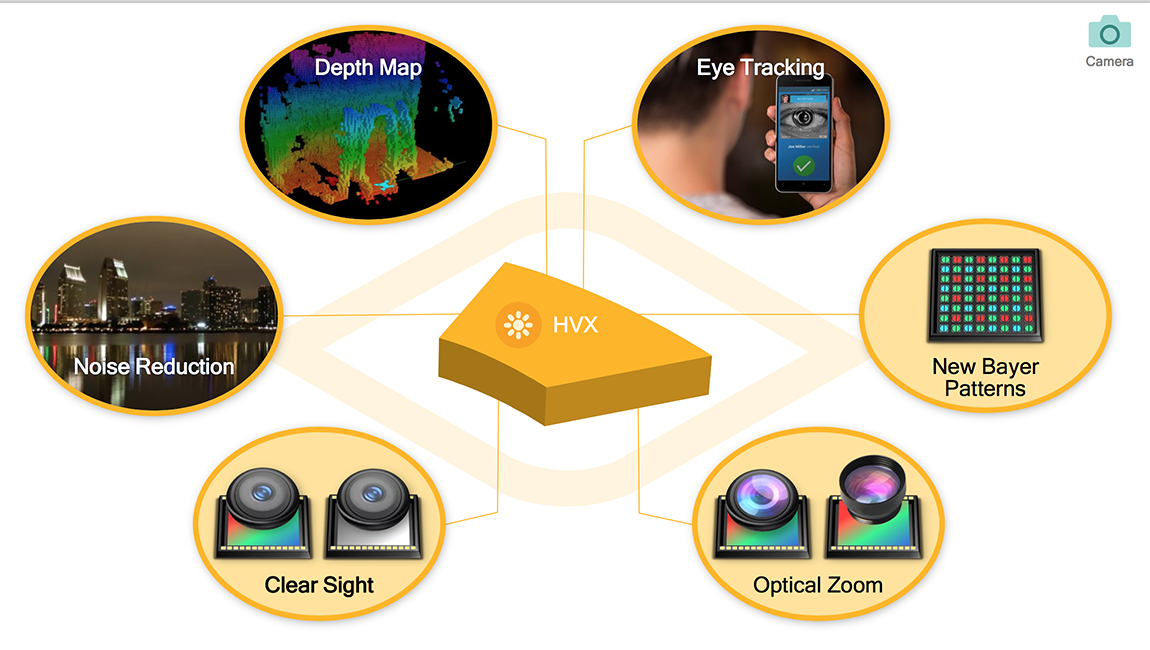
Another significant addition to Snapdragon 660 is Qualcomm’s Hexagon 680 DSP, which made its debut last year in the Snapdragon 820 SoC and features Hexagon Vector eXtensions (HVX) specifically designed for advanced photo and video processing, virtual reality, and computer vision workloads. This DSP can work on two vector threads in parallel, each containing four 1024-bit SIMD pipelines (a typical ARM CPU core contains two 128-bit SIMD NEON vector pipelines for comparison), allowing each HVX context to work on 4,096 bits/cycle compared to 256 bits/cycle for a single CPU core. The Hexagon 680 also contains four threads for scalar instructions too, each with 4 VLIW pipelines. Using up to two scalar threads and two vector threads in parallel allows concurrent execution of audio and imaging tasks. The Snapdragon 660 supports Qualcomm’s Snapdragon Neural Processing Engine SDK, along with TensorFlow and Halide frameworks on the Hexagon 680 DSP, bringing advanced machine learning and computer vision capabilities to the 600-tier for the first time.
The Snapdragon 630 SoC uses a familiar octa-core Cortex-A53 CPU configuration. Unlike the Snapdragon 625/626 that it replaces, the Snapdragon 630 has a more distinct big.LITTLE arrangement with four A53s running at up to 2.2GHz (the same as the S626) sharing a 1MB L2 cache and four more A53s only reaching up to 1.8GHz and sharing a smaller 512KB L2 cache. While there should not be much difference in CPU performance and power compared to the Snapdragon 626, the Snapdragon 630’s Adreno 508 GPU performs 30% better on average than the S626’s Adreno 506 GPU. It also supports Vulkan and all of the latest 3D graphics APIs at resolutions up to 1920x1200. The Hexagon 642 DSP still supports Qualcomm’s Snapdragon Neural Processing Engine SDK for machine learning and TensorFlow, but does not share the Hexagon Vector eXtensions (HVX) microarchitecture of the more powerful Hexagon 680 and 682 DSPs.
Both of the new Snapdragon 660 and 630 platforms include features and capabilities previously seen only in the premium 800-tier, and also add new technologies like Bluetooth 5 and LPDDR4 RAM support (up to 8GB), which reduces power consumption and improves bandwidth compared to LPDDR3. The Snapdragon 660 sounds particularly compelling, because it appears to deliver a very similar experience to last year’s Snapdragon 820 but, presumably, at a lower price point. The Snapdragon 660 and 630 platforms are pin and software compatible, and they both use the same 14nm LPP FinFET process from Samsung. The Snapdragon 660 is available to partners now and should appear in devices during the second quarter, while the Snapdragon 630 will become available at the end of May and is expected to appear in devices during the third quarter. | |||||||||||||||||||||||||||||||||||||||||||||||||||||||||||||||||||||||||||||||||||||||||||||||||||||||||







| << Previous Day |
2017/05/08 [Calendar] |
Next Day >> |