[Most Recent Entries] [Calendar View]
Thursday, July 6th, 2017
- Samsung at Flash Memory Summit: 64-layer V-NAND, Bigger SSDs, Z-SSD
- Samsung Announces 960 PRO And 960 EVO M.2 PCIe SSDs (Updated)
- The Samsung 960 Pro (2TB) SSD Review
- The Samsung 960 EVO (1TB) Review
- SK Hynix Launches 72-Layer 256 Gb 3D TLC NAND with Increased Performance
- Western Digital Announce BiCS4 3D NAND: 96 Layers, TLC & QLC, Up to 1 Tb per Chip
- Toshiba's 768Gb 3D QLC NAND Flash Memory: Matching TLC at 1000 P/E Cycles?
- EK Water Blocks Announces Aluminum-based Fluid Gaming Series Open Loop Liquid Coolers
- SilverStone Launches SST-TP01-M.2 Thermal Pads for M.2 SSDs
- Intel Announces SSD DC P4501 Low-Power NVMe SSD With 3D NAND
- Plextor Announces M9Pe SSD: 3.1 GB/s, Marvell Controller, 64-Layer 3D TLC, RGB LEDs
- Patriot Preps Budget-Priced & Phison-Based Scorch NVMe SSD For Q3
- Toshiba Introduces XG5 Client NVMe SSD
| Time | Event | ||||||||||||||||||||||||||||||||||
| 10:15a | Mining Cards Update: Zotac, Manli and Biostar Products Formally Confirmed
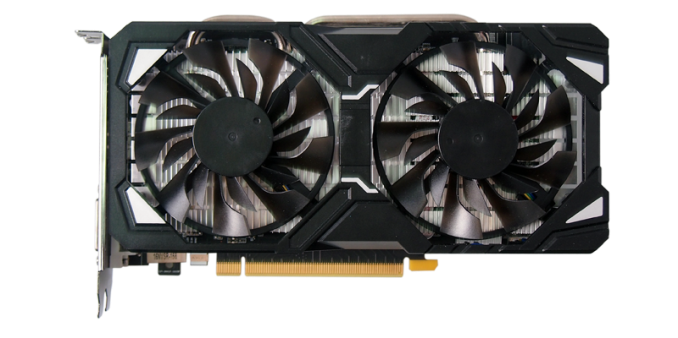
Although ASUS and Sapphire cryptocurrency mining cards were officially outed last week, other pieces of evidence have suggested other vendors were also producing cryptomining cards. Both the GPU manufacturers (AMD and NVIDIA) and their board partners have remained tight-lipped, with only ASUS announcing via press release about their cryptomining hardware endeavors. Since then, product pages for cards have emerged for Manli, Zotac, and Biostar. Manli, a PC Partner sub-brand focused on the Asia/China region, has listed product pages and datasheets for two cryptocurrency mining cards and one mining system containing many cards: the P106-100 Mining Card (F336G), the P106-100 Mining Card (F347G), and GPU Mining System (M-P1061008-N). Meanwhile, Zotac, another sub-brand of PC Partner more familiar in the West, has listed a product page on its Chinese website for P106-100; the English/Global site does not have the page. And as covered earlier, Biostar outed their VA47D5RV42 (Mining) card, a custom version of the China-exclusive AMD Radeon RX 470D.
The MANLI P106-100 SeriesBoth Manli P106-100 cards are roughly equivalent to the NVIDIA GTX 1060 6GB, equipped with the same GP106 GPU at GTX 1060 reference clocks alongside 6GB of GDDR5 VRAM. Both are outfitted with custom two-fan open air coolers, and lack display outputs. At a glance, the F336G variant appears to have the same cooler as the Manli GTX 1060 6 GB (F336G), albeit without stickers or labels, while the F347G resembles the Manli GTX 1060 Gallardo. Interestingly, the package size for both cards is noted as ‘bulk pack,’ as opposed to the typical box dimension measurements for Manli’s other graphics cards. This indicates that the products are purchased in bulk and are not packaged or intended for individual sale.
Moving on, Manli’s GPU Mining System (M-P1061008-N) is a pre-assembled mining rig with 8 preinstalled passively-cooled ‘Nvidia P106-100 mining cards’ and an optional 1600W PSU. A mobile Intel Celeron CPU runs the system, accompanied with 1 stick of 4GB DDR3 and a 64GB mSATA SSD with an optional Windows 10 installation. The custom motherboard has 9 PCIe x16 slots and 7 12V 6pin connectors, all cooled by 10 9cm 4500RPM fans. As for outputs, the rig has an HDMI port, a ‘Giga LAN’ RJ45 port, and 2 USB 2.0 ports. Essentially, the system looks like a server, and certainly will make a noise like one. Zotac's P106-100Like Manli’s GP106-based cards, Zotac’s P106-100 is reference clocked and does not support any display outputs. It seems like Zotac rehashed (no pun intended) the preexisting Zotac GTX 1060 6GB Galaxy HB two-fan custom cooler for the P106-100 mining card. In fact, as careful readers will notice, the Zotac P106-100 custom cooler closely resembles the Manli F336G card coolers. As Zotac and Manli are sub-brands of PC Partner, this commonality is entirely reasonable, and perhaps expected.
Announcements So FarSumming up the companies, Manli, Zotac, and Biostar join ASUS and Sapphire in officially releasing mining-specific video cards. Relatedly, China-only P106-100 mining cards from MSI and Galax were shown in an unboxing video last week. In total, most of the world’s largest graphics card vendors are releasing cryptomining cards, with PC Partner represented through Zotac and Manli, and Palit being represented by sub-brand Galax. Given that Manli and Zotac appear to have utilized the same GTX 1060 custom cooler, it is not unreasonable to expect a mining card from PC Partner's third sub-brand, Inno3D. Yet with all the hardware out and about, only ASUS has packaged and announced products for individual sale: the MINING series. Otherwise, it is clear that there is a heavy focus on the Chinese market and on large-scale bulk purchasers.
These trends bring up a number of points. Board partners are not aggressively attacking the traditional consumer market with these cards, preferring to keep quiet publicly. If it turns out that mining demand is centered on China, segmenting the market this way isolates the lucrative US and Europe spheres from mining card contamination and bad publicity. Likewise, if mining demand is indeed centered on distributors, organized groups, and bulk purchasers rather than hobbyist cryptominers, standard consumers are shielded in the same way while the problem is solved out of the public eye. In context, manufacturers are still dealing with the same issues brought up in our first cryptocurrency mining cards article: overproduction leading to oversupply, RMA/warranty concerns, sales cannibalization by way of old inventory and a flooded secondary market, and brand damage (e.g. used cards in poor health, association with mining farms). The overproduction issue has been misinterpreted by some to mean that production is maxed and so manufacturers are incapable meeting inflated demand, which is incorrect because they are capable. Much of the problem is the turnaround time, as the time between the decisions to increase production and the extra products hitting the shelves are in the order of several months or longer. In addition, increased production would last for a minimum of several months. Depending on how severely supply is starved, board partners might be waiting on AMD and NVIDIA, who themselves might be waiting on GlobalFoundries and TSMC, before they can even stick the GPU on a custom PCB and cooler, not to mention putting it in a box and shipping it out. For something as volatile as cryptocurrency mining, a currency crash during those in-between months would be catastrophic. Ordering higher production is relatively easy; getting rid of excess unsellable inventory because demand crashed too soon is hard. For mining-specific cards, the stakes are doubled, as excess niche mining cards would be even more difficult to sell. In that regard, ROI-focused cryptominers take into account the inherent resale value of consumer graphics cards. If mining SKUs are too enticing for cryptominers, so much that consumers start to partake, manufacturers have to deal with market segmentation headaches and lower average selling prices. But if mining SKUs are not enticing enough for cryptominers, hobbyists or otherwise, miners will instead keep purchasing consumer cards, leaving board partners with unsold inventory of niche products on top of having no supply to satiate annoyed non-mining consumers. The consequences for that hypothetical failure are less dire outside US/Europe, while mining card success in China would presumably give vendors valuable experience in how to properly market and produce mining cards in the US/Europe. Similarly, producing bulk amounts of brown box cards for distributor back-channels ensures that inventory keeps selling without the risk of adversely affecting the consumer market. And if that resolves the mining demand problem right there and then, then all the better for them – and us. | ||||||||||||||||||||||||||||||||||
| 11:30a | Samsung’s Multi-Billion Fab in Pyeongtaek Starts Production of 64-Layer V-NAND
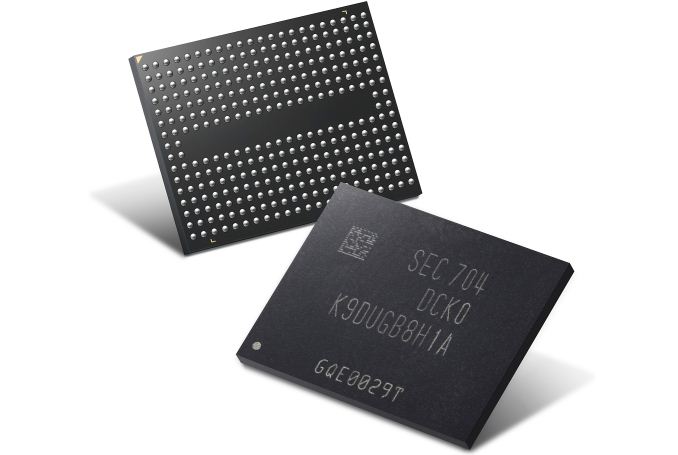
Samsung on Tuesday announced that it had started mass production of 64-layer V-NAND memory in its newly build fab in Pyeongtaek, South Korea, and the first batch had already been shipped to one of the company’s customers. The new fab was intended to focus on DRAM manufacturing, but in the light of NAND flash shortage the company adjusted its plans at some point and now the plant produces V-NAND. Samsung’s semiconductor manufacturing facility in Pyeongtaek will be the largest and one of the most expensive fabs in the world once it ramps up its production to full capacity. Samsung announced plans to build it in October, 2014, and then started construction in April, 2015. Initially, Samsung announced plans to invest ₩15.6 trillion (around $13.5 billion at the current exchange rate) in the facility, but over the past couple of years, it announced further expansion plans for the fab. As a result, investments in the Pyeongtaek facility will total ₩30 trillion ($26.1 billion) by 2021, making the complex the most important semiconductor manufacturing facility ever. According to some reports, Samsung initially planned to produce DRAM in its new fab, but given its size and scale, it was doubtful that the plant would be used only for DRAM. As it appears, Samsung decided to produce fourth-generation 3D V-NAND flash memory in its Pyeongtaek facility first, possibly because there is growing demand for NAND by Samsung’s own divisions, including Samsung Mobile. It remains to be seen when the fab in Pyeongtaek starts to manufacture DRAM ICs, which are also in short supply nowadays. Keep in mind that 3D NAND and DRAM components are produced using completely different process technologies and the former requires some additional equipment. Therefore, Samsung and other memory makers cannot switch from NAND to DRAM and vice versa without some level of equipment adjustment and reconfiguration of fab space.
At present, Samsung does not talk about the number of wafer starts at the Pyeongtaek fab because it is not operating at full capacity. That said, the plant is not going to have a substantial impact on global NAND supply in the coming weeks or months. Once fully ramped several quarters down the road, the Pyeongtaek facility will have a significant impact on both NAND and DRAM industries, as it will increase the output of both types of memory (assuming that it will be used for DRAM in the coming quarters). Samsung does not disclose what kind of flash memory chips it produces in terms of capacity and performance, but says that they rely on its 64-layer V-NAND design. So far, the company officially has announced only two 64-layer V-NAND ICs. First is the 512 Gb 3D TLC NAND chip with an 800 MT/s interface data rate that the company demonstrated at the Flash Memory Summit 2016. Second, the 256 Gb 3D TLC NAND IC with a 1000 MT/s interface data rate, the company launched earlier this year and began to produce in high volume in June (presumably at another facility).
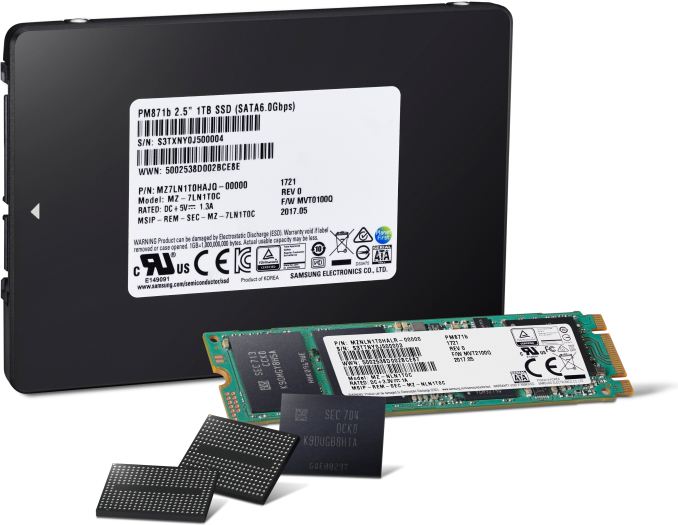
Manufacturing of 64-layer 256 Gb chips in at least two facilities indicates that Samsung is ramping up volume production of its fourth-generation V-NAND chips and therefore it is logical to expect new products based on such ICs (e.g., SSDs, memory cards, etc.) to hit the market in the coming months. Among the more interesting products will be higher-end SSDs based on 256 Gb V-NAND chips featuring a faster interface, but it remains to be seen what kind of real-world performance advantages they are going to bring given the bandwidth limitations of PCIe 3.0 x4 bus (used for NVMe M.2 drives), or for smaller capacities. So far, Samsung has only introduced the OEM-oriented PM871b SATA SSDs in 2.5" and M.2 form-factors based on its fourth-gen V-NAND memory. Related Reading | ||||||||||||||||||||||||||||||||||
| 2:00p | EKWB Launches Aftermarket EK-M.2 Aluminum Heatsink for M.2 SSDs
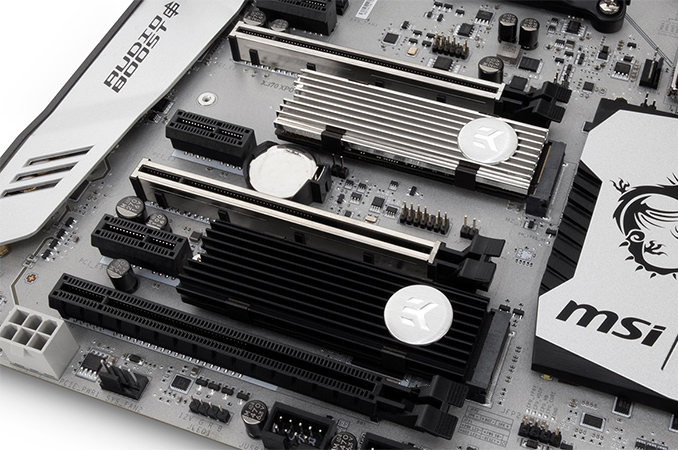
EKWB (EK Water Blocks) on Wednesday introduced a useful but slightly different to their normal routine type of product. The company has started to sell its EK-M.2 NVMe passive heatsinks, designed for consumer M.2 SSDs that matches the design of the company’s water blocks and other components. The device costs €10 – €13, depending on the finish. Advantages of M.2 SSDs over consumer drive form-factor drives have been discussed multiple times before: they are smaller, sometimes they are cheaper to make, and they are faster because they use PCIe interface along with NVMe protocol (in most cases). However, they have one main drawback that sometimes affects their performance: they are hard to cool down. Contemporary SSD controllers contain multiple computing cores and perform rather intensive mathematical operations in order to work with modern NAND flash memory properly and correct read errors that occur with the latest types of flash (and thus guarantee their endurance rating). As a result, sometimes those controllers overheat on M.2 drives because of insufficient cooling and begin to throttle, reducing performance. Going forward, SSD controllers will become even more complex, especially as the industry moves to higher bit densities with TLC and then QLC architectures. Developers of such controllers will likely try to keep their TDPs in check by using lower-power compute cores and/or low-power process technologies, but it remains to be seen whether temperatures of next-gen controllers will be lower than temperatures of modern ones.
Various industry players attempt to ensure proper cooling of M.2 SSDs by equipping their drives with thermal pads (Samsung) or heatsinks (Plextor), offering heatsinks with motherboards (MSI) or selling aftermarket thermal pads (Silverstone). Now, EK Water Blocks is throwing its 2c and offering aftermarket M.2 heatsinks for owners of its LCS and other customers. The EK-M.2 NVMe passive heatsinks are made of aluminum, feature front and back plates, and are equipped with clips to attach them to SSDs. The coolers are compatible with single-sided M.2-2280 drives plugged into M.2 slots that are of 4.2 mm height. Essentially, EK-M.2 NVMe can handle standard consumer SSDs installed into typical desktop motherboards, but compatibility beyond that cannot be guaranteed. According to EKWB, the EK-M.2 heatsink can reduce controller temperature by 8-10°C, or even more with appropriate airflow.
As for pricing, EKWB sells its the EK-M.2 NVMe heatsink with black finish for €9.96, whereas the M.2 SSD cooler with nickel finish costs €12.94 (incl. VAT). The products are available from EKWB’s online store as well as from its resellers. Gallery: EKWB EK-M.2 NVMe Heatsink
      Related Reading: | ||||||||||||||||||||||||||||||||||
| 4:00p | Nokia Smartphones to Exclusively Use Zeiss Optics
HMD Global and Zeiss on Thursday announced that they had signed an agreement under which upcoming Nokia-branded smartphones will use Zeiss-branded optics exclusively. The companies said that they would co-develop imaging capabilities of future handsets, but did not elaborate when to expect actual devices on the market. The collaboration announcement between HMD and Zeiss has a number of layers, all of which seem to be significant. First off, Nokia’s future phones will use optics co-developed with a renowned designer of lenses. The important upshot here is that HMD is actually investing in the development of custom capabilities for its Nokia phones. Second, the two companies are talking about “advancing the quality of the total imaging experience”, involving optics, display quality, software, and services, but do not elaborate. From the announcement, it looks like HMD will put R&D efforts not only into optics but will design its own software enhancements to improve imaging capabilities beyond those offered by vanilla Android. A good news here is that certain future phones carrying the Nokia brand are not going to rely completely on off-the-shelf hardware, software, and reference designs. Third, HMD announced that imaging is one of the areas that it considers important for its future smartphones. Finally, Zeiss will be used on Nokia-branded devices exclusively, which means that future halo smartphones from Microsoft (if the company decides to launch them) will have to rely on other optics.
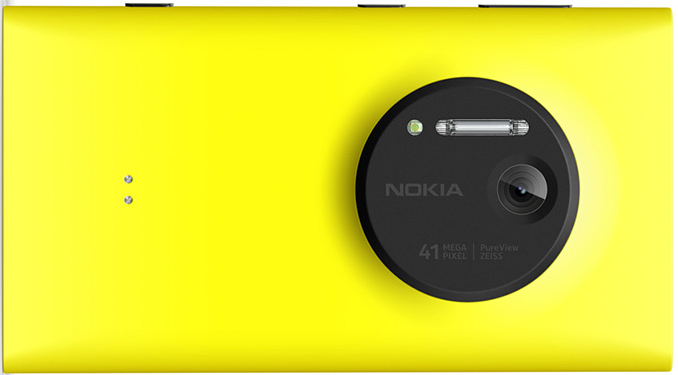
Nokia started to work with Zeiss (which was called Carl Zeiss then) more than 10 years ago. The first handset to use Zeiss optics was the N90 released in 2005, which set some standards for smartphone imaging capabilities for a long time. The two companies collaborated for a long time and introduced a number of smartphones with advanced cameras. The culminations of their work were the Nokia 808 PureView and Lumia 1020 phones released in 2012 and 2013 (respectively) and featuring a 41 MP sensor along with an oversized Carl Zeiss-branded optics assembly and providing features like lossless digital zoom and pixel oversampling. After the acquisition of Nokia’s smartphone business by Microsoft in 2013, the latter released a number of handsets featuring Zeiss Tessar four-element lenses as well, but eventually, Microsoft lost interest in smartphones in general and decided not to prolong its agreement with Zeiss. As a result, Microsoft’s latest Lumia 650 smartphone does not use Zeiss-branded optics.
HMD and Zeiss aim to co-develop “standard-defining imaging capabilities” for smartphones, but they do not disclose when the first Android-based Nokia handsets with Zeiss optics are to arrive in the market. Keep in mind that the agreement between HMD and Microsoft does not cover the PureView (imaging) IP nor the ClearBlack (display enhancements) IP that remain at Microsoft. Therefore HMD will have to develop its image processing technology and LCD screen filters to match features of previous-gen Nokia smartphones when it comes to photography and display quality. It is unclear how much time this work will take, but the good news here is that the works are either underway or about to start. Related Reading: | ||||||||||||||||||||||||||||||||||
| 9:00p | Qualcomm’s New Lawsuit Cites Six Patents, Seeks US Sales Ban of Infringing Apple Products
Qualcomm is about to enter another round of its legal battle against Apple. With a new complaint, the company is set to file on Friday with the U.S. ITC. In the complaint, Qualcomm accuses Apple of infringing its patents that cover various technologies that can extend the battery life of a mobile device and seeks to ban sales of Apple’s devices in the U.S with a limited exclusion order for non-Qualcomm baseband Apple devices, and a Cease and Desist Order for all infringing devices. Back in January, Apple filed a lawsuit against Qualcomm and accused the company of overcharging for its chips and withholding a payment of about $1 billion in promised rebates, which is what Apple wants to get from its partner. Several days before Apple sued Qualcomm, the U.S. ITC charged the latter company with multiple antitrust violations, one of which was preclusion of Apple from sourcing baseband modems from Qualcomm’s rivals. In April, Qualcomm countersued Apple and accused the company of numerous wrongdoings, including interfering Qualcomm’s business relationships with manufacturers of Apple iOS devices as well as of artificially limiting capabilities of Qualcomm’s modem in the iPhone 7. In the new lawsuit to be filed on Friday, Qualcomm is accusing Apple of infringing six of its patents not related to wireless networks and 'is seeking a Cease and Desist Order barring further sales of infringing Apple products that have already been imported and to halt the marketing, advertising, demonstration, warehousing of inventory for distribution and use of those imported products in the United States'. The patents in question (see table below for details) cover various techniques that can extend the battery life of mobile devices. The patents are not covered by any industry standard, are not essential parts of any devices, and all six patents were issued in the last four years, Qualcomm asserts. At least one of the patents covers an essential aspect of any modern mobile SoC (e.g., a GPU stream processor supporting mixed precision instruction execution) and it could be considered impossible to build one without infringing that particular patent. Qualcomm claims that Apple’s iOS devices use the aforementioned Qualcomm’s patents all the time, yet the hardware maker does not pay any royalties. What is ironic about the lawsuit is that while it does not involve Qualcomm’s wireless patents, it seeks to stop sales of iPhones and iPads with modems that compete against those from Qualcomm, essentially forcing Apple to buy baseband processors only from Qualcomm.
Qualcomm expects the ITC investigation to start in August and for the case go to trial in 2018. In addition to the complaint with the ITC, Qualcomm also filed a lawsuit against Apple in the U.S. District Court for the Southern District of California alleging of the same wrongdoings. We have questions fired at Qualcomm and Intel and will update in due course when we get responses. Official Qualcomm Press Release
Related Reading | ||||||||||||||||||||||||||||||||||







| << Previous Day |
2017/07/06 [Calendar] |
Next Day >> |