[Most Recent Entries] [Calendar View]
Saturday, July 8th, 2017
- Razer Announces Project Ariana: Chroma Lighting Comes To The Room, And To Third Parties
- Razer Reveals Their Triple Monitor Gaming Laptop Concept: Project Valerie
- Razer Acquires Majority Of THX Ltd Assets
- Razer Updates The Razer Blade Stealth: More Screen, Less Bezel, New Color Option
- Razer Launches The Thresher Ultimate: An Xbox, PS4, And PC 7.1 Headset
- Razer Announces The Lancehead Gaming Mice
- Razer Updates The Razer Blade Pro With THX Certification
| Time | Event | |||||||||||||||||||||||||||||||||||||||||||||||||||||||||||||||||||||||||||
| 9:00a | AOC Teams Up with Porsche Design for PDS241 and PDS271 Displays
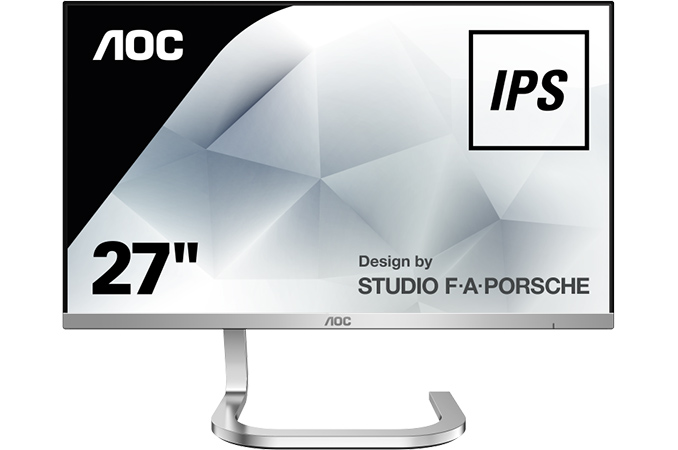
AOC this week introduced two new displays that it co-developed with the Austrian arm of the Porsche Design Group. The PDS241 and PDS271 feature IPS panels with FHD resolution, but their main feature is visual aesthetics with a design that attempts to hide power and signal cables. While things like resolution, color gamut and refresh rate matter a lot, the visual design remains very important in for various business environments. The new AOC PDS family of displays is an example of the design-first approach. When developing the PDS-series monitors, AOC claims to have attempted to achieve three goals: first, to build visually attractive devices; second, to hide their cables inside their stands; third, to ensure relative affordability without using cheap components and compromising user experience.
The AOC PDS-series displays feature asymmetric metal stands that integrate their power and signal cables, creating the impression of ‘cable-less’ monitors. The displays use custom PSUs that not only deliver power, but also feature an HDMI input. In fact, in order to make the PSUs small in general, and avoid using thick power cables, AOC had to use LCD panels and backlighting with lowered power consumption and slightly reduced brightness versus mainstream desktop screens. This also contributes to the reduced thickness of the panel itself.
Speaking of panels and general specs, the PDS241 and the PDS271 are based on 23.8” and 27” AH-IPS panels featuring a 1980×1080 resolution, 250 nits brightness, a 1000:1 contrast ratio, viewing angles of 178°, and so on. The displays claim to cover 100% of sRGB and 90% of NTSC color gamut. As for input, both monitors only have an HDMI connector due to space constraints, located in the power supply. Power consumption of both displays ls listed as not exceeding 25 W.
Two thing to notes about the PSU: it is very small, but it also uses a USB Type-C connector to the display to carrying both signal and power.
AOC’s PDS241 and PDS271 displays are already available in the U.S. from Amazon for $199 and $249, respectively. Gallery: AOC PDS241 and PDS271 Displays
      Related Reading | |||||||||||||||||||||||||||||||||||||||||||||||||||||||||||||||||||||||||||
| 11:00a | Razer Files for IPO in Hong Kong to Raise $600 Million
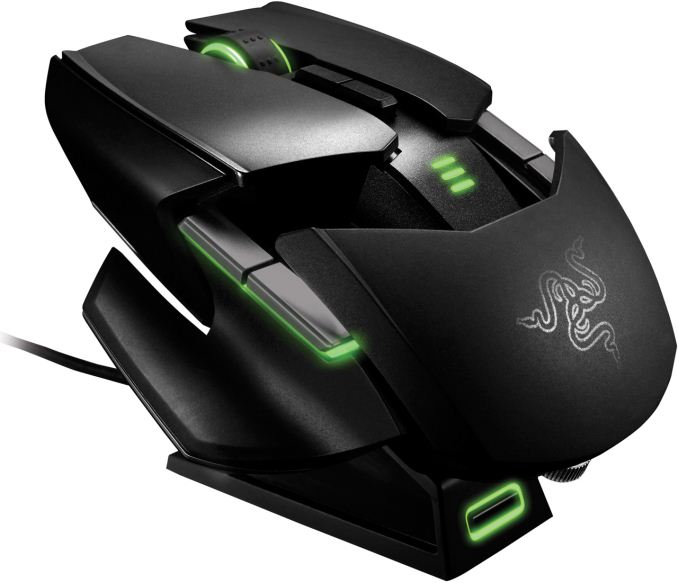
This week Razer has made a preliminary filing for IPO on the Hong Kong Stock Exchange. The company plans to raise $600 million for future growth, particularly in Asia. In addition, the funding is supposed to improve the company’s overall march with investments in R&D as well as the brand. Razer's recent financial filings indicate Razer operated at a $20m profit in 2012-2013, but ran a loss of ~$70m in 2015-2016 because of multiple acquisitions as well as a tripling in R&D activities with a small uptick in revenue. Razer started as a subsidiary of a computer peripheral maker Kärna in 1998 and quickly became famous for its Boomslang mouse designed specifically for FPS gamers and launched in 1999. Kärna ceased to exist in 2000 because of financial issues, but the Boomslang was so popular despite its price tag (which was high by the standards of the year 2000) that Terratec brought the Razer Boomslang back to market in 2003. Min-Liang Tan and Robert Krakoff (who used to be the GM of Kärna back in the day) acquired rights to the IP and the brand sometime in 2005 and established Razer Inc., as we know it today. Initially, Razer focused on mice, but the company gradually expanded its product portfolio with keyboards, headsets and other peripherals. Sometime in 2009-2010, Razer began to hire engineers from PC companies like Dell and HP with an aim to develop actual systems and go beyond peripherals. Today, the company offers various gaming gear, laptops, co-developed Razer Edition PC systems, and licenses its designs to others. Meanwhile, Razer is always in pursuit to expand its lineup of products and their distribution.
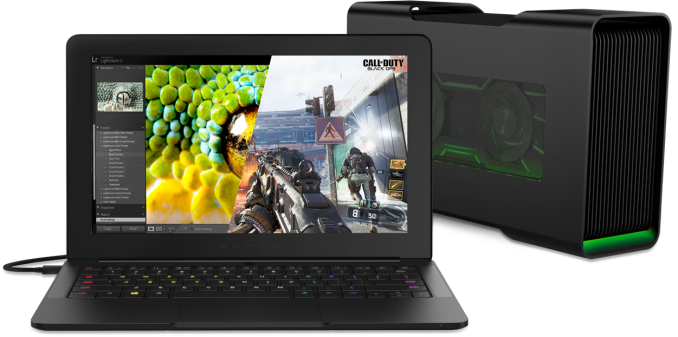
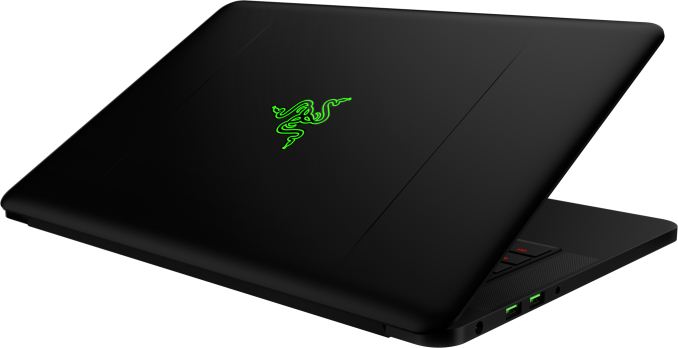
The company actively develops various concept devices that may or may not become big. Over the past years, Razer has demonstrated its Switchblade console, the Christine modular PC concept, the Valerie triple-display notebook, the Ariana projector and other devices: none of which have ever hit retail production. In addition, they have acquired multiple companies, including Ouya, THX, Nextbit and others, to expand its IP portfolio. Finally, to drive sales, Razer started to open its own stores in the U.S. and Asia in 2015–2016. R&D efforts, acquisitions, and stores all require money, which is why Razer went from a $20.332 million profit in 2014/15 to losing $20.356 and $59.332 million in successive years. Over that time, Razer’s revenues have increased from $315.2 million in 2014 to $392.1 million in 2016, clearly indicating growing demand for gaming hardware and peripherals as well as Razer’s success. Razer’s latest round of $50-$100 million venture capital investment in May valued the supplier at approximately $2 billion, reflecting investors’ confidence in the company. Apparently, to keep evolving, Razer needs more money and with its IPO on the Hong Kong Stock Exchange the hardware supplier plans to raise up to $600 million, reports TechCrunch.
One of the things that Razer wants to do is to expand in Asia. At present half of the company’s revenue comes from the U.S., the remainder is split between Asia and Europe. Since the Asian/APAC market is very large and has a high potential, the company has good chances to increase its revenue, particularly in countries like China and Taiwan. Another potential area for growth is gaming PCs. In 2016, the company generated 76.2% ($298.8 million) of its revenue from gaming peripherals, whereas PCs accounted for only 23.1% ($90.1 million). Owners of Razer’s mice and keyboards tend to be loyal customers and if the firm manages to offer them the right computers, they could bite, driving Razer’s revenues up. More recently Razer jumped into services and digital currency businesses, but have yet to become significant revenue sources for the balance sheet.
Wrapping things up, it is evident that Razer is growing fast as a result of overall industry trends, as well as competitive products and brand recognition. With additional funding, the company could unlock more growth opportunities, but Razer is tight-lipped what it plans to do with the IPO. Related Reading | |||||||||||||||||||||||||||||||||||||||||||||||||||||||||||||||||||||||||||



| << Previous Day |
2017/07/08 [Calendar] |
Next Day >> |